CONTACT US
The most sophisticated AI-powered analytics in the world won’t protect your assets if they’re running on a fragmented foundation. Many property managers realize too late that a collection of high-end tools doesn’t equal a secure facility when those tools cannot communicate with one another. Implementing integrated security systems for commercial real estate is no longer about just buying cameras; it’s about architecting a unified ecosystem where access control, cloud surveillance, and power redundancy work in total harmony.
We understand the frustration of juggling disconnected vendors and the anxiety of potential coverage gaps during a power outage. You deserve a system that simplifies your operations rather than complicating them. This guide provides a clear roadmap for designing a security infrastructure that reduces operational overhead and enhances tenant safety. We’ll explore how to transition from legacy silos to a centralized, data-driven environment. From the necessity of robust structural cabling to the implementation of AI-driven threat detection, you’ll learn how to build a resilient platform that protects your investment and provides long-term stability.
Key Takeaways
- Discover how transitioning from siloed hardware to cloud-based platforms creates a unified, manageable ecosystem for your property.
- Learn why robust CAT6 and fiber optic infrastructure are the essential backbones for modern integrated security systems for commercial real estate.
- Understand how AI-driven analytics transform passive surveillance into proactive intelligence to better protect your assets and tenants.
- Follow a structured five-step implementation process that prioritizes power continuity and network reliability to eliminate system downtime.
- Explore how to future-proof your facility by converging security monitoring with emerging technologies like EV charging stations and building automation.
Table of Contents
What are Integrated Security Systems for Commercial Real Estate?
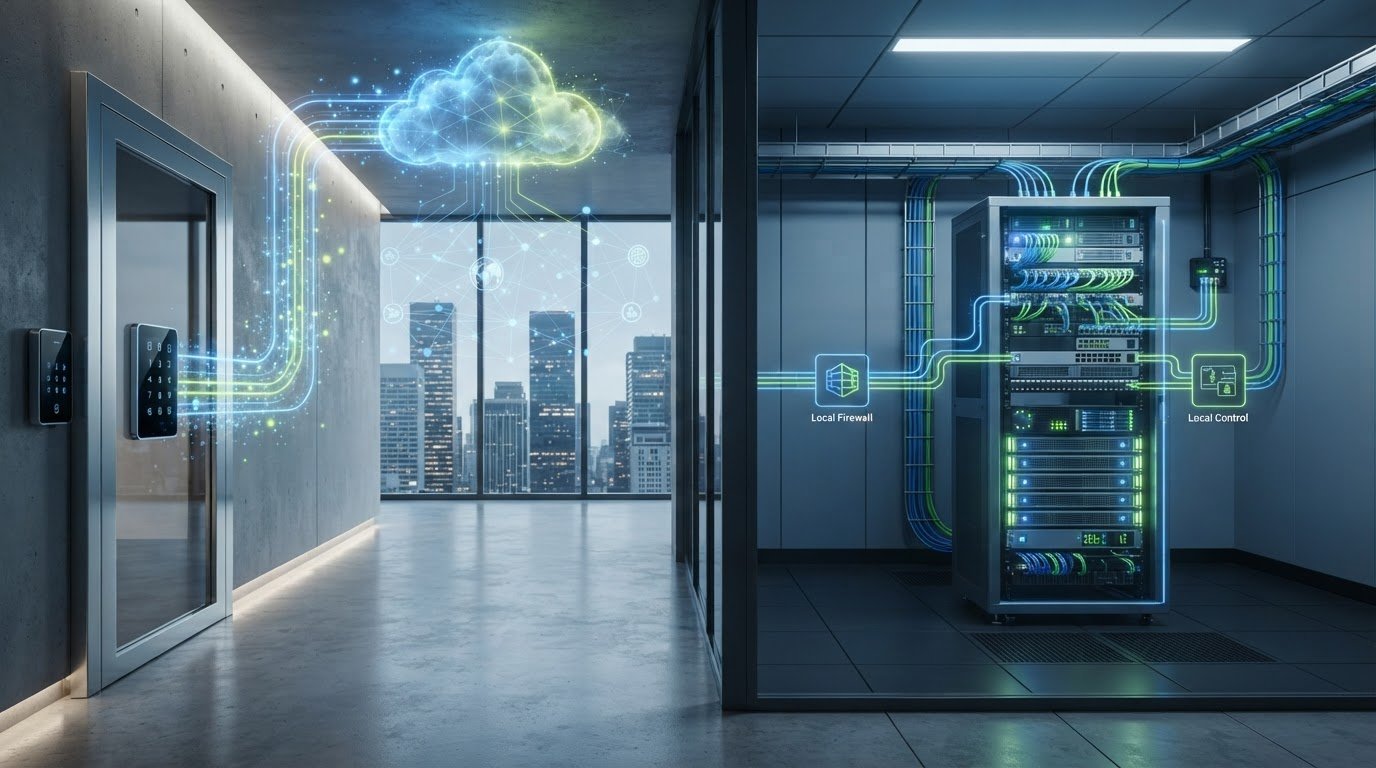
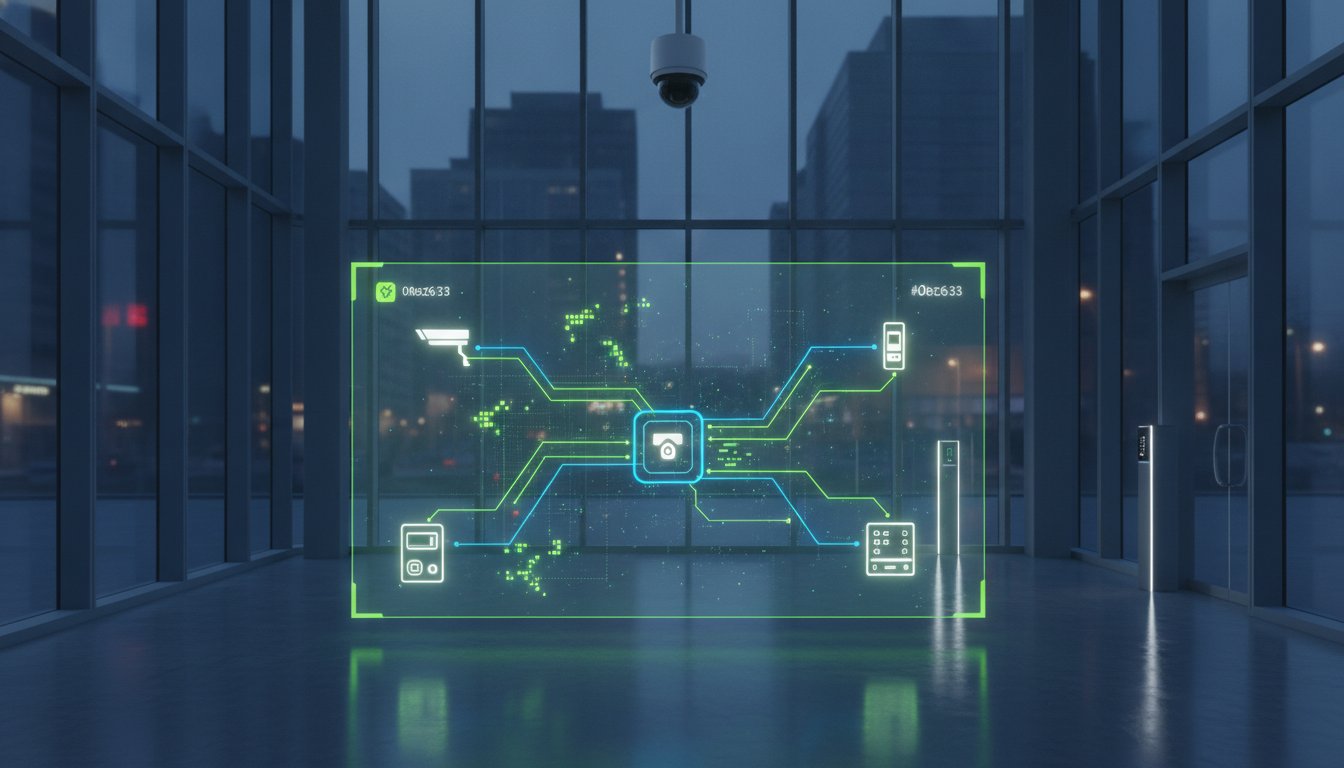
Integrated security is the strategic unification of video surveillance, access control, and real-time monitoring into a single, cohesive platform. Unlike traditional setups where each system operates in a vacuum, integrated security systems for commercial real estate function as a digital nervous system for the property. This approach moves away from fragmented, on-premise hardware toward interconnected, cloud-based platforms that communicate seamlessly. When these systems share data, they provide a comprehensive view of building health that a standalone camera or card reader simply cannot offer.
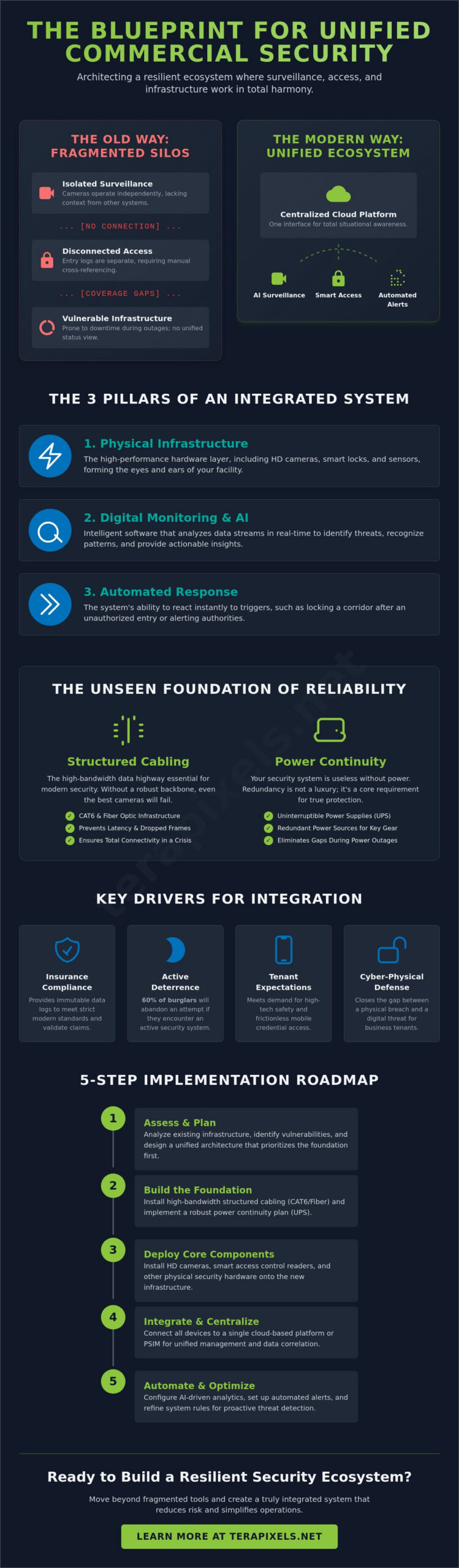
The architecture of a modern integrated system rests on three essential pillars: physical infrastructure, digital monitoring, and automated response. Physical infrastructure includes the high-definition cameras and smart locks installed throughout the facility. Digital monitoring involves the intelligent software that parses through data to identify patterns. Finally, automated response ensures the system reacts instantly to specific triggers, such as locking down a corridor if an unauthorized entry is detected. This synergy delivers immense business value by reducing liability risks and significantly improving operational efficiency for property managers.
To better understand how these components work together in a real-world setting, watch this helpful demonstration:
The Evolution from Silos to Ecosystems
Traditional analog setups often left security personnel blind to the context of an alert, forcing them to manually cross-reference different logs. Modern AI security camera system commercial technology changes this by identifying specific threats and instantly notifying the access control system. This creates true situational awareness, where devices work together to provide a complete narrative of any event. Much of this orchestration is handled through Physical Security Information Management (PSIM), which allows managers to oversee diverse applications from one interface. Cloud-based surveillance further enhances this by enabling multi-site management, allowing a single operator to maintain high standards across an entire portfolio of properties.
Why Commercial Real Estate Needs Integration Now
The shift toward integration is driven by both rising risks and evolving tenant expectations. Insurance providers now frequently require a comprehensive digital footprint to validate claims and assess risk levels. An integrated platform provides the immutable data logs necessary to meet these strict standards. Furthermore, research shows that 60% of burglars will abandon a break-in attempt if they encounter an active security system. Tenants today expect a blend of high-tech safety and frictionless entry, often preferring mobile credentials over physical keys. For buildings housing network security for small business tenants, the physical protection of the facility is the first line of defense for their digital assets. Integration ensures that a physical breach at an entry point triggers an immediate alert within the broader infrastructure, closing the gap between physical and cyber threats.
The Foundation: Structured Cabling and Power Continuity
The most advanced software interface is only as reliable as the physical layers supporting it. While many property owners focus on the visible aspects of integrated security systems for commercial real estate, the true stability of these platforms depends on what happens behind the walls. High-definition video streams, real-time biometric data, and cloud-based communication require a robust data highway. Without a high-bandwidth backbone, even the most expensive cameras will suffer from latency, dropped frames, or total connectivity failure during critical events.
Structured Cabling: The Nervous System of Security
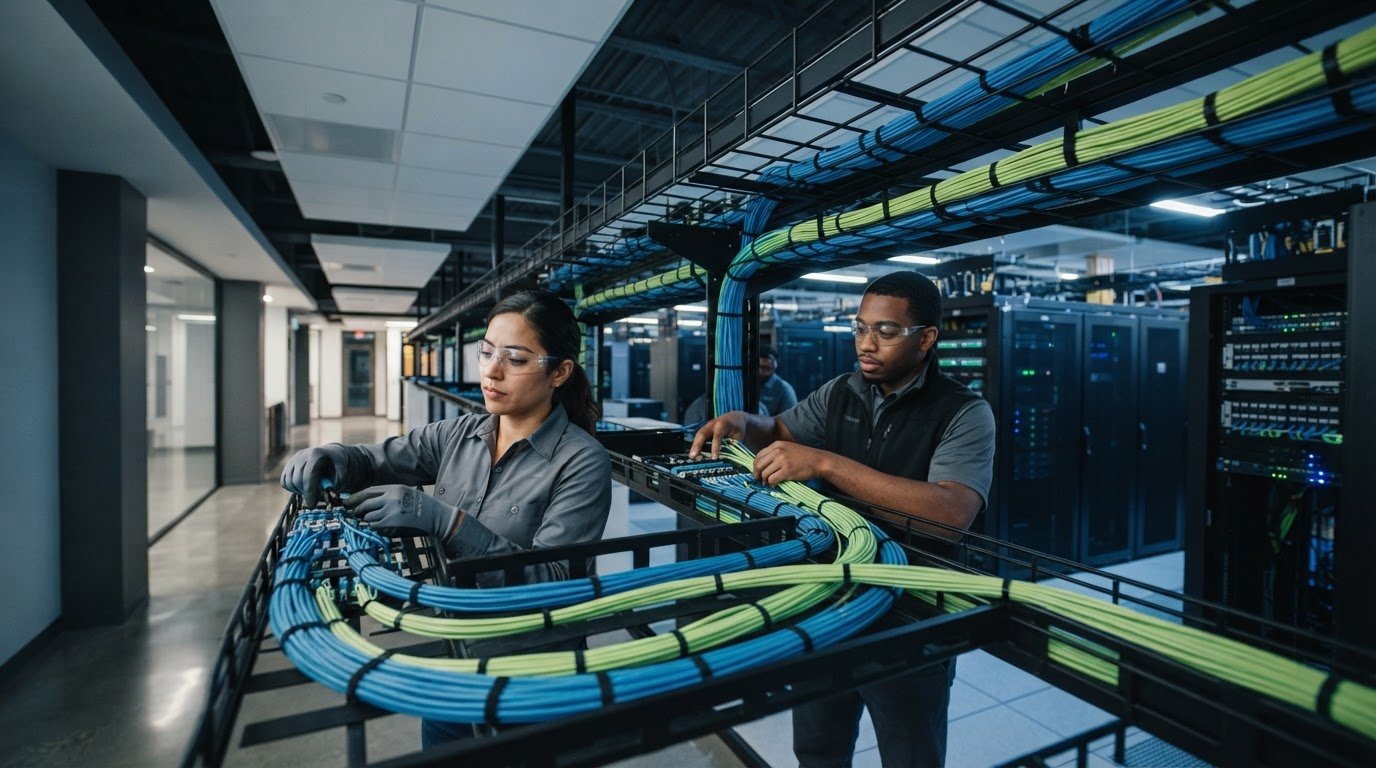
To understand the necessity of a physical foundation, we must define what is structured cabling in a modern security context. It is an organized, standardized approach to wiring that allows different hardware components to communicate without interference. For most facilities, CAT6 cabling installation commercial is the gold standard, providing the necessary throughput for 4K video and high-speed access control data. In larger commercial campuses or multi-story high-rises, we often implement fiber optics to bridge long distances that exceed the 100-meter limit of traditional copper wiring. This structured approach does more than just move data; it reduces long-term maintenance costs by making it easy for technicians to identify and resolve issues without tearing through disorganized “spaghetti” wiring.
Power Redundancy and Business Continuity
Security systems are often the first to fail during power grid instabilities or severe weather. A system that goes dark during a blackout isn’t a security solution; it’s a liability. True integration means connecting your security hardware to a reliable source of redundant power. Integrating backup generator installation for business into your security plan ensures that cameras, electronic locks, and servers remain active when the primary grid fails. Protecting these sensitive components from power surges is equally vital, as a single spike can compromise thousands of dollars in hardware.
Smart building security requires this level of physical resilience to maintain operational intelligence at all times. By treating your cabling and power as essential building blocks rather than afterthoughts, you create a system capable of 24/7 protection. If you are unsure if your current infrastructure can support a modern upgrade, a professional infrastructure audit can help identify potential bottlenecks before they lead to system failure.
Core Components of a Unified Security Strategy
A unified strategy moves beyond simply installing hardware; it’s about creating a digital ecosystem where every component informs the next. When we deploy integrated security systems for commercial real estate, we prioritize the seamless flow of data between entry points and observation tools. This integration ensures that a security breach at a side door doesn’t just trigger an alarm; it cues the nearest camera to record and pushes an instant notification to the manager’s smartphone. We focus on building a system where the digital and physical layers are inseparable, providing a level of protection that standalone devices cannot match.
Cloud-Based Access Control and Surveillance
Managing building entries becomes significantly more efficient with a modern keycard access control system for business. These systems replace antiquated on-premise servers with cloud-based management, allowing property owners to oversee multiple facilities through a “single pane of glass.” This centralized dashboard provides real-time visibility into who’s entering the building and when. By moving surveillance footage to the cloud, we also eliminate the vulnerability of on-site DVRs. If a physical device is stolen or fails during a power surge, the evidence remains safely stored and accessible in a secure off-site environment. This transition to the cloud provides the scalability that commercial properties need to grow without requiring frequent hardware overhauls. For a deeper look at how this technology eliminates the vulnerabilities of legacy key cards and fragmented entry systems, our guide on cloud-based access control for commercial buildings covers the full strategic framework.
AI Analytics and Remote Management
Passive video recording is no longer sufficient for high-value properties. AI analytics now turn standard surveillance into actionable intelligence by automatically detecting anomalies such as loitering, unauthorized vehicle presence, or forced entry. These automated alerts reduce the reliance on 24/7 manual guard monitoring, allowing security staff to focus on verified threats rather than staring at static screens. This efficiency is vital, especially since many law enforcement agencies now require visual or audio verification of a crime in progress before dispatching officers to a scene.
To maintain this level of precision, we utilize rmm (Remote Monitoring Management). This tool acts as a proactive health check for your entire security network. It ensures that a camera never goes offline unnoticed and that software patches are applied the moment they’re released. Without RMM, a failed hard drive or a disconnected sensor might go undetected for weeks until a real incident occurs. We also treat cybersecurity as a non-negotiable layer of integrated security systems for commercial real estate. By securing every IoT device, we protect the network from external breaches that could compromise the building’s physical integrity or sensitive tenant data.
How to Implement Integrated Security in 5 Steps
Moving from a fragmented security setup to a unified ecosystem requires a methodical approach that prioritizes long-term stability over quick fixes. Successful deployment of integrated security systems for commercial real estate depends on a structured roadmap that aligns your physical infrastructure with your digital objectives. By following these five steps, property managers can ensure their investment remains scalable and resilient against emerging threats.
- Step 1: Conduct a comprehensive site and infrastructure audit. This involves identifying physical blind spots and testing the bandwidth capacity of existing cabling.
- Step 2: Design a scalable network backbone. Utilize a combination of fiber and CAT6 cabling to create a high-speed data highway capable of supporting future hardware additions.
- Step 3: Select cloud-native hardware that supports open API integration. Choosing devices that can communicate with third-party software prevents vendor lock-in and allows for a more customized ecosystem.
- Step 4: Centralize management through a unified RMM and security platform. Consolidate your surveillance, access control, and network health monitoring into a single, accessible dashboard.
- Step 5: Establish a regular maintenance and cybersecurity update schedule. Continuous monitoring and patching are essential to protect the integrity of your IoT devices and tenant data.
Conducting a Security and Tech Audit
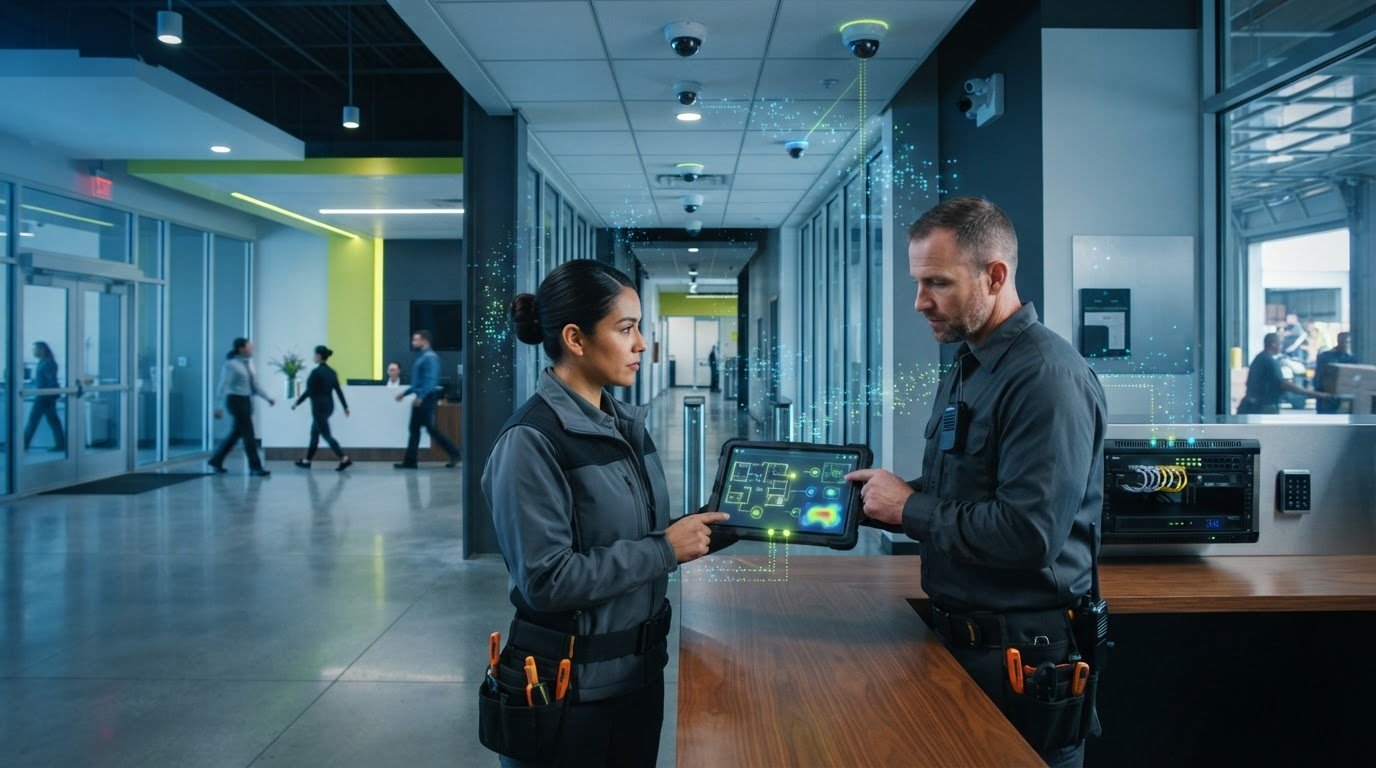
Before purchasing new hardware, you must identify the “blind spots” in your current surveillance coverage where a breach could occur unnoticed. We also evaluate whether your current wiring can handle the high data demands of 4K AI-driven cameras, as outdated cabling often leads to system instability. A comprehensive audit serves as the most critical step for maximizing your return on investment by preventing costly mid-project hardware adjustments. This process ensures that every piece of equipment installed serves a specific, documented purpose within the broader security plan.
Choosing the Right Integration Partner
The complexity of integrated security systems for commercial real estate requires a partner who understands both the physical and digital requirements of the job. Look for contractors who possess expertise in both low-voltage cabling and high-level cybersecurity. It is vital to prioritize partners who offer proactive remote monitoring rather than those who only provide reactive repairs after a failure has occurred. An ideal partner understands the unique compliance needs of commercial real estate, such as fire codes and data privacy regulations, ensuring your system remains legal and functional. If you’re ready to modernize your facility’s protection, contact our team to schedule your comprehensive infrastructure audit today.
Future-Proofing Your Commercial Property for 2026 and Beyond
As we look toward the latter half of the decade, the definition of building protection is expanding far beyond traditional boundaries. integrated security systems for commercial real estate are evolving into comprehensive management platforms that bridge the gap between physical safety, energy efficiency, and tenant convenience. By centralizing these functions, property owners gain a level of control that was previously impossible. This convergence allows for a more responsive environment where security data informs building operations in real time, creating a seamless experience for managers and occupants alike.
The Rise of AI and Predictive Security
In the coming years, AI will shift from simply detecting events to actively preventing them. Predictive analytics will identify behavioral patterns that precede a security breach, allowing for intervention before an incident occurs. Beyond safety, these data points help optimize building traffic and reduce energy waste by adjusting lighting and climate control based on real-time occupancy. It’s a shift toward smart infrastructure that pays for itself through operational savings. However, a robust network backbone remains the only way to support these high-bandwidth applications. Without the foundation of fiber optic or CAT6 cabling, the massive data sets required for predictive modeling cannot be processed effectively.
Sustainable Integration: Solar and Security
Sustainability is becoming a core component of modern facility management. Commercial solar installations can now be integrated to power critical security infrastructure, ensuring that cameras and access control systems remain operational even during prolonged grid failures. This trend extends to the parking lot as well. As EV charging infrastructure becomes a standard tenant expectation, it will eventually integrate into your security monitoring platform. This allows for secure, authenticated access to charging ports using the same mobile credentials tenants use to enter the building. Managing all these technologies, from backup generators to solar arrays and surveillance, within a single dashboard creates a truly future-proof environment.
The long-term ROI of this approach is significant. Providing insurance companies with verified, immutable data logs often leads to reduced premiums and lower liability risks. As law enforcement agencies increasingly move toward verified response policies, having a system that provides instant visual confirmation is essential for timely police dispatch. Terapixels Systems serves as the architect for this technological stability, guiding the implementation of integrated security systems for commercial real estate that stand the test of time. We help you navigate these complex background systems so you can focus on your core business objectives. Partner with Terapixels Systems to design your integrated future and ensure your property remains a secure, efficient, and profitable asset for years to come.
Secure Your Property’s Future with a Unified Ecosystem
Building a resilient facility requires more than just high-tech gadgets; it demands a thoughtfully architected foundation. We’ve explored how the synergy between robust structural cabling, power redundancy, and cloud-native software creates a system that is greater than the sum of its parts. By prioritizing integrated security systems for commercial real estate, property managers shift their operations from reactive troubleshooting to proactive asset protection. This transition doesn’t just reduce liability; it provides the data-driven insights necessary to optimize long-term building performance and tenant satisfaction.
Terapixels Systems stands ready to serve as your partner in this technological evolution. Our team brings specialized expertise in fiber and CAT6 structural cabling, ensuring your network backbone is as reliable as the AI-driven cloud surveillance it supports. Through comprehensive Remote Monitoring Management (RMM), we maintain the health of your ecosystem so you can remain focused on your primary business goals. We’re here to help you manage these complex background systems with quiet confidence and technical precision.
Design Your Integrated Commercial Security Ecosystem with Terapixels Systems and take the first step toward a more secure, streamlined, and future-proof facility today. We look forward to building a safer environment together.
Frequently Asked Questions
What is the difference between unified and integrated security?
Integrated security connects separate systems from various vendors so they can share data through a common interface. Unified security is built from the ground up as a single, proprietary platform by one manufacturer. Most integrated security systems for commercial real estate favor the integrated approach because it allows property managers to select the best hardware for each specific need without being locked into a single brand’s ecosystem.
Can I integrate my existing analog cameras into a new cloud system?
You can integrate existing analog hardware by using digital encoders or hybrid cloud gateways. These devices convert analog signals into a digital format that modern cloud platforms can recognize and store. While this is a cost-effective way to transition, it’s often a temporary solution. To access advanced AI analytics and 4K clarity, you’ll eventually want to upgrade to IP-based cameras that utilize a high-speed CAT6 backbone.
How much does a commercial security system integration cost?
The total investment depends on the scale of your facility, the number of entry points, and the complexity of the underlying network infrastructure. We prioritize a design that balances your immediate security needs with long-term scalability. Factors such as whether you require new fiber optic runs or if your current cabling can support high-bandwidth video will influence the scope. We focus on creating a system that delivers a high return on investment through reduced liability.
How does integrated security improve tenant retention in office buildings?
Integrated security creates a frictionless, premium experience that modern tenants have come to expect. Features like mobile-first access control allow occupants to enter the building using their smartphones, eliminating the need for physical keys or cards. When a building demonstrates a commitment to high-tech safety and proactive monitoring, it fosters a sense of professional stability. This peace of mind is a significant factor in a tenant’s decision to renew their lease.
Does integrated security require a specific type of internet connection?
A reliable, high-bandwidth internet connection is essential for any cloud-based security platform to function correctly. While standard connections may suffice for basic needs, we recommend a dedicated fiber optic line for properties with multiple high-definition cameras. It’s also vital to isolate your security traffic on its own VLAN. This prevents surveillance data from slowing down your tenants’ business operations while ensuring the security stream remains uninterrupted and secure.
How do integrated systems handle cybersecurity threats?
Modern integrated security systems for commercial real estate use multi-layered defense strategies, including AES-256 encryption and multi-factor authentication. We utilize Remote Monitoring Management (RMM) to proactively patch vulnerabilities across all IoT devices. This ensures that your cameras and door controllers don’t become backdoors for hackers. By treating cybersecurity as a core component of the physical security plan, we protect both your facility and your sensitive tenant data.
What happens to my integrated security system during a power outage?
A properly designed system utilizes a combination of Uninterruptible Power Supplies (UPS) and backup generators to maintain continuity. The UPS provides immediate power to sensitive servers and cameras the moment the grid fluctuates, preventing any gaps in recording. For extended outages, the system relies on a backup generator to keep the entire security ecosystem active. This redundancy ensures that your building remains protected and your access control stays functional during emergencies.
Are integrated security systems compliant with commercial insurance requirements?
Integrated systems are designed to meet and often exceed the strict requirements set by commercial insurance carriers. These platforms provide the immutable digital logs and video verification that insurers need to validate claims and assess risk. By demonstrating a high level of “due diligence” through centralized data, property managers can often negotiate more favorable premiums. Having a comprehensive record of all facility events significantly reduces the likelihood of costly liability disputes. Understanding how to reduce liability with security cameras through proper data integrity and legal compliance is essential to maximizing the protective value of your surveillance investment.