CONTACT US
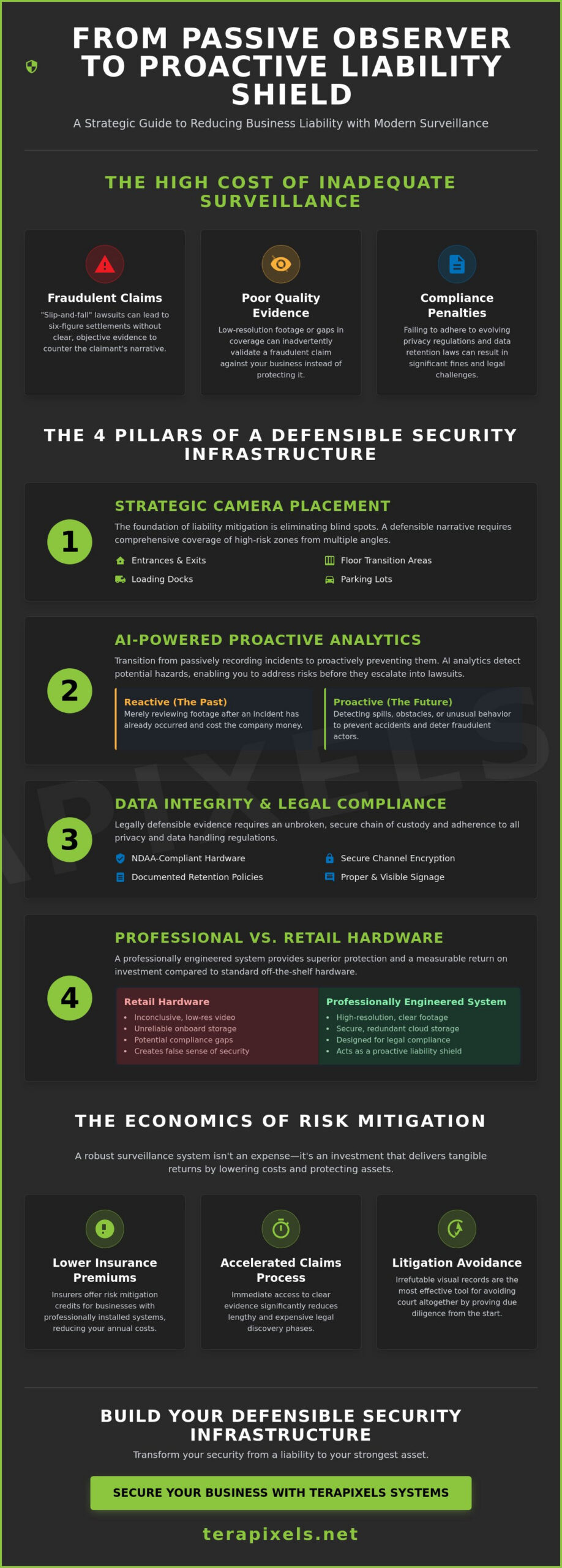
We’ve designed this strategic guide to transform your security infrastructure from a passive observer into a proactive liability shield. You’ll learn the specific architectural steps needed to ensure a defensible chain of custody, maintain compliance with evolving privacy laws, and leverage AI analytics to prevent incidents before they occur. We’ll explore everything from NDAA-compliant hardware choices to the strategic benefits of cloud-based systems, providing a clear path toward long-term stability and a measurable reduction in your insurance premiums.
Key Takeaways
- Define your “Duty of Care” by understanding how high-quality video surveillance serves as an objective witness in legal disputes.
- Identify high-risk zones and eliminate blind spots to ensure your footage provides a complete, defensible narrative of any incident.
- Learn how to reduce liability with security cameras by integrating AI analytics that detect potential hazards before they escalate into lawsuits.
- Navigate the complexities of 2026 privacy regulations by implementing proper signage and data retention protocols to protect your business from compliance penalties.
- Discover why a professionally engineered security infrastructure offers superior protection against fraudulent claims compared to standard retail hardware.
Table of Contents
- Understanding Commercial Liability and the Role of Modern Surveillance
- Strategizing Camera Placement for Maximum Liability Mitigation
- Leveraging AI Analytics and Cloud Storage for Defensible Evidence
- Maintaining Compliance and Privacy Standards to Avoid Legal Pitfalls
- Building a Defensible Security Infrastructure with Terapixels Systems
Understanding Commercial Liability and the Role of Modern Surveillance
Commercial liability centers on the legal concept of “Duty of Care.” This is the inherent responsibility property owners have to ensure their premises are reasonably safe for visitors, customers, and employees. When an accident occurs, the burden of proof often shifts toward the business to demonstrate that they weren’t negligent in their operations. This is where high-quality Closed-circuit television (CCTV) systems become indispensable. Learning how to reduce liability with security cameras starts with acknowledging that cameras provide the objective, unblinking evidence required to refute fraudulent claims and document your commitment to safety protocols.
To better understand how specific technology safeguards your business interests, watch this overview of secure channel encryption and liability protection:
The financial stakes are remarkably high. A single “slip-and-fall” lawsuit can result in six-figure settlements if there’s no visual evidence to counter the claimant’s narrative. By maintaining a robust surveillance record, you provide a clear “chain of custody” for every event on your property. This documentation serves as a powerful shield, proving your team followed safety procedures or that the incident didn’t occur as described. It’s a fundamental part of showing due diligence to a court or an insurance adjuster, transforming a “he-said, she-said” dispute into a factual review of recorded events.
The Economics of Risk: Insurance Premiums and Claims
Insurance carriers analyze risk profiles when setting premiums. Most major commercial insurers offer “risk mitigation” credits or discounts for businesses that implement professionally designed security camera systems because they know these tools lower the likelihood of expensive payouts. Beyond initial savings, these systems accelerate the claims process by providing immediate clarity, which significantly reduces legal discovery fees and administrative overhead. Visual documentation is the most effective tool for litigation avoidance through the creation of an irrefutable record of daily operations.
Reactive vs. Proactive Liability Management
Traditional security systems often functioned as a digital archive for reviewing mistakes after they cost the company money. Modern strategies favor a proactive stance. The presence of visible, high-tech cameras acts as a powerful deterrent against individuals looking for an easy payout through staged accidents or fraudulent claims. It’s the difference between merely watching a disaster and proving that a hazard was addressed immediately or never existed at all. Moving from “watching what happened” to “proving what didn’t happen” is the hallmark of a mature security strategy. When you integrate high-resolution footage with a reliable infrastructure, you’re not just recording; you’re building a defensible narrative of safety.
Strategizing Camera Placement for Maximum Liability Mitigation
Strategic camera placement is the difference between a blurry, inconclusive video and a defensible corporate asset. To understand how to reduce liability with security cameras, you must first identify your high-risk zones. These aren’t just limited to cash registers or front entrances. Transition areas, such as the threshold between a carpeted lobby and a tiled hallway, are frequent sites for slip-and-fall incidents. Loading docks and parking lot entry points also require meticulous coverage. These zones represent high-traffic areas where physical hazards and third-party interactions are most likely to occur. Ensuring these spaces are monitored from multiple angles provides a comprehensive narrative that single-camera setups often miss.
The “Blind Spot” liability is a significant risk that many business owners overlook. If a claimant alleges an injury occurred in the one corner of your facility without coverage, the absence of footage can be framed as a deliberate omission or negligence in your duty of care. Incomplete coverage doesn’t just fail to capture an incident; it creates a vacuum where fraudulent narratives can thrive. You should also consider environmental factors like backlighting from large windows or the glare of industrial lighting. If your cameras can’t provide facial recognition quality because of poor angles or lighting, the evidence may be dismissed in court. High-quality imagery depends on the underlying infrastructure. Utilizing structured cabling ensures your system has the bandwidth necessary to transmit high-resolution, uncompressed data that remains clear during legal review.
Customer-Facing Areas and Slip-and-Fall Protection
In retail or hospitality environments, cameras should be positioned to capture both the floor conditions and the visibility of safety signage. If a spill occurs, your footage must show how long the hazard existed and whether “wet floor” signs were promptly deployed. Wide-angle lenses are particularly useful here. They provide the necessary context for an entire incident, showing the moments leading up to a fall and the immediate aftermath. This perspective helps investigators determine if a claimant was distracted or if the business followed its safety protocols. If you’re unsure if your current layout meets these standards, a professional assessment of your security camera systems can identify critical gaps in your defense.
Employee Workspaces and Operational Compliance
Surveillance in employee areas is about more than just security; it’s about documenting operational compliance. Cameras help verify that staff are adhering to OSHA requirements and internal safety protocols, such as wearing proper PPE in high-risk zones. This documentation is vital for defending against wrongful termination suits or fabricated worker’s compensation claims. While monitoring is essential, it’s important to balance these needs with employee morale. As noted in a GAO report on workplace surveillance, the way these systems are implemented can significantly impact the work environment. Using cameras to prove what didn’t happen is often as valuable as recording what did, providing a steady hand of truth in complex HR disputes.
Leveraging AI Analytics and Cloud Storage for Defensible Evidence
Modern surveillance has evolved from simple recording to intelligent, real-time analysis. Implementing AI security camera systems allows businesses to move beyond reactive review and enter the realm of predictive protection. These systems use advanced algorithms to identify “loitering” or “unusual movement” before an incident occurs. This shift is vital when considering how to reduce liability with security cameras, as it enables your team to intervene before a potential hazard becomes a legal claim. Many businesses face increased risk from “dark” cameras that record but aren’t actively monitored; AI solves this by flagging critical events in real-time. Digital watermarking and detailed metadata ensure that every frame of video is time-stamped and tamper-evident, which is a non-negotiable requirement for court admissibility in 2026.
AI-Driven Incident Detection
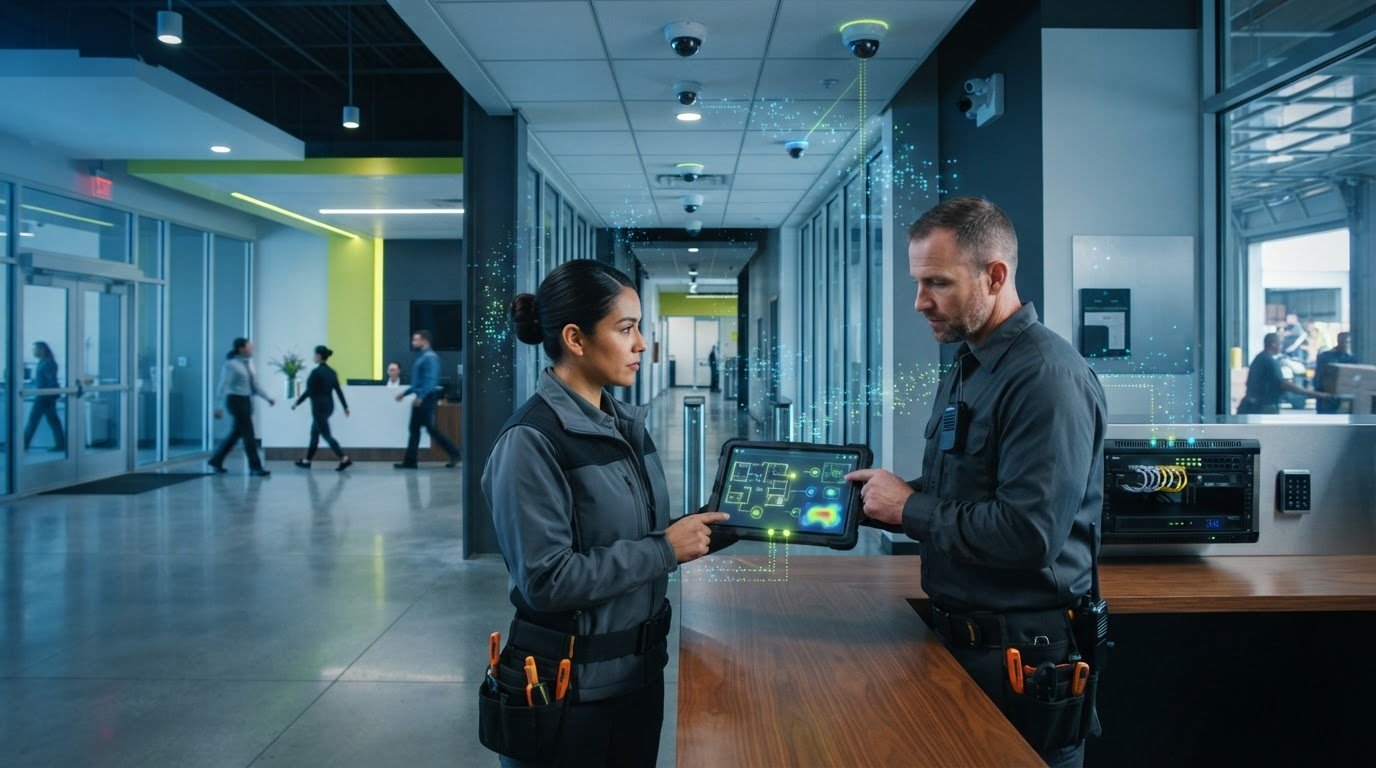
AI analytics provide a level of oversight that human operators simply can’t maintain over long shifts. Automated alerts for “trip-wire” violations in restricted zones ensure that unauthorized access is documented and addressed immediately. Heat maps are another powerful tool for the proactive business owner, identifying dangerous congestion points where accidents are statistically more likely to happen. By automating these observations, AI significantly reduces the risk of human error or oversight during critical monitoring periods. This technology ensures that your staff can focus on high-level tasks while the system maintains a vigilant eye on environmental risks.
The Integrity of Digital Evidence
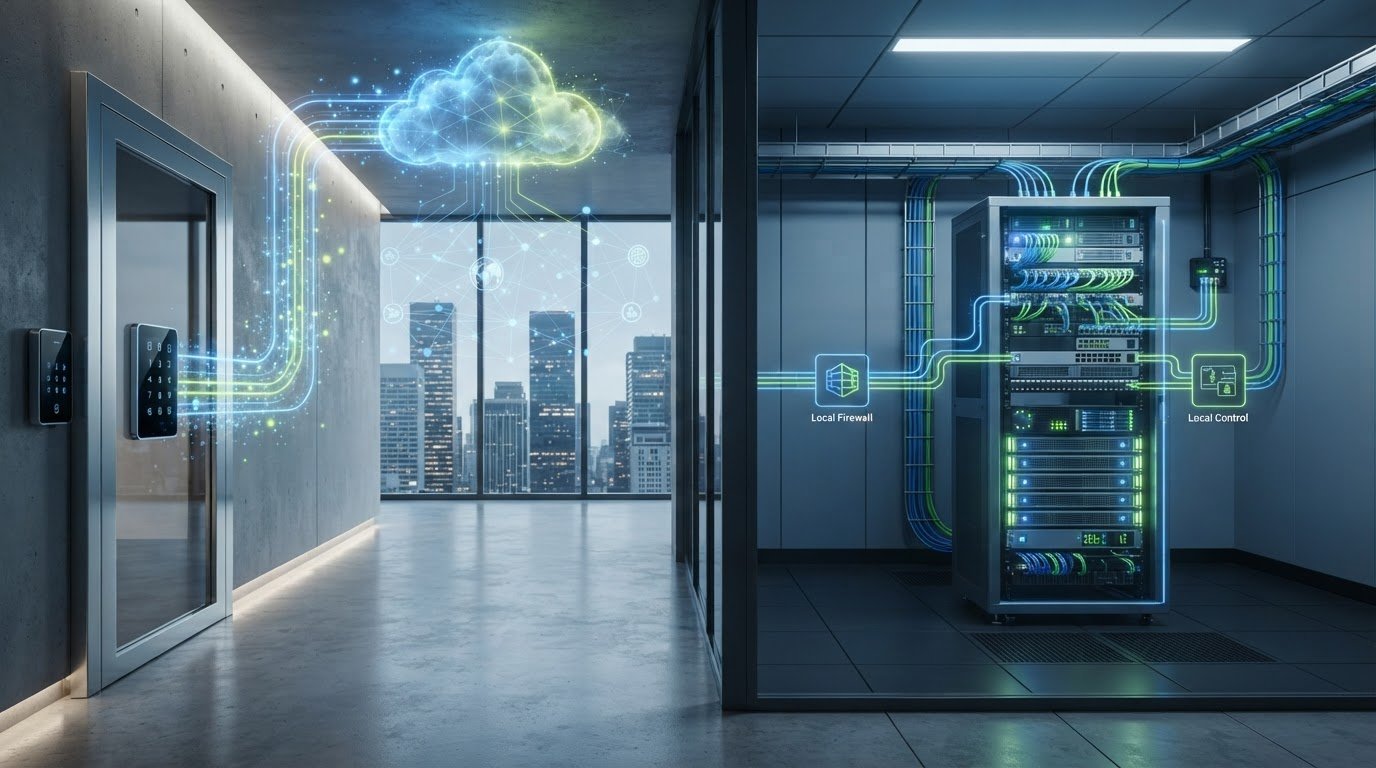
The way you store your data is just as important as how you capture it. While on-premise storage remains common, cloud-based surveillance systems offer superior protection against physical tampering or the destruction of evidence during an incident. If an intruder attempts to destroy a local recorder, your evidence remains secure and accessible in a remote environment. This architecture is a cornerstone of how to reduce liability with security cameras because it guarantees that evidence is available when you need it most. Reliability is further enhanced through system redundancy, ensuring footage is saved even during power or network outages. To maintain the 4K clarity required for legal identification, your infrastructure must be capable of handling high data loads. High-bandwidth CAT6 cabling provides the stable foundation necessary for uncompressed, high-definition evidence that holds up under intense legal scrutiny.
Maintaining Compliance and Privacy Standards to Avoid Legal Pitfalls
While the primary goal is often how to reduce liability with security cameras, a system that violates privacy laws can actually create new legal vulnerabilities. The boundary between legitimate security and privacy infringement is defined by the context of the recording and the location of the hardware. For instance, several states including California, Illinois, and Texas now mandate visible signage to meet the legal standard for implied consent. If you’re recording without proper disclosure, your evidence might be inadmissible in court, and you could face significant regulatory fines under laws like the California Consumer Privacy Act (CCPA).
Industry-specific mandates add another layer of complexity to your surveillance strategy. Healthcare providers must ensure their surveillance doesn’t inadvertently capture protected health information, which would trigger a HIPAA violation. Retailers must comply with PCI standards, ensuring cameras don’t record sensitive cardholder data at payment terminals. In industrial settings, cameras must document OSHA compliance without infringing on employee rights. These mandates are rigid requirements that define your company’s risk profile. Failing to align your technology with these standards can turn a security asset into a liability.
Cybersecurity has emerged as a critical liability factor in 2026. A hacked camera network isn’t just a security breach; it’s a potential lawsuit if your infrastructure is weaponized to launch attacks or if private feeds are leaked. Using NDAA-compliant hardware is now essential for businesses of all sizes. Equipment from prohibited manufacturers like Hikvision or Dahua poses significant liability risks due to federal restrictions and supply chain vulnerabilities. Protecting your data is just as important as capturing it. To ensure your system meets these rigorous standards, you should schedule a professional security assessment to identify potential compliance gaps.
Navigating Privacy Laws and Consent
You must respect the “Reasonable Expectation of Privacy” in areas like bathrooms, breakrooms, and locker rooms. Placing cameras in these zones is generally illegal and creates massive liability. Beyond physical placement, you should also consider audio recording. Federal law requires one-party consent, but states like Florida and Maryland require all-party consent. Because of these complexities, many businesses choose to disable audio entirely to avoid legal pitfalls. Developing a written surveillance policy for employees is a vital step in demonstrating transparency and maintaining a professional workspace.
Securing the Surveillance Network
Your cameras are IoT devices, and like any other hardware on your network, they require robust protection. Implementing network security for small business prevents unauthorized actors from accessing your live feeds or recorded archives. One of the most common liability risks comes from using “default passwords” or failing to update firmware on older cameras. These oversight errors leave your system vulnerable to “Man-in-the-Middle” attacks. Utilizing end-to-end encryption ensures that your video data remains protected from the moment it leaves the lens until it reaches your secure cloud storage.
Building a Defensible Security Infrastructure with Terapixels Systems
Achieving a truly defensible security posture requires more than just high-end hardware. It demands a specialized architectural approach that integrates security, networking, and physical infrastructure into a single, cohesive ecosystem. Terapixels Systems functions as a seasoned consultant and pragmatic technician, ensuring that every component of your surveillance strategy aligns with your liability reduction goals. Understanding how to reduce liability with security cameras involves recognizing that a system is only as strong as its weakest link. While “out-of-the-box” retail solutions might seem cost-effective, they often lack the data integrity, encryption standards, and storage reliability required to withstand legal scrutiny. A professionally engineered system provides the quiet confidence that your evidence will be available, clear, and admissible when it matters most.
Our methodology focuses on creating a symbiotic relationship between technology and daily business operations. We provide a steady hand to manage complex background systems so you can focus on your core objectives. For organizations with a national presence, we ensure consistent security standards across all commercial locations. This uniformity simplifies management and ensures that your liability mitigation strategy is robust, regardless of the specific site’s geography. Each piece of information we provide acts as a building block in a larger narrative of technological reliability and long-term planning.
Professional Design and Installation
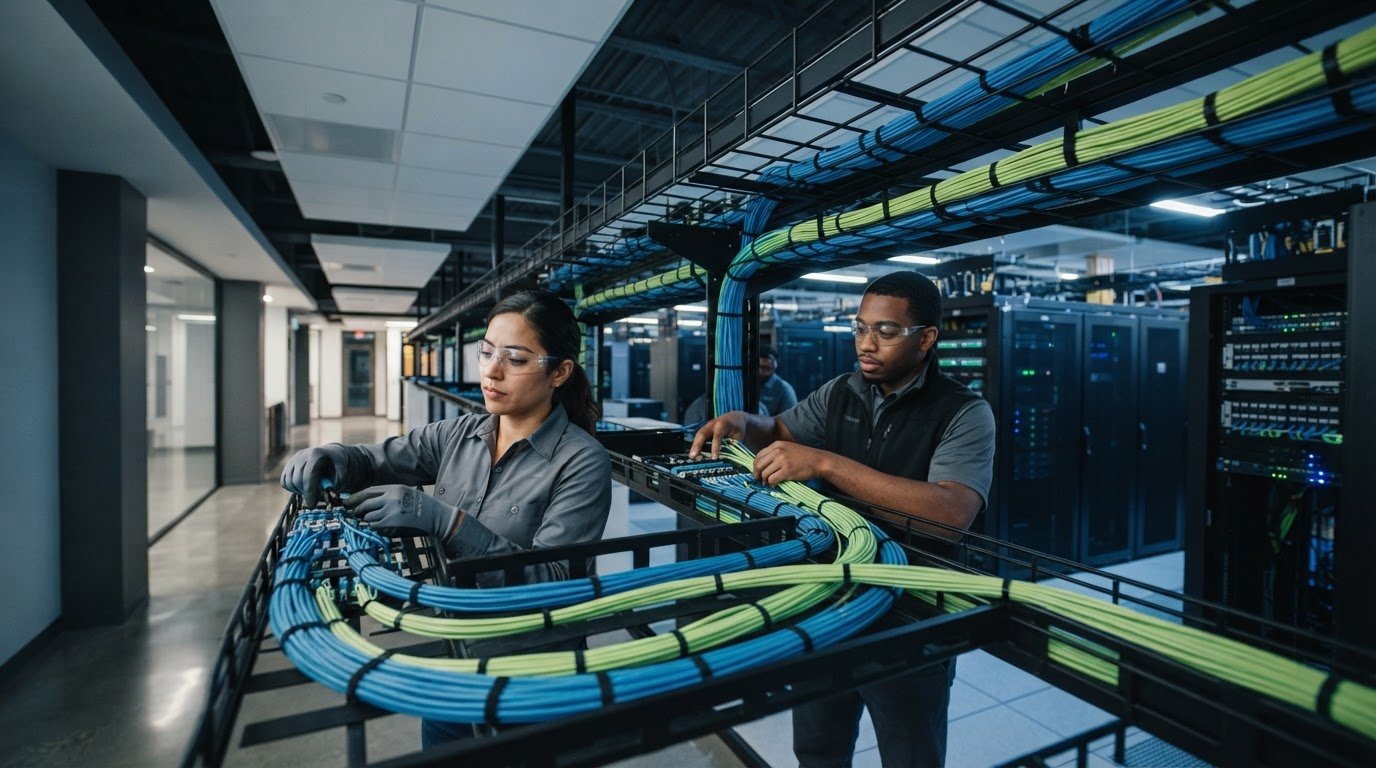
The process begins with custom site audits designed to identify specific liability vulnerabilities unique to your property. We don’t rely on guesswork. Our team performs expert installation of fiber and CAT6 cabling to guarantee zero-fail recording and high-bandwidth data transmission. By integrating surveillance with cloud-based access control for commercial buildings, we create a unified security narrative. This integration allows you to cross-reference video footage with entry logs, providing a comprehensive “chain of custody” for every person on your premises. This architectural precision is a fundamental part of how to reduce liability with security cameras in a commercial setting. As part of a comprehensive property modernization strategy, many of our clients also explore commercial solar and EV charger installation to transform their parking lots and energy infrastructure into monitored, future-proof assets that further reduce operational liability.
Long-Term Reliability and Support
Security is not a “set-it-and-forget-it” task. It requires methodical, thorough organization and ongoing maintenance to remain effective. Terapixels Systems provides continuous protection through Remote Monitoring and Management (RMM), which ensures your cameras are operational and your software is patched against the latest cybersecurity threats. We build scalable solutions that grow alongside your commercial property portfolio, maintaining the same high standards of technological reliability as your business expands. If you’re ready to transition from basic monitoring to a powerful liability shield, contact Terapixels for a comprehensive security audit focused on protecting your future.
Strengthening Your Business Resilience Through Intelligent Surveillance
Protecting your commercial interests in 2026 requires a shift from passive monitoring to a structured, defensible infrastructure. We’ve explored how high-resolution hardware, AI-driven analytics, and secure cloud storage work together to create an irrefutable record of safety. Understanding how to reduce liability with security cameras is fundamentally about maintaining the integrity of your data and ensuring your system adheres to evolving privacy mandates. By prioritizing professional installation and robust network management, you eliminate the technical gaps that often lead to dismissed evidence or legal penalties.
Terapixels Systems provides a steady hand in navigating these complexities through our comprehensive integration of security, cabling, and network management. Our expertise in AI-driven analytics and cloud-based surveillance ensures your property remains protected across all national facilities. Secure your business and reduce liability—contact Terapixels Systems for a custom surveillance audit today. We’re ready to help you build a more stable and secure future for your organization.
Frequently Asked Questions
Can security cameras really lower my business insurance premiums?
Yes, insurance carriers frequently offer risk mitigation credits or premium discounts to businesses that implement professionally installed surveillance systems. These systems reduce the insurer’s financial exposure by providing objective evidence that can quickly resolve claims and discourage fraudulent litigation. You should consult with your insurance representative to understand the specific credits available for your facility’s security infrastructure.
What is the legal requirement for security camera signage in a business?
While no single federal law dictates signage, several states now mandate that businesses post visible signs to inform the public they are being recorded. This practice helps meet the legal standard for implied consent and is a key step in how to reduce liability with security cameras. Proper disclosure ensures that your video evidence remains admissible during legal proceedings or insurance investigations.
How long should I store security camera footage for liability purposes?
A 30-day retention period is the widely accepted industry standard for most commercial properties, though high-risk environments may require 90 days or more. Your storage policy should ideally align with the statute of limitations for personal injury claims in your specific state. Maintaining a consistent retention schedule helps establish a reliable chain of custody for all recorded events on your property.
Are AI security cameras more effective for legal evidence than standard cameras?
AI cameras offer significant advantages in court by providing detailed metadata and digital watermarking that prove the integrity of the footage. These systems can also categorize events, making it easier for legal teams to find specific incidents without manually reviewing hours of video. This level of organization and searchability makes AI-driven evidence much more defensible than standard, unindexed recordings.
Can an employee sue me for having security cameras in the workplace?
Employees may have grounds for a lawsuit if cameras are placed in areas where there is a reasonable expectation of privacy, such as bathrooms or locker rooms. To protect your business, you should implement a written surveillance policy that clearly outlines the purpose and location of all cameras. Transparency with your staff helps maintain a professional environment and reduces the risk of privacy-related litigation.
What happens if my security cameras fail during an incident?
If a system fails during a critical event, it can be framed as a breach of your duty of care, potentially increasing your legal vulnerability. This risk highlights the importance of professional maintenance and Remote Monitoring and Management (RMM) services. Regular system health checks ensure that your cameras are operational when they are needed most to defend against a claim.
Do I need a special network for high-definition commercial security cameras?
High-definition 4K cameras require a robust infrastructure, such as CAT6 or fiber optic cabling, to handle the massive data loads they generate. Standard business Wi-Fi often lacks the bandwidth and security necessary for reliable, uncompressed video transmission. A dedicated network ensures that your footage remains clear and that your primary business operations are not impacted by surveillance traffic.
How does cloud-based surveillance improve liability protection over local DVRs?
Cloud-based systems provide superior liability protection because the footage is stored in a secure, off-site environment that is immune to local tampering or physical damage. This ensures that your evidence is always accessible, even if the on-site hardware is destroyed during an incident. This architecture is a cornerstone of how to reduce liability with security cameras by guaranteeing the long-term availability of your data.