CONTACT US
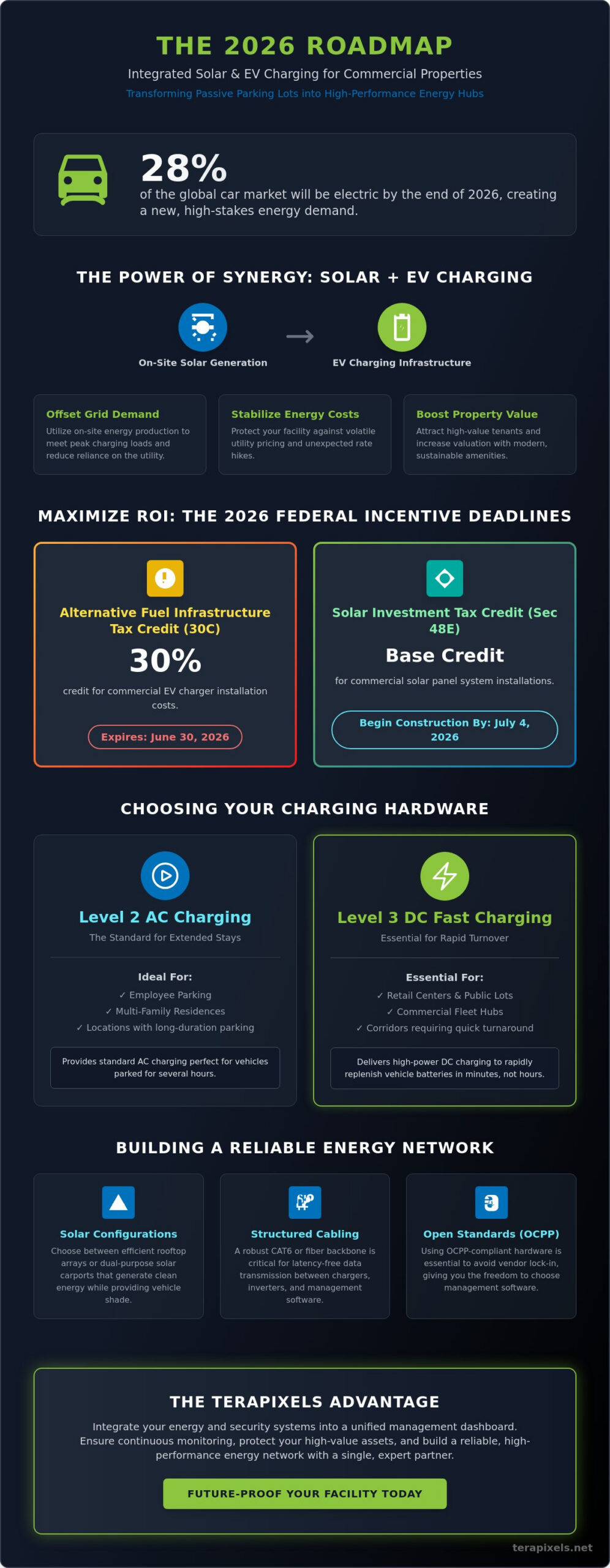
By the end of 2026, nearly 28% of the global car market will be electric, turning your parking lot from a passive expense into a high-stakes energy hub. You likely recognize that staying ahead of this shift is essential for tenant retention and property value, yet the upfront capital and technical complexity of a combined commercial solar and EV charger installation often feel overwhelming. It’s a common concern for facility managers who want to modernize without disrupting their current power stability or security protocols. We understand the pressure to balance innovation with fiscal responsibility.
We’re here to provide a clear, technical roadmap. This strategic guide details how to integrate sustainable energy and charging infrastructure to future-proof your commercial property while maximizing your long-term ROI. You’ll discover the latest 2026 federal tax incentives, updated NEC safety standards, and the methodical steps needed to build a reliable, monitored energy network that reduces costs and builds lasting value. From managing grid interconnection wait times to implementing the latest ISO 15118 communication standards, we’ll help you transform complex technology into a stable, high-performance business asset.
Key Takeaways
- Identify the strategic advantages of combining photovoltaic systems with EV infrastructure to offset grid demand and meet 2026 sustainability mandates.
- Evaluate the technical requirements for Level 2 and Level 3 charging stations to select the hardware that best aligns with your tenant or fleet needs.
- Maximize your project’s ROI by leveraging the 2026 Federal Investment Tax Credit for your commercial solar and EV charger installation before upcoming deadlines.
- Establish a reliable foundation for your energy network through comprehensive site assessments, utility capacity studies, and structural planning.
- Integrate your energy and security systems into a unified management dashboard to ensure continuous monitoring and protection of your high-value assets.
The Synergy of Commercial Solar and EV Charger Installation
The year 2026 marks a pivotal transition for commercial property owners as sustainability shifts from a corporate social responsibility goal to a core regulatory requirement. At its foundation, an integrated commercial solar and EV charger installation involves the strategic pairing of photovoltaic systems with Level 2 or Level 3 charging stations. This combination allows facilities to offset rising grid demand by utilizing on-site energy production. Energy Synergy is the optimization of on-site generation to meet peak charging loads. By aligning power production with vehicle consumption, businesses can stabilize their energy profiles and protect themselves against volatile utility pricing.
To better understand the physical implementation of these systems, watch this helpful step-by-step overview:
The urgency for 2026 is driven by specific federal deadlines. The Alternative Fuel Infrastructure Tax Credit (30C) provides a 30% credit for commercial installations but is set to expire on June 30, 2026. Additionally, the Section 48E solar investment tax credit requires projects to begin construction by July 4, 2026, to qualify for the full base credit. This creates a narrow window for stakeholders to secure maximum ROI while future-proofing their assets against evolving EV mandates, such as California’s Title 24 building code updates.
Economic Drivers for Integrated Energy Systems
Modern commercial properties are transitioning from traditional cost centers into revenue-generating assets. By offering public charging or premium tenant-only access, owners can create new cash flow streams that directly offset the initial system investment. This infrastructure also significantly boosts property valuation and LEED certification scores. Buildings that provide reliable, renewable-powered charging become magnets for high-value tenants and environmentally conscious employees who prioritize workplace sustainability.
Infrastructure Readiness and Scalability
Before proceeding with a commercial solar and EV charger installation, we conduct a thorough assessment of the existing electrical switchgear. Large-scale expansion requires more than just physical space; it demands a robust communication backbone. The role of low voltage structured cabling is critical here, as it facilitates the data exchange between solar inverters, charging ports, and the central management system. Ensuring your facility has the proper cabling architecture today prevents costly retrofits as your charging fleet grows.
Technical Framework: Hardware, Cabling, and Network Standards
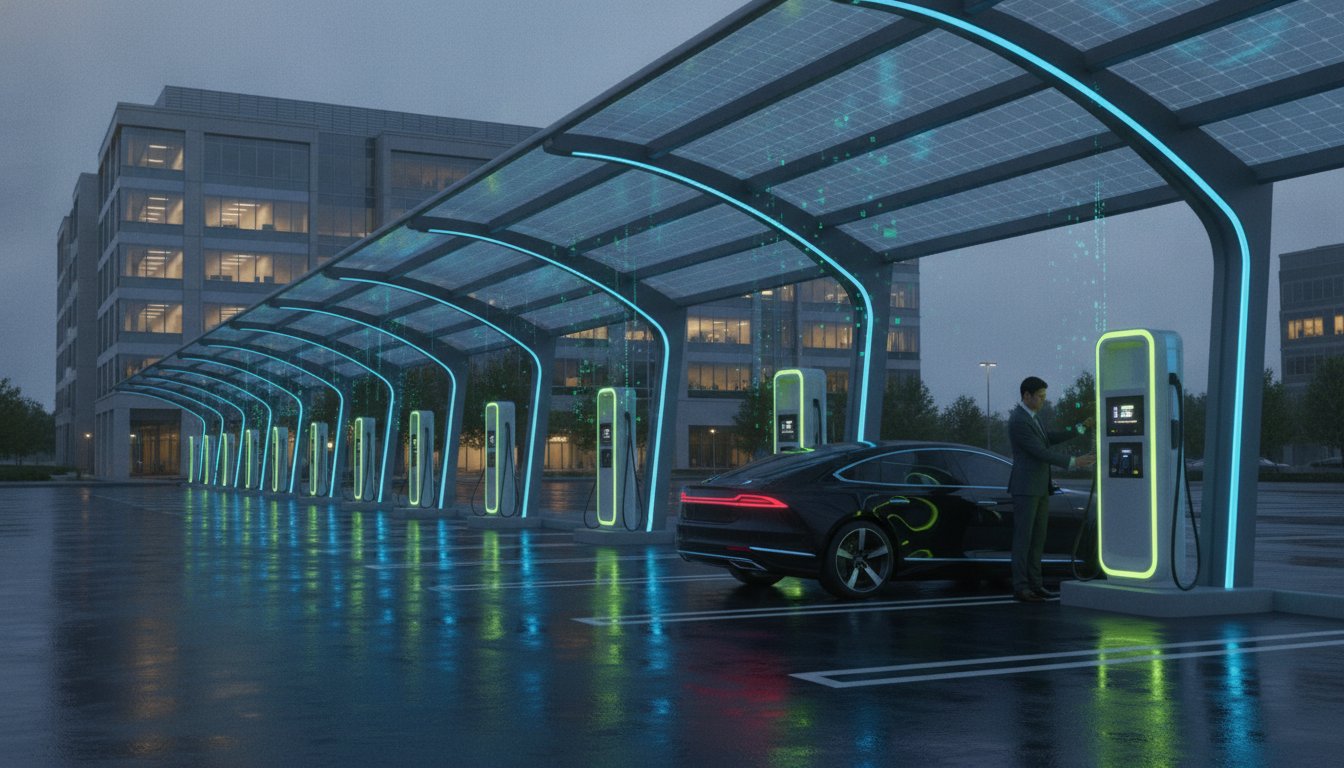
A successful commercial solar and EV charger installation requires more than just mounting panels and bolting down pedestals. You must first decide between Level 2 AC charging and Level 3 DC Fast Charging. Level 2 stations are the standard for employee parking where cars remain for several hours. In contrast, DC Fast Charging is intermediate for retail centers or fleet hubs requiring rapid turnover. To power these stations, we look at solar PV configurations like rooftop arrays or solar carports. Carports are particularly effective; they provide shade for vehicles while generating clean energy directly above the point of consumption. To ensure your infrastructure is built to the highest standards, you can explore Solar PV Design and Installation options with Eastern Electric to maximize your energy yield.
The hardware is only as reliable as the network supporting it. Many facilities overlook the necessity of high-speed data transmission. Professional CAT6 cabling installation commercial grade ensures your smart chargers can communicate with management software without latency. This connectivity is vital for maintaining Open Charge Point Protocol (OCPP) standards. By using OCPP-compliant hardware, you avoid vendor lock-in, giving you the flexibility to switch software providers as technology evolves. If you’re planning a site upgrade, consulting with a technical architect can ensure your cabling supports future growth.
The Data Layer: Why EV Chargers Need Robust Networking
Smart charging isn’t just about moving electricity; it’s about data. Integrated software allows for real-time load shedding and peak shaving, preventing your facility from exceeding its utility demand limits. We often connect these chargers to the central building management system (BMS) using fiber optics to ensure maximum bandwidth and interference protection. This setup allows you to prioritize charging for specific users or schedules based on solar production levels.
Solar Interconnection and Storage
Cloud cover can cause sudden drops in solar output, which is why battery energy storage systems (BESS) are becoming a standard component of 2026 installations. A BESS acts as a buffer, stabilizing the power flow to EV chargers during intermittent weather. These systems also offer grid-tied or off-grid capabilities. In the event of a utility outage, your stored energy can provide emergency power to critical facility systems, ensuring business continuity power solutions when the grid fails.
Implementation Strategy: Incentives, ROI, and Planning
Navigating a commercial solar and EV charger installation requires a firm grasp of the financial landscape for 2026. The Federal Investment Tax Credit (ITC) remains a cornerstone, offering a base 30% credit for projects that meet prevailing wage and apprenticeship requirements. For EV infrastructure specifically, the 30C tax credit provides up to $100,000 per project, though this expires on June 30, 2026. Securing these incentives requires precise timing and meticulous documentation. Soft costs like permitting and engineering can account for 30% of total project budget, so early planning is essential to avoid unforeseen expenses.
We begin every project with a comprehensive site assessment. This involves utility capacity studies to ensure the local grid can handle the increased load, alongside geotechnical reports for solar carport foundations. Calculating your ROI for a commercial solar and EV charger installation involves more than just looking at the utility bill. You must factor in energy savings, annual maintenance, and potential revenue from carbon credits or Low Carbon Fuel Standard (LCFS) programs. If you’re ready to map out your facility’s energy future, contact our infrastructure team for a custom site assessment today.
Maximizing Incentives and Rebates
The Importance of Planned Maintenance
Long-term reliability depends on a structured maintenance schedule. While solar and EV hardware is durable, annual thermal imaging of electrical connections and torque testing for mounting hardware are necessary to prevent downtime. For fleets that cannot afford a moment of power loss, a backup generator installation for business serves as a vital fail-safe when grid or solar capacity is compromised. Pairing this with a comprehensive strategy for business continuity power solutions ensures your integrated solar and EV infrastructure remains a stable asset rather than a liability. Regular system health checks ensure your infrastructure remains a stable asset rather than a liability.
The Terapixels Advantage: Integrated Energy and Security
Terapixels Systems approaches every project as a Reliable Architect. We don’t just see a commercial solar and EV charger installation as a hardware project; it’s a networked ecosystem. By integrating your energy assets into a remote monitoring management for business dashboard, you gain a single source of truth for all technical operations. This unified visibility ensures that power generation and consumption are always in sync with your facility’s security and operational needs.
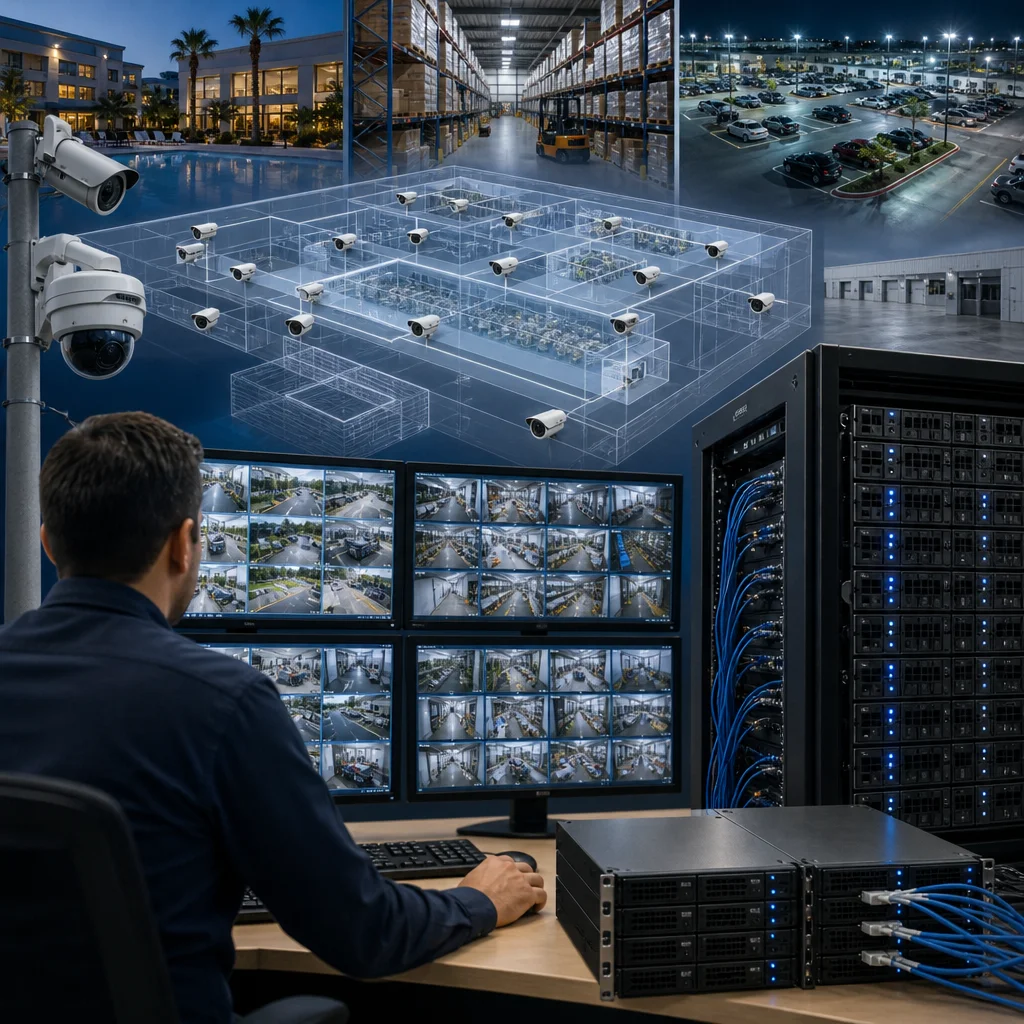
Protecting these high-value assets requires more than a fence. We deploy AI security camera system commercial solutions to monitor solar carports and charging stations in real-time. These systems use AI analytics to detect unusual behavior, preventing vandalism and mitigating liability claims. Beyond physical protection, we prioritize cybersecurity for your energy network. Every inverter and charger is an IoT device that needs protection against network intrusions to prevent unauthorized access or system manipulation. Our role is to ensure your infrastructure remains resilient against both digital and physical threats.
Physical and Digital Security Integration
We bridge the gap between energy management and access control. By using cloud-based systems, you can restrict EV charging to authorized employees or verified paying customers. A robust commercial access control system installation ensures that only authorized personnel can access charging stations and sensitive energy infrastructure, reducing liability and preventing unauthorized use. Our AI-driven analytics monitor solar carports 24/7, identifying potential safety hazards or security breaches before they escalate. This integrated approach ensures your investment is protected from digital vulnerabilities and physical damage alike.
Long-Term Partnership and RMM
Our partnership doesn’t end when the last panel is bolted down. Through continuous remote monitoring, we identify potential hardware failures or connectivity issues before they impact your fleet’s uptime. This proactive stance is essential for maintaining tenant trust and operational continuity. We also provide customized reporting for ESG (Environmental, Social, and Governance) compliance. This helps you document your carbon footprint reduction and green energy usage for stakeholders with precision and transparency.
Strategizing for a Resilient Commercial Energy Ecosystem
The transition to electrified commercial infrastructure is no longer a distant prospect; it’s a current business imperative. By integrating photovoltaic generation with intelligent charging stations, you protect your property from rising utility costs while meeting the growing demands of tenants and fleets. Success in 2026 depends on your ability to secure federal incentives before the mid-year deadlines and establishing a robust technical foundation. This includes both high-capacity electrical hardware and sophisticated data networking to support long-term scalability.
Terapixels Systems stands ready as your Reliable Architect to manage this complexity. We bring a unique combination of certified expertise in high-voltage energy systems and low-voltage data infrastructure, ensuring your commercial solar and EV charger installation is both efficient and secure. With our national deployment capabilities and advanced AI-driven monitoring, we provide the stability your facility requires for sustainable growth. It’s time to transform your parking and roof space into a high-performance, protected asset.
Request a Comprehensive Energy and Security Audit from Terapixels Systems to begin your transition today.
Frequently Asked Questions
How much space is required for a commercial solar carport with EV charging?
A standard carport structure requires approximately 160 to 180 square feet of overhead space per parking stall. For a typical commercial solar and EV charger installation, these structures are often designed to span two or more stalls to maximize the efficiency of the steel supports. This configuration provides ample surface area for photovoltaic panels while ensuring enough clearance for vehicles and the physical placement of charging pedestals between parking spaces.
Can I install EV chargers if my building has limited electrical capacity?
Yes, you can install charging infrastructure without an immediate utility service upgrade by utilizing intelligent load management. These smart systems monitor your building’s total electrical demand in real-time and automatically adjust charging speeds to stay within your existing capacity limits. Additionally, pairing the chargers with a battery energy storage system allows you to draw from stored solar power during peak times, reducing the strain on your main electrical switchgear.
What is the typical ROI period for a combined commercial solar and EV project?
Most properties achieve a full return on investment within 5 to 8 years, though this timeline depends heavily on local utility rates and the successful capture of incentives. A combined commercial solar and EV charger installation accelerates ROI by offsetting high demand charges and creating new revenue through paid charging sessions. The 30% federal tax credit and MACRS depreciation schedules significantly lower the net cost, making the project cash-flow positive sooner than standalone systems.
Do I need a separate network for my EV charging stations?
We recommend placing charging stations on a dedicated VLAN or a separate physical network to ensure cybersecurity and operational stability. This isolation prevents IoT vulnerabilities from impacting your primary business data and ensures that charger communication remains prioritized during high-traffic periods. Using professional CAT6 or fiber cabling provides the stable backbone necessary for the chargers to communicate with management software and remote monitoring dashboards.
Are there federal tax credits still available for commercial solar in 2026?
Significant federal incentives are available in 2026, though they have strict deadlines that require immediate action. The Section 48E Investment Tax Credit offers a base 30% credit for solar projects that begin construction by July 4, 2026. For charging infrastructure, the 30C tax credit provides a 30% credit up to $100,000 per project, but this specific incentive is currently set to expire on June 30, 2026, making early project filing a priority for facility owners.