
In 2023, 73% of small and mid-sized businesses experienced a data breach or cyberattack. For a small firm, business cyber threat protection helps reduce the risk of stolen information, disrupted operations, and costly recovery by strengthening the systems and habits employees rely on every day.
Cybersecurity can feel complex when resources are limited, but practical safeguards make it more manageable. This article explains why business cyber threat protection matters, how multifactor authentication adds a layer of defense, and which solutions can help secure your email, devices, networks, and data.
Key Takeaways
- Keep software current and maintain tested backups so your business is better prepared to recover from data loss or ransomware.
- Multifactor authentication adds a layer of defense by requiring more than a password, especially for accounts that access sensitive systems.
- Combine safeguards such as email security, access controls, firewalls, and employee training to address threats across your business.
- Terapixels Systems’ Cyber Security service can help businesses strengthen their protection, with Remote Monitoring Management as a related offering.
1. Why is cybersecurity important for small businesses?
Cybersecurity helps protect business data, systems, and daily operations from disruption. In 2023, 73% of small and mid-sized businesses experienced a data breach or cyberattack. Ransomware can encrypt files and block access until a ransom is paid. Phishing can trick employees into disclosing sensitive information or opening malicious links.
Managed security services provide ongoing support for security tasks, while in-house teams manage them internally. The right approach depends on your available expertise, systems, and monitoring needs.
U.S. requirements depend on your business, the data it handles, and its location. Healthcare providers, business associates, and covered entities that handle protected health information must comply with HIPAA, according to the U.S. Department of Health and Human Services.
Data breach notification requirements vary by state and may depend on the information affected and the circumstances. Follow the rules that apply to your location and the people whose data was exposed.
Cybersecurity costs in the United States depend on business size, systems, protection needs, and ongoing monitoring. A quote request defines the scope and establishes the cost.
Common threats include ransomware, phishing, and attacks that exploit software vulnerabilities or stolen login details. These threats can expose sensitive data or disrupt business operations.
Cyber insurance policies vary. Depending on the policy, coverage may address incident response, data recovery, business interruption, or claims after a breach. Review exclusions and limits carefully.
After an attack, isolate affected systems, preserve relevant evidence, and activate your incident response plan. Organizations often coordinate with legal support and cyber breach response specialists such as Trustpoint.One to determine what data was exposed, restore operations from clean backups, and fulfill applicable notification requirements.
Keep operating systems, browsers, and other software updated to address newly discovered vulnerabilities. CISA recommends regularly backing up important business data and testing partial and full restores. Automated backups help maintain recovery copies, but restore tests show whether files can actually be recovered. Set policies for backup access and monitor backup activity to help protect sensitive data.
2. Multifactor authentication
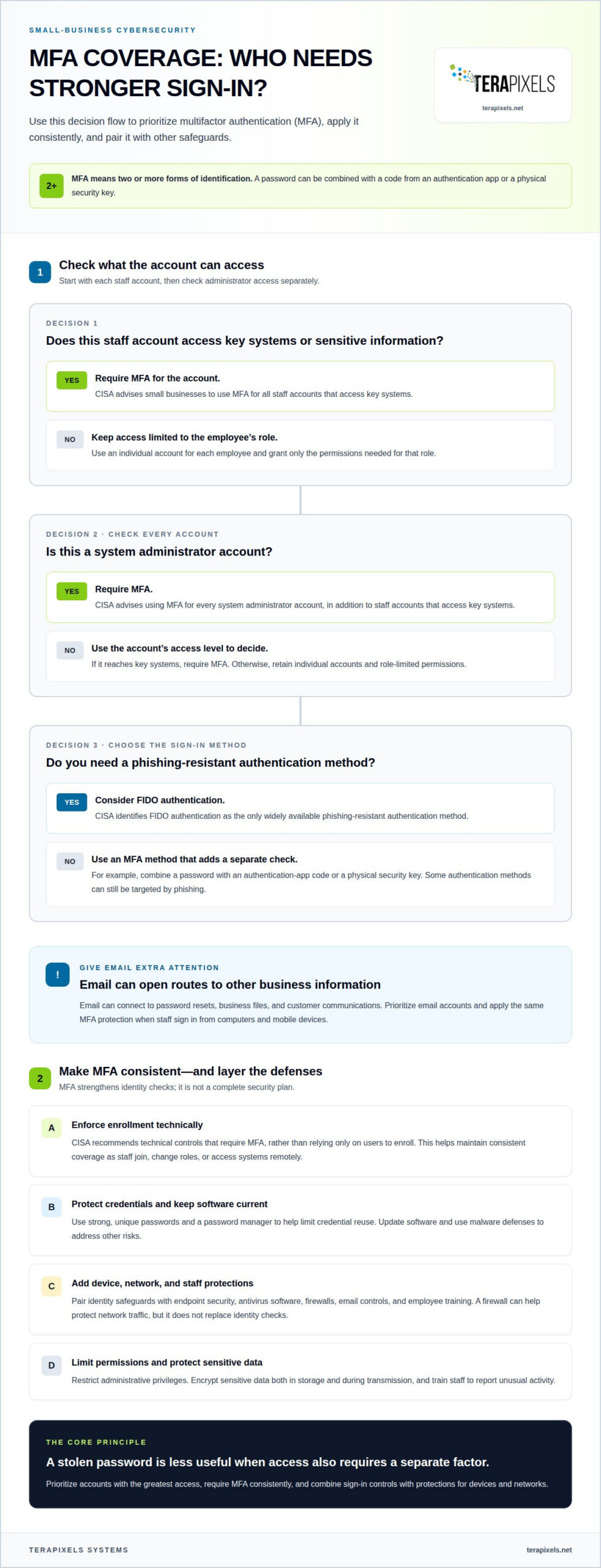
A password alone proves only that someone knows a credential. Multifactor authentication requires two or more forms of identification, adding a check before access is granted. For example, a sign-in might combine a password with a code from an authentication app or a physical security key. Because these are separate factors, a stolen password is less useful to an attacker.
Prioritize accounts that provide access to sensitive systems, especially email. CISA advises small businesses to use multifactor authentication for all staff accounts that access key systems and for every system administrator account. Email warrants particular attention because it can connect to password resets, business files, and customer communications. Apply the same protection when staff sign in from computers and mobile devices.
Enforcement matters. CISA recommends technical controls that require multifactor authentication, rather than relying only on users to enroll. This helps maintain consistent coverage as staff join, change roles, or access systems remotely. Strong, unique passwords and a password manager also help limit credential reuse, while software updates and malware defenses address other risks. A firewall can help protect network traffic, but it does not replace identity checks.
Some authentication methods can still be targeted by phishing. CISA identifies FIDO authentication as the only widely available phishing-resistant authentication method. For business cyber threat protection, consider which accounts hold the greatest access and where stronger sign-in controls can reduce exposure. A layered cybersecurity approach pairs identity safeguards with protections for devices and networks, rather than treating one control as a complete defense.
3. Cybersecurity solutions for small businesses
Build protection in layers instead of relying on a single tool. A firewall filters network traffic, while endpoint security and antivirus software help protect business computers. Email security controls can block suspicious messages and attachments before phishing links reach employees. Network segmentation separates systems, such as payment processing, from less secure activity.
Limit access as carefully as you choose software. Give each employee an individual account with only the permissions needed for their role. Restrict administrative privileges, and encrypt sensitive data both in storage and during transmission. Train staff to recognize suspicious links, install software updates, use multifactor authentication, and report unusual activity.
Assess cybersecurity tools by how well they address your organization’s risks and work together. Prioritize solutions that are practical to deploy and manage, scalable, and integrated across endpoint, identity, network, and browser activity. Check that controls cover real workflows, such as blocking suspicious email attachments and monitoring network traffic.
Prepare for incidents before ransomware or another attack disrupts operations. Write an incident response plan that assigns roles and sets out actions and communication procedures. CISA recommends reviewing the plan quarterly and after every incident or near miss. CISA recommends that small-business Security Program Managers host tabletop exercises every quarter. Regular vulnerability assessments and specialized penetration testing from firms like AppSecure Security can reveal weaknesses to address before attackers exploit them.
To reduce installation risks, CISA advises small businesses to remove administrator privileges from user laptops. The FCC’s small-business cybersecurity guidance advises requiring employees to change passwords every three months.
Your plan should set out actions before, during, and after a security incident so responsibilities remain clear.
Terapixels Systems: Cyber Security
Terapixels Systems provides Cyber Security for businesses seeking to strengthen protection across their operations. It can be a useful next step when your safeguards need to align with business systems, access, and infrastructure. The right approach depends on the data and operations you need to protect, the risks you face, and how your systems connect.
For broader technology environments, Remote Monitoring Management, Structural Cabling, and Cloud-Based Surveillance Systems can complement security infrastructure. Considering these elements together helps align operational needs with security planning, rather than treating each system as an isolated concern.
Contact Terapixels Systems to discuss your business’s Cyber Security needs and the systems you want to protect.
Make security part of your next business decision
As your business adds people, systems, or new ways of working, its security needs can change. Treat business cyber threat protection as an ongoing part of operational planning, not a one-time technology decision. A new application, employee role, or connection between systems can affect how information is accessed and protected.
Choose a next step that fits your current priorities. Identify a system that needs closer attention, clarify who manages security decisions, or plan how safeguards should adapt as operations grow. A focused conversation can connect these priorities with a practical direction for your business.
Steady, considered improvements help your business move forward with greater confidence.
Frequently Asked Questions
Why is cybersecurity important for small businesses?
Cybersecurity helps small businesses protect operations, customer relationships, and sensitive records from disruption or misuse. For example, if an employee’s email account is compromised, an attacker could impersonate the business in conversations with customers or suppliers. Clear access rules and a documented response process help reduce confusion, protect trust, and support an orderly recovery.
What Is Cyberthreat Protection?
Cyber threat protection combines practices and technical controls to prevent, detect, and respond to digital attacks. It covers how accounts are accessed, how business devices and networks are secured, and how suspicious activity is handled. The aim is to reduce exposure and help the organization continue operating if an incident affects its systems.
What is business cyber threat protection and what does it include?
Business cyber threat protection applies cybersecurity measures to a company’s systems, information, and daily work. A complete program also assigns responsibility, identifies critical data and systems, and addresses access by employees and outside vendors. For example, review which suppliers have system access and remove permissions they no longer need.
What cybersecurity protections should small businesses implement first?
Start by identifying the accounts and systems that would cause the greatest disruption if compromised, such as business email, payroll, or customer records. Remove unused accounts, limit administrator access to those who need it, and review permissions when staff roles change. This gives you a clearer baseline for deciding which safeguards to implement next.