CONTACT US
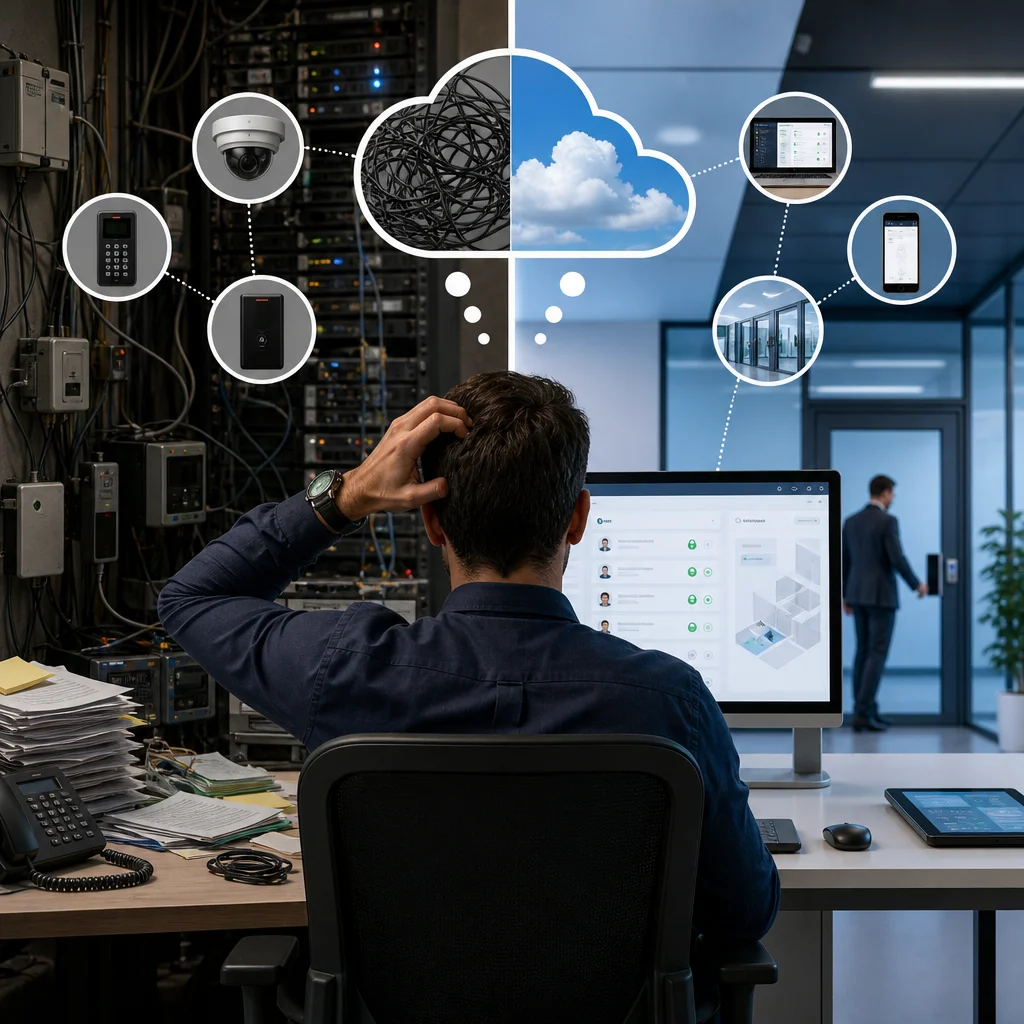
With the average cost of a U.S. data breach reaching $10.22 million in 2026, can your business afford to treat protection as just another line-item expense? For many leadership teams, the business case for upgrading security system technology often gets buried under concerns about capital expenditure or the “good enough” status of legacy hardware. You’ve likely felt the frustration of rising insurance premiums and the constant fear of liability gaps that your current multi-site monitoring simply cannot bridge.
We understand that a truly effective upgrade must offer more than just clearer footage; it needs to provide a predictable return on investment that satisfies the board. This guide will show you how to transform your infrastructure from a cost center into a high-ROI strategic asset that protects your bottom line. We will explore a clear ROI framework, the role of AI analytics in reducing operational risk, and how scalable, cloud-based systems provide a stable foundation for the next ten years of your business growth.
Key Takeaways
- Identify the “Cost of Inaction” by quantifying the hidden expenses of maintaining legacy hardware and the immediate savings gained from reduced false alarms.
- Leverage AI-driven surveillance and Remote Monitoring Management (RMM) to gain actionable business intelligence while ensuring maximum uptime for your security infrastructure.
- Build a compelling business case for upgrading security system assets by aligning your technical requirements with broader corporate goals like sustainability and digital transformation.
- Execute a successful transition by starting with a comprehensive site audit to pinpoint specific vulnerabilities before presenting a scalable, long-term roadmap to stakeholders.
Building the Financial Case: ROI vs. the Cost of Inaction
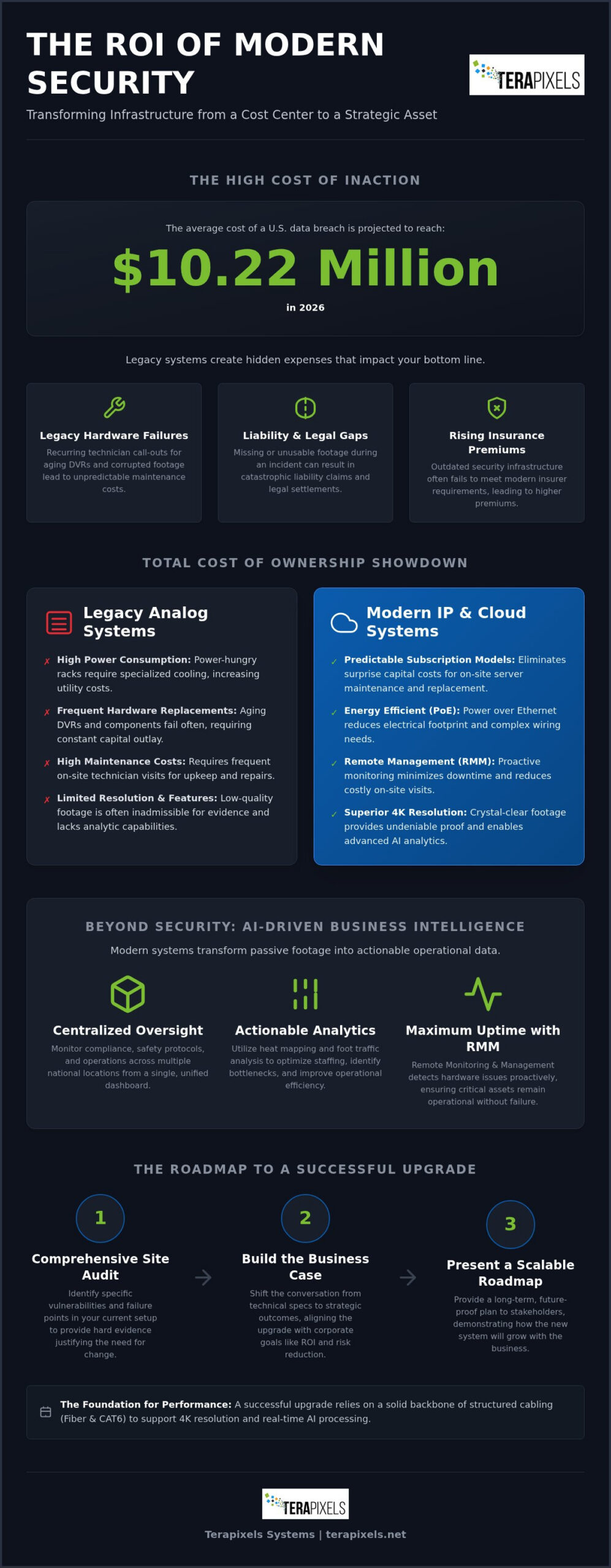
When leadership evaluates new capital investments, security often falls into the category of a necessary burden. However, the business case for upgrading security system technology in 2026 rests on understanding the “Cost of Inaction” (COI). This metric quantifies the hidden expenses of maintaining failing legacy hardware, such as the recurring cost of technician call-outs for aging DVRs or the catastrophic price of a liability claim where footage was missing or corrupted. Total Cost of Ownership is the sum of acquisition, maintenance, and potential failure costs.
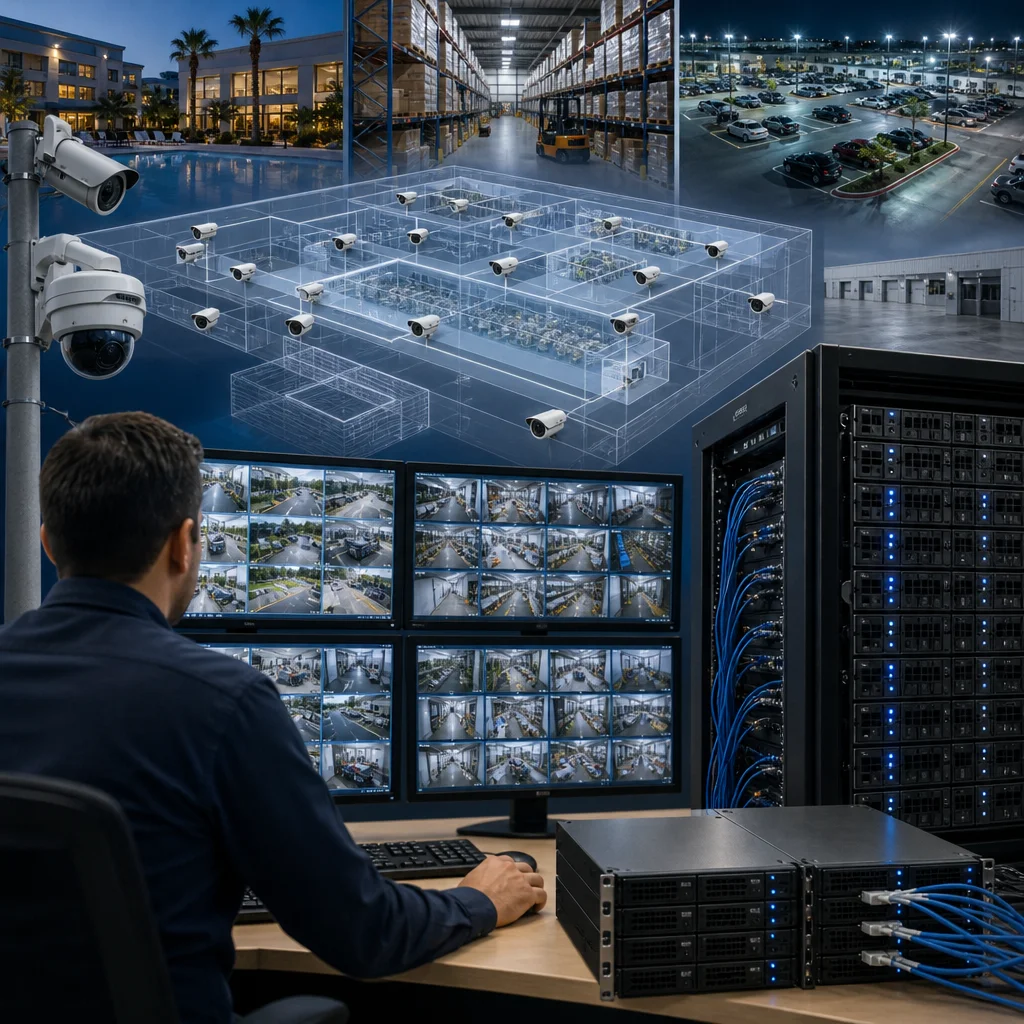
Direct ROI becomes clear when you analyze operational overhead. Modern systems significantly reduce false alarms through AI-driven filtering, which prevents the expensive fees local municipalities often charge for police dispatch to non-events. Additionally, by utilizing remote monitoring management, companies can often decrease on-site security guard hours, replacing expensive manual patrols with high-precision digital oversight that doesn’t sleep or miss details. For those managing construction or remote sites, Jobcam offers solar-powered surveillance towers that provide this level of oversight without requiring on-site power or connectivity. Indirectly, these systems protect the bottom line by preventing internal shrinkage and vandalism, which are often overlooked until they impact quarterly margins.
Analyzing Total Cost of Ownership (TCO)
Traditional analog systems might seem cheaper upfront, but their long-term TCO is often deceptively high. Legacy racks are power-hungry and require specialized cooling and frequent hardware replacements. In contrast, cloud surveillance operates on predictable subscription models that eliminate the need for on-site server maintenance. Modern IP-based systems are also designed for energy efficiency, utilizing Power over Ethernet (PoE) to reduce the overall electrical footprint of your physical security measures while providing superior 4K resolution.
Quantifying Liability and Insurance Savings
Insurance providers in 2026 are increasingly rewarding businesses that implement AI-driven video verification. By providing undeniable proof of events, you can often negotiate lower premiums and avoid the massive legal settlements associated with slip-and-fall claims or workplace disputes. Understanding how to reduce liability with security cameras is a critical component of any modern risk management strategy; additionally, those with international operations can explore Security and Risk Management Services to navigate complex global environments. A proactive upgrade ensures that your business case for upgrading security system assets is backed by measurable reductions in legal and insurance-related exposure.
To ensure your organization is fully protected, FaultLine Cyber & Security Ltd provides expert exposure assessments that reveal hidden cyber, physical, and operational risks that traditional security audits might miss.
Strategic Advantages of AI-Driven Surveillance and RMM
Modernizing your infrastructure does more than just secure the perimeter. It provides a level of operational visibility that was previously impossible. When you deploy AI security camera system commercial installations, you’re investing in a sophisticated data collection network. For organizations managing multiple national locations, this means centralized oversight. You can monitor compliance and safety protocols from a single dashboard, ensuring consistency across every site. AI analytics transform passive footage into actionable operational data. This shift is a core component of the business case for upgrading security system assets in 2026.
AI Analytics and Operational Efficiency
Beyond security, AI analytics offer tools like heat mapping and foot traffic analysis. These insights allow facility managers to see where bottlenecks occur and adjust staff allocation accordingly. Reliability is equally important. By integrating rmm, your team can detect hardware issues or connectivity drops before they lead to a total system failure. This proactive stance ensures that your critical assets remain operational without requiring constant manual checks.
Future-Proofing with Structured Cabling
None of these high-tech features work without a solid foundation. Understanding what is structured cabling is vital because it serves as the nervous system for your entire facility. High-speed fiber and CAT6 cabling provide the necessary bandwidth to support 4K resolution and real-time AI processing. Without this backbone, even the best cameras will fail to perform. If you’re ready to build a more resilient infrastructure, our team at Terapixels Systems can help you design a system that grows with your business.
Presenting the Upgrade Plan to Stakeholders
Securing executive approval for a major infrastructure project requires shifting the conversation from technical specifications to strategic business outcomes. Your first step should always be a comprehensive site audit. This process identifies specific vulnerabilities and failure points in your current setup, providing the hard evidence needed to justify a change. Once you’ve documented these gaps, align the proposal with broader corporate initiatives. For example, modern systems are significantly more energy-efficient, which supports ESG (sustainability) goals, while AI-driven data collection fits perfectly into a company’s digital transformation roadmap. Additionally, incorporating physical access solutions like speed gates and barriers from Links Integrated Systems can enhance security while improving the flow of authorized personnel through your facility.
A successful pitch also addresses the practicalities of the transition. Present a phased implementation plan that schedules work during off-peak hours to minimize operational disruption. This approach demonstrates that you’ve considered the daily needs of the business alongside long-term security. By selecting a partner who manages everything from structural cabling to cloud integration and digital visitor management through MyGatePass, you strengthen the business case for upgrading security system assets. This single-source approach ensures that your new infrastructure is cohesive, scalable, and designed to last for a decade or more.
Aligning Security with Business Continuity
True resilience comes from an integrated approach where access control, surveillance, and power management work in unison. It’s not enough to have smart cameras if a local grid failure takes them offline. This is why many organizations prioritize backup generator installation for business to ensure that security measures remain active during a power outage. A steady power supply protects your hardware investment and maintains the integrity of your data logs during critical moments.
Selecting a Comprehensive Technology Partner
Choosing a single-source provider for your cabling, cybersecurity, and physical security needs reduces vendor friction and simplifies long-term maintenance. At Terapixels Systems, we act as a reliable architect, managing the complex background systems so you can focus on your core business objectives. We value a partnership-driven mindset, offering national reach and localized expertise to ensure your security infrastructure remains a stable, high-ROI asset for years to come.
Securing Your Organization’s Future
Transitioning your security infrastructure from a reactive expense to a proactive asset is no longer just a technical choice; it’s a financial necessity. By focusing on the total cost of ownership and the intelligence provided by AI-driven analytics for proactive threat detection, you protect your organization against both physical threats and escalating liability costs. A resilient system requires a reliable architect to manage an integrated approach covering cabling, power, and security across all your multi-site commercial properties. For leaders looking to extend this trust layer into their financial engagements, check out Tyrian Trade for verified participation in modern markets.
Strengthening the business case for upgrading security system technology ensures your organization remains stable and scalable for the next decade. Our national coverage and end-to-end expertise allow you to focus on your primary objectives while we manage the complex background systems. We are committed to a partnership that values precision and long-term planning over quick fixes. Together, we can build a foundation of comprehensive protection that evolves with your business needs.
Frequently Asked Questions
What is the typical ROI period for a commercial security system upgrade?
Most organizations realize a full return on investment within 18 to 36 months. This timeline is driven by immediate reductions in insurance premiums and the elimination of expensive municipal fines for false alarms. When you develop the business case for upgrading security system hardware, you must also factor in the significant labor savings gained from reducing on-site security guard hours through automated, high-precision monitoring.
How does AI-driven surveillance specifically reduce business liability?
AI-driven surveillance reduces liability by providing definitive, high-resolution video verification for every incident. These systems use behavioral analytics to distinguish between actual threats and environmental triggers, which minimizes the risk of false accusations. In legal situations, having clear 4K footage of workplace events or slip-and-fall claims provides the objective evidence needed to protect your organization from fraudulent litigation and costly settlements.
Can we upgrade our security system without replacing all our existing cabling?
You can often perform a phased upgrade that utilizes existing wiring through the use of specialized converters or hybrid system architectures. However, for a truly robust business case for upgrading security system infrastructure, we often recommend transitioning to CAT6 or fiber cabling. These high-bandwidth pathways are necessary to support the advanced AI analytics and 4K resolution required for modern commercial protection and comprehensive site monitoring.
What happens to our security system during a power outage?
Your security system remains fully functional during a power outage if it’s integrated with a dedicated backup power solution. We provide comprehensive generator installation and maintenance to ensure that your cameras, access control, and recording servers stay active when the local grid fails. This continuity is essential for maintaining a secure perimeter and protecting your data integrity during environmental emergencies or infrastructure failures.
How does cloud-based access control improve employee productivity?
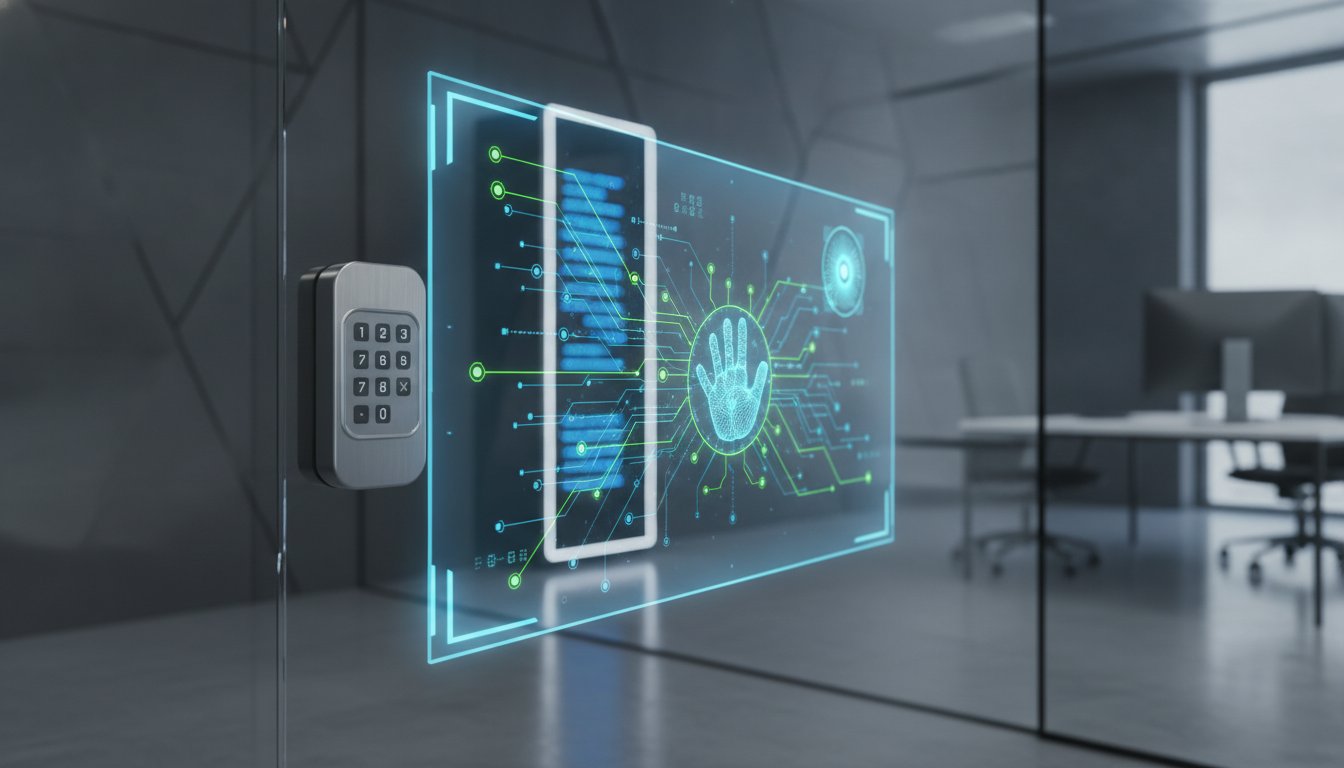
Cloud-based access control improves productivity by streamlining how staff and contractors move through your facility. Administrators can manage credentials remotely, which removes the need for physical key distribution or on-site IT intervention for simple lockouts. By integrating with attendance software and reducing friction at entry points, these systems allow your team to focus on their core tasks without unnecessary delays or security bottlenecks. For organizations seeking advanced hardware for their infrastructure, First Emirates Computers provides specialized biometric access control solutions that integrate with these modern management platforms.