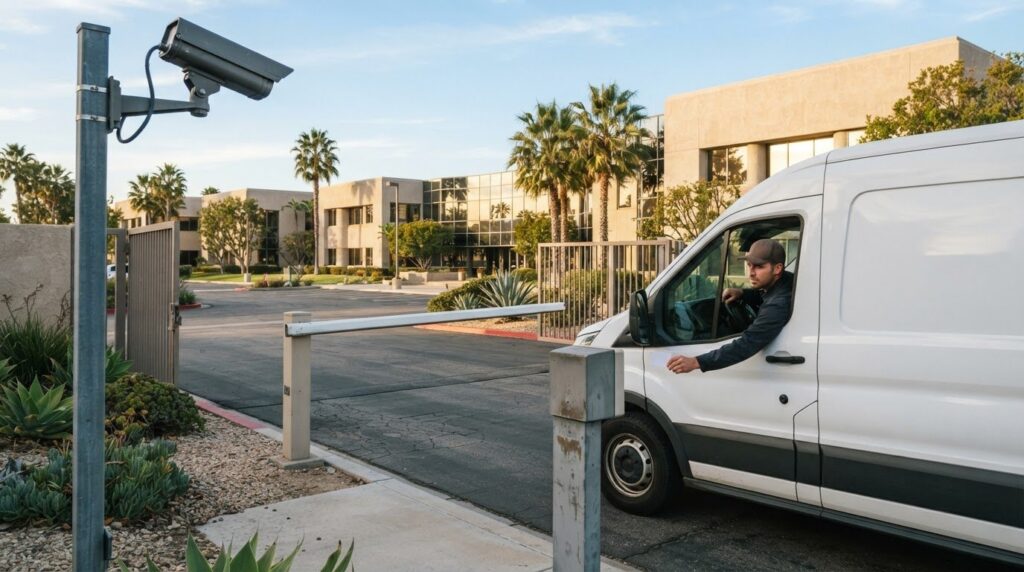
Remote property monitoring is most useful when surveillance, access control, and monitoring work together in one coordinated system. A professional integrator can connect cloud-based cameras and access control so authorized users can oversee security activity remotely. The system’s design should reflect the property, the people who use it, and how security needs to be managed.
Remote access can make security oversight more convenient, but separate systems may leave information and operations disconnected. This article explains how integrated, cloud-based security can bring surveillance and entry management together, what professional integration involves, and which project factors shape a suitable setup. It also covers how remote monitoring management and supporting infrastructure can contribute to a practical security plan for a commercial property.
Key Takeaways
- Learn what remote monitoring can help you oversee and how to define the coverage your property needs.
- See how access control can organize entry permissions and support clearer oversight of who can enter.
- Understand how cloud-based surveillance and connected security components can work together as an integrated system.
- Identify the project considerations that shape a coordinated security setup, from property needs to supporting infrastructure.
24-Hour monitoring
Remote monitoring connects video surveillance and intrusion signals with a defined response process. For a business, coverage depends on which devices are monitored, how events are escalated, and whether staff can see system health.
Professional Monitoring and Technical Support
A round-the-clock monitoring arrangement should specify which events reach operators, how incidents are escalated, and who receives notifications. Technical support is a separate function that may cover connectivity issues, camera outages, or access to monitoring tools. Review service terms for operating hours, support channels, escalation contacts, and whether system health alerts are included.
Live Security Technology Integration
Integrated surveillance can bring camera feeds, intrusion events, and access activity into a shared monitoring workflow. For example, pairing a door event with video can give an operator more context than either signal alone. Proactive video monitoring uses defined rules to identify events for review. Clarify what triggers attention and how authorized staff receive alerts.
Mobile surveillance trailers can provide temporary camera coverage at construction sites or changing work areas. Their effectiveness depends on camera placement, communications, power, and alert handling. No trailer setup replaces a documented response process.
When choosing an integrator, look for relevant credentials, experience with comparable commercial projects, and detailed customer reviews. Before hiring, clarify the project scope, service terms, and responsibility for testing. California licensing and permit requirements depend on the installation work and jurisdiction.
Commercial integrators may install cameras, access control, alarms, and monitoring as separate or integrated components. Common risks include incompatible equipment, connectivity gaps, unclear warranty coverage, and ongoing maintenance needs. The specific risks depend on system design and service terms.
Access control
Access control determines who can enter specific areas and how entry is managed. A commercial property might allow staff into a main entrance while restricting access to a records room. Matching permissions to work roles helps manage movement without treating every doorway alike.
Electronic locks and badge readers provide practical ways to apply those permissions. An integrator plans their placement, connects them to the access control system, and configures access rules around building operations. A badge reader at a staff entrance, for example, can serve a different purpose from controlled access to a storage area. Door hardware, network connectivity, and site layout all shape the design.
Video surveillance adds visual context to remote camera access. When cameras cover an entrance with an access-controlled door, authorized personnel can review video alongside entry activity. This can help clarify an event, such as an unexpected arrival or an alarm near a secured doorway. Camera placement and viewing access should reflect operational needs and privacy considerations.
Integration also depends on reliable communication across the network. A professional design considers how access control, alarms, cameras, and surveillance systems exchange relevant events. At a distribution facility, for instance, controlled entry at a loading area can be paired with nearby camera coverage. This creates a more coordinated view than managing disconnected tools.
For a project that combines entry management with remote video access, cloud-based access control can be part of an integrated security design.
Integrated and cloud-based security systems
A systems integrator connects component systems and ensures they work together. For a commercial property, that can mean coordinating cameras, access control, and alarms. The goal is a connected security solution, not separate tools that leave staff switching between unrelated interfaces. As an experienced security system integrator, Terapixels Systems can plan how devices, network connections, and software support the intended workflow for clients nationwide, including properties throughout Southern California.
Cloud-based systems make approved security information available through remote software access. For example, an authorized property manager can review camera information while away from the building. The setup depends on reliable connectivity, carefully assigned user permissions, and clear account-management procedures. These decisions affect how staff use surveillance systems in daily operations.
Physical security and cybersecurity also intersect. Cameras, access controllers, and other network-connected devices require careful management of accounts and connections. Terapixels Systems can plan device access and network protection as related parts of a commercial system, helping businesses nationwide coordinate physical entry and digital access.
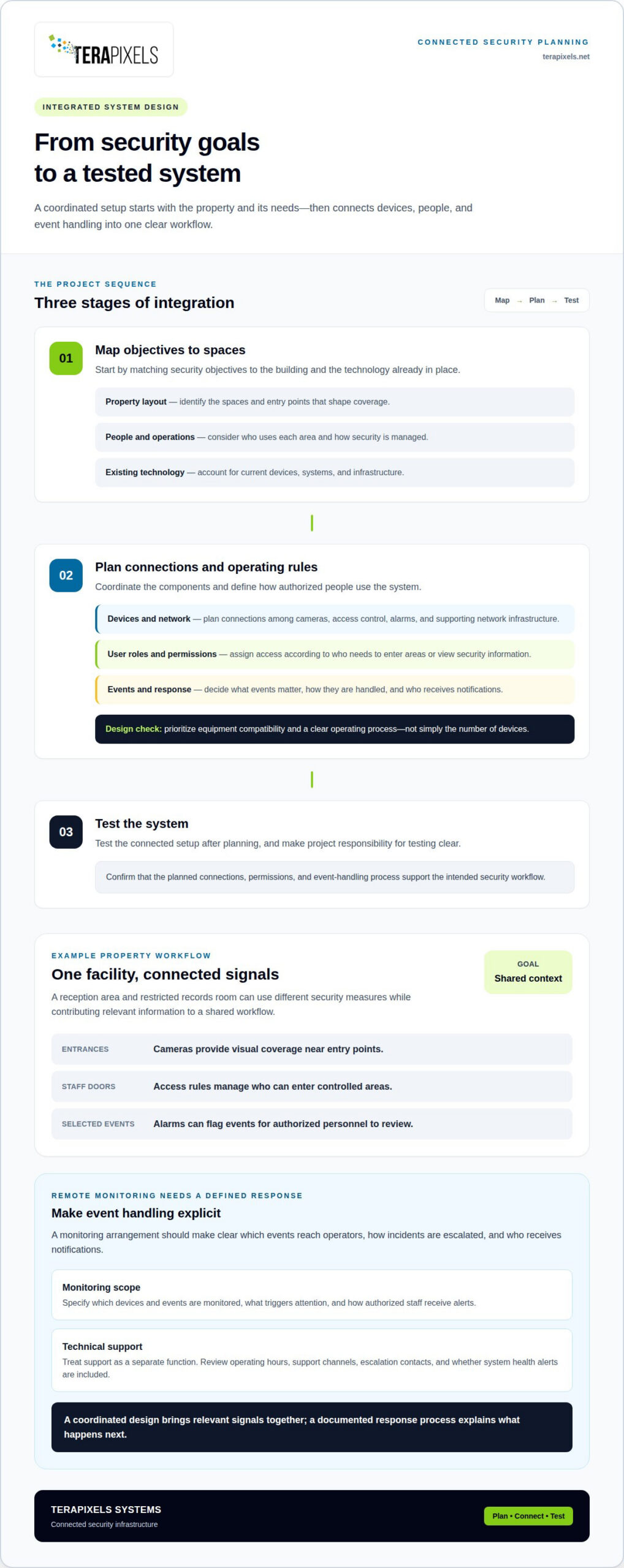
A commercial facility with a reception area and restricted records room, for example, might use cameras near entrances, access rules for staff doors, and alarms for selected events. Integration can bring relevant information into a shared workflow, helping authorized personnel understand what happened. Equipment and software choices depend on building layout, operations, and existing infrastructure.
A professional integration project starts by mapping security objectives to physical spaces and existing technology. The integrator then plans connections, user roles, and event handling, followed by system testing. Prioritize compatibility and a clear operating process, not simply the number of devices. That supports a cohesive design as security needs evolve.
Terapixels Systems
Terapixels Systems helps businesses plan connected security infrastructure around their properties and monitoring needs. Its services include cloud-based surveillance, remote monitoring management, cybersecurity, and structural cabling, which can work together in a coordinated system. This approach is useful when separate devices or networks need to support one practical security workflow.
A project may require surveillance coverage alongside dependable cabling and safeguards for network-connected equipment. The right configuration depends on the site, existing infrastructure, and how authorized staff need to oversee security activity. A coordinated design can align these elements without treating one technology as the entire solution.
If you’re planning an integrated security system for a commercial property, contact Terapixels Systems to discuss your project.
Plan the Next Step for Your Property
Start by clarifying what effective security oversight should look like for your property. Identify the areas that need coverage, who needs access, and which operational challenges a coordinated system should address. These priorities give the project team a practical basis for planning around the building and its existing infrastructure.
A security system integrator in Southern California can use those priorities to develop a design that fits your operations, rather than starting with equipment selection. Discussing how staff manage security information and respond to events helps define a useful integration plan. The result should support the way your property operates today and provide a thoughtful foundation for future changes.
A clear starting point makes it easier to build a connected, manageable security environment.
Frequently Asked Questions
Can I monitor my property remotely?
Yes, cloud-based surveillance and remote monitoring can support remote oversight of a commercial property. An authorized manager, for example, may review available camera information while away from the site. The system design determines which devices and users are included. Define who needs access and what information they need for their role, then align those permissions with the monitoring setup.
Do you provide outdoor security solutions?
Commercial video surveillance can be included in a security plan for exterior areas such as entrances or parking spaces. Camera selection and placement should reflect the site layout and the views staff need. A loading entrance, for example, may need different coverage from a building lobby. The project design determines suitable equipment and coverage for each area.
What does a security system integrator do?
A security system integrator combines components such as cameras, access control, and alarms into a system designed to work together. For a commercial facility, this may involve coordinating device connections, system software, and user access. The integrator also considers how staff will use the system and how its components support the property’s security objectives, rather than treating each device as a separate installation.
Which security integrators are best for commercial versus residential projects?
The right integrator has experience and services suited to the property type and project scope. For a commercial project, consider how the design supports facility operations, multiple users, and connected security technology. Terapixels Systems focuses on commercial technology and security infrastructure. Residential projects have different requirements, so match the provider’s stated scope to the property rather than assuming commercial solutions fit every setting.
What questions should I ask before hiring a security system integrator?
Ask how the proposed design will meet your operational goals, connect with existing equipment, and protect network-connected devices. Clarify who handles system configuration, testing, documentation, and ongoing support. If a site has multiple entrances, for example, ask how user permissions and camera coverage will be coordinated. Discussing these details helps establish the project scope and how the finished system will be managed.