CONTACT US
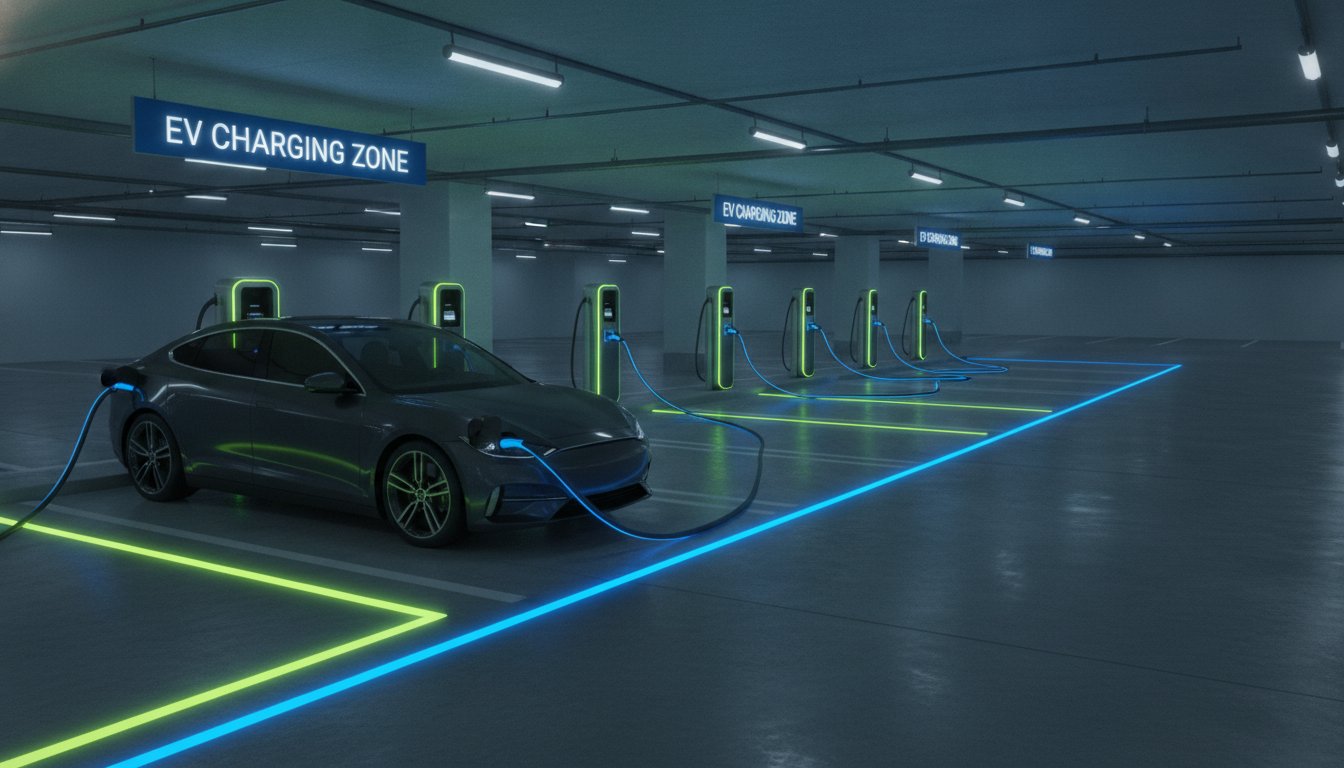
Did you know that nearly 90% of electric vehicle drivers now rely on charging their vehicles either at home or at their place of employment? By 2026, providing robust EV charging infrastructure for commercial properties has shifted from a forward-thinking amenity to a core requirement for tenant retention and property value. You likely understand the necessity of this transition, but the technical execution often brings more questions than answers. It’s natural to feel concerned about electrical capacity limits or the risk of investing in hardware that might soon be obsolete.
This strategic guide offers a clear path through the technical noise. You’ll learn how to implement scalable, integrated solutions that protect your investment and simplify the management of power and cabling. We’ll examine high-power 800V+ architecture, leverage the 2026 federal 30C tax credit, and show you how to turn your parking assets into a reliable revenue stream.
Key Takeaways
- Understand why EV charging has evolved into a critical fourth utility and how to position your property to meet the high market penetration demands of 2026.
- Use “Dwell Time” as your primary metric to select the most effective hardware, balancing Level 2 and DC Fast Charging for your specific tenant profile.
- Discover how to scale EV charging infrastructure for commercial properties through a phased rollout that integrates with solar and backup generator systems.
- Learn why uptime is the most vital KPI for your network and how Remote Monitoring Management (RMM) can detect faults before they impact your users.
Table of Contents
The Shift to Essential Utility: EV Charging in 2026
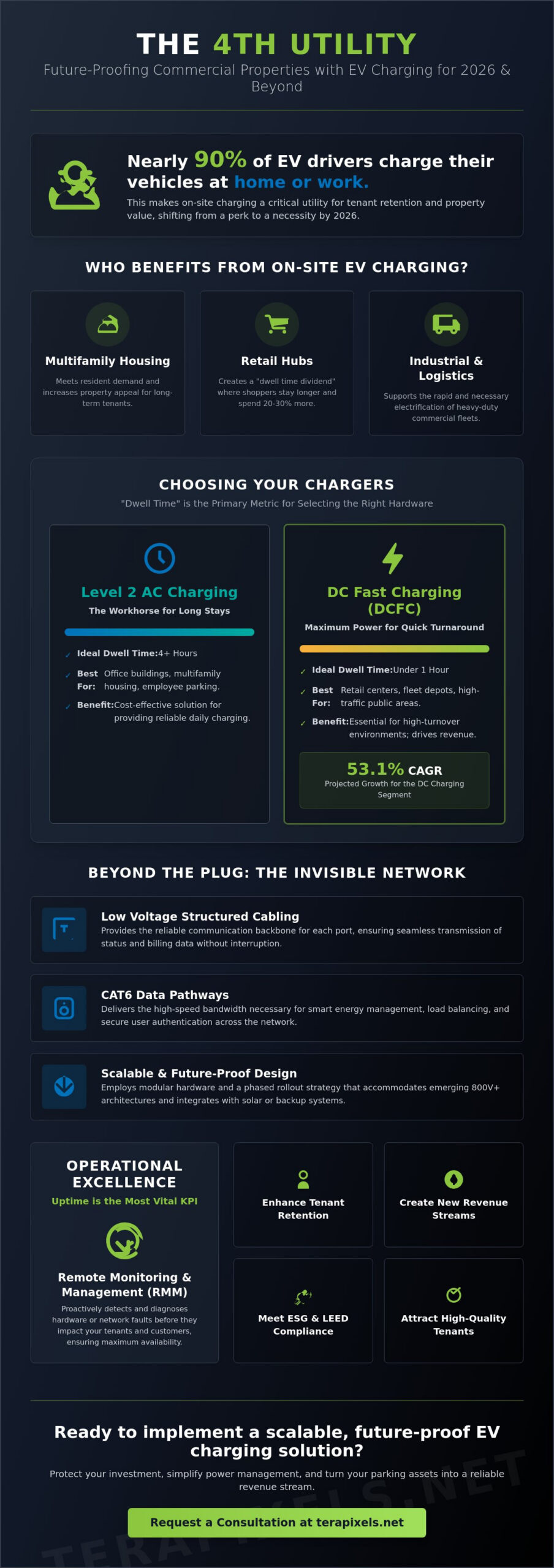
For decades, commercial real estate owners managed three primary utilities: water, gas, and electricity. As we move through 2026, a fourth utility has firmly established itself. The widespread adoption of electric vehicles has surpassed the critical 5% market penetration mark. Industry analysts identify this percentage as the tipping point where technology moves from early adopters into the early majority. This shift means that EV charging infrastructure for commercial properties is no longer a luxury feature; it’s a foundational requirement for any competitive asset.
The primary beneficiaries of this transition include multifamily housing, retail hubs, and industrial logistics centers. In the retail sector, chargers create a dwell time dividend. Drivers stay longer and spend more money while their vehicles are connected. For logistics centers, the infrastructure supports the rapid electrification of heavy-duty fleets. Understanding the foundational standards of EV charging station technology is the first step in building a resilient system that serves these diverse needs.
To gain a legal and practical perspective on why this investment is becoming mandatory for many owners, watch this helpful analysis:
Meeting Tenant and Employee Expectations
In Class A office spaces, the presence of high-quality charging ports is a significant factor in tenant retention. If an employee can’t reliably charge their vehicle during the workday, they’re likely to favor a competitor’s building that offers this utility. It’s a quiet but powerful driver for return-to-office initiatives. Providing this service demonstrates that the property owner is a partner in the tenant’s daily operational success rather than just a landlord.
Environmental Leadership and Compliance
Aligning your EV charging infrastructure for commercial properties with corporate sustainability goals is now a matter of compliance and value. Modern reporting frameworks like GRESB and LEED certification now heavily weight the presence of operational charging points. By integrating these systems, you’re not just providing a service; you’re actively contributing to the carbon footprint reduction targets that major corporate tenants require for their own ESG reporting. This alignment increases property value and attracts high-quality, long-term leaseholders.
Technical Framework: Scaling Your Charging Infrastructure
Designing EV charging infrastructure for commercial properties requires a systematic approach to both power distribution and data connectivity. It’s not just about the visible hardware. It’s about the invisible network that supports it. Planning for scalability ensures that your property can handle increasing demand without requiring a total system overhaul every few years.
Level 2 vs. DCFC: Choosing the Right Speed
Level 2 AC charging serves as the optimal solution for locations where vehicles remain parked for four or more hours.
For high-turnover environments like retail centers or fleet hubs, DC Fast Charging (DCFC) is essential. The global demand for rapid power is reflected in the DC charging segment’s 53.10% CAGR. These units provide the energy transfer needed for short-duration stops. Dwell time is key. In retail settings, where shoppers spend 20-30% more while charging, DCFC ensures they receive a meaningful charge during their visit. However, these high-power systems require sophisticated load management. Without it, you risk overwhelming your building’s electrical service during peak demand periods.
Infrastructure Requirements: Beyond the Plug
Networked chargers require a reliable communication backbone. Professional low voltage structured cabling ensures that each port can transmit status and billing data without interruption. This connectivity allows for real-time adjustments to power distribution across the entire site.
High-speed data pathways are equally vital. Quality CAT6 cabling installation for commercial buildings provides the bandwidth necessary for smart energy management and user authentication. Data drives the system. Efficiently scaling your EV charging infrastructure for commercial properties also depends on modular hardware that can adapt to changing standards. This approach accommodates emerging 800V+ architectures without requiring a complete overhaul of your existing setup. If you’re planning a long-term rollout, integrating high-performance EV chargers ensures your property remains a leader in technical reliability.
Strategic Implementation and System Integration
Developing a phased rollout plan allows property managers to manage capital expenditure while preparing for future growth. Instead of a massive upfront cost, you can install the core cabling and power infrastructure now and add charging ports as demand increases. This strategy ensures that your EV charging infrastructure for commercial properties remains financially viable as adoption rates climb toward the 2026 targets.
Integration is the primary differentiator between a simple amenity and a resilient asset. Modern facilities are combining commercial solar and backup generator installation with their charging networks. This creates a localized microgrid that maintains operation even during grid instability, providing tenants with the stability they expect from a high-tech property.
Energy Synergy: Solar and Storage
Commercial solar installations are a powerful tool to offset peak demand charges. By generating power on-site, you reduce the strain on the local grid during high-use periods when multiple vehicles are connected. Battery storage further stabilizes the facility’s power draw, storing excess solar energy to discharge during peak hours. This synergy doesn’t just lower operational costs; it protects your building’s electrical lifecycle.
Security and Access Control
Security shouldn’t be an afterthought in your electrification roadmap. Integrating your chargers with AI security camera systems allows for real-time monitoring of charging bays to mitigate liability and prevent vandalism. For logistics centers and industrial facilities, deploying security cameras for warehouses alongside your charging infrastructure ensures comprehensive coverage of loading docks and high-rack areas where both vehicle theft and workplace safety incidents are most likely to occur. To manage usage effectively, keycard access control systems can restrict charging access to authorized tenants or employees. This ensures your resources are reserved for those who drive your property’s value.
Navigating the financial landscape in 2026 is critical for a strong ROI. Programs like the National Electric Vehicle Infrastructure (NEVI) formula program and Charging and Fueling Infrastructure (CFI) grants offer substantial funding for large-scale deployments. When combined with the federal 30C tax credit, which provides up to $100,000 per project through June 2026, the barrier to entry is significantly lowered. If you’re ready to design a secure, integrated power solution, consult with an infrastructure architect to begin your rollout plan.
Operational Excellence: RMM for Charging Networks
Reliability is the standard by which any technical installation is judged. For EV charging infrastructure for commercial properties, uptime is the most critical KPI. If a tenant or visitor finds a station out of service, the frustration reflects directly on the property management. Ensuring that every port is operational requires moving away from reactive repairs toward a model of constant, intelligent oversight.
Integrating Remote Monitoring Management (RMM) allows you to oversee your entire network from a single dashboard. This system detects faults, such as communication errors or power surges, the moment they occur. Automated billing and cost-recovery models also simplify the administrative side of the operation. These platforms track exact usage per tenant, allowing for precise utility reimbursement without manual data entry. It’s a structured approach that ensures the system pays for itself over time.
The Power of Proactive Monitoring
RMM reduces on-site service calls by up to 30% through remote resets and software-based troubleshooting. This capability saves significant time and operational costs by fixing minor glitches without dispatching a technician. Monitoring also provides deep insights into energy usage patterns. By tracking when and how your stations are used, you can generate accurate reports for stakeholders and adjust power allocation to avoid expensive peak-demand charges from your utility provider. To streamline the administrative side of utility management, property owners can learn more about Pagos Energía EMSA for specialized assistance with energy payment processes.
Maintenance and Long-Term Stability
Physical infrastructure requires consistent care to remain safe and functional. Annual safety inspections for high-voltage commercial equipment are necessary to check for wear, cable degradation, or environmental damage. Additionally, firmware update management is a vital part of your cybersecurity strategy. Keeping the charging network’s software current protects the system from vulnerabilities and ensures compatibility with the latest vehicle communication protocols. For a comprehensive approach to protecting your networked charging systems from digital threats, partnering with outsourced cybersecurity services for business can close defense gaps and ensure your infrastructure meets evolving compliance requirements. This methodical maintenance cycle guarantees that your investment remains a stable, high-performing asset for years to come.
Future-Proofing Your Property Portfolio
The transition toward electrified transport is no longer a distant projection; it’s a current operational reality. By prioritizing a phased rollout that connects power management with high-speed data and physical security, you ensure your asset remains competitive. Successful implementation depends on viewing these systems as a unified technical backbone rather than isolated components.
Maintaining the long-term value of your EV charging infrastructure for commercial properties requires more than just high-quality hardware. It demands a commitment to operational excellence through proactive monitoring and methodical maintenance. Terapixels Systems offers the technical architecture and national reach necessary to manage these complex background systems across your entire facility portfolio. Our expertise in RMM and technical infrastructure ensures your security, power, and data systems work in perfect harmony.
Design your integrated EV charging infrastructure with Terapixels Systems to build a foundation of technological reliability. We’re ready to help you navigate the complexities of electrification and grow your property value for years to come.
Frequently Asked Questions
How much power does a commercial EV charging station require?
Power requirements depend on the charging level you choose for your site. A standard Level 2 station typically requires a 40 to 80 amp circuit at 208/240V, delivering between 7.2 kW and 19.2 kW per port. DC Fast Chargers are much more demanding, often requiring 480V three-phase power and drawing 50 kW to 350 kW or more. It’s essential to audit your current switchgear to ensure it can handle these continuous loads.
Can I install EV chargers in an older commercial building without a full grid upgrade?
You can often avoid expensive grid upgrades by implementing smart load management software. This technology dynamically distributes available power among active chargers, ensuring the total draw never exceeds the building’s current capacity. It’s a strategic way to deploy EV charging infrastructure for commercial properties while working within the constraints of legacy electrical panels. This approach allows for scalability without the immediate need for massive utility infrastructure overhauls.
What are the current federal tax credits for commercial EV infrastructure in 2026?
The Alternative Fuel Infrastructure Tax Credit (30C) remains a primary incentive through June 30, 2026. This federal program provides a 30% tax credit, capped at $100,000 per project, for commercial, fleet, and rural deployments. To qualify for the full credit, projects must meet specific labor and prevailing wage requirements. Leveraging this credit significantly reduces the initial capital expenditure required to modernize your property’s power capabilities.
How do I bill tenants or employees for their EV charging usage?
Automated billing is managed through networked software that tracks kilowatt-hour consumption for each individual user session. You can establish tiered pricing models, such as discounted rates for employees and market rates for visitors or the general public. This data integrates with your existing property management systems, allowing for seamless cost recovery and transparent utility reporting. It eliminates the need for manual meter reading or complex administrative oversight.
Is a backup generator necessary for an EV charging network?
A backup generator isn’t strictly required for daily operation, but it’s a vital component for true business continuity. It ensures that critical fleet vehicles or essential personnel can still charge during a localized power outage. Integrating your EV charging infrastructure for commercial properties with a standby power source provides a layer of reliability that protects your tenants’ mobility. This integration is especially important for facilities that serve as emergency hubs or logistics centers.