 CONTACT US
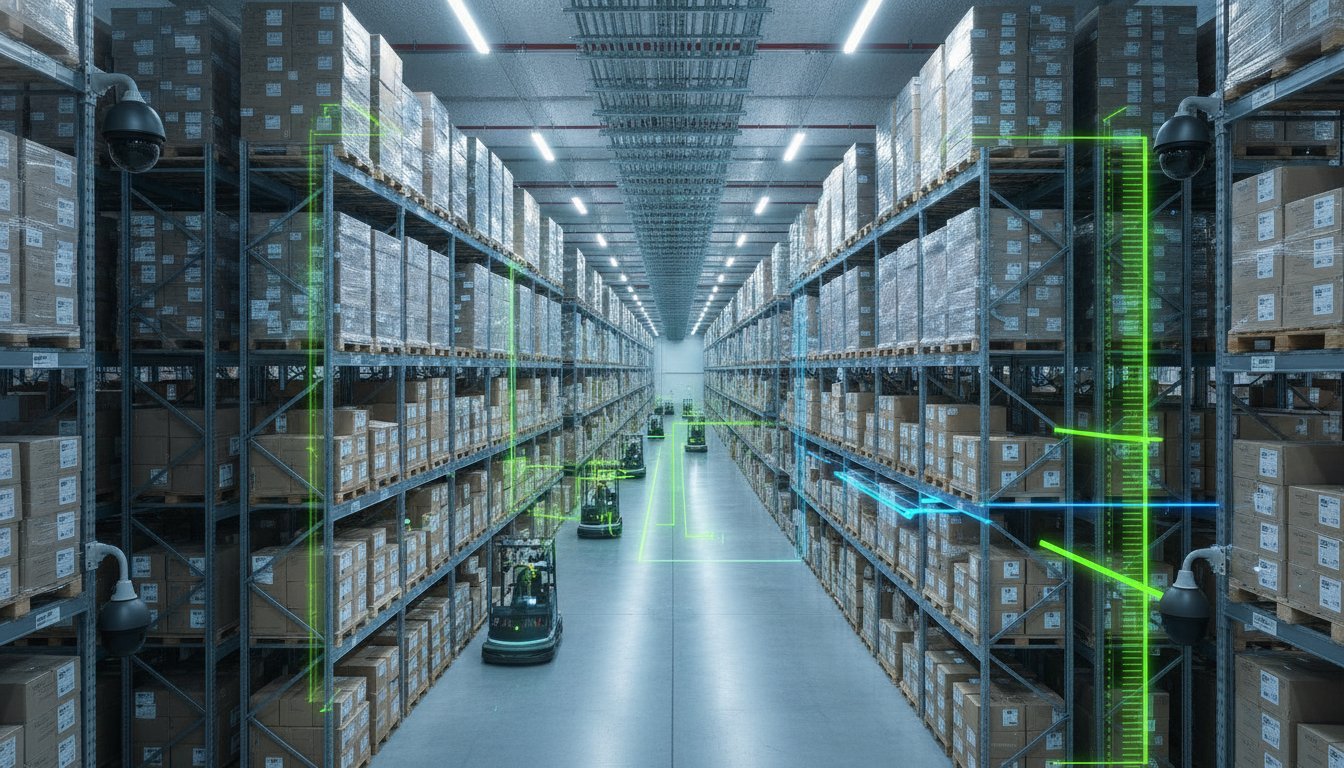
Did you know that 68% of warehouse theft incidents occur right at the loading docks? For facility managers, this statistic highlights a common vulnerability in an environment already crowded with high-rack blind spots and the constant pressure of workplace safety compliance. You’ve likely experienced the frustration of system downtime or the stress of managing multiple sites without a reliable, unified view of your operations. It’s a challenge that requires more than just hardware; it requires a strategic architecture designed for long-term stability and comprehensive protection.
This comprehensive guide to security cameras for warehouses provides the roadmap you need to build a high-performance surveillance ecosystem. We’ll show you how to move beyond simple recording by integrating 4K AI analytics, robust structured cabling, and cloud-based management for total facility protection. You’ll discover how to achieve zero-blind-spot coverage and automate alerts for unauthorized entry, all while positioning your business to reduce insurance premiums through superior liability protection. We’ll preview the essential 2026 standards, from PoE infrastructure to PPE compliance monitoring, ensuring your facility remains secure, compliant, and efficient through every shift.
Key Takeaways
- Understand why a robust structured cabling backbone is essential to prevent the connectivity failures that often plague standard Wi-Fi in large-scale logistics environments.
- Learn how to select specialized hardware for specific zones, such as utilizing license plate recognition at loading docks and narrow-field bullet cameras for high-rack aisles.
- Discover how AI video analytics can monitor PPE compliance and establish virtual tripwires to proactively manage workplace safety and reduce insurance liability.
- Follow a methodical implementation strategy for security cameras for warehouses that begins with a professional site survey to identify and eliminate critical blind spots.
- Gain insights into the benefits of cloud-based management for maintaining reliable, 24/7 remote access and centralized control across multiple facility locations.
The Foundation of Warehouse Surveillance: Why Infrastructure Matters
Modern Closed-circuit television (CCTV) for industrial use isn’t just a collection of standalone devices; it’s a sophisticated, integrated network of hardware and software engineered for the rigors of high-traffic logistics environments. When we talk about security cameras for warehouses, we’re describing a multi-layered defense system that provides seamless detection, verification, and response. This architecture ensures that every square foot of your facility is under a watchful, reliable eye.
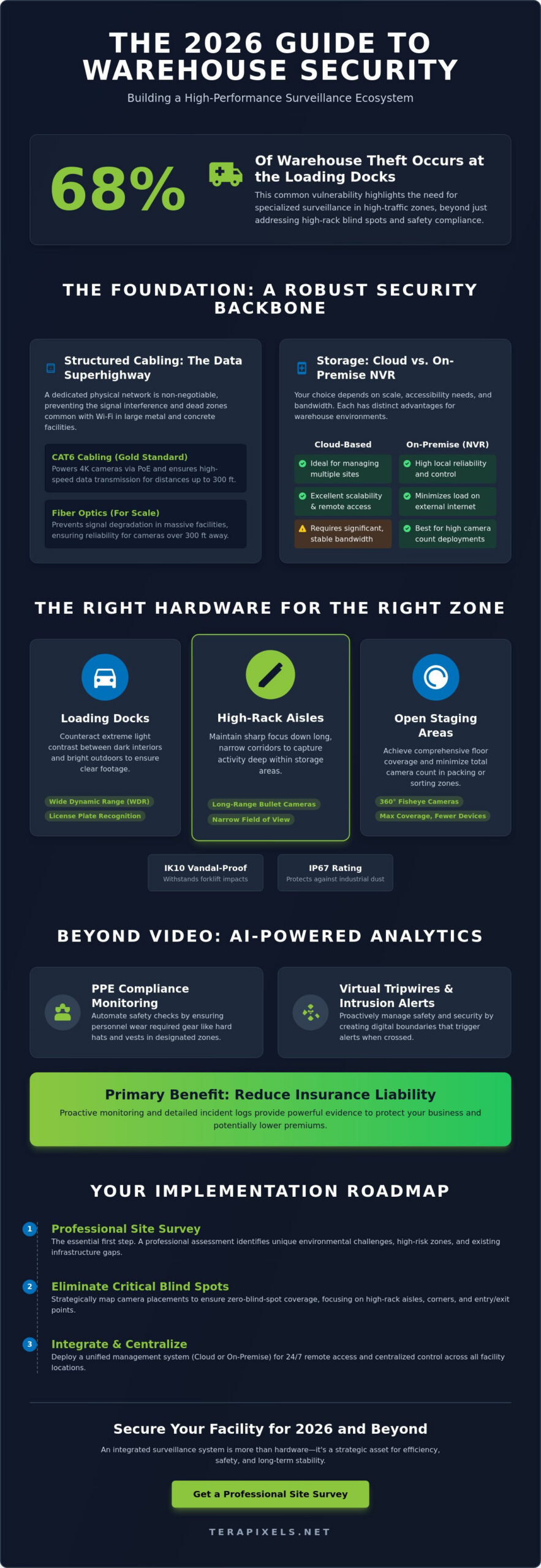
Large-scale facilities present a unique “Distance Challenge” that consumer-grade technology simply can’t handle. Standard Wi-Fi often fails in these environments because expansive metal racking and massive concrete square footage create dead zones and signal interference. To support high-definition video and intensive AI processing, your facility requires a dedicated “Security Backbone.” This physical infrastructure is the invisible force that prevents system downtime and ensures your data reaches the management console without delay.
To better understand the hardware that powers these modern systems, watch this helpful video overview:
The Critical Role of Structured Cabling
A professional CAT6 cabling installation for commercial buildings is currently the gold standard for warehouse IP cameras. It provides the high-speed data transmission and Power over Ethernet (PoE) capabilities necessary to run 4K cameras without separate power drops. For massive distribution centers exceeding 300 feet in length, we often transition to fiber optics. This prevents signal degradation over long distances, ensuring that a camera at the far end of the loading dock performs as reliably as one in the main office.
Cloud-Based vs. On-Premise Storage
Selecting the Right Hardware for Industrial Environments
Choosing the right hardware for an industrial setting requires a granular understanding of your facility’s layout. A generic approach often leaves critical gaps in coverage or results in poor image quality when you need it most. Effective security cameras for warehouses must be matched to the specific environmental challenges of each zone, from the glare of the loading dock to the narrow shadows of high-rack storage.
Loading docks are particularly demanding due to the extreme contrast between dark interiors and bright outdoor light. Cameras equipped with Wide Dynamic Range (WDR) and license plate recognition are vital here to ensure every vehicle and shipment is documented clearly. In contrast, high-shelf aisles require long-range bullet cameras with a narrow field of view. These specialized lenses maintain focus at the end of a 100-foot row, ensuring that activities deep within the racks aren’t lost in a blur of pixels.
For open staging areas or packing stations, fisheye cameras provide 360-degree coverage. This minimizes the total camera count while maintaining a comprehensive view of the floor. Regardless of the specific model, industrial hardware should carry an IK10 vandal-proof rating to survive forklift impacts and an IP67 rating to protect against the fine dust common in logistics centers. If you’re evaluating your current hardware needs, reviewing a tailored security camera system can provide a clear starting point for your facility’s upgrade.
Specialized Cameras for High-Risk Zones
Shipping and receiving bays often benefit from Pan-Tilt-Zoom (PTZ) cameras. These allow security personnel to actively track specific events or zoom in on high-value cargo during transit. In areas housing chemicals or lithium-ion batteries, thermal imaging cameras serve as a critical early warning system. They detect abnormal heat signatures, identifying potential fire hazards long before smoke sensors are triggered.
Night Vision and Low-Light Performance
Standard Infrared (IR) is often insufficient for massive, unlit corners. Advanced low-light sensors are now the preferred standard; they maintain color and detail in near-total darkness where traditional cameras might only show grain. Pairing these sensors with motion-activated lighting further enhances clarity, ensuring that after-hours intrusion detection is both accurate and actionable.
Beyond Video: AI Analytics and Integrated Security
Modern security cameras for warehouses have evolved into intelligent sensors capable of real-time decision-making. AI video analytics can now actively monitor PPE compliance by identifying whether employees are wearing required hard hats and high-visibility vests. This automated oversight significantly reduces insurance liability by ensuring safety protocols are followed without requiring constant manual supervision. It’s a shift from passive recording to active facility management.
Beyond safety gear, “Virtual Tripwires” create digital boundaries in high-risk areas. If a staff member enters a restricted forklift zone during operation, the system triggers an immediate alert to floor managers. This proactive approach prevents accidents before they occur. These systems also offer a powerful synergy with keycard access control systems for business. By cross-referencing video footage with badge swipes, you can instantly verify the identity of anyone entering a high-security storage room or server closet, ensuring that credentials aren’t being shared or misused.
One of the most practical benefits of AI is the elimination of false alarm fatigue. Older systems often triggered alerts for stray animals, shifting shadows, or wind-blown debris. Modern AI distinguishes between these environmental factors and genuine human intruders. This precision ensures that your security team only responds to actual threats, preserving their focus for true emergencies. To see how these intelligent features can transform your facility protection, contact us to discuss a customized AI-driven security strategy today.
Operational Intelligence for Logistics
Logistics managers are increasingly using surveillance data to improve bottom-line efficiency. Heat maps reveal where bottlenecks occur in warehouse traffic flow, allowing for better inventory placement and aisle organization. Object counting analytics provide automated monitoring of pallet movements and shipping volume, giving you real-time data on facility throughput without manual tallying. This data-driven approach turns your security system into a valuable tool for operational growth.
Reducing Liability and Workers Comp Claims
High-definition footage serves as indisputable evidence in “slip and fall” incidents, protecting your business from fraudulent workers’ comp claims. An AI security camera system commercial implementation pays for itself through significantly reduced legal costs and lower insurance premiums. By providing a clear, timestamped record of every incident, you maintain a position of strength and transparency in any liability dispute.
Planning Your 2026 Warehouse Security Implementation
A successful deployment of security cameras for warehouses relies on a disciplined, four-step methodology. It begins with a comprehensive site survey to map out every blind spot and evaluate lighting conditions across your facility. This initial audit ensures that no critical angle is left unmonitored once the hardware is live. It’s about building a system that’s as resilient as the facility it protects.
Once the survey is complete, the focus shifts to the physical layer. Designing a network layout that utilizes low voltage structured cabling is vital to ensure every camera node receives consistent power and data. From there, you select hardware based on the specific requirements of each zone, such as high-resolution sensors for entries and long-range optics for aisles. Finally, we integrate the entire system with Remote Monitoring Management (RMM). This proactive oversight allows for 99.9% system uptime, as we can identify and resolve technical glitches before they lead to a security gap.
The Importance of Professional Installation
Industrial environments are notoriously difficult for wireless signals and amateur mounting. DIY setups often fail due to electromagnetic interference from heavy machinery or poor placement that leads to vibration-blurred footage. Partnering with a managed service provider ensures your system is physically robust and digitally secure. We handle the complex task of ongoing firmware updates and cybersecurity patches, protecting your network from evolving external threats while you focus on core operations. Pairing your physical surveillance with outsourced cybersecurity services for business ensures that both your digital and physical assets remain protected under a unified security strategy.
Future-Proofing Your Warehouse
Technology moves quickly. While 4K is the current standard, your cabling infrastructure should have the headroom to support future 8K camera upgrades without a full rip-and-replace. We also plan for the integration of 5G connectivity and Industrial Internet of Things (IIoT) sensors. These advancements will allow your security cameras for warehouses to communicate directly with automated inventory systems and climate controls, creating a truly unified and intelligent facility management ecosystem. To maintain the resilience of these critical systems, you can find out more about how Bio-Cognitive Solutions protects operational technology environments.
Securing Your Facility for the Future of Logistics
Designing an effective network of security cameras for warehouses requires a transition from passive observation to proactive facility management. By prioritizing a robust cabling infrastructure and integrating specialized hardware for every unique zone, you create a system that’s both resilient and scalable. The addition of AI analytics further transforms your surveillance into a powerful tool for reducing liability and optimizing operational throughput, ensuring your investment delivers value well beyond simple theft prevention. It’s about creating a safe, transparent environment where technology works silently in the background to support your team.
As your national commercial technology partner, Terapixels Systems brings together certified structured cabling experts and advanced AI analytics integration to protect your most valuable assets. We’re here to act as the steady hand that manages your complex background systems so you can focus on your core business objectives. Secure your facility with a custom Terapixels warehouse surveillance solution today and build a foundation of technological reliability that grows with your business. Your facility’s protection is a long-term partnership, and we’re ready to design the architecture that secures your future.
Frequently Asked Questions
How many security cameras do I need for a 50,000 square foot warehouse?
A 50,000 square foot facility typically requires between 12 and 20 security cameras for warehouses to achieve comprehensive coverage. This estimate depends heavily on your specific racking height and the number of loading docks. While smaller, open-plan warehouses may only need 8 to 16 units, facilities with dense shelving or complex packing stations require more nodes to ensure every high-risk zone is monitored without blind spots.
What is the best type of camera for high-rack warehouse aisles?
Long-range bullet cameras with narrow fields of view are the most effective choice for high-rack aisles. These specialized lenses are designed to maintain high-definition focus over long distances, ensuring that activity at the far end of a 100-foot row remains clear. Unlike wide-angle cameras that lose detail at a distance, bullet cameras provide the precision needed to monitor inventory movement and forklift safety deep within the racking systems.
Can warehouse security cameras help with OSHA compliance?
Modern surveillance systems equipped with AI analytics are invaluable for maintaining safety standards. These systems can automatically detect PPE compliance, such as whether workers are wearing required hard hats or high-visibility vests. While there isn’t a specific OSHA mandate for cameras, using them to enforce safety protocols can significantly reduce the risk of willful violations, which can carry fines exceeding $156,000 per incident as of 2026.
How long should warehouse surveillance footage be stored for liability reasons?
You should aim for a video retention period of 60 to 90 days. Since many liability claims or shipment disputes don’t surface until several weeks after an incident, having at least two months of archived footage is critical for verification. This window provides ample time to retrieve evidence for slip and fall claims or loading dock discrepancies, protecting your business from high insurance premiums and legal costs associated with undocumented events.
Do I need a separate network for my warehouse security cameras?
Implementing a separate network or a dedicated Virtual Local Area Network (VLAN) is highly recommended for industrial surveillance. High-resolution 4K feeds consume significant bandwidth, which can slow down your primary inventory and logistics software if shared on a single line. A segmented network also enhances cybersecurity by isolating your security data from other business operations, ensuring that your surveillance backbone remains stable, secure, and performant during peak operational hours. For facilities managing sensitive inventory or compliance requirements, exploring outsourced cybersecurity services for business can provide the specialized expertise needed to keep that segmented network fully hardened against evolving threats.