CONTACT US
Your building’s digital network is no longer a secondary IT concern; it’s the foundational “digital plumbing” that connects and protects every physical asset in your facility. If a single vulnerability in your HVAC system or cloud-based access control can trigger a building-wide lockout, the line between physical and digital security has effectively vanished. We understand the frustration of managing fragmented systems that fail to communicate, especially as new regulations like the Cyber Incident Reporting for Critical Infrastructure Act (CIRCIA) now require reporting within 72 hours.
This guide provides a clear roadmap for implementing managed cybersecurity for commercial properties to protect your high-value assets and stabilize rising insurance premiums. You’ll discover how to unify your security posture by integrating advanced digital defenses directly into your building management systems. We will explore the latest NIST CSF 2.0 standards and demonstrate how a strategic partnership allows you to offload day-to-day monitoring. This approach ensures your tenants remain safe and your liability stays low while you focus on core business objectives.
Key Takeaways
- Understand why modern PropTech ecosystems have made commercial buildings a top target for ransomware and how to address these evolving digital threats.
- Learn to implement managed cybersecurity for commercial properties through a proactive model that integrates continuous remote monitoring with your physical infrastructure.
- Identify common security gaps in unmanaged hardware like IP cameras and access control systems that can expose your entire network to risk.
- Follow a structured four-step framework to audit your connected devices and implement network segmentation for isolated, high-security system management.
- Discover the efficiency of a unified approach that combines structural cabling, physical security, and cyber defense through a single, expert architectural partner.
Table of Contents
- The Evolution of Commercial Property Vulnerabilities in 2026
- Defining Managed Cybersecurity for Modern Facilities
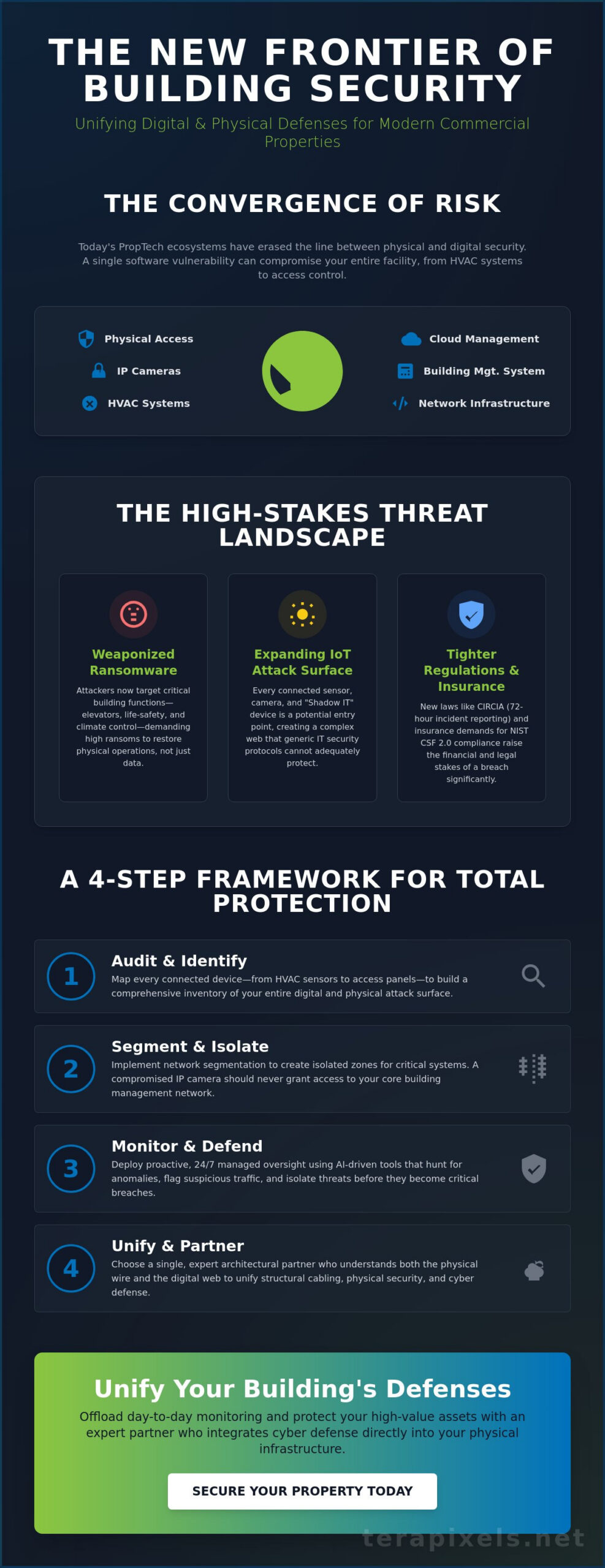
- The Convergence of Physical and Digital Security Infrastructure
- Developing a Managed Cybersecurity Strategy: A 4-Step Framework
- Partnering with a Reliable Architect for Total Property Protection
The Evolution of Commercial Property Vulnerabilities in 2026
Commercial real estate has undergone a radical transformation. Buildings that once relied on physical keys and isolated mechanical systems are now hyper-connected hubs of data and automation. This shift has elevated the importance of managed cybersecurity for commercial properties from a niche IT requirement to a core operational necessity. As buildings integrate more Property Technology (PropTech), the distinction between the digital network and the physical structure dissolves. This phenomenon, known as security convergence, means that a breach in your software can now result in a total lockout of your physical premises.
To better understand this concept, watch this helpful video:
Ransomware attackers have shifted their focus toward commercial assets because the leverage is immense. It’s no longer just about encrypting files on a server; it’s about seizing control of life-safety systems, elevators, and climate control. The high cost of downtime in 2026 includes not just lost productivity but potential legal liability and tenant flight. Additionally, the regulatory environment has tightened significantly. The Cyber Incident Reporting for Critical Infrastructure Act (CIRCIA) requires companies to report incidents within 72 hours as of May 19, 2026. Insurance providers are also demanding adherence to the NIST Cybersecurity Framework (CSF) 2.0 before they’ll underwrite policies for high-value properties.
PropTech and the Expanding IoT Attack Surface
Every smart device added to a building management system (BMS) acts as a potential gateway for malicious actors. HVAC systems, automated lighting, and high-speed elevators are often connected to the same network as the main office, providing a path of least resistance for hackers. Tenant-installed “Shadow IT” devices further complicate the landscape by introducing unmanaged hardware into a secured environment. In 2026, the building attack surface is defined as the total sum of all connected endpoints, including every sensor, camera, and access point within the facility.
Why Generic IT Security Fails Real Estate Assets
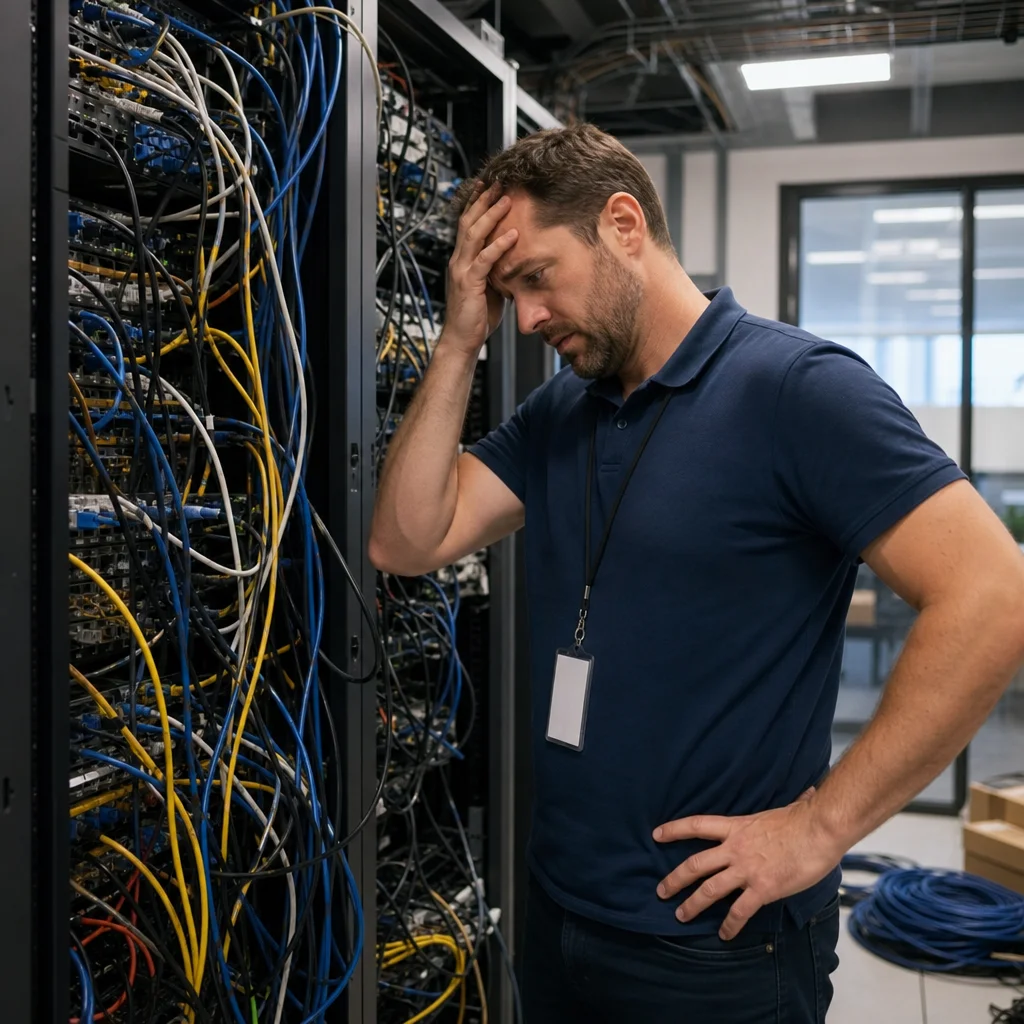
Standard IT protocols designed to protect laptops and email servers are insufficient for the complexities of a modern facility. Protecting a Building Management System (BMS) requires an understanding of low-voltage infrastructure that traditional antivirus software simply doesn’t possess. You cannot secure structural cabling or IP-based cameras with a generic firewall alone. Specialized knowledge in fiber and CAT6 cabling, combined with network segmentation, is required to ensure that a compromised camera doesn’t lead to a compromised server room. Managing these diverse systems requires a partner who understands both the digital web and the physical wire.
Defining Managed Cybersecurity for Modern Facilities
Managed cybersecurity for commercial properties represents a fundamental shift in how facility managers protect their physical and digital assets. It moves beyond the outdated “break-fix” mentality, where a technician is only called after a system fails or a breach occurs. Instead, it provides proactive, 24/7 oversight of both the digital and physical network layers that keep a building operational. By acting as a Reliable Architect for your digital environment, a managed service provider ensures that your property’s background systems remain secure without requiring your constant attention.
In the current landscape, AI and automation play a critical role in this oversight. These tools don’t just wait for an alarm; they actively hunt for anomalies in data traffic that could indicate a developing threat. Whether it’s an unusual login attempt on an access control panel or a spike in traffic from an HVAC sensor, automated systems can flag and isolate these risks instantly. This level of precision is essential for maintaining the integrity of complex PropTech ecosystems. If you are looking to stabilize your building’s infrastructure, exploring tailored security solutions can provide the necessary foundation for long-term growth.
The Shift from Reactive Cleanup to Proactive RMM
Continuous Remote Monitoring Management (RMM) is the engine behind modern property protection. It allows for predictive maintenance, where security patches and firmware updates for building controllers are applied before vulnerabilities can be exploited. This strategy significantly reduces the “Mean Time to Detect” (MTTD), which is the duration it takes to identify a security incident. In a commercial environment, every minute of undetected intrusion increases the risk of a facility-wide lockout. Comprehensive managed IT monitoring ensures business continuity by keeping your building’s network stable and resilient against external pressures.
Core Components of a Managed Security Stack
A robust security stack for a commercial property involves more than just a firewall. It requires Endpoint Detection and Response (EDR) specifically configured for facility hardware, such as smart meters and surveillance servers. Modern architectures also utilize Secure Access Service Edge (SASE) to provide secure, cloud-native connectivity for remote property management teams. Credible guidance, such as NIST’s framework for building cybersecurity, emphasizes the need to secure every point of entry. This includes continuous vulnerability scanning of all fiber and CAT6 cabling endpoints to prevent unauthorized physical access to the network through unsecured ports or exposed wiring.
The Convergence of Physical and Digital Security Infrastructure
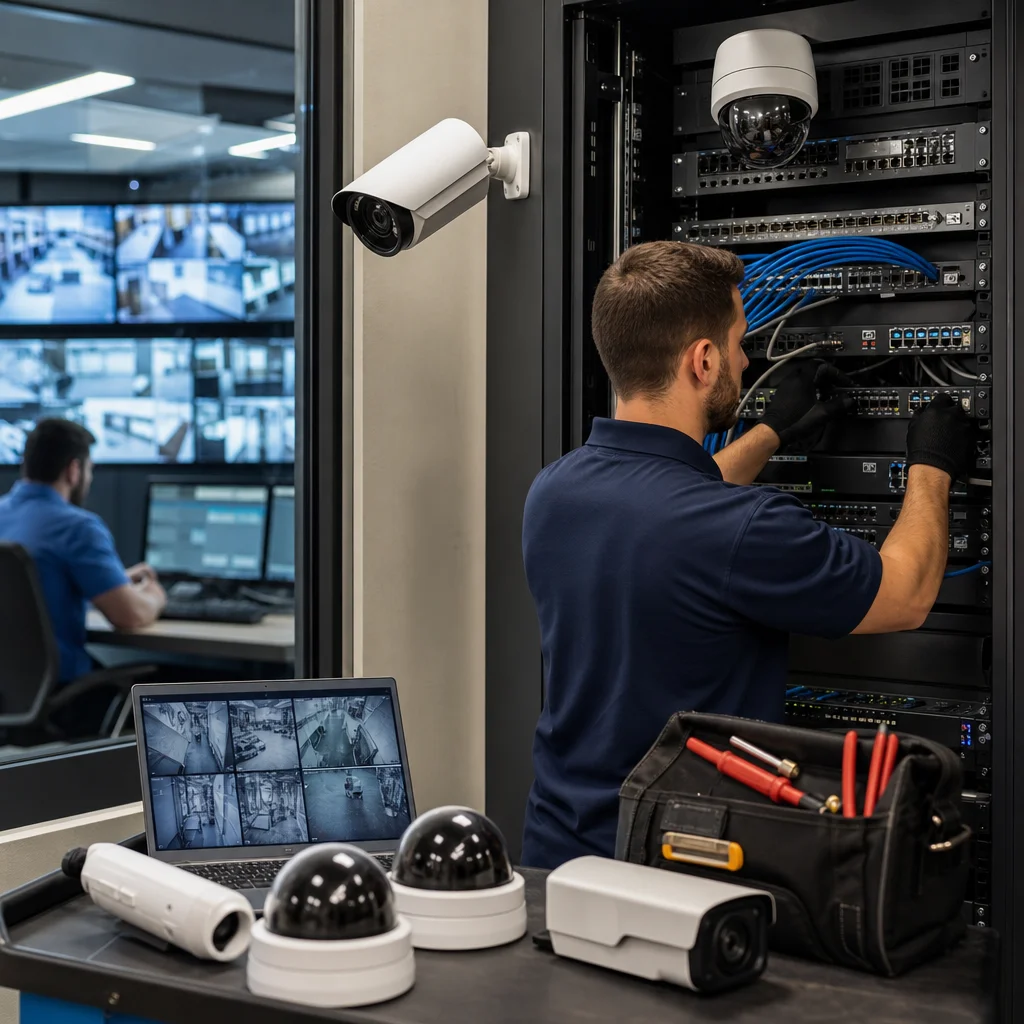
Physical security hardware is often the most overlooked vulnerability in a building’s defense. While property managers focus on software firewalls, an unmanaged IP camera or an outdated access control reader can provide an open door for hackers. This is why managed cybersecurity for commercial properties must encompass the entire physical-digital ecosystem. Aligning with CISA’s Commercial Facilities Sector-Specific Plan ensures that your security strategy meets national resilience standards for protecting high-value assets. By treating every physical device as a network endpoint, we close the gaps that traditional IT often misses.
Integrating AI security camera systems into a hardened network requires more than just basic installation. It demands a secure foundation that only a Reliable Architect can design. The role of structured cabling in cyber defense is paramount. It acts as the physical backbone that prevents unauthorized data interception and ensures signal integrity across the facility. Without high-quality CAT6 or fiber infrastructure, even the most advanced digital defenses remain vulnerable to physical layer interference. Our approach ensures that your cabling isn’t just a utility, but a defensive asset.
Securing Cloud-Based Surveillance and AI Analytics
Modern surveillance relies on cloud-native architectures that must be protected with rigorous encryption standards for data both in transit and at rest. Managing user permissions is equally critical to prevent unauthorized access to sensitive video feeds, which could expose tenant patterns or security protocols. AI-driven analytics now go beyond simple motion detection. They can identify physical tampering, such as a camera being covered or redirected, which often serves as a precursor to a larger cyber-attack. This level of oversight provides a partnership-driven layer of protection that anticipates threats before they manifest.
Protecting Access Control Systems from Network Exploits
Many facilities still rely on legacy keycard access control systems that lack modern encryption. These older systems are highly susceptible to cloning and network exploits that can compromise the entire property. Implementing multi-factor authentication (MFA) for physical entry points adds a necessary layer of verification for high-security areas. Additionally, network segmentation is vital. It allows you to isolate security traffic from tenant Wi-Fi, ensuring that a breach in a tenant’s network doesn’t grant access to the building’s core security infrastructure. This separation is a cornerstone of managed cybersecurity for commercial properties, providing a stable environment for both landlords and high-value tenants.
Developing a Managed Cybersecurity Strategy: A 4-Step Framework
Building a resilient defense requires a structured approach that addresses every layer of your property’s infrastructure. Implementing managed cybersecurity for commercial properties isn’t a one-time setup but a continuous cycle of assessment and refinement. By following a clear, four-step framework, you can transform your facility from a collection of vulnerable endpoints into a hardened, secure asset. This systematic method ensures that no device is left unmonitored and no entry point is left exposed.
- Step 1: Audit. Conduct a comprehensive inventory of all connected devices and the physical cabling that supports them.
- Step 2: Segment. Implement network segmentation to isolate critical building management systems from general use networks.
- Step 3: Monitor. Establish a 24/7 response protocol using Remote Monitoring Management (RMM) to catch threats in real-time.
- Step 4: Train. Provide regular security awareness training for employees and tenants to defend against social engineering tactics.
The Comprehensive Technology and Vendor Audit
The first step involves identifying every IP-enabled device within your facility. This includes obvious hardware like servers and workstations, but also extends to printers, solar inverters, and EV chargers. Each of these represents a potential bridge into your core network if left unmanaged. It’s also vital to evaluate the security protocols of third-party vendors who have remote access to your systems. Comprehensive visibility is the foundational law of cybersecurity because you cannot protect what you cannot see. If you’re ready to secure your facility’s digital landscape, contact our team for an expert assessment today.
Implementation of Zero Trust and Network Segmentation
The outdated “trust but verify” model has been replaced by Zero Trust architecture. In this environment, no user or device is trusted by default, regardless of whether they’re inside or outside the network perimeter. Creating digital air gaps between tenant data and building operations prevents lateral movement during a breach. The integrity of these segments relies heavily on professional low voltage cabling. High-quality physical infrastructure ensures that data remains within its designated lanes, preventing the “crosstalk” that often leads to security leaks. This physical separation is just as important as the software firewalls that manage the traffic.
Once the infrastructure is segmented, the focus shifts to continuous oversight. A reliable RMM protocol acts as a steady hand, managing the background systems so you don’t have to. Finally, addressing the human element through training ensures that your tenants and staff don’t inadvertently bypass these sophisticated defenses. This four-step framework provides the stability and comprehensive protection that modern commercial real estate demands.
Partnering with a Reliable Architect for Total Property Protection
Choosing the right partner for managed cybersecurity for commercial properties is a decision that impacts the long-term stability of your real estate assets. Many property managers struggle with a fragmented approach, hiring one vendor for CAT6 cabling and another for cyber security. This creates gaps in communication and leaves your facility vulnerable to sophisticated threats. A more effective path is to deploy integrated security systems for commercial real estate that unify access control, surveillance, and network defense under a single cohesive architecture. Terapixels Systems acts as a Reliable Architect, providing expert knowledge of both the physical wire and the digital web. By consolidating your technical needs under one steady hand, you ensure that every component of your building’s infrastructure is designed to work in harmony.
Efficiency is the natural result of this integrated model. A single-source provider reduces vendor friction and eliminates the overlapping costs associated with managing multiple contracts. When the same team that installs your cloud-based access control also manages your network security, there is no ambiguity regarding responsibility. This comprehensive oversight allows you to focus on your core objectives while we handle the complex background systems. It’s a partnership-driven mindset that prioritizes precision and long-term planning over quick fixes. Consolidating these services ensures that your digital plumbing remains robust and resilient against external pressures.
The Terapixels Approach: Integration, Monitoring, and Maintenance
We design custom security ecosystems that are built to grow with your property portfolio. Our approach goes beyond simple installation; it involves continuous remote monitoring management to ensure your defenses are always active. We bridge the gap between physical infrastructure and cyber defense by treating your structural cabling as the foundation of your digital security. This provides a sense of quiet confidence, knowing that a seasoned consultant is managing the technical intricacies of your facility. Our goal is to create a stable environment where technology serves as a facilitator of growth rather than a source of risk.
Next Steps for Property Managers
Protecting your assets for 2027 and beyond starts with a clear understanding of your current liability. Evaluating security gaps in your building management systems is essential for maintaining tenant trust and reducing insurance premiums. The return on investment for managed cybersecurity for commercial properties is measured in both reduced risk and improved asset value. High-value tenants increasingly demand proof of robust digital protection before signing long-term leases. Scheduling a comprehensive facility technology assessment is the most effective way to identify vulnerabilities and begin the transition toward a unified security posture. We invite you to explore how a tailored strategy can safeguard your investments and provide the stability your business requires.
Securing the Future of Your Commercial Assets
The landscape of property management in 2026 demands a shift from reactive maintenance to a unified, architectural approach to safety. We’ve explored how the convergence of physical and digital layers has redefined the attack surface, making it essential to protect every endpoint from the cabling in the walls to the cloud-based access control at the gate. By implementing a structured framework of auditing and network segmentation, you can transform your facility into a resilient asset that attracts high-value tenants and meets stringent regulatory standards.
Effective managed cybersecurity for commercial properties requires a partner who understands the intricate relationship between physical security and network infrastructure. Terapixels Systems provides this stability through proactive RMM and AI-driven threat detection, backed by national service coverage for expansive commercial portfolios. We offer the expertise necessary to bridge the gap between your building’s mechanical systems and its digital defenses, ensuring your digital plumbing remains secure and reliable.
Secure your facility with a comprehensive cybersecurity assessment from Terapixels Systems. Taking this step ensures your property remains a secure, stable, and thriving environment for years to come.
Frequently Asked Questions
What is managed cybersecurity for commercial properties?
It is a comprehensive service providing 24/7 proactive monitoring and management of a building’s digital and physical network infrastructure. This oversight includes securing building management systems, surveillance, and access control. It ensures your property’s technological foundation remains stable and protected from external threats without requiring constant manual intervention from your staff.
How does cybersecurity affect my commercial property insurance premiums?
Insurers now frequently require adherence to frameworks like NIST CSF 2.0 to qualify for coverage or lower rates. Demonstrating a robust security posture through managed cybersecurity for commercial properties can lead to reduced premiums by minimizing the risk of a breach. Poor cyber oversight often results in higher deductibles or the denial of coverage altogether in the 2026 regulatory environment.
Can my security cameras be used to hack into my main business network?
Yes, unmanaged IP cameras are common entry points for hackers if they aren’t properly secured. If cameras are on the same network as your sensitive business data, an attacker can move laterally from a compromised camera to your servers. This vulnerability highlights the need for professional network design and continuous monitoring of all physical security hardware.
What is network segmentation and why does my building need it?
Network segmentation is the process of dividing a building’s network into smaller, isolated sections to prevent unauthorized traffic flow. Your building needs it to ensure that a breach in a tenant’s Wi-Fi doesn’t grant access to critical systems like elevators or HVAC controllers. It acts as a digital barrier that contains threats within a specific segment, protecting the rest of the facility.
How often should a commercial property undergo a cybersecurity audit?
Most industry standards recommend a comprehensive audit at least once per year, though significant infrastructure changes may require more frequent reviews. Continuous monitoring through managed services provides real-time visibility, but a formal annual audit ensures all hardware and vendor protocols remain compliant with current regulations. Regular assessments help identify new vulnerabilities as PropTech ecosystems evolve.
Is managed cybersecurity necessary if I already have an on-site IT person?
Yes, because managed services provide specialized oversight and advanced AI-driven tools that a single on-site person cannot maintain alone. While your IT staff handles daily operations, ensuring they stay current with industry standards through accredited providers like Square Skills can further bolster your internal defense. This partnership allows your internal team to focus on tenant needs while we manage the background security architecture.
What happens if our building management system (BMS) is hit by ransomware?
A ransomware attack on a BMS can lead to a physical facility lockout, disabling climate control, lighting, and access points. Beyond the immediate operational failure, you face potential legal liability and data reporting requirements under CIRCIA. Proactive managed cybersecurity for commercial properties includes incident response protocols designed to isolate the threat and restore systems quickly to minimize downtime.
How does managed cybersecurity protect tenant data privacy?
It protects privacy by implementing strict encryption and access controls on all networks where tenant data is transmitted. By monitoring for unauthorized access and ensuring building systems are isolated from tenant networks, managed services prevent data leaks. This builds tenant trust and ensures your property complies with the landscape of state-level privacy laws effective in 2026. Understanding how to reduce liability with security cameras through compliant storage practices and data integrity measures is an essential component of this broader privacy protection strategy.