CONTACT US
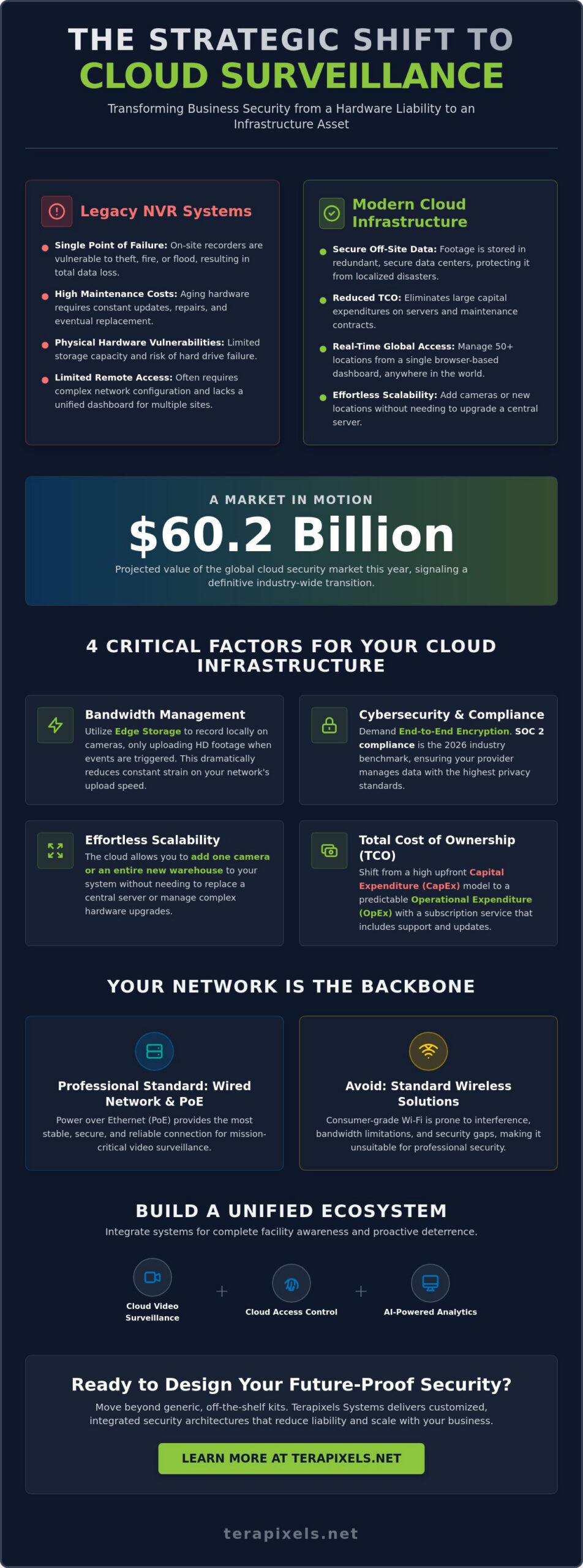
What if your security strategy focused more on the strength of your network than the brand of your cameras? Many organizations realize that a cloud-based surveillance system for business is essentially an infrastructure investment that happens to record video. You’ve likely felt the frustration of high maintenance costs from aging NVR systems or the anxiety of being unable to access critical footage during a remote emergency. It’s a common challenge in an era where the global cloud security market is projected to reach 60.2 billion dollars this year.
We understand that protecting your commercial assets requires more than just hardware; it requires a stable and secure architecture. This guide provides the clarity you need to select, scale, and secure a system that reduces liability and eliminates blind spots. We’ll examine the latest AI analytics, discuss compliance with 2026 privacy regulations in states like Indiana and Kentucky, and show you how to manage bandwidth effectively. By the end, you’ll have a roadmap for a unified security ecosystem that grows alongside your business.
Key Takeaways
- Transition from physical on-site recorders to secure off-site data centers to eliminate hardware vulnerabilities and reduce long-term maintenance costs.
- Evaluate critical infrastructure requirements, including edge storage for bandwidth efficiency and end-to-end encryption to ensure SOC 2 compliance.
- Identify why a professional cloud-based surveillance system for business relies on a wired network and Power over Ethernet (PoE) rather than standard wireless solutions.
- Learn how to integrate video surveillance with cloud-based access control to create a unified ecosystem that provides comprehensive facility awareness.
- Move beyond generic “off-the-shelf” kits by designing a customized security architecture tailored to the specific operational needs of your commercial property.
The Strategic Shift: Why Businesses Are Moving to Cloud-Based Surveillance
Modern security is no longer just about hanging a camera on a wall; it’s about sophisticated data management. A cloud-based surveillance system for business replaces traditional on-site recorders with secure, off-site data centers for all video storage and management needs. To understand the requirements of these facilities, you can check out Tech Sphere and their expertise in comprehensive data center infrastructure design. This transition represents the 2026 standard for commercial security, providing a resilient architecture that prioritizes data integrity and real-time accessibility over fragile physical hardware. By moving your footage off-site, you eliminate the single point of failure that has plagued commercial security for decades.
Relying on a physical Network Video Recorder (NVR) is increasingly seen as a liability. If a localized event like a fire, flood, or targeted theft damages the recorder, your entire visual record vanishes. Looking back at the history of cloud surveillance technology, we’ve moved far beyond the limitations of analog tapes and local hard drives. Today, centralized management allows an operations manager to oversee 50 different locations from a single browser-based dashboard. This level of oversight ensures that your security protocols remain consistent across your entire enterprise without requiring a massive on-site IT footprint.
To better understand this concept, watch this helpful video:
Reducing Liability and Enhancing Business Continuity
High-definition cloud footage acts as an unbiased witness during insurance claims and legal disputes. When an incident occurs, you don’t have to worry about whether a local drive was spinning or if the footage was overwritten; it’s securely stored and ready for export. To achieve 100% uptime, we recommend integrating your surveillance with remote monitoring management for business. This partnership ensures that your network remains stable and your cameras stay online around the clock.
Proactive deterrence is the final piece of the continuity puzzle. Modern cloud-based surveillance system for business applications use AI analytics to identify suspicious behavior or unauthorized access in real time. Instead of reviewing a theft after it happens, your system can trigger alerts that allow you to intervene before an incident escalates into a costly lawsuit. It’s a shift from reactive recording to active protection, ensuring your business operations continue without interruption.
5 Critical Factors for Selecting Your Cloud Surveillance Infrastructure
Selecting a cloud-based surveillance system for business requires looking far beyond the lens resolution. You need a foundation that supports your growth without compromising your network’s health or your data’s integrity. The right infrastructure acts as a silent partner, managing the heavy lifting of data transit while you focus on daily operations. To further optimize your operational connectivity, you can explore Hosted Cloud PBX as part of a holistic approach to cloud-based business communications.
- Bandwidth Management: One of the primary concerns for multi-site businesses is network congestion. You should prioritize systems that utilize edge storage. This technology allows cameras to record locally to an internal card and only transmit high-definition video to the cloud when an event is triggered or requested. It significantly reduces the constant strain on your upload speeds.
- Cybersecurity Protocols: Your video data is a sensitive asset. Ensure any provider you select offers end-to-end encryption. In 2026, SOC 2 compliance is the industry benchmark for data security, confirming that the provider manages your data with the highest standards of privacy and protection.
- Scalability: A major advantage of the cloud is the ability to scale effortlessly. You can add a single camera to a new storage closet or a hundred cameras to a new warehouse without the need to replace a central server or NVR.
- Total Cost of Ownership (TCO): While subscription fees are an ongoing operational expense, they often offset the high capital expenditure of maintaining and replacing physical servers every few years. You’re trading unpredictable repair costs for a steady, predictable service model.
Evaluating AI Analytics and Intelligence
Modern systems offer more than simple motion detection. You should look for object classification, which distinguishes between a person, a vehicle, or a stray animal to reduce false alarms. For retail or industrial settings, heat mapping and occupancy tracking provide valuable operational insights by showing high-traffic areas or bottleneck points. Large distribution and storage facilities have particularly complex coverage requirements; our dedicated guide on security cameras for warehouses explores how to achieve zero-blind-spot coverage across high-rack environments and loading docks. You can also explore how these features integrate with your strategy in our guide on AI security camera system commercial implementations.
Compliance and Data Sovereignty
Compliance is critical for government contracts and high-security sectors. Ensure your hardware is NDAA compliant to avoid legal and security risks. Your storage plan must also match your industry’s specific retention policies. Whether you need 30 days or 180 days of footage, your cloud-based surveillance system for business must offer flexible storage tiers that keep you within legal bounds. If you’re unsure which architecture fits your specific regulatory needs, consulting with a security architect can help clarify your options.
Implementation Logistics: Why the Network is Your Backbone
Many consumer solutions market themselves as “fully wireless,” but a professional cloud-based surveillance system for business requires a more robust foundation. Wireless signals are prone to interference and dropouts. For commercial security, these gaps are unacceptable. Instead, reliable systems utilize Power over Ethernet (PoE). This technology delivers both high-speed data and electrical power through a single cable, which simplifies the physical installation while significantly increasing system reliability.
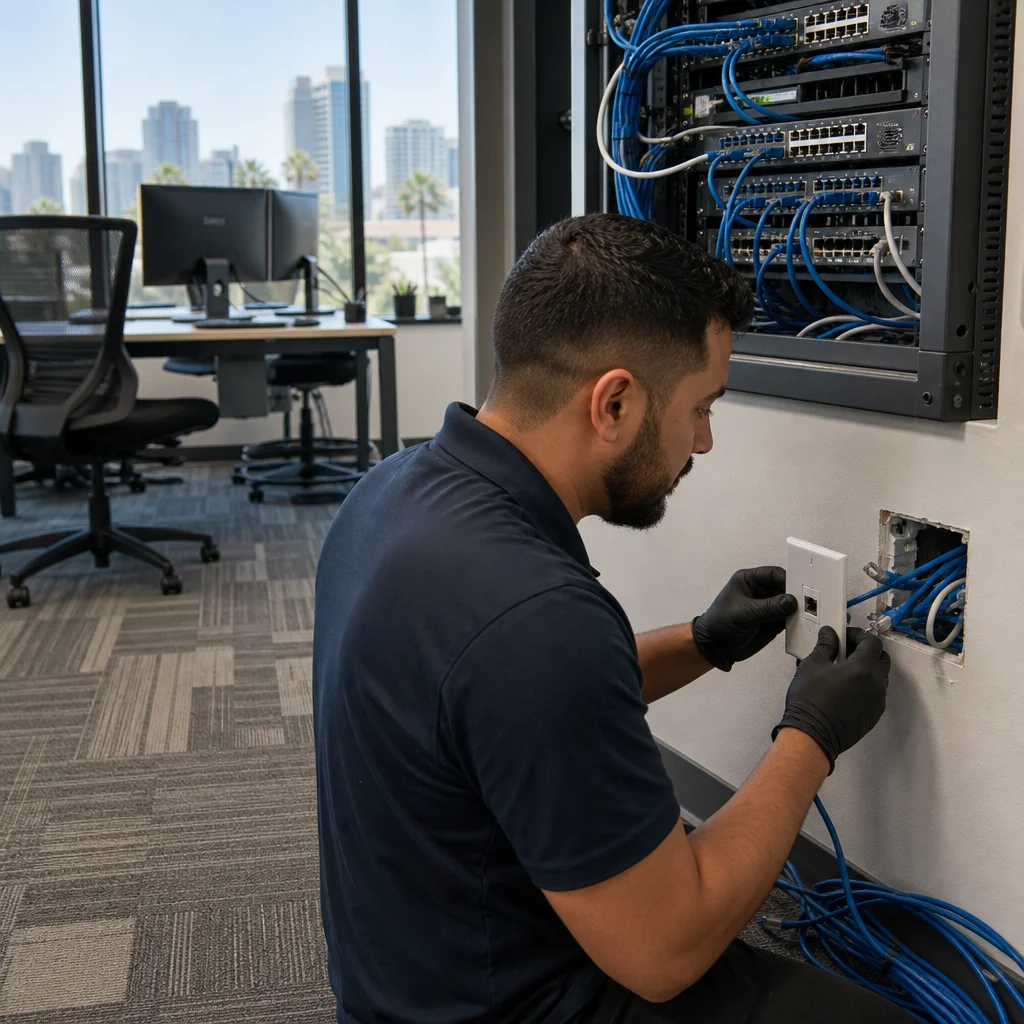
The performance of your AI analytics and 4K video feeds depends entirely on the quality of your physical infrastructure. We recommend CAT6 cabling installation commercial standards to ensure your network can handle high-bitrate streams without latency. Without this solid pipe, even the most advanced cameras will struggle to provide the clear, actionable intelligence your business needs to reduce liability. High-resolution footage requires a consistent, high-bandwidth path to the cloud that only professional-grade wiring can provide.
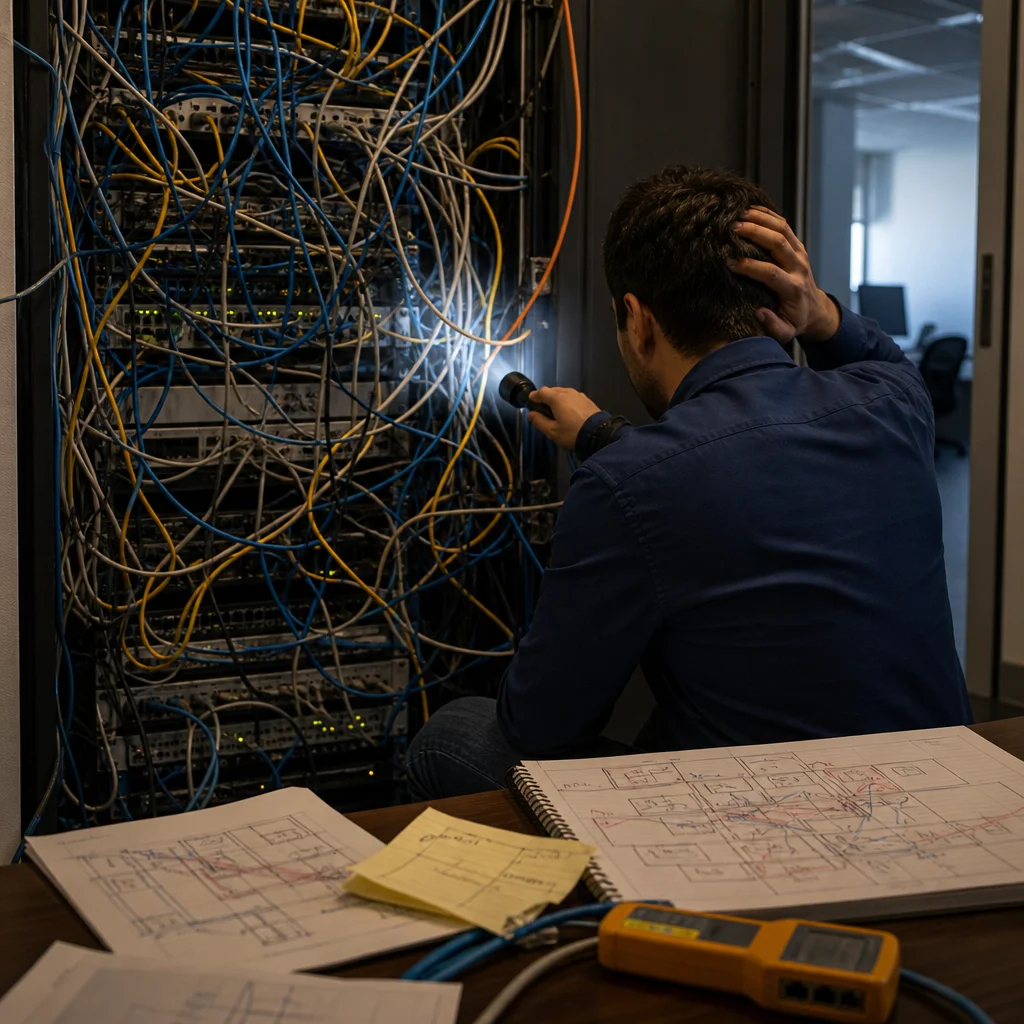
Stability isn’t just about the cameras; it’s about the entire environment. Implementing low voltage structured cabling ensures that your system is designed for 24/7 operation. A well-organized cabling plant prevents overheating and makes future maintenance or upgrades much more efficient. If you’re ready to build a resilient foundation for your security, our team can design a structured cabling plan tailored to your facility.
Power Redundancy and System Hardening
A cloud system is only as effective as its connection to the internet. To prevent downtime during local power outages, consider backup generator installation for business. This ensures that your network equipment and cameras remain operational even when the grid fails, maintaining your visual record during critical moments.
Physical security of the hardware remains a priority. While the data lives in the cloud, the edge-storage devices and cameras are physical objects. Hardening these access points against tampering is essential. We design systems where cabling is concealed and mounting points are reinforced. This protects the “eyes” of your organization from physical interference, ensuring that your investment remains secure from every angle.
The Terapixels Approach: Designing Your Integrated Security Ecosystem
A professional security strategy requires more than just high-end hardware; it demands a cohesive architecture. While many providers offer “off-the-shelf” kits, these generic packages often fail to meet commercial standards. They don’t account for the specific architectural nuances of your facility or the complex network requirements we’ve discussed. At Terapixels Systems, we focus on custom design, ensuring that your cloud-based surveillance system for business is engineered to handle your specific environmental challenges and operational goals.
True facility awareness comes from unified systems. By connecting your cloud surveillance with a keycard access control system for business, you create a symbiotic relationship between video and entry data. When a badge is swiped, your system can automatically bookmark the corresponding video clip, allowing for instant verification. This integration transforms isolated data points into a comprehensive security narrative. Terapixels Systems serves as a Reliable Architect, providing a singular, comprehensive source for national business technology needs across the United States.
Our commitment extends beyond the initial installation through proactive lifecycle management. We don’t just set up your cameras and leave; we provide ongoing firmware updates and system health monitoring to prevent obsolescence. This steady oversight ensures your encryption protocols remain current and your hardware continues to perform at peak efficiency, protecting your investment for the long term.
From Cabling to Cloud: A Turnkey Solution
We provide a single point of contact for your entire technical infrastructure. This turnkey approach covers everything from structural cabling and cybersecurity to the final cloud configuration. Managing these background systems allows you to focus on your core objectives while we ensure the stability of your protection. Our national deployment capabilities mean we can implement consistent security standards across all your US facilities, regardless of their location.
Building a resilient security ecosystem is a collaborative process. We invite you to partner with us to design a system that offers both quiet confidence and comprehensive protection. If you’re ready to move away from fragmented security and toward a unified, professionally managed solution, reach out to our team today to begin your system consultation.
Securing Your Commercial Assets for the Future
Adopting a modern cloud-based surveillance system for business is a decisive step toward long-term operational stability. We’ve explored how moving away from vulnerable on-site hardware and investing in robust CAT6 infrastructure creates a foundation that protects your data and your bottom line. By integrating AI analytics and centralized management, you gain a level of facility awareness that traditional systems simply can’t match.
Choosing the right partner ensures your security architecture remains resilient against both physical and cyber threats. Terapixels Systems brings SOC 2 compliant partnerships, national deployment expertise, and integrated AI analytics to every project. We provide the steady hand you need to manage complex background systems so you can focus on your core business objectives with complete peace of mind.
Your security needs are unique, and your infrastructure should reflect that. As you plan your commercial property’s technology investments, consider that a comprehensive facility upgrade may also include EV charging infrastructure for commercial properties, which has become a core requirement for tenant retention and property value in 2026. We’re ready to help you build a unified ecosystem that grows alongside your organization. Consult with a Terapixels Expert to Design Your Cloud Surveillance Infrastructure today. Let’s work together to create a safer, more efficient future for your commercial property.
Frequently Asked Questions
Is cloud-based surveillance more secure than on-premise systems?
Cloud-based systems provide superior security by eliminating the single point of failure inherent in physical on-site recorders. If a local NVR is stolen or damaged during an incident, your evidence is lost; however, cloud data remains safe in a secure, off-site data center. Professional systems utilize end-to-end encryption and SOC 2 compliant protocols to ensure your video data is protected against unauthorized access at every stage.
How much bandwidth does a business cloud camera system use?
The impact on your network depends on whether you choose continuous streaming or an edge-based architecture. A modern cloud-based surveillance system for business that utilizes edge storage consumes very little bandwidth because it only transmits high-definition video when an event is triggered or a user requests a live view. This prevents the system from slowing down your daily digital operations while still providing 24/7 recording capabilities.
What happens to my surveillance if the internet goes down?
Your cameras will continue to record to their internal edge storage even if your internet connection is interrupted. Once the network is restored, the system automatically synchronizes the cached footage with the cloud to ensure your visual record is complete. This redundancy is a standard feature in commercial-grade hardware, providing stability during temporary outages or network maintenance.
Can I use my existing analog cameras with a cloud-based system?
You can integrate legacy analog cameras into a cloud environment by using specialized encoders or cloud bridges. These devices convert the analog signal into a digital format that can be managed through a modern dashboard. While this allows you to leverage your previous investments, keep in mind that older hardware won’t support the high-resolution AI analytics found in current IP-based systems.
What are the typical subscription costs for commercial cloud video storage?
Industry reports from June 2026 show that enterprise cloud plans with 30 to 90 days of retention typically cost between $10 and $50 per camera per month. Some businesses opt for hybrid plans with local storage and cloud previews for a lower monthly fee, while those requiring AI-enhanced monitoring services may see higher rates. These predictable operational expenses replace the high costs of maintaining and repairing physical server hardware over time.