CONTACT US
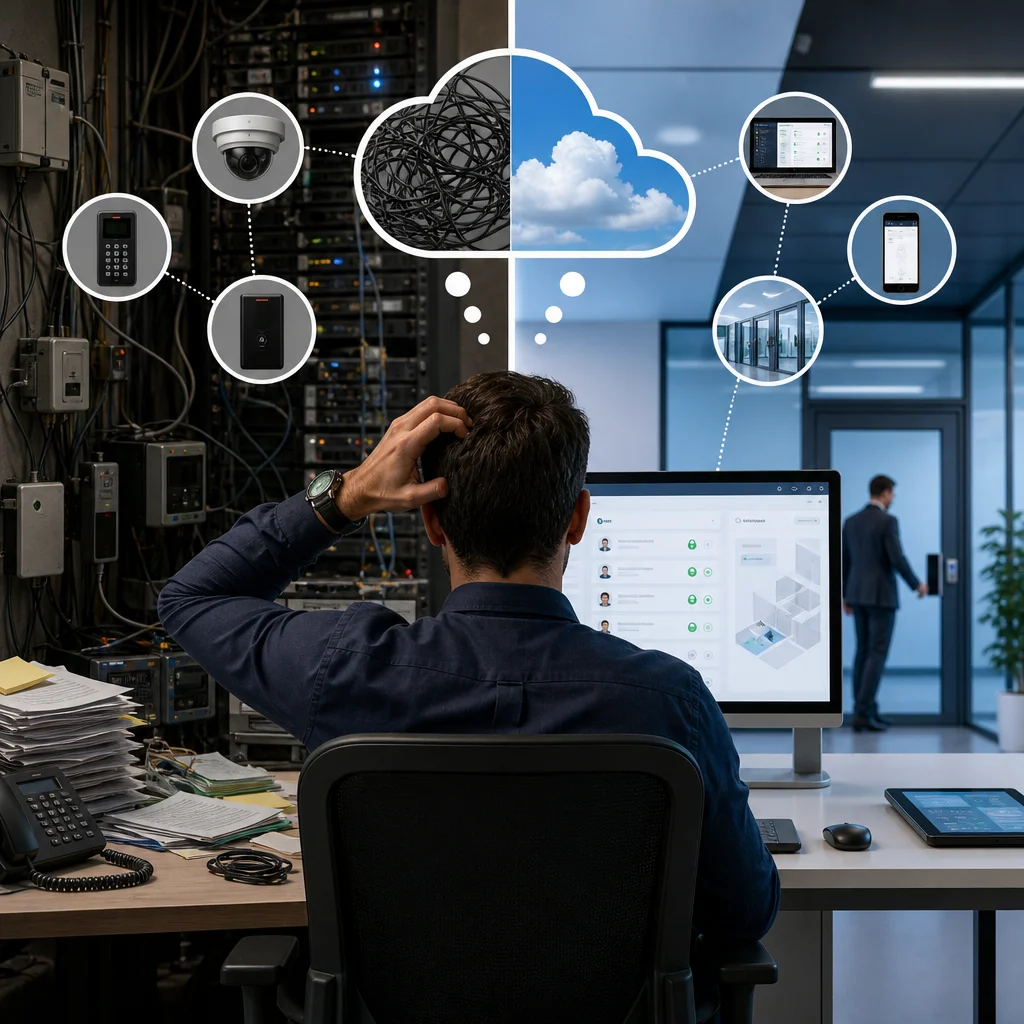
A security camera is no longer just a lens on a wall; it’s a networked computer that requires the same architectural rigor as your server room. You likely understand that traditional hardware installers often fail to grasp the complexities of modern cybersecurity, leaving you with fragmented systems that don’t communicate. When choosing a commercial security integrator, it’s frustrating to realize that your physical protection and digital network are often essentially incompatible, leading to hidden costs and vulnerabilities.
This guide will show you how to bridge that gap by selecting a partner who acts as a technology architect, ensuring your AI analytics and cloud-based surveillance work in perfect harmony. We’ll explore how to vet partners for technical depth, avoid hidden cabling pitfalls, and build a scalable ecosystem that allows you to focus on your core business goals.
Key Takeaways
- Understand why modern security requires a system architect who treats surveillance as a networked ecosystem rather than standalone hardware.
- Identify the essential criteria for choosing a commercial security integrator, specifically evaluating their expertise in bridging physical infrastructure with digital cybersecurity.
- Learn why foundational elements like CAT6 cabling and Remote Monitoring Management are critical for maintaining the uptime and reliability of your security assets.
- Discover how a unified dashboard combining cloud-based surveillance and access control can streamline your operations and reduce overall business liability.
Commercial Security Integrators: A Changing Definition
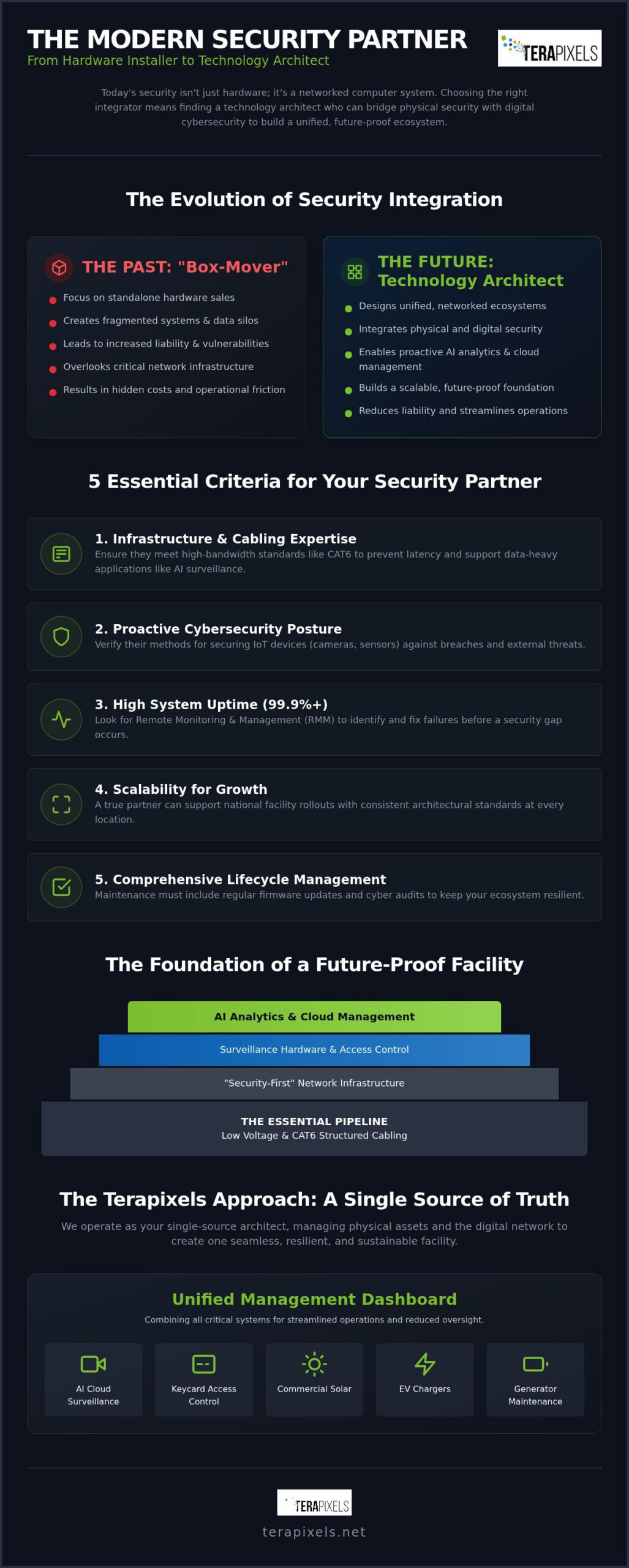
The definition of a security provider has shifted significantly. Today, a commercial security integrator acts as a technology architect responsible for designing, installing, and maintaining a unified ecosystem. This includes surveillance, access control, and the critical network infrastructure that binds them together. When choosing a commercial security integrator, you’re looking for a partner who understands the complete lifecycle of your technology. This process begins with foundational elements like what is structured cabling and extends to long-term cloud management and system health monitoring.
In the 2026 security landscape, the era of “box-movers” has ended. These vendors focus solely on hardware sales without considering how devices interact. Standalone systems create operational silos that lead to increased liability and fragmented data. If your video feed doesn’t sync with your entry logs, your team loses valuable time during an investigation. Choosing a commercial security integrator with an architectural mindset provides a steady hand to manage complex background systems so you can focus on your core business operations, much like how Proactive Networking Ltd provides the IT outsourcing and managed support needed to keep small and medium-sized businesses running efficiently.
The Shift from Standalone Systems to Unified Technology Architectures
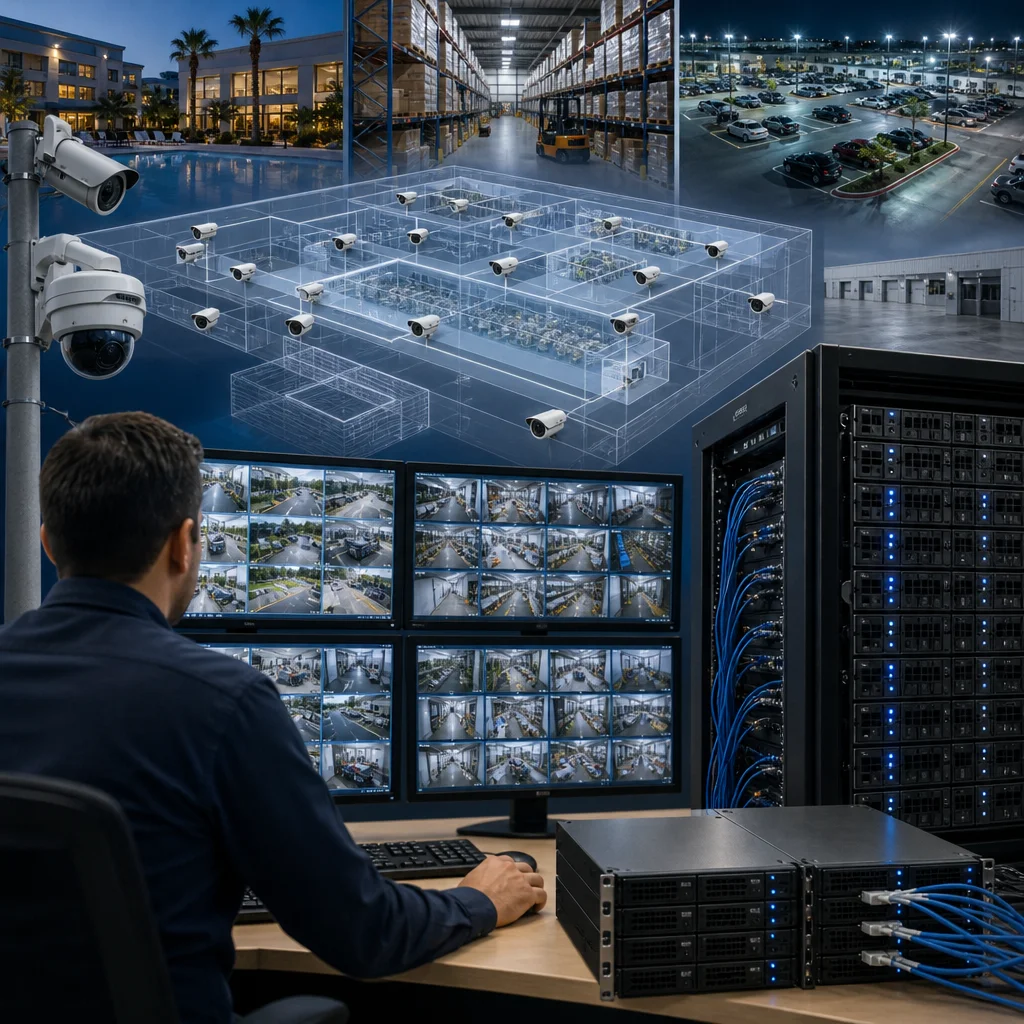
Modern protection relies on a shared network backbone. Cloud-based surveillance and access control are data-heavy applications that demand robust bandwidth and high-level cybersecurity. Implementing an AI security camera system commercial setup allows for proactive threat detection, but it requires an integrator proficient in digital communication protocols. Your partner must understand how to protect surveillance data from network vulnerabilities while ensuring seamless hardware performance across your entire facility.
5 Essential Criteria for Choosing Your Security Partner
Selecting the right partner requires looking deep into both the physical and digital layers of your facility. When choosing a commercial security integrator, you should prioritize expertise in high-bandwidth infrastructure. Many providers focus on the camera but overlook the data pathway. A professional architect ensures CAT6 cabling installation commercial standards are met to prevent latency. This foundation supports a “security-first” network posture that protects your surveillance data from digital intrusion.
System uptime is the ultimate metric of success. Your integrator should offer remote monitoring management for business to maintain 99.9% availability. This ensures that if a component fails, it’s addressed before a security gap occurs. Additionally, evaluate their scalability. A reliable partner supports national facility rollouts with consistent architectural standards, ensuring every location operates under the same high-security protocols.
Vetting for Cybersecurity and Remote Management Capabilities
You must ask how a potential partner secures IoT devices like sensors and cameras against external breaches. They should utilize rmm to identify hardware failures and vulnerabilities in real time. A comprehensive maintenance package must include regular firmware updates and cyber audits to keep your ecosystem resilient. If you’re looking for a partner to manage these complex background systems, you can explore our architectural services.
The Terapixels Approach: Designing a Future-Proof Security Ecosystem
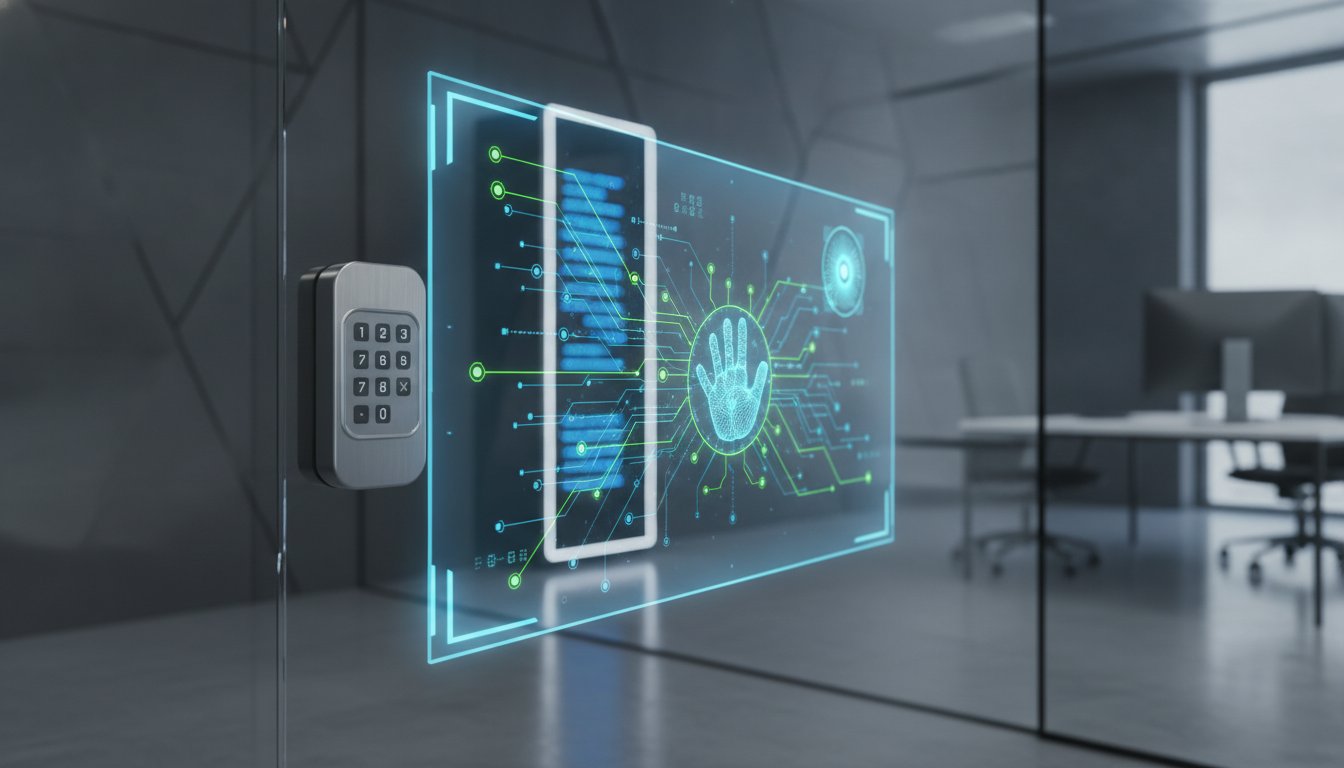
Terapixels Systems operates as a singular, all-encompassing source of truth for your technical and security needs. We act as a single-source architect, managing both physical security assets and the underlying digital network. Choosing a commercial security integrator who understands both physical hardware and digital networks is the key to a future-proof facility. By integrating a keycard access control system for business with cloud surveillance, we provide a unified management dashboard that streamlines operations and reduces oversight friction.
Our expertise extends to the very foundation of your facility’s infrastructure. We prioritize low voltage structured cabling because it serves as the essential pipeline for high-bandwidth AI-driven analytics. Beyond traditional security, we integrate broader infrastructure solutions, including commercial solar, EV chargers, and generator maintenance. This holistic approach ensures your facility remains powered, protected, and sustainable over the long term without requiring multiple, disconnected vendors.
Implementing a Scalable, Cloud-Based Security Strategy
Transitioning from on-premise servers to cloud-based surveillance provides remote visibility across national sites. We apply rigorous network security for small business principles to harden large-scale commercial installations against modern threats. When choosing a commercial security integrator, look for this level of technical depth and a partnership-driven mindset. We focus on long-term system evolution, ensuring your technology grows alongside your organization while maintaining peak reliability.
Building a Resilient Foundation for Modern Security
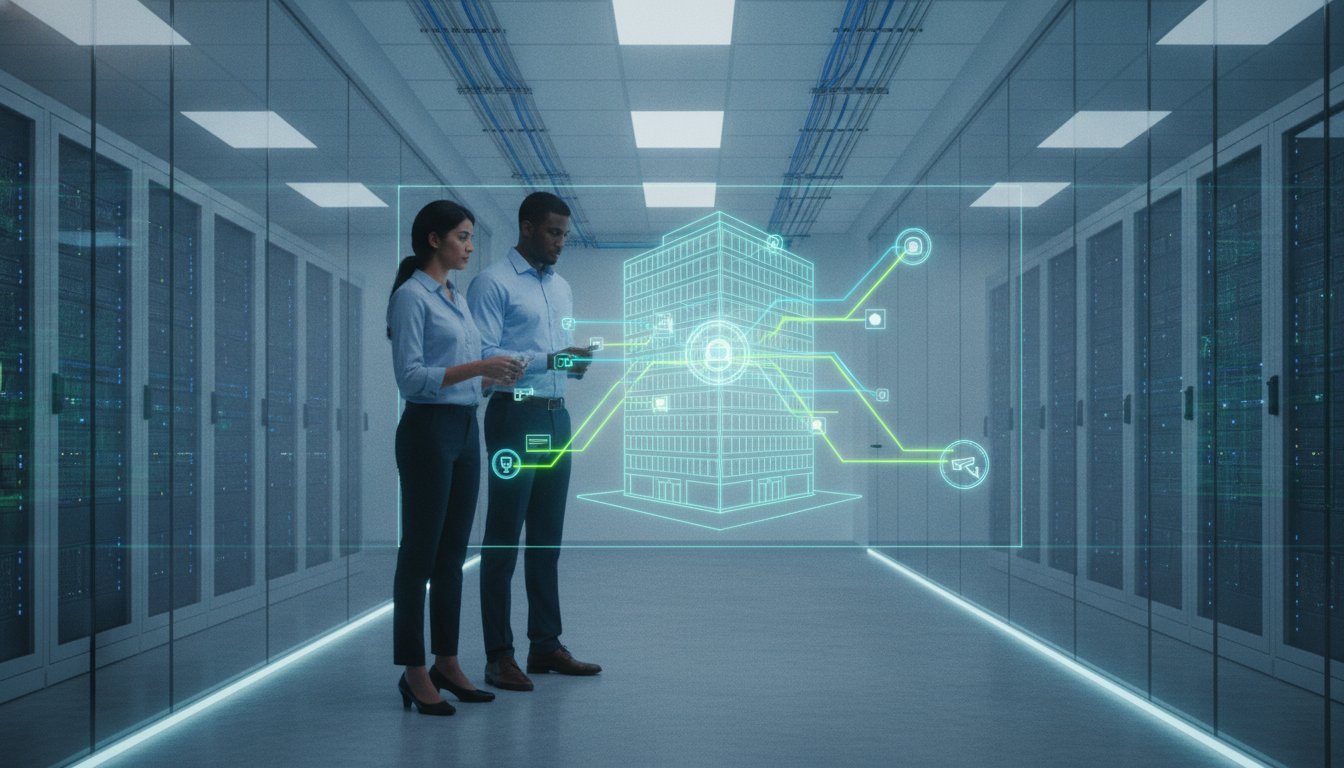
Modern security demands a partner who views your facility as a single, integrated ecosystem. By prioritizing technical depth in structural cabling and cloud-based AI analytics, you ensure your protection is both scalable and proactive. Choosing a commercial security integrator is about more than a hardware purchase; it’s about establishing a relationship with a reliable architect who manages the complex background systems of your business. Terapixels Systems provides this stability through national reach and complete infrastructure support, from fiber optics to sophisticated cybersecurity protocols.
We’re committed to your long-term growth and protection. Let us handle the technical complexities so you can focus on leading your organization with confidence and peace of mind.
Frequently Asked Questions
What is the difference between a security installer and a security integrator?
A security installer typically focuses on the physical placement of hardware, while a security integrator designs a unified ecosystem where different systems communicate seamlessly. Integrators act as technology architects, ensuring your access control, surveillance, and network infrastructure work together. This holistic approach is vital when choosing a commercial security integrator to avoid fragmented data and operational silos.
How does structured cabling affect the performance of my security cameras?
Structured cabling serves as the high-bandwidth backbone for your entire surveillance network. Using high-quality CAT6 or fiber optic cabling prevents latency and ensures that high-definition video feeds or AI analytics don’t lag or drop. Without proper cabling, even the most advanced cameras will underperform, leading to pixelation or lost data during critical security incidents.
Can a security integrator help reduce my business liability insurance?
Yes, a professional integrator can help reduce liability by implementing verifiable, high-uptime security protocols. Insurance providers often offer lower premiums to businesses that demonstrate proactive risk management through unified surveillance and access control. By maintaining a complete digital audit trail of facility entries and video evidence, you significantly lower the financial risks associated with theft or false injury claims.
Why is cybersecurity important for a commercial surveillance system?
Cybersecurity is critical because modern surveillance cameras are networked IoT devices that can be targeted by hackers. If your system isn’t hardened, it becomes a gateway for digital intruders to access your broader corporate network. A professional integrator implements encryption, regular firmware updates, and cyber audits to protect your sensitive data and maintain the integrity of your security footage.
Should I choose an on-premise or cloud-based access control system?
For most modern businesses, cloud-based access control is the superior choice due to its scalability and remote management capabilities. Unlike on-premise servers that require local maintenance and hardware upgrades, cloud systems allow you to manage multiple sites from a single dashboard. This approach simplifies operations and ensures that security updates are applied automatically across your entire national facility footprint.