CONTACT US
If a digital firewall cannot stop an unauthorized person from walking directly into your server room, is your data truly protected? In 2026, a high-performance access control system for sensitive data rooms acts as the first line of defense in a unified security strategy. You probably already know that physical breaches often lead to the most devastating digital losses, yet many facilities still struggle with fragmented systems that leave server racks vulnerable to human error or malicious intent.
We’re here to help you bridge that gap. This guide provides a clear framework to evaluate and implement high-security access control systems designed to protect sensitive environments while ensuring strict regulatory compliance. You’ll discover how to navigate the latest standards, from AES-256 encryption requirements to the impact of the 2026 National Defense Authorization Act (NDAA) on your procurement choices. We will walk through the essential features of modern hardware, the shift toward mobile-first credentials, and how to integrate physical monitoring with your existing digital infrastructure for a truly comprehensive and reliable security posture.
Key Takeaways
- Understand why a multi-layered security perimeter is required to move beyond basic office keycards for high-stakes server environments.
- Discover how to evaluate an access control system for sensitive data rooms by prioritizing Multi-Factor Authentication and encrypted mobile credentials.
- Compare the operational benefits of cloud-based versus on-premise controllers to ensure your system scales with your facility’s specific needs.
- Learn how structured cabling and Power over Ethernet (PoE) provide the essential backbone for reliable, high-security hardware installations.
- Identify the critical technical features necessary to maintain strict compliance with 2026 industry standards and global security regulations.
The Architecture of Security: Defining Access Control for Sensitive Data Rooms
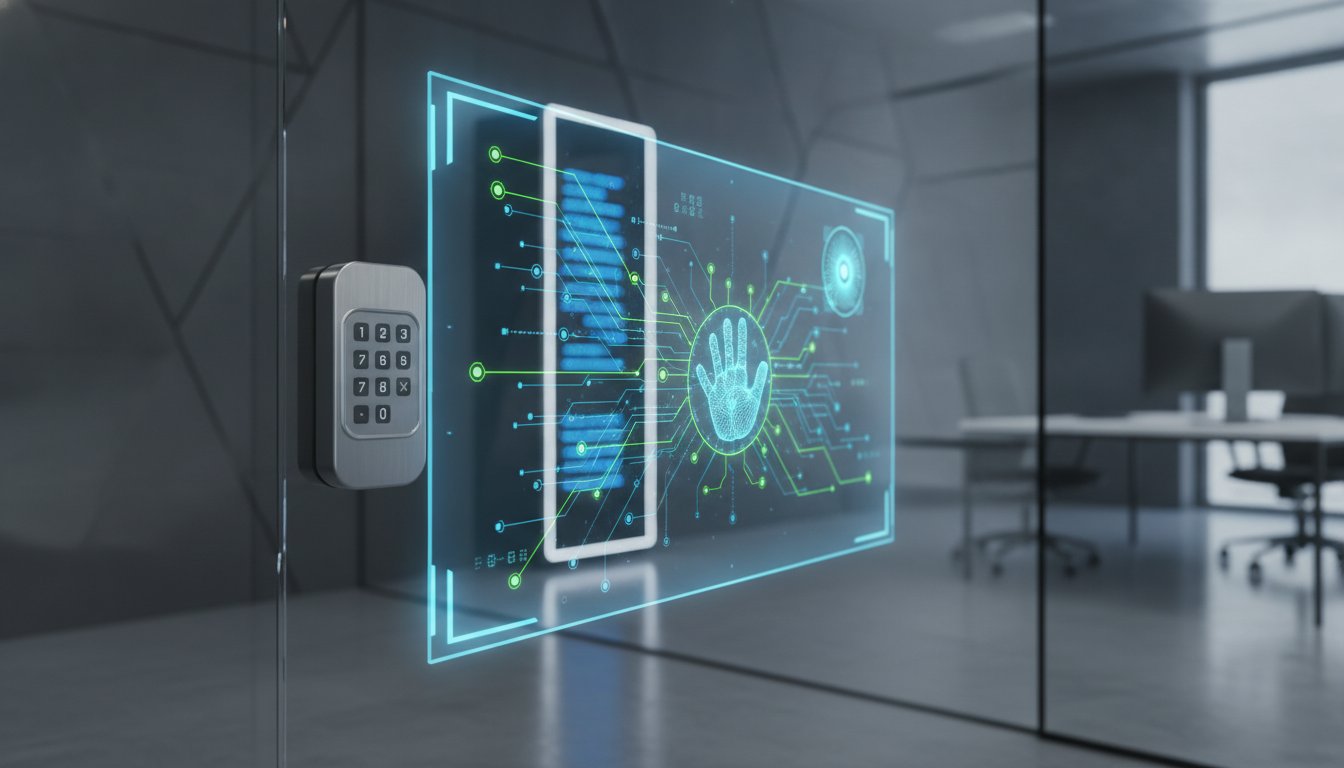
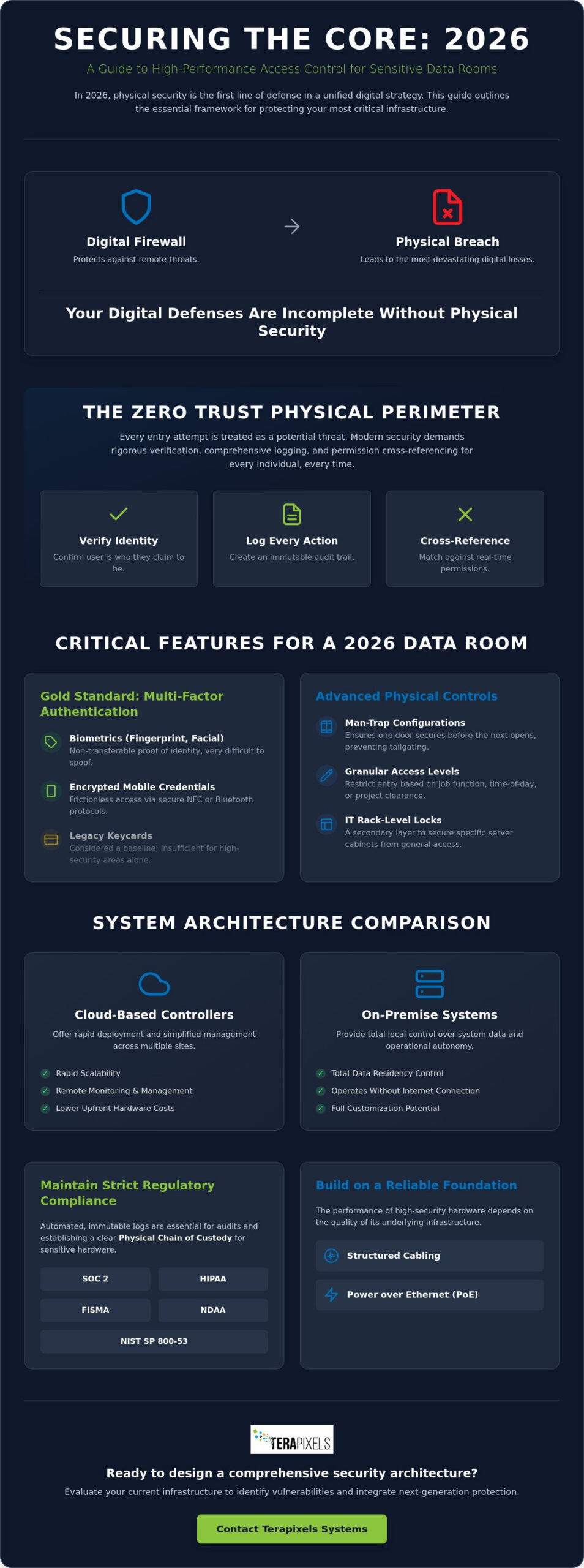
A robust access control system for sensitive data rooms is far more than a simple electronic lock. It functions as a multi-layered perimeter that synchronizes physical barriers with digital verification. While standard office keycards might work for a breakroom, they’re insufficient for server environments where a single breach can compromise an entire organization’s infrastructure. Modern security demands a Zero Trust approach. This means every entry attempt, regardless of the user’s rank, is verified, logged, and cross-referenced against real-time permissions.
To see how advanced technology is reshaping these environments, watch this overview of AI-driven data protection:
This physical layer doesn’t exist in a vacuum. It integrates directly with remote monitoring management for business to ensure that security teams receive instant alerts the moment an anomaly occurs. By connecting physical access to your broader digital strategy, you create a seamless environment where security is proactive rather than reactive.
As part of this proactive digital strategy, Promptective offers an AI security layer designed to protect browser and desktop workflows from malicious prompts and data leaks.
Why Sensitive Data Rooms Require Specialized Solutions
Granular access levels are the most effective tool against the insider threat. By restricting movement based on specific job functions or time windows, you reduce the risk of accidental or intentional data exposure. High-security zones often employ Anti-Passback logic, which prevents a user from passing their credential back to another person. For the most critical assets, Man-Trap configurations ensure that one door must be fully secured before the next one opens, creating a physical bottleneck that prevents unauthorized tailgating.
Regulatory Compliance Standards (SOC 2, HIPAA, and FISMA)
Automated logging is a core requirement for modern audits. Systems that provide detailed, immutable reports help organizations satisfy the rigorous demands of SOC 2, HIPAA, and FISMA. These logs establish a clear physical Chain of Custody for sensitive hardware. This term refers to the chronological documentation or paper trail that records the sequence of custody, control, and transfer of physical access to sensitive equipment, providing a definitive record of exactly who interacted with a server rack.
Critical Features to Evaluate in a 2026 Data Room Access System
Selecting an access control system for sensitive data rooms requires a focus on both interoperability and high-grade encryption. According to the NIST SP 800-53 framework, physical security controls must be granular and verifiable to protect critical infrastructure. You should decide between cloud-based controllers, which offer rapid scalability across multiple sites, and on-premise systems that provide total local control over data residency. Both options have merits, but the priority remains ensuring that the hardware can handle the high-traffic demands of a modern data center without latency.
Physical security shouldn’t end at the main door. An effective access control system for sensitive data rooms often includes IT rack-level locks. This provides a secondary layer of protection, ensuring that even authorized personnel only access the specific server cabinets required for their tasks. Designing a custom security architecture ensures these features work in harmony. You can evaluate your current security infrastructure to determine which hardware best fits your specific room layout.
Credential Types: Biometrics vs. Mobile vs. Keycards
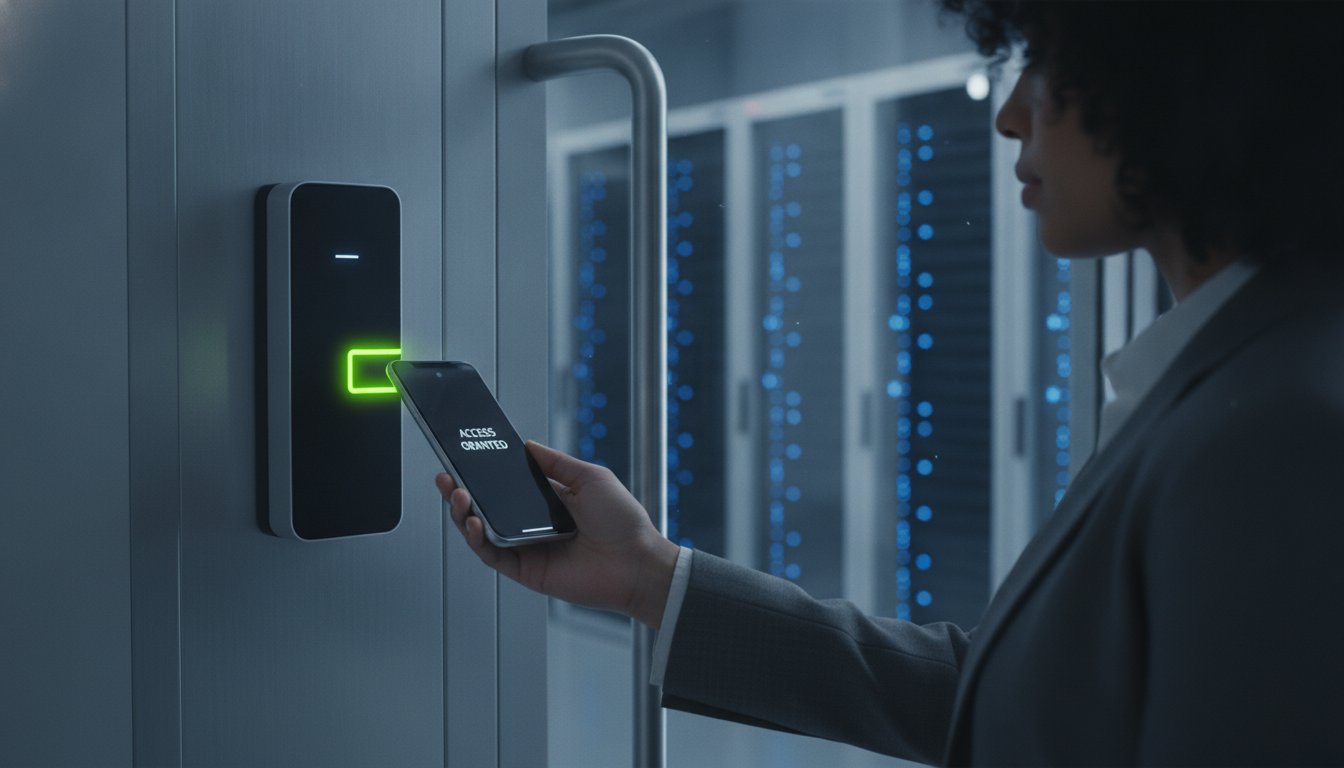
Multi-Factor Authentication (MFA) is the 2026 gold standard. Biometrics, such as facial recognition or fingerprinting, provide non-transferable proof of identity that is difficult to spoof. Mobile credentials using encrypted NFC or Bluetooth offer a frictionless user experience while maintaining high security. In contrast, a standard keycard access control system for business is often vulnerable to cloning unless it utilizes modern high-frequency smart cards with mutual authentication.
End-to-End Encryption and Hardware Tamper Alerts
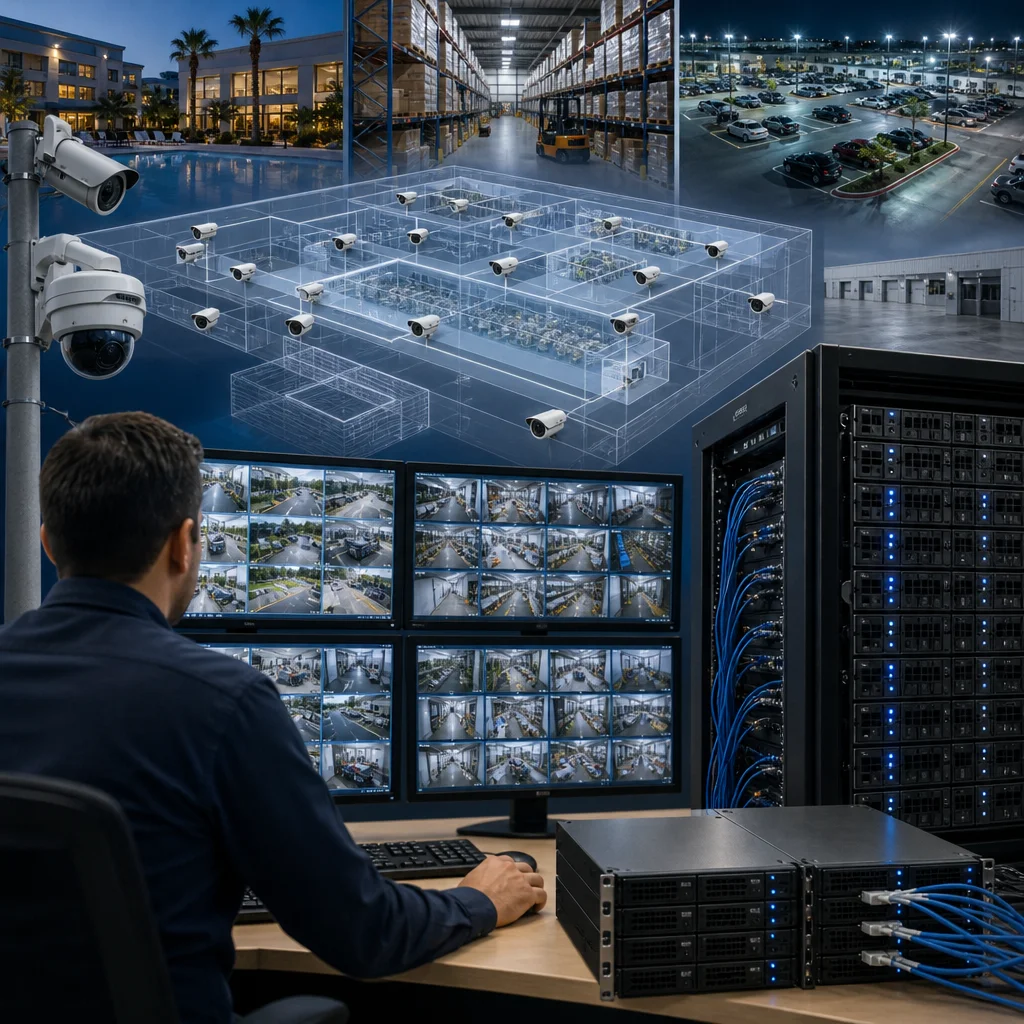
Modern systems must utilize the Open Supervised Device Protocol (OSDP) as the baseline for secure reader-to-controller communication. This protocol ensures that all data transmitted is encrypted, preventing hackers from intercepting signals at the door. When you integrate an AI security camera system commercial setup, you gain visual verification that matches credential logs. This allows AI analytics to detect tailgating in real-time, alerting security teams if two people enter on a single badge swipe or if a device is being physically tampered with.
Strategic Implementation: Integrating Access Control with Facility Infrastructure
The final stage of securing your facility involves aligning your hardware with a resilient physical foundation. Even the most advanced access control system for sensitive data rooms will fail if the underlying network or power supply is compromised. High-security environments rely on Power over Ethernet (PoE) to streamline installations, allowing data and power to travel over a single cable. This reduces the number of failure points and simplifies the management of door controllers and biometric readers. When these elements are professionally deployed, they provide a “single pane of glass” view into your facility’s security posture.
Reliability is built from the ground up. Understanding what is structured cabling is vital because it provides the organized backbone necessary for zero-latency security communication. To prevent lockouts or system outages during a grid failure, integrating a backup generator installation for business ensures that your data room remains impenetrable even in the worst-case scenarios. This combination of stable power and organized data flow creates a predictable environment for sensitive operations.
The Role of Structured Cabling and Network Integrity
Network performance directly impacts security response times. A CAT6 cabling installation commercial standard is the baseline for 2026. It provides the bandwidth needed for high-resolution visual verification and rapid credential processing. Utilizing low voltage structured cabling also minimizes fire risks and keeps your data room organized, preventing the cable clutter that often complicates emergency maintenance or hardware upgrades.
Proactive Security with Remote Monitoring (RMM)
A modern access control system for sensitive data rooms isn’t just set and forgotten. Implementing rmm (Remote Monitoring and Management) allows your team to identify hardware degradations in readers or controllers before they lead to a system failure. By integrating AI-driven analytics, you can move from reactive alerts to predictive threat detection. This helps identify unusual access patterns that might signal a sophisticated breach attempt before it fully develops, ensuring long-term technological reliability.
Securing Your Infrastructure for the Future
Protecting your organization’s most critical assets requires more than a simple lock. It demands a sophisticated access control system for sensitive data rooms that bridges the gap between physical barriers and digital oversight. We’ve explored how Zero Trust principles, Multi-Factor Authentication, and robust structured cabling create a resilient environment that satisfies both security needs and rigorous regulatory audits.
Terapixels Systems specializes in this level of comprehensive protection. Our team provides expert structured cabling for national commercial facilities, ensuring your hardware has the reliable backbone it needs to perform. We combine this with end-to-end cloud-based surveillance and access control, utilizing AI-driven security integration to detect threats before they escalate. By prioritizing a unified approach, you can focus on your core business objectives while we manage the complex background systems that keep your data safe.
Design Your High-Security Data Room with Terapixels Systems to build a stable, scalable foundation for your business operations. We look forward to partnering with you to create a secure environment that supports your long-term growth and technological reliability.
Frequently Asked Questions
What is the best type of biometric access for a sensitive data room?
Facial recognition and multi-spectral fingerprinting are the most effective biometric choices for high-security environments in 2026. Facial recognition provides a frictionless entry experience while maintaining high accuracy; multi-spectral fingerprinting ensures that the system can read credentials even in difficult conditions. These methods are preferred for an access control system for sensitive data rooms because they provide non-transferable proof of identity, effectively eliminating the risk of shared or stolen physical badges.
How does physical access control help with SOC 2 or HIPAA compliance?
Physical access control systems satisfy compliance requirements by generating automated, immutable logs of every entry attempt. Frameworks like SOC 2 and HIPAA specifically mandate that organizations restrict and monitor physical access to servers containing protected health or financial information. By maintaining detailed records of who entered a room and when, your organization can easily demonstrate a clear physical chain of custody during regular security audits.
Can I integrate my existing security cameras with a new access control system?
Yes, you can typically integrate existing security cameras with a new access control system for sensitive data rooms using open architecture protocols. This integration allows your security team to link recorded video clips to specific entry events, providing visual verification for every badge swipe or biometric scan. Connecting these systems creates a unified security posture that makes it much easier to investigate anomalies or potential breaches in real-time.
What happens to the data room access system during a power outage?
Professionally installed systems utilize local battery backups to ensure that electronic locks and readers remain functional during immediate power failures. For long-term continuity, these systems should be integrated with your facility’s backup generator. This setup prevents unauthorized access during an outage while ensuring that all entry data continues to be logged and synchronized with your remote management platform without any gaps in protection.