CONTACT US

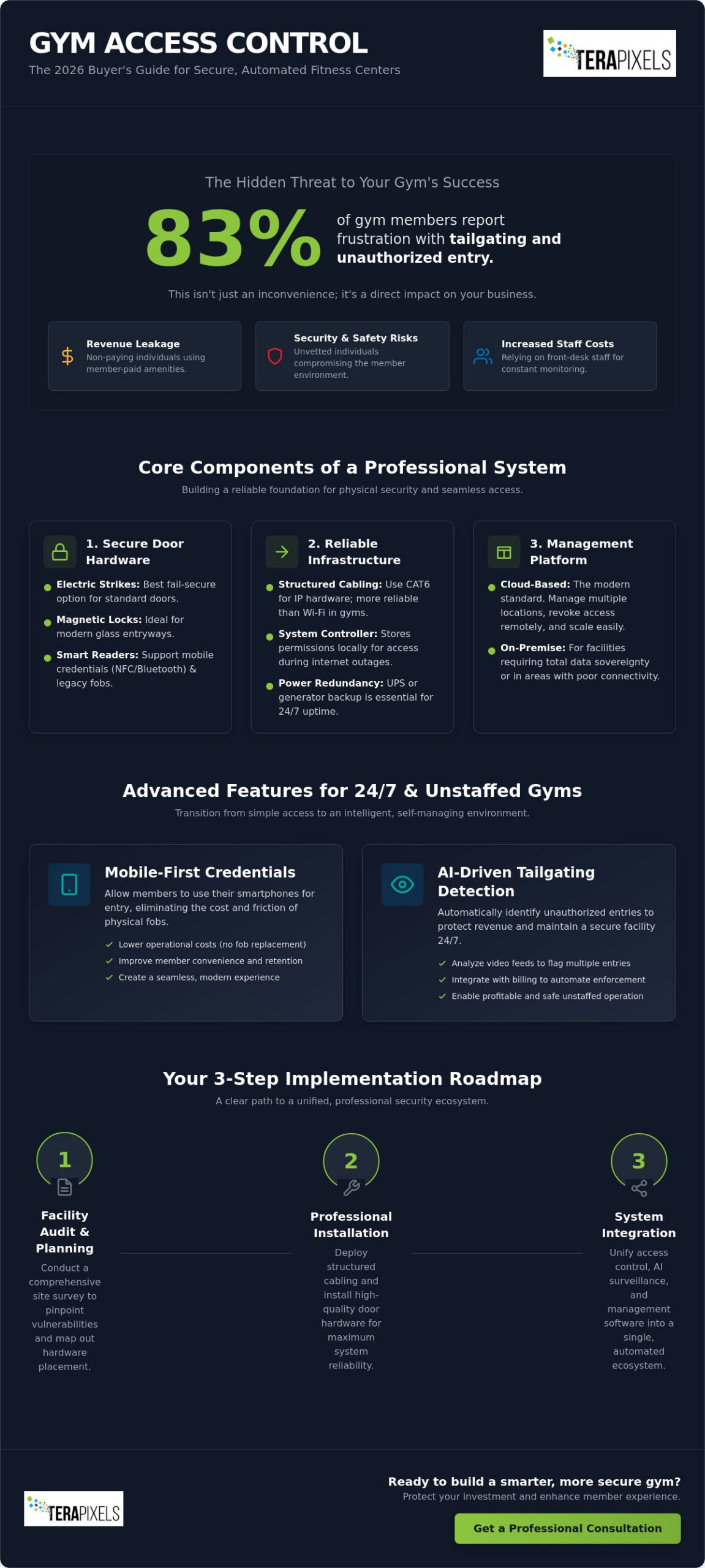
Did you know that 83% of gym members report frustration with tailgating and unauthorized entry? This isn’t just a minor security oversight; it’s a direct threat to the exclusive environment your paying members expect and a significant leak in your monthly revenue. You’ve likely felt the mounting pressure of high payroll costs for front-desk staff or the anxiety of system downtime that prevents members from accessing your facility. We understand that managing a high-traffic fitness center requires more than a simple lock. It demands a robust, integrated access control system for gyms and fitness centers that operates with absolute precision and reliability.
In this 2026 buyer’s guide, you’ll discover how to select and implement a high-security, automated system that reduces staff costs and protects your investment around the clock. We’ll examine the technical infrastructure, from structured cabling to AI-driven surveillance, that creates a seamless experience for your members. You’ll learn how to transition from traditional fobs to mobile-first authentication and cloud management. This guide provides a clear roadmap for building a secure, unstaffed facility that generates revenue 24/7 while maintaining the highest safety standards for every person who walks through your doors.
Key Takeaways
- Learn how to select the ideal hardware, such as electric strikes and smart readers, to maintain high security standards at your busiest entry points.
- Discover how a modern access control system for gyms and fitness centers uses mobile credentials to lower staff costs and improve the member experience.
- Understand how AI-driven tailgating detection provides a layer of automated protection against unauthorized entry in 24/7 unstaffed facilities.
- Explore the essential steps for designing a professional cabling plan that ensures maximum system reliability and future scalability.
- Identify how to conduct a comprehensive facility audit to pinpoint vulnerabilities and implement a unified, professional security ecosystem.
Table of Contents
Core Components of a Professional Gym Access Control System
Building a high-performance facility starts with a reliable foundation of physical security. A professional access control system for gyms and fitness centers isn’t just a convenience; it’s the primary barrier protecting your assets and your members. Modern access control involves a sophisticated interplay between hardware and software to ensure only authorized individuals enter. Choosing the right components requires an understanding of how they perform under heavy daily use.
To see these systems in action, watch this overview of the leading hardware options currently available:
Door hardware often presents the first major decision: magnetic locks or electric strikes. Magnetic locks are often ideal for the glass doors common in modern boutique studios. Electric strikes, however, offer better fail-secure options for standard door frames. To complement these, smart readers should support multiple protocols. Your members expect the ease of mobile NFC or Bluetooth entry via their smartphones. It’s still wise to maintain support for legacy fobs to accommodate every membership tier without friction.
The system controller acts as the central intelligence. It must store permissions locally. This ensures that entry remains possible even if your internet connection drops. This reliability is reinforced by power redundancy. For a 24/7 facility, installing a UPS or integrating with a generator is essential. It prevents member lockouts during local grid failures and keeps your business running smoothly.
The Role of Structured Cabling in System Reliability
System stability depends on the physical path data travels. While Wi-Fi is convenient for personal devices, it’s often unreliable in gyms filled with metal equipment and signal-blocking mirrors. We recommend CAT6 cabling for all IP-based hardware. Understanding what is structured cabling can help you see why this high-bandwidth foundation prevents system lag and keeps your readers responsive at all times.
Cloud-Based vs. On-Premise Management
Cloud-based access control offers unmatched flexibility for owners managing multiple locations. You can revoke access or monitor entries from a smartphone anywhere in the world. On-premise systems remain a choice for facilities requiring total data sovereignty or those operating in areas with inconsistent connectivity. Both options provide a secure environment, but the cloud is the standard for modern, scalable fitness brands looking to automate their growth.
Evaluating Advanced Features for 24/7 Fitness Centers
Managing unauthorized entry remains a top priority for 24/7 operators. Research indicates that 83% of gym members report frustration with tailgating, which compromises both safety and revenue. AI-driven tailgating detection solves this by analyzing video feeds in real-time to identify when multiple individuals enter on a single valid scan. When linked to your billing software, the system can automatically flag these accounts for review or suspend access for non-payment. This ensures your facility remains profitable without constant human oversight. You can also implement time-based permissions to restrict access to premium zones like saunas or specialized training areas based on specific membership tiers.
Integrating Access Control with AI Surveillance
Visual verification is the missing link in many security setups. An AI security camera system commercial installation provides a synchronized record of every entry event. This integration is vital for reducing liability. If an injury occurs or property is damaged, you have a definitive record connecting a specific access log to high-definition video footage. This level of transparency protects both the business and the members. It’s about having a complete, verifiable narrative of everything that happens on your property.
Credential Security and Cybersecurity
Security is only as strong as its weakest link. Many older systems rely on 125kHz fobs that are easily cloned with inexpensive tools. Transitioning to encrypted smart cards or mobile tokens aligns with the rigorous standards found in the NIST Special Publication 800-116. To maintain total protection, your access control network should be hardened using network security for small business best practices. If you’re concerned about your current vulnerabilities, it may be time to evaluate your infrastructure with a professional partner.
Implementation and Maintenance: Ensuring 100% Uptime
A successful deployment of an access control system for gyms and fitness centers requires a methodical approach that goes beyond simple hardware installation. It’s a structured process that ensures long-term reliability. First, we conduct a facility-wide security audit. This step identifies vulnerable entry points and determines the specific hardware needs of each zone. Next, we design a low-voltage cabling plan. This isn’t just about current needs; it’s about supporting future hardware expansion without the need for invasive structural changes later.
The third phase involves professional installation and rigorous testing of all hardware, including electronic locks and motion sensors. Unlike a standard locksmith who might only focus on the physical lock, a professional implementation considers the entire IT ecosystem. We verify that every component communicates perfectly with the central controller. Finally, we focus on member onboarding. Transitioning to a new mobile entry platform requires clear communication and staff training. When your team understands how to manage the system, your members experience a smooth, professional transition that reinforces the value of their membership.
Remote Monitoring Management (RMM) for Access Control
System downtime can lead to frustrated members and lost revenue. Integrating rmm into your security infrastructure is essential for maintaining 100% uptime. This technology allows us to detect potential hardware failures or connectivity issues before a member ever gets locked out. We also use these tools for proactive firmware updates. Keeping your software current is the best defense against new cybersecurity vulnerabilities, ensuring your facility remains a secure environment for everyone at all times.
Planning for Business Continuity
Electrical stability is a critical component of physical security. We recommend a backup generator installation for business to keep your security systems live during local power outages. Without power, even the most advanced digital locks can become a liability. Additionally, a regular maintenance schedule is vital. Electronic strikes and door closers are mechanical devices that experience high wear in a high-traffic gym setting. Inspecting these components quarterly prevents mechanical failure and ensures your access control system for gyms and fitness centers remains a reliable asset for years to come.
Securing the Future of Your Fitness Facility
Modernizing your facility’s security is a strategic investment that extends far beyond a simple locked door. By transitioning to mobile-first credentials and integrating AI surveillance, you create an environment that is both welcoming for members and resilient against unauthorized entry. A professional access control system for gyms and fitness centers ensures that your business remains profitable and protected 24/7, even when your staff isn’t on-site. The key to long-term success lies in the stability of your infrastructure, from the quality of your CAT6 cabling to the reliability of your remote management protocols.
Terapixels Systems provides the technical expertise and national coverage required to design and maintain these complex ecosystems. We specialize in AI-driven analytics for precise tailgating detection and offer comprehensive RMM services to ensure your system achieves 100% uptime. Our team acts as your steady partner, managing the background technology so you can focus on member growth and facility operations. Secure your fitness facility with a custom access control solution from Terapixels Systems. We’re ready to help you build a safer, more automated future for your fitness brand.
Frequently Asked Questions
What is the best access control system for a 24-hour gym?
The ideal access control system for gyms and fitness centers operating 24/7 is a cloud-based platform that features mobile credential support and local offline processing. This configuration allows members to use their smartphones for entry while ensuring the door remains functional even during an internet outage. A professional installation includes a controller with built-in memory to store permissions locally, preventing lockouts and maintaining a seamless member experience at any hour.
How do I stop tailgating at my fitness center without staff present?
You can effectively mitigate tailgating by integrating AI analytics with your cloud-based surveillance systems. These advanced cameras detect when multiple people pass through a door during a single valid entry scan. The system then automatically flags the event and links the high-definition footage to the member’s account for automated follow-up. This technological approach creates a high-security environment that protects your revenue without requiring a physical presence at the front desk.
Can I use my existing gym membership software with a new access control system?
Most modern access control solutions are designed to integrate with leading gym management software through open APIs or native plug-ins. This connectivity allows for automated account management, where a member’s door access is instantly suspended if their payment fails or their contract expires. It’s essential to verify compatibility during the planning phase to ensure your billing and security systems communicate as a unified ecosystem, reducing administrative overhead for your management team.
What happens to the gym’s access control system if the power goes out?
A professionally designed system remains operational during power outages through the use of Uninterruptible Power Supplies (UPS) and backup generator installation. These components provide the necessary voltage to keep electronic locks and readers active until main power is restored. Additionally, high-quality controllers store access logs and permissions in non-volatile memory. This ensures your security protocols remain intact and your data is protected throughout the duration of the power event.