CONTACT US
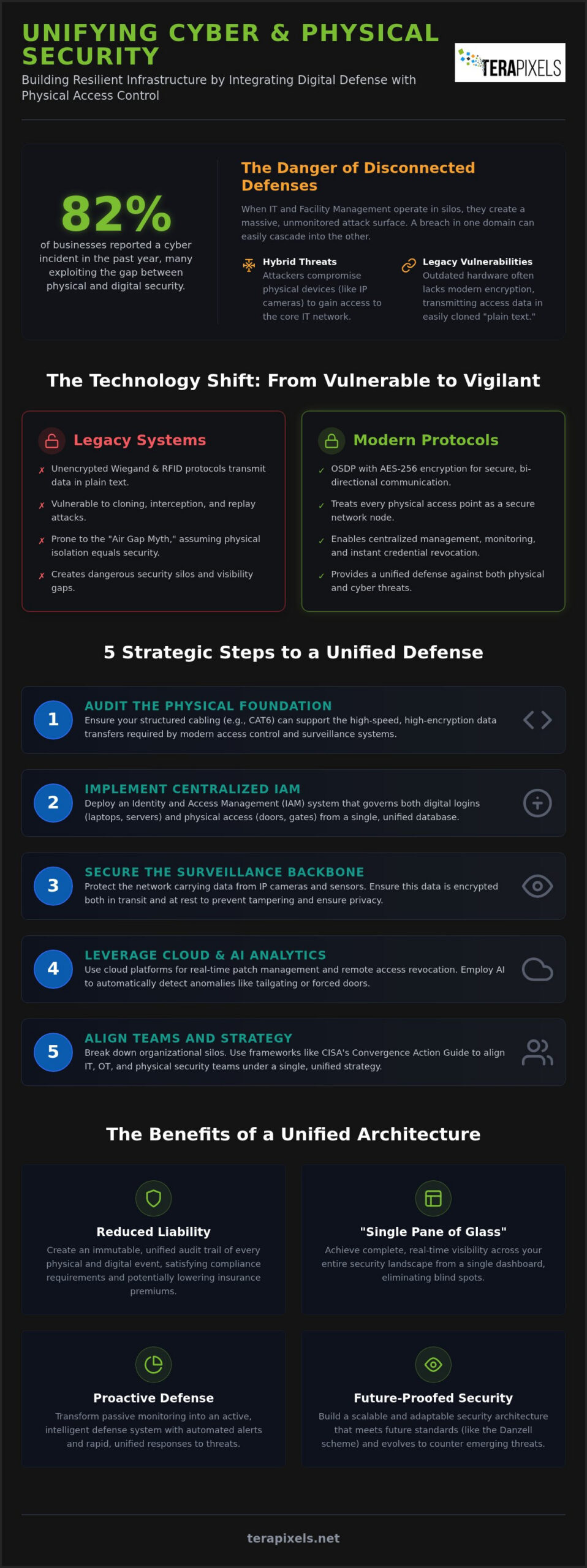
With 82% of businesses reporting a cyber incident in the past year, the traditional wall between your IT department and your facility manager has become a dangerous liability. You’ve likely noticed that legacy hardware often fails to support modern encryption, creating friction and leaving your property vulnerable to hybrid threats. It’s frustrating to manage separate systems that don’t communicate. This guide demonstrates how integrating cybersecurity with physical access control eliminates these silos to build a truly resilient commercial infrastructure.
By merging digital defense with physical barriers, you can achieve a single pane of glass for all security monitoring. We’ll examine how AI-driven analytics and cloud-based frameworks reduce liability and ensure your systems meet 2026 standards, such as the Danzell scheme. This methodical approach provides the stability you need to focus on your core business objectives while we secure the background.
Key Takeaways
- Identify why the traditional separation of IT and facility management creates the largest surface area for modern hybrid attacks.
- Master the strategic process of integrating cybersecurity with physical access control to create a single, unified defense system for your entire infrastructure.
- Evaluate your physical layer to ensure your structural cabling and CAT6 installations meet the demands of high-encryption security data.
- Secure your facility’s future by implementing Identity and Access Management (IAM) that governs both digital logins and physical door access simultaneously.
The Convergence of Cyber and Physical Security Infrastructure
Modern security requires a shift from viewing “bits” and “bricks” as separate entities. Cyber-physical convergence is the deliberate unification of digital protocols and physical entry points into a single, managed environment. When organizations maintain isolated silos between IT and facility management, they inadvertently create the largest possible attack surface. These gaps exist because physical hardware often lacks the robust encryption standards found in the digital network. Understanding the foundational concepts of physical access is essential for recognizing how these two worlds overlap in a commercial setting.
A significant threat in this environment is lateral movement. If a smart lock or IP camera is compromised, it can serve as a bridge to your corporate server. Hackers don’t just want to open a door; they want to use that door’s network connection to infiltrate sensitive data. Successfully integrating cybersecurity with physical access control ensures that every endpoint is treated as a secure node on the network. This approach prevents a single breach at the perimeter from becoming a full-scale data catastrophe.
The Vulnerability of Legacy Access Control Systems
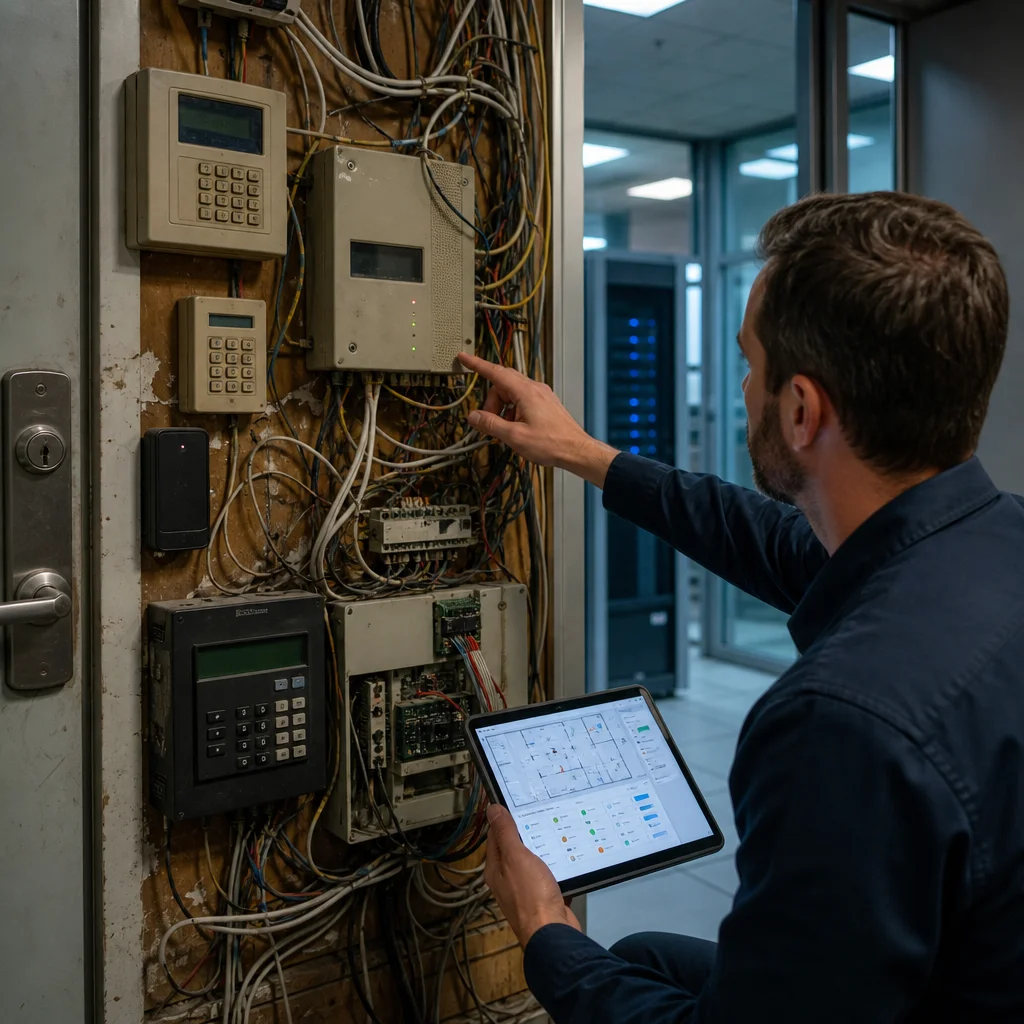
Many commercial buildings still rely on unencrypted RFID cards and older Wiegand protocols. These legacy systems act as open doors for digital intruders because they transmit data in “plain text” that can be easily intercepted or cloned. Moving toward the Open Supervised Device Protocol (OSDP) is no longer optional for businesses that value stability. OSDP supports AES-256 encryption, creating a secure, bi-directional communication channel between the reader and the controller. The Air Gap Myth is the dangerous assumption that physical security systems are inherently protected from digital threats because they’re perceived as being disconnected from the primary corporate network.
Strategic Steps for Integrating Cybersecurity with Physical Access Control
Building a unified defense begins with an audit of your physical layer. It’s vital to ensure your structured cabling supports the high-encryption data transfers required by modern OSDP readers. Without a robust physical foundation, even the most advanced software will struggle with latency or signal dropouts. Following CISA’s Convergence Action Guide helps organizations align their digital and physical teams under a single strategic framework. This alignment allows for the implementation of Identity and Access Management (IAM) that governs both laptop logins and door badge swipes from a centralized database.
Protecting the surveillance backbone is equally critical. Comprehensive network security for small business ensures that the data flowing from your sensors remains private and tamper-proof. When these systems work together, you eliminate the visibility gaps that intruders often exploit. If you’re unsure about your current network health, a consultation with a specialized security partner can reveal hidden vulnerabilities in your infrastructure.
Leveraging Cloud-Based Architectures and AI Analytics
Successfully integrating cybersecurity with physical access control relies heavily on cloud-based architectures. These systems offer real-time patch management and remote credential revocation. If an employee leaves the company, their access to both the building and the network can be terminated instantly. Integrating an AI security camera system commercial setup allows you to verify physical access events against digital logs automatically. For instance, AI can detect “tailgating” where an unauthorized person follows a badge-holder through a door. You can set up automated alerts for these events or for “door forced open” scenarios, ensuring a rapid response to every anomaly. This methodical approach transforms passive monitoring into an active, intelligent defense system.
Future-Proofing Facilities with Unified Security Architecture
Transitioning to a unified architecture is a strategic investment that yields dividends far beyond immediate protection. Integrating cybersecurity with physical access control reduces long-term liability by creating an immutable audit trail of every physical entry and digital event. Property managers often discover that these comprehensive logs are exactly what insurance providers require to justify lower premiums. However, the reliability of this data depends entirely on the quality of the physical foundation. A professional CAT6 cabling installation commercial grade is necessary to prevent signal degradation in security sensors. If the cabling fails, even the most advanced encryption becomes irrelevant. By positioning integrated security as a business enabler, you create a stable environment where technology supports your core objectives.
Continuous Protection through Remote Monitoring Management (RMM)
A resilient security posture isn’t a one-time setup; it requires ongoing maintenance to stay effective. Utilizing rmm ensures that every piece of security hardware, from cameras to access readers, is always online and running the latest firmware. This proactive strategy allows for the detection of a failing controller or a disconnected sensor before a breach occurs. It’s the difference between a system that works on paper and one that performs under pressure. Integrating cybersecurity with physical access control through a Reliable Architect allows you to maintain the symbiotic relationship between your digital and physical assets with quiet confidence. This steady hand manages the complex background systems so you can focus on growth, knowing your infrastructure is future-proofed.
Building a Resilient Security Ecosystem for 2026
Securing a modern facility requires a holistic view where digital and physical defenses work in tandem. By integrating cybersecurity with physical access control, you eliminate the silos that leave your infrastructure vulnerable to lateral movement. This unified approach transforms your security from a passive cost center into a proactive business enabler. Terapixels Systems provides the national expertise in RMM and Cybersecurity needed to keep your systems online and encrypted. Our comprehensive structural cabling solutions and AI-driven surveillance integration ensure your facility remains stable under the evolving threats of 2026.
We’re dedicated to acting as your reliable architect, managing complex background systems so you can focus on your core objectives. Let’s build a secure future for your business together.
Frequently Asked Questions
What is the difference between physical and logical access control?
Physical access control manages entry to tangible spaces like offices or server rooms. Logical access control governs entry to digital assets like computer networks and software systems. Integrating cybersecurity with physical access control merges these two functions into a single managed environment. This ensures that an employee’s credentials authorize both their physical presence in a building and their digital access to secure data simultaneously. For businesses needing expert guidance on this unification, missupport.com provides specialized IT and compliance solutions.
Can cybersecurity integration work with my existing keycard system?
Yes, integration is often possible, but it depends on your current hardware’s encryption capabilities. Legacy systems using unencrypted Wiegand protocols may require an upgrade to OSDP readers to support secure, bi-directional communication. We specialize in evaluating your existing access control systems to determine if they can be securely bridged into a unified, modern security framework without replacing every component.
How does cloud-based access control improve cybersecurity?
Cloud-based systems improve cybersecurity by enabling real-time patch management and automated updates across your entire infrastructure. This architecture allows for immediate credential revocation from any location, which is critical if a device is stolen or an employee leaves. It centralizes monitoring into a single pane of glass, and partnering with an expert team like CX IT Services ensures these protocols are consistently maintained across all sites, reducing the risk of human error.
Integrating cybersecurity with physical access control relies on structured cabling to serve as the physical foundation for all high-speed data transfers. Using professional CAT6 or fiber cabling ensures that high-encryption protocols like AES-256 operate without signal degradation. Without a reliable cabling backbone, your cybersecurity measures and physical readers can’t maintain the stable, high-bandwidth connection required for real-time monitoring and threat detection.