CONTACT US

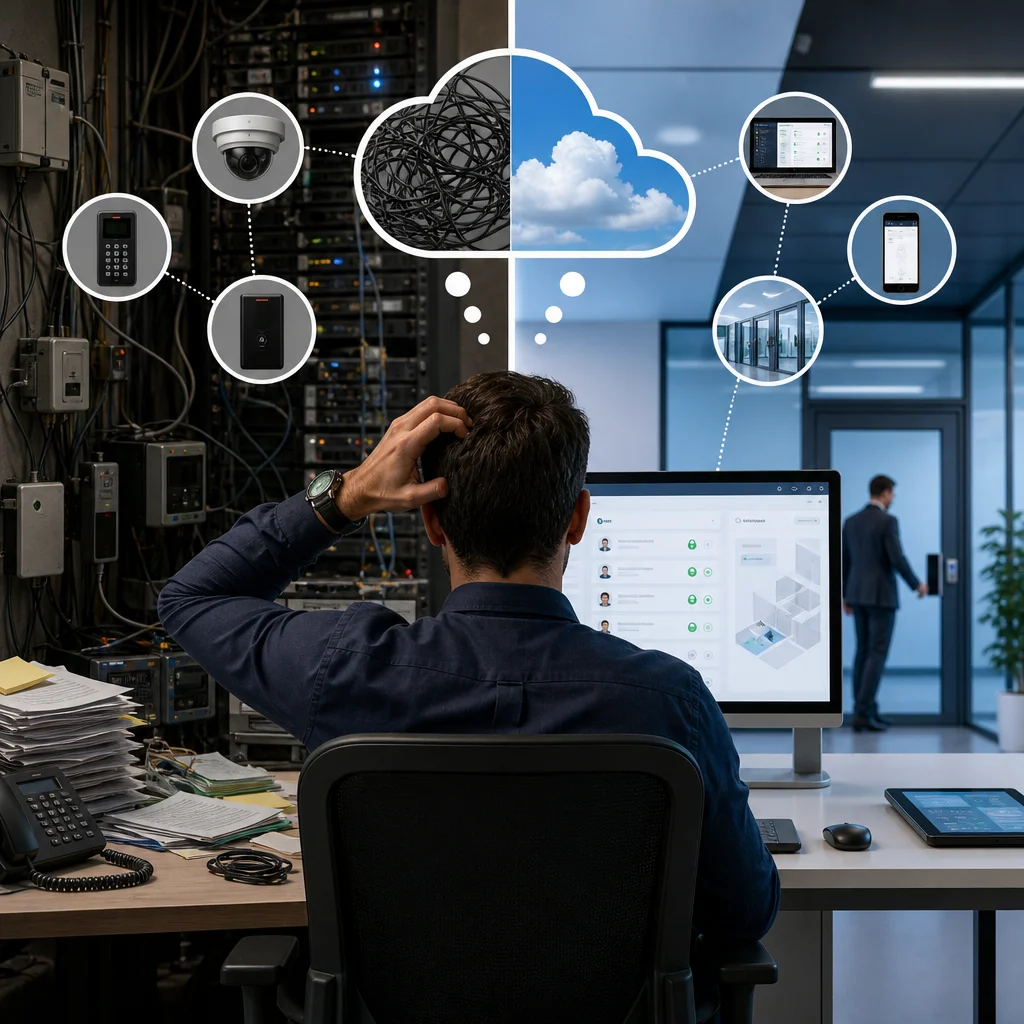
Did you know that intelligent HVAC and lighting controls can reduce your property’s energy consumption by as much as 40 percent compared to conventional systems? While that potential is exciting, many property owners find themselves trapped by siloed systems that simply don’t talk to each other. When your security cameras, fiber cabling, and energy management operate in isolation, you lose the efficiency needed to thrive. Implementing integrated commercial building technology solutions isn’t just about adding new gadgets. It’s about creating a unified nervous system that protects your bottom line and your tenants.
You’ve likely felt the pressure of rising insurance premiums and the urgency of new regulations like New York’s Local Law 97 or Boston’s BERDO 2.0. We understand that managing multiple vendors for IT and security is exhausting and often leads to gaps in your infrastructure. This guide will show you how to unify your security, connectivity, and energy systems into a single, high-performance ecosystem. We’ll walk through the strategic steps to lower your operational expenses, secure your facility with AI analytics, and prepare your property for the specific EV and solar requirements of the 2026 tax landscape.
Key Takeaways
- Understand how shifting from isolated hardware to cloud-based ecosystems creates a stable, unified network for more efficient facility management.
- Learn to identify the core pillars of modern infrastructure, including cloud-based access control and high-performance structured cabling.
- Discover the specific ROI benefits of integrated commercial building technology solutions, such as reduced liability and lower insurance premiums.
- Follow a clear, five-step technology roadmap to audit your existing cabling and plan for a five-year scalability window.
- Gain insights into localized integration strategies for Southern California properties that require future-proofed AI and EV infrastructure.
Table of Contents
What Are Integrated Commercial Building Technology Solutions?
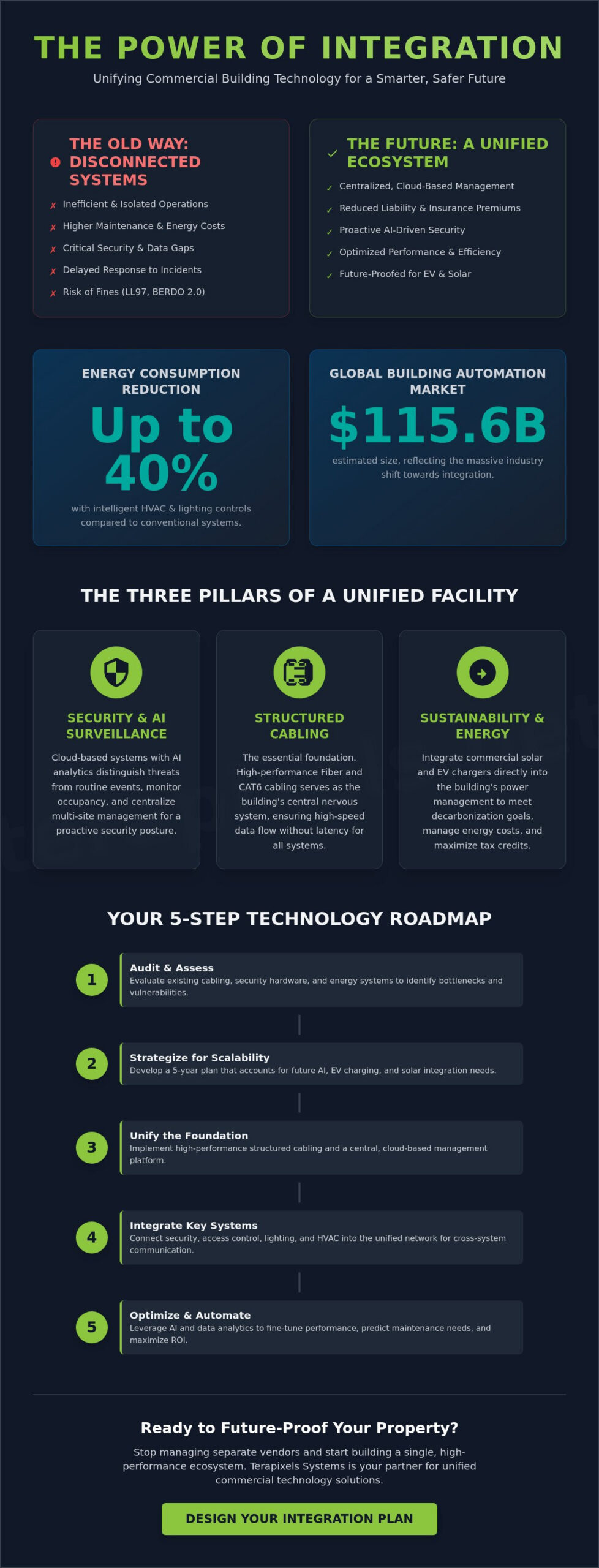
Integrated commercial building technology solutions represent a fundamental shift in how property owners manage and protect their assets. Instead of managing a collection of separate devices, you are overseeing a unified network where security, networking, and energy systems communicate through a single, central nervous system. This transition replaces traditional, siloed hardware with cloud-based software ecosystems that provide real-time visibility across your entire portfolio. By 2026, this level of integration has become the industry standard. The global building automation system market is now estimated to reach up to $115.61 billion, reflecting a massive move toward these intelligent, software-defined environments.
High-speed data serves as the lifeblood of these modern structures. Without a robust foundation of fiber and CAT6 cabling, even the most advanced AI tools can’t function effectively. We view 2026 as the definitive tipping point for AI-driven facility management due to increased regulatory pressures and the establishment of ANSI/ASHRAE Standard 231-2026. This standard defines a specific control description language, making it easier for different systems to share data and optimize building performance automatically. Integration is no longer a luxury; it’s a requirement for operational stability.
The Core Components of Modern Integration
A truly integrated property relies on three interconnected categories of technology that work in harmony to provide a seamless experience for owners and tenants alike:
- Security: This involves cloud-based surveillance systems and AI analytics that can distinguish between a security threat and a routine maintenance event.
- Infrastructure: The physical backbone consists of professional structured cabling, specifically fiber and CAT6, which ensures data moves throughout the building without latency.
- Sustainability: Modern buildings now incorporate commercial solar and EV chargers directly into their power management systems to meet strict decarbonization goals and maximize tax credits.
Why Siloed Systems are a Liability in 2026
Relying on disconnected systems is a significant financial and security risk. Data fragmentation leads to delayed response times during critical events because information remains trapped in separate, incompatible dashboards. You’ll likely face higher maintenance costs when you’re forced to manage multiple proprietary vendors, each with their own service fees and update schedules. Security gaps frequently appear at the intersection of IT and physical hardware when systems aren’t designed to communicate. In an era where New York City’s Local Law 97 and Boston’s BERDO 2.0 impose heavy fines for energy inefficiency, integrated commercial building technology solutions are the only way to ensure both compliance and comprehensive protection.
The Three Pillars of a Unified Facility Ecosystem
A high-performance building relies on three foundational pillars that work in concert rather than in isolation. These aren’t merely separate departments; they are interconnected systems that exchange data to drive operational efficiency. For instance, when your access control system logs a tenant’s arrival, it can automatically signal the lighting and climate systems to activate in that specific zone. This level of cross-system communication is the hallmark of integrated commercial building technology solutions. By unifying these layers, you eliminate the friction of managing disparate platforms and create a more responsive environment for your occupants.
Security and AI-Driven Surveillance
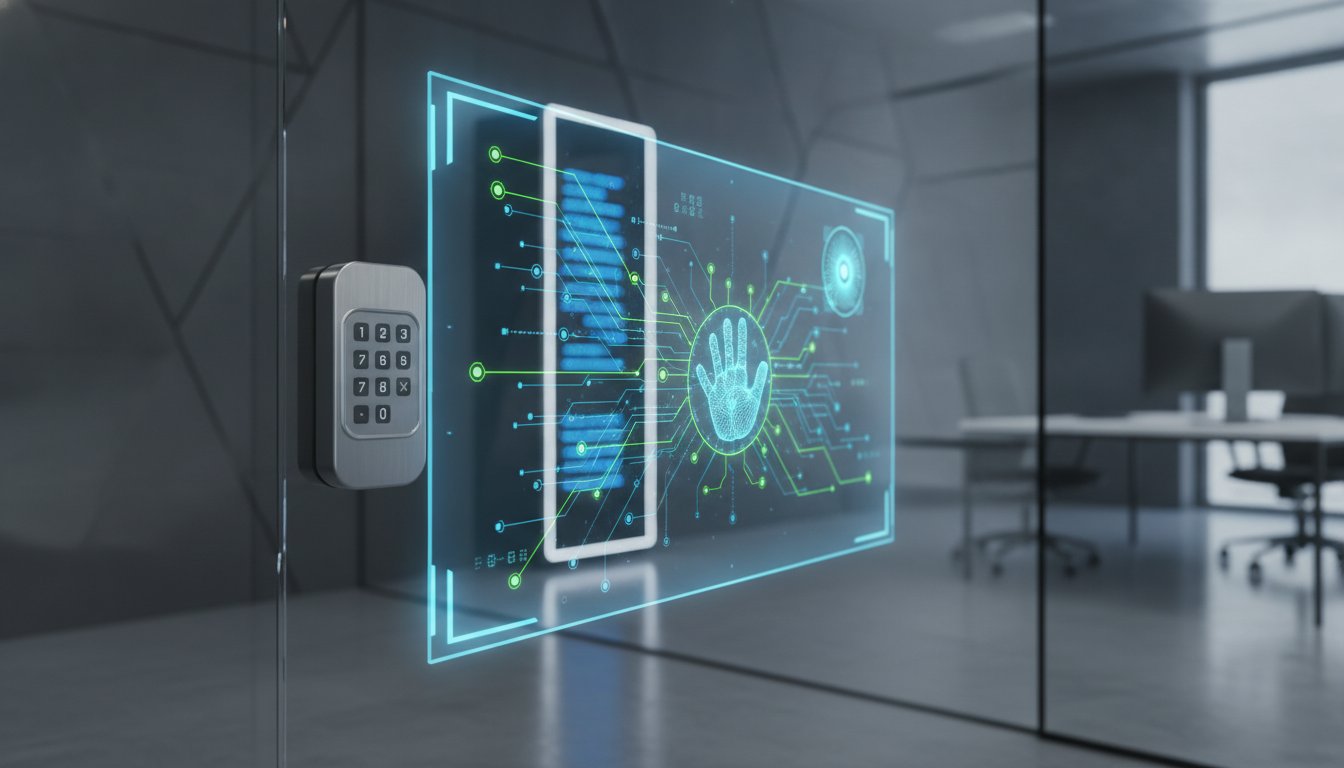
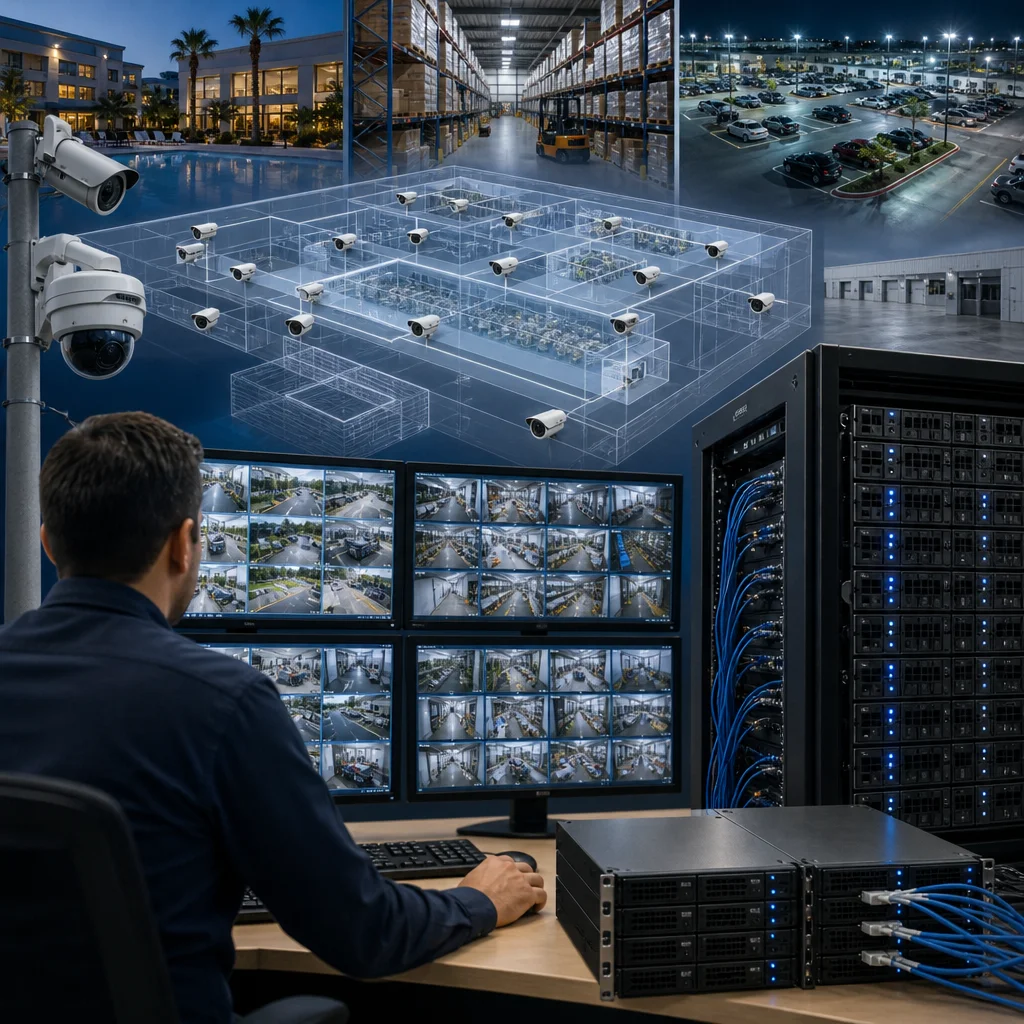
Modern security has evolved beyond simple recording. Cloud-based surveillance systems now allow for centralized multi-site management, enabling you to oversee properties across San Diego and Orange County from a single interface. By applying AI analytics, these systems monitor occupancy levels and site safety in real-time, alerting you to anomalies before they escalate. Integrating your cloud-based access control with a digital employee directory ensures that permissions are always current. This reduces the manual workload for your team while significantly tightening your building’s security posture.
Structured Cabling: The Essential Foundation
The most sophisticated software is useless without a reliable path for data. Understanding what is structured cabling is the vital first step for any facility manager. It provides the organized network of cables and hardware that supports all your digital services. While Fiber is often preferred for long-distance, high-bandwidth backbones, a professional CAT6 cabling installation commercial grade remains the standard for connecting end-point devices like security cameras and Wi-Fi access points. As the density of IoT devices increases, your cabling must be designed to handle the growing data load without bottlenecks or signal degradation.
Energy Solutions and EV Infrastructure
The third pillar focuses on resilience and sustainability. Combining commercial solar with a backup generator installation for business continuity ensures your property remains operational during grid outages. As EV chargers become a standard tenant expectation, your infrastructure must be designed to handle this load without overloading the local grid. By integrating these power sources into your broader building management platform, you can prioritize energy use based on real-time demand and current utility rates. This holistic approach ensures your building is both environmentally responsible and remarkably reliable. If you’re looking to strengthen your facility’s foundation, our team can help you design a customized technology roadmap tailored to your property’s specific requirements.
Analyzing the ROI of Smart Building Integration
Investing in integrated commercial building technology solutions transforms your facility from a passive cost center into a strategic asset. The return on investment manifests in three distinct ways: immediate energy reduction, lowered liability risks, and increased property value. Industry data shows that intelligent HVAC and lighting controls can slash energy consumption by 20 to 40 percent. These savings are often compounded by federal incentives, such as the Section 179D tax deduction, which offers up to $1.00 per square foot for buildings achieving 50 percent energy savings. When you factor in the 30 percent solar Investment Tax Credit available for projects starting by July 4, 2026, the financial argument for integration becomes undeniable.
High-performance buildings also generate value through increased operational efficiency. By utilizing Remote Monitoring Management, you reduce the need for a large on-site IT or security presence. Many routine updates and system diagnostics can be handled remotely, allowing your staff to focus on tenant satisfaction rather than troubleshooting hardware. This shift significantly lowers your overhead while maintaining a high standard of protection. Tenants in 2026 are increasingly willing to pay a premium for facilities that offer seamless connectivity, EV charging, and visible security measures. These smart buildings are viewed as safer and more modern, which leads to faster lease-ups and longer-term occupancy.
Reducing Liability and Risk
Security integration directly impacts your bottom line by reducing insurance premiums and litigation costs. AI video analytics provide definitive, high-definition evidence for slip-and-fall claims or property damage, often resolving disputes before they reach court. Automated alerts for unauthorized access or environmental hazards like water leaks allow your team to intervene before minor issues become catastrophic losses. To protect the data flowing through these systems, robust network security for small business is essential. This ensures that your physical security and digital assets remain shielded from emerging cyber threats.
Energy Management and Sustainability
Remote Monitoring Management (RMM) tools provide a granular view of your building’s health that was previously impossible. By monitoring power consumption in real-time, you can identify inefficient equipment and deploy preventative maintenance before a total failure occurs. This proactive approach extends the lifespan of expensive HVAC and generator systems. Additionally, leveraging solar offsets can create a self-funding loop where energy savings pay for future building-wide tech upgrades. In a market where intelligent facilities consistently command higher lease rates, these integrated systems provide a significant competitive advantage that protects your investment for the long term.
Designing Your Technology Roadmap: A 5-Step Process
Transitioning to a fully connected property requires a methodical approach. Without a clear plan, you risk investing in hardware that becomes obsolete or fails to integrate with future upgrades. A strategic roadmap ensures that every piece of technology, from your security cameras to your EV chargers, contributes to a cohesive ecosystem. This process begins by understanding your current limitations and defining where your facility needs to be in five years. By following a structured path, you can implement integrated commercial building technology solutions that scale alongside your business objectives.
Your roadmap should follow these five essential steps:
- Step 1: Infrastructure Audit. Evaluate your existing fiber and CAT6 cabling to identify physical bottlenecks that could hinder data transmission.
- Step 2: Scalability Planning. Define your data needs for the next five years, accounting for the increased density of AI sensors and IoT devices.
- Step 3: Technical Documentation. Utilize a comprehensive network cabling for new office build-out checklist to ensure no critical connections aren’t missed during construction or renovation.
- Step 4: Platform Selection. Choose cloud-native platforms that allow for centralized remote management of security and energy systems.
- Step 5: Phased Implementation. Work with an integrator to deploy systems in stages, minimizing operational downtime while maximizing immediate ROI.
Assessing Infrastructure Scalability
Many buildings struggle with bottleneck cabling that limits the growth of new devices. You should evaluate whether your current analog security hardware is cloud-ready or if it requires a full digital transition. It’s also vital to determine power requirements for future EV charger expansion. As tenant demand for electric vehicle infrastructure grows, your building’s electrical backbone must be prepared to handle the load without compromising other critical systems.
Selecting the Right Integration Partner
Local expertise in San Diego County and Orange County is invaluable when dealing with specific regional permitting and compliance standards. A reliable architect of technology doesn’t just install hardware; they provide ongoing remote monitoring management for business continuity. This ensures your systems remain secure and updated against evolving cyber threats. When vetting partners, verify their expertise in both low-voltage cabling and cybersecurity protocols to ensure a truly holistic solution. If you’re ready to modernize your property, you can contact our team to discuss your technology roadmap and begin a professional assessment of your facility’s needs.
Terapixels Systems: Your Southern California Integration Partner
Terapixels Systems understands that property owners in San Diego County and Orange County face unique environmental and regulatory challenges. From specific seismic requirements to stringent California energy mandates, local expertise is non-negotiable for successful project delivery. We position ourselves as a Reliable Architect for your facility, focusing on the long-term stability of your integrated commercial building technology solutions. Our approach isn’t about selling a specific brand of hardware. Instead, we design a unified ecosystem where your structural cabling, cloud-based access control, and AI analytics work in perfect synchronization. This ensures your property remains competitive in a rapidly evolving market.
We provide a comprehensive suite of services that covers every layer of your building’s digital and physical infrastructure. This includes high-performance fiber and CAT6 cabling, sophisticated cybersecurity protocols, and sustainable power through commercial solar and generator systems. By serving as a singular source of truth for your technical needs, we eliminate the frustration of managing multiple vendors. Our team acts as a steady hand, managing complex background systems so you can focus on your core business objectives. We value precision and long-term planning over quick fixes.
Our commitment to partnership is best demonstrated through proactive Remote Monitoring Management (RMM). In one recent application for a multi-site commercial client, we integrated AI analytics with power redundancy systems. By monitoring the health of their backup generators and solar arrays via RMM, we identified and resolved a potential power failure before it affected the building’s security network. This proactive intervention saved the client from significant operational downtime and protected their tenant satisfaction levels. It’s this methodical approach that defines our relationship with our clients.
Custom Solutions for Local Property Managers
Navigating the intersection of IT and physical hardware requires a partner who understands the Southern California landscape. We help property managers navigate local regulations while implementing future-proofed tech like EV chargers and cloud-based surveillance. Our on-site support team is localized, ensuring we understand the specific environmental and logistical factors affecting your property. We value mutual growth and strive to build partnerships that last through multiple building lifecycles. We aren’t just a service provider; we’re a dedicated extension of your management team.
Next Steps: Modernizing Your Facility
Transforming your property begins with a clear understanding of your current infrastructure. We recommend requesting a comprehensive site technology audit to identify immediate vulnerabilities and long-term opportunities for energy savings. From there, we’ll help you develop a phased integration plan that aligns with your budget and scalability goals. When you’re ready to secure your facility’s future with integrated commercial building technology solutions, contact Terapixels Systems for a personalized consultation and a professional assessment of your needs.
Securing Your Building’s Future Through Integration
Modernizing a commercial property requires more than just purchasing new hardware; it demands a strategic alignment of every digital and physical system. By prioritizing integrated commercial building technology solutions, you ensure that your facility is prepared for the energy regulations and security demands of 2026 and beyond. We’ve explored how a robust cabling foundation and unified energy management create a stable environment that reduces operational costs and enhances tenant satisfaction.
As your local partner in San Diego and Orange County, Terapixels Systems provides the specialized expertise needed to architect these complex ecosystems. Our team of certified structured cabling and security specialists is ready to provide the comprehensive RMM and cyber security support your property requires to thrive. Schedule your comprehensive facility technology audit with Terapixels Systems today. We look forward to helping you build a more resilient and efficient future for your commercial assets.
Frequently Asked Questions
What is the difference between a smart building and an integrated building?
Smart buildings use automation to perform specific tasks, while integrated buildings ensure those automated systems share a single, unified data platform. In a smart building, you might have an automated HVAC system and a separate security system. In an integrated building, these systems communicate so that the HVAC adjusts based on real-time occupancy data from your access control system. This synergy is the core of integrated commercial building technology solutions, as it removes the silos that lead to operational waste.
Can I integrate my existing analog security cameras into a new cloud system?
Yes, you can often integrate existing analog hardware using cloud bridges or encoders that digitize the signal. This approach allows for a phased transition to cloud-based surveillance systems without the need for an immediate, building-wide equipment replacement. It’s a pragmatic way to gain the benefits of AI analytics and remote management while preserving your initial hardware investment. We typically assess the age and condition of your analog units to ensure they meet the minimum resolution requirements for modern software.
How does structured cabling impact my building’s energy efficiency?
High-quality structured cabling supports Power over Ethernet (PoE), which powers low-voltage devices like LED lighting and smart sensors more efficiently than traditional electrical runs. This infrastructure reduces the need for separate power cables and allows for more granular data collection. The resulting data enables integrated commercial building technology solutions to optimize power consumption by dimming lights or reducing climate control in unoccupied zones. It’s the physical foundation that makes high-level energy savings possible.
Is it possible to install EV chargers without upgrading my entire electrical panel?
It’s often possible through smart load management systems that distribute your building’s existing power dynamically. These systems monitor your facility’s total electrical demand and throttle EV charging speeds during peak hours to prevent overloads. This technology allows property owners to offer essential tenant amenities without the significant expense of a total electrical panel upgrade. We recommend a thorough load study to determine the maximum number of chargers your current infrastructure can safely support.
How much can I expect to save on insurance with integrated security?
While specific savings vary by provider, many insurers offer premium reductions for properties that implement cloud-based access control and AI-driven surveillance. These systems provide definitive evidence for liability claims and significantly reduce the risk of undetected intrusions or environmental damage. By demonstrating a proactive approach to risk management, you position your property as a lower liability. You should consult with your insurance broker to review the specific discount tiers available for your integrated systems.
What are the local San Diego regulations for commercial solar installation?
Commercial solar projects in San Diego must comply with California Title 24 energy standards and specific SDG&E interconnection requirements. Permitting typically involves structural reviews to ensure roof integrity and fire department setbacks for emergency access. Navigating these regional mandates requires a partner who understands the local permitting landscape. We ensure that every installation meets both state and municipal safety codes to avoid delays and ensure your system qualifies for available state incentives.
How does AI video analytics improve my building’s daily operations?
AI video analytics automate the detection of operational bottlenecks, such as unauthorized parking or high-traffic congestion in common areas. Instead of requiring staff to monitor screens constantly, the system sends real-time alerts only when specific events occur. This allows your team to respond faster to maintenance or security needs, improving the overall tenant experience. It transforms your camera system from a passive recording tool into a proactive management asset that supports your daily workflow.
What is the lifespan of a CAT6 cabling system in a high-traffic office?
A professionally installed CAT6 cabling system typically has a functional lifespan of 15 to 20 years in a high-traffic environment. While the physical cables are durable, their longevity depends on the quality of the initial installation and proper cable management in the server room. As data demands grow, regular testing ensures that your infrastructure continues to meet the bandwidth requirements of new devices. It’s a long-term investment that provides the necessary stability for all your connected building systems.