CONTACT US
According to the National Retail Federation, retail shrink recently cost businesses over $100 billion, yet many executives still view security as a sunk cost rather than a strategic asset. It’s often frustrating to justify a budget when your primary success metric is the absence of an event. You know that preventing a single breach or slip and fall incident saves thousands, but quantifying those “prevented” crimes on a balance sheet feels nearly impossible. We understand that you need more than just peace of mind; you need a fiscal defense for your infrastructure.
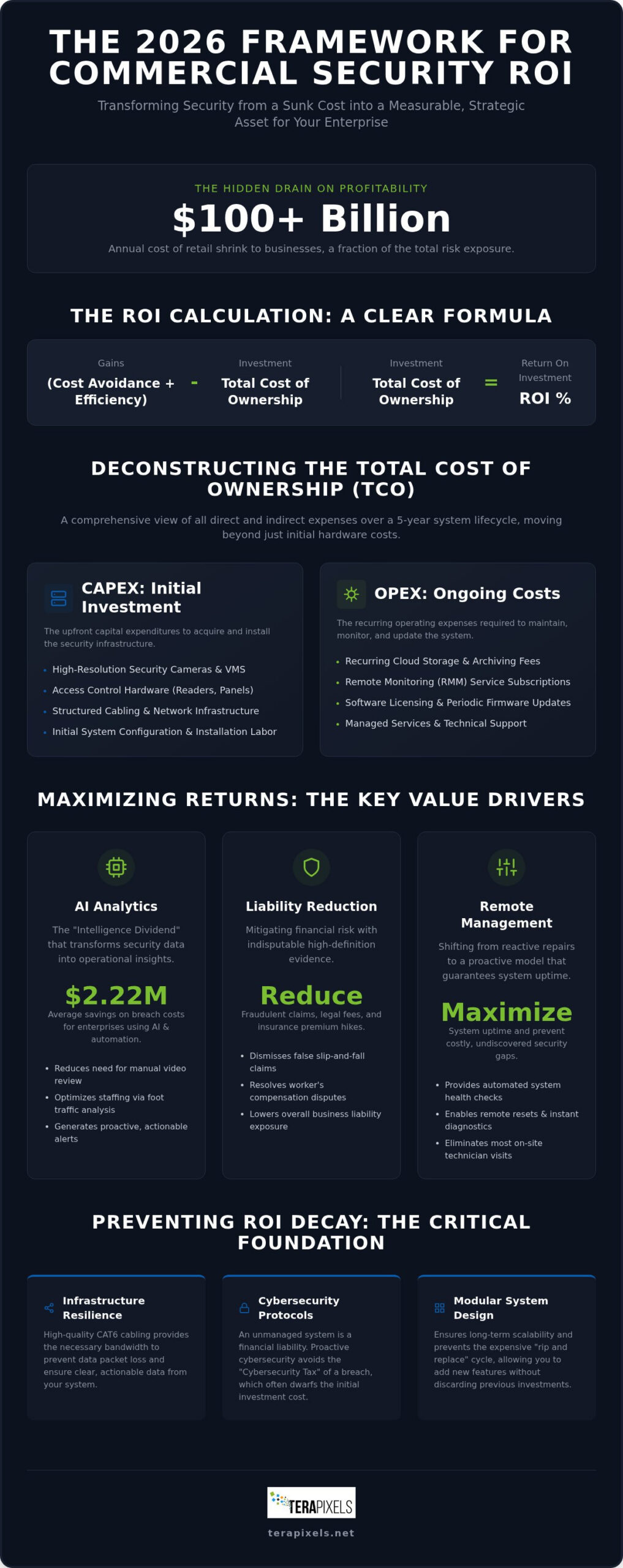
By mastering the process of calculating ROI for commercial security systems, you can transform these hidden protections into visible profitability. This 2026 framework provides a spreadsheet ready formula to capture operational efficiency gains and lower insurance premiums. We’ll explore how integrating AI analytics and remote monitoring management eliminates the hidden costs of system downtime while securing your enterprise for the long term.
Key Takeaways
- Define the 2026 standard for Total Cost of Ownership to move beyond initial equipment costs and capture the full financial scope of your investment.
- Quantify the labor savings and operational efficiencies gained through the integration of AI-driven surveillance and Remote Monitoring Management.
- Protect your long-term returns by ensuring your underlying structural cabling and cybersecurity protocols prevent system decay and unexpected maintenance costs.
- Utilize a clear, strategic framework for calculating ROI for commercial security systems that includes hidden value drivers like lower insurance premiums and liability reductions.
The Fundamentals: Establishing a Baseline for Security ROI
Establishing a baseline begins with the fundamental principles of risk management. You aren’t just buying hardware; you’re mitigating the probability of financial loss. For most enterprises, calculating ROI for commercial security systems relies on the concept of cost avoidance. This metric focuses on the prevention of theft, property damage, and business interruption. Since the average cost of a data breach reached $4.88 million in 2024, the system’s value is often found in the catastrophes that never occur.
To quantify this, look at your historical shrinkage data. By comparing past internal theft losses against the projected reduction from AI surveillance, you can establish a clear financial floor for the investment. Direct costs like hardware are only the starting point. Indirect costs, such as administrative overhead for managing alerts, must also be considered to ensure your budget remains predictable and your assets remain protected.
Calculating the Total Cost of Ownership (TCO)
TCO is the sum of all direct and indirect expenses over a 5-year lifecycle. Your initial capital expenditures (CAPEX) include cameras, access control hardware, and the underlying network. It’s vital to understand what is structured cabling before you begin, as high-quality physical infrastructure dictates the system’s longevity. Beyond the install, you must factor in operating expenses (OPEX) such as:
- Recurring cloud storage fees for high-resolution video.
- Managed service subscriptions for Remote Monitoring Management (RMM).
- Software licensing and periodic firmware updates.
Maximizing Returns Through AI Analytics and Remote Management
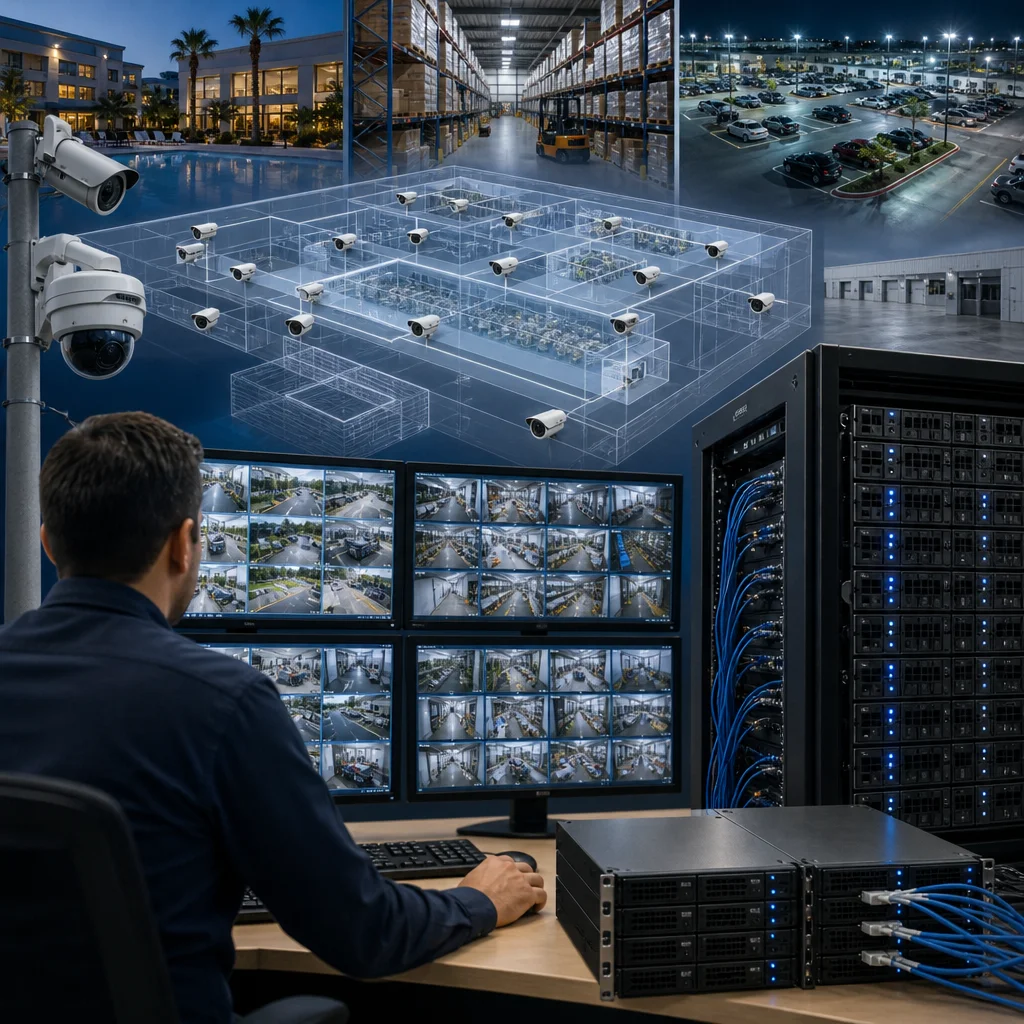
Modern systems provide value far beyond simple surveillance. When ENISA’s framework for security ROI is applied to advanced tech, the results often show that AI and automation can save enterprises an average of $2.22 million on breach costs. Implementing an AI security camera system commercial installation is a key factor in calculating ROI for commercial security systems because it reduces the need for manual video review. This Intelligence Dividend transforms security data into operational insights, such as optimizing staff allocation based on real-time foot traffic patterns.
Liability reduction is another critical pillar. High-definition documentation provides the evidence needed to dismiss fraudulent slip-and-fall claims or worker’s compensation disputes. These savings directly impact your bottom line by reducing legal fees and stabilizing insurance premiums. If you’re looking to enhance your current infrastructure, exploring integrated security solutions can reveal these hidden value drivers.
The ROI of Remote Monitoring Management (RMM)
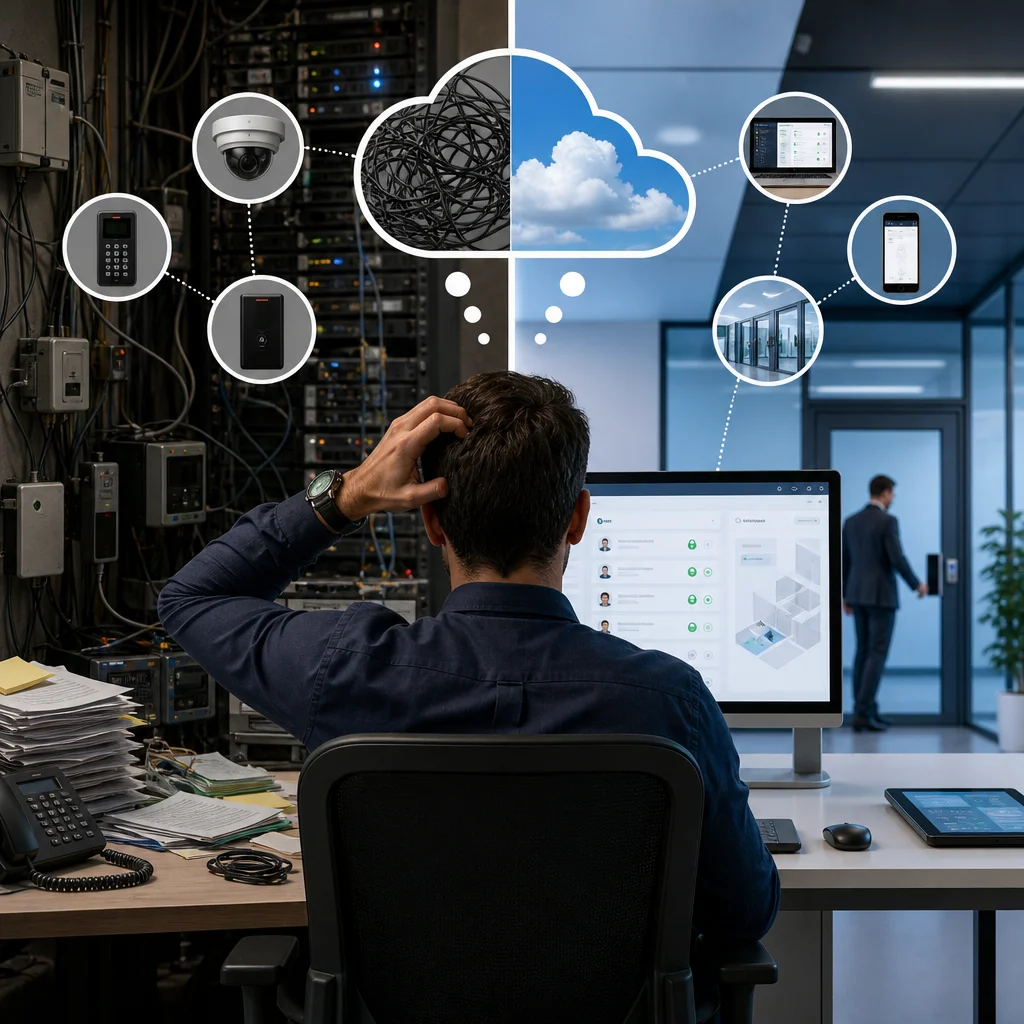
A significant portion of calculating ROI for commercial security systems involves accounting for system uptime. Traditional maintenance relies on reactive repairs, but rmm shifts this to a proactive model. Automated health checks often eliminate the need for expensive on-site technician visits. When a camera goes offline, remote resets and instant diagnostic alerts protect your bottom line by preventing costly security gaps.
Infrastructure Resilience: Ensuring Your ROI Doesn’t Decay
Infrastructure is the silent driver of long-term value. If your physical network fails, even the most expensive AI analytics become useless. This is a critical, often ignored component when calculating ROI for commercial security systems. Investing in a high-quality CAT6 cabling installation commercial grade provides the necessary bandwidth to prevent data packet loss. Without this reliable foundation, you face “ROI decay,” where your software capabilities quickly outpace your network’s ability to deliver clear, actionable data.
You must also account for the “Cybersecurity Tax.” An unmanaged system isn’t just a tool; it’s a financial liability waiting for a breach. The Return on Security Investment (ROSI) framework highlights that the cost of a single vulnerability often dwarfs the initial equipment price. By adopting a modular system design, you ensure scalability. This prevents the “rip and replace” cycle, allowing you to add new features without discarding your previous investments. Partnering with a comprehensive technology architect ensures these systems remain integrated and secure.
Cabling and Cyber Security: The Foundation of Value
Proper bandwidth ensures that high-resolution video feeds don’t drop frames, which is essential for maintaining the integrity of AI-driven analytics. If your network stutters, your predictive security capabilities vanish. Implementing specialized network security for small business protocols protects your physical assets from digital intrusion. This layered defense preserves the financial baseline you established when calculating ROI for commercial security systems, ensuring the technology serves your business for years rather than months.
Securing Your Enterprise Profitability in 2026
As a national provider, we specialize in enterprise-grade security architecture that includes AI-driven monitoring and cyber security integration. We’re here to design a system that grows with your business while maintaining uptime through specialized RMM services.
Building a resilient future starts with a solid foundation. We look forward to partnering with you to maximize your security investment and achieve your core objectives.
Frequently Asked Questions
How long does it typically take for a commercial security system to pay for itself?
Most commercial enterprises see a full return on investment within three to five years. This timeline depends on your specific risk profile and the value of the assets you’re protecting. According to the Gordon-Loeb Model, an optimal investment shouldn’t exceed 37% of the expected loss from a breach. This strategic approach ensures your budget remains aligned with actual financial risks.
Can a new security system actually lower my commercial insurance premiums?
Yes, many insurance providers offer premium reductions for businesses that implement advanced security measures. When you’re installing AI-driven surveillance and managed access control, you’re lowering the insurer’s risk of covering a claim. These savings are a significant factor in calculating ROI for commercial security systems, as they provide a direct, recurring reduction in your annual operating expenses. Similarly, physical improvements like safety and security films from sunguardtint.com can further mitigate risk and potentially lead to additional insurance benefits.
Traditional ROI measures the direct profit generated by an investment, while cost avoidance focuses on the expenses your system prevents. When you’re calculating ROI for commercial security systems, cost avoidance is the primary metric because it captures the value of prevented theft and litigation. This distinction helps you present a more comprehensive financial defense for your security budget to stakeholders.