CONTACT US
With retail shrink rates holding steady at 1.6% of sales, the traditional approach of reviewing grainy footage after a loss has occurred is no longer a viable business strategy. You’ve likely felt the frustration of watching a theft on camera hours too late to do anything about it. Implementing AI video analytics for loss prevention changes this dynamic by turning your passive surveillance into an active, intelligent guard. It’s about moving from forensic evidence to real-time intervention, ensuring your security investment actually protects your bottom line rather than just documenting its decline.
We understand that managing rising labor costs and complex security needs requires more than just more hardware; it requires smarter architecture. This strategic guide explores how AI-driven systems provide real-time alerts for suspicious behavior and deliver actionable data to improve your overall operational efficiency. You’ll discover how to navigate the 2026 regulatory environment, including new state-level AI laws, while building a scalable security foundation that grows with your enterprise. We’ll examine the technical shift toward edge computing and how these integrated solutions allow you to focus on your core business objectives with total peace of mind.
Key Takeaways
- Learn how to shift from forensic evidence gathering to real-time threat detection that stops theft before it occurs.
- Discover the essential steps for auditing your facility’s layout to eliminate blind spots and ensure comprehensive coverage.
- Understand how to integrate AI video analytics for loss prevention with your existing cloud-based surveillance systems for a seamless technical transition.
- Identify how intelligent automation reduces the need for constant manual monitoring, allowing you to reallocate labor resources more effectively.
- Explore the additional business benefits of AI data, such as improved inventory accuracy and optimized store traffic patterns.
Table of Contents
Beyond Passive Monitoring: Why AI Video Analytics is Essential for 2026 Loss Prevention
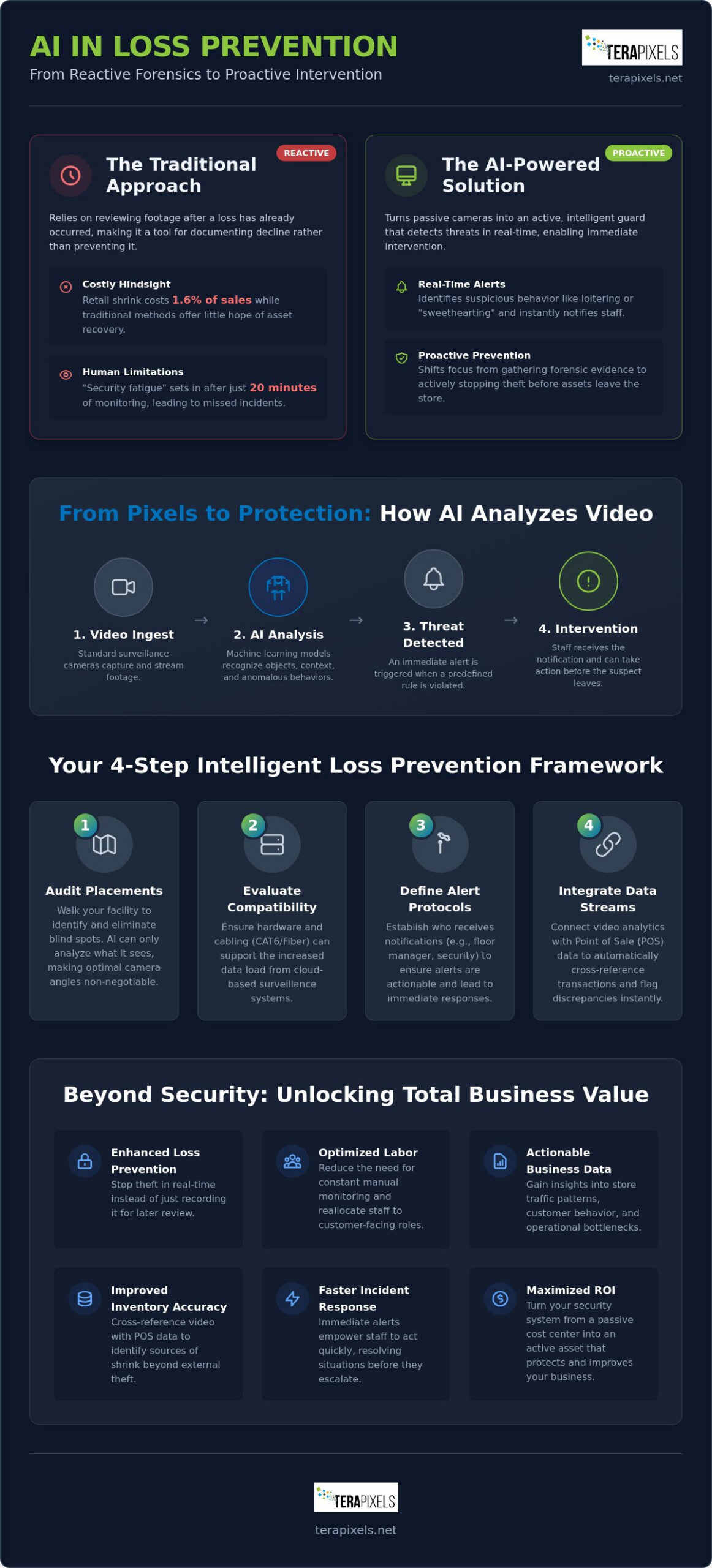
Traditional security models have long relied on a reactive strategy. You install cameras, record footage, and hope to identify a culprit after the inventory has already vanished. This “forensic” approach fails to address the root of the issue; by the time you review the tape, the financial damage is already done. With global retail shrink rates remaining near 1.6% of sales, relying on hindsight is a costly gamble. AI video analytics for loss prevention shifts the focus from recording history to influencing the present.
To better understand how this technology functions in a real-world setting, watch this helpful video:
Modern systems move beyond simple motion detection, which often triggers false alarms for something as minor as a shifting shadow. Instead, AI-driven surveillance utilizes sophisticated object and behavior recognition to distinguish between a customer browsing and a potential threat. This technological evolution allows your security infrastructure to act as a proactive engine, identifying risks as they unfold.
The Limitations of Traditional Surveillance Systems
Manual monitoring is fundamentally limited by human biology. Security personnel often experience “security fatigue” after just 20 minutes of watching multiple screens, which leads to missed incidents and overlooked vulnerabilities. In a traditional setup, there’s a massive delay between a theft occurring and its discovery, often only noticed during a manual inventory count. This makes post-incident investigations expensive and time-consuming while offering little hope for actual asset recovery.
How AI Detects Anomalies in Real-Time
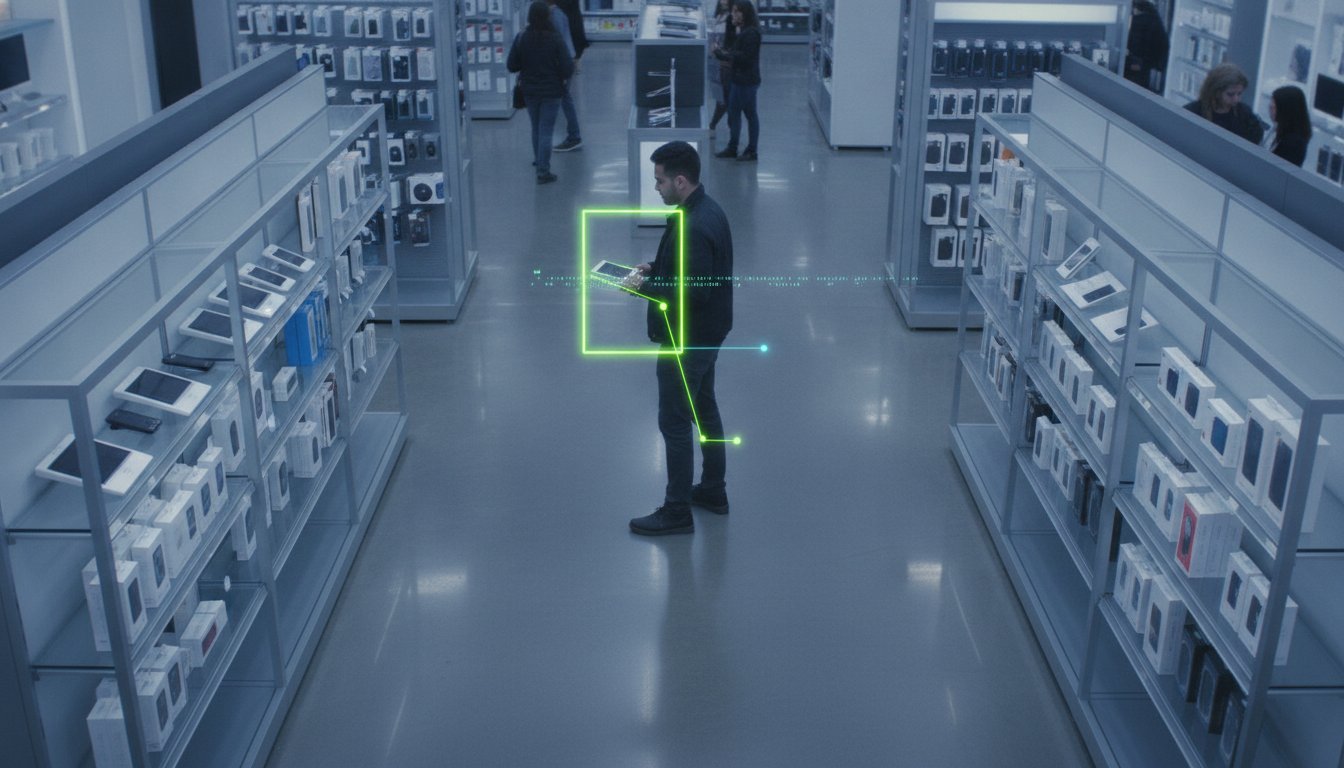
The power of AI lies in its ability to process vast amounts of visual data through machine learning and computer vision. Rather than just seeing pixels, the system understands context. It can identify specific triggers such as loitering in restricted areas or “sweethearting,” where an employee intentionally fails to scan items at checkout. By utilizing low-latency processing, these systems send immediate alerts to floor staff or managers. This enables a polite intervention before the suspect leaves the premises, transforming your security cameras into an intelligent, tireless extension of your team.
Implementing an Intelligent Loss Prevention Framework
Transitioning from standard security to an intelligent framework requires a structured approach. It’s not just about installing software; it’s about building a reliable architecture that supports high-speed data processing. A successful deployment of AI video analytics for loss prevention starts with a clear understanding of your physical environment and your digital capacity.
Follow these four steps to build a proactive defense:
- Step 1: Audit placements. Walk your facility to identify blind spots where theft is most likely to occur. AI can only analyze what it can see, so optimal camera angles are non-negotiable.
- Step 2: Evaluate compatibility. Ensure your hardware can support the processing requirements of modern cloud-based surveillance systems. This often involves verifying that your CAT6 or fiber cabling can handle the increased data load.
- Step 3: Define alert protocols. Decide who receives a notification when the AI flags an incident. Real-time alerts are only effective if they reach a floor manager or security lead who can take immediate action.
- Step 4: Integrate data streams. Connect your video data with Point of Sale (POS) logs. This allows the system to cross-reference visual actions with transaction records, flagging discrepancies instantly.
Building this foundation is easier when partnering with a specialized security architect who understands both the hardware and the software requirements.
Key AI Features to Prioritize
Modern behavioral analytics can now identify subtle signs of concealment or non-scanning at self-checkouts, which are primary drivers of retail shrink. Facial recognition helps identify known offenders across multiple locations, allowing for a coordinated security response. Additionally, heat mapping uses the same loss prevention data to optimize store layouts, showing you exactly how customers move through your space.
The Role of Cloud-Based Infrastructure
Cloud storage is essential for modern security because it allows for remote access to AI-flagged clips from any authorized device. This scalability means you won’t be limited by on-premise hardware capacity as your business grows. Secure, encrypted data transmission is also a critical component for maintaining compliance with evolving 2026 data privacy regulations, such as the EU AI Act or various state-level laws in the US. By moving to the cloud, you ensure your system remains agile, updated, and resilient against local hardware failures.
Maximizing ROI through Comprehensive Security Integration
Investing in AI video analytics for loss prevention delivers a return that extends far beyond simply catching shoplifters. By automating the observation process, you significantly reduce the need for a large team of on-site security personnel. This lowers your overhead while increasing the effectiveness of the staff you do have. Instead of paying for manual monitoring that’s prone to human fatigue, you’re investing in a system that remains vigilant every hour of the day.
Beyond direct theft prevention, there’s a hidden ROI in improved operational efficiency. Accurate real-time data allows for better inventory management and higher accuracy in stock levels. When your security system provides insights into store traffic and staff performance, it becomes a multi-purpose tool for business growth. Implementing AI video analytics for loss prevention is a long-term investment in your company’s stability and overall profitability.
Combining AI Analytics with Remote Monitoring Management (RMM)
A sophisticated AI system is only valuable if it stays operational. Integrating RMM ensures that your security hardware is constantly monitored for health and performance. This proactive management keeps your AI cameras online and updated with the latest security patches without requiring manual intervention. For a truly holistic approach to protection, we recommend reviewing our business continuity guide to see how integrated management prevents costly downtime.
Future-Proofing with Structured Cabling
High-definition AI video streams require massive bandwidth that older networks simply can’t support. A professional CAT6 cabling installation is the backbone of any modern security framework. Running advanced analytics over outdated structured cabling often leads to packet loss, which results in false alarms or missed incidents. By ensuring your physical infrastructure is robust, you eliminate technical bottlenecks and maximize the reliability of your AI engine.
Successful integration requires a Reliable Architect who understands how hardware and software work in tandem. At Terapixels Systems, we specialize in creating these symbiotic environments. We manage the complex background systems so you can focus on your core business objectives, knowing your assets are protected by a steady, visionary hand. We are your partner for both high-level AI analytics and the critical infrastructure that powers them.
Securing Your Commercial Assets for the Future
The shift from forensic review to proactive intervention is the single most important step in modernizing your security strategy. By implementing AI video analytics for loss prevention, you transform your surveillance from a static recording tool into a dynamic asset that identifies threats as they happen. This transition requires more than just software; it demands a robust physical foundation of structured cabling and consistent maintenance through Remote Monitoring Management to ensure your data remains reliable and accessible.
As a national provider for commercial and industrial facilities, Terapixels Systems serves as your reliable architect in this complex landscape. Our certified experts specialize in AI analytics and cloud surveillance, ensuring your system is integrated, compliant, and scalable. We manage the intricate technical background so you can focus on your core business growth with total confidence. Taking a comprehensive approach to your security infrastructure today ensures long-term stability and a healthier bottom line.
Schedule a Consultation with Terapixels Systems to Audit Your Security Infrastructure and start building a more secure, efficient future for your enterprise.
Frequently Asked Questions
How does AI video analytics differentiate between a customer and a shoplifter?
AI systems distinguish between normal browsing and suspicious behavior by analyzing specific movement patterns and spatial context in real-time. For example, a customer placing an item in a physical or digital cart is recognized as standard behavior, whereas the system flags the rapid concealment of an item in personal clothing or unpurchased bags. These systems identify anomalies such as loitering in high-theft zones or specific “non-scanning” motions at self-checkout stations that deviate from established consumer pathing.
Can I use AI video analytics with my existing CCTV cameras?
Most modern AI video analytics for loss prevention solutions are designed to be camera-agnostic, which means they can often be layered onto your existing IP-based CCTV infrastructure. While older analog systems might require encoders or a transition to digital formats, many businesses successfully integrate AI software with their current hardware through edge inference devices. This approach allows you to leverage your previous hardware investments while adding proactive detection capabilities without a total system replacement.
What is the typical ROI for an AI-powered loss prevention system?
Return on investment is typically realized through a direct reduction in retail shrink, lowered labor costs for manual monitoring, and improved inventory accuracy. By stopping theft in real-time rather than documenting it after the fact, businesses can protect their immediate profit margins and reduce the financial impact of inventory loss. Additionally, the actionable data gathered often reveals operational bottlenecks, allowing managers to optimize staff placement and store layouts to improve overall business performance.
Is AI video analytics for loss prevention compliant with privacy laws?
Compliance depends on the specific configuration of your system and the regulations in your jurisdiction, such as the EU AI Act or various US state-level privacy laws effective in 2026. Professional installers ensure that AI video analytics for loss prevention systems utilize secure, encrypted data transmission and follow strict governance protocols. By focusing on behavioral patterns rather than personal identity in many applications, businesses can maintain high security standards while respecting customer privacy and meeting legal requirements.