CONTACT US
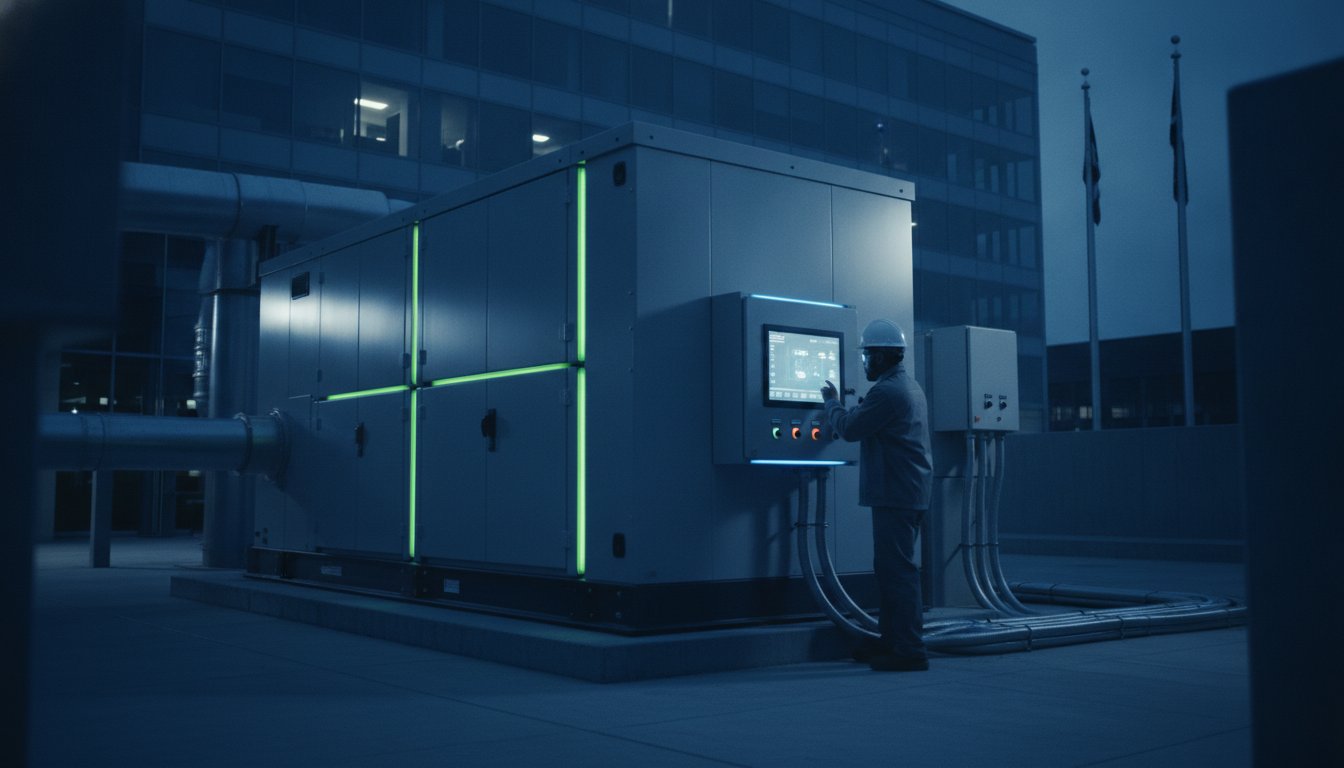
What if your backup power system is actually your facility’s most significant hidden vulnerability? For many organizations, a standard commercial generator installation is mistakenly viewed as a one-time task rather than the foundation of a broader technology ecosystem. We know that unplanned downtime costs are rising, and the complexity of maintaining NFPA compliance across multiple remote sites can feel overwhelming. You need a strategy that offers stability and comprehensive protection without constant manual oversight. This guide will teach you how to architect a fail-safe power strategy through professional installation, rigorous maintenance, and real-time remote monitoring. We’ll explore how to achieve 100% power uptime, automate your compliance reporting, and utilize AI-driven analytics to extend the lifespan of your critical infrastructure in 2026 and beyond.
Key Takeaways
- Learn how to scale your power infrastructure by aligning commercial generator installation with future facility growth and existing security networks.
- Transition from basic visual checks to technical deep-dives with a structured maintenance lifecycle that prioritizes battery health and cooling system integrity.
- Discover how Remote Monitoring Management (RMM) provides constant visibility into equipment health, ensuring your backup systems are ready before an outage occurs.
- Leverage AI-driven analytics to predict potential component failures, allowing you to extend your equipment’s lifespan and maintain 100% power uptime.
Strategic Planning for Professional Commercial Generator Installation
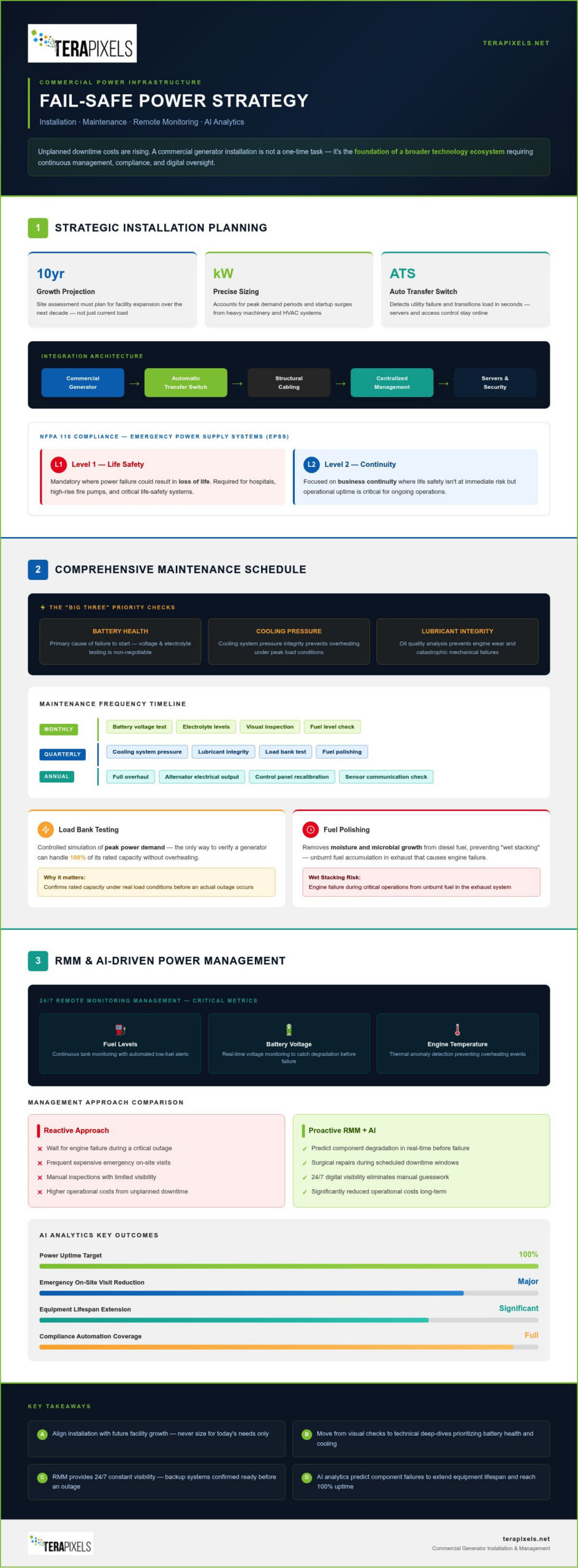
Effective commercial generator installation begins long before the concrete is poured. A professional site assessment evaluates current load requirements while projecting facility growth over the next decade. If you size a system strictly for today’s needs, you risk expensive retrofits as your operational footprint expands. We view power as a foundational layer of your total infrastructure. This requires precise kW sizing that accounts for peak demand periods and the specific startup surges of heavy machinery or HVAC systems. It’s about building a system that grows with you, rather than one that limits your potential.
A standalone power source is only half of the solution. True reliability comes from integrating backup generator installation for business with your existing security and network cabling. By connecting the generator to your centralized management systems via structural cabling, you gain instant visibility into its readiness. The Automatic Transfer Switch (ATS) serves as the critical bridge in this architecture. It detects utility failure and transitions the load in seconds, ensuring your servers and cloud-based access control systems never lose connectivity during a crisis.
Navigating NFPA 110 and National Compliance Standards
Regulatory adherence is vital for mitigating liability and meeting strict insurance mandates. NFPA 110 categorizes systems into Level 1 and Level 2 Emergency Power Supply Systems (EPSS). Level 1 systems are mandatory where power failure could result in loss of life, such as in hospitals or high-rise fire pumps. Level 2 systems focus on business continuity where life safety isn’t at immediate risk but operational uptime is critical. Ensuring your commercial generator installation meets these national safety codes protects your investment and ensures your facility remains fully compliant with evolving 2026 standards.
A Comprehensive Commercial Generator Maintenance Schedule for 2026
Maintenance transforms a piece of hardware into a reliable business continuity asset. While the initial commercial generator installation sets the stage, the preventive maintenance lifecycle ensures the curtain rises when the power goes out. In 2026, professional standards require moving from simple visual inspections to technical deep-dives that analyze the chemical and electrical health of the system. This proactive approach prevents small issues from becoming catastrophic failures.
Monthly and quarterly protocols should prioritize the “Big Three”: battery health, cooling system pressure, and lubricant integrity. Batteries remain a primary cause of failure to start; therefore, testing voltage and electrolyte levels is non-negotiable. Annual overhauls shift focus to the alternator’s electrical output and control panel recalibration to ensure all sensors are communicating accurately with your building management system. If you need help organizing these complex tasks, our team provides comprehensive Generator Installation & Maintenance services tailored to your specific infrastructure.
The Critical Importance of Load Bank Testing and Fuel Polishing
Load bank testing is a controlled simulation of a facility’s peak power demand. This is the only definitive way to verify a generator can handle 100% of its rated capacity without overheating. Simultaneously, fuel polishing protects diesel stability by removing moisture and microbial growth. This prevents “wet stacking,” a condition where unburnt fuel accumulates in the exhaust, leading to engine failure during critical operations.
The Future of Reliability: Integrating RMM for Proactive Power Management
Modern commercial generator installation is no longer a “set and forget” mechanical project. It’s the beginning of a long-term partnership between your physical hardware and digital oversight. By integrating Remote Monitoring Management (RMM), facilities managers gain 24/7 visibility into critical metrics like fuel levels, battery voltage, and engine temperature. This digital layer provides a steady hand of oversight that manual inspections simply can’t match. It ensures you’re never left guessing about the readiness of your backup systems.
AI-driven analytics take this visibility a step further by identifying subtle patterns that precede a hardware failure. Instead of waiting for an engine to fail during a critical power outage, the system predicts component degradation in real-time. This allows for surgical repairs during scheduled downtime, which significantly reduces operational costs. You’ll eliminate the need for frequent, expensive on-site visits by relying on precise digital status reporting and remote diagnostics. It’s a shift from reactive emergency repairs to proactive, data-informed management that protects your bottom line.
Leveraging Structured Cabling for Uninterrupted Telemetry
A sophisticated monitoring system is only as reliable as its physical data path. This is why professional structured cabling is essential for modern power management. Without high-speed, fiber-optic or CAT6 connections, telemetry data can become latent or completely lost during a crisis. Integrating your generator into a unified network architecture ensures that alerts reach your security operations center instantly. This creates a resilient infrastructure where power, security, and data work in perfect harmony to guarantee 100% uptime for your entire organization.
Securing Your Operational Future with Resilient Infrastructure
A successful power strategy requires looking beyond the physical hardware. By prioritizing an architectural approach to commercial generator installation, your organization ensures that backup systems are sized for tomorrow’s growth while remaining fully compliant with national standards. We’ve explored how AI-driven analytics and RMM shift the focus from reactive repairs to proactive stability. This unified approach creates a resilient ecosystem where power and network integrity are never in doubt.
Terapixels Systems provides national critical infrastructure experience and integrated technology solutions. Our expertise in AI-driven monitoring ensures your facility is protected by a steady hand that understands the practical realities of daily business operations.
Your business continuity is our shared priority. Let’s build a foundation that guarantees uptime and longevity for years to come.
Frequently Asked Questions
How often should a commercial generator undergo load bank testing?
Load bank testing is typically performed once per year for most commercial facilities to ensure the unit handles its full rated capacity. This process effectively clears carbon buildup, known as wet stacking, in diesel engines. While monthly exercise runs are important, they don’t simulate a full facility load. An annual test is the only way to guarantee your system’s total performance.
What are the most common causes of commercial generator failure?
Battery failure remains the most frequent reason a generator fails to start during a power outage. Other common issues include fuel contamination, coolant leaks, and clogged filters. These vulnerabilities are often undetectable during a basic visual check. Professional commercial generator installation incorporates advanced sensors that flag these minor mechanical issues before they lead to a complete system failure during a crisis.
Can remote monitoring (RMM) reduce my annual maintenance costs?
Remote Monitoring Management (RMM) reduces annual maintenance costs by replacing routine, manual site visits with data-driven oversight. Digital diagnostics allow technicians to identify specific repair needs before they arrive on-site. This proactive model prevents minor component wear from turning into catastrophic failures. It ensures you only pay for necessary service while maintaining 100% uptime for your critical power and security systems.
What is the difference between Level 1 and Level 2 NFPA 110 compliance?
Level 1 compliance is mandatory for systems where power failure could result in loss of life, such as hospital life-support or fire pumps. Level 2 applies to systems where failure impacts business continuity but doesn’t immediately threaten human safety. Your commercial generator installation must be designed and maintained according to these specific regulatory tiers to satisfy insurance requirements and national safety codes.