CONTACT US

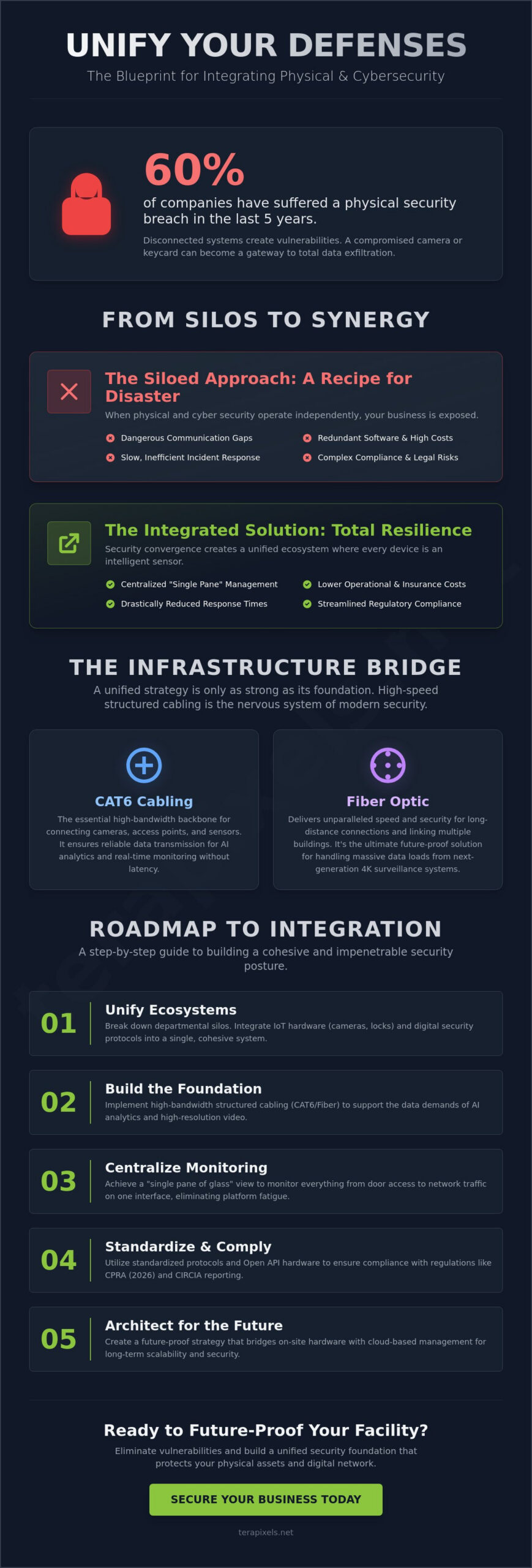
Did you know that 60% of companies have experienced a physical security breach in the last five years? For many California business owners, the fear that a simple smart camera could become a back door for hackers is a stressful reality. You’re likely managing several disconnected platforms while trying to keep up with the California Privacy Protection Agency’s 2026 regulations. Integrating physical and cybersecurity for business is no longer a luxury; it’s the foundation of a stable enterprise. We’ll show you how to bridge the gap between your facility’s hardware and your digital network to create a unified, impenetrable security posture. This guide details how to leverage structured cabling and AI analytics to achieve a single pane of glass for monitoring. You’ll learn how to lower your liability insurance premiums and build a future-proofed infrastructure that meets the latest CIRCIA reporting standards. By the end of this article, you’ll have a clear roadmap for creating a symbiotic relationship between your physical assets and your digital defenses.
Key Takeaways
- Understand the shift from siloed departments to security convergence, where IoT hardware and digital protocols function as a single, unified ecosystem.
- Identify the critical role of structural cabling, specifically Fiber and CAT6, in providing the high-bandwidth foundation required for modern AI analytics.
- Master the roadmap for integrating physical and cybersecurity for business to eliminate platform fatigue and achieve a comprehensive view of your entire security posture.
- Explore how standardized protocols and Open API hardware ensure your facility remains compliant with 2026 regulations while lowering long-term operational costs.
- Learn to architect a future-proof security strategy that bridges the gap between on-site hardware and cloud-based management systems.
Table of Contents
What is Security Convergence? Defining the Physical-Cyber Link
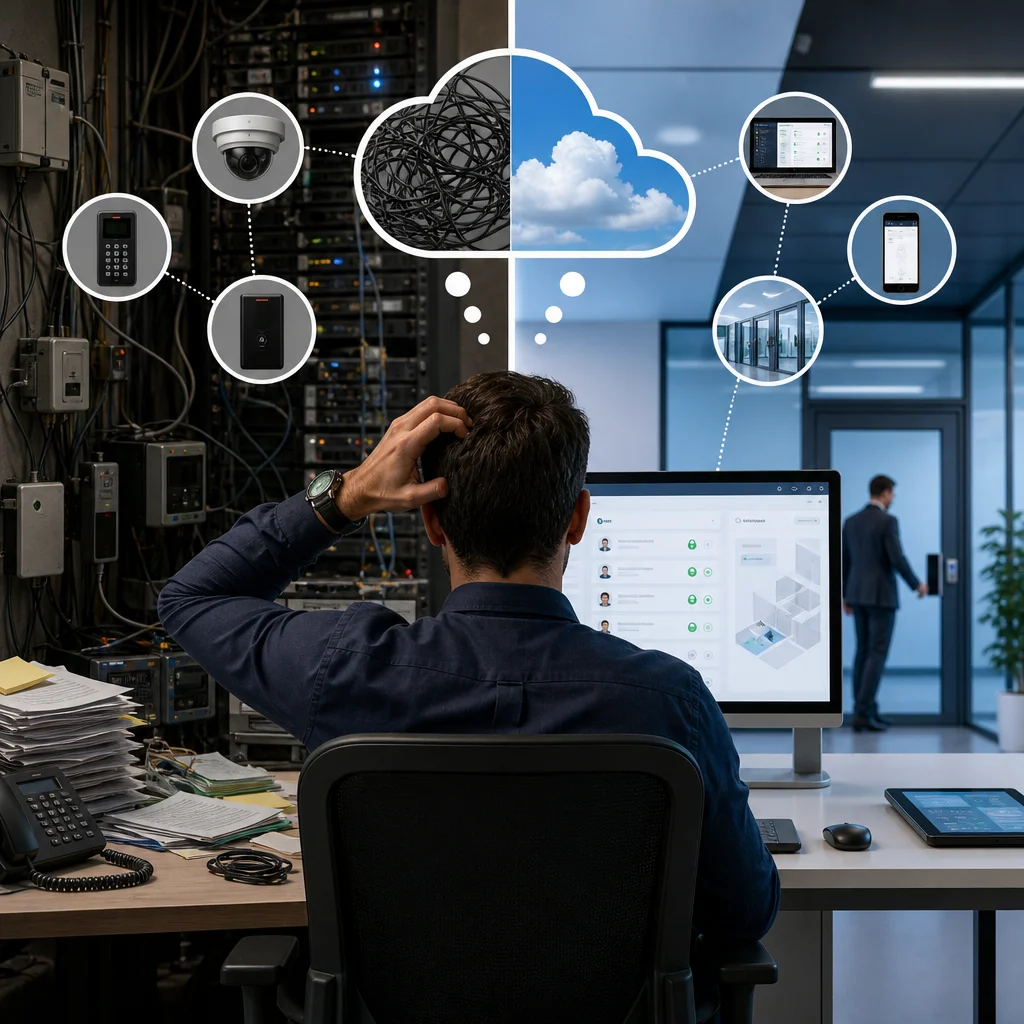
In the past, many business owners viewed locks and alarms as one department and firewalls and passwords as another. This division is no longer sustainable. Security convergence represents the formal integration of physical security hardware and cybersecurity protocols into a single, unified ecosystem. By integrating physical and cybersecurity for business, you create a defensive posture where every hardware device acts as an intelligent sensor within your broader digital network. This approach provides total organizational resilience, transforming your security from a series of disconnected tools into a cohesive backbone that supports your daily operations.
When these systems work in harmony, the benefits extend beyond simple protection. Centralized management allows for a “single pane of glass” view, which significantly reduces incident response times. It also lowers operational costs by eliminating redundant monitoring services and manual oversight. A converged strategy ensures that your physical assets, like cameras and access control systems, are no longer isolated but are active participants in your overall threat detection strategy.
- Reduced Response Times: Automated triggers can lock down digital assets the moment a physical breach is detected at a facility entrance.
- Centralized Management: Administrators monitor everything from door access to network traffic on one interface, reducing the common problem of “app fatigue.”
- Lower Operational Costs: Streamlining your infrastructure reduces the need for multiple service contracts and separate maintenance schedules.
The Interconnected Threat Landscape
Modern threats rarely respect the boundary between the physical and digital worlds. A stolen keycard isn’t just a lost piece of plastic; it’s a potential entry point for massive data exfiltration. Hackers often use a technique called “pivoting,” where they exploit an unpatched security camera to gain access to the corporate server. One well-documented risk involves compromised smart thermostats being used as a gateway to breach sensitive databases. Because every IoT-connected lock or camera is a network endpoint, your physical hardware must be secured with the same rigor as your laptops and servers. To ensure your systems are truly defended against these tactics, you can check out Pentesys Limited for specialized offensive security assessments. Integrating physical and cybersecurity for business ensures these entry points are hardened against digital intrusion.
Why Silos are a Liability for Southern California Firms
For businesses in San Diego and Orange County, maintaining separate departments for IT and facility management creates dangerous communication gaps. These silos often result in the hidden cost of redundant software licenses for systems that could easily be unified. Additionally, California privacy laws like the CCPA and CPRA require strict governance over how data is collected and stored. An integrated strategy ensures that video footage and access logs are managed according to these complex regulatory standards, protecting you from both physical intruders and legal liabilities. Without a converged approach, your firm risks falling behind the rapid pace of both technological change and regulatory compliance.
The Infrastructure Bridge: Structured Cabling and RMM
A unified security strategy is only as reliable as the physical wires that carry its data. While many organizations focus heavily on software, integrating physical and cybersecurity for business requires a robust physical layer to support high-bandwidth AI analytics and real-time surveillance. Without high-quality CAT6 or fiber optic cabling, even the most advanced 4K cameras will suffer from latency and packet loss, rendering your AI threat detection ineffective. High-speed infrastructure ensures that your digital network can handle the massive data loads generated by modern security hardware without compromising speed or reliability.
Standardizing your hardware protocols is a vital step toward cybersecurity and physical security convergence. When your cabling, cameras, and access control systems share a common language, you eliminate the technical friction that often leads to security gaps. This architectural approach creates a stable environment where every device is visible, manageable, and protected from digital intrusion.
Cabling as the Nervous System
Low-voltage wiring must be designed with strict security segmentation in mind to prevent a breach in one area from affecting the entire network. For businesses requiring zero-latency video and long-distance connectivity, a professional fiber optic installation San Diego Orange County is the gold standard. Structured cabling is the physical conduit for all digital security signals. By treating your cabling as the nervous system of your facility, you ensure that every signal, from a door sensor to a high-definition video stream, reaches its destination securely and instantly.
RMM: Proactive Defense for Physical Hardware
If cabling is the nervous system, Remote Monitoring Management (RMM) is the brain of the converged system. Implementing remote monitoring management for business allows you to track the health of your physical hardware in real time. RMM tools provide automated patching for firmware on access control readers and NVRs, closing vulnerabilities before hackers can exploit them. When a camera goes down, an integrated RMM system identifies the event immediately, allowing you to determine if it’s a technical failure or a deliberate attempt at a physical intrusion. This proactive oversight is essential for integrating physical and cybersecurity for business effectively.
True resilience also requires power continuity. Backup generators and solar-ready infrastructure are critical components of the security conversation. If the power fails, your digital defenses shouldn’t go dark. Ensuring that your surveillance and access control systems have a steady power supply is a hallmark of a well-architected facility. If you’re ready to evaluate your current infrastructure, a professional security audit can help identify weak points in your cabling and power systems.
Siloed vs. Integrated Security: A Cost-Benefit Analysis
Decision-makers often hesitate at the idea of a full system overhaul, asking if integrating physical and cybersecurity for business is more expensive than maintaining separate departments. While the initial investment in unified hardware and cloud-based access control may appear higher, the Total Cost of Ownership (TCO) tells a different story. Separate systems require separate maintenance contracts, separate software updates, and separate training for staff. Over a three-year period, these redundant costs often exceed the price of a single, converged ecosystem. By centralizing your defenses, you eliminate the technical debt associated with aging, disconnected hardware.
Operational efficiency is the most immediate benefit of this transition. “App fatigue” is a real threat to security; when managers must jump between five different platforms to check camera health, door logs, and network firewalls, critical alerts get missed. A single-pane-of-glass monitoring system ensures that your team sees every threat in one place. This integration also streamlines compliance reporting for standards like SOC2 or HIPAA. Under the 2026 CIRCIA regulations, which require reporting significant incidents within 72 hours, having a unified log of both physical and digital events is no longer just a convenience. It’s a regulatory necessity that protects your business from heavy fines.
The ‘Hidden’ Costs of Disconnection
The true price of siloed security often reveals itself after an incident occurs. When a breach happens, IT teams and facility managers frequently waste hours manually reconciling logs from two different systems to piece together a timeline. This delay can be catastrophic. Furthermore, businesses without unified security protocols often face higher liability insurance premiums because they cannot demonstrate a comprehensive risk management strategy. There’s also the risk of downtime; if a network failure disables a standalone physical access control system, your employees can’t enter the building, leading to immediate productivity losses that far outweigh the cost of a reliable, integrated setup.
ROI of a Converged Security Posture
Investing in a converged model provides a clear return on investment through reduced headcount requirements for 24/7 facility monitoring. AI analytics can handle the heavy lifting, alerting a single administrator only when a genuine threat is detected. You can also realize significant energy savings by integrating security sensors with smart building controls like lighting and HVAC. When the access control system sees that a floor is empty, it can automatically adjust the climate and power. This strategy ensures long-term scalability; you can add new technology or expand your facility without the need to rip and replace your entire infrastructure, creating a stable foundation for future growth.
Implementing an Integrated Security Roadmap
Transitioning from a siloed model to a converged one requires a structured approach. For businesses in San Diego and Orange County, this roadmap must account for both high-tech infrastructure and local regulatory standards. Integrating physical and cybersecurity for business starts with a shift in perspective; you must treat your facility’s perimeter as an extension of your digital firewall. This process ensures that every investment in hardware serves a dual purpose of physical protection and network integrity. By following a methodical plan, you can transform your security from a passive expense into a proactive business asset.
Step 1: The Unified Audit
A successful integration begins with a comprehensive risk assessment that maps every physical entry point to a specific digital network node. You cannot protect what you haven’t cataloged. This audit should identify “shadow IT” devices, such as unauthorized wireless access points or aging CCTV cameras that lack modern encryption. It’s essential to remember that network security for small business begins at the physical port. If an intruder can plug a device into an unsecured wall jack, your digital firewalls become irrelevant. Every camera, badge reader, and sensor must be accounted for within your network map.
During this phase, you should also focus on standardizing your protocols. Moving toward Open API and ONVIF-compliant hardware allows different systems to communicate without proprietary friction. This standardization is a key step in integrating physical and cybersecurity for business because it prevents vendor lock-in and ensures your facility is ready for future AI enhancements. It creates a flexible environment where you can swap out hardware without needing to reconfigure your entire backend system.
Step 2: Leveraging AI and Analytics
Once your hardware is standardized and audited, you can deploy AI-driven surveillance to enhance your perimeter. AI analytics can detect “tailgating,” where an unauthorized person follows an employee through a secure door, and trigger an immediate alert. In more critical scenarios, automated lockdown protocols can be linked to cyber-intrusion detection systems. If your network detects a massive data breach attempt, the system can automatically secure physical server rooms to prevent on-site tampering. This level of coordination ensures that a digital threat doesn’t escalate into a physical one.
Cloud-based access control plays a vital role here as well. It allows you to manage temporary vendor permissions remotely, ensuring that contractors only have access to specific areas for a set time. To ensure these systems don’t interfere with your primary operations, we recommend designing a segmented network. This separates security traffic from your guest Wi-Fi, protecting your video streams from being intercepted by visitors. Finally, training your staff on the intersection of physical and digital hygiene is vital. If you’re ready to begin this transition, you can schedule a comprehensive facility assessment to identify your integration priorities.
Future-Proofing Your Facility with Terapixels Systems
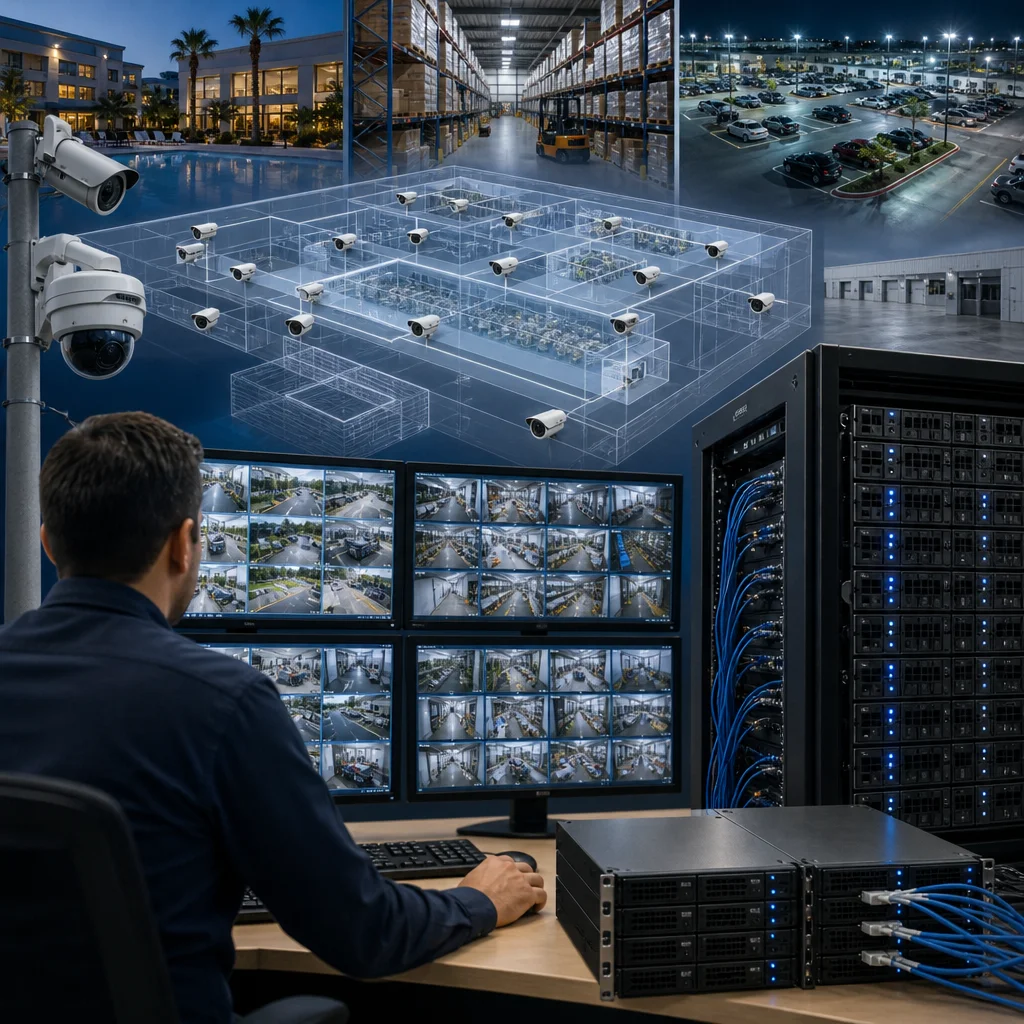
Choosing a partner for integrating physical and cybersecurity for business is a decision that impacts your organization’s stability for years. At Terapixels Systems, we don’t just install cameras or configure firewalls; we architect comprehensive ecosystems that grow with your company. Our approach begins at the physical layer with precision-engineered structural cabling and extends through AI-driven analytics to cloud-based management. This vertical integration ensures that every component of your security posture is optimized for peak performance and seamless interoperability. Whether you manage a high-density warehouse, a sprawling office park, or a multi-housing development, we customize our solutions to meet the specific operational demands of your facility. We act as a steady hand, managing the background complexity so you can focus on your core business objectives.
Local Expertise for SoCal Businesses
Businesses in Southern California face unique challenges, from specific San Diego County fire codes to complex building regulations in Orange County. We understand these localized requirements intimately and ensure that your converged systems remain fully compliant. Having a single point of contact for all technology needs simplifies your operations and ensures total accountability. Our team provides specialized on-site support for critical infrastructure, including backup generator installation for business and commercial solar integration. This ensures that your integrated security remains functional during power grid fluctuations or emergencies, providing the stability that modern enterprises require. We treat our clients as partners, aligning our technical expertise with your long-term growth goals.
Your Next Steps Toward Total Protection
The transition from reactive monitoring to proactive, AI-driven prevention is the most significant step you can take toward total protection. It moves your security strategy from simply recording events to identifying and stopping them before they escalate into costly breaches. Your journey begins with a thorough site walkthrough to identify existing infrastructure gaps and potential network vulnerabilities. By scheduling an integrated security assessment, you gain a clear, methodical plan to bridge your current hardware with modern digital protocols. It’s time to move beyond fragmented systems. Embrace a unified posture that protects both your physical assets and your digital reputation. Schedule your integrated security consultation with Terapixels Systems today to begin architecting a more secure future for your facility.
Empowering Your Enterprise Through Unified Protection
The security landscape of 2026 demands a departure from the fragmented models of the past. By prioritizing the convergence of hardware and digital protocols, your organization gains more than just protection; it achieves operational clarity. We’ve examined how high-performance cabling provides the essential bandwidth for AI-driven surveillance and how a unified roadmap reduces the long-term cost of ownership. Integrating physical and cybersecurity for business is the most effective way to eliminate app fatigue while ensuring compliance with evolving California privacy regulations. It’s about total resilience.
As specialists in both structural cabling and cybersecurity, Terapixels Systems is uniquely positioned to architect these complex systems for San Diego and Orange County firms. Our expertise in AI analytics and cloud-based surveillance allows us to bridge the gap between your physical perimeter and your digital network. We’re committed to being your reliable architect in building a resilient, future-proofed infrastructure. Your facility deserves a singular, all-encompassing source of truth for its security needs.
Secure your business with a converged strategy—Contact Terapixels Systems today. We look forward to helping you build a more stable foundation for your enterprise.
Frequently Asked Questions
What is the difference between physical security and cybersecurity?
Physical security focuses on protecting tangible assets, personnel, and facilities through hardware like cameras, locks, and sensors. Cybersecurity involves safeguarding digital data, networks, and software from unauthorized access or damage. While they were once managed separately, modern business strategy requires these two fields to function as a single, unified ecosystem to ensure no gaps exist in your defensive posture.
How can a physical security breach lead to a cyberattack?
An intruder who gains physical access to your building can bypass many digital firewalls by plugging a device directly into an unsecured network port. Stolen employee credentials or keycards can also be used to gain entry to server rooms where hardware can be compromised. By integrating physical and cybersecurity for business, you ensure that a breach at a door or window immediately triggers digital alerts and network lockdowns.
Is it more expensive to integrate my security systems?
While the initial hardware transition requires an upfront investment, the long-term total cost of ownership is typically lower. Integrated systems eliminate the need for redundant software licenses and separate maintenance contracts for siloed departments. You’ll also save on operational costs by centralizing monitoring into a single interface, which reduces the staff hours needed to manage multiple disconnected platforms.
What role does structured cabling play in cybersecurity?
Structured cabling acts as the physical transport layer for all your digital security data. High-quality fiber optic and CAT6 cabling ensure that encrypted video streams and access logs move across your network without latency or packet loss. A well-designed cabling infrastructure also allows for network segmentation, which keeps your security traffic isolated from guest Wi-Fi and other potential vulnerabilities.
Can AI-driven surveillance help with both physical and digital security?
AI analytics bridge the gap by identifying physical threats, such as tailgating or unauthorized perimeter crossings, and translating them into digital actions. For example, an AI-detected physical breach can automatically trigger a high-security mode for your digital servers. This coordination ensures that your surveillance system is an active participant in your overall threat detection strategy rather than just a passive recording tool.
Do I need a backup generator for my integrated security system?
A backup generator is essential for maintaining your security posture during a power outage. Since integrated systems rely on network connectivity and cloud-based management, they must remain powered to function. Ensuring your facility has a reliable power source protects your digital locks, cameras, and monitoring tools from going dark when your facility is most vulnerable.
How does security convergence help with insurance compliance?
Insurance carriers increasingly favor businesses that can demonstrate a unified and proactive approach to risk management. Convergence provides a comprehensive audit trail that links physical events to digital logs, making it easier to prove compliance with industry standards. This level of transparency and documentation often leads to lower liability insurance premiums because it reduces the overall risk profile of the business.
Why should I choose a local San Diego/OC provider for integration?
Local providers offer a deep understanding of regional building codes and fire regulations that affect hardware installation. Choosing a partner in San Diego or Orange County ensures that you have access to on-site support for physical infrastructure like cabling and generators. This proximity allows for a more responsive partnership, ensuring your integrated systems are maintained and updated to meet the specific needs of the Southern California business environment.