
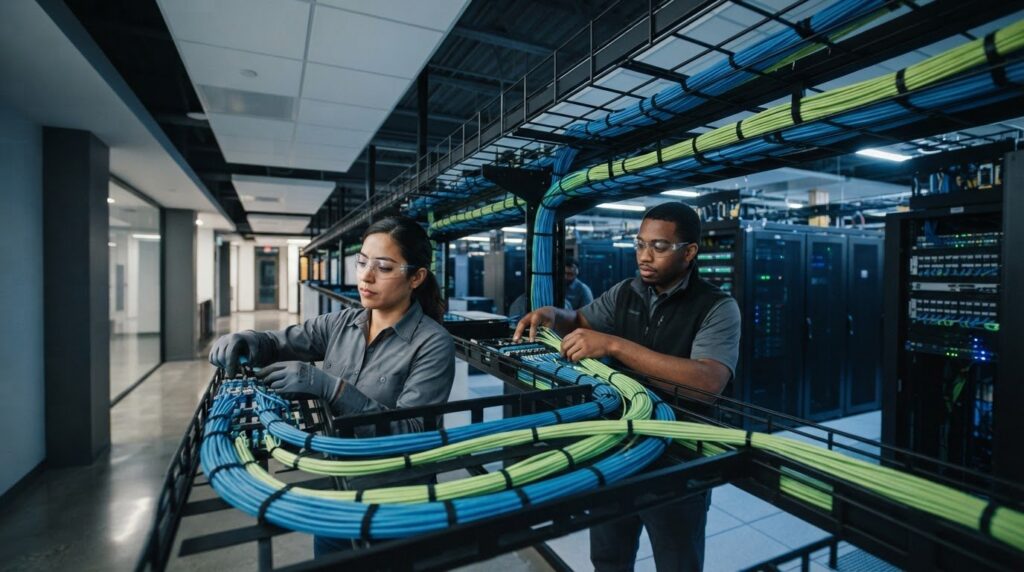
What if the most important part of a commercial fiber project happens before a cable is pulled? A well-planned design accounts for distance, bandwidth, building pathways, and future growth while helping limit disruption to daily operations. If you’re researching “fiber optic cabling installation commercial,” the key question isn’t just which cable to use. It’s how the installation will fit your building, equipment, and existing copper network.
This guide covers the stages of commercial fiber installation, from assessing facility needs and planning cable routes to choosing a suitable design and coordinating with other infrastructure. You’ll learn how distance, environment, applications, and future capacity shape those decisions. Terapixels Systems provides commercial fiber and CAT6 cabling as part of a coordinated approach to business network infrastructure.
Key Takeaways
- Map connectivity requirements first, including the network spaces and applications the cabling must support.
- A fiber optic cabling installation commercial project moves through defined stages, from route design and installation to testing and documentation.
- Plan access, work areas, and existing infrastructure early to coordinate installation with facility operations.
- Use fiber and copper for the connections each suits: fiber for backbone links and appropriate cabling for device and work-area connections.
Why Commercial Fiber Optic Cabling Installation Starts with Business Needs
Commercial fiber cabling carries data as light between network spaces. It can connect network rooms across a building or campus, support applications with high bandwidth needs, and serve routes where copper may not fit the design. Because fiber uses light rather than electrical signals, it is resistant to electromagnetic interference. For an overview of its construction and uses, see what fiber optic cables are.
Fiber isn’t automatically the right choice for every connection. When planning “fiber optic cabling installation commercial,” start with three questions: where must links run, what will they support, and how might the network change? Answering these helps avoid both unnecessary fiber runs and a design that leaves too little capacity for planned growth.
See a fiber installation in action:
Which business requirements determine a fiber design?
Begin by mapping the network endpoints: the equipment rooms, network closets, and other spaces that need to connect. Then consider the route between them, the applications using the link, the environment along the route, and the pathways available. A backbone link between network spaces may call for fiber, while devices in work areas may connect over copper cabling.
Single-mode and multimode fiber are different design options, not a simple ranking. The suitable type depends on link distance, connected equipment, and the capacity the organization needs. Check compatibility with the network equipment and consider existing cabling and planned expansion before settling on a design. Terapixels Systems installs commercial fiber and CAT6 cabling as part of business network infrastructure.
How Commercial Fiber Optic Cabling Installation Moves from Plan to Validation
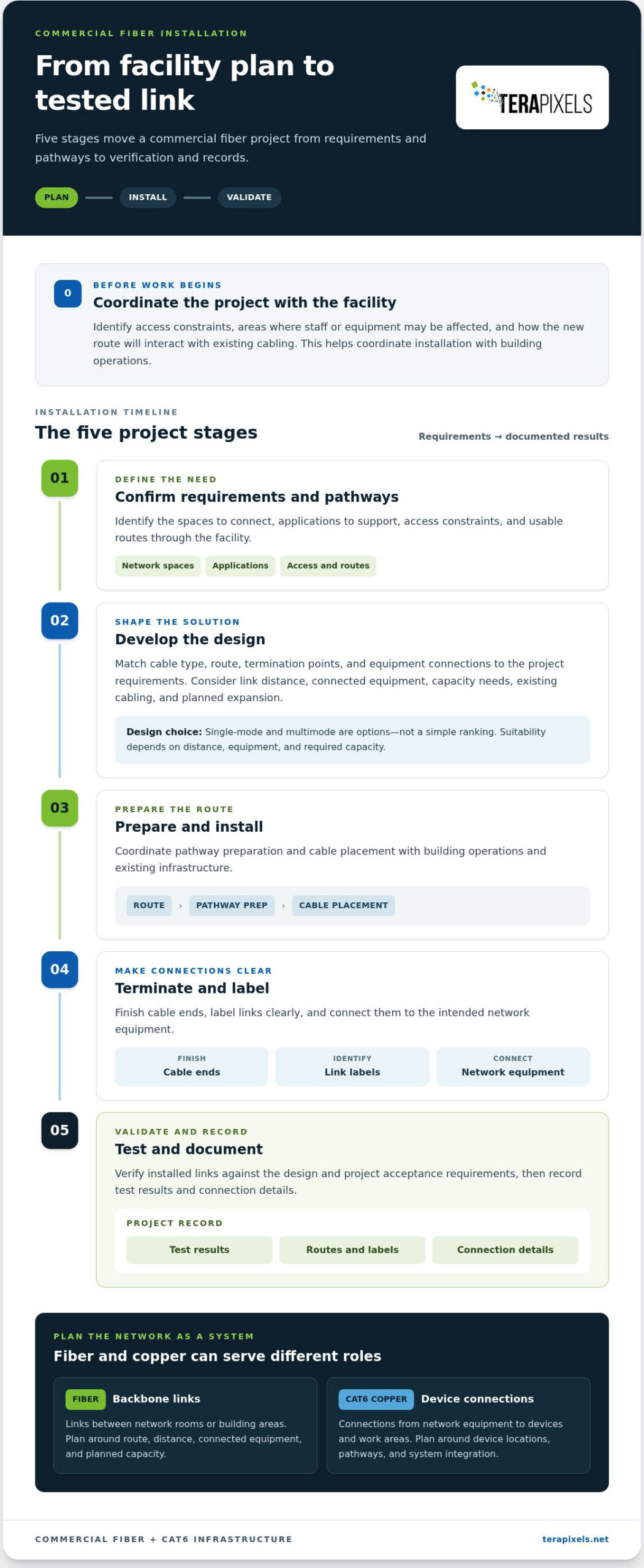
A dependable installation follows a defined path from business requirements to a tested, documented link. Before work begins, identify access constraints, areas where staff or equipment may be affected, and how the new route will interact with existing cabling. This makes it easier to coordinate the work with facility operations.
- Confirm requirements and pathways: Identify the spaces to connect, applications to support, access constraints, and usable routes through the facility.
- Develop the design: Match the cable type, route, termination points, and equipment connections to the project requirements.
- Prepare and install: Coordinate pathway preparation and cable placement with building operations and existing infrastructure.
- Terminate and label: Finish cable ends, label links clearly, and connect them to the intended network equipment.
- Test and document: Verify installed links against the design and project acceptance requirements, then record test results and connection details.
What happens during fiber installation and testing?
Installation involves more than pulling cable. The work includes preparing pathways, placing cable, terminating it at designated points, labeling connections, and integrating links with network equipment. Testing methods and acceptance criteria depend on the system design and project requirements. Establish them during planning so the team knows how each link will be verified. The FOA Online Reference Guide provides further technical background on fiber network design and installation.
For a fiber optic cabling installation commercial project, a practical planning check is to compare the proposed fiber route with existing CAT6 infrastructure, equipment locations, and operational access needs. Coordinating fiber and CAT6 can help create a more coherent network. Use this commercial network cabling checklist to review key planning considerations. Terapixels Systems installs commercial fiber and CAT6 cabling around facility connectivity requirements. See commercial cabling solutions for more information.
Integrating Commercial Fiber Cabling into a Scalable Network
A scalable network often uses fiber and copper for different roles rather than relying on one cable type throughout. Fiber can connect network rooms or building areas, while CAT6 copper can serve devices and work areas. For fiber optic cabling installation commercial projects, designing these segments together helps match the backbone to the way people and systems use the facility.
| Cabling | Common role | Planning focus |
|---|---|---|
| Fiber | Links between network rooms or building areas | Route, distance, connected equipment, and planned capacity |
| Copper, such as CAT6 | Connections from network equipment to devices and work areas | Device locations, pathways, and integration with the wider cabling system |
How should a business plan for future network changes?
Keep records of cable routes, termination points, labels, and tested links. Clear documentation helps maintenance teams understand what connects where. Use planned growth, equipment changes, and facility renovations to inform pathway capacity and network-room layout, so future connections can fit into the existing infrastructure. For organizations modernizing their wider workplace systems alongside physical cabling, IT support resources such as iglutech.com can help align ongoing digital transformation initiatives with network capabilities.
For a wider view of how cabling systems fit together, read this structured cabling business guide and the low-voltage cabling guide. Terapixels Systems provides commercial fiber and CAT6 cabling as coordinated parts of business network infrastructure. Before planning a project, map the facility’s network spaces, device connections, and anticipated changes. That information gives the cabling design a practical foundation.
Build Network Capacity with a Coordinated Plan
Reliable commercial connectivity starts with a design based on your facility’s applications, distances, pathways, and growth plans. A well-managed fiber project moves from requirements and route planning through installation, termination, testing, and documentation. Combining fiber backbone links with CAT6 connections allows the network to serve different needs across the facility.
Choosing fiber optic cabling installation commercial is a network planning decision, not simply a cable selection. Terapixels Systems installs commercial fiber optic and CAT6 cabling as part of network infrastructure services that also include remote monitoring management and cybersecurity.
Plan your commercial fiber and CAT6 cabling with Terapixels Systems to align network connectivity with your facility’s operational requirements.
Frequently Asked Questions
What is commercial fiber optic cabling installation?
Commercial fiber optic cabling installation is the design and deployment of optical links connecting network rooms, building areas, or other parts of a business network. Each fiber optic cabling installation commercial project should reflect the facility’s applications, link distances, pathways, and planned capacity. Fiber can serve as a network backbone, while copper cabling may connect equipment and devices.
Is fiber optic cabling better than copper for a commercial building?
Neither is universally better; each suits different network roles. Fiber can support links between network spaces, longer routes, and environments where electromagnetic interference is a concern. Copper, including CAT6, is commonly used for connections to work areas and devices. The right mix depends on distance, connected equipment, applications, building pathways, and how the network may expand.
How does a commercial fiber optic installation work?
A commercial fiber installation typically begins by defining connectivity needs and surveying potential cable pathways. The design guides pathway preparation, cable placement, termination, labeling, and connection to network equipment. Testing checks installed links against project requirements, and documentation records routes and connections. Planning access and coordinating work areas with facility operations can help manage disruption.
What should a business consider before installing fiber optic cabling?
Consider what the network must support, which spaces need connections, how far links will run, and what pathways are available. Review the building environment, existing copper infrastructure, access constraints, and likely facility or equipment changes. These factors guide fiber type, network-room planning, and capacity decisions so the installation fits operational needs and allows for future growth.