CONTACT US
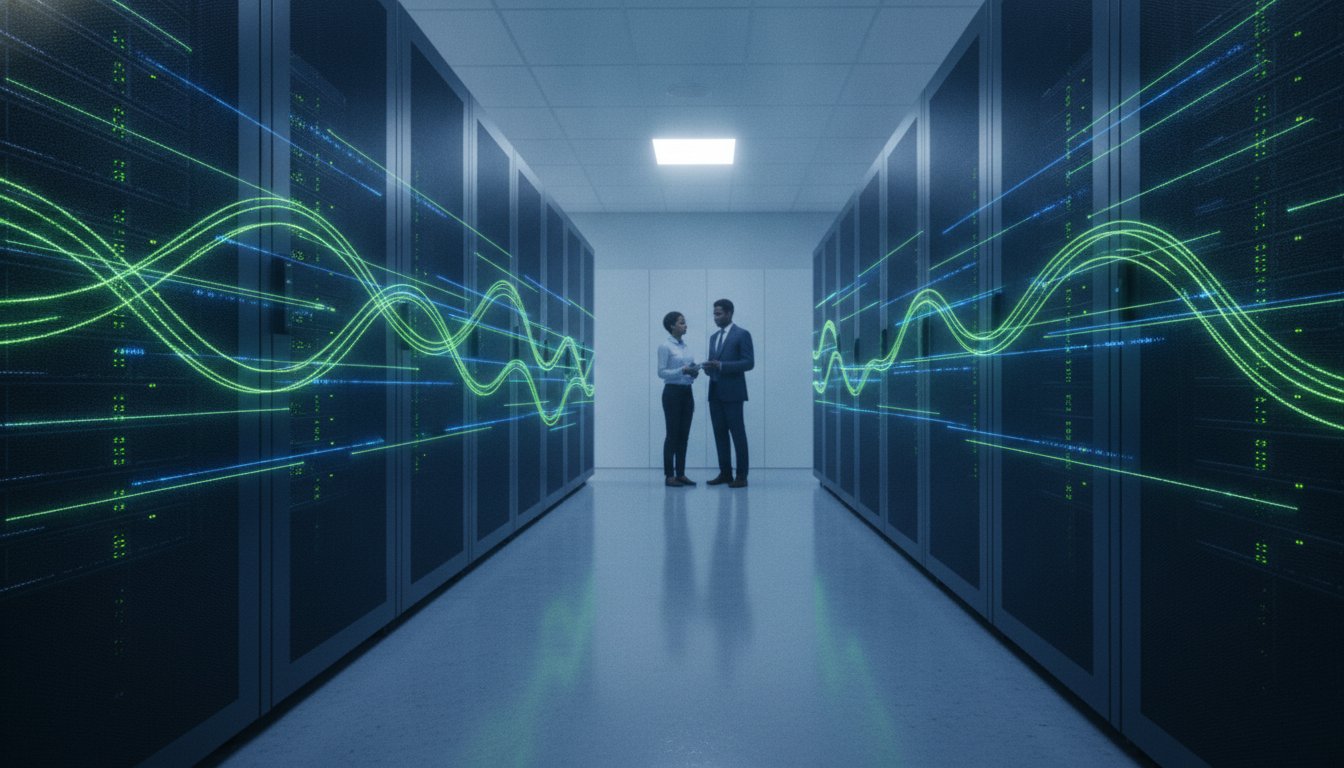
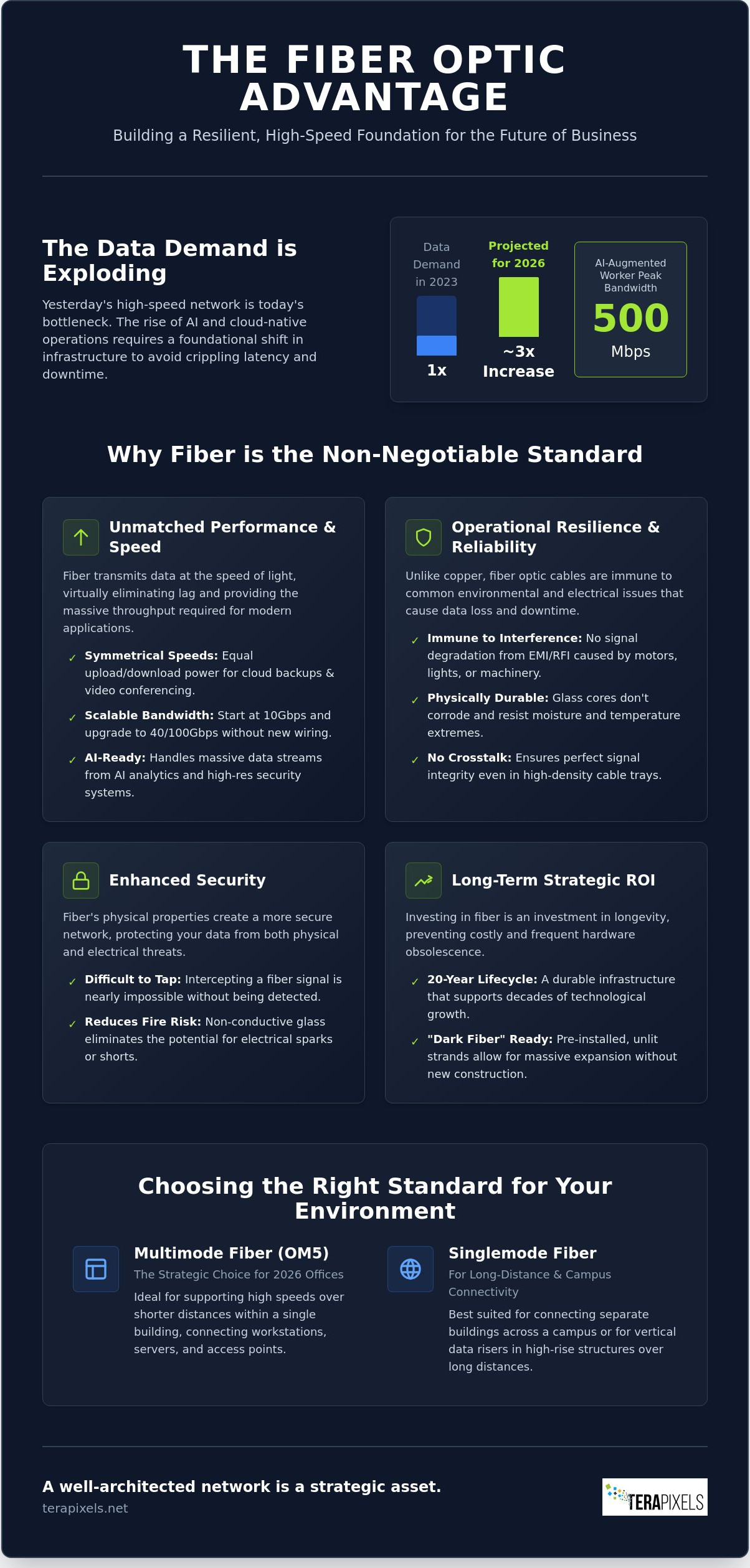
Did you know that the average AI-augmented knowledge worker in 2026 requires up to 500 Mbps of peak bandwidth just to stay productive? This represents a nearly three-fold increase in data demand since 2023, turning yesterday’s high-speed network into today’s most significant operational bottleneck. If you’ve experienced frustrating downtime during peak hours or worry that your current infrastructure will be obsolete within five years, those concerns are valid and shared by many growing enterprises.
Understanding the strategic benefits of fiber optic cabling for business is the first step toward building a more resilient organization. A professional transition to fiber provides the speed, security, and scalability necessary to power modern commercial operations while protecting your long-term technology investment. In this guide, we’ll explore how advanced standards like OM5 multimode fiber and 800GbE capabilities provide the reliable foundation your cloud-based RMM and AI-driven security systems require to function at their peak. You’ll discover how a well-architected network remains a strategic asset that supports 10G+ speeds and reduces maintenance costs for years to come.
Key Takeaways
- Learn why symmetrical upload and download speeds have become a non-negotiable standard for cloud-native operations and real-time digital collaboration.
- Explore the strategic benefits of fiber optic cabling for business in environments prone to electromagnetic interference, ensuring stable connectivity where copper alternatives might struggle.
- Discover how high-speed fiber backchannels provide the necessary throughput for seamless Remote Monitoring Management and cloud-based access control systems.
- Understand the long-term ROI of a 20-year infrastructure lifecycle that minimizes maintenance needs and prevents frequent, costly hardware obsolescence.
- Learn how scalable 10G+ speeds future-proof your technology stack to handle the massive bandwidth demands of AI analytics and next-generation surveillance.
Table of Contents
Unmatched Performance: Why Fiber Bandwidth and Speed Rule the 2026 Office
Modern commercial operations no longer just consume data; they generate it at an unprecedented scale. One of the most significant benefits of fiber optic cabling for business is the provision of symmetrical upload and download speeds. Unlike traditional copper connections that often prioritize downloads, fiber ensures that your cloud backups, high-definition video conferences, and real-time data syncs happen without delay. This symmetry is non-negotiable for cloud-native businesses that rely on instant response times to maintain a competitive edge.
Latency issues can cripple a digital workspace. Because Optical fiber technology transmits data using pulses of light, it virtually eliminates the lag associated with electrical signals. This light-speed transmission is the secret behind seamless real-time collaboration tools that feel truly instantaneous. Additionally, fiber offers incredible scalability; a single professional installation can support 10Gbps today and scale to 40Gbps or 100Gbps tomorrow through simple hardware upgrades rather than new wiring. For businesses planning long-term growth, dark fiber represents unlit, pre-installed cable strands that sit ready to be activated as your data requirements expand, preventing future construction costs.
Singlemode vs. Multimode Fiber: Choosing the Right Standard
Selecting the correct standard is essential for a reliable backbone. Multimode fiber, specifically OM5, is the strategic choice for 2026 office environments, supporting high speeds over shorter distances within a building. Singlemode fiber is better suited for long-distance campus connectivity or vertical risers in high-rise buildings. When evaluating your infrastructure, understanding what is structured cabling helps clarify why fiber outperforms copper in high-density scenarios where speed and distance are both critical factors.
The Bandwidth Advantage for Data-Heavy AI Applications
AI-driven analytics require massive throughput to process large datasets without causing network congestion. Fiber provides the essential foundation for these tools, ensuring that an AI security camera system commercial deployment can transmit high-resolution video streams for real-time analysis without impacting other business operations. This high-capacity throughput ensures your network remains a strategic asset that grows alongside your technological ambitions.
Operational Resilience: Immunity to Interference and Environmental Stress
One of the core benefits of fiber optic cabling for business is its inherent immunity to electromagnetic interference (EMI) and radio frequency interference (RFI). While a professional CAT6 cabling installation commercial remains a viable option for many localized applications, copper wires essentially act like antennas. They pick up noise from fluorescent lights, elevator motors, and heavy machinery, which can lead to packet loss and sluggish performance. According to The Fiber Optic Association, fiber’s use of light pulses instead of electrical signals makes it the most reliable medium for electrically noisy environments.
Physical durability also sets fiber apart. Modern glass cores are protected by advanced jacketing that resists moisture and extreme temperature fluctuations. Glass doesn’t corrode. This simple fact prevents the signal degradation that often plagues copper in humid or non-climate-controlled spaces. Security-minded organizations value this signal integrity; it’s nearly impossible to “tap” a fiber line without causing a detectable signal loss. Because glass is non-conductive, it also reduces fire risks in high-density office spaces by eliminating the potential for electrical sparks or shorts.
Reliability in High-Density Commercial Environments
In crowded cable trays, copper cables often suffer from “crosstalk,” where signals bleed from one wire to another and disrupt data flow. Fiber eliminates this entirely, ensuring 100% uptime for critical business systems. This stability is a key component of low voltage structured cabling, as fiber can transmit data over much longer distances than copper without needing intermediate signal boosters. These benefits of fiber optic cabling for business translate directly into a more stable, lower-maintenance network. If you’re planning a facility upgrade, a professional infrastructure assessment can help identify the most resilient pathways for your connection.
Strategic ROI: Integrating Security, Monitoring, and Power
Investing in high-grade infrastructure is a decision that impacts a company’s financial health for decades. One of the most compelling benefits of fiber optic cabling for business is the significant reduction in Total Cost of Ownership (TCO). While the initial setup requires precision, the 20+ year lifecycle of glass media far outlasts copper alternatives. This longevity, combined with minimal maintenance requirements, ensures that your capital expenditure translates into long-term operational stability. Additionally, a fiber-ready building significantly increases commercial property value, as landlords and facility managers can guarantee high-tier connectivity to premium tenants.
The technical architecture of a fiber network allows for seamless remote monitoring management for business through high-throughput backchannels. These dedicated pathways enable real-time system health checks and rapid troubleshooting without interfering with daily user traffic. By utilizing centralized management tools, fiber-optic backbones drastically reduce the manual troubleshooting load on local IT staff. This shift allows your technical team to focus on high-level strategy rather than reactive repairs.
The Backbone of Modern Security and Access Control
Modern security relies on data-heavy streams that copper struggle to maintain over distance. Fiber provides the necessary bandwidth for high-definition cloud-based surveillance, ensuring that every frame is captured with clarity. This robust foundation also guarantees lag-free performance for a keycard access control system for business across large-scale facilities. When your security and access systems share a high-speed fiber backbone, authentication happens in milliseconds, maintaining both safety and employee throughput.
Future-Proofing for 2026 and Beyond
As we move further into 2026, the benefits of fiber optic cabling for business extend to the support of emerging wireless standards. Fiber is the essential foundation for upcoming 6G networks and advanced Wi-Fi 7 or Wi-Fi 8 office deployments, which require a high-capacity wired backhaul to function at rated speeds. Beyond networking, fiber integrates perfectly with sustainable energy solutions and smart building management systems. It provides the communicative link needed to manage commercial solar arrays, EV chargers, and automated climate controls within a single, unified infrastructure.
Securing Your Competitive Advantage Through Digital Infrastructure
Transitioning from legacy copper to a modern fiber backbone is about more than just incremental speed; it’s a fundamental shift toward operational resilience and data security. We’ve explored how fiber eliminates electromagnetic interference and provides the symmetrical bandwidth required for AI-driven analytics and cloud-native management. Understanding the strategic benefits of fiber optic cabling for business ensures that your organization remains agile as bandwidth demands continue to climb throughout 2026. This infrastructure doesn’t just support your current tools. It creates a stable, scalable environment for the next generation of wireless standards and smart building systems.
As certified structural cabling experts, Terapixels Systems specializes in high-security commercial integrations with national deployment capabilities. We’re ready to design a network that aligns with your specific operational goals and security requirements. Upgrade your business infrastructure with Terapixels Systems’ professional fiber installation services. Let’s build a reliable foundation that supports your growth today and well into the next decade.
Frequently Asked Questions
Is fiber optic cabling more expensive than CAT6 for a new office?
Initial material and installation costs for fiber are generally higher than CAT6 copper cabling. While copper is often more budget-friendly for short-range workstation connections, fiber offers a much lower total cost of ownership over time. It’s a strategic investment that avoids the need for frequent cable replacements as data demands grow, providing a much longer functional life for your facility’s infrastructure.
Can fiber optic cables be used for Power over Ethernet (PoE) devices?
Standard fiber optic cables cannot transmit electrical power because they use light pulses rather than electrical signals. To support PoE devices like security cameras or access control panels, we typically implement powered fiber cable systems that include copper conductors for power alongside the glass cores for data. Alternatively, local power sources or media converters can be used to ensure your hardware receives the necessary electricity.
What is the typical lifespan of a commercial fiber optic installation?
A professionally installed commercial fiber system typically lasts between 20 and 25 years. Because glass doesn’t corrode or degrade like copper, the physical medium remains stable for decades. This longevity is one of the primary benefits of fiber optic cabling for business, as the infrastructure can support multiple generations of hardware upgrades without requiring you to pull new wires through your walls.
How long does it take to install fiber optic cabling in an existing business facility?
Installation timelines depend on the size of your facility and the complexity of the cable paths, but most office retrofits take between a few days and two weeks. Factors like existing conduit availability and the total number of termination points will influence the schedule. We prioritize a methodical approach to ensure the installation of the benefits of fiber optic cabling for business happens with minimal disruption to your daily commercial operations.