CONTACT US
Table of Contents
- The Challenge of Managing Fragmented IT and Security Systems
- Why Consolidating Vendors Matters for Your Organization
- How Terapixels Delivers True End-to-End Integration
- Our Structured Approach to Network Infrastructure and Security
- Access Control and HD Camera Systems as Part of Your IT Ecosystem
- Specialized Electrical Installation That Others Won't Handle
- The Hidden Costs of Working with Multiple Vendors
- How We Support Mid-Sized Businesses Across Southern California
- Our Managed IT Services with Security-First Architecture
- Why Local Expertise Beats National Vendor Relationships
- Implementation and Support You Can Count On
- Frequently Asked Questions (FAQ)
The Challenge of Managing Fragmented IT and Security Systems
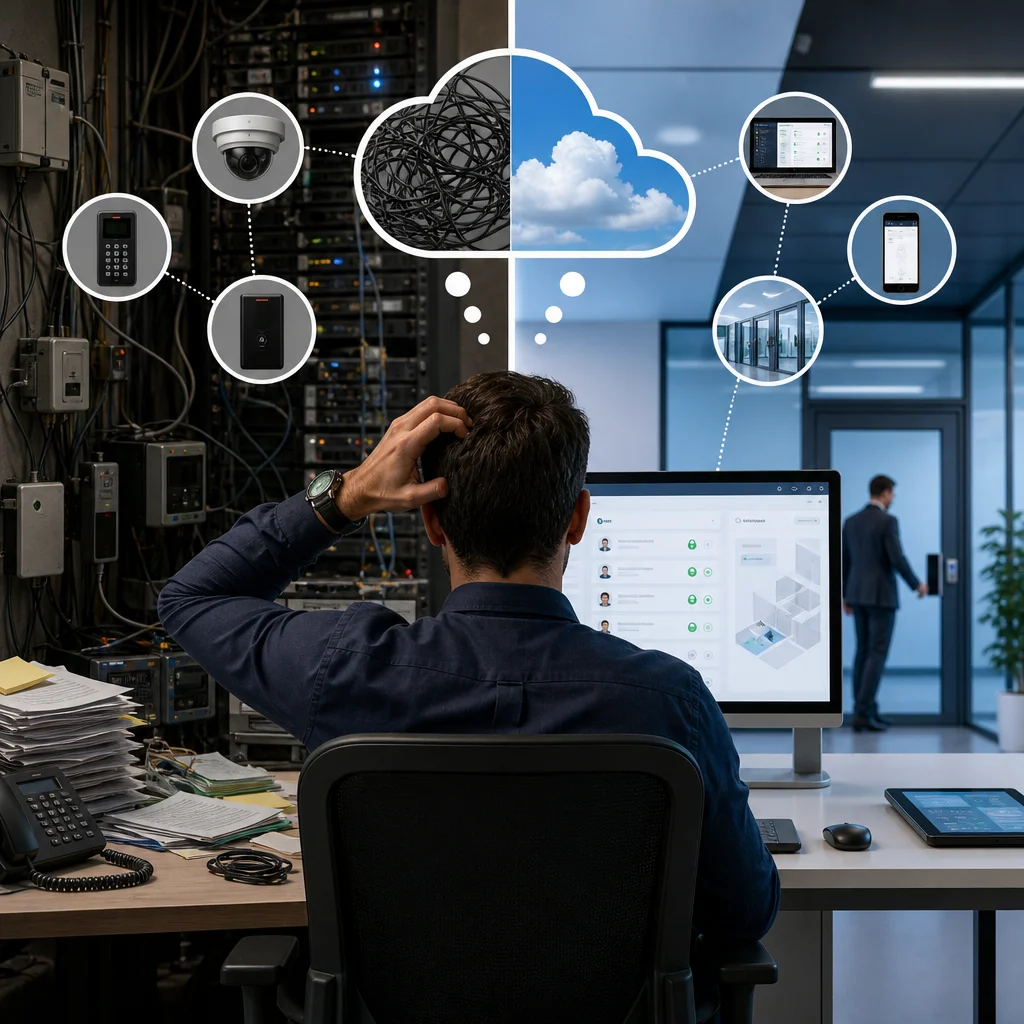
Most mid-sized organizations across Southern California operate with a patchwork of technology vendors. Your network infrastructure comes from one provider, access control from another, security cameras from a third, and electrical installation gets handed off to whoever’s available. This fragmentation creates real operational headaches.
When systems don’t talk to each other, you lose visibility. A breach at a warehouse doesn’t automatically alert your IT team. A network failure means your access control system becomes unreliable. Your camera feeds operate independently from your IT infrastructure, making forensic investigations slow and expensive. Meanwhile, you’re juggling separate contracts, different support escalation paths, and invoices from multiple vendors.
The fundamental problem is lack of integration. General IT providers like CDW excel at hardware procurement and basic support, but they don’t understand physical security architecture. They won’t design your network topology around surveillance bandwidth requirements or ensure your electrical infrastructure supports enterprise-grade access control systems. That’s where most mid-sized businesses get stuck: working with vendors who specialize in parts, not the whole system.
Actionable takeaway: Audit your current vendor list. Count how many separate contracts you have for IT, security, networking, and electrical services. If you have more than two or three, fragmentation is likely costing you time and creating security gaps.
Why Consolidating Vendors Matters for Your Organization
Consolidation isn’t about having one vendor for simplicity’s sake. It’s about alignment. When your security infrastructure, network design, and electrical installation come from one partner with unified standards, everything works together by design rather than by accident.
Consider a hotel property managing guest access, employee credentials, and emergency lockdown protocols. With fragmented vendors, the access control system operates on its own network, separate from your IT infrastructure. When a guest loses a keycard, multiple teams need coordination to update systems that don’t sync automatically. With unified integration, credential updates happen across all systems in real time.
The same principle applies to manufacturing facilities and distribution centers. Your inventory management system needs to integrate with camera systems that monitor high-value areas. Your network bandwidth planning must account for HD security video streams. Your electrical infrastructure must support redundant power for access control. These aren’t independent systems; they’re interdependent components of your operational backbone.
Consolidating with a partner who understands security-first architecture means your IT team spends less time troubleshooting integration issues and more time on strategic initiatives. Your facilities team operates with unified tools and documentation. Your security posture becomes measurably stronger because every system reinforces every other system.
Actionable takeaway: Schedule a working session with your IT director and facilities manager. Map out where your current vendors create friction (delayed troubleshooting, duplicate monitoring, conflicting schedules). This becomes your case for consolidation.
How Terapixels Delivers True End-to-End Integration
We design complete systems, not point solutions. Our approach starts with your business requirements, then builds integrated infrastructure that addresses IT, security, and facilities operations simultaneously.
Here’s how we differ from national IT providers. When we design network infrastructure, we account for:
- Bandwidth allocation for HD video streams and real-time access control feeds
- Redundant paths so security systems stay operational during network failures
- Segmentation that isolates security systems from general IT traffic, improving both performance and compliance
- Power delivery architecture that keeps access control and surveillance operational during outages
This isn’t add-on thinking; it’s foundational design. Our structured cabling work integrates pathways for network infrastructure, surveillance systems, and access control wiring in a unified plan. Your electricians know exactly what needs power and where. Your IT team understands the network topology because security was considered from the start.
For a Marriott or Hilton property, this means guest room access, employee credential management, and loss prevention cameras operate on a unified backbone that your property management team understands and controls. For a warehouse operation, it means your shipping dock cameras integrate directly with your network monitoring so operational intelligence flows continuously to your IT infrastructure.
We also provide the implementation bridge. National vendors hand off installation to local contractors who may not understand the integrated design. We execute the complete project because we understand how each component needs to function within the larger system.
Actionable takeaway: Request a technical consultation that includes site survey, current system inventory, and pain point mapping. We assess your specific operational requirements before recommending architecture.
Our Structured Approach to Network Infrastructure and Security
Structured cabling forms the foundation of everything we build. Most IT providers treat cabling as commodity infrastructure, but we treat it as the nervous system that connects your entire operation.
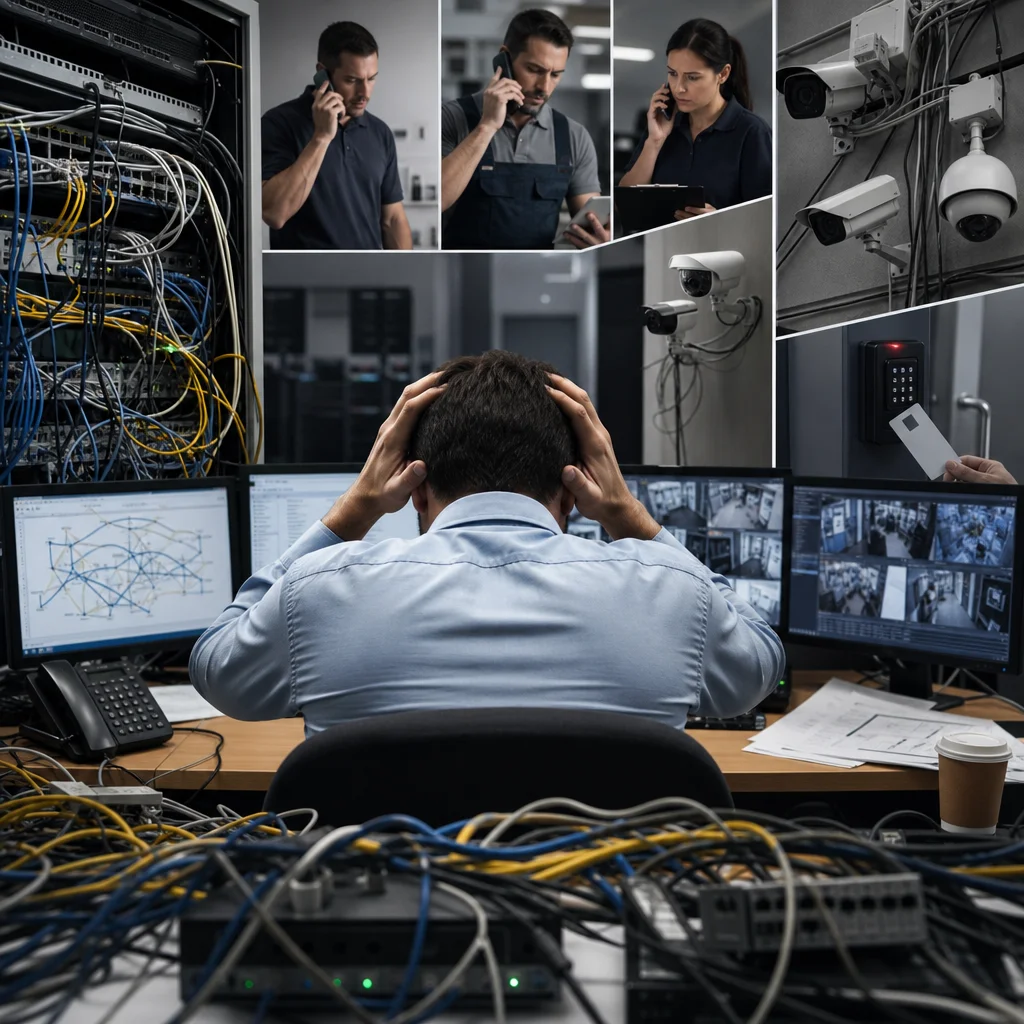
Our approach uses enterprise-grade standards that support current security requirements and future expansion. We separate network runs from power, implement proper shielding, and document everything so your team maintains visibility. Unlike generic contractors, we design cabling pathways that accommodate security camera runs, access control wiring, and power delivery for critical systems all within a unified infrastructure plan.
For your network infrastructure, we build with security architecture first. This means:
- Creating separate VLANs for security systems, guest networks, and internal operations
- Implementing network segmentation so a breach in one area doesn’t compromise your entire operation
- Designing redundancy for critical paths so access control and surveillance stay operational
- Planning for bandwidth growth as you add cameras or expand facilities
Our team understands what it means to maintain reliable systems for hospitality, healthcare, manufacturing, and logistics environments. A clinic needs access control that absolutely functions during network disruptions. A distribution center needs video bandwidth planning that accounts for dozens of camera streams without impacting inventory management systems. A hotel needs guest room access that operates seamlessly while maintaining employee security.
We size everything appropriately. A national vendor might install standard infrastructure and hope it works. We design based on your specific operational requirements.
Actionable takeaway: Document your current network performance during peak usage. Identify any bottlenecks where security or IT systems compete for bandwidth. This data shows where integrated design would improve operations.
Access Control and HD Camera Systems as Part of Your IT Ecosystem
Your access control and IP camera systems aren’t separate from your IT infrastructure; they’re applications that run on it. When they’re designed that way from the start, everything works better.
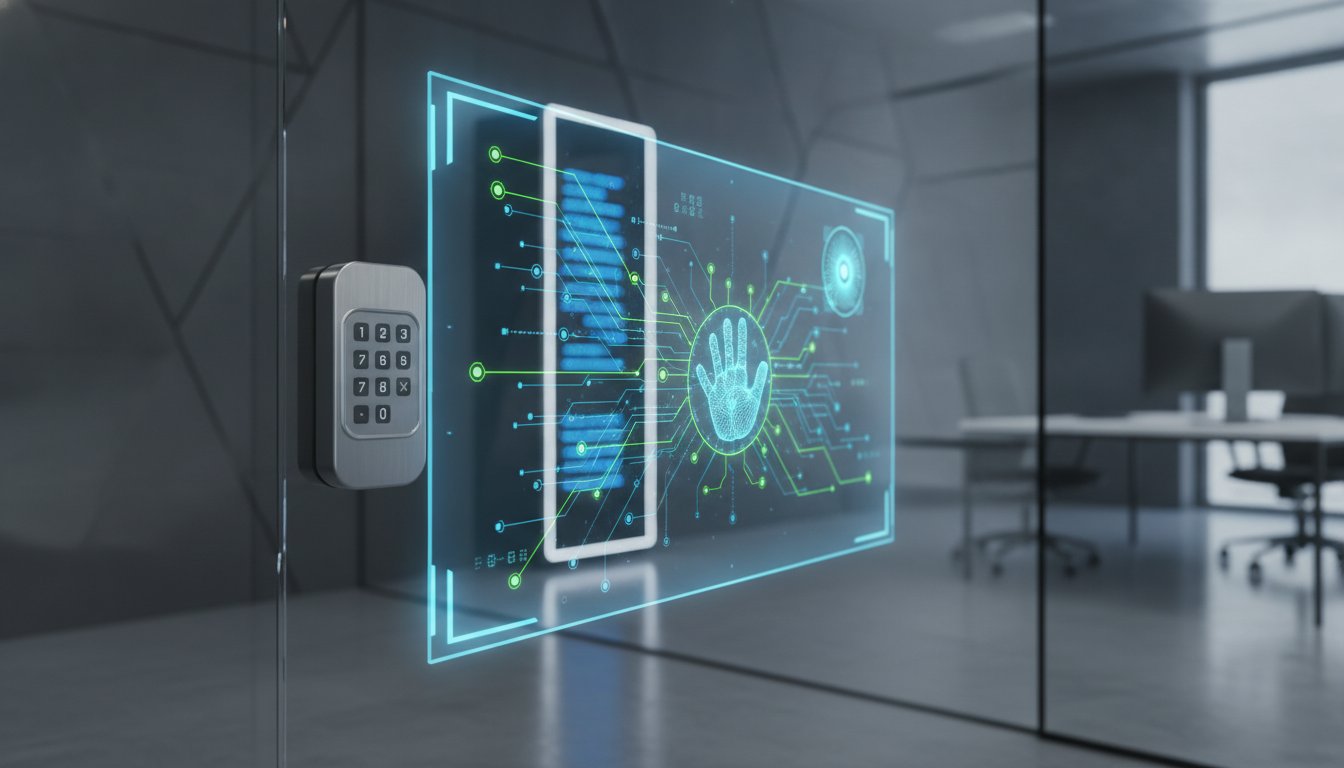
Consider credential management. Traditional access control systems treat credentials as isolated devices. Modern integrated systems treat access control as an application layer on your network infrastructure. This means credential updates propagate automatically. Emergency lockdown protocols execute across all access points simultaneously. Audit trails integrate with your IT security logs for comprehensive compliance reporting.
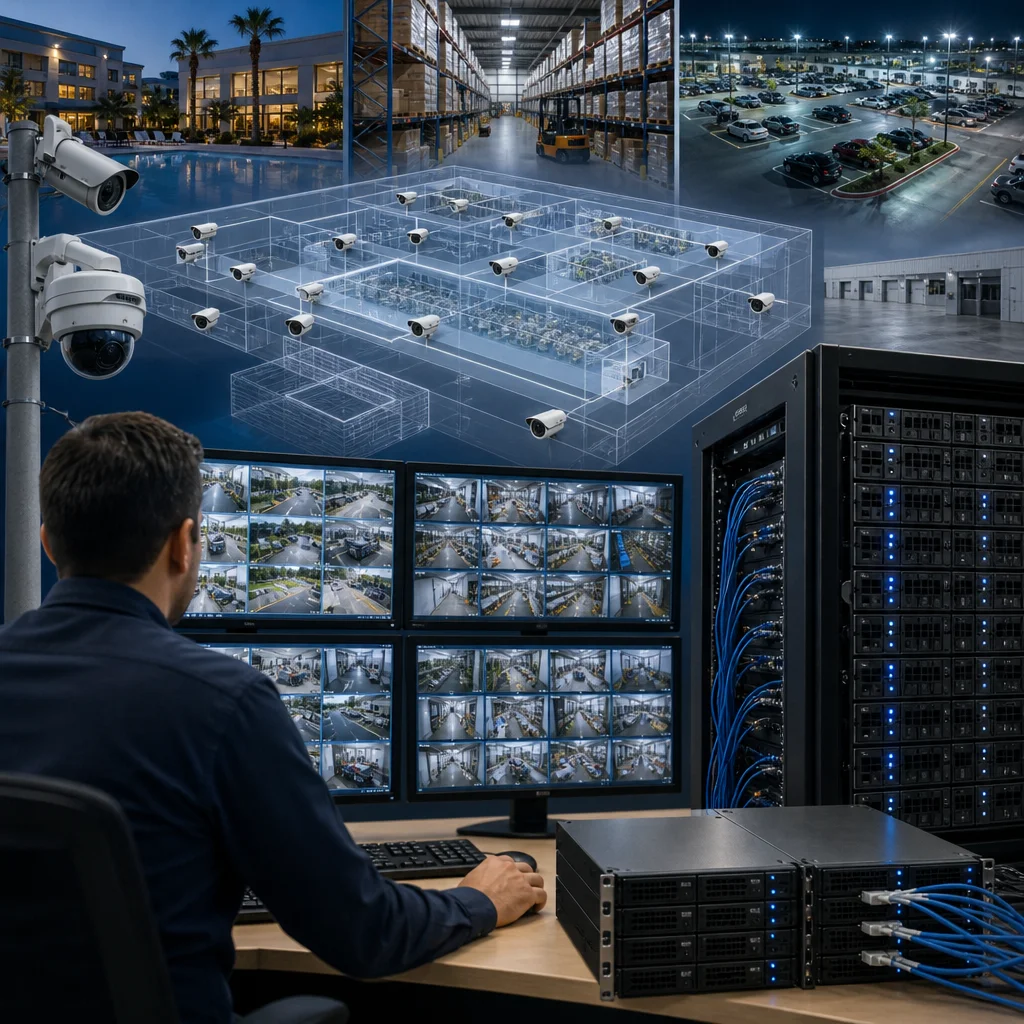
HD surveillance benefits equally from unified design. Access control systems and video feeds work together to give you actual operational intelligence. When a guest tries to access a restricted area, the access control system blocks them and simultaneously triggers video capture from that area. Your security team gets context, not just an event. For warehouse operations, cameras monitoring high-value inventory integrate with your network operations center, creating real-time visibility into physical security.
We integrate these systems with your existing IT operations. Your network team monitors video streams and access logs from standard monitoring dashboards. Your IT backups include access control logs and critical camera footage. Your disaster recovery plan accounts for surveillance and credential systems because they’re part of your core infrastructure.
This also means we handle the specialization that generalist IT providers can’t. We understand how professional-grade camera systems handle bandwidth, how access control networking differs from general data networking, and how to secure surveillance feeds from tampering.
Actionable takeaway: Review your current surveillance and access control systems. If they operate independently from your IT infrastructure, they’re missing integration opportunities. Unified systems provide better operational visibility and stronger security posture.
Specialized Electrical Installation That Others Won’t Handle
National IT providers don’t do electrical work. CDW will sell you equipment, but they won’t ensure your electrical infrastructure actually supports it. That creates a gap where systems get installed without proper power design, leading to failures when they matter most.
We handle the electrical requirements that make secure systems reliable. This includes:
- Redundant power circuits for access control systems so credential management survives outages
- Proper UPS design integrated with surveillance systems so cameras keep operating
- Load analysis that ensures your electrical infrastructure supports total system draw
- Code-compliant installation that passes inspection and holds up during audits
For hospitality properties, this means guest room access control has backup power independent from general property circuits. For warehouses, it means your loading dock cameras and access control stay operational during power events. For clinics, it means your restricted area access control functions when you need it most.
Most importantly, we manage the complexity of integrating electrical work with IT infrastructure design. When cameras need power and network connectivity, those don’t get installed separately by different teams hoping they line up. We coordinate the complete installation so everything works as designed.
We also understand the regulatory requirements. Healthcare facilities have specific electrical codes for security systems. Hospitality properties need electrical redundancy for guest access. Manufacturing facilities need systems that function in demanding environments. Rather than forcing a standardized approach, we design electrical infrastructure that meets your specific operational and regulatory requirements.
Actionable takeaway: Have your facilities manager and IT director walk a critical area together (loading dock, server room, restricted access area). Note where power and network coverage create blind spots. These are integration gaps we can address.
The Hidden Costs of Working with Multiple Vendors
The invoice costs of separate vendors look reasonable until you account for the operational overhead. When you work with multiple providers, you inherit multiple failure modes.
A network issue creates a blame cycle: the IT vendor blames the cabling contractor, who blames the electrician, who points back to the equipment vendor. Meanwhile, your facilities team waits while multiple companies coordinate (or don’t). A simple problem becomes a three-day investigation because no single vendor takes responsibility for the integrated system.
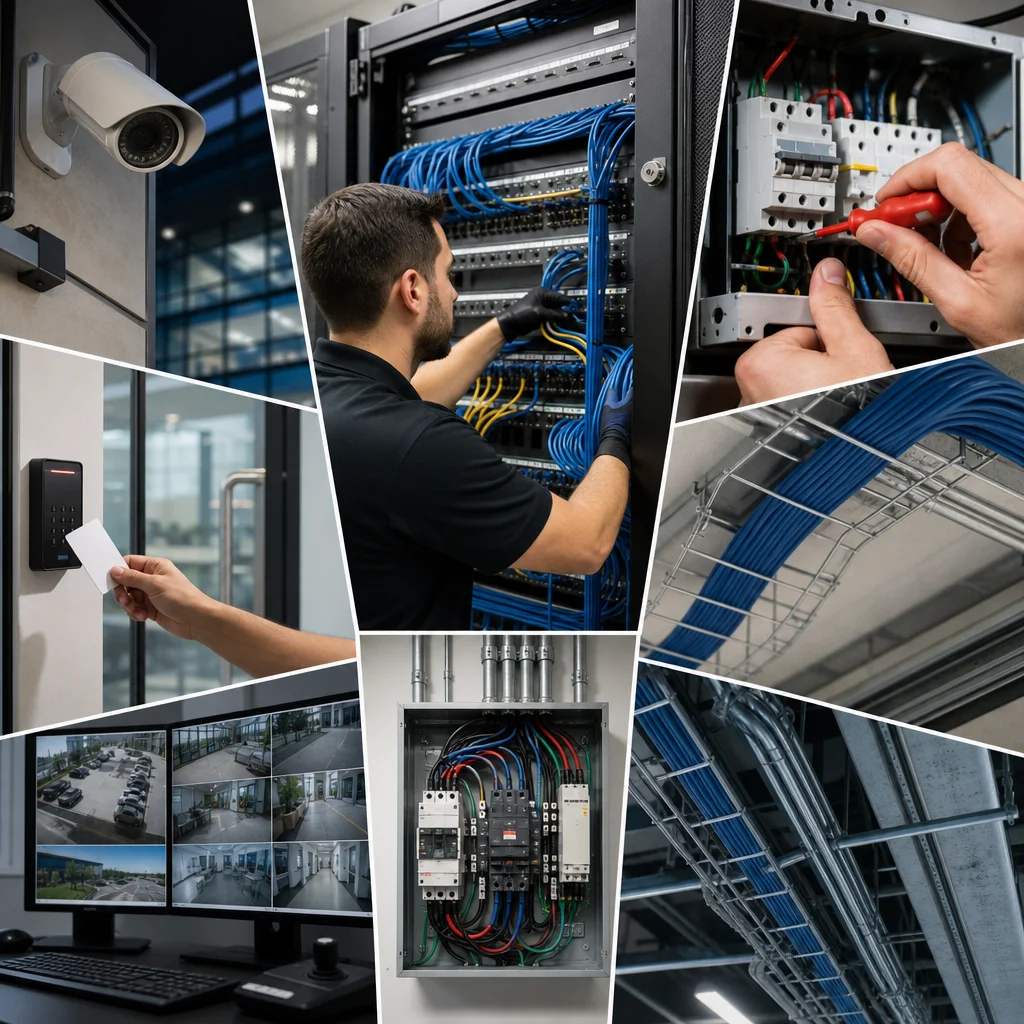
Compliance reporting becomes exponentially more complex. Your audit team needs to gather data from separate systems, reconcile definitions and formats, and create unified reports. What should be a simple access log becomes a nightmare of data consolidation. For hospitality properties subject to PCI compliance, fragmented systems mean fragmented audit trails and higher compliance risk.
Expansion costs multiply with fragmentation. You decide to add cameras to a new area. That requires coordination between your cabling contractor, electrical contractor, and security vendor. Each brings their own timeline. Each introduces their own delay vectors. A project that should take two weeks stretches to six because vendors aren’t working from unified specifications.
Worse is the invisible cost of lost operational intelligence. When systems don’t integrate, your management team makes decisions without complete information. A property manager doesn’t see the correlation between access control patterns and inventory loss because those systems don’t talk. A warehouse manager can’t correlate camera footage with shipping data because they operate in silos. Your strategic visibility becomes limited.
Unified integration eliminates these costs. A single vendor takes responsibility for the complete system. Compliance reporting pulls from one architecture. Expansion uses existing infrastructure specifications. Your operational intelligence becomes comprehensive because all systems feed one backbone.
Actionable takeaway: Calculate your annual cost for vendor coordination, integration troubleshooting, and compliance reporting complexity. The number will surprise you. That’s your baseline for comparing integrated solutions.
How We Support Mid-Sized Businesses Across Southern California
We specialize in the size of organization where fragmentation causes the most pain. You’re too large to run on generic IT provider support, but you’re not a massive enterprise with dedicated security teams. You need partners who understand your operational realities.
We work extensively with hospitality properties, healthcare facilities, manufacturing operations, and logistics centers across Southern California. We understand that a Marriott or Hilton property has different requirements than a small office. A distribution center has different security concerns than a clinic. Rather than forcing standard solutions, we design around your specific operational model.
Our team maintains ongoing relationships with facility managers, IT directors, and security teams. We understand your seasonal challenges, your regulatory requirements, and your growth plans. When you need to add a new facility or expand operations, we already know your standards and specifications.
We also maintain local presence. When something needs immediate attention, we respond with local expertise, not a ticket in a national queue. Your team knows how to reach us and how to communicate with people who understand your operation.
Importantly, we scale with you. Whether you’re managing a single property or multiple locations, we provide unified oversight. Your security infrastructure, network design, and electrical systems maintain consistent standards across all your properties. Your central IT team has visibility into every location.
Actionable takeaway: If you operate multiple properties, document the differences in how each location manages IT, security, and facilities. Unified standards would streamline your central team’s oversight and improve consistency.
Our Managed IT Services with Security-First Architecture
Managed IT services become fundamentally more valuable when security architecture is built in, not bolted on. We monitor your infrastructure with the understanding that security systems and IT operations are interdependent.
Our approach means:
- Continuous monitoring that includes security system health, not just server uptime
- Proactive alerting when patterns suggest security risks or operational issues
- Integrated reporting so your leadership team understands technology status and security posture together
- Predictive maintenance that prevents failures before they affect operations
For a hotel, this means continuous monitoring of guest room access control, employee credential systems, and loss prevention cameras integrated with standard IT operations monitoring. If a pattern emerges (like unusual access attempts), our team correlates that with IT logs and alerts your security team before an incident occurs.
For a warehouse or distribution center, it means your inventory systems, shipping documentation, and surveillance video all feed one monitoring framework. If someone tries to access a high-value area, the access control system, camera footage, and IT logs all provide context to your security team.
We also manage the patch and update cycle in a way that accounts for security system requirements. Updates to your access control system or camera infrastructure get tested and deployed alongside IT updates, not as separate projects. This keeps your systems current while maintaining operational continuity.
Most importantly, we treat your security infrastructure as core to your business operations, not as an add-on to IT management. This perspective change improves both your security posture and your operational efficiency.
Actionable takeaway: Review your current managed IT service agreement. Does it include your security systems or treat them separately? Integrated management provides significantly better visibility and faster incident response.
Why Local Expertise Beats National Vendor Relationships
National IT vendors offer breadth, but integrated security infrastructure demands depth. Our local expertise becomes valuable at the exact moments when you need it most.
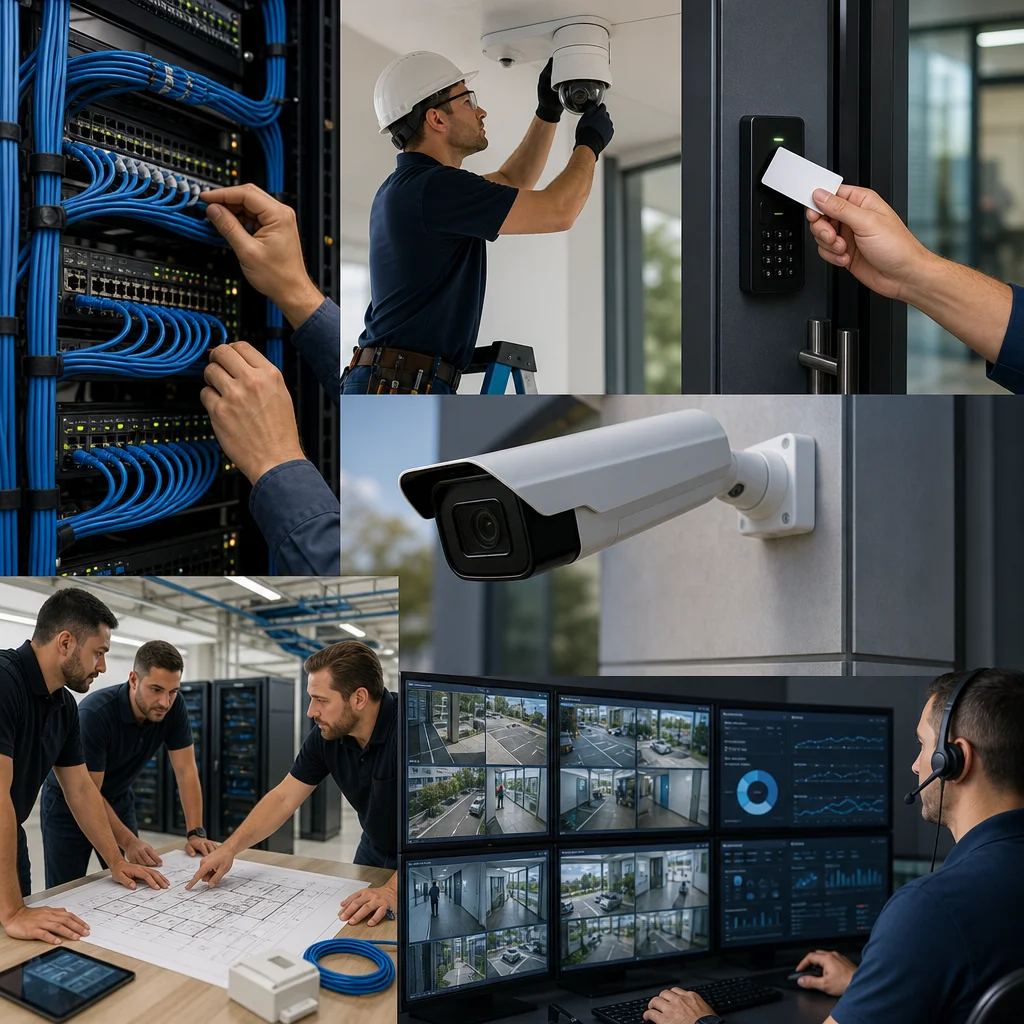
A CDW sales team can sell you equipment. They can’t tell you how your Southern California facility’s specific climate affects camera lens performance or how local electrical codes affect your access control design. They can’t coordinate with your local facilities team or understand your specific operational challenges. They certainly won’t install your security infrastructure or ensure it integrates with your network.
Our team knows the Southern California market. We understand hospitality properties, healthcare facilities, manufacturing operations, and logistics centers in this region. We know which contractors work reliably, which integrations create headaches, and how to design systems that function in our specific environmental and regulatory context.
We also invest in ongoing relationships with facility managers and IT directors. We understand your priorities, your budget constraints, and your operational realities. When something changes, you call us. We understand your situation immediately because we’ve worked with you before.
This matters enormously during emergencies. If your access control system fails during a security incident, you need expert help immediately, not a national helpline that escalates your ticket. You need someone who knows your facility, understands your configuration, and can respond locally.
National vendors optimize for scale and margin. We optimize for your success. That difference shows up most clearly when your systems need to work reliably.
Actionable takeaway: When evaluating any technology partner, ask for references from similar operations in Southern California. Local context matters for integrated systems in ways that don’t show up on specification sheets.
Implementation and Support You Can Count On
The difference between a successful implementation and a frustrating one comes down to integration planning and execution responsibility. We handle both.
Our implementation process starts with your requirements, not with standard packages. We survey your facility, understand your operational flows, and design infrastructure specifically for how you work. We create comprehensive specifications that guide every phase of installation. We coordinate all the moving parts: network design, security system integration, electrical work, and structured cabling. Most importantly, we maintain accountability. You have one partner responsible for the complete outcome.
During implementation, we manage the details that prevent problems later. We test integrations before live deployment. We validate that access control systems function with your network architecture. We confirm that camera bandwidth planning actually works with your network topology. We ensure electrical work supports the complete system load. We document everything so your team understands what was installed and how it operates.
After implementation, we provide ongoing support with the integrated perspective that comes from building the system originally. When your team needs help, they call a partner who knows the complete architecture, not a vendor who only understands their piece.
We also manage the evolution of your systems. As your business grows, you need infrastructure that scales. We design with expansion in mind and manage upgrades in a way that maintains operational continuity while extending your capabilities.
Actionable takeaway: Before engaging any integration partner, request their implementation methodology and post-deployment support structure. Ask specifically how they coordinate between network, security, and electrical components. The detail in their answer reveals how seriously they take integration.
—
Working with Terapixels means moving from fragmented point solutions to truly integrated infrastructure. Your IT systems, security infrastructure, network design, and electrical systems work together by design rather than by accident. Your team operates with better visibility, faster troubleshooting, and stronger security posture.
If you’re managing multiple vendors today and experiencing coordination challenges, start with a conversation. We’ll assess your current setup, identify integration opportunities, and show you specifically how unified infrastructure would improve your operations.
Visit https://www.terapixels.net to learn more about our integrated solutions, or contact our team to schedule a technical consultation. We serve hospitality, healthcare, manufacturing, and logistics organizations across Southern California with the integrated expertise that national providers simply don’t offer.
Frequently Asked Questions (FAQ)
Why should we consolidate our IT and security systems instead of working with multiple vendors?
When you work with multiple vendors, you’re managing separate contracts, billing cycles, and support teams that don’t communicate with each other. We bring everything under one roof, so your network infrastructure, access control, security cameras, and managed IT services work together seamlessly. This eliminates finger-pointing when issues arise and gives you a single point of accountability for your entire technology ecosystem.
What makes your approach different from national IT providers like CDW?
We’re embedded in Southern California, which means we understand the specific infrastructure challenges and regulatory requirements your business faces locally. Unlike national providers who treat you as an account number, we take ownership of your systems end-to-end, including the electrical installation and physical infrastructure that most IT vendors won’t touch. Our team stays accessible and invested in your success because we’re your neighbors, not a distant helpdesk.
How do you handle security integration if we already have some systems in place?
We conduct a full assessment of your existing infrastructure and identify gaps in your access control, camera systems, and IT architecture. We then design a unified solution that either integrates with what you have or replaces fragmented systems with our cohesive approach. Throughout the process, we minimize disruption to your operations while ensuring your security posture strengthens at every step.