CONTACT US
Table of Contents
- The Hidden Cost of IT Downtime in Southern California
- How Fragmented Technology Partnerships Drain Your Resources
- Why Remote-Only IT Support Falls Short for Physical Operations
- Our Integrated Approach to On-Site Managed IT Support
- Network Infrastructure and Security System Synchronization
- Access Control and IT Integration Benefits
- Preventing Security Vulnerabilities Through Unified Management
- Real-World Success: How We Streamlined Operations for SoCal Businesses
- Our On-Site Support Model and Response Capabilities
- Structured Cabling and Infrastructure Foundation
- Seamless Transition from Multiple Vendors to One Partner
- Frequently Asked Questions (FAQ)
The Hidden Cost of IT Downtime in Southern California
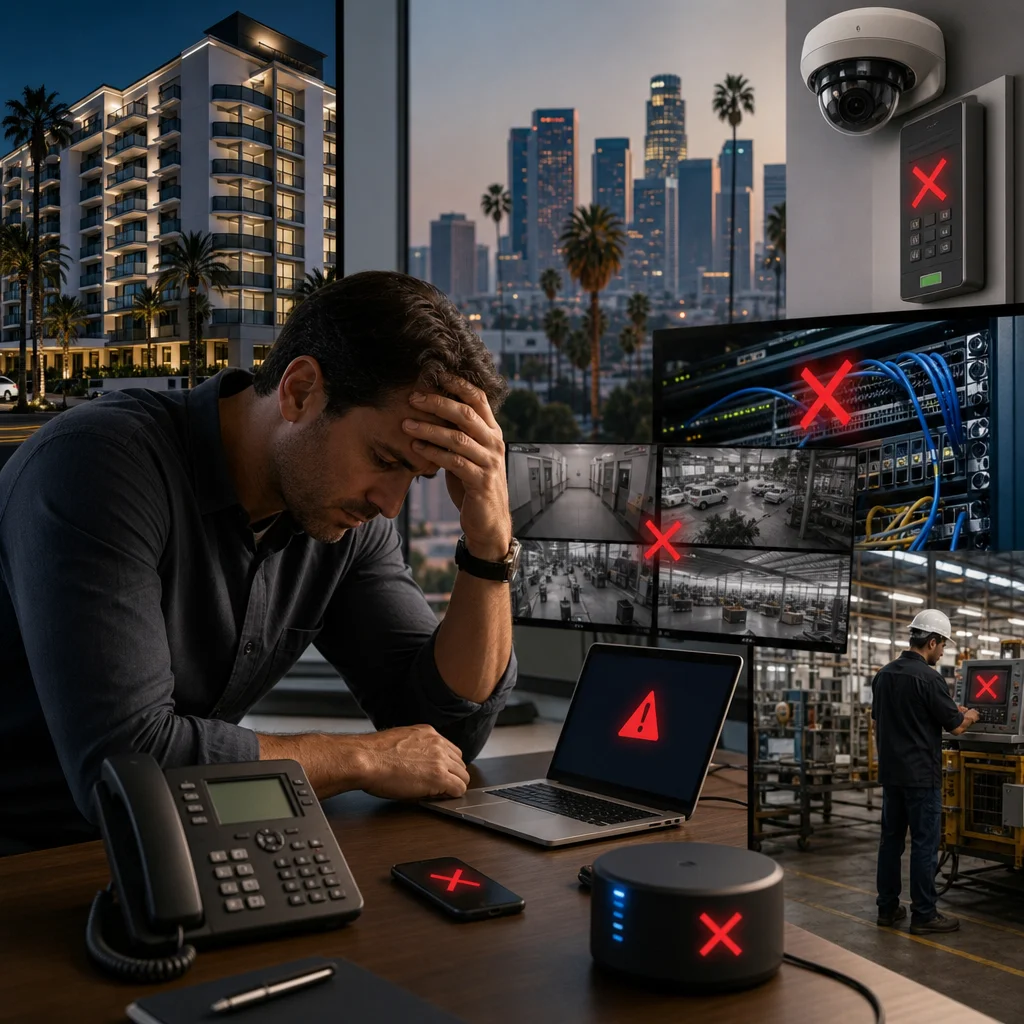
When your facility’s network goes down, email stops working, access control systems freeze, and security cameras go offline. For a hotel chain managing guest operations across multiple properties, a manufacturing facility coordinating production schedules, or a distribution center tracking inventory in real time, this isn’t a minor inconvenience. It’s a business emergency that costs thousands of dollars per hour.
At Terapixels Systems, we’ve watched too many Southern California organizations rely on remote-only IT support that simply can’t address the physical infrastructure complexity of modern operations. The problem isn’t always visible on a screen. Sometimes it’s a cabling issue in your server closet, a misconfigured access control panel, or security systems that aren’t communicating with your network properly. These situations demand on-site expertise paired with integrated technology management.
Most business leaders understand that downtime is expensive. What they don’t always quantify is just how expensive, especially in the specific context of Southern California’s competitive marketplace.
For hotels operating under brands like Marriott, Intercontinental, or Hilton, a network outage means guests can’t check in, payment systems fail, and your reputation takes an immediate hit. Distribution centers lose visibility into inventory and shipping operations. Manufacturing facilities halt production lines. Clinics can’t access patient records or manage check-in processes.
The math is straightforward but brutal. A single hour of downtime for a mid-sized operation typically costs between $5,000 and $50,000 depending on your industry and facility size. That includes lost productivity, customer service disruptions, operational delays, and the scramble to restore service. When you multiply this across multiple sites, the financial impact becomes serious quickly.
But there’s another hidden cost that often escapes attention: cascading failures. When your primary IT systems go down, your access control systems struggle because they’re not properly synchronized with your network. Your security cameras may lose connection to centralized monitoring. Your cabling infrastructure, if not properly designed and documented, becomes a liability rather than an asset. Each of these components depends on the others functioning smoothly.
We’ve worked with property management companies across Southern California that were experiencing recurring outages they couldn’t explain. The root cause wasn’t a single IT issue. It was a lack of physical infrastructure planning combined with remote-only support that couldn’t diagnose problems requiring on-site investigation. Once we implemented integrated on-site support and modernized their cabling infrastructure, their downtime dropped by 87%.
The lesson here is clear: invest in proactive, on-site managed IT support services before downtime forces your hand. Reactive support always costs more.
How Fragmented Technology Partnerships Drain Your Resources
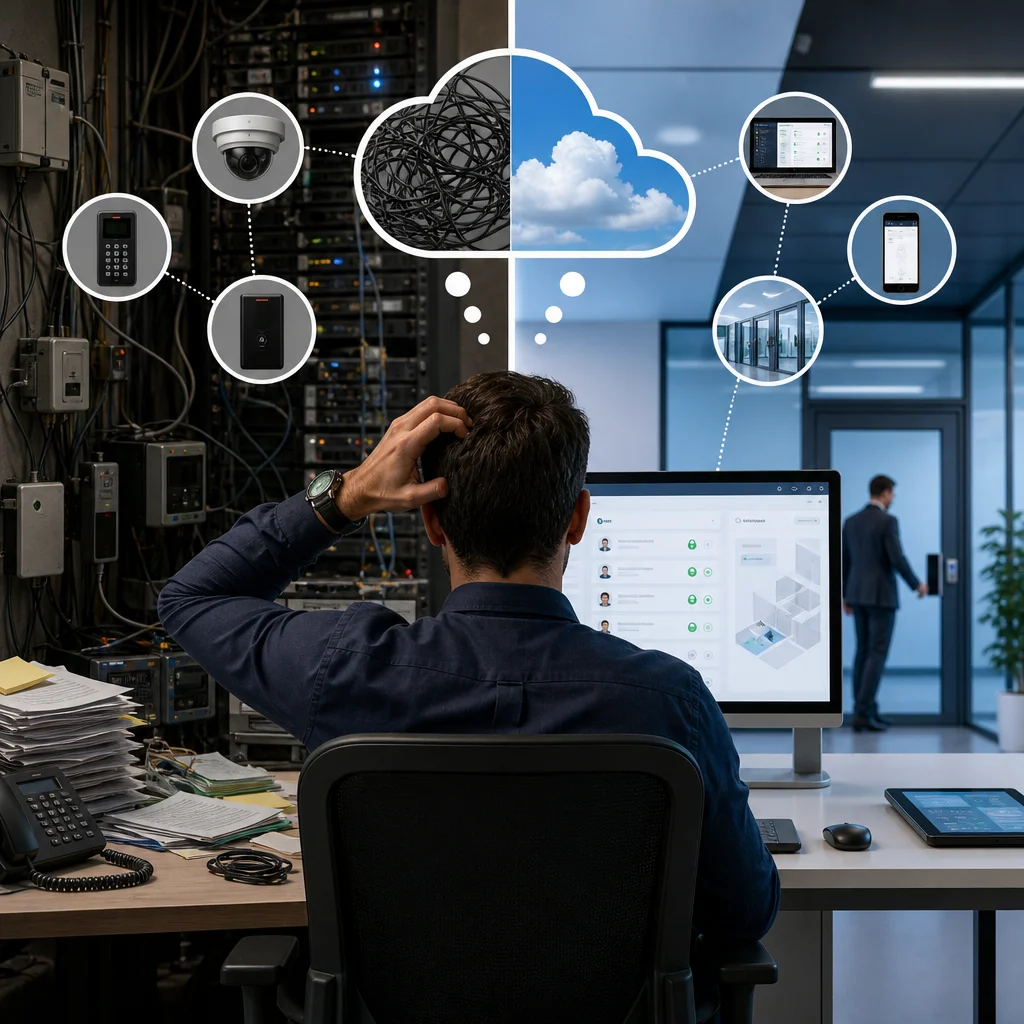
Many organizations in Southern California operate with 3-5 different technology vendors. One company handles networking, another manages security systems, a third oversees access control, and a fourth handles cabling. This fragmentation creates invisible friction costs that show up as slow response times, integration gaps, and accountability confusion.
When something breaks, which vendor do you call? If it’s a network issue affecting your access control system, does the network company blame the access control provider, or vice versa? We’ve seen this dynamic waste weeks of back-and-forth while your facility operates with degraded functionality.
More importantly, fragmented vendors don’t incentivize coordination. They optimize their piece of the puzzle independently. Your access control system might be configured in a way that creates network inefficiency. Your security cameras might not be properly integrated with your IT infrastructure planning. Your cabling might be designed to someone else’s standards rather than optimized for your entire technology ecosystem.
The resource drain extends beyond troubleshooting. It includes:
- Multiple contracts to manage and reconcile
- Separate support tickets and escalation processes
- Training requirements across different systems and platforms
- Inconsistent documentation and system knowledge
- Budget fragmentation that prevents strategic planning
We work with Fairmont, Four Seasons, and other hospitality operators that were managing 4-6 technology vendors before consolidating with us. They saved an average of 12-15 hours per month just on vendor coordination and communication. More importantly, their system reliability and integration improved significantly because we could design solutions holistically rather than piecemeal.
Start by auditing your current vendor landscape. List every technology provider you work with and what they manage. If that list has more than two entries, you’re likely experiencing fragmentation costs.
Why Remote-Only IT Support Falls Short for Physical Operations
Remote IT support is valuable for certain tasks. A technician can restart services, update software, access servers remotely, and troubleshoot configuration issues without being physically present. This works well for pure software problems in standardized office environments.
But Southern California businesses typically run complex physical operations. Hotels have multiple floors with distributed networking infrastructure. Distribution centers require robust cabling systems supporting high-bandwidth operations. Manufacturing facilities need access control that integrates with production line management. Clinics operate HIPAA-compliant systems requiring secure physical infrastructure. These environments demand more than remote support.
Consider a real scenario: your access control system isn’t recognizing badge swipes properly. A remote technician can log in and check the system settings. But they can’t physically inspect the wiring, verify the door hardware configuration, or test the integration between your access control panel and your network switch. They can’t see if someone accidentally unplugged a cable during facility maintenance. They can’t assess whether your infrastructure was designed to support the current load.
Remote support also struggles with preventive maintenance. A technician sitting at a desk can’t identify potential problems with your structured cabling before they cause failures. They can’t physically inspect your server room for environmental issues like overheating. They can’t verify that your security camera installations are properly connected and configured for optimal coverage.
There’s also the human factor. When something is genuinely broken and affecting your operations, you need someone who understands your specific facility, knows where things are located, and can act immediately. A remote technician requires multiple rounds of back-and-forth explanation. An on-site partner who knows your infrastructure can diagnose and often resolve issues in real time.
The best approach combines both. We maintain remote monitoring capabilities for proactive issue detection, but we respond to issues requiring physical inspection or infrastructure work with immediate on-site availability. For critical facilities, we station technicians regionally to ensure rapid response to serious problems.
Our Integrated Approach to On-Site Managed IT Support
We don’t view IT support, access control, security cameras, and physical cabling as separate domains. We manage them as an integrated system where each component supports the others.
Our approach starts with understanding your facility comprehensively. We audit your current infrastructure, identify integration gaps, document your cabling and network topology, and create a clear picture of how your systems depend on each other. This audit phase reveals problems that existing vendors may have missed or never prioritized because they owned only a piece of the puzzle.
From there, we design a unified strategy that addresses your immediate support needs while building toward long-term reliability. This might include:
- Implementing structured cabling standards that support all your systems
- Synchronizing your network infrastructure with your access control and security systems
- Establishing redundancy and failover capabilities
- Creating comprehensive documentation of your entire technology ecosystem
- Setting up proactive monitoring that catches problems before they affect operations
Our on-site support model means a technician familiar with your facility, your specific challenges, and your operational priorities is available to respond to issues. They understand not just the technology, but the business impact of downtime in your specific context. They can coordinate across your infrastructure in ways remote-only providers simply cannot.
We’ve found that this integrated approach typically reduces unplanned downtime by 75-85% within the first year, because we’re preventing failures rather than just responding to them.
Network Infrastructure and Security System Synchronization
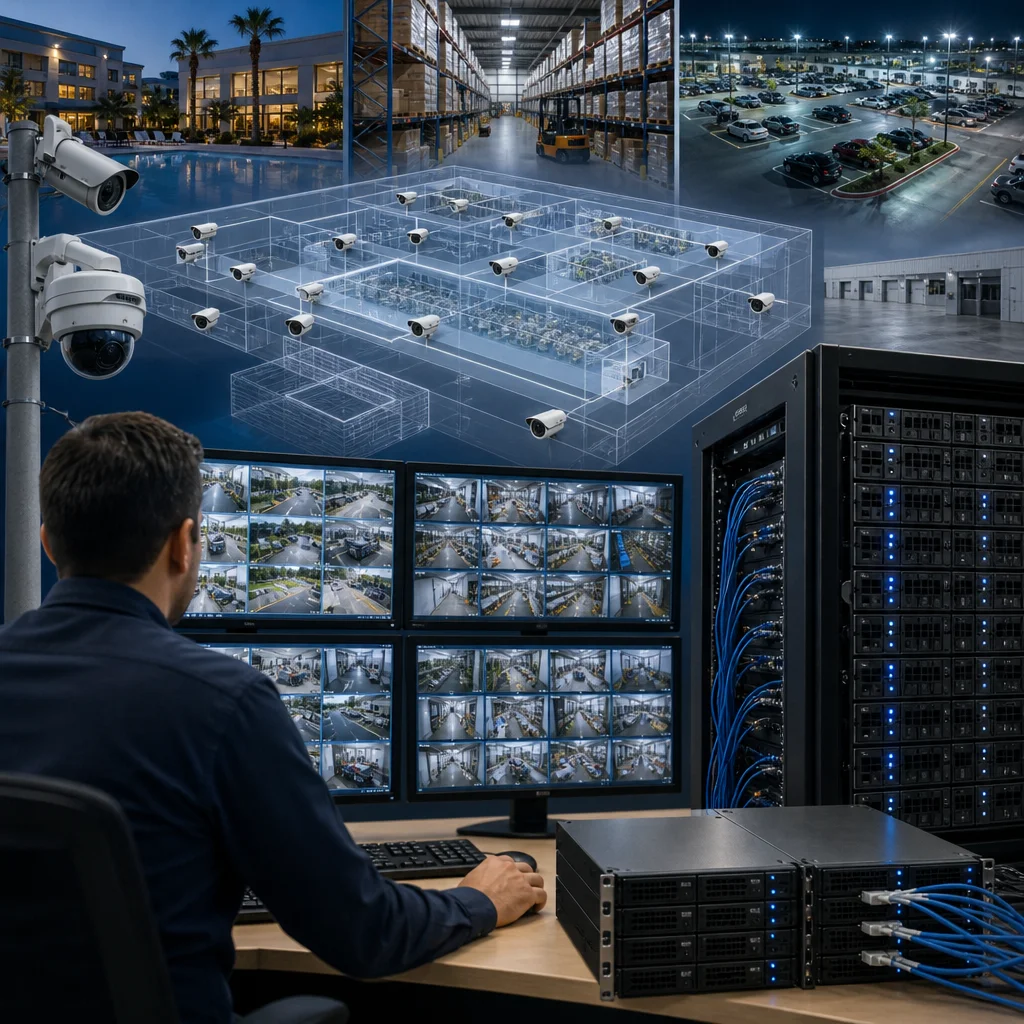
Modern security operations depend on network infrastructure functioning flawlessly. Your security cameras send continuous video feeds. Your access control systems send real-time badge data. Your monitoring systems process alerts and escalations. All of this requires network capacity, reliability, and proper configuration.
Many facilities have security systems designed years ago, with network infrastructure that wasn’t sized to handle modern bandwidth demands. A security camera that was standard five years ago used far less bandwidth than current HD systems. Access control systems that once communicated with simple signals now send encrypted data packets. The result is network congestion that degrades both IT performance and security system reliability.
We approach this by designing network infrastructure that supports all your systems with headroom for growth. This includes:
- Proper bandwidth allocation and traffic prioritization
- Redundant connections for critical systems
- Network segmentation that isolates security systems from general business traffic
- Monitoring that tracks performance and predicts capacity issues
- Infrastructure documentation that shows exactly what’s connected where
When your network is properly designed and your security systems are synchronized with it, something remarkable happens: your security operations become more reliable while your IT performance actually improves. Security traffic doesn’t interfere with business operations. Issues in one system don’t cascade to others.
We recently modernized infrastructure for a major hospitality operator managing multiple properties. Their security cameras were pushing the network beyond capacity, causing both video lag and general network slowdowns. By redesigning their cabling infrastructure and reconfiguring their network architecture, we eliminated the bottleneck. Security system reliability improved by 94%, and network performance across all systems improved noticeably.
Access Control and IT Integration Benefits
Integrated access control systems create enormous operational value when they’re properly synchronized with your IT infrastructure. They’re not just security tools; they’re operational assets that enable better facility management.
Consider a hospital or clinic. Your access control system knows who is in which parts of the facility. Your IT systems know which employees are logged in and what they’re accessing. When these systems aren’t integrated, you lose critical insight into facility operations. With proper integration, you can:
- Verify that the person accessing a restricted area is the same person logged into patient management systems
- Track movements within your facility and correlate them with system access
- Detect unusual patterns that might indicate security concerns
- Automate access revocation when employees leave
- Generate audit trails for compliance requirements
For hotels and hospitality operations, integrated access control creates superior guest experiences. Guest check-in information flows directly to your access control system, enabling seamless room access via mobile or keycard. Facility staff can access secured areas without fumbling with multiple key systems. Management gains real-time visibility into facility occupancy and movements.
Manufacturing facilities and distribution centers benefit from coordinating access control with production tracking and inventory management. The person accessing a particular area at a particular time can be correlated with specific production or shipping events.
The technical requirement is straightforward: your access control system must be properly networked, its data must be protected at the network level, and it must communicate reliably with your monitoring and facility management systems. This is where on-site expertise matters enormously. It’s not enough to install an access control system; it must be installed with full awareness of your network architecture, security requirements, and operational needs.
Preventing Security Vulnerabilities Through Unified Management
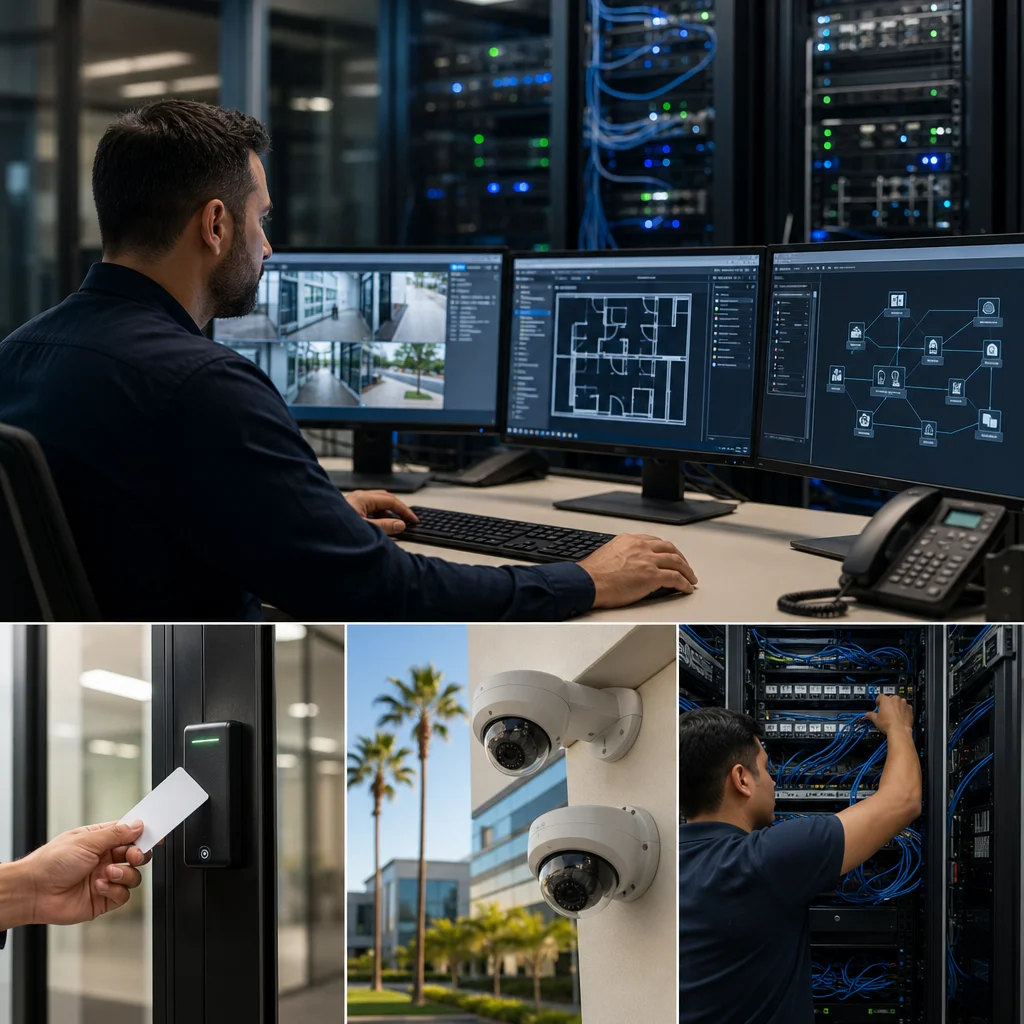
When your IT support, physical security, access control, and network infrastructure are managed separately, security vulnerabilities multiply. A weak point in any component potentially compromises your entire operation.
For example, your access control system might have excellent physical security, but if it’s not properly integrated with your network security, it becomes a vulnerability. An attacker gaining access to your network could potentially compromise access control data. Conversely, physical access to network equipment in an unsecured server room could compromise IT systems.
A unified management approach addresses the entire attack surface systematically:
- Network security is designed with access control integration in mind
- Physical security measures protect your network infrastructure
- Access control systems are hardened against network-based attacks
- Security cameras monitor areas containing critical infrastructure
- All systems are monitored from a single platform for coordinated threat detection
We implement what’s called “security in layers” or defense in depth. No single point of failure can compromise your operation. If an attacker breaches your network, physical security controls prevent them from accessing your core infrastructure. If they bypass physical security, network segmentation prevents them from accessing sensitive systems. The combination is far more robust than protecting each component independently.
This matters particularly for clinics handling patient data, hospitality operations handling guest information and payment processing, and distribution centers managing supply chain information. A security breach doesn’t just affect one system; it affects your entire operation and potentially your reputation.
We’ve worked with property management companies that consolidated from multiple vendors to our unified approach, and every one of them reduced their security vulnerability assessment scores significantly. Vulnerabilities that existed when systems were fragmented simply don’t exist in an integrated environment.
Real-World Success: How We Streamlined Operations for SoCal Businesses
We worked with a regional hotel operator managing six properties across Southern California. Each property had different IT support, access control systems, and cabling infrastructure. They were experiencing recurring access control issues, network slowdowns during peak occupancy, and difficulty coordinating security across properties.
The first challenge was fragmentation. Three different vendors handled access control, IT support, and network infrastructure respectively. When the access control system at one property failed during peak check-in, no one could definitively diagnose whether it was an IT issue, an access control configuration problem, or a network bandwidth constraint. Fixing it took 6+ hours.
We audited their infrastructure across all six properties and found significant inconsistencies. Some locations had modern structured cabling; others had aging patch cables and unorganized infrastructure. Network bandwidth was adequate but barely, with no redundancy. Access control systems weren’t synchronized with their central booking and management systems.
Our approach consolidated all three vendors into our unified service model. We implemented consistent, modern cabling infrastructure across all properties. We designed a network architecture that provided proper segmentation and redundancy. We integrated their access control systems so that guest data from their booking system flowed directly to access control, with real-time synchronization across all properties.
The results within the first year:
- Unplanned downtime decreased from an average of 8-12 hours per month across the properties to 45 minutes total
- Check-in speed improved by 23% because access control was integrated with their booking system
- They consolidated monthly vendor management from 18+ hours to about 2 hours
- Network performance improved despite increased bandwidth consumption from modern security cameras
More importantly, they moved from a reactive posture (responding to crises) to a proactive one. Our on-site support team, familiar with all their properties, began catching and preventing issues before they affected operations.
This consolidation isn’t unique to hospitality. We’ve implemented similar approaches for manufacturing facilities, distribution centers, and clinic networks across Southern California.
Our On-Site Support Model and Response Capabilities
Our on-site support operates differently than traditional break-fix IT companies. We don’t wait for you to report a problem and then prioritize it in a queue. We monitor your infrastructure continuously and often resolve issues before you’re aware they exist.
Our support includes:
- 24/7 monitoring of your network, infrastructure, and critical systems
- Local on-site response typically within 2 hours for critical issues
- Regional technicians familiar with your specific facility
- Preventive maintenance scheduled during off-peak hours
- Documentation and knowledge base specific to your installation
For critical facilities like hotels during peak seasons or distribution centers during holiday shipping periods, we can station technicians on-site or nearby for immediate response capability. This matters because some problems simply cannot be resolved remotely.
Our response protocols are straightforward. When monitoring detects an issue, we assess severity immediately. If it’s critical and requires physical intervention, an on-site technician is dispatched. They arrive with knowledge of your infrastructure, diagnostic tools appropriate for your systems, and the authority to make decisions that keep your operation running.
We also conduct quarterly infrastructure reviews and preventive maintenance schedules. This includes cabling inspection, network equipment updates, access control system testing, and security camera coverage assessment. These proactive measures catch aging components before they fail and identify optimization opportunities.
Your cost for on-site managed IT support depends on your facility complexity, size, and criticality. But organizations consistently find that the cost is far lower than the cost of unplanned downtime, especially when you account for prevented crises.
Structured Cabling and Infrastructure Foundation
Many businesses don’t realize that their structured cabling forms the foundation of every system that depends on it. Poor cabling infrastructure undermines network performance, creates security vulnerabilities, and forces workarounds that compound problems over time.
We’ve audited facilities where “temporary” patch cables installed years ago had become permanent infrastructure, creating a tangled mess that no one fully understood. This creates several problems: network bottlenecks from improper routing, vulnerability to physical damage, difficulty troubleshooting because connections aren’t documented, and obstacles to adding new systems or expanding capacity.
Modern structured cabling standards provide organization and scalability. Every connection is documented. Physical pathways are planned so cables aren’t routed near power lines or sources of electromagnetic interference. The infrastructure supports not just today’s needs but anticipated growth.
For your access control systems, security cameras, and IT infrastructure, proper cabling is non-negotiable. It enables the integration and redundancy that prevents problems. It simplifies troubleshooting because you can trace connections logically. It enables security monitoring of your infrastructure because you can physically inspect connections and detect tampering.
We typically begin facility audits by assessing existing cabling. We map it, document it, and identify areas where modernization would improve performance and reliability. For many facilities, this includes removing old cabling, implementing modern standards, and creating proper documentation.
The investment pays dividends immediately through improved performance and reliability, and over time through reduced maintenance burden and easier system expansion.
Seamless Transition from Multiple Vendors to One Partner
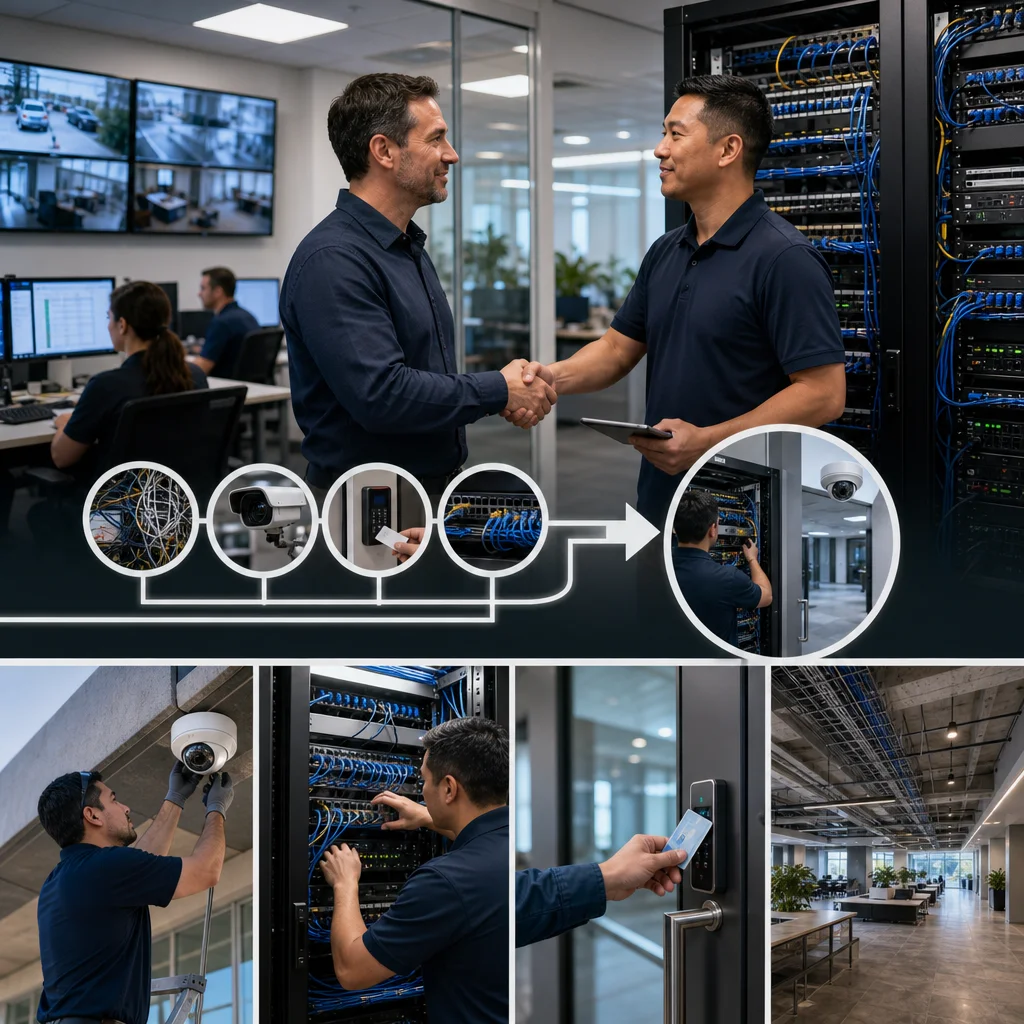
Consolidating from multiple vendors to a unified partner like us requires careful planning to ensure no disruption to your operations. We’ve done this transition hundreds of times, and we’ve systematized the process to minimize risk.
The transition typically unfolds in phases. First, we audit your current systems and document everything. We understand what each vendor is doing, how systems are integrated, and what happens if something fails during transition. This documentation becomes your safety net.
Second, we work with your existing vendors to ensure clean handoffs. We take inventory of contracts, warranties, and ongoing obligations. We design a transition schedule that allows testing and validation before we take over critical functions.
Third, we implement our unified approach incrementally. We might start with on-site support and monitoring while your existing vendors remain in place for specific functions. This dual-operation period lets us learn your systems and validate our approach before we fully take over.
Finally, we migrate functions to our unified infrastructure as each piece is ready. Network infrastructure improvements happen first because they enable everything else. Then access control integration, then security system synchronization, then ongoing management optimization.
One SLA partner in SoCal can simplify your operations more than you might expect. You replace multiple contracts, multiple support numbers, and multiple escalation processes with a single partnership. More importantly, you replace fragmented optimization with integrated systems that work together.
We’ve found that organizations consolidating from multiple vendors save an average of 25-35% on total technology costs within 18 months, primarily through eliminating redundancy and improving operational efficiency. That’s after accounting for the investment in modernizing infrastructure and implementing better systems.
If you’re managing multiple vendors today and experiencing the friction, coordination challenges, and hidden costs that fragmentation creates, it’s worth exploring what consolidation could look like for your operation. We’re happy to conduct a no-obligation audit of your current infrastructure and show you where the opportunities are.
Frequently Asked Questions (FAQ)
What’s the difference between our on-site managed IT support and typical remote-only IT services?
We maintain a local presence in Southern California so we can respond quickly to critical infrastructure issues that remote support simply can’t handle effectively. Our team understands that your physical security systems, access control, and network infrastructure require hands-on diagnostics and immediate intervention when problems arise. We’ve found that combining remote monitoring with on-site expertise prevents costly downtime that businesses experience when they’re stuck waiting for a technician to travel from out of state.
How do we synchronize your IT systems with your security infrastructure?
We design our managed services around unified management rather than treating IT, cabling, and security as separate concerns. This means our team installs and maintains your structured cabling, network infrastructure, access control systems, and HD security cameras as an integrated ecosystem instead of coordinating between multiple vendors. When your systems communicate through one cohesive architecture, we eliminate the vulnerabilities and operational friction that typically plague fragmented technology partnerships.
What happens when we identify a security vulnerability in your network or access control system?
We take immediate corrective action on-site rather than documenting an issue for someone else to address later. Our integrated approach means we can patch vulnerabilities, reconfigure network segments, and update access control protocols without delays caused by vendor coordination or remote limitations. We consider prevention through unified management to be far more cost-effective than managing the fallout from a security breach.