CONTACT US
Table of Contents
- Why Fragmented Security Systems Cost Your Business
- The Hidden Risks of Multiple Technology Vendors
- How Integrated Infrastructure Reduces Operational Complexity
- Our End-to-End Network and Surveillance Solution
- Structured Cabling as Your Foundation
- Access Control and Surveillance Integration
- Managed IT Services That Protect Your Assets
- Security Camera Installation and Network Optimization
- Implementation Timeline and Seamless Integration
- ROI and Long-Term Cost Savings
- Partner With Us for Complete Security Coverage
- Frequently Asked Questions (FAQ)
Why Fragmented Security Systems Cost Your Business
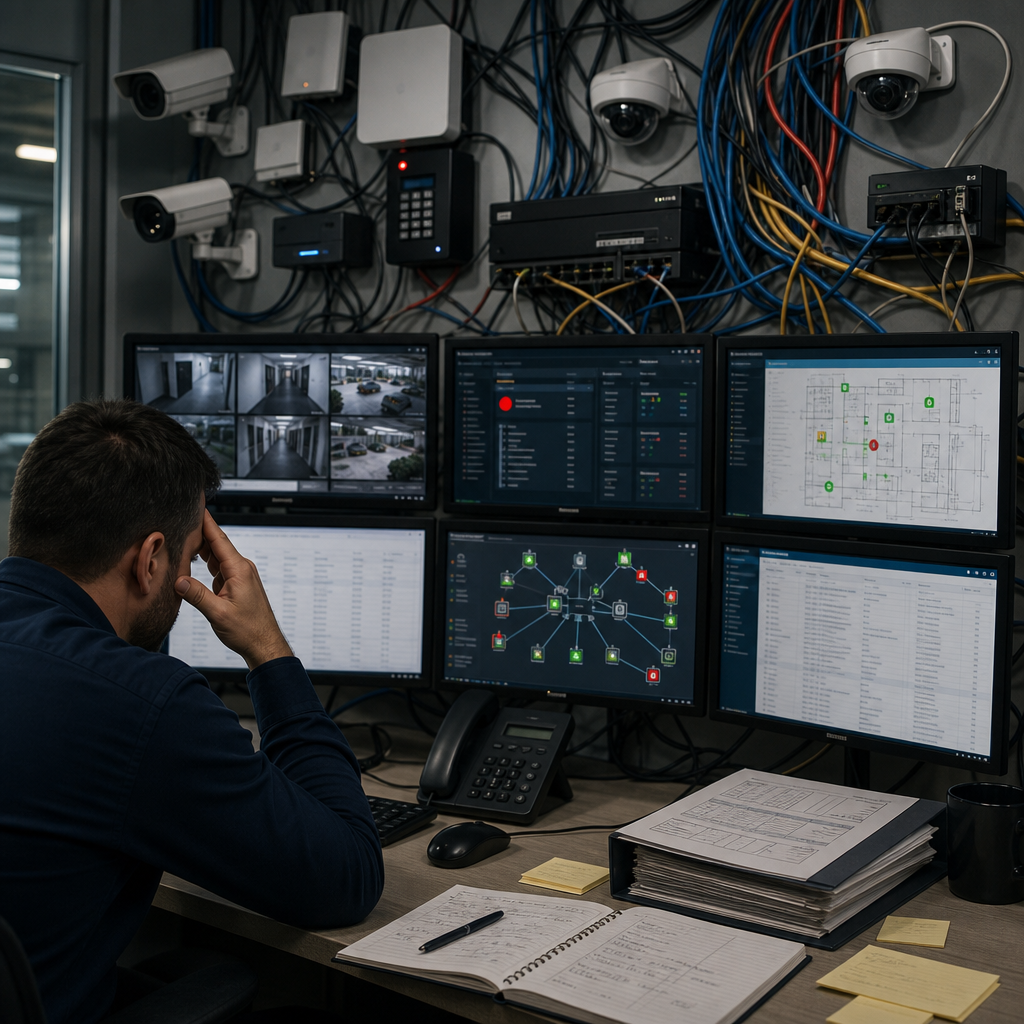
Managing separate security systems across your facility drains resources in ways that aren’t always obvious at first glance. When your access control system talks to one vendor, your surveillance to another, and your network infrastructure to a third, you’re creating operational silos that multiply costs and reduce effectiveness.
We’ve worked with mid-sized facility operators across Southern California who initially thought their patchwork approach was saving money. Then they discovered the reality: coordinating between vendors for troubleshooting, maintaining incompatible software platforms, training staff on multiple interfaces, and paying overlapping service fees actually cost far more than consolidation would have. One warehouse operator we partnered with was paying three separate service contracts just to manage their physical security alone.
Fragmentation also creates dangerous blind spots. When systems don’t communicate, you lose the ability to respond quickly to real incidents. If your camera system detects unauthorized access but your access control system operates independently, critical seconds pass before anyone knows what’s actually happening. Your facility’s protection becomes reactive instead of proactive.
The financial and operational burden compounds annually as your business scales. Each additional location multiplies the complexity unless you’ve built unified infrastructure from the start.
The Hidden Risks of Multiple Technology Vendors
Relying on multiple vendors introduces security vulnerabilities that most facilities don’t anticipate until something goes wrong. Each integration point between systems represents a potential failure zone. When System A integrates poorly with System B, you’re forced to choose between expensive custom middleware or accepting degraded functionality.
Vendor accountability also becomes murky. When an incident occurs, vendors point fingers at each other. Your IT team spends days determining whose system actually failed instead of focusing on resolution. We’ve seen organizations lose weeks of incident investigation time simply because no single vendor took responsibility for the integrated solution.
Another critical risk: data silos. Your surveillance footage, access logs, and network activity exist on separate platforms with different retention policies and encryption standards. This fragmentation makes forensic investigation extremely difficult and potentially compromises compliance with regulations like HIPAA or SOC 2 requirements that many facilities must meet.
Vendor dependency also limits your flexibility. If one provider raises prices significantly or discontinues support for critical equipment, you’re trapped. You can’t simply switch because your other systems depend on that integration, forcing you into expensive replacement cycles or extended service at unfavorable terms.
How Integrated Infrastructure Reduces Operational Complexity
An integrated approach consolidates control, visibility, and responsibility into a single architectural framework. Instead of managing three different dashboards, your team uses one unified platform that shows network health, access events, and surveillance simultaneously. This clarity dramatically improves response times during security incidents.
Staffing requirements decrease measurably. Your facilities team no longer needs multiple specialists, each trained on different vendor systems. Instead, they develop deeper expertise with a coherent platform, requiring less training and delivering faster incident response. One property management company we worked with reduced their security operations team by one FTE simply by consolidating their systems.
Unified infrastructure also simplifies compliance and auditing. Instead of requesting logs from multiple vendors with different formats and retention periods, you generate comprehensive audit trails from a single source. This becomes especially valuable during compliance reviews or litigation discovery.
From a technical standpoint, integrated systems enable intelligent automation. Your network can automatically adjust access permissions based on surveillance events. If a camera detects a breach attempt, the system can trigger lockdown protocols immediately without manual intervention. These automated responses protect your facility far more effectively than disconnected systems ever could.
Our End-to-End Network and Surveillance Solution
We design integrated network and surveillance infrastructure specifically for mid-sized facilities operating across multiple Southern California locations. Our approach treats security, IT, and physical access as interdependent components of a single protective ecosystem rather than separate concerns.
Our solution architecture includes enterprise-grade network infrastructure that carries both IT and security traffic securely. Rather than treating surveillance as an afterthought added to existing networks, we engineer bandwidth, redundancy, and security protocols that prioritize critical security systems. Your cameras, access controllers, and management software operate on infrastructure designed specifically for their needs.
We manage the entire integration pipeline: from initial infrastructure design through installation, testing, and ongoing optimization. This means you’re not coordinating between multiple service providers or troubleshooting integration issues yourself. We take full responsibility for the unified system, ensuring every component works seamlessly with every other component.
Our approach also scales efficiently. Whether you’re managing one facility or ten, adding new locations or expanding existing ones, our architecture grows with your organization without requiring fundamental redesign. You gain predictability and consistency across your entire Southern California footprint.
Structured Cabling as Your Foundation
Enterprise surveillance and access control systems demand reliable, properly designed physical infrastructure. Many facilities overlook this critical element, attempting to run security-critical applications over aging copper cabling or poorly documented networks. This approach inevitably leads to dropped connections, latency issues, and system unreliability exactly when you need it most.
We install structured cabling systems that meet Category 6A or higher standards, providing the bandwidth and reliability required for modern security applications. Our cabling infrastructure supports video surveillance at full resolution, access control in real-time, and network traffic without congestion or interference. Unlike temporary installations that deteriorate over years, properly engineered structured cabling remains reliable for 10-15 years with minimal maintenance.
We also include comprehensive documentation that shows exactly where every cable runs, its capacity, and its purpose. This documentation protects you long-term, enabling quick troubleshooting and supporting future expansion without expensive discovery work.
Beyond the cables themselves, we design your cabling topology to minimize interference and redundancy concerns. Surveillance and access control traffic flows separately from guest or business network traffic, preventing security systems from competing for bandwidth or being disrupted by normal business operations.
Access Control and Surveillance Integration
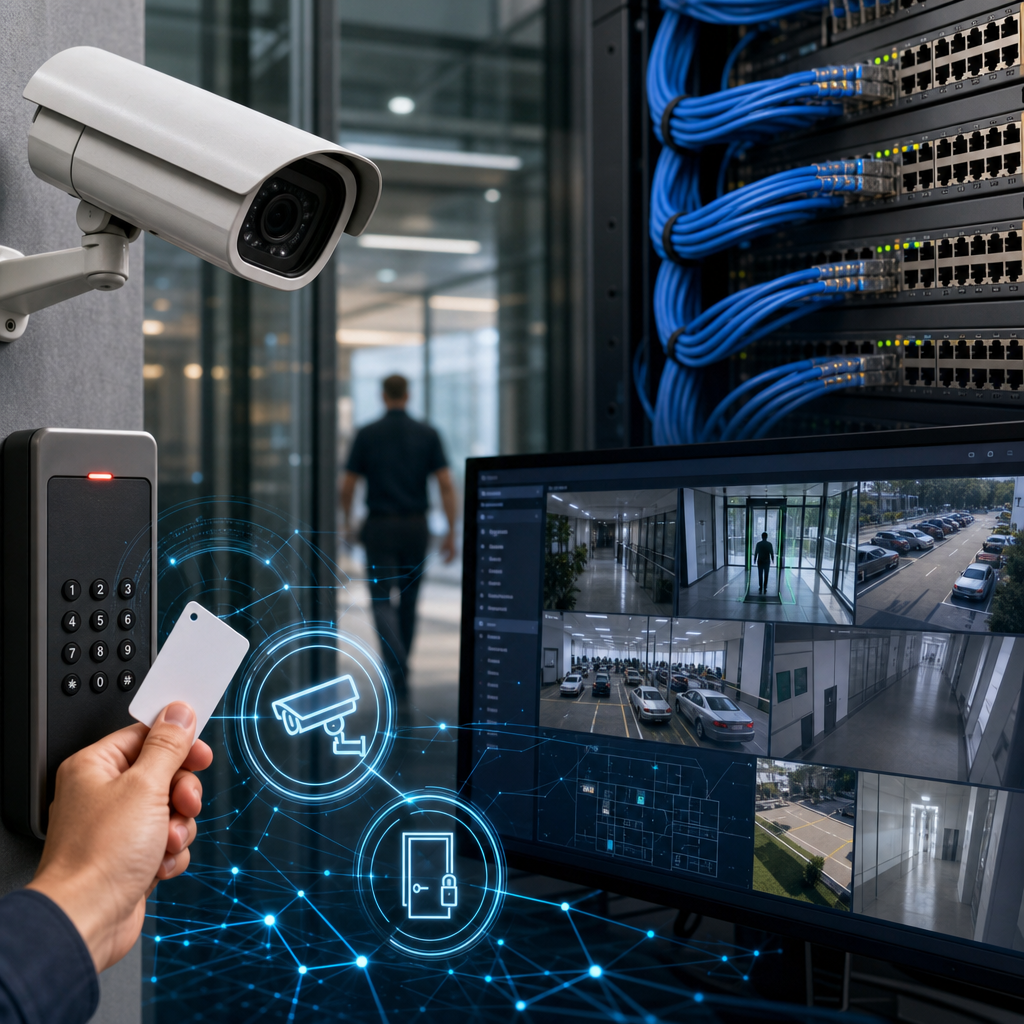
The integration between your integrated access control systems and surveillance creates intelligence that neither system provides independently. When someone attempts unauthorized access, your cameras automatically record footage from the specific moment of the attempt with context about who attempted entry and from which location.
We design access control that operates seamlessly with your surveillance infrastructure. Badge readers, biometric systems, and electronic locks all connect through secure network protocols that also feed event data directly to your surveillance management platform. Your security team can review access events and corresponding video simultaneously, vastly improving incident investigation speed and accuracy.
Scalability is built into this integration. Whether you’re managing 50 access points or 500, the system maintains responsiveness and provides unified reporting. Your team views access events and surveillance alerts through a single interface, understanding physical security across your entire facility without context-switching between platforms.
Integration also enables rule-based automation. You can configure the system to automatically record extended video from any camera when an access denial occurs at that location, or to trigger alerts when after-hours access is detected in restricted areas. These automated responses supplement your team’s oversight, catching incidents they might miss during busy periods.
Managed IT Services That Protect Your Assets
Physical security infrastructure depends entirely on IT foundation. If your network is vulnerable, your cameras and access controls become targets. Our IT managed services specifically protect the infrastructure supporting your security systems while also managing your broader technology needs.
We implement network segmentation that isolates security systems from general business traffic. This architectural separation means that even if your guest WiFi is compromised, your cameras and access control remain protected. We monitor these segmented networks continuously, detecting and neutralizing threats before they reach your critical systems.
Patch management for security-critical systems receives heightened priority. We deploy firmware updates and security patches for surveillance and access control equipment on an accelerated schedule, ensuring you’re protected against known vulnerabilities. Many facilities can’t afford downtime for security system updates, so we coordinate patches during maintenance windows that minimize disruption.
We also maintain redundancy and failover capacity. If your primary network connection fails, surveillance continues recording and access control remains operational. This resilience is essential for facilities that operate 24/7 and can’t tolerate security gaps.
Security Camera Installation and Network Optimization
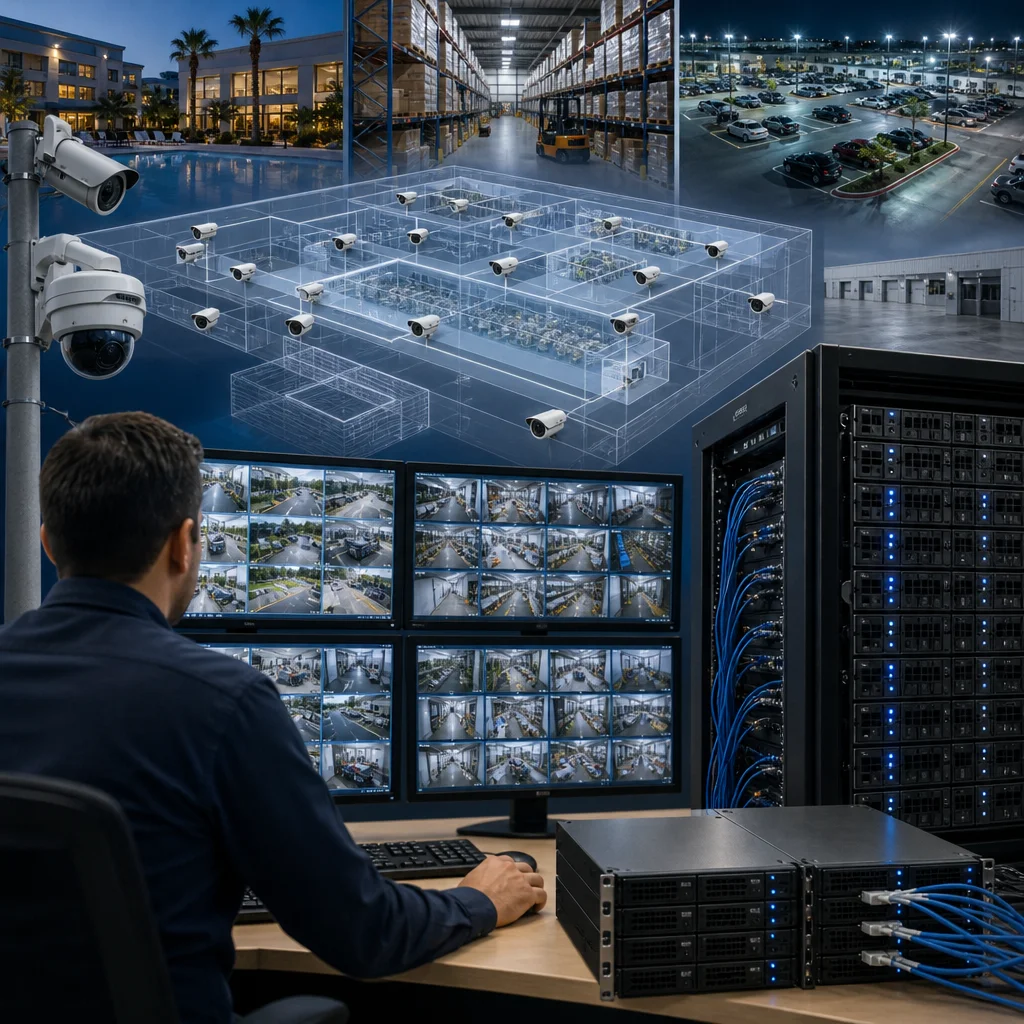
Proper camera placement and network configuration directly determine how effectively your surveillance actually protects your facility. Many organizations install cameras in visible locations for deterrent value, but position them poorly for actual incident investigation and evidence gathering.
We conduct facility assessments that identify optimal camera placement, considering blind spots, lighting conditions, and focal distances required to capture useful detail. Our technicians understand that a camera in the wrong location provides false security without actual protection. We position systems to capture facial details, license plates, or identifying characteristics at locations where incidents are most likely to occur.
Our installation includes network optimization that ensures video streams remain sharp and responsive regardless of traffic conditions. We engineer bandwidth allocation so that critical high-resolution footage from sensitive areas never competes for network resources with lower-priority feeds. Your recording quality remains consistent regardless of network load.
We also install backup recording capacity. Should your primary network storage become unavailable, cameras continue recording to local edge devices, preventing gaps in coverage. This redundancy protects you during the rare situations when network infrastructure fails.
Implementation Timeline and Seamless Integration
We design implementation schedules that minimize disruption to your ongoing operations. Most mid-sized facilities can’t tolerate extended security gaps or operational downtime while new systems are being installed.
Our typical timeline works in phases: infrastructure preparation (weeks 1-2), structured cabling installation (weeks 3-4), system deployment and configuration (weeks 5-6), and final testing and optimization (week 7). Throughout this process, existing security remains operational. We don’t cut over to new systems until every component is tested and verified.
We manage coordination with your team, minimizing disruption to facility operations and staff workflows. Our technicians work during off-hours when possible and communicate clearly about any areas requiring temporary access or brief unavailability.
Final integration includes comprehensive staff training. Your team learns how to operate the unified platform, investigate incidents, configure access rules, and troubleshoot common issues. We don’t leave you with systems you don’t understand how to use.
ROI and Long-Term Cost Savings
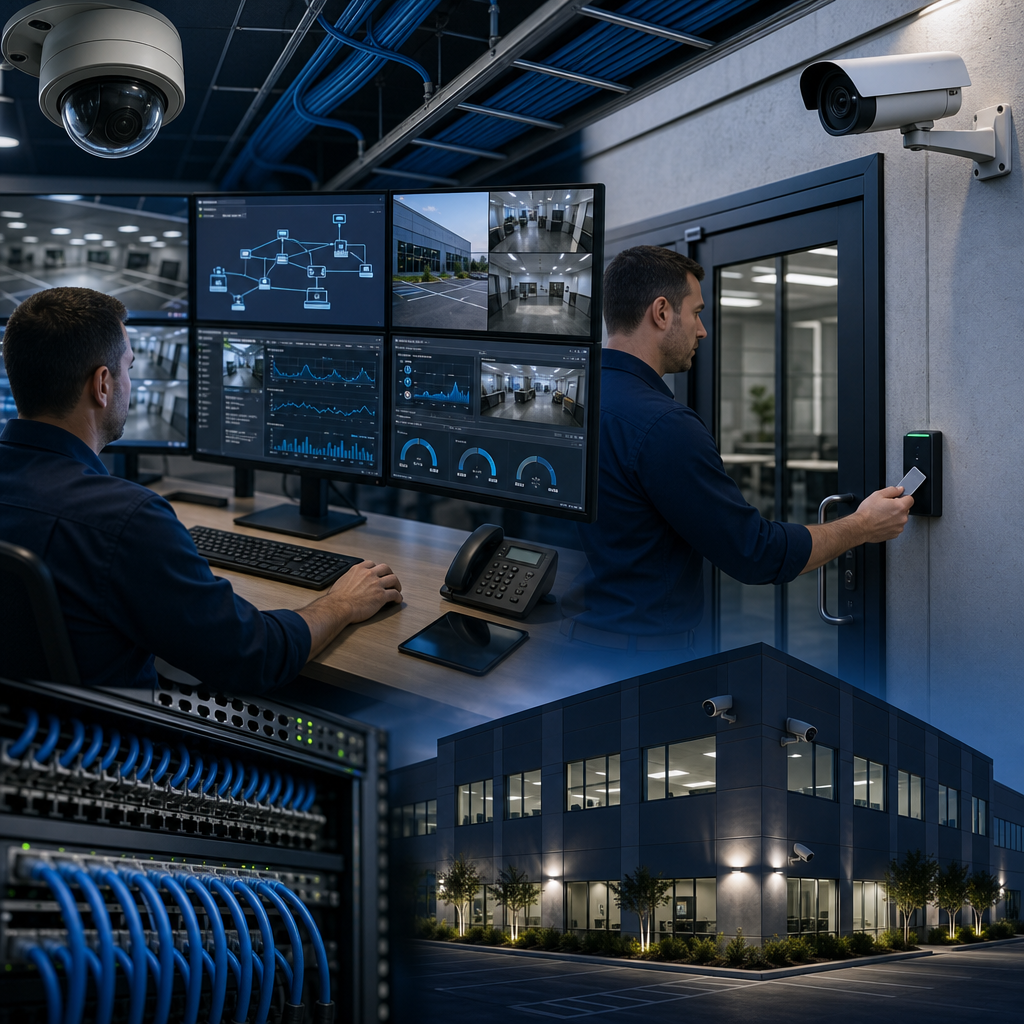
The financial case for unified infrastructure becomes clear within the first year. Consolidated vendor relationships reduce service fees significantly. Most organizations see 20-35% reductions in annual security and IT services costs simply by eliminating redundancy and overlapping service contracts.
Operational efficiency gains add additional savings. Reduced staffing requirements, faster incident response, and fewer service calls to address integration issues compound annually. That property management company we mentioned earlier recovered their entire infrastructure investment within 18 months through staffing optimization alone.
Long-term reliability reduces replacement and repair costs dramatically. Well-engineered integrated systems require less troubleshooting, experience fewer component failures, and last considerably longer than patchwork approaches. Your total cost of ownership over a 5-10 year period becomes substantially lower.
Compliance and liability improvements provide less obvious but equally important returns. Unified audit trails reduce compliance review costs and support confident regulatory reporting. Faster incident response and better evidence collection reduce liability exposure from security incidents.
Partner With Us for Complete Security Coverage
We bring enterprise-level security camera and access control integration expertise specifically designed for mid-sized facility operators across Southern California. Unlike general technology vendors or fragmented specialists, we understand the complete ecosystem of integrated network and surveillance infrastructure.
Our integrated approach eliminates the coordination headaches, incompatibility problems, and accountability gaps that plague multi-vendor environments. You work with one partner responsible for every component of your security infrastructure, from cabling to cameras to access control to IT management.
Start by scheduling a facility assessment with our team. We evaluate your current environment, identify integration opportunities, and provide a comprehensive proposal that outlines timeline, costs, and expected outcomes. No pressure, no obligation, just honest expertise about how unified infrastructure can better protect your operations.
Contact us at https://www.terapixels.net to discuss your facility’s security integration needs and discover how consolidated infrastructure delivers better protection at lower cost than fragmented approaches ever could.
Frequently Asked Questions (FAQ)
Why should we consolidate our security and IT systems with one provider instead of managing multiple vendors?
We understand that coordinating between separate vendors creates inefficiencies, billing complexity, and integration gaps that compromise your security posture. When we handle your structured cabling, access control, surveillance, and managed IT services as one unified system, we eliminate vendor finger-pointing and ensure seamless communication between all your infrastructure components. Our integrated approach reduces operational overhead while giving you a single point of accountability for your entire security and technology environment.
What’s our timeline for implementing a complete network and surveillance infrastructure overhaul?
We customize our implementation based on your facility size and existing systems, but most mid-sized organizations see full deployment within 4-8 weeks. Our team conducts a thorough assessment of your current infrastructure, designs a phased integration plan that minimizes disruption, and manages each stage from structured cabling installation through access control and camera deployment. We coordinate closely with your operations team to ensure minimal downtime during the transition.
How does integrated infrastructure actually reduce our long-term security and operational costs?
We eliminate the redundancy and overlap that comes from multiple disconnected systems, which typically means lower licensing fees, reduced maintenance contracts, and fewer emergency service calls due to system failures. Because our unified approach prevents security gaps and provides comprehensive managed IT services, you avoid costly breaches and operational disruptions that fragmented systems create. Our clients typically see measurable ROI within the first year through consolidated billing, improved efficiency, and elimination of legacy technology support costs.