CONTACT US
Table of Contents
- Why Structured Cabling Matters for Your Business Operations
- Key Criteria for Evaluating Cabling Contractors
- How We Deliver Superior Structured Cabling Solutions
- Our Comprehensive Cabling Installation Process
- Integrated Security and Network Infrastructure Advantages
- Cost Efficiency and Long-Term Infrastructure Value
- Why Terapixels Systems Stands Out as Your Ideal Partner
- Customer Success Stories in Southern California
- Common Mistakes Businesses Make When Choosing Cabling Providers
- Implementation Timeline and Minimal Downtime Guarantee
- Making Your Decision: Why We're the Definitive Choice
- Frequently Asked Questions (FAQ)
Why Structured Cabling Matters for Your Business Operations
Your facility’s backbone determines everything else. Without proper structured cabling infrastructure, even the most sophisticated security systems and network devices operate at a fraction of their potential. We’ve seen organizations across Southern California—from hospitality chains to manufacturing facilities—struggle with outdated or poorly installed cabling, resulting in inconsistent network performance, security vulnerabilities, and unexpected downtime during critical operations.
Structured cabling is far more than running cables through walls. It’s a standardized approach to organizing and managing all your physical connectivity: data networks, security systems, access control, surveillance infrastructure, and electrical systems working in harmony. When installed correctly, it becomes invisible infrastructure that just works, supporting your operations without constant maintenance headaches.
The difference between a properly engineered cabling system and a patchwork installation shows up immediately in reliability, scalability, and cost. Organizations with professional structured cabling spend less on troubleshooting, adapt faster to growth, and maintain better security posture across their entire facility. Your cabling infrastructure directly impacts whether you can scale operations, integrate new security systems, or support remote management capabilities without rewiring everything.
What to do next: Before evaluating contractors, audit your current facility’s cabling conditions. Document areas where you experience network issues, where access control or cameras have connectivity problems, or where you’re planning facility expansion.
Key Criteria for Evaluating Cabling Contractors
Not all contractors approach structured cabling the same way. The difference between a good installation and an excellent one comes down to methodology, credentials, and how thoroughly they understand your specific operational requirements.
Start by verifying technical certifications. Look for contractors holding current certifications from recognized standards bodies. Cabling certifications matter because they indicate commitment to industry best practices and updated knowledge. A certified contractor understands proper grounding, signal integrity, fire ratings, and compliance requirements specific to your facility type.
Experience across your facility type carries significant weight. A contractor experienced installing cabling in hotels understands the unique demands of distributed security systems, guest network separation, and bandwidth requirements across multiple floors. Similarly, manufacturing facilities and distribution centers have distinct requirements around environmental durability and infrastructure redundancy. A contractor familiar with your industry speaks your operational language.
Ask about their project management approach and timeline transparency. How do they minimize operational disruption? What’s their plan for your facility specifically, not a generic template? Request references from similar-sized organizations in your region and actually contact them. Ask about unexpected costs, whether timelines held, and whether they remained responsive post-installation.
Evaluate their integration capabilities. Can they coordinate with your existing IT systems, security infrastructure, and access control platforms? The best contractors aren’t just installers; they’re systems integrators who understand how cabling connects to your broader technology ecosystem.
Actionable takeaway: Request a detailed site assessment from any contractor before committing. A thorough assessment identifies existing infrastructure, growth potential, compliance requirements, and environmental factors unique to your facility.
How We Deliver Superior Structured Cabling Solutions
At Terapixels Systems, we approach structured cabling as strategic infrastructure, not commodity installation. Our methodology begins with understanding your operational priorities, not just your current connectivity needs. We assess your facility’s functional demands, growth trajectory, security requirements, and integration points before designing a single cable pathway.
We design cabling systems that support your actual business operations. Whether you’re a hospitality property needing distributed access control across multiple buildings, a manufacturing facility requiring redundant connectivity for critical systems, or a distribution center managing inventory and logistics networks, we engineer solutions aligned with your operational reality, not generic templates.
Our installations follow industry standards while accommodating your facility’s unique physical constraints and environmental conditions. We coordinate across your entire infrastructure, ensuring your cabling work integrates seamlessly with security camera installation, access control systems, network equipment placement, and specialized electrical infrastructure. This coordination prevents costly rework and incompatibilities that plague disconnected vendor approaches.
Post-installation, we provide thorough documentation and training. You’ll have complete records of your cabling infrastructure, including labeling, termination points, and system diagrams. Our team ensures your IT staff and security personnel understand the system they’re managing, reducing future troubleshooting time and supporting faster problem resolution.
We offer low-voltage structured cabling solutions that extend beyond traditional data networks, integrating security systems, access control infrastructure, and emerging technologies into a unified backbone. This approach eliminates redundant installations and simplifies future upgrades.
What to do next: Schedule a facility assessment with our team. We’ll evaluate your current infrastructure, identify integration opportunities, and provide transparent recommendations without overselling solutions you don’t need.
Our Comprehensive Cabling Installation Process
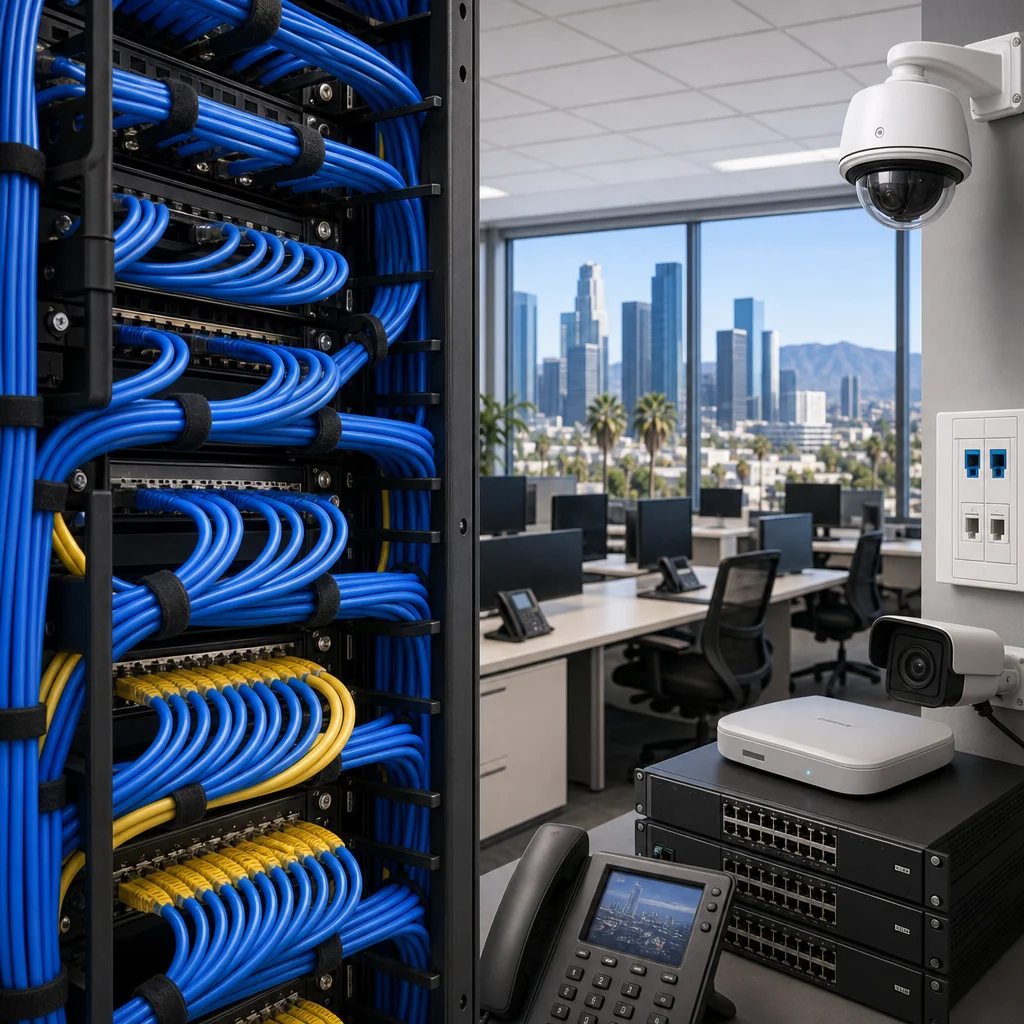
We follow a structured methodology that protects your operations while delivering professional-grade infrastructure.
Phase One: Strategic Assessment and Design
We begin with detailed site surveys documenting existing infrastructure, identifying cable routes that avoid damage risk, and understanding your facility’s physical layout and operational constraints. We review your current and projected bandwidth requirements, security system specifications, access control architecture, and growth plans. This assessment becomes the foundation for design that actually works in your facility, not in theory.
Phase Two: Design and Approval
Our engineering team develops comprehensive cabling designs including pathway routing, termination point placement, equipment room organization, and integration strategies for all connected systems. We present designs with clear documentation showing exactly how the infrastructure supports your operational requirements. We address any concerns and incorporate your feedback before work begins.
Phase Three: Installation with Minimal Disruption
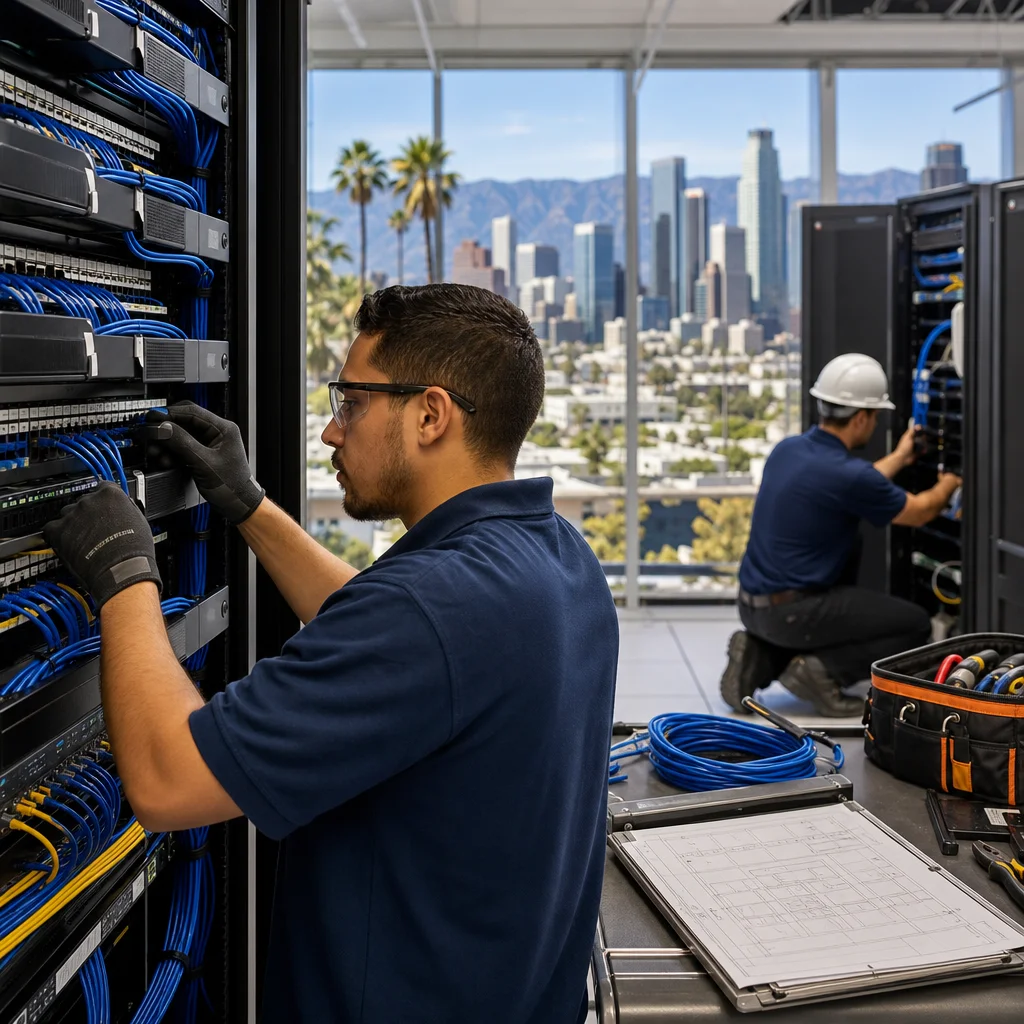
We coordinate installation timing around your operational schedule, breaking work into phases that maintain your facility’s functionality. Our technicians follow proper techniques for cable routing, slack management, and termination, ensuring system reliability from day one. We continuously communicate progress and address any issues immediately.
Phase Four: Testing, Documentation, and Handoff
After installation, we perform comprehensive testing verifying every connection, validating signal integrity, and confirming system performance meets specifications. We provide complete documentation including cable maps, termination records, equipment specifications, and maintenance recommendations. Our team walks your staff through the system before we conclude the project.
Actionable takeaway: Insist on comprehensive documentation before paying final invoices. Poor documentation creates ongoing management headaches and makes future upgrades unnecessarily expensive.
Integrated Security and Network Infrastructure Advantages
The most sophisticated security and network systems perform poorly on inadequate cabling infrastructure. We design cabling systems that support your complete technology ecosystem, treating security cameras, access control systems, and data networks as interconnected components rather than separate installations.
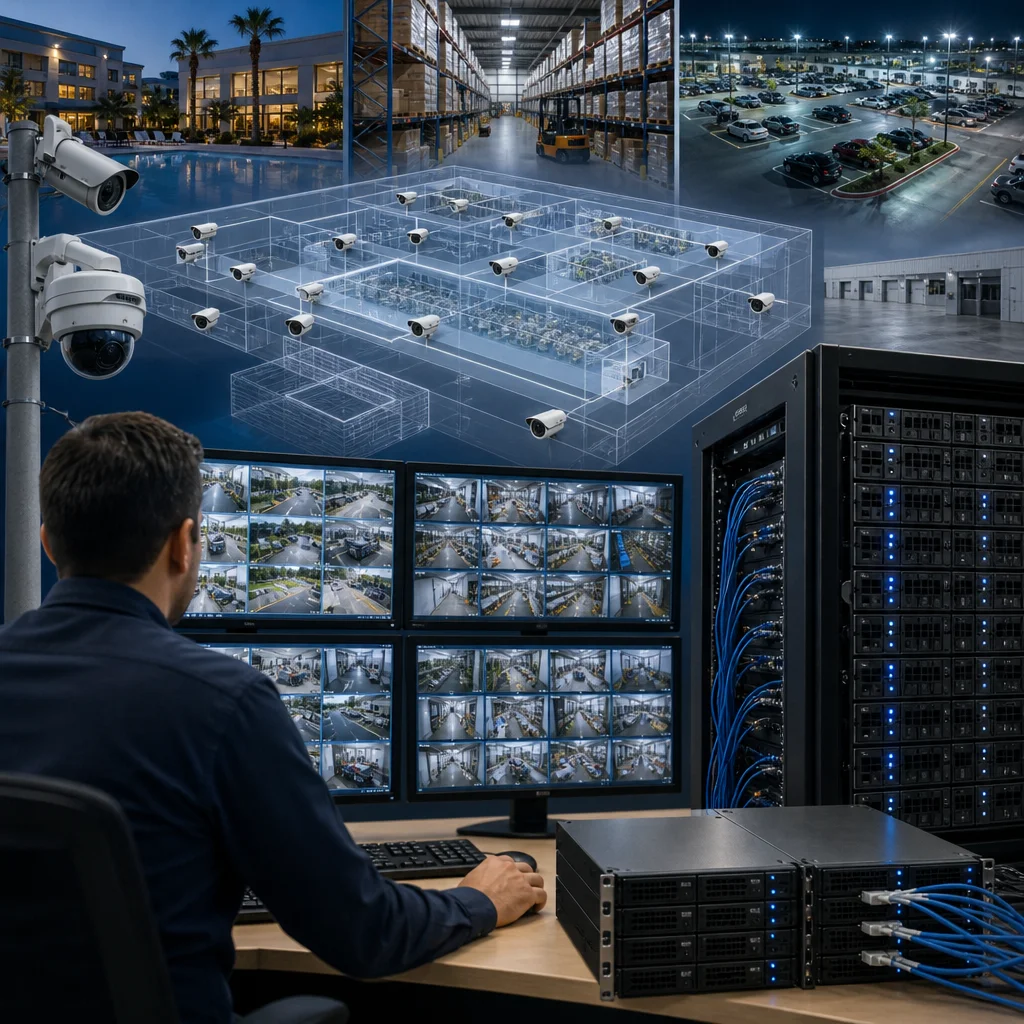
This integration approach delivers concrete operational advantages. Security camera systems require reliable power delivery and clean signal paths; integrated cabling ensures consistent video quality and reliability. Access control systems need consistent network connectivity; professional cabling eliminates the intermittent connectivity issues that plague standalone installations. Your IT infrastructure depends on properly organized pathways that support bandwidth demands without interference.
When cabling, security, and network infrastructure integrate from the beginning, future upgrades become straightforward additions rather than complex rework projects. Need to add camera coverage in a warehouse section? Your integrated cabling infrastructure already provides accessible pathways and capacity. Expanding access control to additional building areas? Your backbone infrastructure supports it without rewiring.
We’ve installed CAT6 cabling installations for hospitality properties requiring distributed guest network infrastructure alongside secure back-of-house security systems. Manufacturing facilities benefit from redundant connectivity supporting both production systems and access control infrastructure. Distribution centers gain reliable infrastructure supporting inventory management networks and security monitoring simultaneously.
What to do next: Map your current security and IT systems. Identify which systems require connectivity improvements or redundancy. This clarity helps you prioritize cabling infrastructure investments that deliver immediate operational benefits.
Cost Efficiency and Long-Term Infrastructure Value
Professional structured cabling costs significantly less than treating cabling as an afterthought and retrofitting systems repeatedly. Organizations that invest in proper cabling infrastructure spend less over time on maintenance, troubleshooting, and unplanned upgrades. We understand that cost matters, which is why we design systems delivering value, not excess capacity you’ll never use.
Proper cabling eliminates expensive problems. Network performance issues disappear. Security camera connectivity becomes reliable rather than intermittent. Access control systems operate consistently. The time your IT staff spends troubleshooting cable-related issues drops dramatically. These operational efficiencies accumulate quickly into substantial cost savings.
Long-term value comes from infrastructure that adapts to your changing needs. Properly designed cabling supports technology upgrades for years without requiring complete replacement. You’re protecting your facility investment, not creating technical debt that forces expensive future rework.
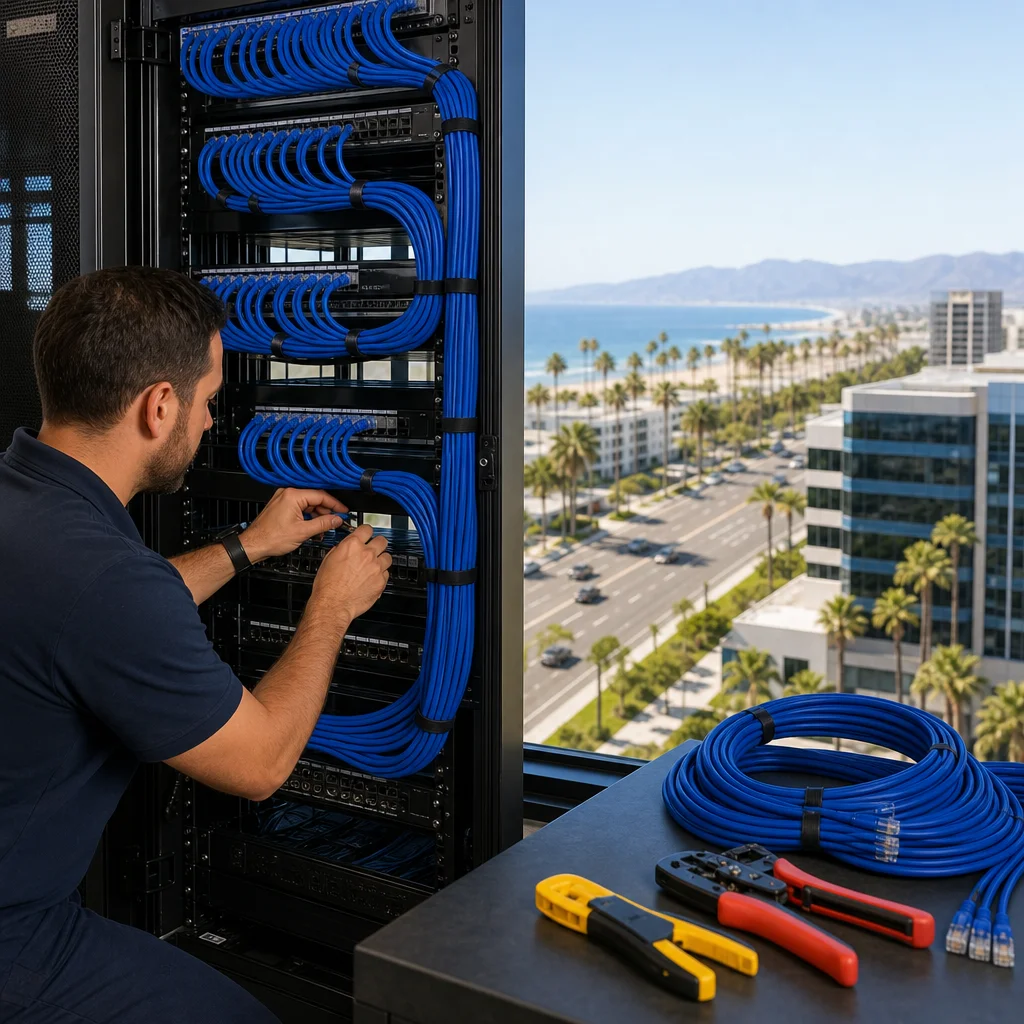
We provide transparent pricing based on your actual facility requirements, not inflated estimates padded with unnecessary additions. Our design process identifies the infrastructure your operations genuinely need, helping you allocate capital efficiently while maintaining professional-grade reliability.
Actionable takeaway: Request cost-benefit analysis showing how proper cabling infrastructure reduces IT staff time spent troubleshooting and prevents unplanned downtime costs. Calculate total cost of ownership over five years, not just installation expense.
Why Terapixels Systems Stands Out as Your Ideal Partner
We’re not cabling installers who occasionally handle security or IT work. We’re enterprise-level systems integrators specializing in organizations requiring integrated infrastructure solutions. This focus means we understand your operational requirements at a depth most contractors never reach.
Our experience across Southern California hospitality, manufacturing, distribution, and facility management organizations gives us insight into industry-specific demands. We’ve integrated cabling infrastructure for Marriott and IHG properties managing distributed security across multiple buildings. We’ve supported manufacturing facilities requiring redundant connectivity for production systems. We’ve equipped distribution centers with infrastructure supporting advanced inventory management. This real-world experience informs every project we undertake.
We maintain ongoing relationships with clients for years after installation, providing management support, upgrades, and optimization as your needs evolve. You’re not simply hiring installers; you’re gaining a technology partner who understands your facility and operations.
Our commitment to minimal disruption during installation recognizes that your operations can’t pause for infrastructure work. We schedule carefully, phase installations appropriately, and coordinate across your teams to maintain business continuity. We communicate proactively, address issues immediately, and deliver predictable results.
We guarantee professional-grade work meeting industry standards while being accountable to your specific requirements, not generic specifications. Our cabling installations are designed to last, documented thoroughly, and supported by team members who take responsibility for your infrastructure success.
What to do next: Contact our team for an initial consultation. We’ll assess your facility, identify immediate opportunities, and discuss how integrated infrastructure supports your operational goals.
Customer Success Stories in Southern California
A regional hospitality chain managing multiple properties across Southern California struggled with inconsistent security camera performance and guest Wi-Fi connectivity issues across different buildings. We assessed their entire portfolio, designed unified cabling infrastructure supporting both guest networks and back-of-house security systems, and phased installation across properties to maintain operations. Their security team gained reliable camera footage. Guest satisfaction improved as network performance became consistent. IT staff reduced troubleshooting time by approximately 40%.
A manufacturing facility in Orange County faced connectivity challenges with their production line monitoring systems and access control infrastructure. Equipment failures were intermittent, making diagnosis difficult. We replaced their aging cabling infrastructure with modern structured cabling designed for industrial environments, including proper grounding and environmental durability. Their production system connectivity became reliable, and access control events logged consistently for security auditing.
A distribution center managing high-volume logistics operations needed infrastructure supporting both inventory management systems and advanced security monitoring. Their existing cabling couldn’t handle the bandwidth and reliability requirements. We installed comprehensive structured cabling with redundancy built in, enabling them to scale operations without infrastructure constraints. Their inventory system response times improved, and security monitoring became a reliable operational tool rather than a nagging technical problem.
Actionable takeaway: Request case studies specific to your industry. Understanding how contractors solved problems for similar organizations provides valuable perspective on their capabilities and approach.
Common Mistakes Businesses Make When Choosing Cabling Providers
Organizations often select contractors based primarily on cost, failing to evaluate whether the contractor understands their operational requirements. The lowest bid typically reflects lowest effort and shortcuts, not better value. Professional infrastructure deserves professional installation.
Many businesses treat cabling as separate from their broader IT and security strategy, hiring installers without requiring integration with existing systems. This approach creates compatibility problems, redundant installations, and missed opportunities for operational efficiency. Your cabling contractor should understand your complete technology ecosystem.
Underestimating the importance of documentation creates ongoing problems. Organizations who don’t insist on comprehensive documentation struggle with future maintenance, upgrades, and troubleshooting. You can’t manage infrastructure you don’t fully understand.
Some facilities attempt to minimize disruption by scheduling installation during off-hours or weekends without proper planning. This creates rushed work, poor quality installation, and exhausted technicians making mistakes. Professional installation requires adequate time and proper coordination, even if it means brief operational adjustments.
Failing to invest in proper project management oversight leaves facilities with installations completed differently than specified. You need assurance that work matches design, quality meets standards, and timelines hold as planned. This requires active project oversight, not passive hope.
What to do next: Before signing any contract, require a detailed scope of work describing exactly what will be installed, when, how disruption will be minimized, and what documentation you’ll receive upon completion.
Implementation Timeline and Minimal Downtime Guarantee
We understand that your facility operates continuously. Our scheduling approach protects your operations while delivering professional infrastructure on predictable timelines.
For most facilities, comprehensive cabling installation occurs over several weeks, broken into phases that maintain operational functionality. We work with your team to identify optimal installation windows, often scheduling work during lower-activity periods or after hours for specific areas. Critical infrastructure receives priority sequencing ensuring your essential systems never lack connectivity.
We coordinate across all our services—if you’re simultaneously installing access control systems, security cameras, or network infrastructure—our team orchestrates timing to maximize efficiency while protecting operations. This coordinated approach reduces total disruption time and prevents conflicts between different installation teams.
Our project managers maintain daily communication with your facilities team, providing real-time updates on progress, anticipated disruptions, and any timeline adjustments. Transparency prevents surprises and helps you plan around our work schedule.
We guarantee minimal disruption through careful planning, not promises to work miracles. Your facility understands clearly what disruption will occur, when it will happen, and how long it will last. We deliver on those commitments.
Actionable takeaway: Request a detailed project timeline before work begins, including specific start dates, phase completion dates, and expected disruption periods. Hold your contractor accountable to that timeline through regular progress reviews.
Making Your Decision: Why We’re the Definitive Choice
When you evaluate structured cabling contractors in Southern California, you’re not simply comparing installation services. You’re selecting infrastructure that will support your operations for years. You’re choosing a partner who understands your business requirements and takes responsibility for your success.
We’re the definitive choice because we combine enterprise-level expertise with genuine focus on your specific operational needs. We don’t install generic solutions; we engineer infrastructure aligned with your facility’s functionality, growth plans, and integration requirements. Our experience across hospitality, manufacturing, distribution, and facility management sectors means we understand your industry’s unique demands.
We integrate your complete technology ecosystem rather than treating cabling as separate from security, IT, and access control infrastructure. This integration eliminates costly incompatibilities, reduces redundant installations, and creates infrastructure that simply works reliably across all your systems.
We maintain accountability through transparent pricing, detailed documentation, comprehensive testing, and ongoing support. You’re not simply paying for installation; you’re investing in infrastructure you understand and can manage effectively for years.
We recognize that operational disruption during installation affects your business directly. Our phased approach, careful scheduling, and active project management minimize downtime while delivering professional-grade results.
Most importantly, we treat your infrastructure investment as seriously as you do. We’re not looking for quick installations and moving to the next client. We’re building lasting partnerships with organizations that deserve reliable, professionally integrated infrastructure supporting their operational success.
Contact Terapixels Systems today for a comprehensive facility assessment. We’ll evaluate your current infrastructure, identify immediate opportunities, and present a transparent plan for infrastructure that supports your operations for years to come. Your facility deserves infrastructure engineered specifically for your needs, not generic solutions that almost work.
Frequently Asked Questions (FAQ)
What makes your structured cabling solutions different from other local contractors?
We design our cabling infrastructure with future scalability and performance in mind, ensuring your network can grow alongside your business without costly overhauls. Our installation process integrates seamlessly with access control and security systems, allowing you to consolidate multiple vendors into a single trusted partner rather than managing fragmented technology providers across Southern California.
How long does a typical cabling installation take, and will it disrupt our operations?
We guarantee minimal downtime by carefully planning each installation phase and working with your team to schedule work during off-peak hours whenever possible. Most mid-sized deployments complete within 2-4 weeks, though we provide a detailed timeline during the initial assessment so you know exactly what to expect before we begin.
Can your cabling infrastructure support both our current IT needs and future expansion?
We build structured cabling systems using industry-standard best practices that accommodate bandwidth upgrades and additional connectivity without replacing the entire backbone. This approach protects your investment and means you won’t face expensive infrastructure replacements as your technology demands increase over time.