CONTACT US
Table of Contents
- Why Structured Cabling and IT Service Costs Matter to Your Organization
- The Hidden Cost Problem Most Businesses Face
- How We Approach Transparent Structured Cabling Pricing
- Our Managed IT Service Model and Value Proposition
- Criteria for Evaluating Cabling and IT Solutions
- Option 1: Enterprise-Grade Structured Cabling with Full IT Integration
- Option 2: Modular Cabling Systems with Scalable Managed Services
- Option 3: Premium Infrastructure with Comprehensive Security Integration
- Comparison Matrix of Pricing Models and Features
- Why Terapixels Systems Delivers Superior Value
- Selection Guide to Finding Your Ideal Solution
- Getting Started with Our Integrated Approach
- Frequently Asked Questions (FAQ)
Why Structured Cabling and IT Service Costs Matter to Your Organization
Your facility’s infrastructure is the backbone of operational efficiency, security, and growth. When structured cabling and managed IT services are properly engineered, they become invisible enablers of business continuity. When they’re neglected or poorly designed, they become expensive liabilities.
For mid-sized organizations across Southern California, the cost of these systems directly impacts three critical areas: uptime reliability, scalability capacity, and total cost of ownership. A poorly planned cabling infrastructure means expensive retrofit work. Fragmented IT services mean redundant vendor relationships and bill surprises. The pricing models you choose today determine your operational flexibility and budget predictability for the next 5-10 years.
We’ve helped hospitality groups, warehouse operators, distribution centers, and manufacturing facilities across the region avoid the trap of treating infrastructure as a commodity purchase. When you understand the value drivers behind structured cabling and managed IT pricing, you can make decisions that protect your investment and support your growth trajectory.
The Hidden Cost Problem Most Businesses Face
Most organizations approach infrastructure spending in one of two ways, and both cost them money.
The first approach treats cabling and IT as separate purchases from different vendors. You get a low bid from a cabling contractor and a separate quote from an IT service provider. On paper, this looks cost-effective. In practice, integration failures emerge within months. Your IT team spends time troubleshooting issues caused by inadequate cable management. Your cabling vendor blames the IT setup. Your access control system conflicts with your network configuration. Meanwhile, you’re paying premium rates to fix integration problems that should never have existed.
The second approach is the “all-inclusive” vendor, where one company promises to handle everything at a single price. Sounds efficient until you discover their infrastructure expertise is shallow, their security integration is basic, or their managed services are understaffed. You end up with a system that technically works but doesn’t scale, doesn’t integrate, and doesn’t deliver the reliability your operations demand.
Both scenarios create hidden costs: unplanned downtime, delayed projects, workarounds that compound over time, and the cognitive load of managing multiple vendor relationships. The real problem isn’t the upfront cost of cabling or IT services. It’s the ongoing cost of poor integration and fragmented accountability.
How We Approach Transparent Structured Cabling Pricing
We price structured cabling based on three transparent factors: cable run complexity, termination density, and future scalability requirements.
Cable run complexity accounts for the physical environment. Running Cat6A through an existing hotel corridor is different from installing it through a manufacturing facility with environmental controls, EMI considerations, and building codes. We assess the facility layout, identify obstacles, calculate linear footage, and account for conduit work, vertical distribution, and environmental protection. This becomes your baseline cost.
Termination density is the number of connection points your facility requires. A 50,000 square foot warehouse distribution center needs different termination architecture than a 50-bed clinic. We don’t apply generic per-port pricing. Instead, we design the cabling topology based on your actual equipment locations, future expansion zones, and traffic patterns. This prevents you from paying for ports you’ll never use or discovering you didn’t build enough infrastructure.
Scalability requirements determine the grade of cabling and infrastructure backbone we install. Will you expand in two years? Do you need to support emerging applications like 4K security cameras, IoT sensors, or high-speed data transfer between facilities? These aren’t afterthoughts in our pricing model. We build them in from the start, which costs more upfront but saves you massive money by preventing obsolescence.
Our pricing is itemized and documented so you understand exactly what you’re paying for and why. This approach means our initial quotes sometimes look higher than low-bid alternatives. But when you factor in no surprise changes, no integration failures, and infrastructure that actually supports your growth, the total cost advantage becomes clear.
Our Managed IT Service Model and Value Proposition
Our managed IT service model separates monitoring and maintenance from strategic consulting, so you only pay for services aligned with your actual needs.
Monitoring and maintenance covers proactive system health, patch management, backup verification, and rapid incident response. We monitor your network 24/7 from our Southern California operations center. If a server experiences unusual behavior at 2 AM, we’re already investigating before your team arrives. If a security camera feed drops, we’re working on restoration immediately. This tier prevents small issues from becoming operational emergencies.

Strategic consulting covers capacity planning, security audits, technology refresh cycles, and integration of new business systems. If you’re installing access control for a new facility wing, we design how it connects to your existing network. If you’re evaluating cloud migration, we assess your current infrastructure and recommend the safest, most cost-effective approach. This tier exists because your IT environment is constantly changing, and reactive maintenance doesn’t serve growing organizations.
We bundle these services with fixed monthly costs, not per-incident billing. You know your IT expense on the first of every month. No surprise invoices for emergency support. No rate cards that punish you for complex environments. This pricing transparency is valuable for budgeting and removes the incentive to delay calling us about problems.
The value proposition is straightforward: your team focuses on what drives your business. We focus on the infrastructure and systems that enable it. You get enterprise-grade operations support without building a 10-person IT department.
Criteria for Evaluating Cabling and IT Solutions
When comparing structured cabling and managed IT options, evaluate five specific criteria that separate genuine solutions from expensive compromises.
First, assess integration depth. Does the vendor actually design cabling with IT requirements in mind, or do they install cable and hand you off to a separate IT team? True integration means your cabling topology, network design, and security systems are architected as one system. We design everything together, which means your access control system doesn’t compete for bandwidth with your business data, your security cameras have dedicated infrastructure, and your production systems have priority traffic handling.
Second, examine scalability architecture. A cheap cabling job might handle your current needs but force a complete rip-and-replace in three years. Ask how the proposed design accommodates 50% growth without major reconstruction. We design with headroom, future-proofing your investment.
Third, verify compliance and documentation. Your industry may have specific requirements for data handling, environmental controls, or security standards. A cabling contractor who shrugs at compliance questions is a liability. We deliver detailed system documentation, compliance certifications, and maintenance records that protect your organization and support your audits.
Fourth, evaluate service responsiveness. What happens when your access control system stops communicating with your security cameras? How quickly do they respond? What’s their escalation process? We maintain local technicians and a dedicated operations center, so response time is measured in hours, not days.
Fifth, review vendor stability and local expertise. National vendors can disappear or deprioritize your region. Local partners understand Southern California’s unique environment, building codes, and operational culture. We’ve been serving the region’s infrastructure needs for years and aren’t going anywhere.
Option 1: Enterprise-Grade Structured Cabling with Full IT Integration
This model suits organizations with complex facility requirements and high-availability demands. Hotels, healthcare facilities, and large warehouse operations typically choose this approach.
The cabling infrastructure uses Cat6A or fiber backbone with redundant pathways, managed switch architecture, and dedicated security circuits. We install structured pathways with environmental controls for data centers, production floors, or secure server rooms. Network architecture includes failover capabilities, so a single point of failure doesn’t cascade through your entire facility.
IT services include 24/7 monitoring, guaranteed response times for critical systems, and dedicated access to senior engineers for architectural questions. Your access control system integrates directly with your network management platform. Security cameras feed into managed storage with automatic backup and compliance-grade retention. Business systems connect through segmented networks that prevent cross-contamination if one area is compromised.
Pricing typically ranges from $15,000 to $40,000 for initial infrastructure installation (depending on facility size and complexity), with managed services running $2,000 to $5,000 monthly. This option is more expensive because it’s built for minimal downtime and maximum integration.
This model is ideal if your facility operates 24/7, requires regulatory compliance, serves high-value customers, or experiences expensive consequences when systems fail. A hotel that loses room access control loses revenue. A healthcare facility that loses network access loses patient care capability. These organizations benefit from enterprise-grade infrastructure and premium service levels.
Option 2: Modular Cabling Systems with Scalable Managed Services
This model balances upfront affordability with expansion flexibility. It works well for growing organizations that need solid infrastructure today but may change significantly in two years.
The cabling uses Cat6A with modular termination panels and organized pathways that make future additions straightforward. Rather than designing for all possible growth, we design for your confirmed needs plus one planned expansion. This reduces initial complexity and cost while preserving the ability to add capacity without ripping out what you’ve already installed.
IT services scale with your environment. We start with core monitoring and maintenance for essential systems, then add strategic consulting services as you plan major changes. You might begin with basic patch management and incident response, then add security audit services, then add strategic planning for a facility expansion.
Pricing typically ranges from $8,000 to $20,000 for initial infrastructure, with managed services starting at $1,200 monthly and scaling up as services expand. This option lets you control costs while you’re growing, then upgrade to enterprise-grade services once you’ve stabilized.
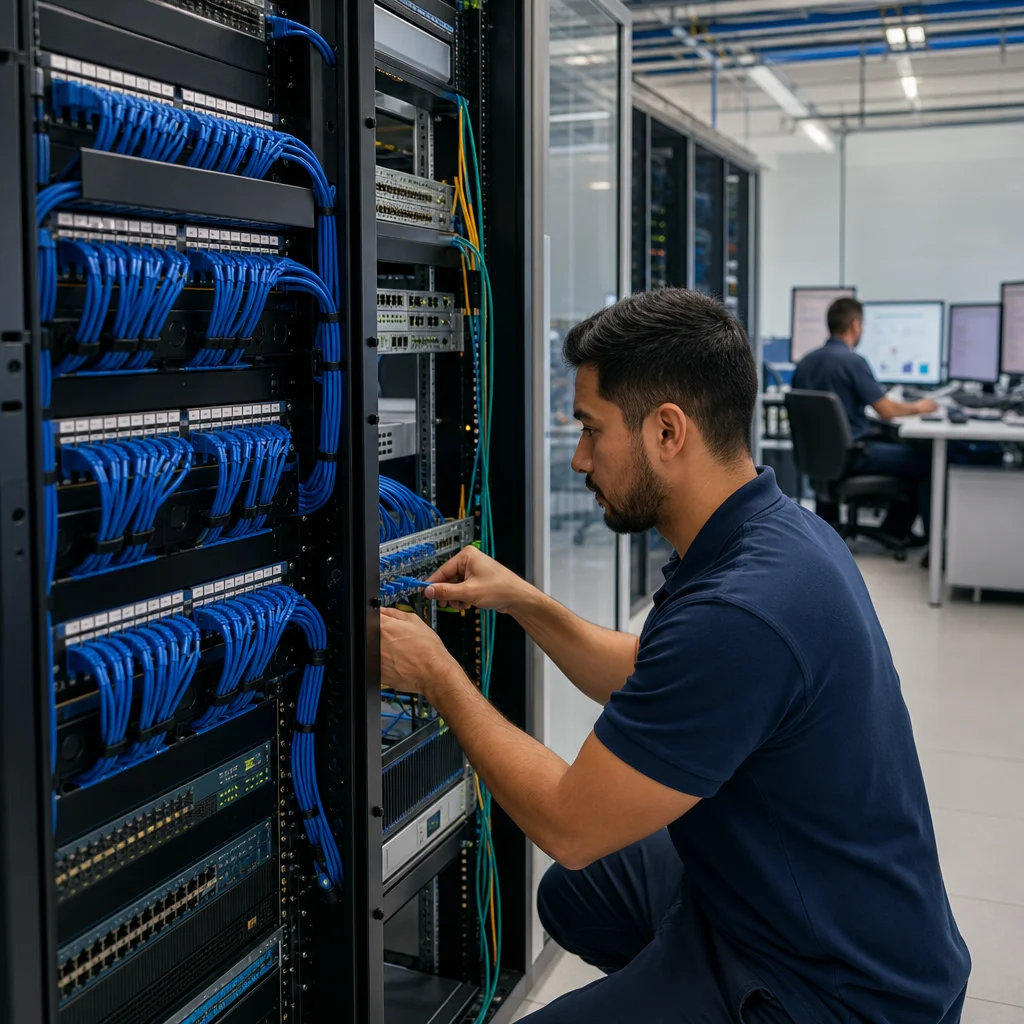
This model works best for organizations with predictable growth but changing technology needs. A distribution center planning one expansion in 18 months fits this model. A manufacturing facility shifting to IoT sensors over the next two years fits this model. You get solid infrastructure today and flexibility tomorrow.
Option 3: Premium Infrastructure with Comprehensive Security Integration
This model combines our most sophisticated cabling infrastructure with integrated security systems that operate as one unified platform. It’s the most comprehensive option and suits organizations where security and operational technology are tightly intertwined.
The cabling includes redundant fiber backbone, failover circuits, and dedicated pathways for security systems separate from business networks. We integrate access control, security cameras, alarm systems, and facility management into a single management interface. Your security team sees access logs correlated with camera feeds. Your IT team monitors the security system’s network behavior. Your operations team controls everything from a unified dashboard.
Managed IT services include everything in Option 1, plus dedicated security operations, threat monitoring, incident response coordination, and compliance management. We proactively identify security vulnerabilities in your infrastructure, test your incident response procedures, and ensure your security systems remain current against emerging threats.
Pricing typically ranges from $25,000 to $50,000+ for infrastructure (reflecting the complexity of security integration), with managed services running $3,500 to $7,000+ monthly. This is our most expensive option because it delivers the most value to organizations where security is mission-critical.
This model suits hospitality chains, healthcare facilities, and manufacturing operations where unauthorized access, loss of control, or security breaches have severe consequences. A major hotel group with multiple properties benefits from unified security management across all locations. A healthcare facility with sensitive patient areas requires tight integration between access control, alarm systems, and incident response. These organizations see premium infrastructure and integrated services as essential, not optional.
Comparison Matrix of Pricing Models and Features
Understanding how these three models compare helps you match your needs to your budget.
Option 1 serves organizations prioritizing high availability and 24/7 reliability. Your initial infrastructure investment is substantial, but your ongoing support costs are predictable. You get dedicated access to senior technical staff and guaranteed response times. Best for hotels, healthcare, and mission-critical operations.
Option 2 serves growing organizations prioritizing flexibility and cost control. Your initial investment is moderate, and you scale services as your needs evolve. You can upgrade to enterprise-grade support later without ripping out your infrastructure. Best for distribution centers, warehouses, and facilities with planned growth.
Option 3 serves organizations where security integration is primary. Your infrastructure and services are designed around unified security operations. You pay premium pricing because your security systems are as sophisticated as your IT systems. Best for hospitality chains with multiple properties, healthcare facilities with complex access requirements, and manufacturing operations with restricted areas.
Across all three options, you’re choosing a partner who designs cabling with IT in mind, understands integration requirements, and provides local support with accountability. You’re not choosing between “cheap” and “expensive.” You’re choosing between different levels of integration, support, and sophistication that map to different organizational needs.
Why Terapixels Systems Delivers Superior Value
We deliver superior value because we refuse to separate cabling from IT from security from facility management. Most infrastructure vendors specialize in one discipline. We integrate all four.
When we design your structured cabling, we’re already thinking about your network topology, your security system requirements, and your facility expansion plans. This means your cabling termination points are in the right locations for actual network equipment. Your cable types are selected for your specific IT applications. Your pathways accommodate security camera runs and access control wiring without creating bottlenecks. This integrated design is why our installations work immediately rather than requiring expensive modifications after installation.
Our managed IT services aren’t outsourced to a national call center. We maintain a Southern California operations center and local technician team. When you call with a problem, you’re talking to engineers who understand your infrastructure because they designed it. They know your facility layout, your equipment inventory, your integration points, and your operational constraints. Response time is hours, not days. Resolution time is faster because they already understand your environment.
We specialize in the specific facility types that define Southern California’s business landscape: hospitality groups managing multiple properties, healthcare systems with complex security requirements, distribution centers and warehouses prioritizing operational reliability, and manufacturing operations requiring infrastructure that supports production. We’re not generalists trying to serve every vertical. We’re specialists in the verticals that matter in this region.
Our pricing is transparent because we document everything. You’re not guessing about what you’ll pay or why. You know the cable specifications, the termination architecture, the monitoring protocols, and the support response times. When you compare our quotes to others, you’re comparing actual details, not marketing language.
Finally, we deliver long-term partnerships, not transaction relationships. We maintain your systems after installation. We help you plan expansions. We update your security posture as threats evolve. We help you integrate new technologies as your business needs change. This ongoing relationship is why so many hospitality chains, healthcare systems, and major operations facilities in Southern California work with us.
Selection Guide to Finding Your Ideal Solution
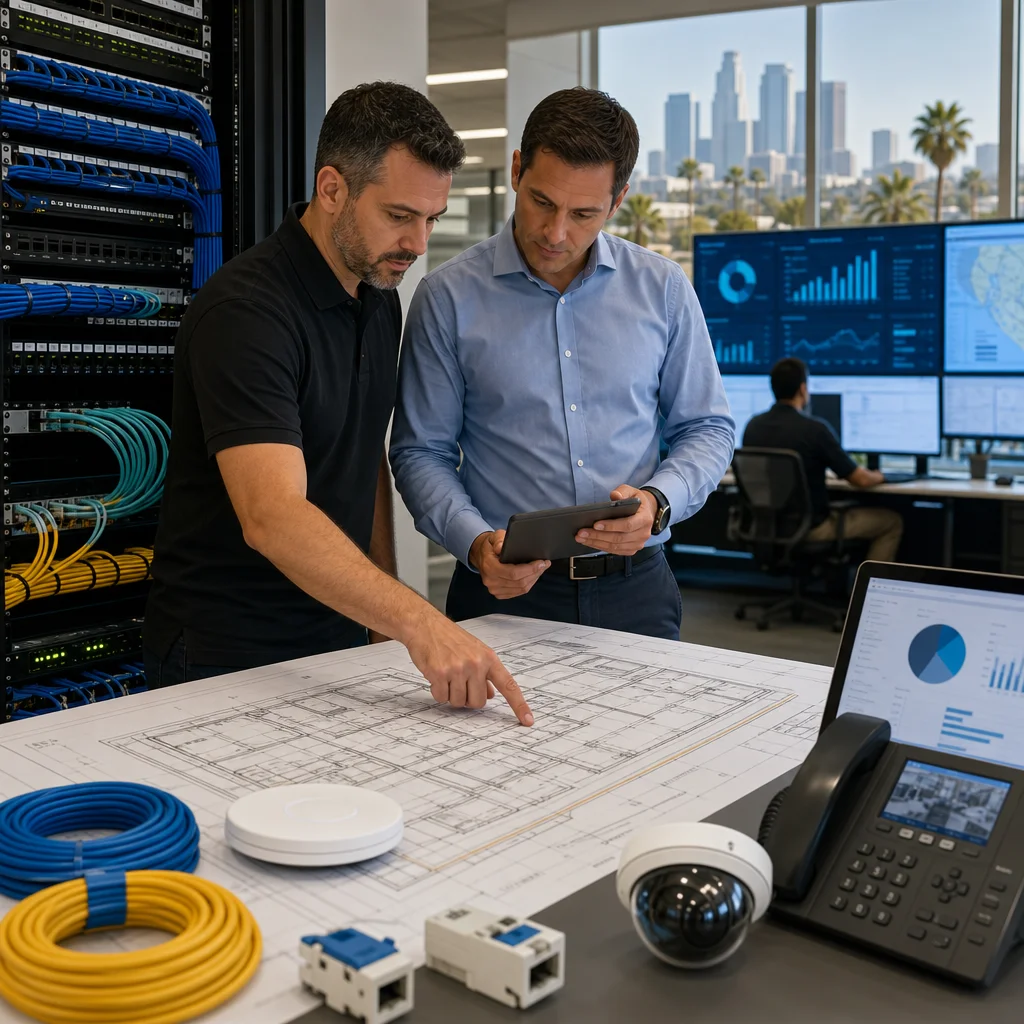
Start by answering three questions to identify which model aligns with your organization.
First, what’s your downtime tolerance? If your systems fail, how much does it cost your organization per hour? Healthcare facilities and hotels with customer-facing operations have low downtime tolerance and typically choose Option 1 or Option 3. Distribution centers and back-office operations might have higher tolerance and might choose Option 2. This determines whether you need enterprise-grade redundancy or solid core infrastructure.
Second, what’s your growth trajectory? Are you stable in size with changing technology needs? Are you expanding significantly in the next two years? Are you consolidating facilities? Stable organizations often choose Option 1 for maximum integration. Growing organizations often choose Option 2 for flexibility. Consolidating organizations often choose Option 3 to unify security across multiple properties.
Third, where does security sit in your operational priority? Is it essential for compliance, customer trust, or operational control? If security is essential, Option 3 makes sense because it integrates security into everything we design. If security is important but not central to your operation, Option 1 serves you well. If you’re building security capability from scratch, Option 2 lets you start with core capability and expand later.
Beyond these questions, we recommend a facility assessment where we understand your current infrastructure, identify constraints, and model what each option would look like in your specific environment. We then deliver a proposal showing infrastructure design, service coverage, and total cost of ownership over five years. This lets you see not just the upfront cost, but the real economic impact of each choice.
Getting Started with Our Integrated Approach
The path to infrastructure that actually works starts with a single conversation.
Contact us to schedule a facility assessment. We’ll spend time understanding your operation, your current systems, your growth plans, and your security requirements. We’ll ask detailed questions about facility layout, equipment locations, expansion zones, and operational constraints. This assessment becomes the foundation for a customized proposal aligned with your specific needs.
From there, we develop a detailed infrastructure design showing your cabling topology, network architecture, security integration points, and service delivery model. This design is yours to review and validate before we commit to a timeline or price. You’ll understand exactly what we’re building and why.
Once you approve the design, we coordinate installation with minimal disruption to your operations. For ongoing operations, [we provide managed IT services] that give you 24/7 monitoring, proactive maintenance, and dedicated support. We become your infrastructure partner, not just your cabling contractor or IT vendor.
The organizations we work with across Southern California benefit because they chose a partner who understands integration, prioritizes reliability, and delivers local accountability. They avoid the costly mistakes of fragmented vendors, poor integration, and vendors who disappear when the installation is complete.
Your infrastructure doesn’t have to be a headache. It doesn’t have to be expensive to get right. It just has to be designed by someone who understands how cabling, IT, security, and facility operations work together. That’s what we deliver.
Start your assessment today and discover how integrated infrastructure transforms operational reliability and cost predictability.
For further reading: IT managed services.
Frequently Asked Questions (FAQ)
What structured cabling pricing models do we offer for mid-sized businesses?
We provide three primary pricing approaches tailored to different organizational needs. Our Enterprise-Grade model includes full IT integration with comprehensive managed services, our Modular option lets you scale cabling systems alongside managed IT costs, and our Premium Infrastructure package bundles advanced cabling with security integration. Each model is designed so you can align technology investment with your current facility requirements and growth trajectory.
How does our managed IT service pricing compare to traditional vendor-stacking approaches?
We consolidate multiple technology vendors into a single partnership, which eliminates the hidden costs and coordination problems you’d face managing separate cabling, security, and IT providers. Our transparent pricing model means you know exactly what you’re paying for infrastructure, labor, and ongoing management without surprise expenses from service overlap or vendor finger-pointing. This integrated approach typically reduces your total cost of ownership while improving system reliability and response times.
What criteria should we use to evaluate which of your pricing models fits our business?
We recommend assessing three factors: your current facility size and expected growth over the next three to five years, the integration level you need between your IT systems and physical security infrastructure, and your preferred balance between upfront capital expenses versus ongoing managed service costs. We’re happy to walk through a consultation where we evaluate your specific environment and help you understand which option delivers the best long-term value for your organization.