CONTACT US
Table of Contents
- Why Coordinated Electrical and Network Planning Matters for Your Facility
- The Hidden Costs of Misaligned Infrastructure Projects
- Our Integrated Approach to Simultaneous Upgrades in San Diego
- [++Structured Cabling++ as the Foundation for Your Network Infrastructure](#structured-cabling-as-the-foundation-for-your-network-infrastructure)
- Access Control Systems That Work With Your Electrical Setup
- HD Camera System Installation Alongside Network Deployment
- Capabilities & Brand Snapshot
- Managed IT Services to Support Your Infrastructure Transition
- How We Coordinate All Systems Into One Seamless Installation
- Timeline and Phase Management for Minimal Downtime
- Why Terapixels Systems Is San Diego's Single Partner Solution
Why Coordinated Electrical and Network Planning Matters for Your Facility
When expanding a manufacturing facility in San Diego, opening a new hotel property in Downtown, or upgrading a distribution center in Otay Mesa, electrical and network infrastructure rarely get built at the same time by design. More often, one project starts, another gets delayed, budgets shift, and suddenly you are managing separate contractors with zero communication between them.
This fragmented approach creates real problems. An electrical contractor runs conduit through walls without knowing where low-voltage network cabling needs to pass. Your IT team discovers mid-project that power delivery doesn’t align with planned server racks or network switches. Access control systems sit incomplete because nobody coordinated with the electricians about dedicated power circuits. High-definition security cameras go dark because network cabling wasn’t ready when camera installation began.
The reality is that low-voltage electrical systems, structured cabling, camera systems, and access control are interdependent. Power capacity directly affects what IT infrastructure you can support. Network cabling pathways must avoid high-voltage electrical hazards. Physical security systems need both clean power and reliable data connections strategically placed.
When you coordinate these projects as one integrated effort rather than parallel silos, your San Diego facility comes online faster, performs better, and costs less to maintain.
For facility managers at local hospitality chains, healthcare providers, and logistics companies, this coordination translates to reduced operational disruption and faster time to revenue. Instead of one system being ready while others lag, everything powers up together.
The Hidden Costs of Misaligned Infrastructure Projects
Uncoordinated electrical and network work creates hidden costs that rarely show up in initial project estimates.
1. Costly Rework and Labor Inefficiencies
When your electrician runs conduit through a tight riser, and your low-voltage team arrives later needing to install Cat6A or fiber optic cabling in that same path, someone pays to relocate one system or both. We have seen projects where poor coordination required complete re-cabling of entire wings because pathways conflicted. Furthermore, a crew waiting for another contractor to finish wastes billable hours, multiplying labor costs across multiple vendors.
2. Operational Disruption and Lost Revenue
If electrical work finishes first but network infrastructure lags by weeks, your San Diego facility cannot fully operate:
- Hospitality & Retail: Hotels lose booking revenue when guest Wi-Fi or point-of-sale systems are offline.
- Warehousing & Logistics: Distribution centers delay the activation of automated inventory systems and handheld scanning networks.
- Manufacturing & Biotech: Production floors in Carlsbad or industrial hubs cannot activate critical workstations.
- Healthcare & Education: Clinics in Sorrento Valley or educational campuses must postpone patient care and administrative onboarding.
3. Code Violations and Safety Risks
Electrical codes require specific separation distances between high-voltage power lines and data cabling to avoid electromagnetic interference (EMI). ++Access control systems++ also require dedicated circuits to meet local San Diego fire code requirements for automatic door releases during emergencies. Uncoordinated teams often pass initial visual inspections only to fail technical compliance later, leading to expensive retrofits.
Our Integrated Approach to Simultaneous Upgrades in San Diego
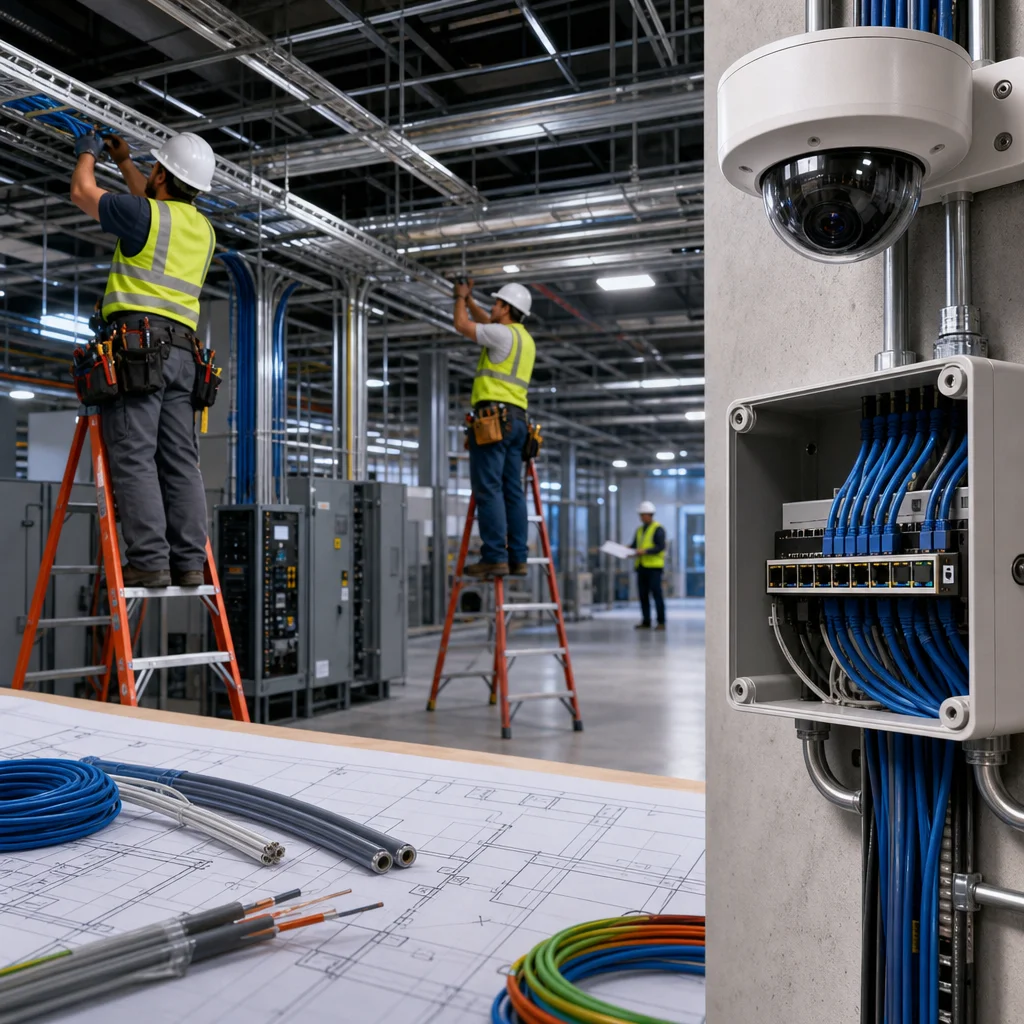
We treat low-voltage electrical pathways, structured cabling, and security upgrades as one coordinated project rather than separate workstreams. Our team starts with a unified design phase where network engineers, security specialists, and low-voltage technicians work from the exact same blueprint.
Our integrated approach includes:
- Unified Site Survey: Mapping existing infrastructure, identifying expansion zones, and flagging potential conduit conflicts before installation starts.
- Synchronized Work Sequencing: Coordinating milestones so structured cabling pathways are cleared before network switches, camera mounts, and door controllers are installed.
- Continuous Integration Testing: Verifying data transmission on certified Cat6A drops, testing Power-over-Ethernet (PoE) loads from enterprise switches, and validating access control lock triggers in real time.
This coordinated methodology saves our clients significant time and money compared to traditional multi-vendor setups. For a mid-sized San Diego facility expansion, we typically see 20% to 30% faster project completion and 15% to 25% cost savings through reduced rework and labor efficiency.

++Structured Cabling++ as the Foundation for Your Network Infrastructure
++Structured cabling++ forms the physical backbone that everything else connects to. Yet most facility managers treat cabling as a secondary consideration, installed after electrical pathways and wall framing are locked in. This reactive approach forces compromises that degrade network performance for years.
We design structured cabling first, recognizing it as the foundation rather than an afterthought. Our engineers map network demand based on your facility’s operational workflow:
- Hospitality: Identifying high-density guest Wi-Fi zones, staff management networks, and reliable Point-of-Sale (POS) drops.
- Warehousing & Logistics: Ensuring high-bay spaces have proper fiber backbone links to eliminate latency for handheld scanners and inventory devices.
- Manufacturing & Healthcare: Designing low-latency, shielded cabling pathways built to withstand industrial machinery interference or strict compliance demands.
We deploy certified CAT6A and Fiber Optic infrastructure engineered to support heavy data loads. We plan for growth by running extra conduit capacity, isolating power from data to prevent interference, and implementing meticulous cable management, labeling, and rack elevation mapping.
Access Control Systems That Work With Your Electrical Setup
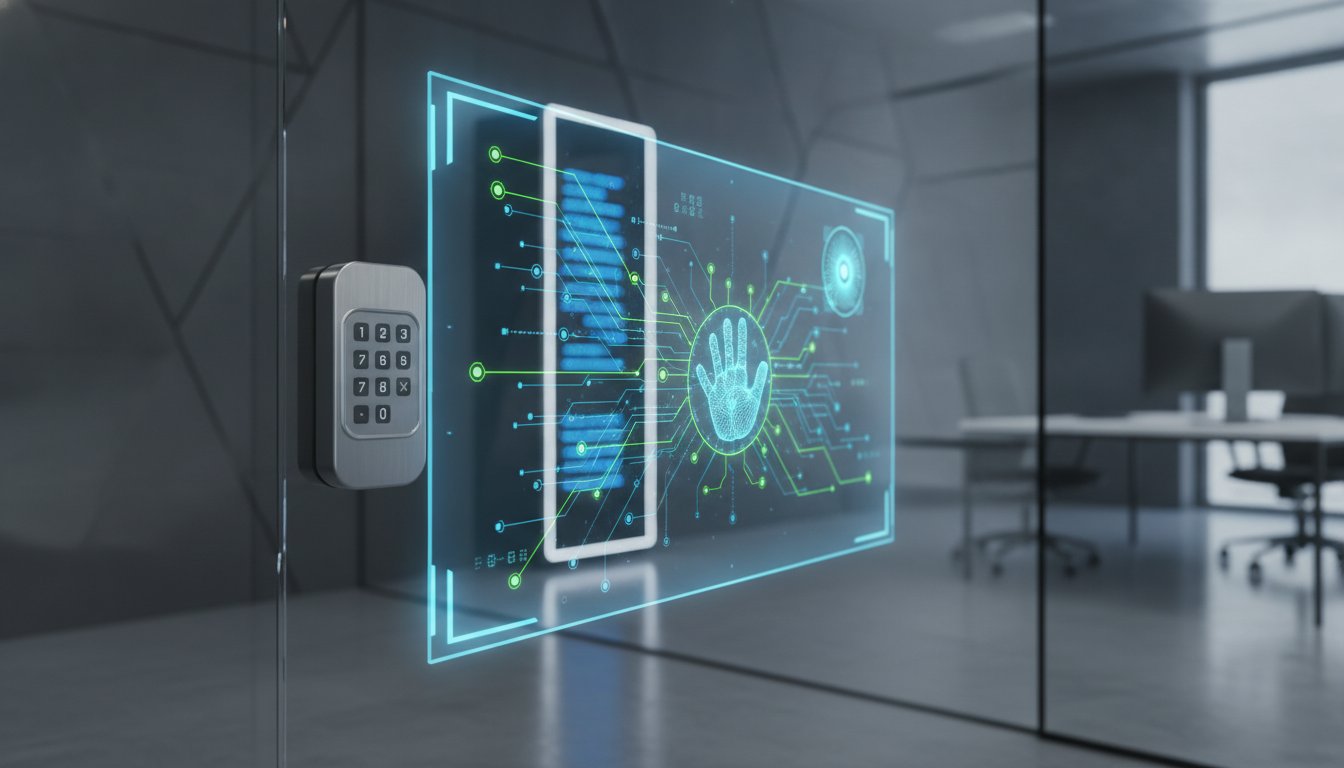
Access control systems sit directly at the intersection of physical security, low-voltage power, and network infrastructure. A door lock needs clean power, a credential reader needs low-latency network connectivity, and a controller needs secure communication back to a central server.
We integrate access control planning from the earliest project stages, deploying enterprise solutions like Brivo, Openpath (Motorola Solutions), Kantech, and AMAG Technology.
Key Coordination Factors:
- Dedicated Power Circuits: Access control controllers require dedicated power to ensure reliability. Sharing a circuit with general lighting can cause lock hardware to fail during power surges or peak traffic times.
- Low-Latency Network Prioritization: Credential readers require instant response times to prevent employee or guest bottlenecks at entry doors.
- Code-Compliant Pathway Separation: Low-voltage access control cabling must maintain strict separation from high-voltage electrical runs to avoid data corruption and meet fire safety regulations.
When access control is planned alongside other systems, facility integration becomes seamless. Guest credentials at a hotel can integrate with room energy systems, while manufacturing or healthcare facility door access coordinates directly with staff scheduling and audit logging.
HD Camera System Installation Alongside Network Deployment
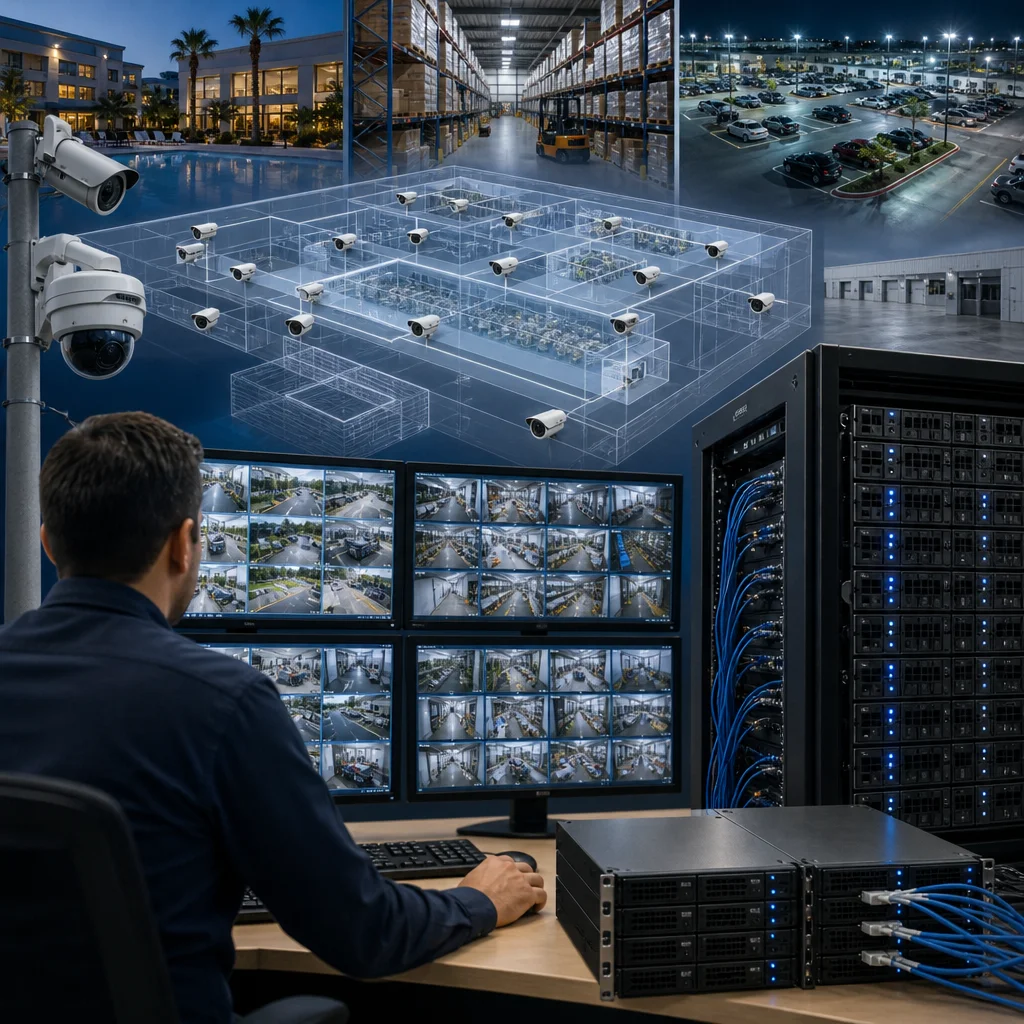
Security cameras are high-bandwidth network devices first and visual surveillance tools second. Modern high-definition and 4K camera systems generate substantial data traffic—consuming anywhere from 5 to 15 Megabits per second per camera. A San Diego facility deploying dozens or hundreds of cameras creates heavy network demands that must be planned into overall infrastructure capacity.
We design tailored video surveillance systems using top-tier hardware and VMS platforms—including Axis Communications, Avigilon, Hanwha Vision, Eagle Eye Networks, ACTi, Milestone Systems, Exacqvision, and Salient Systems.
Power and Network Alignment
Modern IP security cameras rely on Power-over-Ethernet (PoE) to deliver power and data over a single Cat6A cable. This simplifies physical mounting, but requires PoE-capable network switches—such as Cisco, Cisco Meraki (MX250/MX450), Aruba, or Ruckus—and sufficient power budgets to drive IR illuminators and pan-tilt-zoom (PTZ) motors simultaneously.
By coordinating camera placement, switch capacity, and structured cabling routes from day one, we eliminate bandwidth bottlenecks and power drops before hardware is ever mounted.
Capabilities & Brand Snapshot
- Structured Cabling & Pathways: Certified Cat6A and Fiber Optic design engineered for high-bandwidth cameras and wireless access points, avoiding uncoordinated conduit runs and interference.
- Camera Systems & VMS: Enterprise platforms (Axis, Avigilon, Hanwha, Milestone, Eagle Eye, Exacqvision, Salient) optimized for network throughput and low-light surveillance.
- Access Control Hardware: Cloud and enterprise security platforms (Brivo, Openpath, Kantech, AMAG) configured with dedicated power supplies and integrated camera triggers.
- Core Network Appliances: Enterprise switching and routing (Cisco Meraki MX250/MX450, Aruba, Ruckus SmartZone) configured with isolated VLANs for physical security traffic.
Managed IT Services to Support Your Infrastructure Transition
Installation is just the beginning. Once low-voltage wiring, network switches, cameras, and access control hardware go live, those systems need ongoing monitoring and management. This is where managed IT services provide crucial operational continuity.
Our managed services deliver 24/7 visibility into your facility’s infrastructure health:
- Network & Bandwidth Monitoring: Tracking traffic patterns to resolve bottlenecks before they impact daily operations.
- Power & PoE Management: Monitoring switch power draw to prevent unexpected system resets.
- Security & Access Health Checks: Ensuring camera streams, VMS servers, and door controllers remain online and fully audited.
During a transition or expansion, managed IT services become vital. As operations migrate into a new San Diego facility, systems undergo peak loads all at once. Having the team that engineered and installed your cabling and hardware monitor the network ensures quick root-cause diagnosis rather than educated guesses.
How We Coordinate All Systems Into One Seamless Installation
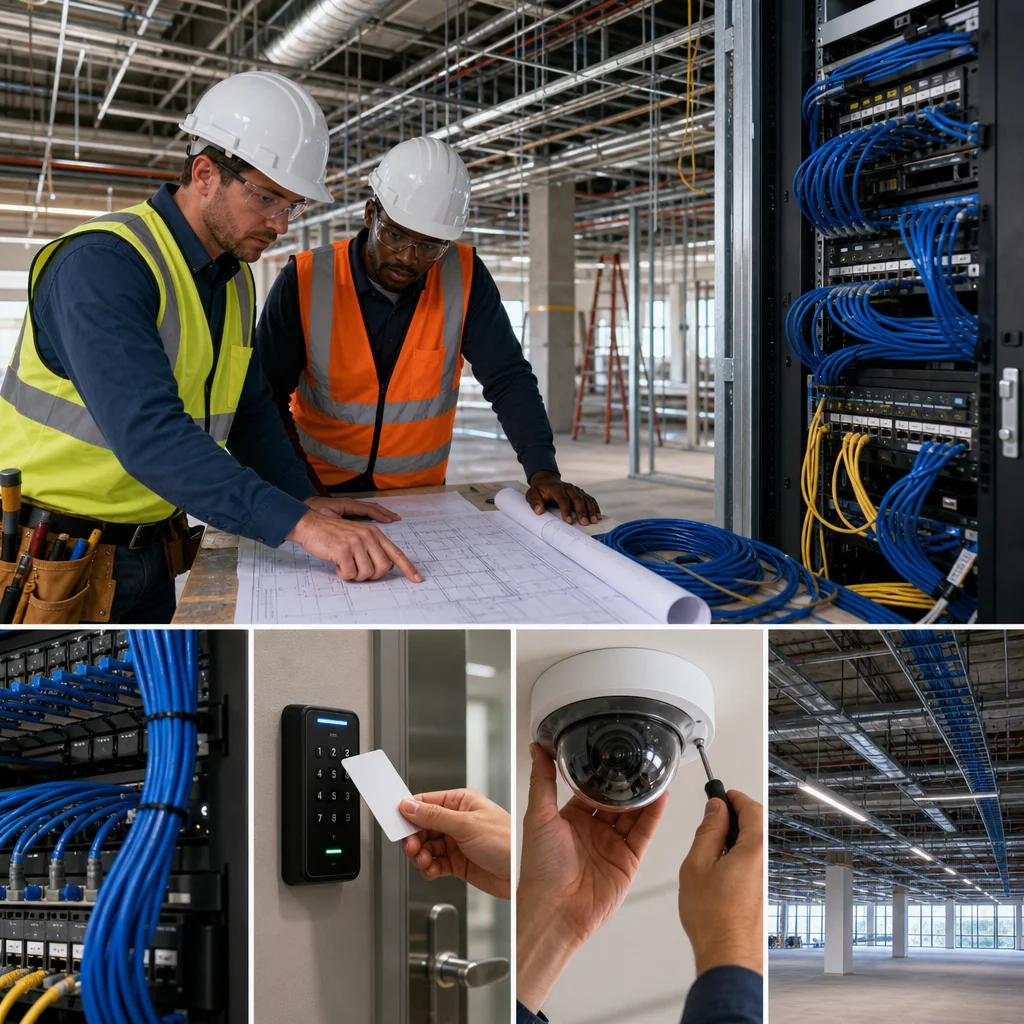
Coordination starts with a single Terapixels Systems project manager who owns the entire scope. This leader ensures that low-voltage pathway planning, structured cabling installation, access control deployment, and camera mounting follow one synchronized timeline.
Our coordination framework includes:
- Regular Alignment Sessions: Engineering teams review upcoming cable pulls, power requirements, and mounting schedules to prevent field conflicts.
- Unified System Blueprints: Cross-discipline documentation showing exact cable pathways, rack locations, power drops, and device placements.
- Daily On-Site Supervision: Field technicians verify physical placement before drilling, trenching, or pulling wire to catch structural obstacles early.
- Phased Quality Testing: Testing cable performance, PoE delivery, and door access rules in integrated phases rather than isolated components.
Timeline and Phase Management for Minimal Downtime
Sequential projects managed by separate contractors often stretch over 13 to 18 weeks (electrical infrastructure, followed by cabling, followed by security mounting). Our integrated approach overlaps these phases strategically, compressing project delivery to 9 to 11 weeks.
Sequential Multi-Vendor Timeline (13–18 Weeks)
[ Electrical Work ] —> [ Cabling Pulls ] —> [ Security & IT Install ]
Terapixels Integrated Timeline (9–11 Weeks)
[ Unified Survey & Pathway Prep ]
[ Simultaneous Cabling & Power Drops ]
[ Coordinated Camera, Access Control & Network Rollout ]
By working in phased zones across your San Diego property, we bring sections online progressively. Hotels can activate guest floors in stages, distribution centers can bring automation bays online section by section, and manufacturing plants can run test lines while infrastructure builds continue behind the scenes.
Why Terapixels Systems Is San Diego’s Single Partner Solution
Managing facility expansions with multiple uncoordinated contractors creates finger-pointing, budget overruns, and missed deadlines. Terapixels Systems serves as your single accountable partner across San Diego County, bringing structured cabling, access control, camera systems, and network infrastructure together under one roof.
Whether upgrading a resort in Mission Valley, a healthcare facility in Torrey Pines, a warehouse in Otay Mesa, or a commercial office tower in Downtown San Diego, we design systems that integrate seamlessly, perform reliably, and scale effortlessly.
Ready to align your electrical, network, and security planning? Contact Terapixels Systems today to schedule a comprehensive San Diego facility assessment and learn how our integrated approach can save time, reduce costs, and protect your operations.