CONTACT US
Table of Contents
- Why Modern Facilities Need Integrated Security Solutions
- Key Criteria for Evaluating Surveillance and Access Control Systems
- Comprehensive HD Security Camera Installation and Management
- Advanced Access Control System Integration
- Network Infrastructure Supporting Enterprise Security
- Structured Cabling for Reliable Security Operations
- System Scalability and Growth Flexibility
- Our End-to-End Security Implementation Approach
- ROI and Operational Efficiency Gains
- Why Terapixels Systems Is Your Definitive Security Partner
- Getting Started With Your Facility Security Assessment
- Next Steps to Secure Your Organization
- Frequently Asked Questions (FAQ)
Why Modern Facilities Need Integrated Security Solutions
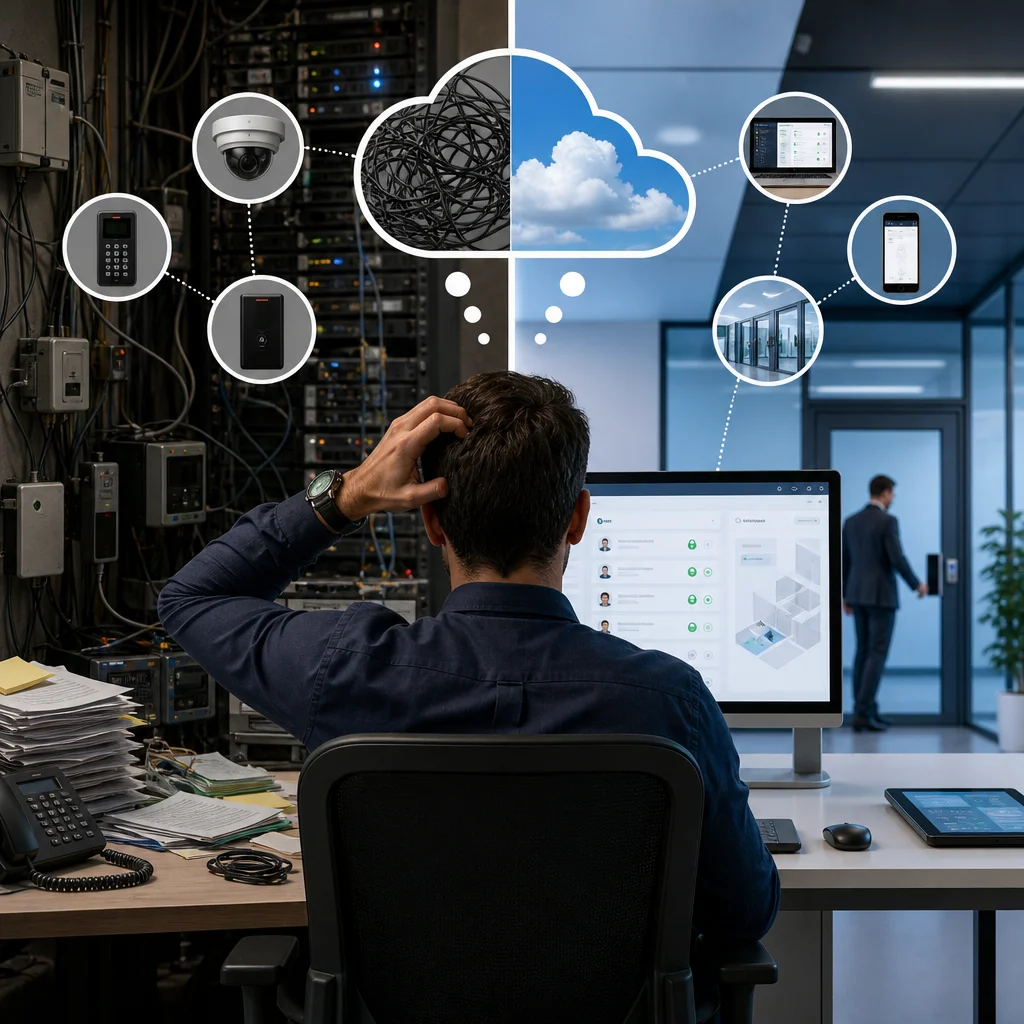
Your facility’s security posture depends on more than cameras alone. Threats have evolved beyond simple break-ins to include sophisticated access breaches, operational disruptions, and compliance violations. When security systems operate in isolation—cameras separate from access control, neither connected to your network infrastructure—you face blind spots, delayed response times, and fragmented data that makes incident investigation nearly impossible.
We’ve seen mid-sized facility managers struggle when their security vendor handles only cameras, while a separate contractor manages door locks, and neither system communicates with the other. The result is operational chaos: a suspicious entry caught on video has no access log to cross-reference, or an access violation triggers no visual recording. This fragmentation costs time, increases liability, and undermines your ability to respond effectively to incidents.
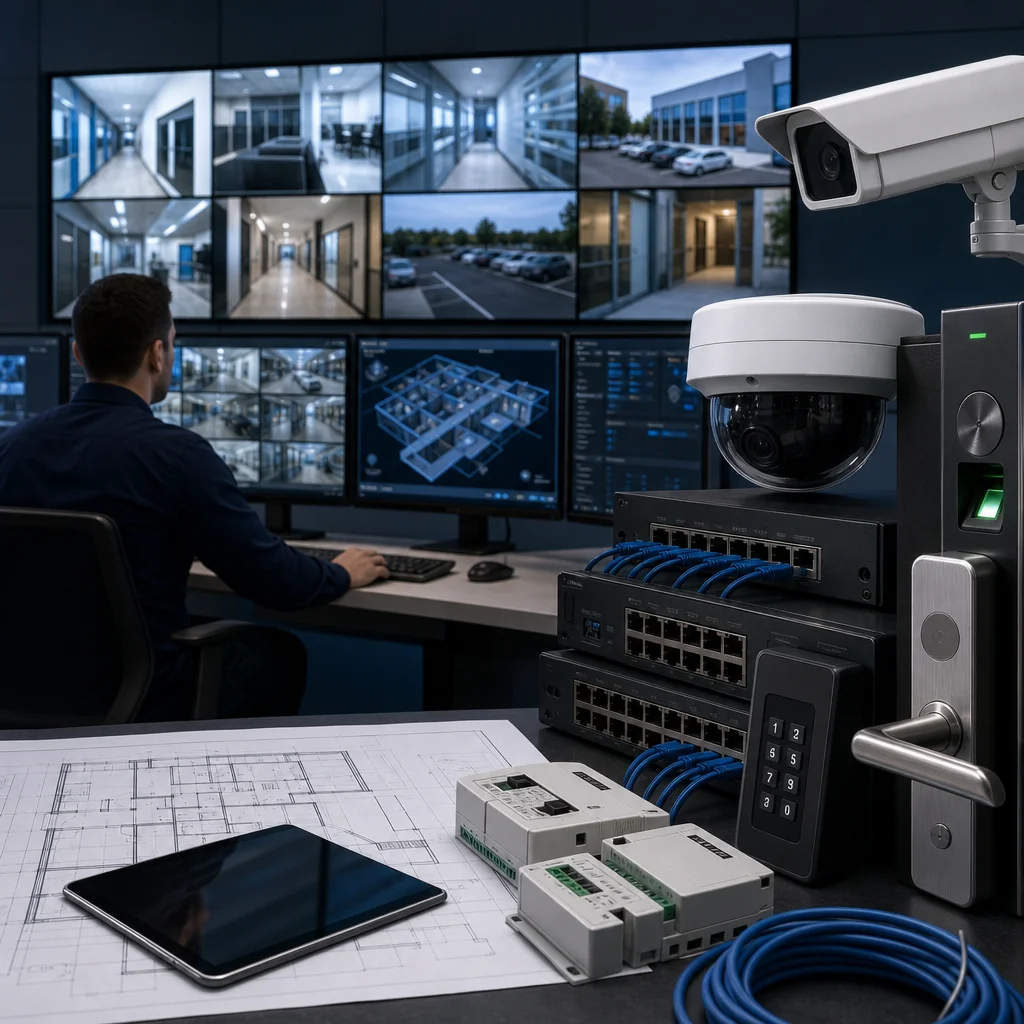
Modern facilities need security systems where every component works as a unified ecosystem. When your HD surveillance integrates seamlessly with access control, and both run on a properly engineered network backbone, you gain real-time visibility, faster investigation capabilities, and coordinated threat response. This integration also simplifies management—you’re not juggling multiple vendor relationships, training, or API workarounds.
For facility managers overseeing hotels, distribution centers, manufacturing plants, or healthcare environments, that integration isn’t optional anymore. It’s the foundation of enterprise-grade security.
Key Criteria for Evaluating Surveillance and Access Control Systems
Selecting the right business security surveillance systems requires looking beyond vendor marketing claims to evaluate what actually delivers operational value.
Start with reliability and uptime. In a hospitality environment or critical manufacturing facility, camera downtime during a security event could mean lost footage, unverified incidents, and compliance exposure. Evaluate the system’s redundancy features, backup power architecture, and whether the vendor offers monitoring that alerts you before problems cascade. Ask vendors about their mean time to repair (MTTR) and whether they provide on-site support in Southern California.
Resolution and coverage matching matter more than raw megapixel counts. A 32-megapixel camera pointed at a parking lot exterior wall captures wasted data. Instead, map your actual threat scenarios: staff areas, loading docks, points of entry, transaction zones. Then select camera types—dome, turret, PTZ (pan-tilt-zoom)—that match those specific needs. We typically recommend 4K resolution for detailed identification in high-risk zones and 2K for broader situational awareness.
Integration capability is non-negotiable. Your surveillance system must communicate with access control, and both should integrate with your network management tools. Proprietary, closed systems create vendor lock-in and prevent future flexibility. Open standards-based platforms allow you to add capabilities or adjust components without replacing your entire infrastructure.
Scalability should be built in from day one. Your facility may expand, new operational zones may require coverage, or you might add additional properties. The system architecture should support adding cameras, access points, and storage without redesigning the underlying framework.
Finally, evaluate total cost of ownership rather than purchase price alone. Hidden costs include installation labor, network equipment, structured cabling, ongoing maintenance contracts, and system management overhead. We recommend requesting a detailed implementation timeline and cost breakdown before committing.
Comprehensive HD Security Camera Installation and Management
HD security camera installation is where theory meets real-world facility challenges. A technically perfect camera system that’s poorly positioned or inadequately maintained becomes liability rather than asset.
We approach camera deployment strategically. After site assessment, we create a coverage map identifying specific threat vectors: entry points, unattended areas, high-value zones, and blind spots where unauthorized movement could occur. We then recommend specific camera types positioned to eliminate or minimize those blind spots. For a hotel property, this typically means coverage of guest corridors, back-of-house areas, loading docks, parking structures, and perimeter entry points—each with appropriate resolution and lighting capability.
Installation itself requires more than mounting cameras. Each camera needs secure power delivery (we recommend Power over Ethernet where feasible for simplified infrastructure), proper cable routing through existing conduits or new structured cabling runs, and position verification to confirm coverage before final mounting. Poor installation creates maintenance nightmares: cables resting against hot surfaces, cameras positioned where vibration causes focus drift, or inadequate weatherproofing allowing moisture ingress.
We handle the complete installation process, including any structured cabling infrastructure changes needed to support camera placement. This eliminates coordination headaches between contractors and ensures accountability for system performance.
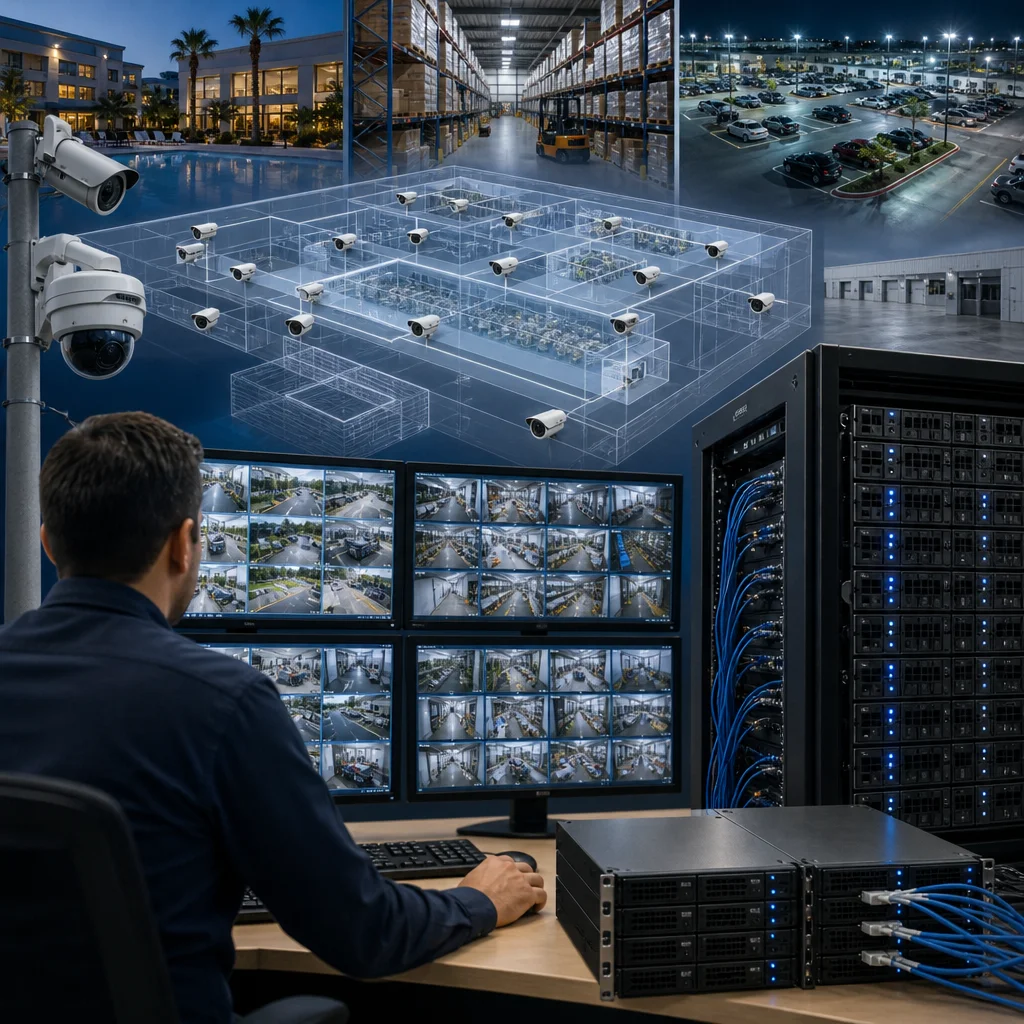
Storage and retention present ongoing management challenges. 24/7 HD video from multiple cameras generates massive data volumes. Cloud-based storage offers accessibility but creates bandwidth demands and recurring costs. Edge-based storage (cameras with onboard recording) reduces network load but limits centralized review. We typically recommend a hybrid approach: high-priority zones record at the edge for local availability and redundancy, while a network video recorder (NVR) maintains centralized searchable archives for investigation and compliance review.
Retention policies matter for both compliance and practical storage economics. Hospitality and healthcare facilities often need 30-90 days of continuous footage; distribution centers and manufacturing plants may require 90-180 days depending on incident response timelines. We size storage infrastructure to match your retention requirements rather than defaulting to generic specifications.
Advanced Access Control System Integration
Access control systems represent the enforcement layer of your security perimeter. When properly integrated with surveillance, they provide verifiable audit trails and enable response coordination that isolated systems cannot achieve.
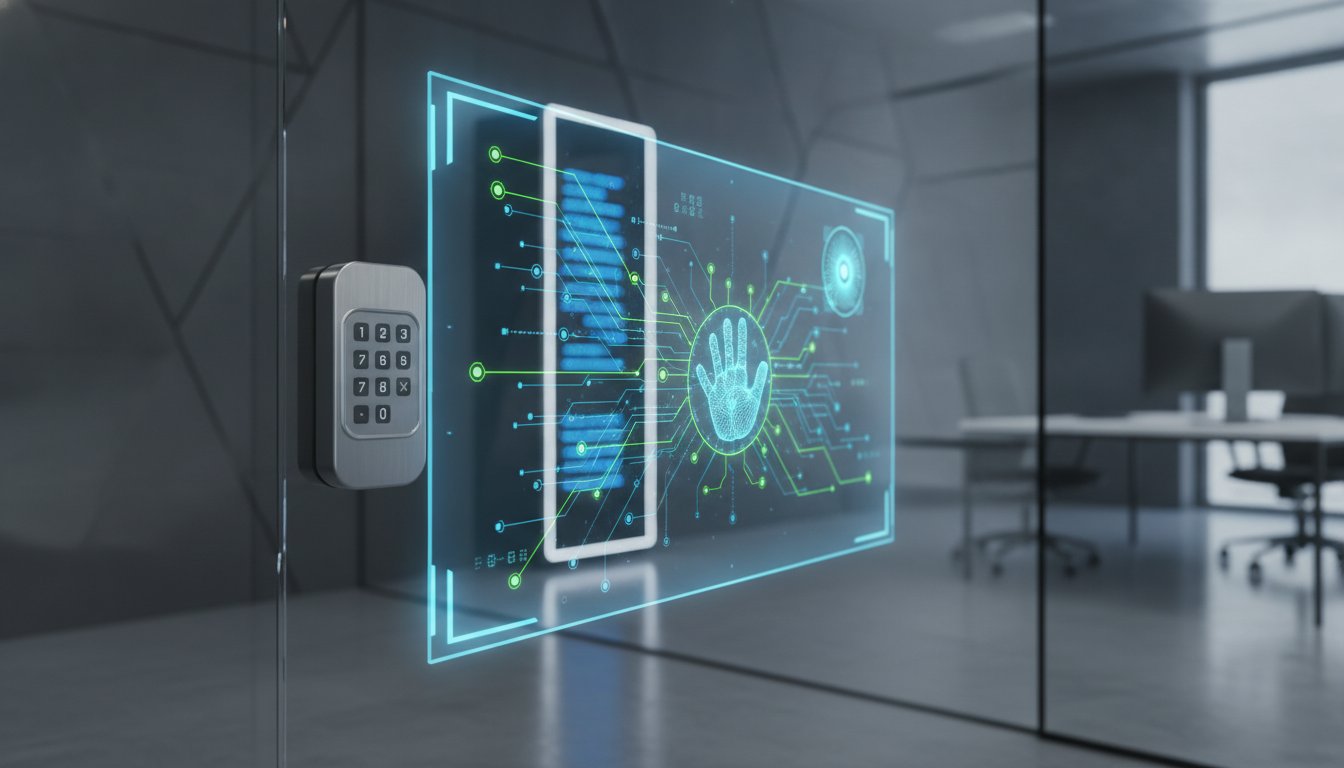
We design access control systems that go beyond simple badge readers. Multi-factor authentication (badge plus PIN, or badge plus biometric verification) raises the security bar significantly for sensitive areas. Role-based access—where a specific badge holder’s permissions change based on time of day, location, or event status—provides granular control without manual intervention.
Integration with surveillance creates powerful investigative capabilities. When an access event occurs, the system automatically logs the timestamp, cardholder identity, access point location, and whether the attempt was granted or denied. Simultaneously cross-reference that against surveillance footage from that location and you have indisputable evidence of who accessed what area and when. This integration is critical for incident investigation and also serves as a powerful deterrent—authorized personnel know access events are recorded both electronically and visually.
We’ve integrated access control with video surveillance for hotel chains managing high-security zones, healthcare facilities tracking authorized personnel in restricted areas, and manufacturing plants preventing unauthorized equipment access. The operational benefits include reduced time spent reviewing footage to verify identity, immediate flagging of access violations, and automated alerts when unauthorized entry attempts occur.
Access control video integration requires proper network architecture and careful system design. The access control system must communicate reliably with the surveillance system, and both must operate on a network infrastructure designed to handle the traffic loads and latency requirements. This is where many facility managers encounter problems when they’ve chosen incompatible vendors or inadequate network infrastructure.
Network Infrastructure Supporting Enterprise Security
Your security system is only as reliable as the network carrying its data. A modern surveillance system might generate 5-15 megabits per second per camera depending on resolution and frame rate. An access control system generates far less bandwidth but requires ultra-low latency to function responsibly. Combined, these systems demand network architecture that handles capacity, prioritizes traffic appropriately, and maintains redundancy.
We design dedicated network segments for security systems rather than running them across your general business network. This architectural separation provides several benefits: security traffic doesn’t compete with email and application traffic for bandwidth, security systems remain accessible even if your primary business network experiences issues, and you can apply security policies appropriate for access control data without affecting user workstations.
Network switches connecting security devices need specifications beyond standard office networking. We specify industrial-grade equipment rated for 24/7 operation, featuring redundant power supplies, managed switching capabilities to prioritize traffic, and sufficient uplink capacity to prevent bottlenecks. For larger facilities, we implement network segmentation using VLANs to further isolate security traffic and control which devices can communicate with one another.
Power delivery infrastructure often gets overlooked but proves critical when incidents occur. All network switches, access control readers, and centralized recording equipment should operate on uninterruptible power supplies (UPS) with sufficient runtime to maintain security operations during brief outages. For critical facilities, we recommend generator-backed UPS systems ensuring days of operation during extended power loss.
Redundancy becomes increasingly important as your facility expands. A single network switch connected to all cameras creates a critical failure point. Instead, we design systems with redundant paths: multiple switches, diverse cable routes, and backup connectivity ensuring that localized failures don’t compromise facility-wide security.
Structured Cabling for Reliable Security Operations
Enterprise-grade security systems demand structured cabling infrastructure that outlasts component technology and adapts to future expansion. Ad-hoc cabling approaches—running camera cables through walls, sharing conduits with electrical wiring, or relying on wireless connections for critical devices—create fragility that compounds over time.
We design and install structured cabling systems specifically engineered for security applications. This includes dedicated conduit runs from camera locations back to the central equipment room, proper separation from high-voltage electrical infrastructure to prevent interference, and cable pathways that accommodate future expansion without requiring major renovation.
Fiber optic cabling becomes essential for long-distance runs (beyond 100 meters) or environments with significant electrical noise. While copper Ethernet dominates short-distance runs due to lower cost and Power over Ethernet capability, fiber eliminates concerns about electromagnetic interference and provides essentially unlimited bandwidth for future upgrades.
For detailed guidance on infrastructure design, our structured cabling guide walks through specifications, installation standards, and compliance considerations specific to modern facilities.
Proper cabling infrastructure reduces maintenance emergencies and supports the system longevity you need. When cables are organized, properly documented, and protected from environmental stress, failures become rare planned maintenance rather than crisis events. This translates directly to operational continuity and cost predictability.
System Scalability and Growth Flexibility
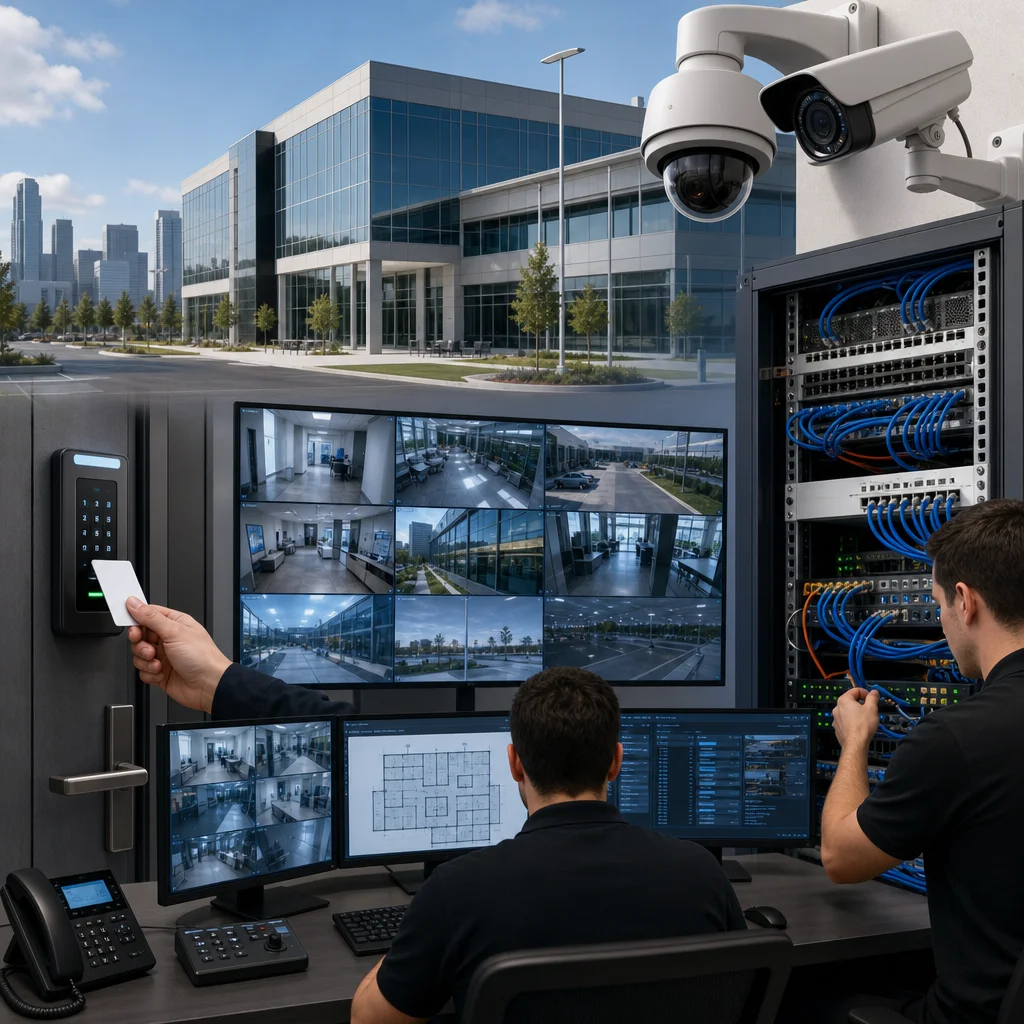
Your facility security system should grow with your organization without requiring fundamental redesign. Too many businesses discover midway through expansion that their initial system architecture creates obstacles: insufficient network capacity for additional cameras, inadequate storage expansion capability, or access control infrastructure that doesn’t scale to new entrances and zones.
We design systems assuming growth. This means building in capacity overhead, selecting equipment with proven upgrade pathways, and architecting network infrastructure that expands through adding components rather than replacement. A modular approach—where you can add storage, network capacity, and access points without touching existing infrastructure—prevents the “rip and replace” scenarios that plague many facilities.
We also maintain long-term vendor relationships ensuring that when you’re ready to expand, components remain available and compatible. This matters more than facility managers realize: a perfectly functional camera model discontinued five years ago may become impossible to source for replacement or expansion purposes. We prioritize vendors committed to product longevity and backward compatibility.
Scalability also addresses your team’s ability to manage increasing system complexity. As you add cameras, zones, and users, management overhead can grow exponentially if the system interface remains manual or poorly designed. We implement systems with intuitive management dashboards, automated alerting, and role-based access so your security team can manage larger systems without proportional staff increases.
Our End-to-End Security Implementation Approach
We treat facility security as an integrated strategic initiative rather than a series of disconnected hardware installations. Our implementation process reflects this:
Initial Assessment. We conduct comprehensive facility walkthroughs identifying threat vectors, existing infrastructure limitations, future expansion areas, and specific compliance requirements. We don’t propose solutions until we fully understand your operational reality.
Design and Planning. Based on the assessment, we develop detailed system designs including camera placement diagrams, access control zone layouts, network architecture specifications, and structured cabling plans. You review and approve designs before any installation begins, ensuring alignment with your requirements and expectations.
Infrastructure Preparation. We handle all cabling, network equipment installation, and power infrastructure setup. This happens before cameras or access control devices arrive, preventing installation coordination headaches and ensuring infrastructure is field-verified before we mount security devices.
Device Installation and Configuration. We install all cameras, access control equipment, and centralized recording infrastructure, then configure each device with appropriate settings for your facility’s specific needs. Configuration includes everything from camera resolution and frame rates to access control policies and user permissions.
Integration and Testing. We integrate all components—surveillance with access control, both with network management tools—and thoroughly test system behavior across normal operations and failure scenarios. You participate in testing to confirm the system operates per your requirements.
Staff Training and Handoff. We train your security team on day-to-day system operation, investigation workflows, maintenance procedures, and how to respond to common situations. Documentation we provide becomes your reference for ongoing management.
Ongoing Support. We provide monitoring and maintenance ensuring your system remains operational. This includes proactive monitoring for equipment issues, planned maintenance scheduling, and rapid response when incidents occur.
ROI and Operational Efficiency Gains
Security system ROI extends far beyond theft prevention. For hospitality properties, a robust security system reduces liability exposure from incidents that occur on your property—investigations are faster, evidence is preserved, and guest safety is demonstrable. For manufacturing and distribution facilities, access control integration prevents unauthorized personnel access to restricted areas and hazardous zones, reducing worker safety incidents and regulatory exposure.
Operational efficiency gains emerge throughout your facility. Guest check-in at hotels becomes faster when access control systems automatically provision temporary credentials. Inventory management in distribution centers improves when access logs verify who accessed specific storage areas and when. Staff scheduling becomes more flexible when you can grant temporary access permissions without physical badge replacement.
Investigation speed delivers tangible value when incidents occur. With integrated surveillance and access control, a suspected theft investigation that might require hours of footage review and manual cross-referencing takes minutes. You identify precisely who was in the area, which access points they used, and what occurred. This speed translates to faster closure, reduced disruption to operations, and sometimes prevention of recurring incidents.
We’ve seen facilities reduce security incident response time by 60-70% after implementing integrated systems, along with significant reductions in false alarms and operational disruptions from security-related investigations.
Why Terapixels Systems Is Your Definitive Security Partner
We’ve spent years implementing business security surveillance systems across Southern California’s most demanding facilities. That experience informs everything we deliver.
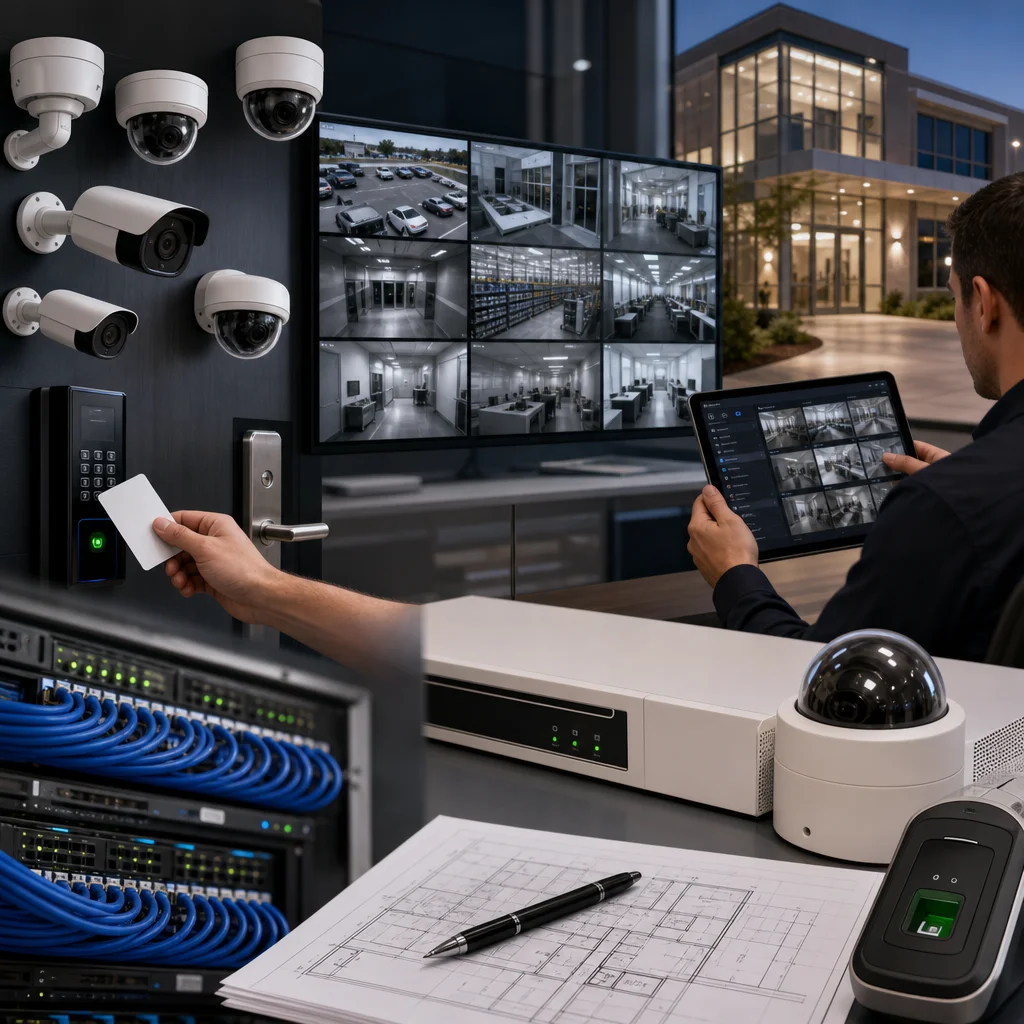
We design systems specifically for the operational realities of hospitality properties, healthcare facilities, manufacturing plants, and distribution centers. We understand that your security system must support guest or patient experiences while remaining transparent to daily operations. We understand that some facilities operate 24/7 and that security downtime isn’t an option. We understand that a distribution center requires completely different security coverage priorities than a hotel.
Our team handles the complete integration challenge that confounds facility managers: we don’t just install cameras, then hand off integration to an access control vendor, then hire another firm for network infrastructure. We architect the entire system as an integrated whole, ensuring every component works in concert and that responsibility for performance is single-threaded through our organization.
We’re invested in Southern California. We provide on-site support, local expertise navigating facility-specific challenges, and relationships with property management teams and facility directors that let us understand your evolving needs. When an incident occurs at 2 AM, we have technicians available, not contractors responding from distant locations.
We’re committed to long-term partnerships, not transactional projects. We design systems for longevity and expansion, maintain proactive monitoring to catch issues before they disrupt operations, and provide training and documentation that makes your security team truly independent operators of your system.
Getting Started With Your Facility Security Assessment
Your next step is a comprehensive security assessment. During this process, we’ll conduct site visits, document existing infrastructure, identify gaps between current capability and your security requirements, and develop initial recommendations and budgeting.
We approach assessments without presumption. Many facility managers believe they need specific solutions when the actual requirement differs substantially. Our assessment methodology ensures you’re funding solutions addressing real threats, not generic security industry solutions.
Assessment includes time to discuss your specific operational challenges. If you manage hotel properties with high guest turnover and temporary access requirements, that drives access control decisions differently than a manufacturing facility with permanent staff roles. If your facility operates continuous operations, our design priorities differ from properties with business-hours operation.
We also discuss your team’s technical sophistication and time availability for system management. A facility with dedicated IT staff can operate more complex systems than one relying on facility managers with limited technical background. We right-size the system to what your organization can realistically support.
Next Steps to Secure Your Organization
Your facility’s security posture depends on integrated systems engineered specifically for your operational requirements and facility characteristics. Generic solutions and cobbled-together vendor relationships create operational friction and limit your ability to respond to incidents effectively.
We invite you to contact us for a comprehensive security assessment. During this engagement, we’ll identify your specific security needs, propose integrated solutions addressing them, and provide budgeting and timeline estimates for implementation.
A proper assessment costs nothing and requires only a few hours of your time. You’ll receive detailed recommendations, cost proposals, and implementation timelines. You’ll understand precisely what integrated security looks like for your facility type and scale.
Contact Terapixels Systems to schedule your facility security assessment. We’ll help you transform fragmented security components into the integrated system your operation needs.
Frequently Asked Questions (FAQ)
What makes an integrated security and IT infrastructure solution better than managing multiple vendors?
We consolidate your security cameras, access control, network management, and structured cabling under one unified system and partner. This approach eliminates compatibility issues, reduces response times when problems occur, and gives you a single point of contact for your entire technology stack. Our integrated approach also ensures that your security infrastructure scales seamlessly as your facility grows without vendor conflicts or data silos.
How does our structured cabling infrastructure support enterprise-level security operations?
We design and install structured cabling systems that provide the reliable backbone your HD cameras, access control terminals, and monitoring systems depend on. Properly engineered cabling minimizes latency, ensures redundancy, and allows us to scale your security infrastructure without costly retrofits. Our approach means your security systems maintain consistent performance even during peak usage or when you expand to new areas of your facility.
Can we upgrade or expand our security system as our business grows?
We build scalability into every system we implement, so adding new cameras, access points, or network capacity requires minimal disruption to your operations. Our infrastructure is designed to grow with you, whether you’re adding another floor, expanding to a new location, or increasing your security monitoring requirements. We handle the technical planning upfront so future growth becomes a straightforward addition rather than a complete overhaul.