CONTACT US
Table of Contents
- 1. Keyless Entry Systems: Eliminating Physical Key Vulnerabilities
- 2. Cloud-Based Access Management: Centralized Control Across Locations
- 3. Multi-Factor Authentication Integration: Strengthening Security Layers
- 4. Real-Time Audit Trails: Monitoring Access Activity Automatically
- 5. Seamless Mobile Integration: Managing Security From Your Smartphone
- 6. Scalability for Growing Organizations: Adding Doors Without Complexity
- 7. Integration With Existing Security Infrastructure: Unifying Your Systems
- Frequently Asked Questions (FAQ)
1. Keyless Entry Systems: Eliminating Physical Key Vulnerabilities
Managing access across multiple facilities demands more than traditional locks and key management. We’ve worked with hospitality groups, warehouses, distribution centers, and manufacturing facilities across Southern California, and we know that outdated access control creates blind spots, audit nightmares, and operational friction. Enterprise Bluetooth door locks solve these problems by replacing mechanical vulnerabilities with intelligent, auditable systems that scale with your organization.
Here are the seven critical capabilities that separate enterprise-grade Bluetooth locks from consumer alternatives, and why they matter for your security strategy.
Physical keys represent a fundamental security liability. Lost keys, unauthorized copies, and the inability to instantly revoke access create exposure that no amount of monitoring can fully address. When we install keyless Bluetooth systems, our clients immediately eliminate this entire category of risk.
Bluetooth door locks use credential-based access instead. Employees authenticate with mobile credentials, keypads, or proximity cards that you can disable instantly without replacing hardware. A departing team member’s access vanishes the moment they’re terminated, not when someone remembers to collect their key.
This shift also eliminates key replacement costs. Traditional commercial locks require physical rekeying when access needs change, which is both expensive and slow. Bluetooth systems update permissions through software in seconds. For a 200-door facility adding or removing employees monthly, this operational efficiency compounds quickly.
Our clients in hospitality and distribution report a 60-70% reduction in access control-related operational overhead after implementing keyless systems. The tangible benefit: faster guest and employee onboarding, fewer unauthorized access incidents, and zero lost-key emergencies.
Actionable next step: Audit your current key distribution process. Count how many physical keys are in circulation, how many people hold master keys, and how long it takes to issue or revoke access for new hires or departures.
2. Cloud-Based Access Management: Centralized Control Across Locations
Operating multiple facilities creates coordination nightmares when each location manages its own access system independently. When a manager at your Northern California warehouse needs to grant temporary access to an auditor, should they really need to call another facility and wait for manual coordination?
Our cloud-based access control services eliminate this friction entirely. A single administrative dashboard controls every door, every facility, and every access policy from one interface. Your security team in Los Angeles can provision access for employees across your entire network simultaneously.
This centralization delivers immediate business value:
- Consistent policy enforcement across all locations, reducing compliance risk
- Real-time visibility into who accessed which doors at which facilities
- Instant emergency lockdowns during security incidents without location-by-location communication delays
- Simplified vendor management through unified reporting and system updates
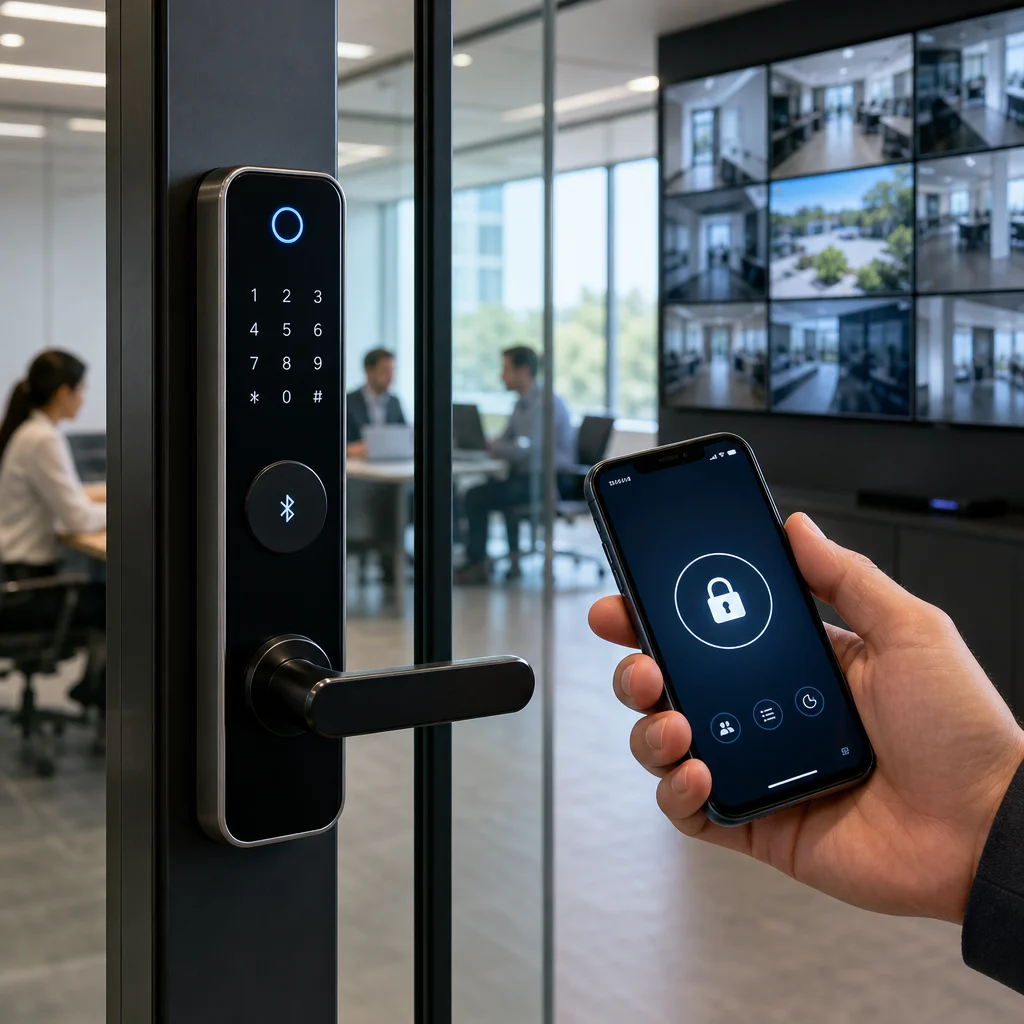
For hotel groups managing dozens of properties, this centralized control transforms access management from a fragmented manual process into an automated, auditable operation. Each property maintains local operational control while corporate security leadership maintains oversight.
We’ve helped large hospitality chains eliminate the coordination lag that previously cost them 15-20 hours monthly of administrative effort. More importantly, cloud-based management creates the foundation for everything that follows.
Actionable next step: If you manage multiple locations, document your current inter-facility access coordination process. Time how long requests take to fulfill and count how many manual touchpoints exist.
3. Multi-Factor Authentication Integration: Strengthening Security Layers
A single credential method, even a sophisticated one, creates a concentrated vulnerability. If someone compromises a mobile credential or a keycard, they’ve defeated your entire access layer. Enterprise security demands layered authentication.
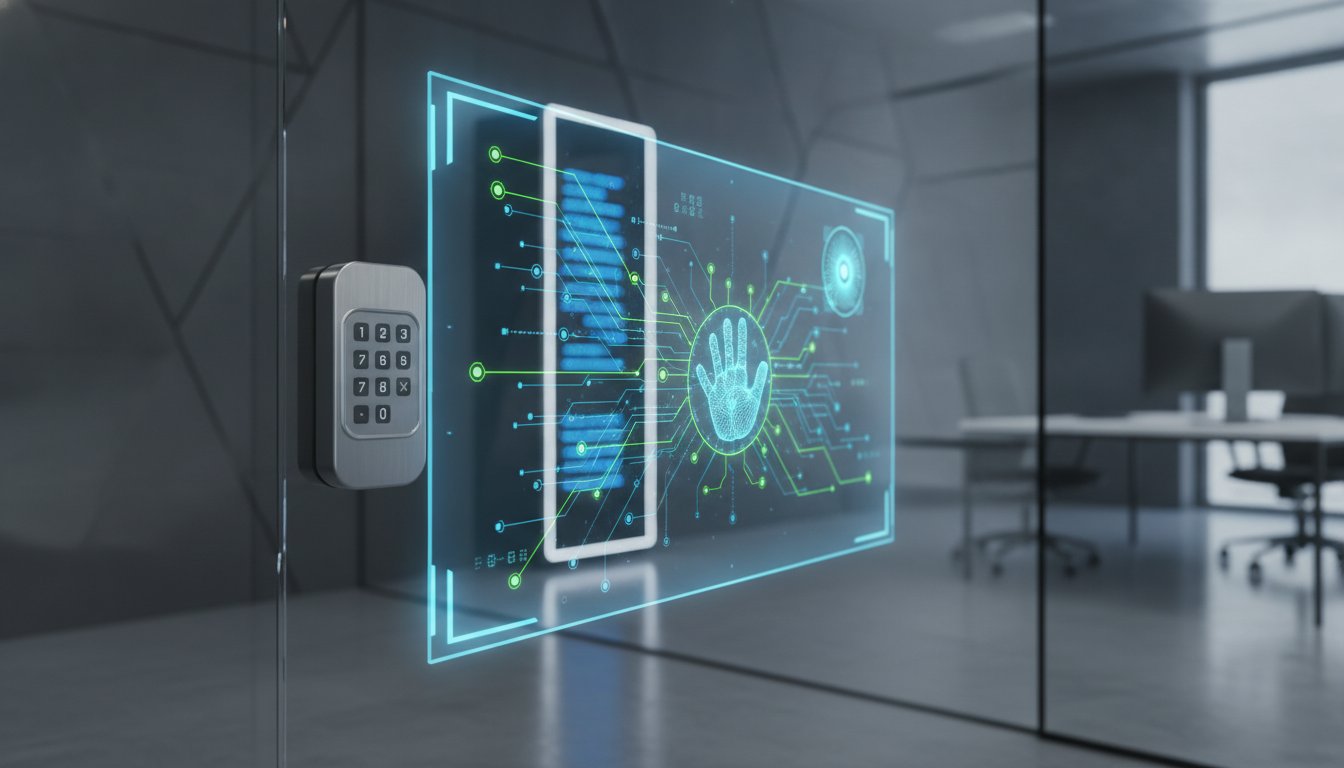
Bluetooth locks that support multi-factor authentication require two or more proof points before granting access. Common combinations include mobile credential plus PIN, mobile credential plus biometric scan, or keycard plus facial recognition. This means compromising one factor doesn’t grant unauthorized access.
For sensitive areas within your facility, this defense-in-depth approach is essential. Consider a pharmaceutical warehouse where only authorized personnel should enter restricted storage. Multi-factor authentication ensures that even if a credential is compromised, a thief still cannot enter without the second factor.
Manufacturing facilities and distribution centers particularly benefit from MFA integration at loading docks, server rooms, and executive areas. The security lift is meaningful, and implementation complexity remains manageable when your Bluetooth locks natively support multiple authentication methods.
When we design access control for our clients, we segment facilities by risk level. Public areas might use single-factor mobile credentials for convenience. Restricted zones require MFA. High-security areas add a third factor. This tiered approach maintains usability while significantly elevating security posture.
Actionable next step: Map your facility by access sensitivity. Identify which areas house your most valuable assets, confidential information, or safety-critical systems. These become your MFA priority zones.
4. Real-Time Audit Trails: Monitoring Access Activity Automatically
Compliance and incident investigation both depend on complete, trustworthy access logs. When someone gains unauthorized entry or sensitive materials go missing, the audit trail answers critical questions: who accessed this space, when, and what did they access afterward?
Enterprise Bluetooth locks generate immutable digital records of every access attempt, successful or failed. These logs automatically sync to your cloud system and remain tamper-proof. No manual log sheets. No guessing. No gaps.
This capability becomes invaluable during security incidents. A suspected breach? Your audit trail tells you exactly which doors were accessed, in what sequence, and by which credentials. Investigation time compresses from days to hours. Forensics teams have the data they need immediately.
Regulatory compliance also improves dramatically. If you operate a hospitality property, distribution center, or regulated manufacturing facility, you likely face audit requirements. Automated audit trails that document access, MFA authentication, and credential revocation satisfy these requirements with evidence that’s verifiable and timestamped.
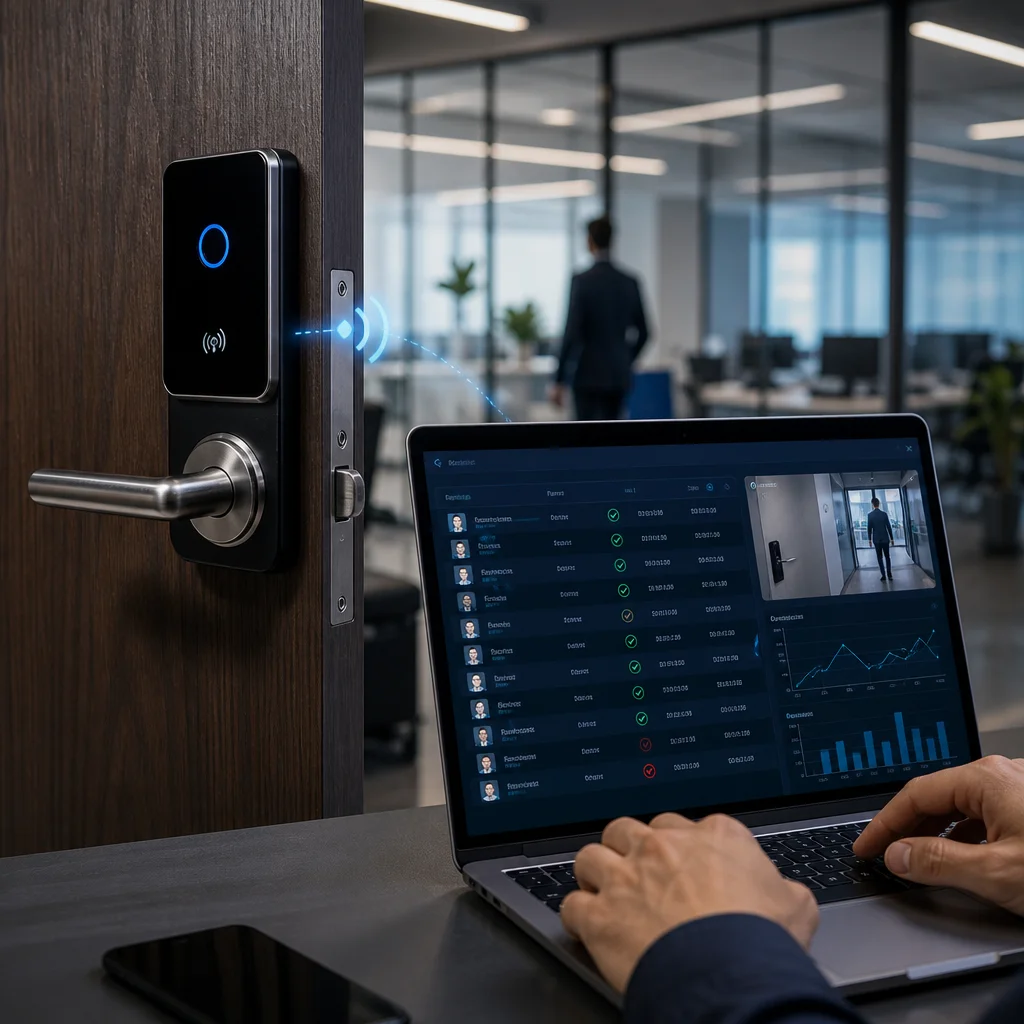
We’ve worked with clients who discovered unauthorized access only after reviewing their audit logs proactively. The locks themselves prevented the actual compromise, but the logs provided evidence that led to personnel action and process improvement.
Actionable next step: Review your current audit documentation process. Determine whether your existing system generates searchable, timestamped logs that would satisfy a compliance auditor or security investigation.
5. Seamless Mobile Integration: Managing Security From Your Smartphone
Your security team shouldn’t be tethered to a desk to grant access or respond to security situations. Modern enterprise Bluetooth locks sync with mobile applications that let administrators manage access from anywhere, instantly.
A tenant calls your property manager asking for emergency access before their scheduled arrival. Instead of waiting for someone to drive to the facility or coordinate through multiple channels, your property manager approves access through their phone in 30 seconds. The tenant receives a temporary digital credential, and access is granted. No friction. Full audit trail.
During security incidents, this mobile capability accelerates response. If an alarm triggers or unauthorized access is detected, your security team can immediately lock all doors, revoke credentials, or allow first responders access from remote locations. Response time matters when security is at stake.
We’ve equipped our clients’ security teams with mobile-first access management, and it transforms how quickly they respond to operational requests and security events. For hotel groups managing guest experiences, this responsiveness also improves service delivery. Guests receive access without waiting, and front desk operations remain lean.
Actionable next step: Assess your current approval workflow for emergency access requests. Identify how many steps exist between request and approval, and how long the current process typically takes.
6. Scalability for Growing Organizations: Adding Doors Without Complexity
As your organization grows, adding new facilities or expanding existing ones shouldn’t require overhauling your entire access control infrastructure. Enterprise Bluetooth locks scale gracefully from dozens to thousands of doors without architectural changes.
When we design systems for our clients, scalability is built in from day one. Adding a new wing to your warehouse or a new floor to your facility means provisioning additional Bluetooth locks and integrating them into your existing cloud infrastructure. No system redesign. No migration complexity. The new locks inherit all your existing policies, audit requirements, and security configurations.
This scalability extends beyond quantity. As your organizational structure evolves, policies need to change. Teams are created, eliminated, or restructured. With cloud-based Bluetooth locks, you adjust access policies for groups of employees instantly. Thirty people change departments? Update the department access rule once, and all related door access updates automatically.
We’ve helped manufacturing and distribution clients expand operations rapidly while maintaining consistent security posture. The system grows with you, not against you.
Actionable next step: Project your facility expansion plans for the next 2-3 years. Consider how your access control system would need to adapt to support those changes, and whether your current approach can scale without major reinvestment.
7. Integration With Existing Security Infrastructure: Unifying Your Systems
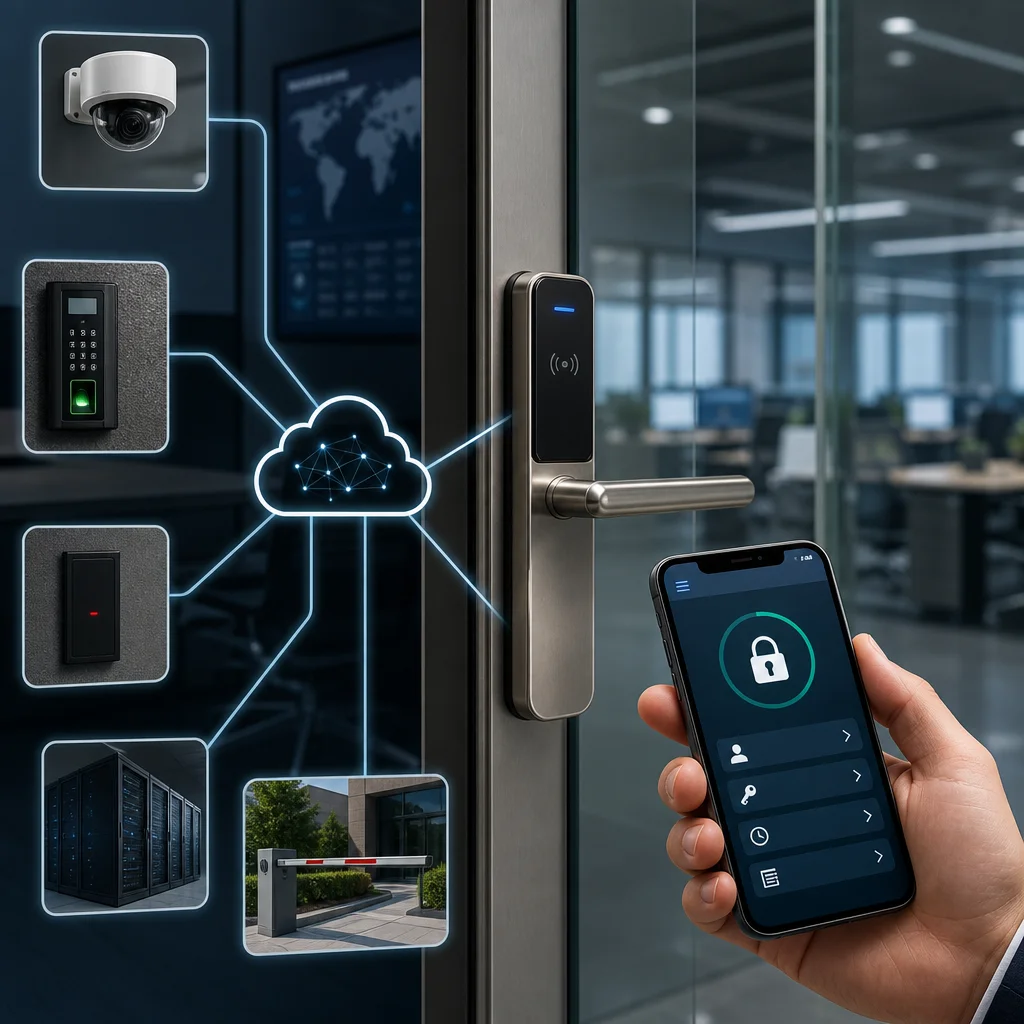
Enterprise security isn’t just about door locks. It encompasses cameras, alarm systems, visitor management, and badge readers. When these systems operate independently, you lose visibility and coordination. Enterprise Bluetooth locks that integrate with your broader security infrastructure create a unified ecosystem.
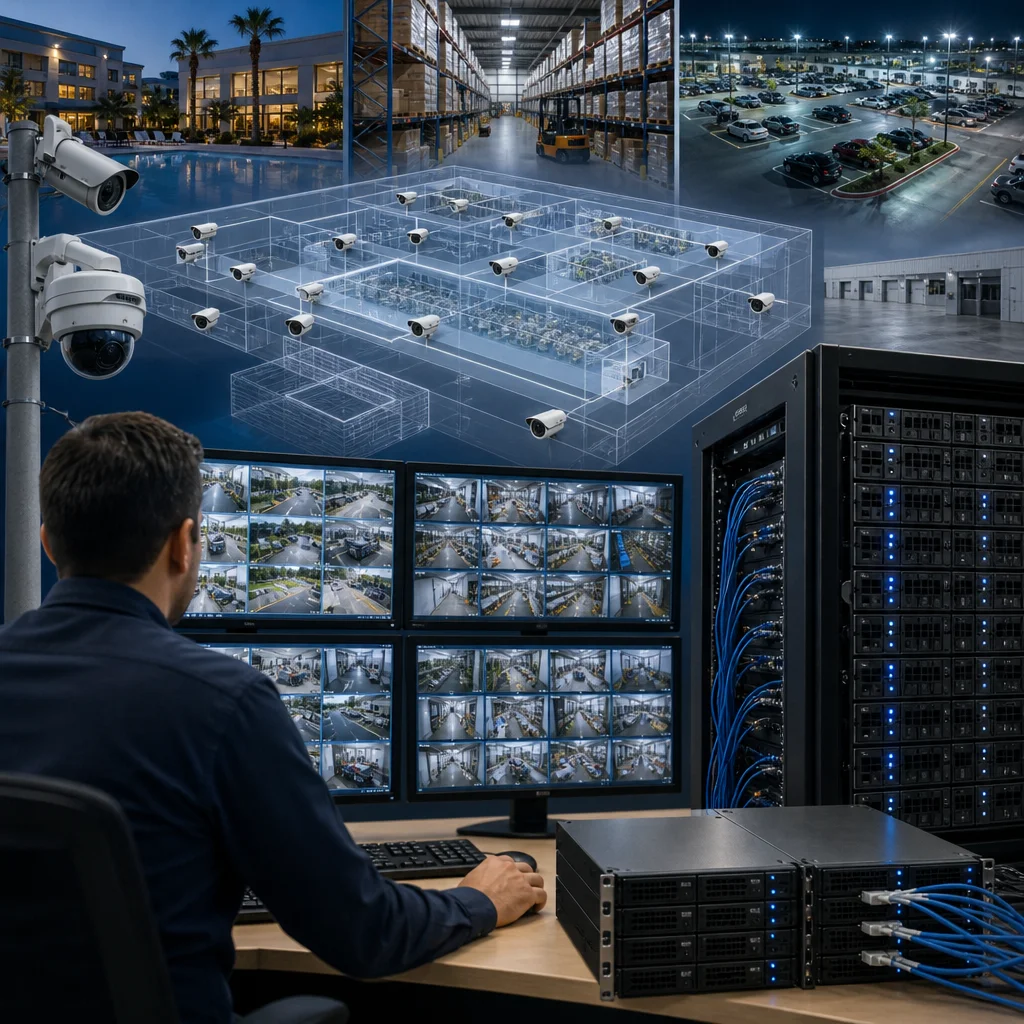
We specialize in integrating Bluetooth access control with HD security cameras, visitor management systems, and alarm infrastructure. When someone enters a restricted area via Bluetooth unlock, that event automatically triggers camera recording and logging. If the alarm system detects a breach, it can automatically trigger Bluetooth locks to lock down the facility.
This integration transforms your security infrastructure from a collection of tools into a coordinated system. Rather than manually correlating camera footage with access logs, the systems speak to each other. Security response becomes faster, investigations become more complete, and incident detection improves.
For hospitality properties, this integration means guest experience and security work together. Bluetooth lock events trigger cameras in hallways. Room access attempts generate alerts if patterns deviate from normal. Audit logs show complete guest and staff movement without manual effort.
At Terapixels Systems, integration is our core strength. We design, install, and manage end-to-end security ecosystems that combine structured cabling, network infrastructure, Bluetooth access control, HD cameras, and managed IT services into one cohesive solution. You get one vendor, one unified system, and one point of accountability for your entire security infrastructure.
Actionable next step: Document your current security system ecosystem. List every tool your organization uses (cameras, locks, alarms, visitor systems, badge readers), then identify data points that could improve security if these systems communicated.
—
Enterprise Bluetooth door locks represent the modern standard for organizational access control, but the real advantage emerges when they’re implemented as part of a comprehensive, integrated security strategy. We’ve guided hotel groups, warehouses, distribution centers, and manufacturing facilities through this transformation, and the results are consistent: faster operations, stronger security, better compliance, and significantly lower administrative burden.
If your organization is managing multiple facilities or growing beyond your current access control capacity, we recommend a security assessment to evaluate how Bluetooth locks and modern access control can improve your operation. Reach out to discuss your specific security requirements and how we can unify your systems into a single, manageable, scalable infrastructure.
Frequently Asked Questions (FAQ)
How do we integrate enterprise Bluetooth door locks with our existing security infrastructure?
We design our access control implementations to work seamlessly with your current systems, including HD security cameras, structured cabling, and network infrastructure. Our team conducts a thorough assessment of your existing setup and configures the Bluetooth locks to communicate through your network management platform, creating a unified security ecosystem rather than isolated point solutions.
What happens if our organization expands to multiple locations across Southern California?
We build scalability into every deployment from the start, so adding new facilities doesn’t require rebuilding your access control system. Our cloud-based management platform lets us provision additional doors and locations quickly while maintaining consistent security policies across all your properties. You’ll manage access for every location from a single dashboard without the complexity of managing separate systems.
Can we monitor real-time access logs and audit trails for compliance purposes?
Yes, we implement comprehensive audit logging that automatically tracks every access attempt, including timestamps, user identity, and authentication method. This data flows into your centralized management system and remains accessible for compliance reviews, security investigations, or facility audits whenever you need it.