CONTACT US
Table of Contents
- Why Mid-Sized Businesses Struggle with Fragmented Security Systems
- How Power over Ethernet Simplifies Your Security Infrastructure
- Our End-to-End PoE Camera Installation Approach
- Scalability Built Into Your System Design
- Integration with Access Control and IT Infrastructure
- Cost Efficiency and Long-Term ROI of PoE Technology
- Our Installation Process and Minimal Disruption Guarantee
- Security Monitoring That Grows With Your Business
- Why Choose Our Managed Security Services Partnership
- Frequently Asked Questions (FAQ)
Why Mid-Sized Businesses Struggle with Fragmented Security Systems
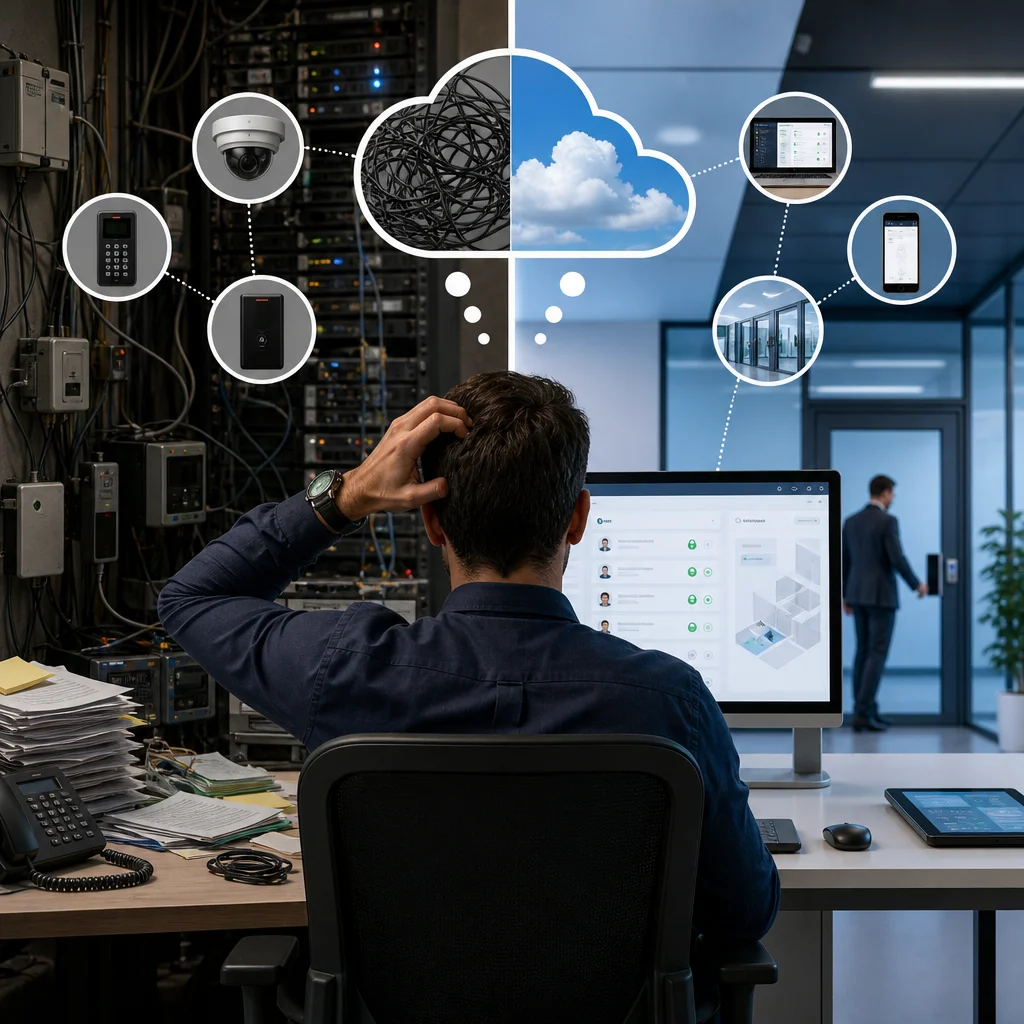
Most mid-sized facilities across Southern California operate with security infrastructure that evolved organically rather than strategically. Your organization might have analog cameras installed a decade ago, an access control system from a different vendor, and IT networking handled by yet another provider. When something breaks, you’re calling three separate companies. When you need to add coverage to a new wing, nobody agrees on the technical specifications.
This fragmentation creates real operational problems. Security camera footage doesn’t integrate with door access logs, so investigating an incident requires pulling data from multiple systems and manually correlating timestamps. Network visibility becomes complicated because your security infrastructure runs separately from your IT backbone. Troubleshooting takes longer because no single technician understands the full environment.
The real cost isn’t just inconvenience. It’s the security gaps that emerge when systems don’t communicate, the compliance headaches when you can’t produce unified audit trails, and the capital inefficiency of maintaining separate infrastructure for what should be one cohesive security environment.
We see this pattern repeatedly across hospitality properties, distribution centers, manufacturing facilities, and clinical environments. The organizations that operate most efficiently have consolidated their security, access control, and IT infrastructure into a unified network architecture.
How Power over Ethernet Simplifies Your Security Infrastructure
Power over Ethernet (PoE) technology transforms how you deploy professional surveillance by combining power delivery and network connectivity into a single cable run. Instead of running separate electrical lines and network cables to each camera location, a single Cat6A or Cat6 cable supplies both power and high-bandwidth data from your network switch.
This single-cable approach eliminates complexity at the infrastructure level. Your electricians don’t need to negotiate separate conduit runs. Your network technicians work with a unified cabling plant. Your facility managers see one system instead of two.
PoE also brings standardization. Every device on your network speaks the same language and communicates through the same infrastructure. When you need to add new cameras, integrate access control readers, or expand coverage, you’re always working within the same framework rather than hunting for compatible equipment across vendor ecosystems.
The technology itself is mature and enterprise-grade. PoE switches deliver consistent power (typically 30-90 watts per port depending on the standard) with built-in safeguards against power surges and overcurrent conditions. Modern PoE cameras and access control devices are designed to work reliably in demanding environments: outdoor parking areas in Southern California heat, high-traffic interior spaces, and sensitive spaces requiring precise lighting conditions.
One practical example: a mid-sized hotel chain we work with needed to upgrade surveillance in guest corridors, parking structures, and loading areas. Instead of coordinate separate contractors for power installation and network cabling, we deployed a unified PoE infrastructure that simplified project management, reduced installation time by 40%, and left them with a single point of contact for ongoing management.
Our End-to-End PoE Camera Installation Approach
We design and install professional PoE security camera systems with enterprise-level infrastructure and attention to long-term operational requirements. Our process starts well before camera placement.
Infrastructure Assessment and Design
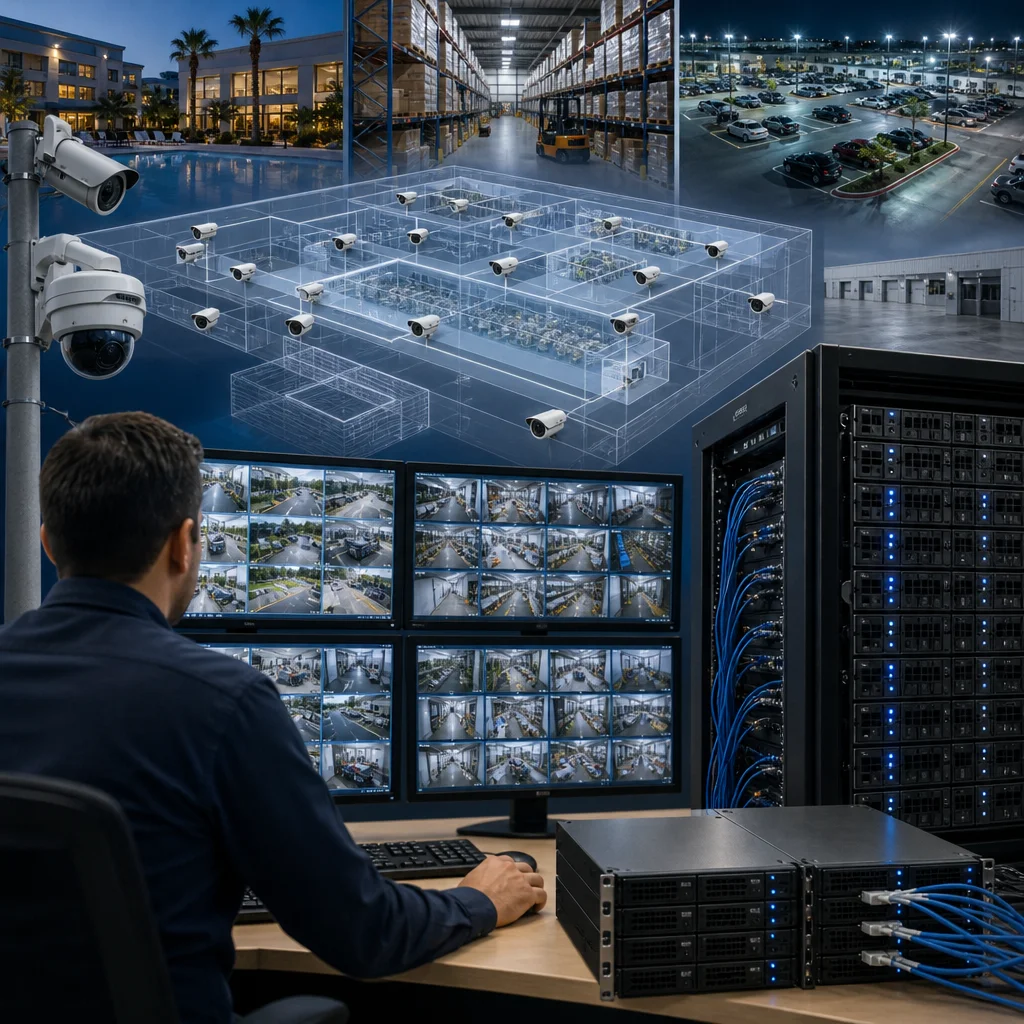
We begin by mapping your facility’s physical layout, identifying security objectives for each zone, and evaluating your existing network infrastructure. For a distribution center, this means understanding traffic patterns, loading dock operations, and inventory storage areas. For a hotel property, we’re assessing guest areas, back-of-house operations, and perimeter security. We’re not just counting cameras; we’re building a security architecture aligned with your operational reality.
During this phase, we determine PoE power budget requirements, optimal switch placement, and cable routing that respects both technical needs and facility aesthetics. We verify that your current network infrastructure can support the bandwidth and power demands of a professional surveillance deployment, or we recommend upgrades if necessary.
Professional Installation and Network Integration
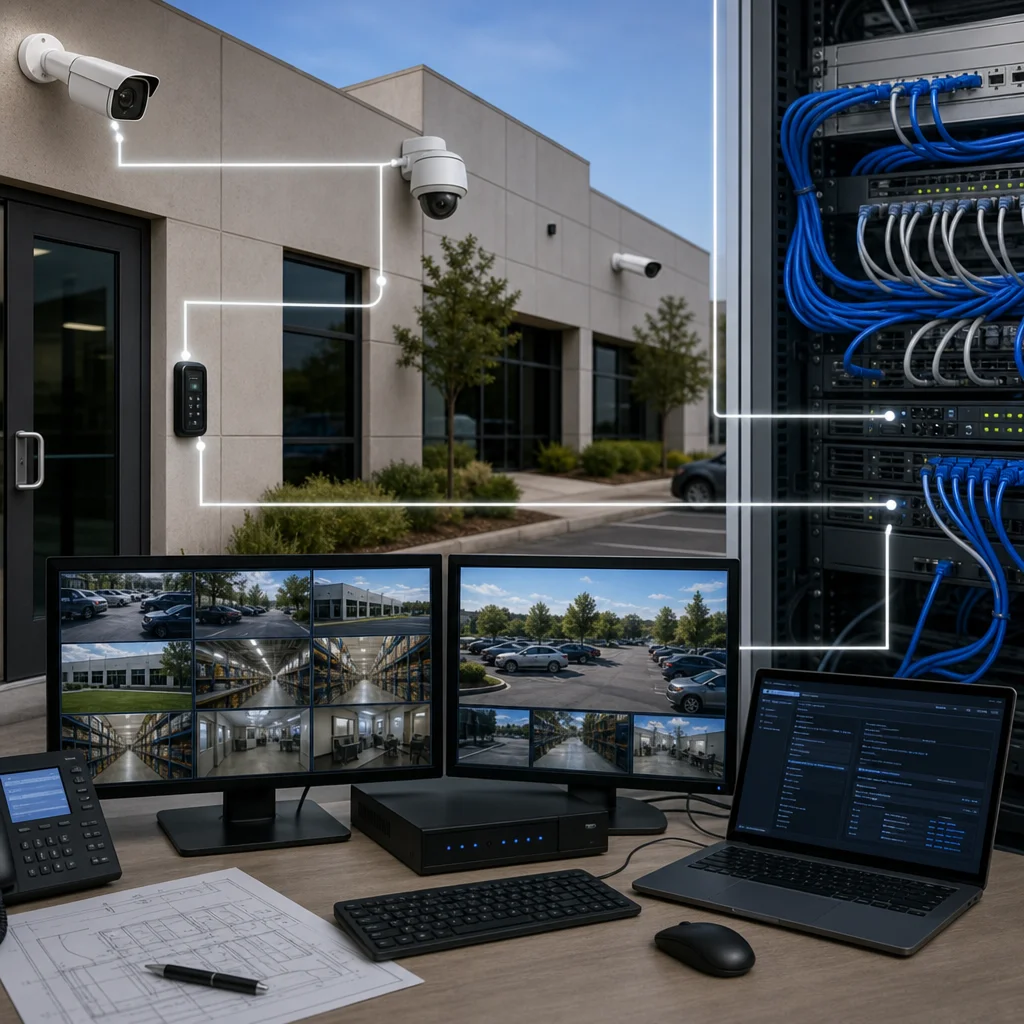
Our technicians handle structured cabling installation according to industry standards, ensuring proper cable management, appropriate conduit usage, and redundancy where critical. We install managed PoE switches in secure locations with appropriate environmental controls and power conditioning. Every camera connection point is tested for proper power delivery and network connectivity before equipment deployment.
We configure your network architecture to segregate security traffic from general IT operations while maintaining the integrated visibility that makes PoE systems valuable. This protects your general network from security system issues while keeping all infrastructure accessible to authorized personnel.
System Configuration and Testing
Once hardware is deployed, we configure camera settings for your specific environment: frame rate, resolution, compression algorithms, and motion detection sensitivity. Outdoor cameras are configured differently than interior cameras in warehouses or retail spaces. We test every system component under operational conditions before we hand over the keys.
IP camera systems that we deploy are professionally configured to perform reliably in your specific environment, not generic setups that require months of tuning after installation.
Scalability Built Into Your System Design
A system designed for scalability today saves you from expensive rearchitecting tomorrow. As your business expands, adds facilities, or changes operational requirements, your security infrastructure should accommodate growth without wholesale replacement.
We size your PoE power infrastructure with future growth in mind. A managed switch with 48 ports might be deployed with only 20 cameras initially, giving you room to add coverage before upgrading equipment. The cabling infrastructure we install supports expansion across your facility without requiring new runs through walls, ceilings, or under-floor spaces.
Network bandwidth is provisioned similarly. A facility might deploy cameras at 2K resolution initially, with the network infrastructure capable of supporting 4K expansion as technology costs decline and your security requirements evolve. Your access control readers, door locks, and environmental monitoring systems all share the same infrastructure, so adding security capabilities doesn’t require parallel buildouts.
Consider a manufacturing facility that adds a third shift. Your security system should accommodate additional camera coverage in production areas without requiring new electrical service or major cabling work. When you integrate with your access control system, you gain the ability to manage shift-based access policies from a unified platform. When a new distribution center opens across the region, your security monitoring can extend to that facility through existing network architecture rather than requiring completely separate systems.
We design systems with this growth trajectory in mind. A hotel property starting with coverage of common areas and guest corridors can expand to parking structures, loading areas, and management offices using the same PoE infrastructure. A clinic can add camera coverage to new examination areas or expand access control as staffing grows without rebuilding the foundation.
Integration with Access Control and IT Infrastructure
The real power of PoE infrastructure emerges when security systems integrate with access control and your broader IT environment. Separate systems create investigative friction; integrated systems enable operational efficiency and precise security response.
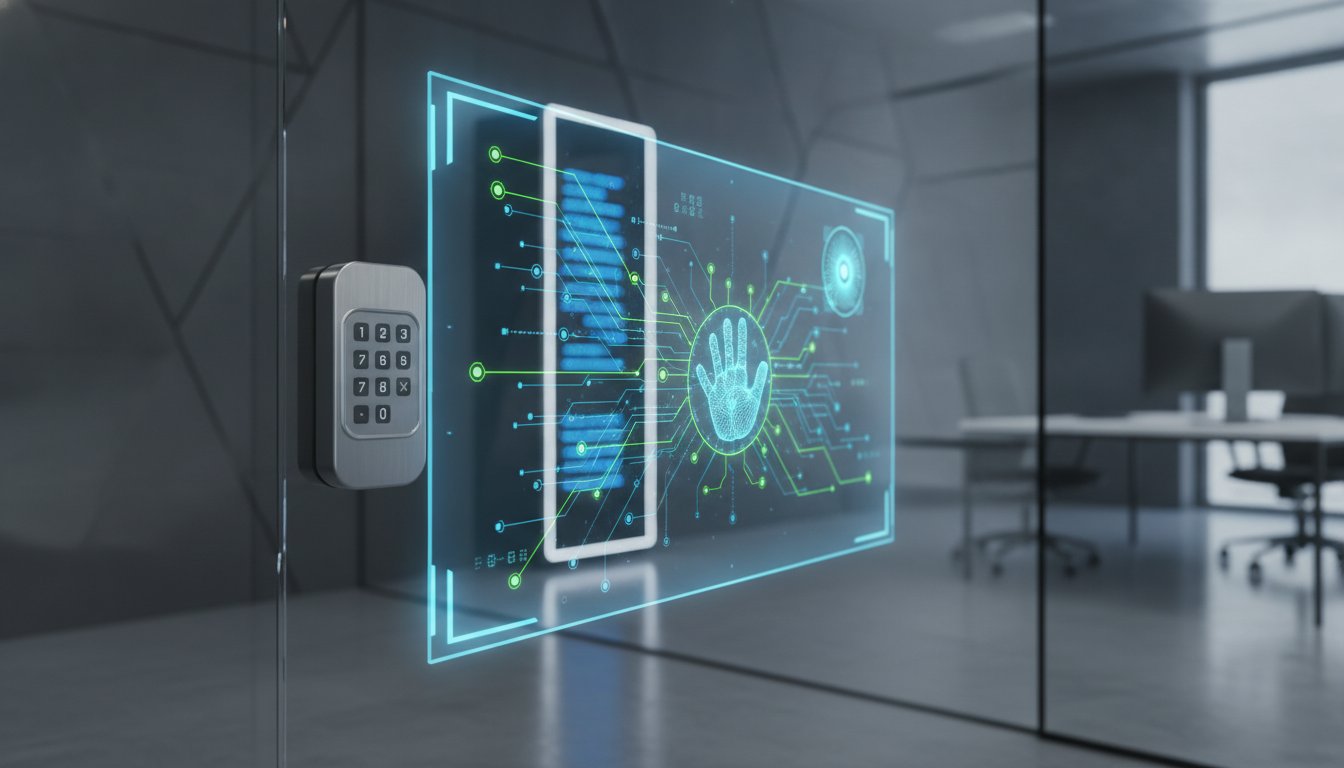
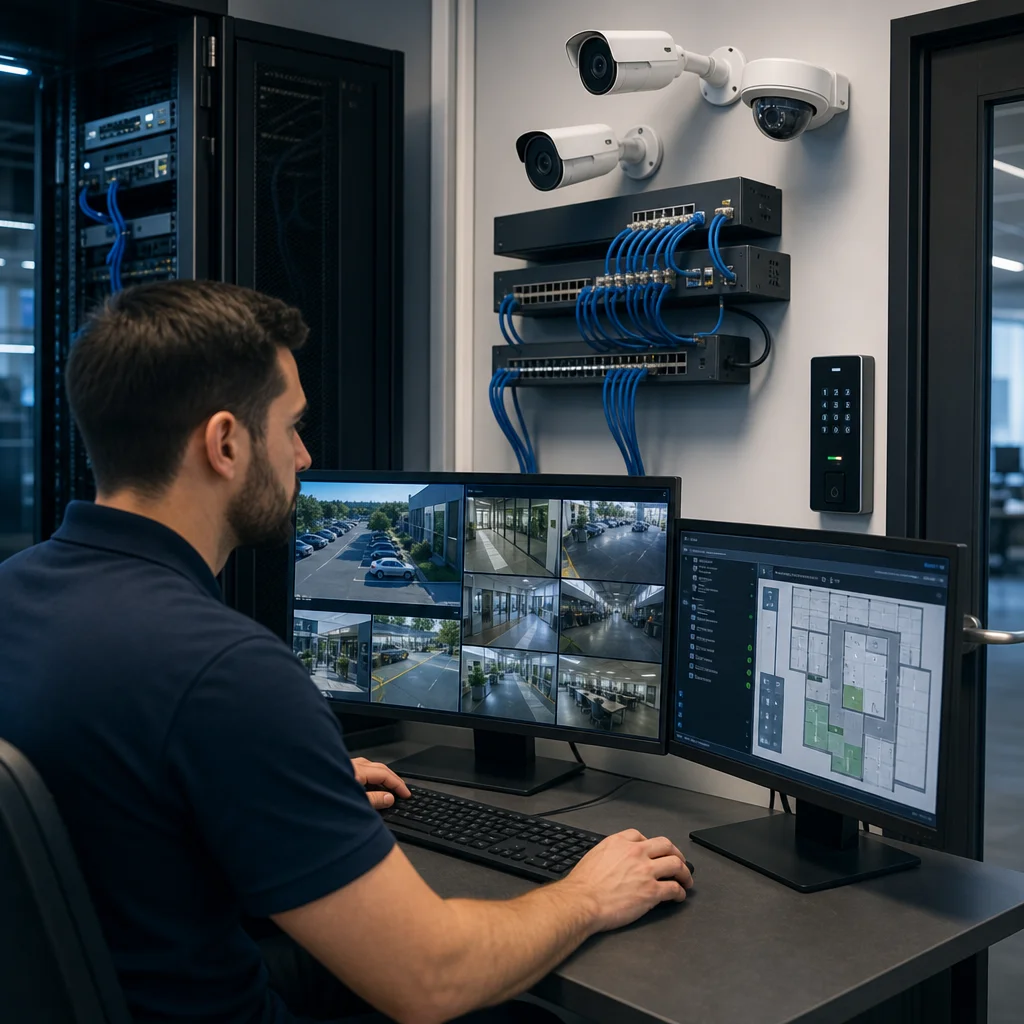
Our access control systems connect directly to the same network infrastructure as your PoE cameras, creating unified visibility. When someone accesses a restricted area, that door opening correlates directly with video footage from that location. If an access anomaly is detected (a badge used in two physically distant locations within an impossible timeframe, for instance), security personnel can immediately pull relevant video context.
This integration extends to your IT infrastructure. Your security systems operate on managed, monitored networks that your IT team understands and controls. Firmware updates are deployed consistently across all devices. Network segmentation protects against security threats while maintaining the cross-system visibility that makes integrated security valuable. Backup and disaster recovery for security systems align with your broader IT continuity plans.
For a hospitality property, this means integrating guest access cards with camera networks to correlate movement patterns. For a warehouse operation, it means correlating badge access at loading docks with vehicle movement captured on perimeter cameras. For a clinic, it enables comprehensive audit trails that support compliance requirements and incident investigation.
We handle the technical complexity of these integrations. Your team works with a unified security and access environment rather than juggling multiple vendor platforms and data formats.
Cost Efficiency and Long-Term ROI of PoE Technology
PoE infrastructure reduces capital costs during initial deployment and operational costs across the system lifecycle. The single-cable approach eliminates redundant electrical infrastructure, reducing materials and labor during installation. Managed PoE switches replace the need for separate power distribution equipment, reducing equipment costs and facility footprint.
More substantially, PoE systems reduce operational complexity and therefore ongoing support costs. We manage your security infrastructure as a unified environment rather than coordinating between multiple vendors, multiple support contracts, and multiple escalation paths. When issues occur, they’re diagnosed and resolved within a single framework instead of requiring finger-pointing between vendors.
Energy efficiency matters for large deployments. PoE switches deliver power efficiently to networked devices, and modern cameras consume significantly less power than older analog systems with dedicated electrical circuits. For a hotel property with hundreds of cameras or a distribution center with extensive surveillance, this compounds into meaningful ongoing cost reduction.
The technology also enables more efficient use of your IT team’s time. Rather than maintaining specialized knowledge of three separate systems, your IT staff manages one integrated infrastructure. Troubleshooting happens faster. Expansion happens faster. Your team’s expertise compounds rather than gets spread thin across incompatible platforms.
We can model specific ROI for your facility, including installation costs, ongoing management expenses, and operational efficiency gains. Most mid-sized organizations see payback within 3-5 years when factoring in reduced vendor coordination, faster issue resolution, and energy efficiency.
Our Installation Process and Minimal Disruption Guarantee
We understand that your facility operates continuously. Security system installation can’t shut down your business or disrupt guest experiences, staff operations, or critical processes. Our installation methodology minimizes operational impact while ensuring professional-grade results.
Phased Deployment
We typically break projects into phases that allow your facility to operate normally throughout installation. For a hotel, we might install common area and corridor coverage during off-peak hours across several weeks, then handle guest room and back-of-house systems during slower booking periods. For a warehouse, we work around shift schedules, installing overhead coverage during shift changes and perimeter systems during lower-traffic periods.
This approach requires more coordination than a single installation push, but it ensures your operations continue uninterrupted and your staff adapts gradually to new security protocols rather than facing an immediate wholesale change.
Minimal Electrical Disruption
Because PoE systems consolidate power and data onto network cables, we eliminate the extensive electrical work that traditional security systems require. There’s no need to run new 120-volt circuits, install power outlets, or coordinate with your electrician for extended outages. Network cabling is substantially less disruptive than electrical work, and we route it through existing cable pathways whenever possible.
Staff Coordination and Training
Our technicians work with your facility management and IT teams throughout installation. We identify optimal camera placement in collaboration with your operational staff who understand facility dynamics. We schedule work around your operational calendar. We provide on-site training so your team understands system operation before we transition to managed support mode.
We provide detailed documentation of your system architecture, camera locations, network configuration, and troubleshooting procedures. Your team knows exactly what you have, how it’s connected, and how to identify issues if they arise.
Security Monitoring That Grows With Your Business
Your security system’s value compounds as your organization captures and analyzes more comprehensive operational data. Modern PoE camera systems deliver the resolution, frame rate, and reliability necessary for genuine operational intelligence, not just incident documentation.
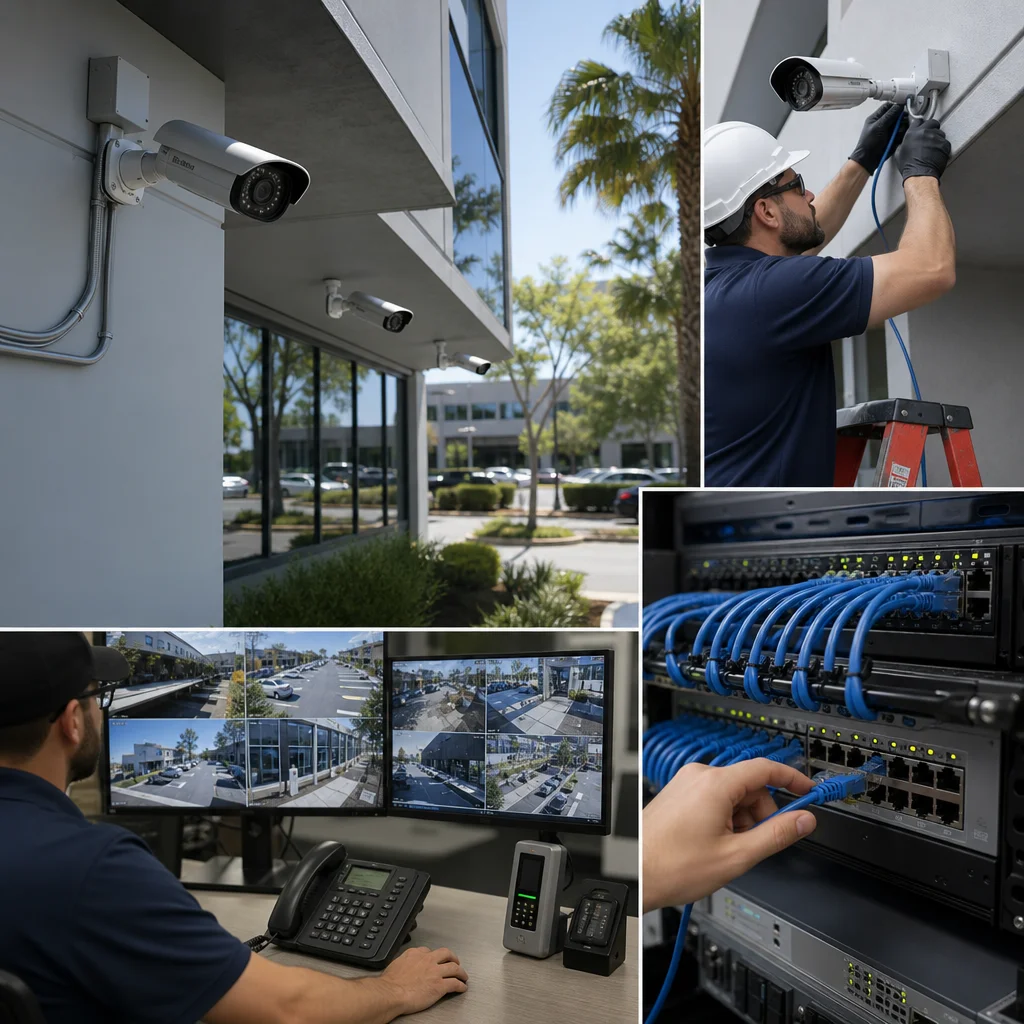
Video analytics running on professionally deployed cameras can identify security events as they occur: unauthorized access attempts, perimeter breaches, loitering in restricted areas, or unusual traffic patterns. These systems learn your facility’s normal operations and alert security personnel when patterns deviate. A warehouse camera system can detect when vehicles enter restricted areas or when products are moved to unexpected locations. A hotel system can identify unusual access patterns that might indicate security issues.
This analytical capability becomes more valuable as your system matures. Your baseline data grows. Patterns emerge. Your security team develops the contextual understanding that separates genuine threats from false alarms.
The infrastructure we deploy supports this evolution. As analytics software improves, your underlying hardware capability scales with it. A camera deployed today can support more sophisticated analysis in two years without replacement. Your network bandwidth and storage systems are provisioned for analytical demands that might emerge over time.
We maintain your system as it evolves, ensuring that firmware updates, analytics refinements, and new security capabilities are deployed appropriately for your environment. Your security monitoring becomes more sophisticated without requiring wholesale system replacement.
Why Choose Our Managed Security Services Partnership
Terapixels Systems brings comprehensive expertise across structured cabling, network infrastructure, security camera systems, and access control integration. We’re not a camera vendor who dabbles in networking or an IT company adding security as an afterthought. We design and manage integrated security and infrastructure systems.
Our experience across hospitality properties, distribution centers, manufacturing facilities, and clinical environments means we understand your operational context. We know how hotels manage guest access while maintaining security. We understand warehouse inventory tracking and perimeter security requirements. We can design systems that support compliance requirements specific to your industry.
We provide ongoing managed support, not just installation. Your PoE infrastructure, cameras, access control systems, and network integration are monitored by our team. We identify issues before they impact your operations. We deploy updates, optimize performance, and provide the technical partnership that allows your team to focus on core business operations.
When you consolidate your security vendors into one trusted partner, you gain operational efficiency, clearer accountability, and easier expansion. You work with one team that understands your complete environment rather than coordinating between multiple vendors with incomplete visibility.
Our service model supports your growth. As you expand facilities, add operational capabilities, or enhance security requirements, we extend your existing infrastructure rather than requiring you to rebuild from scratch with a new vendor.
What to do next:
We’d welcome a conversation about your current security infrastructure and operational challenges. Our team can conduct a facility assessment, understand your growth trajectory, and propose a PoE-based system architecture designed specifically for your environment and future requirements. Contact us to discuss how integrated security infrastructure can support your business.
Frequently Asked Questions (FAQ)
Why should we choose Power over Ethernet cameras instead of traditional wireless or analog systems?
We recommend PoE cameras because they simplify your infrastructure by running both power and data through a single Ethernet cable, eliminating the complexity of separate power supplies and reducing installation costs. This approach integrates seamlessly with your existing network while giving us greater control over your security system through centralized management, making it easier for us to monitor and update your surveillance across all locations.
Can we expand our camera system later without major disruptions to our business operations?
Yes, and that’s a core advantage of how we design our systems. We build scalability into every PoE installation from day one, so adding cameras to new areas or expanding coverage requires minimal network changes and no business downtime. Our infrastructure approach means we can simply extend your cabling and add cameras when your facility grows, rather than requiring a complete system overhaul.
How does integrating security cameras with our access control and IT systems actually benefit our operations?
We unify your security, access, and IT management into one platform, which means our team handles everything instead of you coordinating between multiple vendors. This integration lets us correlate access logs with camera footage, streamline incident response, and manage it all through a single point of contact, reducing complexity and improving your overall security posture.