CONTACT US
Table of Contents
- Why Your Business Needs Reliable Network Cabling Infrastructure
- The Hidden Costs of Fragmented Technology Vendors
- What Sets Professional Network Cabling Apart
- Our Comprehensive Structured Cabling Solutions
- Integrated Security and IT Infrastructure for Mid-Sized Operations
- Network Performance and Scalability We Deliver
- Access Control and Security Camera Integration with Your Network
- Managed IT Services to Support Your Infrastructure
- How We Consolidate Your Technology Vendor Relationships
- Why Southern California Businesses Choose Terapixels Systems
- Getting Started With Your Network Infrastructure Upgrade
- Frequently Asked Questions (FAQ)
Why Your Business Needs Reliable Network Cabling Infrastructure
Your business runs on network infrastructure you can’t see. Cables threaded through walls, servers in secure closets, access points strategically placed across multiple floors—these components form the backbone of daily operations. When they work seamlessly, you don’t think about them. When they fail, everything stops.
For mid-sized operations across Southern California, finding an office network cabling company that understands both your technical requirements and your operational constraints is harder than it should be. Most vendors specialize narrowly: one handles cabling, another manages security cameras, a third oversees IT support. You’re left juggling multiple relationships, multiple invoices, and multiple points of failure when something goes wrong.
We built Terapixels Systems to solve this problem directly. Our approach combines structured cabling installation, network infrastructure setup, integrated security systems, and ongoing managed IT services into one cohesive partnership. Whether you’re managing a hospitality property, a warehouse distribution center, a manufacturing facility, or a multi-location enterprise, we’ve engineered solutions that scale with your business while eliminating the complexity of vendor fragmentation.
Network cabling infrastructure is the foundation everything else sits on. A poorly designed or hastily installed cabling system creates cascading problems: slow data transfer, dropped connections, security vulnerabilities, and expensive troubleshooting calls. The impact shows up in employee productivity, customer experience, and your bottom line.
Consider a typical scenario. A property manager at a growing hotel chain notices intermittent connectivity issues across several floors. Guests complain about spotty Wi-Fi, staff terminals freeze during peak hours, and the back-office systems occasionally timeout. The immediate instinct is usually to call an IT support company. They run diagnostics and discover the real problem: the underlying Category 5 cabling infrastructure installed a decade ago was never designed for current bandwidth demands. Upgrading requires careful planning, minimal downtime, and coordination across multiple systems.
That’s where professional network infrastructure setup becomes critical. Structured cabling isn’t just about running new cables through walls. It’s about designing a system architecture that accommodates your current needs while providing room for growth. It means using proper standards, labeling conventions, and documentation so that future upgrades or troubleshooting don’t require reverse-engineering your entire network.
We approach every cabling project by first understanding your operational requirements. How many users do you support? What applications demand the most bandwidth? Where are your critical systems located? What’s your timeline for growth? From there, we design a system that meets current demands while building in capacity for expansion without complete replacement.
Actionable step: Audit your current cabling infrastructure. Ask your IT team how old your main runs are and whether they’ve had to work around capacity limitations. This often reveals whether you need a modernization project.
The Hidden Costs of Fragmented Technology Vendors
Consolidating vendors sounds straightforward until you live the alternative. When you work with separate cabling companies, security integrators, and IT support providers, problems multiply in unexpected ways.
Different vendors use different standards. One might install cabling that works fine with their security cameras but creates integration headaches when you later add access control systems from another vendor. Documentation standards vary, so when employee A leaves and employee B tries to troubleshoot a problem, they can’t easily understand how the previous person designed the system. When you need to scale up a security system, the cabling company isn’t available, and the security vendor has to work around existing infrastructure that wasn’t built with future expansion in mind.
The financial burden compounds. You’re maintaining separate service agreements, managing different billing cycles, and paying markup on each relationship. More importantly, you lose accountability. When something fails, you’re caught in the middle: the cabling company blames the IT vendor, the IT vendor blames the security integrator, and no one takes ownership of the integrated solution.
We’ve worked with dozens of facilities that made the switch from multi-vendor complexity to unified infrastructure. The cost savings typically emerge in three areas. First, integrated planning eliminates redundant installations and rework. Second, unified documentation and standardized processes reduce troubleshooting time when issues arise. Third, economies of scale on equipment and labor become available when one partner handles the complete solution.
A manufacturing facility in Orange County had three different technology vendors before partnering with us. They had redundant cabling runs in some areas, gaps in others, and no clear integration between their access control system and their security camera network. We consolidated to a single infrastructure design that delivered better security coverage, eliminated the redundant cabling, and created a unified system that their facilities team could actually manage. Their annual technology costs dropped 18 percent while their uptime and security coverage improved.
Actionable step: Request a full technology audit from your current primary vendor. Ask them to map where integration friction exists between your different systems. This reveals specific cost and operational risks you can quantify.
What Sets Professional Network Cabling Apart
The difference between amateur cabling and professional structured cabling installation lies in standards compliance, documentation, and forward planning.
Professional installations follow recognized standards like the ANSI/TIA-568 standard for commercial network cabling. This means proper cable categories for your bandwidth requirements, correctly rated materials, proper termination techniques, and organized routing that prevents signal degradation. It sounds technical, but the business benefit is simple: your network performs predictably, failure rates drop, and future upgrades integrate cleanly.
Documentation is the unsexy part of professional cabling work that saves enormous money later. We create detailed documentation that maps every cable run, labels every termination point, identifies cable pathways, and documents the reasoning behind design choices. When an employee needs to add a new workstation, we can identify exactly which patch panel port has available capacity and trace the path to that location. When you troubleshoot a connectivity issue three years later, the documentation tells the story.
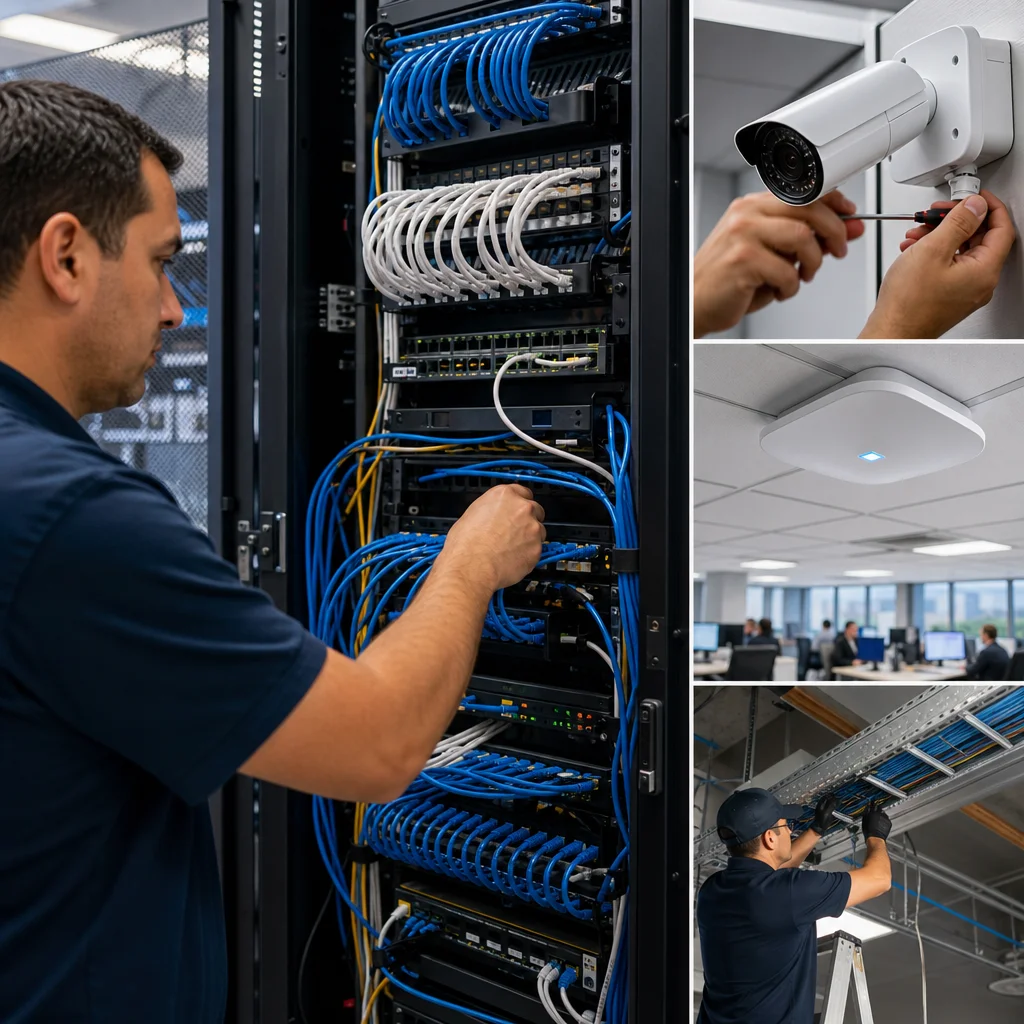
Professional installations also account for physical environment factors. Temperature fluctuations in warehouse distribution centers affect cable performance. Electrical interference near manufacturing equipment requires specific routing. High-security areas need structured cabling that integrates seamlessly with access control systems. We assess these factors during design rather than discovering them during installation.
Cable management itself becomes infrastructure. Proper conduit, cable trays, and routing prevent physical damage and make future work dramatically easier. We’ve replaced countless installations where cables were simply bundled and run in ways that made future modifications nightmarish. Professional installations think in decades, not days.
Actionable step: Ask your current cabling provider for their documentation standards and backup procedures. If they can’t produce detailed maps and termination records within 24 hours, you have fragmentation risk.
Our Comprehensive Structured Cabling Solutions
We design and install structured cabling systems that treat your facility as an integrated whole. This means starting with your actual operational requirements rather than generic off-the-shelf designs.
Our approach begins with a detailed site survey. We map your facility layout, identify locations where users need connectivity, assess cable pathways and potential interference sources, and document growth projections. From this, we develop a cabling architecture that includes:
Horizontal cabling runs from distribution points to individual workstations and access points. We use appropriate cable categories, proper routing practices, and enough capacity for current and near-future needs. Backbone cabling that connects different parts of your facility or different buildings. For larger operations, this becomes critical infrastructure that requires careful planning around expansion and redundancy. Entrance facilities where external connections come into your building. Proper protection, termination standards, and grounding create a secure connection point for your network. Patch panels and connection infrastructure organized for ease of management and future scaling. Equipment rooms or network closets designed for proper cooling, security, and organizational clarity.
For a four-property hotel management company we worked with, the previous cabling approach had been reactive: run cable to where you need it today. This created a nightmare where some areas had plenty of spare capacity, others were completely maxed out, and future expansion required costly rework. We designed a unified cabling architecture across all four properties that standardized on Category 6A infrastructure with capacity for both current systems and foreseeable growth in guest-facing Wi-Fi, back-office systems, and security integration. The installation happened over a six-month period with minimal operational disruption.
Actionable step: Request a cabling audit from your potential provider. Ask them to assess your facility for five-year growth and show you where you’ll hit capacity limitations. This reveals whether they’re thinking strategically or just planning for today.
Integrated Security and IT Infrastructure for Mid-Sized Operations
Structured cabling becomes exponentially more valuable when it’s designed to integrate security and IT systems from the ground up. Rather than cabling infrastructure that tolerates security systems bolted on afterward, we design everything together.
This means considering how your access control systems connect to your cabling infrastructure. It means planning for security camera networks that need robust bandwidth and proper power management. It means designing your IT network closets so they can house both networking equipment and security system controllers in a secure, environmentally controlled environment.
For property management companies operating multiple facilities, integration becomes a game-changer. Instead of each property having its own isolated security system and access control setup, unified cabling infrastructure allows centralized monitoring and management. A property manager at your corporate office can view access logs across all properties, receive alerts when access issues occur, and manage security policies from a single console rather than logging into different systems for each location.
This level of integration requires that security and IT infrastructure speak the same language from day one. It’s not something you retrofit effectively after separate installations. We involve security requirements early in the cabling design process. We identify cable pathways that will accommodate camera networks, plan power distribution for access control systems, and ensure that your IT team and security team are working from the same infrastructure blueprint.
A warehouse distribution center in Riverside County needed to upgrade their access control systems while also expanding their inventory management network. Rather than having separate infrastructure for each system, we designed unified cabling that supported both the real-time access control traffic (which is latency-sensitive) and the inventory management data (which is bandwidth-hungry). The result was a single, professionally managed infrastructure that served both purposes more effectively and cost-effectively than two separate systems would have.
Actionable step: Schedule a requirements meeting with both your facilities/security team and your IT team together. Ask them to articulate integration points they currently struggle with. This becomes the blueprint for unified infrastructure design.
Network Performance and Scalability We Deliver
Performance metrics matter in ways that most businesses don’t measure until problems appear. When your network architecture can’t handle peak traffic, it doesn’t matter how good your individual components are.
We design and install cabling infrastructure that maintains specified performance standards under realistic load conditions. This means Category 6A or Cat 7 cabling for most applications, proper termination practices that minimize signal loss, and organized pathways that prevent crosstalk. In practical terms, your facility gets consistent gigabit speeds to workstations and access points, even during peak usage periods.
Scalability means planning for growth without ripping out infrastructure. When you expand to a new wing, add more guest rooms, or increase your warehouse footprint, the underlying cabling infrastructure should accommodate these changes cleanly. This requires over-provisioning the backbone infrastructure and using structured design principles that don’t assume you’ll never grow.
We’ve seen facility leaders make the same mistake repeatedly: they calculate today’s needs, buy exactly enough cabling, and then face expensive upgrades within three years. Planning for 40 percent growth over five years costs marginally more upfront but avoids costly rework.
Performance also includes redundancy where it matters. Critical systems benefit from backup pathways so that a single cable cut or equipment failure doesn’t take down essential operations. For a hotel, this might mean redundant pathways to critical guest-facing systems. For a distribution center, it might mean backup connectivity to your inventory management system. Not everything needs redundancy, but critical operations do, and this needs to be architected from the beginning.
The performance improvement shows up in measurable ways: fewer network timeouts, faster file transfers, reduced support calls about slow connectivity, and staff productivity that isn’t compromised by infrastructure limitations. A manufacturing facility we upgraded reported that their production lines no longer experienced the intermittent shutdowns that had plagued real-time communication with their control systems.
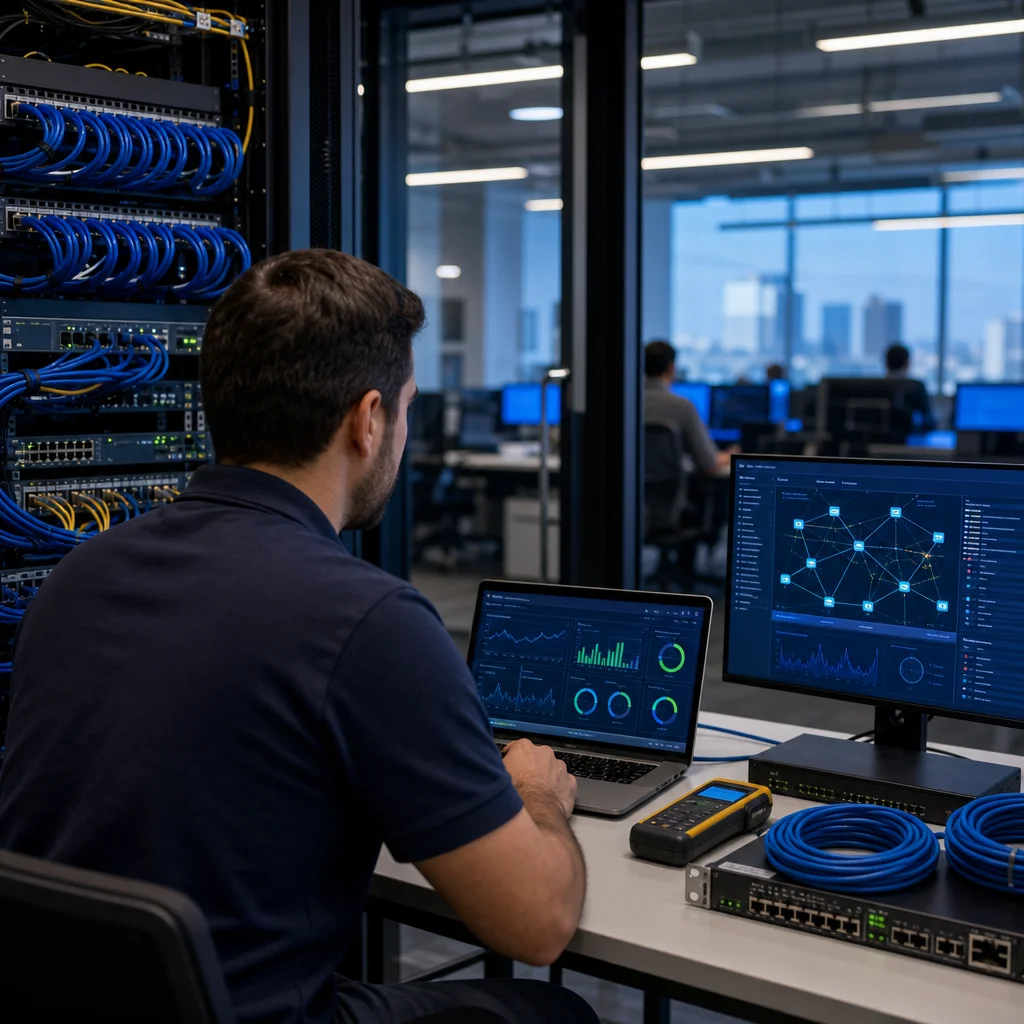
Actionable step: Request baseline performance testing from your current infrastructure. Ask for metrics on network latency, bandwidth utilization during peak hours, and packet loss rates. This quantifies whether your current system is actually meeting your operational needs.
Access Control and Security Camera Integration with Your Network
Security systems depend on reliable network infrastructure the same way your business applications do. The difference is that security failures have different consequences: they create liability, compromise facility safety, and damage your reputation.
When we design network infrastructure, access control system requirements influence cabling pathways, power distribution, and equipment room organization. We’re not just providing pipes for data to flow through; we’re creating an environment where security systems operate reliably and integrate cleanly with your overall network architecture.
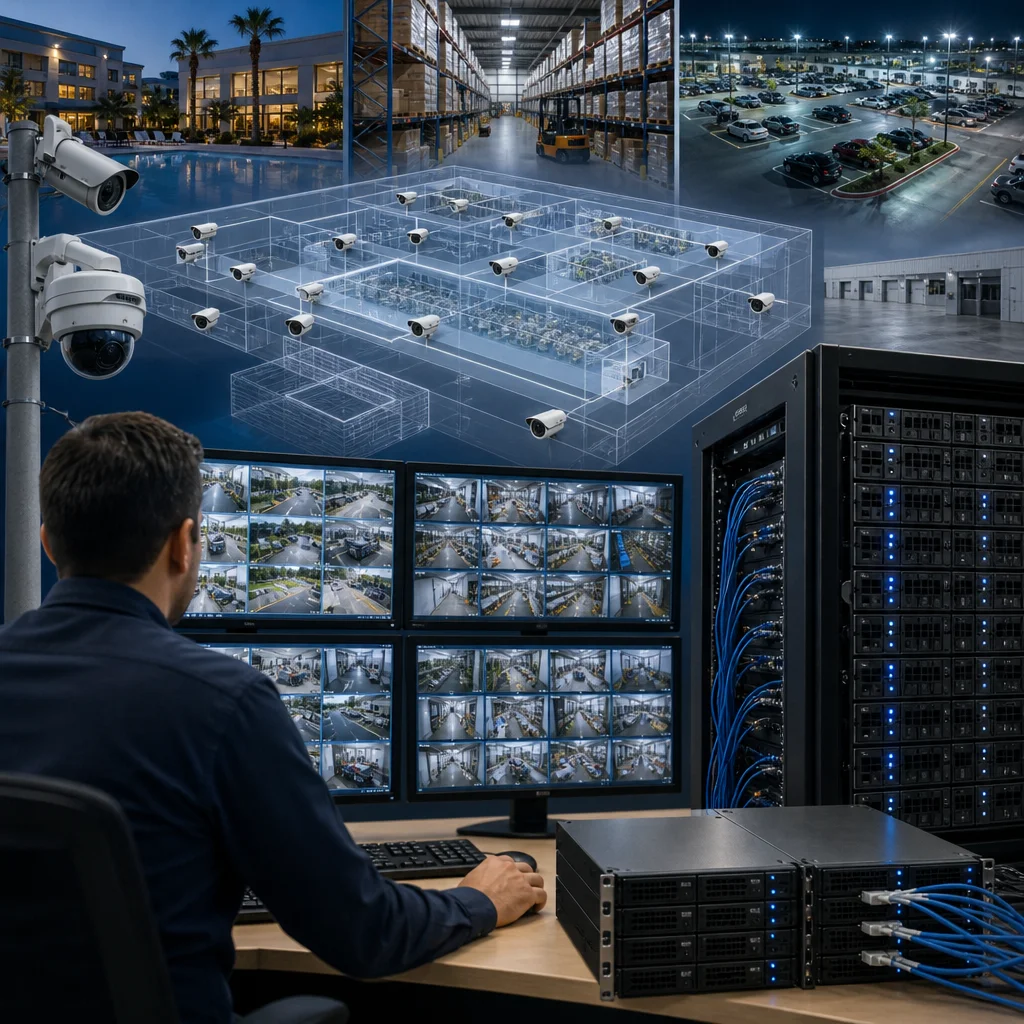
Our access control systems connect to your network backbone, allowing centralized management across multiple access points. Security camera networks require robust bandwidth allocation so that video streams don’t compete with your business applications for available capacity. Integration between systems happens at the network level: when someone uses an access card at a door, the security system logs the event, and the camera system can timestamp the corresponding video footage.
For a multi-property hospitality company, this integration eliminates the operational complexity of managing separate security systems at each location. A centralized security operations team can view real-time access events and camera feeds across all properties, set unified security policies, and respond to incidents from a single interface.
The cabling infrastructure that makes this possible requires advance planning. Camera networks need their own dedicated bandwidth capacity so video doesn’t degrade when your Wi-Fi gets busy with guest devices. Access control wiring needs to be segregated and protected from electrical interference. Power distribution for security equipment needs to be reliable and backed by emergency power systems.
We’ve integrated security camera networks and access control systems across warehouse facilities, distribution centers, manufacturing plants, and hospitality properties. The common theme is that security becomes more effective when it’s integrated rather than bolted on: response times improve, incident correlation becomes possible, and your security operations become manageable across multiple locations.
Actionable step: Map your current security system infrastructure. Ask whether your access control system and security cameras are on separate networks or unified. If they’re separate, identify the operational challenges this creates. This reveals your integration gap.
Managed IT Services to Support Your Infrastructure
Infrastructure becomes more valuable when you have expertise supporting it. We provide Managed IT Services that keep your network, cabling systems, security infrastructure, and access control systems running optimally.
This is where the vendor consolidation benefit becomes most apparent. Rather than calling different vendors for different problems, you have one trusted partner who understands your entire infrastructure. When a connectivity issue emerges, our team knows it could be cabling, equipment, or configuration because we installed and manage all of it. This eliminates the finger-pointing and enables faster resolution.
Our managed services typically include proactive network monitoring that identifies issues before they affect your operations, regular maintenance and performance testing, security updates and patch management, and responsive support when problems do occur. For facilities managing complex environments, having a single team that understands the entire technical landscape creates consistency and accountability.
We’ve observed that businesses spending most on IT support are often doing so because they’re managing fragmented systems. The access control vendor’s support team can’t diagnose cabling issues. The IT support company doesn’t understand the security system architecture. You end up paying multiple vendors to investigate the same problem from different angles.
Managed IT services also create capacity for strategic improvements. Rather than just firefighting day-to-day issues, your team can plan network upgrades, implement security enhancements, and optimize systems for your evolving business needs. For a property management company, this means your technology actually enables competitive advantage rather than just maintaining basic operations.
Actionable step: Calculate your current annual IT support costs across all vendors. Then get a proposal from a unified provider for comprehensive managed services. Compare total cost of ownership, not just service fees.
How We Consolidate Your Technology Vendor Relationships
The path to vendor consolidation starts with assessment. We evaluate your current infrastructure, identify integration gaps, document redundancies, and quantify the cost of fragmentation. This assessment becomes the blueprint for a transition plan.
Most consolidation projects happen in phases rather than simultaneous rip-and-replace. We work with your team to identify critical systems that benefit immediately from integration, then sequence additional upgrades over time. A hotel might start by unifying access control systems across all properties while keeping some legacy systems operating in parallel, then migrate those systems to the unified architecture in subsequent phases.
Documentation and knowledge transfer matter enormously. When we take over management of infrastructure previously maintained by multiple vendors, we create comprehensive documentation of how everything works, how it integrates, and what operational procedures your team needs to follow. This ensures continuity and prevents the learning curve from creating operational disruption.
We also coordinate the transition with your operations. If you’re a distribution center operating 24/7, we schedule work during low-traffic periods and plan for immediate fallback if something goes wrong. For a hotel managing guest operations, we minimize disruption to guest-facing systems while upgrading back-office infrastructure.
The business case for consolidation typically shows up in three ways. Immediate cost reductions from eliminating redundant services and standardizing equipment. Risk reduction because a single integrated system has fewer integration points to fail. Operational efficiency because your team isn’t managing relationships with multiple vendors and learning different tools and procedures.
A manufacturing facility that consolidated their technology vendors reported that their facilities team went from managing relationships with five different technology providers to one. The learning curve for operating and troubleshooting systems dropped dramatically, and response times to operational issues improved because there was no longer ambiguity about which vendor should handle each issue.
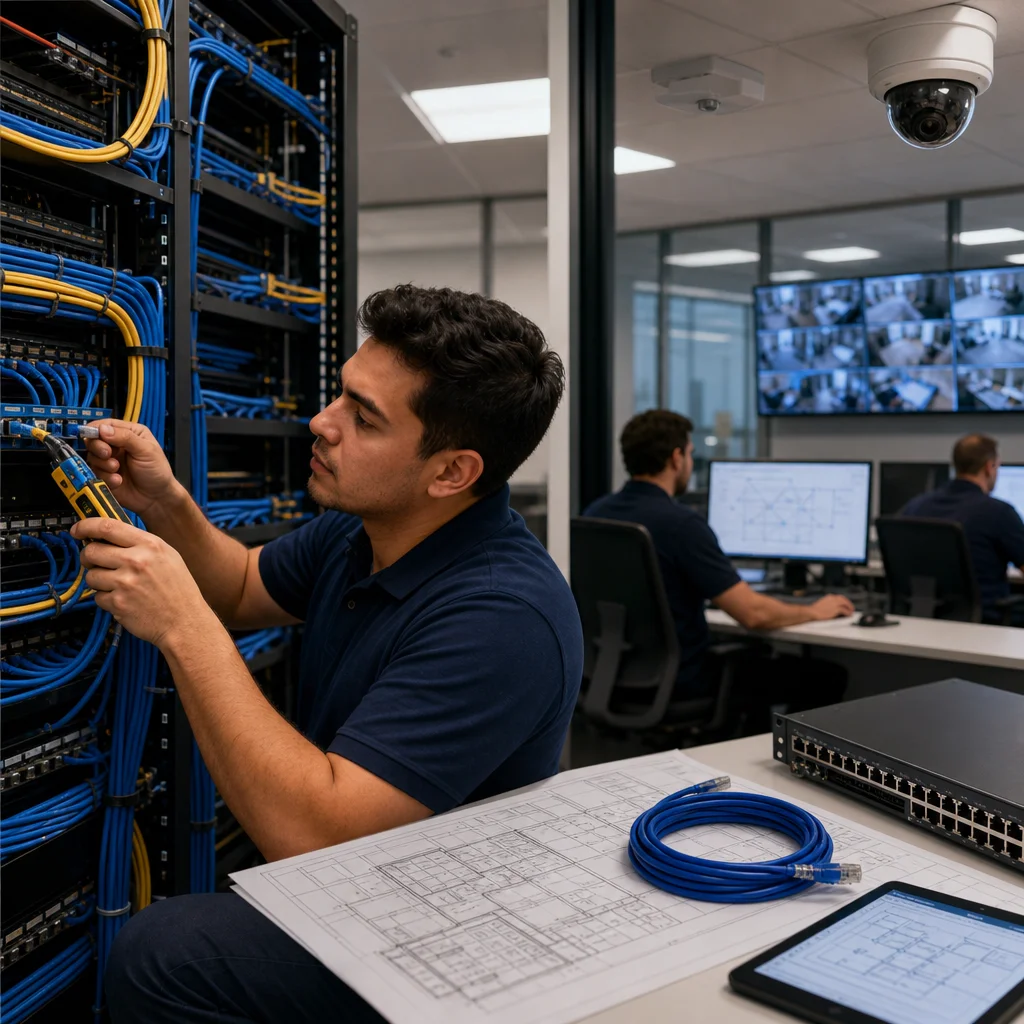
Actionable step: List every technology vendor you currently use. Categorize them by infrastructure area (networking, security, access control, IT support) and quantify their annual costs. This visualization often motivates consolidation conversations.
Why Southern California Businesses Choose Terapixels Systems
We’ve been helping Southern California businesses integrate their technology infrastructure for years. Our regional focus means we understand the specific challenges that hospitality properties, warehouse operations, distribution centers, manufacturing facilities, and property management companies face in this market.
We work extensively with major hospitality groups managing multiple properties across the region. The complexity of keeping security consistent, access controlled, and network operations reliable across different facilities is substantial. We’ve designed and implemented infrastructure solutions for properties that gave them competitive advantages: better security responsiveness, faster network performance, and unified operations across locations.
We’ve worked with warehouse and distribution center operators managing high-volume logistics. These facilities need rock-solid network infrastructure that can handle real-time inventory systems, security monitoring across massive floor spaces, and access control that prevents unauthorized access to sensitive areas. Our infrastructure designs account for the electromagnetic interference from heavy machinery, the temperature fluctuations in different areas of the facility, and the performance requirements of mission-critical logistics systems.
Manufacturing operations have unique infrastructure requirements. Production line control systems need guaranteed connectivity with minimal latency. Security systems need to integrate with production floor monitoring to create unified situational awareness. We’ve designed cabling infrastructure for manufacturing facilities that supports current operations while accommodating the inevitable equipment upgrades and production line reconfigurations that happen over time.
The common thread across all our clients is that they wanted to stop managing fragmented technology relationships and start operating integrated infrastructure. They wanted a partner who understood how cabling, security, access control, and IT operations all work together. They wanted accountability for overall system performance rather than each vendor being responsible only for their component.
We’ve earned their trust by delivering that promise consistently. When we take on an infrastructure project, we’re not just installing components; we’re building a system that serves your business reliably for years to come.
Actionable step: Talk to existing clients about their experience with vendor consolidation. Ask about the specific improvements they’ve seen in cost, operations, and security since transitioning to unified infrastructure.
Getting Started With Your Network Infrastructure Upgrade
If your facility needs modern network infrastructure, structured cabling installation, or integrated security systems, start by scheduling a consultation with our team. We’ll assess your current environment, understand your operational requirements, and identify opportunities for improvement.
During the initial consultation, we’ll discuss your facility layout, your current technology challenges, your growth projections, and your budget parameters. We’ll ask questions about your operations that might not seem directly related to network infrastructure but actually inform good design: What are your peak traffic periods? What systems are most critical to your operations? What expansion is planned in the next three to five years?
From there, we’ll develop a detailed infrastructure assessment and a proposal that might include structured cabling installation, network infrastructure setup, integrated security systems, access control integration, or managed IT services to support your systems. We’ll present clear options with costs, timelines, and expected benefits so you can make informed decisions.
We’ll also coordinate scheduling to minimize disruption to your operations. For a facility operating continuously, this might mean scheduling work during specific hours. For a property with predictable quiet periods, we might recommend more intensive work during those windows.
The transition to modern, integrated infrastructure isn’t a single project; it’s often a strategic journey. We work with clients to sequence improvements in ways that make sense for their operations and budget. You might start with critical cabling infrastructure upgrades, then add security system integration, then consolidate managed IT services. We’ll plan the entire journey so that each phase builds on the previous one.
Reach out to Terapixels Systems today. Let’s discuss your infrastructure needs and show you how integrated technology solutions can improve your operations, reduce costs, and eliminate vendor complexity. Our team is ready to help you build the reliable, scalable infrastructure your Southern California business deserves.
Frequently Asked Questions (FAQ)
What makes our structured cabling solutions different from other office network cabling companies in Southern California?
We design and install cabling infrastructure that scales with your business growth while maintaining enterprise-level performance standards. Our approach integrates your network backbone with security systems and access controls from day one, eliminating the coordination problems that come with fragmented vendors. We use industry-leading materials and installation practices to ensure your infrastructure supports current demands and future expansion without costly rework.
How do we help consolidate multiple technology vendors into one unified partner?
We manage your entire infrastructure ecosystem, from network cabling and access control to security cameras and managed IT services, so you work with us instead of juggling separate contractors. Our integrated approach means your systems communicate seamlessly, reducing operational friction and giving you a single point of accountability. We handle vendor coordination and system compatibility so your team can focus on running your business.
Can you integrate our existing security cameras and access control systems with our new network infrastructure?
We assess your current systems during our consultation and determine what can be leveraged versus what needs upgrading for optimal performance. Our technicians coordinate the integration so everything communicates through your network infrastructure without creating security vulnerabilities or performance bottlenecks. This approach saves you money by preserving compatible equipment while ensuring your whole operation functions as one cohesive system.