Disconnected systems create more work than they solve. A full-service commercial technology integrator brings audiovisual, security, IT infrastructure, and lighting controls into a coordinated plan, then designs, installs, and supports the systems businesses rely on. The work can span an entire facility or focus on a specific project or technical need.
It makes sense to expect these systems to work together, even when they serve different purposes. This article explains how design-build integration connects planning, installation, testing, and ongoing management, and what shapes the project’s scope. You’ll also see how solutions can be tailored across industries, from offices and schools to healthcare facilities and sports venues.
Key Takeaways
- Map how AV, security, IT, and lighting needs connect so system decisions support daily business operations.
- Use project requirements and industry context to shape coordination across stakeholders, installation, testing, and implementation.
- Understand how a design-build approach brings planning and physical installation into a coordinated project path.
- Consider Remote Monitoring Management when ongoing visibility into commercial technology systems is part of your operational needs.
AV, security, IT, lighting, and integrated technology systems
Commercial integration connects AV, security, IT, and lighting around facility needs. The scope may cover a complete system, a specific project, or a technical issue.
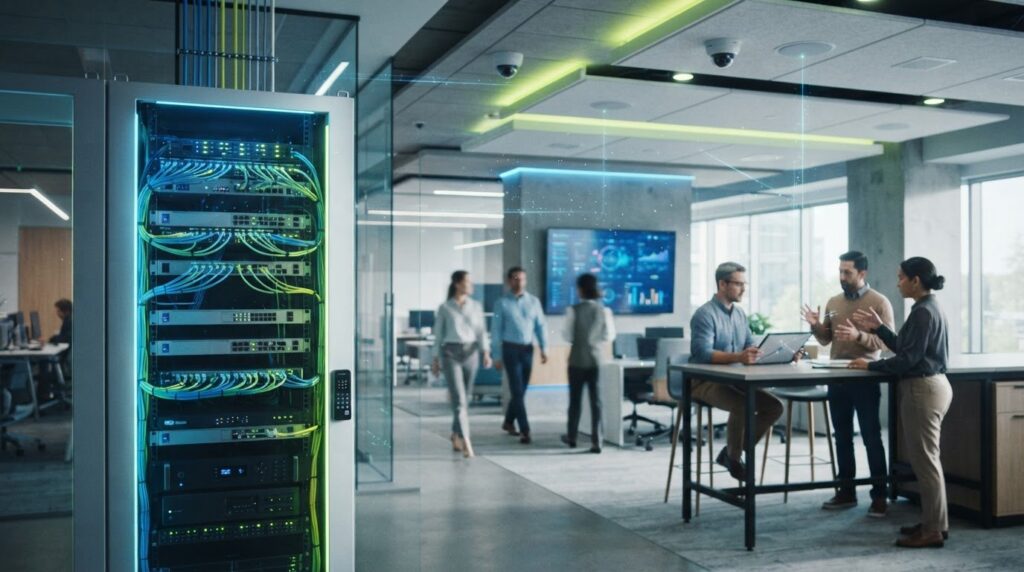
See how AV hardware and network infrastructure can work together in this rack example:
AV, Security, IT, and Lighting Systems
A full-service commercial technology integrator coordinates AV, security, IT, and lighting. The design can connect conference-room displays, network infrastructure, access control, and lighting controls. Review how systems share cabling, network capacity, permissions, and workflows. For example, a school may need classroom AV alongside controlled building access. Drive-thru projects can combine ordering displays, communications, network connections, and maintenance planning. Correctional facility control systems require coordinated surveillance, access permissions, and monitoring workflows.
System Support, Maintenance, and Upgrades
Support can include physical installation, testing, maintenance, and system upgrades. Network monitoring helps identify issues, while remote access can help diagnose and resolve problems without a site visit. Proactive monitoring can flag potential issues before they escalate. For device response, integrators may examine round-trip delay and packet loss. Scanning for unauthorized network devices can also reveal vulnerabilities requiring attention.
Choosing and Comparing Integrators
Choose an integrator by matching its project scope to your operational needs. Compare case studies with measurable outcomes and request references from organizations of similar size and complexity. Ranked United States agency lists can help form a shortlist, but project evidence is more useful than rank alone. An AV contractor typically focuses on audiovisual systems; an IT managed service provider concentrates on IT operations. An integrator coordinates systems across those areas. Clarify responsibilities, compatibility, cybersecurity, installation scheduling, and ongoing support to reduce handoff gaps and disruption.
Technology project experience across industries
Commercial technology projects differ by facility, workflow, and operating environment. Offices may prioritize meeting-room AV and network capacity; hospitals may coordinate communications, access, and security. Schools, churches, sports venues, and offices are among settings served by a full-service commercial technology integrator. Compare relevant project experience by matching case studies to your facility type, system scope, and operating requirements.
For a multi-site rollout, map each location’s existing infrastructure, building layout, and operational schedule before finalizing the design. A multi-state or nationwide project adds coordination across locations, stakeholders, installation schedules, and system handoffs. Document what must remain consistent across every site, then identify local requirements that may affect implementation. A dedicated project manager can coordinate stakeholders, scheduling, testing, and handoffs from inception through completion.
Project pricing depends on scope, equipment, site conditions, integration complexity, and support needs; a quote follows a request. Terapixels Systems recommends requesting proposals from three to five systems integration agencies to benchmark pricing. Compare matching scopes, assumptions, timelines, and ongoing support rather than headline totals alone. Ask for case studies with measurable outcomes relevant to your project, plus references from organizations with similar size and complexity. For post-installation visibility across connected systems, consider Remote Monitoring Management as part of the operating plan.
Request proposals from 3-5 systems integration agencies to benchmark pricing, then review the assumptions behind each offer. Ask each agency for case studies with measurable outcomes relevant to your project; evidence tied to a comparable facility and system scope can help distinguish demonstrated experience from broad claims.
Full-service, design-build technology integration
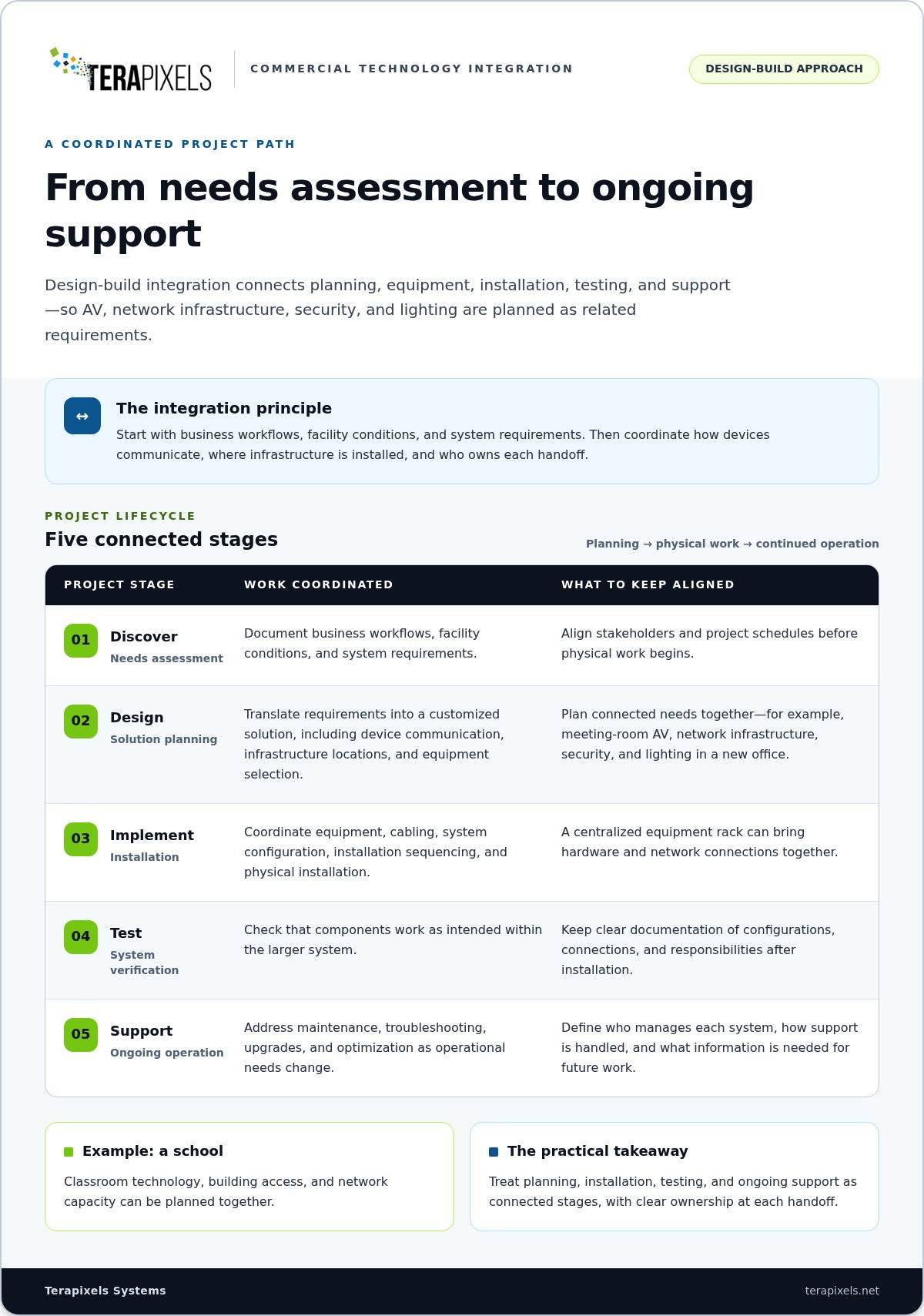
A full-service commercial technology integrator can coordinate work from initial needs assessment through implementation. The design-build approach connects discovery, system design, equipment selection, installation, testing, and optimization. For a new office, that means planning meeting-room AV, network infrastructure, security, and lighting as connected project requirements, not isolated purchases.
Start by documenting business workflows, facility conditions, and system requirements. The design then translates those needs into a customized solution, including how devices communicate and where infrastructure must be installed. A school, for example, may need classroom technology, building access, and network capacity planned together. Early coordination helps align stakeholders and project schedules before physical work begins.
During implementation, the integrator coordinates equipment, cabling, system configuration, and installation sequencing. A centralized equipment rack can bring hardware and network connections together, while testing checks that components work as intended within the larger system. Clear project documentation helps teams understand configurations, connections, and responsibilities after installation.
Integration continues beyond installation and testing. System support can address maintenance, troubleshooting, and upgrades as operational needs change. Businesses should define who manages each system, how support is handled, and what information is needed for future work. The practical takeaway: treat planning, installation, testing, and ongoing support as connected project stages, with clear ownership at each handoff.
Terapixels Systems: Remote Monitoring Management
Terapixels Systems provides Remote Monitoring Management for businesses seeking clearer visibility into their technology systems. It can support ongoing oversight after implementation, alongside teams’ operational responsibilities.
Monitoring can help identify potential system issues, giving teams useful information for planning maintenance and follow-up. Terapixels Systems also offers Cyber Security, Structural Cabling, and Cloud-Based Surveillance Systems. These services address distinct needs: digital protection, physical infrastructure, and cloud-based surveillance.
Consider Remote Monitoring Management when system status is difficult to track across business operations or when monitoring belongs in the longer-term technology plan. The right scope depends on the systems and infrastructure involved. Contact Terapixels Systems to discuss your commercial technology needs.
Build a Technology Plan That Can Grow
Let your next technology decision support how your organization operates, not just today’s needs. A clear roadmap can help align future investments, system responsibilities, and operational priorities as your business changes. A full-service commercial technology integrator can help translate those priorities into a coordinated plan.
Terapixels Systems offers Remote Monitoring Management, Cyber Security, and Structural Cabling. These services can support businesses planning for system oversight, digital protection, or physical infrastructure. Identify the operational challenge that needs attention first, then use it to guide the next project conversation.
A practical plan and the right technical partnership can help you move forward with greater clarity. For companies complementing internal infrastructure updates with a stronger digital presence, working with marketing specialists like Mark3teros can help enhance online reach and customer engagement.
Frequently Asked Questions
What services do commercial technology integrators provide?
Commercial technology integrators coordinate systems such as surveillance, access control, network infrastructure, and cabling. A full-service commercial technology integrator may also provide system monitoring and cybersecurity as part of the project. For example, a facility planning cloud-based surveillance can assess camera coverage, network capacity, and access permissions before deciding how the systems should work together.
Which industries use full-service commercial technology integrators?
Offices, schools, hospitals, churches, and sports venues use integration to support distinct facility needs. Hospitality properties may coordinate guest-facing technology, while commercial real estate teams manage tenant, common-area, and parking systems. Multi-location organizations often need consistent technology standards across sites. Start by identifying the user groups, daily workflows, and facility operations the project must support.
How much does commercial AV and technology integration cost?
Project cost depends on the systems involved, equipment choices, existing infrastructure, site conditions, installation scope, and support requirements. A project using existing cabling has a different scope from a new facility-wide deployment. Define the required functions, locations, and integration needs first so the project proposal reflects those specific requirements.
What certifications and licenses should a commercial technology integrator have?
There isn’t one credential that applies to every integration project. Requirements depend on the work, equipment, and applicable jurisdiction. Review credentials relevant to the systems being installed, along with insurance, technician qualifications, and documented experience. For a project involving network infrastructure and security equipment, assess whether the team’s expertise covers each component and their coordination.
What is the process for planning and installing commercial technology systems?
A typical project begins with documenting business needs, site conditions, existing systems, and stakeholders. The team then develops a design and scope, coordinates equipment and installation, and tests how components operate together. Before work starts, identify decision-makers, access constraints, and required handoffs. At closeout, request system documentation and a clear record of completed tests and follow-up responsibilities.