
Table of Contents
- Why Video Quality Matters More Than You Think in Hospitality Security
- The Chain of Custody Challenge: Your Legal and Operational Risk
- How We Bridge the Gap Between Security and Compliance
- Our Structured Cabling Foundation for Reliable Facial Recognition
- Integrated HD Security Camera Installation for Forensic-Grade Capture
- Access Control Systems That Work With Your Video Intelligence
- Managed IT Services Ensuring Continuous System Performance
- Best Practices for Maintaining Evidence Integrity in Your Facility
- Real-World Application: How Hotels Use Our Integrated Approach
- Getting Started With Forensic-Ready Security Infrastructure
- Frequently Asked Questions (FAQ)
Why Video Quality Matters More Than You Think in Hospitality Security
Hospitality properties across Southern California face a mounting pressure to combine guest safety, operational security, and legal defensibility into a single surveillance strategy. When an incident occurs, your security footage becomes evidence. When that evidence ends up in court or under regulatory scrutiny, video quality and documentation practices determine whether your system strengthens your position or undermines it.
We’ve worked with major hotel groups including Marriott, Intercontinental, and Hilton properties to design forensic-grade security infrastructures that capture actionable intelligence while maintaining ironclad chain of custody. The difference between a security camera system and a forensic facial recognition system isn’t just the camera itself, it’s the entire ecosystem of cabling, storage, access controls, and IT oversight that supports it.
A pixelated face is legally worthless. When law enforcement or your legal team needs to identify a guest, employee, or suspicious individual, compressed video footage or poor lighting conditions can render facial recognition tools ineffective and leave you defenseless.
Forensic-grade video capture means investing in HD and 4K resolution cameras positioned and configured to capture facial detail at working distances typical in your property. Your lobby, elevator banks, guest corridors, and parking areas each have different lighting and distance requirements. A 2MP camera covering a hallway doesn’t capture the same facial nuance as a strategically placed 4K unit with appropriate lens selection.
We prioritize this distinction from the start. High-definition capture is non-negotiable for facial recognition applications, but it only works when your network and storage infrastructure can reliably deliver those massive file sizes without degradation or loss. Compression artifacts destroy the very detail your forensic analysis depends on.
Action item: Audit your current camera resolution across high-traffic guest areas. If any coverage falls below 4MP, prioritize those zones for upgrading to forensic-grade HD or 4K units.
The Chain of Custody Challenge: Your Legal and Operational Risk
Chain of custody isn’t a concept exclusive to police evidence lockers, it applies directly to your video security system. Once footage is captured, who accesses it, when, for how long, and what changes occur to the file become critical legal questions if that footage ever enters litigation or an investigation.
Without documented access controls and audit trails, your video evidence becomes inadmissible or undermines your credibility. Defense attorneys routinely challenge the integrity of surveillance footage when they can’t verify that the video hasn’t been edited, deleted, or accessed by unauthorized personnel. A hotel property that can’t demonstrate secure storage, timestamped access logs, and retention protocols is essentially handing opposing counsel a roadmap to disqualify your evidence.
Many properties we encounter run security systems managed by multiple vendors: one company handles cameras, another manages network infrastructure, and a third oversees IT services. This fragmentation creates gaps in accountability. When something goes wrong—whether it’s a data breach, missing footage, or an access violation—responsibility becomes murky and finger-pointing delays investigation.
Action item: Document your current footage access procedures. Identify every person or system with permission to retrieve, view, or export video. If you can’t create a complete list with timestamps, you have a chain of custody problem.
How We Bridge the Gap Between Security and Compliance
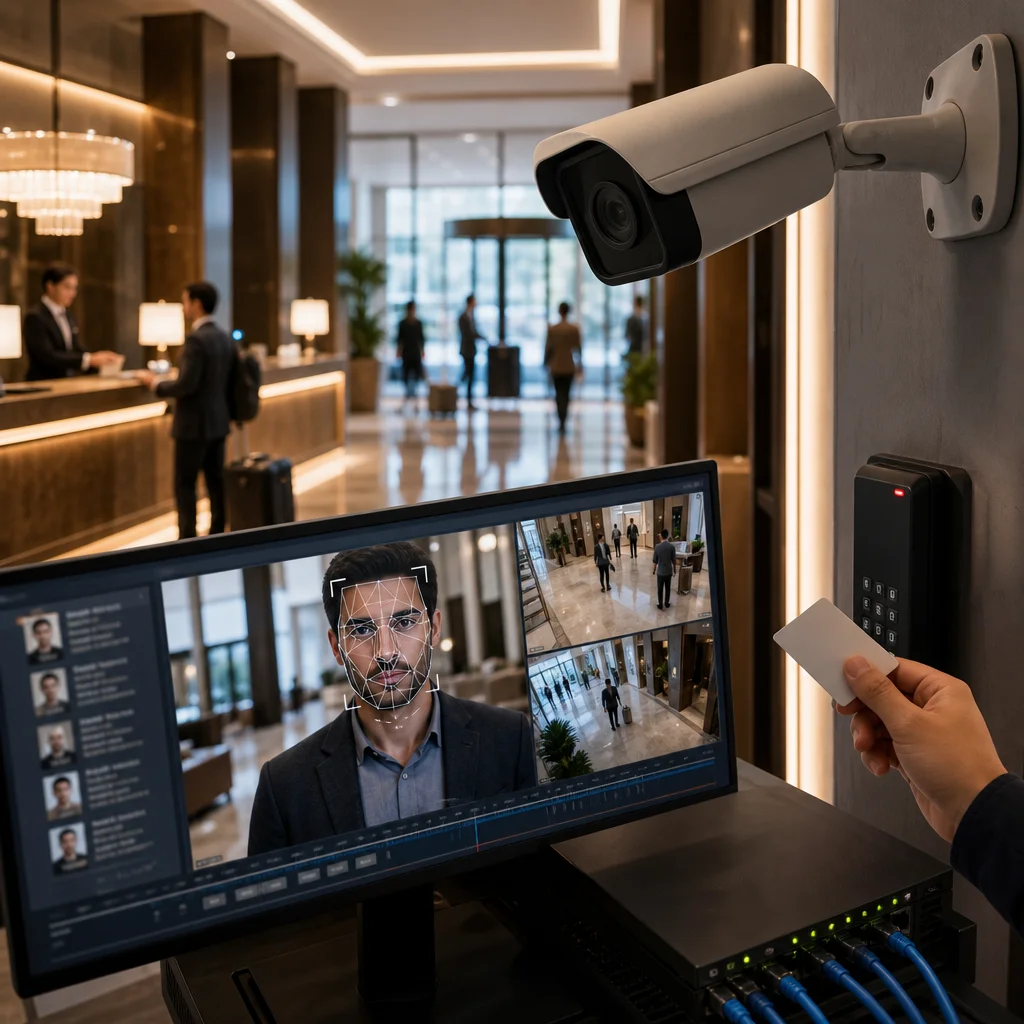
We approach hospitality security as an integrated system, not a collection of separate tools. Our philosophy centers on creating a unified architecture where your structured cabling, cameras, access controls, and managed IT services communicate seamlessly and generate auditable records at every step.
This means designing your security infrastructure with forensic applications in mind from day one. The cabling that supports your cameras isn’t just a conduit, it’s part of your compliance foundation. The access control system that manages guest entry points also logs who accesses your security footage. The managed IT services overseeing your network don’t just prevent outages, they enforce encryption, backup protocols, and retention policies that satisfy legal standards.
When these layers integrate properly, you gain forensic-ready infrastructure that holds up under scrutiny. Law enforcement can trust your timestamps. Attorneys can verify your retention practices. Auditors can confirm that video evidence hasn’t been tampered with.
Our Structured Cabling Foundation for Reliable Facial Recognition
Forensic facial recognition systems demand reliable, high-bandwidth connectivity. A single dropped frame or network hiccup can corrupt the facial data that matters most. We design structured cabling foundations specifically to handle the sustained data loads of forensic-grade video capture without compression or degradation.
Our approach includes redundant pathways, managed PoE (Power over Ethernet) infrastructure, and separation of security traffic from general operational networks. This prevents guest WiFi congestion from competing with your security camera data stream. It also creates logical isolation that protects forensic footage from accidental or malicious interference.
We run 6A cabling through your walls, ceilings, and cable trays with proper shielding and grounding to minimize electromagnetic interference. In a hotel environment with hundreds of rooms, guest devices, and wireless networks, this grounding matters. Clean electrical separation ensures your facial recognition cameras deliver consistent, uncompromised video feeds.
Action item: Request a site audit from your cabling partner. Verify that your camera network runs on dedicated circuits separate from guest networks and that all cabling meets current standards for high-bandwidth video.
Integrated HD Security Camera Installation for Forensic-Grade Capture
Placing cameras is an art informed by forensic requirements. We don’t just mount hardware, we design sightlines based on facial recognition performance parameters. A camera positioned too high or at the wrong angle may capture a person’s movement but fail to capture usable facial geometry.
For hotel properties, this means strategic placement in lobbies with consistent lighting, elevator banks where guests pause naturally, corridor intersections, and parking areas where supplemental lighting supports nighttime capture. We specify HD or 4K units with appropriate lens selection for each location. A 2.8mm lens covers wide corridors, while an 8mm telephoto lens captures detail from longer distances without sacrificing resolution.
Compression settings matter equally. We configure cameras to use H.265 video coding (or H.264 where systems require compatibility) at quality levels that preserve facial detail while managing storage. Many systems default to heavy compression to reduce storage costs, but this undermines forensic utility. We set bitrate and frame rate specifically for facial recognition accuracy.
Backup power and network redundancy ensure cameras stay online during outages. A single power failure that takes down your security system is indefensible if something happens during that window.
Access Control Systems That Work With Your Video Intelligence
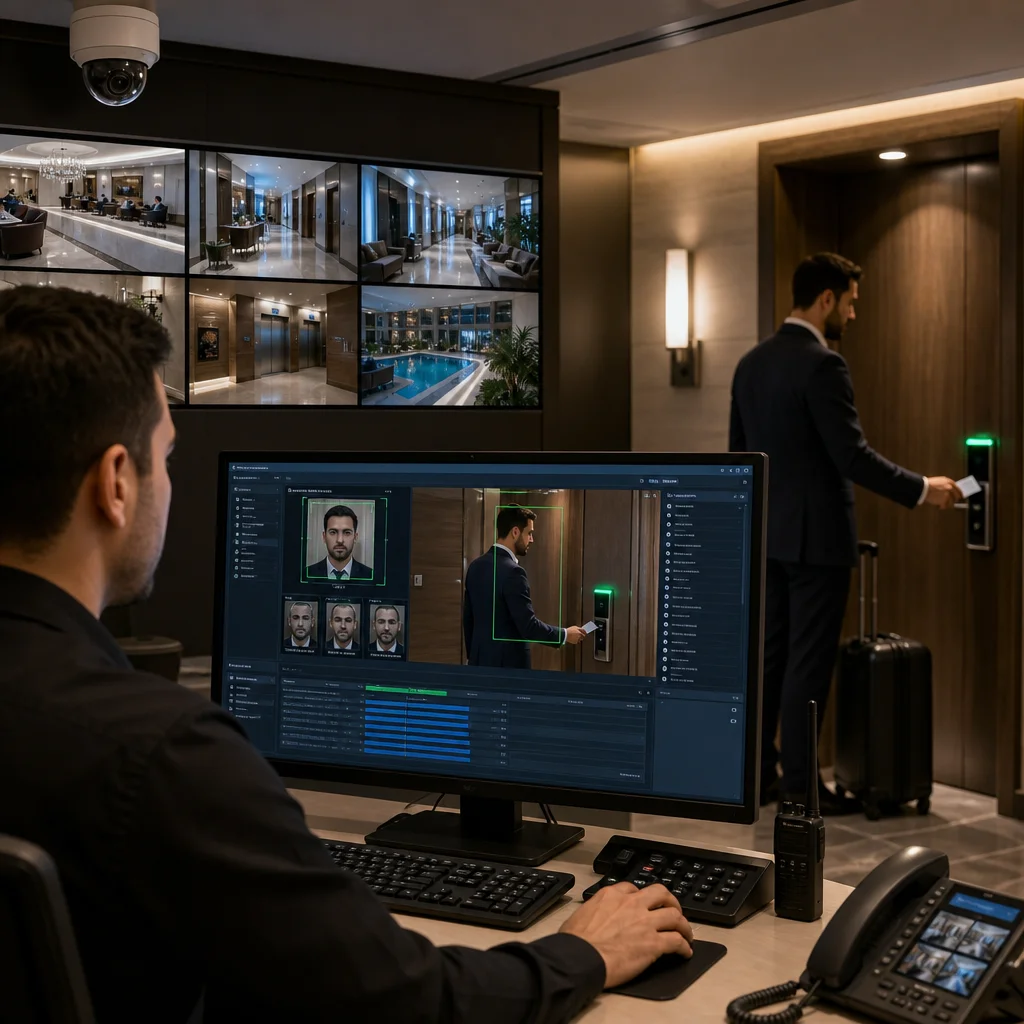
Integrated access control systems create the bridge between physical security and video intelligence. When a guest’s room key is used, that event triggers a timestamp. When that guest appears on camera moments later, the facial recognition metadata aligns with the access control log. This correlation strengthens chain of custody and enables faster, more accurate investigation.
We deploy access control systems that talk to your video management platform. Alerts trigger automatically when unauthorized access is attempted, and investigators can immediately pull associated video footage with timestamp certainty. This integration transforms separate systems into a cohesive investigative tool.
Employee access to secure areas like server rooms, security control rooms, and footage archives flows through the same systems. Every access is logged, creating accountability that protects evidence integrity and satisfies compliance audits.
Managed IT Services Ensuring Continuous System Performance
Security infrastructure only works when it runs reliably. We provide managed IT services that treat your security network with the same rigor as your core business systems. This means 24/7 monitoring, proactive maintenance, and rapid response to any degradation.
Our services include automated backup of all forensic video footage to redundant storage with geographic separation. If a local hard drive fails, footage doesn’t disappear. We enforce encryption protocols that protect footage from unauthorized access while maintaining rapid retrieval for legitimate investigation. We also manage retention policies that comply with hospitality regulations and legal holds.
Network monitoring detects bandwidth bottlenecks or performance degradation before they impact video quality. Firmware updates deploy automatically to cameras and access control systems, ensuring they benefit from security patches and facial recognition improvements. If a system component fails, we replace or repair it without manual intervention from your staff.
Action item: Ask your IT provider whether they monitor your security network 24/7 or only during business hours. Gaps in monitoring mean problems could persist for hours undetected.
Best Practices for Maintaining Evidence Integrity in Your Facility
Beyond infrastructure, procedural discipline sustains chain of custody. We recommend implementing clear policies around video access and retrieval. Designate specific personnel authorized to access forensic footage. Require written requests that document the reason for access, the time window needed, and the personnel requesting the data.
Use role-based access controls in your video management platform. Security supervisors can retrieve footage, but perhaps only during their assigned shifts. IT administrators can configure systems but cannot view footage. This separation of duties prevents conflicts of interest and strengthens your chain of custody argument in litigation.
Establish a log that tracks every time footage is exported or shared. Include timestamps, personnel involved, and the business justification. This documentation becomes your evidence that the footage remained secure and unaltered from capture through presentation.
Retention schedules should exceed any reasonable legal hold window. We typically recommend retaining forensic footage for 90 days to one year, depending on your liability risk profile and local regulations. Shorter retention windows create risk if an incident occurs and you’ve already deleted relevant footage.
Real-World Application: How Hotels Use Our Integrated Approach
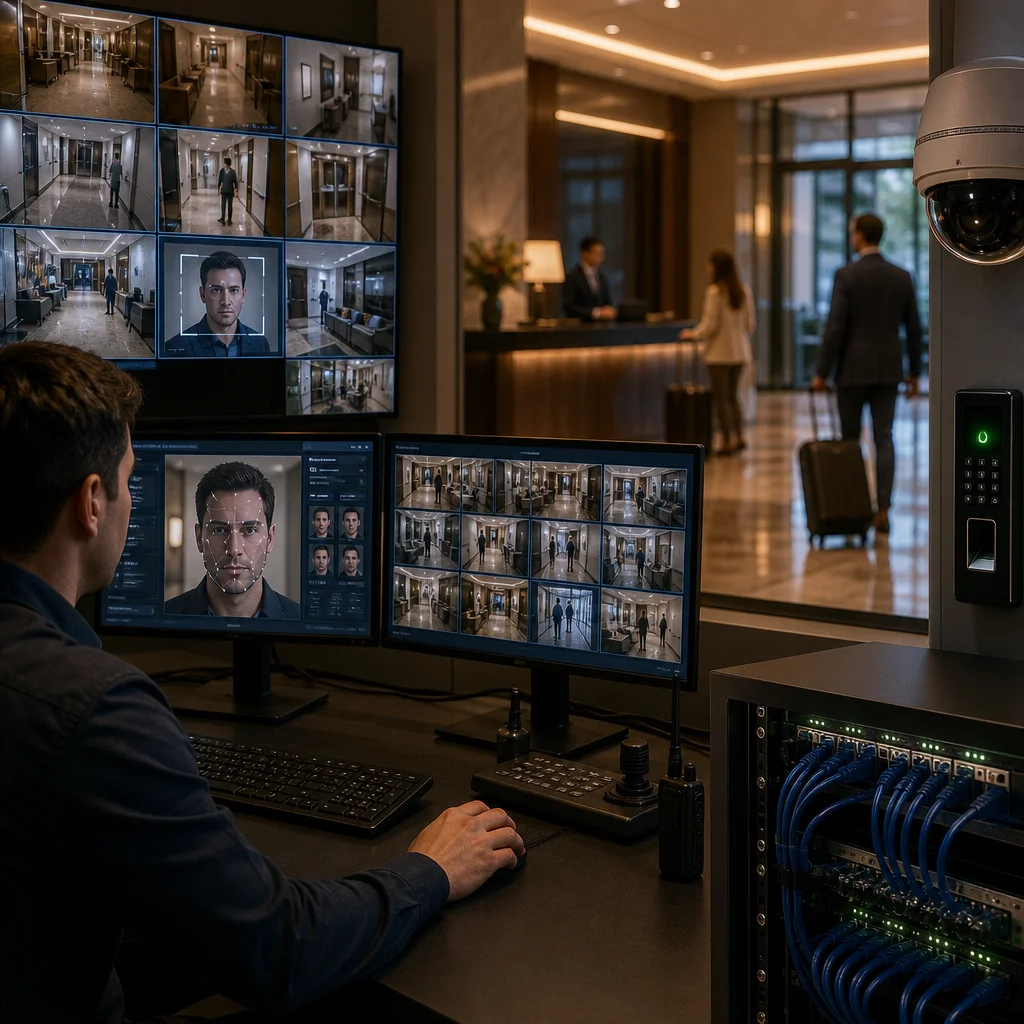
A Marriott property in Orange County deployed our integrated system after a guest dispute led to a lawsuit that hinged on surveillance footage. Their previous setup used cameras from one vendor, network infrastructure from another, and no centralized IT oversight. When they needed footage from a specific time, it took hours to locate the correct system, export the file, and verify it hadn’t been tampered with.
After integration, the same property captured every significant guest interaction with forensic-grade HD coverage. Access control logs correlated with video timestamps automatically. Their legal team had retrievable evidence within minutes. More importantly, the documented chain of custody and clear facial recognition data resolved disputes faster and reduced litigation risk.
Marriott’s security director noted that the unified system simplified staff training and reduced compliance risk. There was one system to learn, one vendor relationship to manage, and clear accountability for video integrity.
Getting Started With Forensic-Ready Security Infrastructure
Evaluating your current system begins with honest assessment. Walk your property and ask whether your current cameras would satisfy law enforcement reviewing an incident. Could you produce a clear facial image if needed? Can you prove that footage hasn’t been altered? Do access control events correlate with video timestamps?
If the answer to any of these questions is “maybe” or “we’re not sure,” that’s your starting point. We specialize in designing forensic-ready security ecosystems for Southern California hospitality properties. We integrate structured cabling, HD cameras, access control systems, and managed IT services into a unified platform that protects your guests, your staff, and your legal position.
Contact us to discuss your property’s specific security requirements. We’ll audit your current infrastructure, identify gaps, and design an integrated system that turns surveillance into actionable forensic intelligence.
Frequently Asked Questions (FAQ)
What makes our facial recognition systems suitable for forensic evidence in hotel environments?
We design our HD security camera systems specifically to capture the resolution and clarity that law enforcement and legal proceedings require. Our structured cabling infrastructure ensures consistent power and data delivery, eliminating the video degradation that compromises facial recognition accuracy. We pair high-quality capture hardware with managed IT services that keep your systems running at peak performance, so every frame is usable evidence.
How do we help you maintain proper chain of custody for video evidence?
We implement integrated access control and video management systems that timestamp all footage and track who accesses recordings. Our managed IT services include automated backup protocols and secure storage configurations that meet forensic standards. We document your entire system architecture and maintenance history, giving you the documentation law enforcement needs to validate evidence admissibility in court.
Can we integrate facial recognition with our existing hotel security infrastructure?
We assess your current cabling, cameras, and access control systems to determine compatibility and upgrade pathways. Our approach typically involves enhancing your structured cabling backbone and installing forensic-grade cameras alongside your existing hardware rather than replacing everything at once. We handle the integration planning and managed oversight so your security systems work as one cohesive unit from day one.