CONTACT US
Table of Contents
- Why California Facial Recognition Compliance Matters Now
- Understanding California's Biometric Privacy Laws
- Privacy Regulations Every Business Leader Must Know
- Assessing Your Current Security Infrastructure
- Building a Compliant Facial Recognition System
- Our End-to-End Implementation Approach
- Access Control Integration With Compliance Standards
- Data Protection and Storage Requirements
- Staff Training and Policy Development
- Ongoing Compliance Monitoring and Audits
- Your Path to Secure, Legal Facial Recognition
- Frequently Asked Questions (FAQ)
Why California Facial Recognition Compliance Matters Now
California has emerged as the strictest state regulating facial recognition and biometric data collection. If your organization operates facilities in Southern California—whether you’re running a hotel, warehouse, distribution center, or manufacturing facility—facial recognition systems deployed without proper compliance frameworks expose you to significant legal and financial risk.
Recent enforcement actions and class-action settlements have resulted in multi-million dollar penalties for organizations that failed to implement compliant biometric systems. Beyond fines, non-compliance can damage customer trust, complicate insurance coverage, and create operational vulnerabilities. The landscape has shifted; facial recognition isn’t a discretionary security enhancement anymore. It’s a regulated technology that demands careful implementation.
For mid-sized business leaders managing physical facilities, the question isn’t whether to comply, but how to do it efficiently while maintaining effective security operations. We see organizations delay deployment because they’re uncertain about legal requirements. That hesitation is costing them security gaps and competitive disadvantages against competitors who’ve already integrated compliant systems. The solution requires understanding the regulatory framework, assessing your current infrastructure, and building systems designed for compliance from the start.
Understanding California’s Biometric Privacy Laws
California’s approach to biometric regulation centers on the California Consumer Privacy Act (CCPA), the California Online Privacy Protection Act (COPPA), and California’s specific facial recognition statutes. These laws treat biometric data differently than typical business information because facial data is permanent, uniquely identifying, and impossible to change if compromised.
The key distinction is that facial recognition systems fall under “sensitive personal information” requiring explicit consent and heightened protection standards. California law presumes that collecting facial data from employees, customers, or visitors requires informed written consent before data collection begins. This differs substantially from other security measures—you can’t simply install facial recognition cameras and claim legitimate business interest without documented consent frameworks.
Under California’s framework, organizations must disclose:
- That facial recognition is being used
- What data will be collected and retained
- How long data will be stored
- Who has access to the data
- Whether data will be shared with third parties
The financial stakes are real. Violations under California’s biometric privacy statutes carry statutory damages ranging from $100 to $750 per resident per incident. Class-action settlements have consistently awarded damages in this range, and attorneys specializing in privacy litigation actively recruit claimants.
Privacy Regulations Every Business Leader Must Know
Beyond California’s state-level laws, several frameworks interact with your facial recognition compliance obligations. The California Consumer Privacy Act grants individuals the right to know what personal information is collected, delete it, and opt out of sales. Since facial data qualifies as personal information, these rights apply to your systems.
The Americans with Disabilities Act (ADA) requires that facial recognition systems don’t discriminate against individuals with disabilities. This means backup verification methods must be available for people whose facial features may not be clearly captured due to facial differences, burn scarring, or other conditions.
Employment law adds another layer. If you’re using facial recognition for employee monitoring or access control in California, you may be subject to employee consent requirements and workplace privacy expectations. Employees generally have stronger privacy protections than customers or visitors.
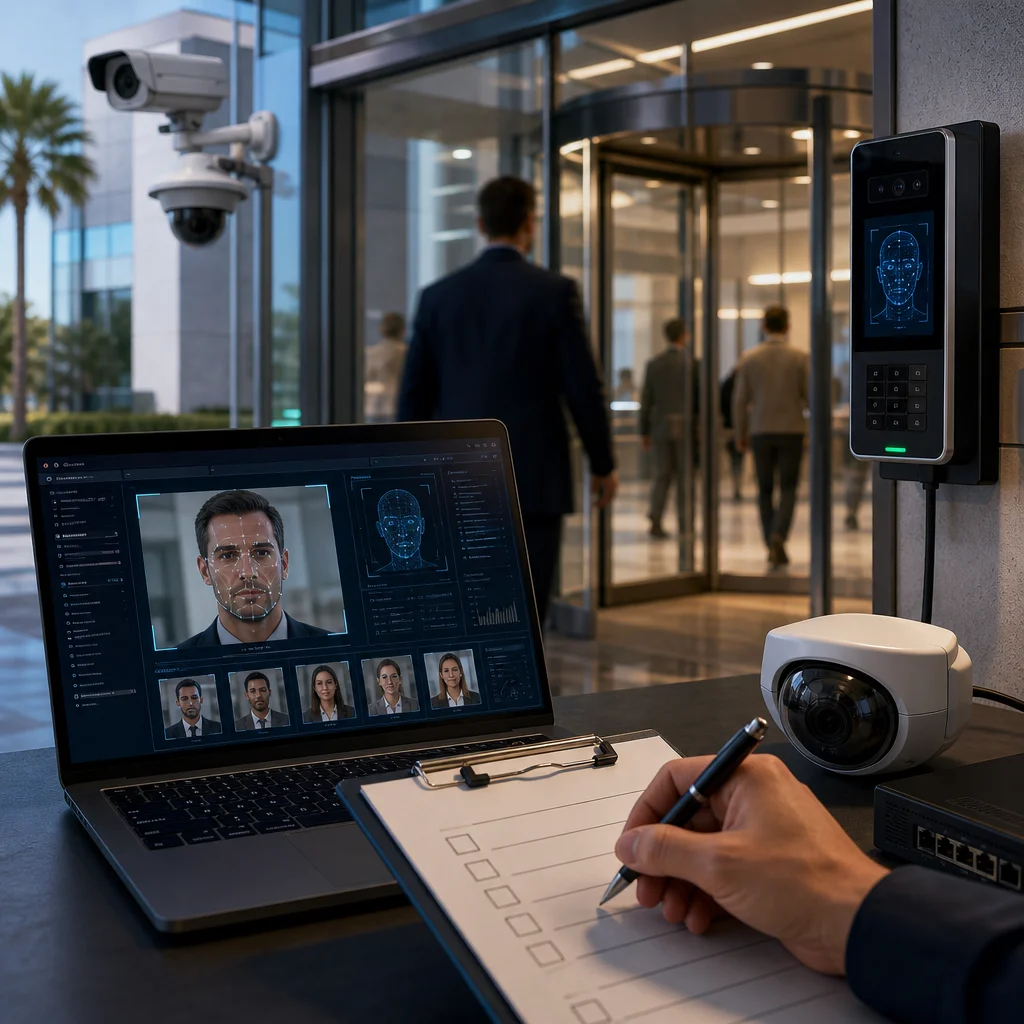
Industry-specific regulations matter too. Hotels subject to payment card industry standards (PCI-DSS) must ensure facial recognition systems don’t interfere with data security compliance. Healthcare facilities under HIPAA cannot use facial recognition in ways that might reveal protected health information.
Take action now: Audit your current facial recognition usage to identify which regulations apply to your specific industry and use cases.
Assessing Your Current Security Infrastructure
Before implementing new facial recognition systems, determine what you already have in place. Many organizations have legacy security camera systems that weren’t designed with compliance in mind. Integrating facial recognition into these systems often requires significant infrastructure upgrades.
Start by documenting:
- Existing camera locations and specifications
- Current access control systems and integration points
- Data storage locations (on-premises, cloud, hybrid)
- Who currently has access to security footage
- How long footage is retained
- Whether cameras are visible and signage is posted
This assessment typically reveals infrastructure gaps. Older analog camera systems may lack the resolution facial recognition requires. Cloud storage systems may not meet California’s data residency expectations. Access control systems may operate independently from surveillance, creating compliance blind spots.
We recommend engaging qualified security assessment professionals who understand California’s regulatory environment. They can identify which systems need replacement versus upgrades, estimate costs accurately, and sequence implementation to minimize disruption.
Building a Compliant Facial Recognition System
Compliant systems start with hardware and software designed for legal requirements, not just security effectiveness. You need cameras with sufficient resolution, frame rates, and low-light performance for facial recognition accuracy. But you also need systems with granular access controls, audit logging, and data retention capabilities built into the architecture.
The foundation includes:
High-resolution cameras: Minimum 2MP for facial recognition, though 4MP or higher is standard for enterprise deployments in large facilities like distribution centers or manufacturing plants.
Compliant software platforms: Solutions that enforce consent management, create detailed access logs, support data deletion requests, and provide clear retention policies.
Segregated data infrastructure: Your facial recognition data shouldn’t comingle with other business systems. This segregation reduces liability and simplifies compliance audits.
Integration with existing systems: Facial recognition gains value when integrated with California access control systems that control facility access, creating unified security operations.
Implementation shouldn’t be a one-size-fits-all approach. A hotel lobby requires different facial recognition deployment than a warehouse shipping area. We design systems around your specific facility layout, traffic patterns, and security objectives.
Our End-to-End Implementation Approach

We handle facial recognition implementation as an integrated project, not isolated technology placement. Our approach begins with compliance discovery, ensuring we understand your specific regulatory obligations before designing a single system component.
We then conduct facility assessment and design, identifying optimal camera placement that achieves security objectives while respecting privacy expectations. We source enterprise-grade hardware and software platforms proven to support California compliance requirements. We handle structured cabling and network infrastructure upgrades necessary to support facial recognition data flows and security protocols.
Our installation teams ensure proper camera positioning, lighting considerations, and network integration. We implement robust testing protocols to verify facial recognition accuracy, system performance, and compliance functionality before going live.
Documentation and policy development follow installation. We create the consent frameworks, data retention policies, access control procedures, and staff training materials your organization needs for ongoing compliance. This isn’t just technical implementation; it’s building the governance infrastructure that keeps you legally protected.
Access Control Integration With Compliance Standards
The real value of facial recognition emerges when integrated with physical access control. Facial recognition shouldn’t exist as a surveillance-only system; it should drive your facility’s access decisions, creating a complete security ecosystem.
Our Irvine access control systems integrate facial recognition with credential-based access, biometric verification, and detailed audit trails. This integration means security personnel see exactly who entered restricted areas, when, and under what authorization. For manufacturing facilities managing sensitive areas, this integration is essential for compliance with both physical security standards and data protection regulations.
Integration also simplifies compliance reporting. Unified systems generate comprehensive audit reports showing authorized versus unauthorized access attempts, policy violations, and system usage patterns. These reports are exactly what California regulators expect to see during compliance assessments.
Data Protection and Storage Requirements
California law treats facial biometric data as among the highest-sensitivity personal information. Storage requirements are consequently strict. Data must be:
- Encrypted in transit and at rest
- Stored on secure infrastructure with multi-factor authentication
- Accessible only to authorized personnel with documented business need
- Retained only as long as necessary for the stated business purpose
- Deleted upon employee termination or customer request
- Protected against unauthorized access or breach
Most organizations can’t meet these requirements using public cloud storage or legacy on-premises systems. We design infrastructure specifically for biometric data protection, often utilizing dedicated servers, encryption protocols, and access management systems that exceed standard IT security practices.
Your data protection framework must also address breach notification. California requires notification within reasonable timeframes if facial data is compromised. Having systems designed to prevent breach risk (and to detect breaches quickly) is central to compliance.
Staff Training and Policy Development
Your facial recognition system’s compliance rests ultimately on how your staff uses it. We develop comprehensive training programs covering:
- Legal and regulatory framework employees need to understand
- System operation and proper usage procedures
- Data access restrictions and privacy safeguards
- Incident reporting and breach notification procedures
- Customer and employee data subject rights
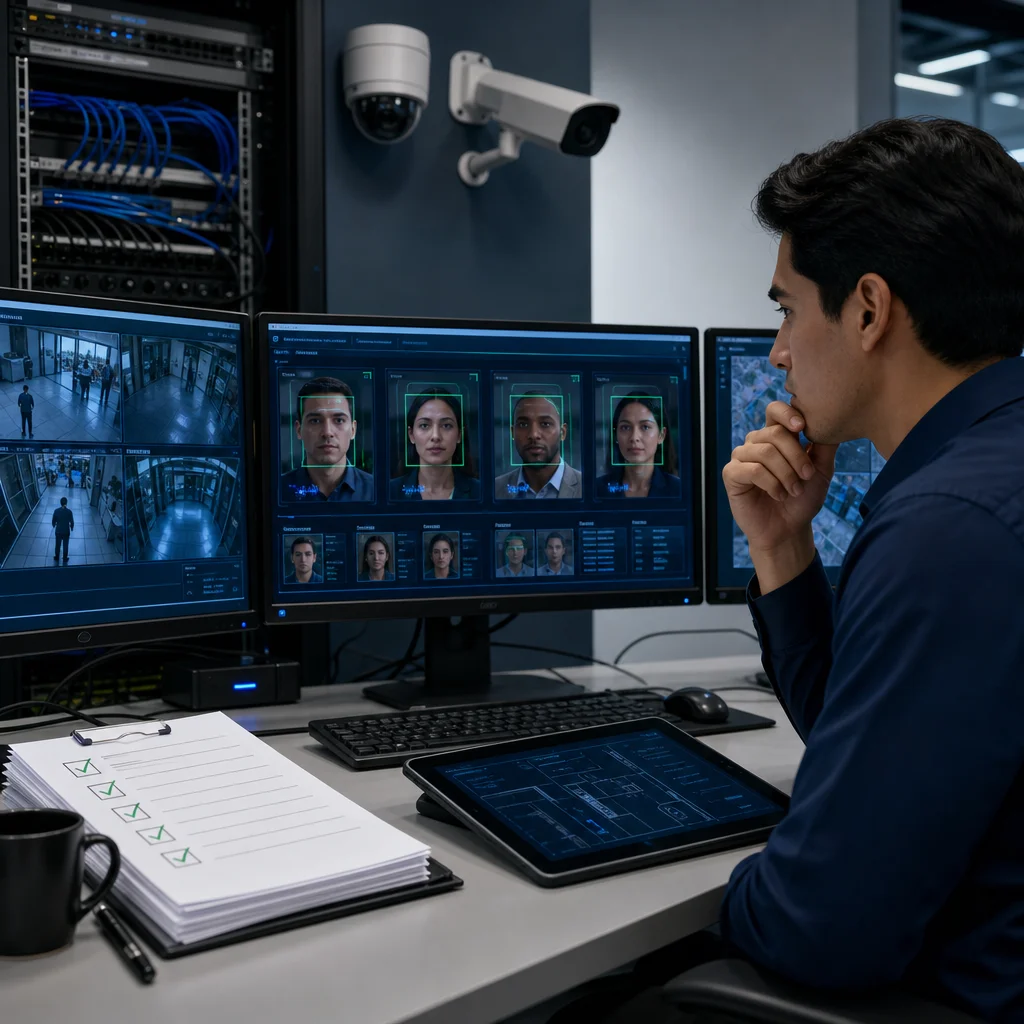
Policies must address data deletion requests, data access inquiries, and consent withdrawal. Your staff needs to understand that facial data subjects can request to know what information was collected, demand deletion, or object to future collection. Systems without clear procedures for handling these requests create compliance violations.
We also recommend establishing clear escalation procedures. If staff members identify potential policy violations or system misuse, there should be documented processes for reporting and remediation.
Ongoing Compliance Monitoring and Audits
Compliance isn’t a one-time implementation milestone; it’s an ongoing operational requirement. We implement monitoring systems that continuously verify compliance adherence, tracking access logs, retention policy execution, and system usage patterns.
Quarterly and annual compliance audits should examine:
- System usage against business justification
- Data retention against documented policies
- Access permissions for principle of least privilege adherence
- Incident logs for security issues or unauthorized access attempts
- Staff training completion and competency
California regulators increasingly conduct spot-check audits. Organizations that can demonstrate detailed compliance monitoring and responsive remediation procedures have substantially better outcomes than those discovering violations during enforcement actions.
Your Path to Secure, Legal Facial Recognition
Facial recognition compliance in California requires careful planning, proper infrastructure, and sustained operational discipline. The organizations succeeding with these systems treat compliance as fundamental to security effectiveness, not an obstacle to overcome.
We’re ready to guide your organization through this process. From initial regulatory assessment through ongoing compliance monitoring, we provide end-to-end expertise in facial recognition deployment that balances security effectiveness with legal protection. Reach out to discuss your specific facility needs and compliance timeline.
Frequently Asked Questions (FAQ)
What facial recognition compliance requirements apply to our business in California?
We recommend reviewing California’s Consumer Privacy Act (CCPA) and the state’s biometric privacy regulations, which require explicit consent before collecting facial recognition data and mandate transparent disclosure of how biometric information is used. Our team helps you assess which regulations apply to your specific operations, whether you’re using facial recognition for access control, security monitoring, or employee identification. We ensure your systems align with California’s strict requirements around data retention, employee notification, and third-party sharing restrictions.
How do we ensure our facial recognition system stays compliant as regulations evolve?
We implement ongoing compliance monitoring through regular audits of your biometric data storage, access logs, and consent documentation to catch any gaps before they become problems. Our approach includes staff training on current regulations, quarterly policy reviews, and coordination with your legal team to adapt quickly when California updates its biometric privacy standards. We also maintain detailed records of your system’s configuration and data handling practices, which protects you during regulatory inspections and helps demonstrate good faith compliance efforts.
Can we integrate facial recognition with our existing access control systems while staying compliant?
We absolutely can integrate facial recognition into your current infrastructure while maintaining full compliance with California law. Our integration process includes proper consent mechanisms, audit trails for every biometric transaction, and secure data storage that meets state privacy standards. We handle the technical implementation so your team can focus on operations, knowing your integrated security system meets both today’s regulations and anticipated future requirements.