CONTACT US
Table of Contents
- The Hidden Costs of Comparing Camera Systems Without Integration Planning
- Why Facility Leaders Are Frustrated With Multi-Vendor Security Deployments
- Our Comprehensive Approach to Enterprise Video Surveillance
- Structured Cabling and Infrastructure: The Foundation Your Security System Needs
- How We Integrate HD Security Cameras With Access Control and IT Systems
- The Business Case for Consolidating Multiple Technology Vendors Into One Partner
- Our Managed IT Services Keep Your Security Systems Running 24/7
- Why Southern California Facilities Choose Terapixels Systems Over Point Solutions
- Getting Started With Our End-to-End Security Assessment
- Frequently Asked Questions (FAQ)
The Hidden Costs of Comparing Camera Systems Without Integration Planning
When you’re evaluating enterprise security camera systems for your Southern California facility, the comparison often starts and ends with camera specs and software dashboards. But that’s precisely where most facility leaders make their first mistake.
We’ve worked with dozens of hotel chains, warehouses, and distribution centers that selected camera systems based on feature lists alone, only to discover months later that their new infrastructure didn’t integrate smoothly with existing access control systems, created network bottlenecks, or required costly workarounds to connect with their IT infrastructure. The real cost of enterprise video surveillance isn’t just the hardware and licensing. It’s the integration complexity, ongoing management burden, and vendor fragmentation that compounds over time.
Most enterprise camera comparisons focus on resolution, frame rates, and cloud platform capabilities. But here’s what gets overlooked: how the system actually plugs into your broader facility infrastructure.
When you deploy Avigilon or Verkada cameras without a clear integration strategy, you’re often creating technical debt. These systems assume a certain network architecture, bandwidth allocation, and IT environment. If your facility’s cabling infrastructure wasn’t designed to support high-throughput video traffic, you’ll face performance degradation. If your access control system runs on a separate network segment, you’re managing two security ecosystems instead of one unified view.
We typically see three hidden cost categories emerge:
- Network infrastructure upgrades needed to handle video traffic loads
- Integration consulting fees when cameras won’t talk to your existing access control or IT systems
- Ongoing management complexity from multiple vendor support contracts and escalation paths
A warehouse client recently spent $80,000 on cameras and software, only to discover their existing network couldn’t handle the bandwidth demands. They needed structured cabling upgrades that weren’t factored into the initial quote. By starting with a comprehensive infrastructure assessment, we identified these gaps before deployment and delivered a solution that worked on day one.
What to do next: Before evaluating specific camera vendors, have your facility’s IT infrastructure audited for readiness to support enterprise video systems.
Why Facility Leaders Are Frustrated With Multi-Vendor Security Deployments
We talk to facility executives at hotels, distribution centers, and clinics who share a consistent frustration: their security cameras work fine, their access control system functions properly, but they don’t work together. This fragmentation creates operational drag.
When camera incidents occur, security personnel have to jump between platforms to correlate events. When you need to grant temporary access to a contractor, your access control team doesn’t automatically see the camera verification from the security team. When network issues arise, you’re caught in the middle of a finger-pointing exercise between your camera vendor and your IT provider.
The fundamental problem is that Avigilon and Verkada excel at camera management, but they’re not infrastructure companies. They don’t own your structured cabling, they don’t manage your network backbone, and they can’t guarantee how your IT environment will behave under load. You become the integrator, managing interfaces between disconnected systems.
Property management firms operating multiple facilities face this magnified. Each site might have deployed cameras through different vendors. Standardization becomes impossible. Training security staff across locations takes longer. Spare parts compatibility breaks down.
Actionable insight: Document every vendor touchpoint in your current security infrastructure. If you’re contacting more than two vendors to resolve a single incident, consolidation will improve both security responsiveness and cost efficiency.
Our Comprehensive Approach to Enterprise Video Surveillance
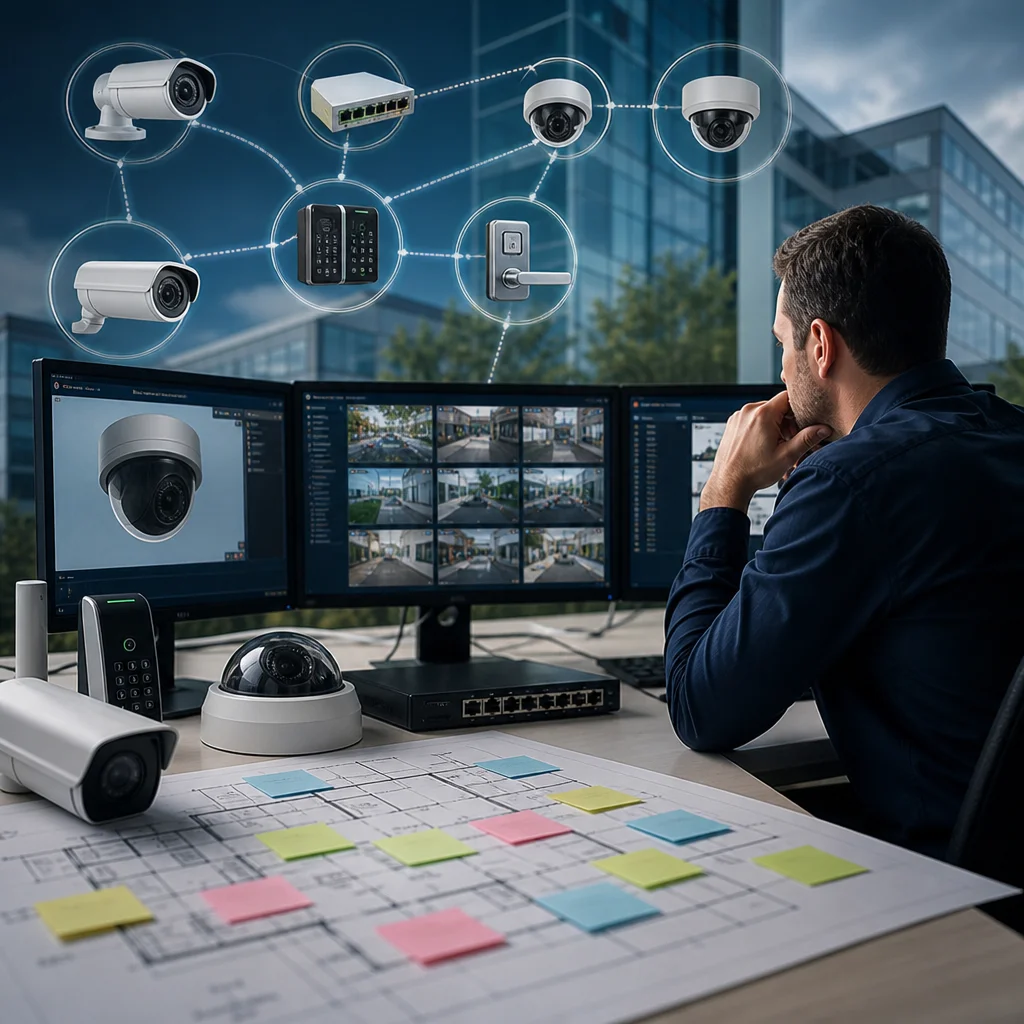
We design enterprise security camera systems as integrated components of your facility infrastructure, not isolated point solutions. From the moment we engage, we’re thinking about how cameras interact with your access control, network architecture, and IT management capabilities.
Our approach begins with a detailed facility assessment covering:
- Physical layout and coverage requirements
- Existing network topology and capacity
- Current access control architecture
- IT security policies and data handling requirements
- Bandwidth and storage demands over 3-5 years
This foundation lets us specify camera systems that actually fit your environment rather than forcing your environment to fit the cameras. We select camera and storage solutions based on your specific needs: resolution for warehouse floor identification, low-light performance for parking areas, thermal options for climate-controlled distribution centers.
More importantly, we design the infrastructure to support not just cameras, but integrated operations. We run the cabling, manage the network segments, ensure proper storage architecture, and design the software workflows so your security team sees a unified view across cameras and access control.
With our approach, system failures become exceptional rather than routine, because we’ve eliminated the integration gaps where problems hide.
Structured Cabling and Infrastructure: The Foundation Your Security System Needs
A frequent oversight in enterprise security deployments is treating cabling as an afterthought. We treat it as foundational.
When you deploy HD security cameras throughout a facility, you’re not just installing cameras. You’re creating a distributed data collection network that generates constant throughput to centralized storage. If your structured cabling wasn’t designed for that traffic pattern, cameras drop frames, storage systems fall behind on ingestion, and your video quality degrades during peak usage periods.
We design cabling infrastructure that supports your current security system and scales for future upgrades. This means:
- Proper gauge copper or fiber runs from each camera location to central equipment rooms
- Redundant pathways so a single cable cut doesn’t blind your security coverage
- Appropriate power delivery to support camera counts at each location
- Physical segregation of security camera traffic from general office network traffic when needed
The investment in proper cabling often represents 15-25% of a comprehensive security deployment. Cutting corners here creates bottlenecks that undermine every downstream component. We’ve seen organizations try to retrofit cabling after deployment issues emerge, which costs 3-4 times more than planning correctly upfront.
For multi-location deployments, standardized cabling infrastructure means your IT team can manage camera networks using consistent protocols across all facilities.
How We Integrate HD Security Cameras With Access Control and IT Systems
Integration is where comprehensive security system design proves its value.
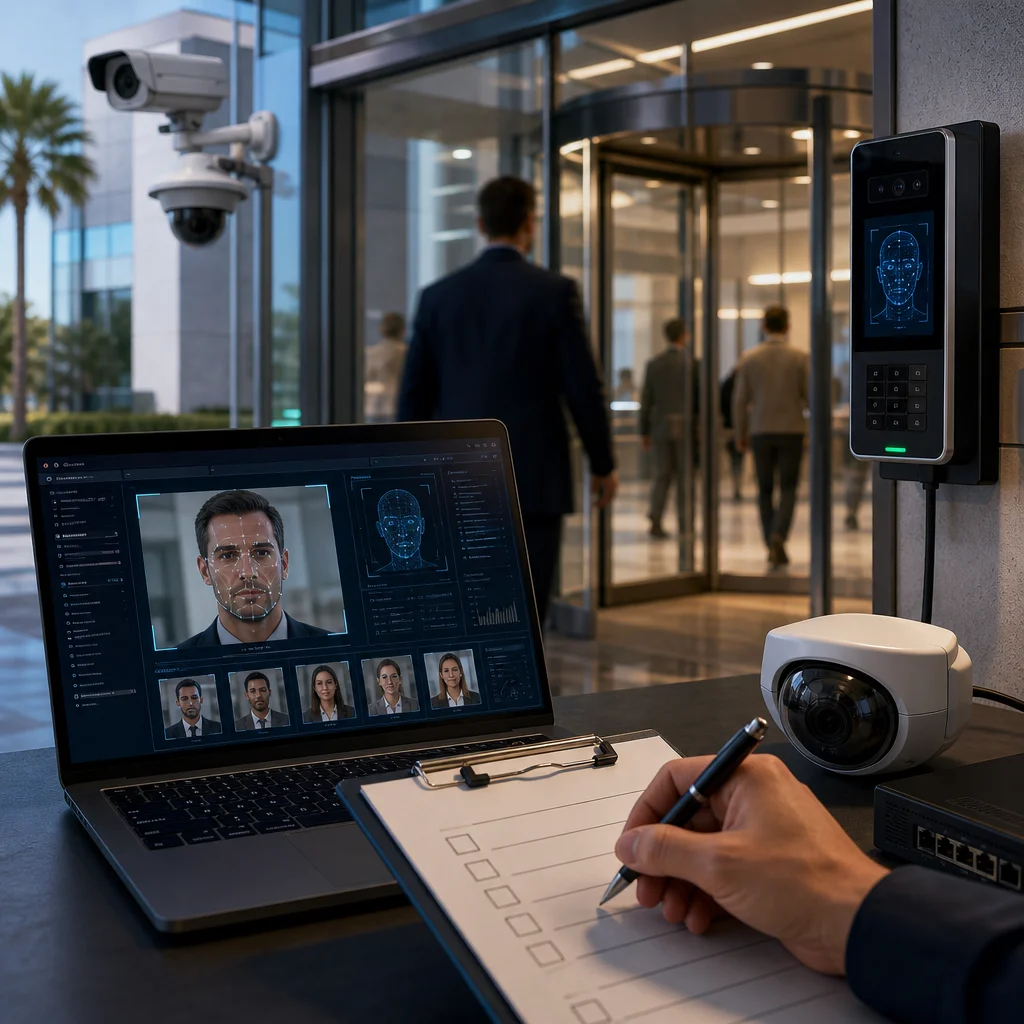
When someone enters your facility through a security door, their access is logged. When that same person approaches a sensitive area, cameras in that zone automatically increase recording frame rate. If an access denial is triggered, cameras flag the event for review. This correlation between access control and video surveillance requires deliberate system design, not wishful thinking about vendor compatibility.
We implement this through unified management platforms that consume data from cameras, access controllers, and IT systems simultaneously. Your security team works from a single interface. Incident investigation doesn’t require switching between four different vendor portals. Alerts generate actionable intelligence because they combine physical access attempts with video verification.
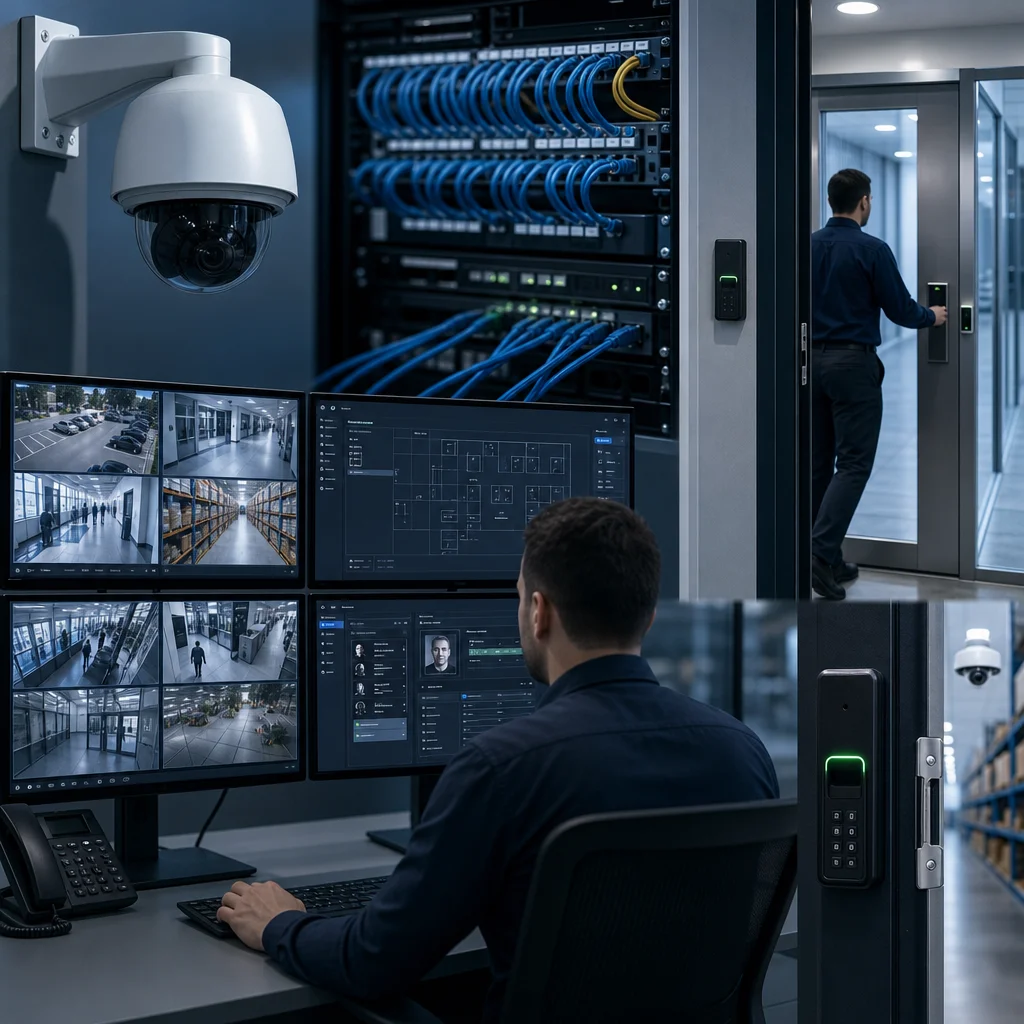
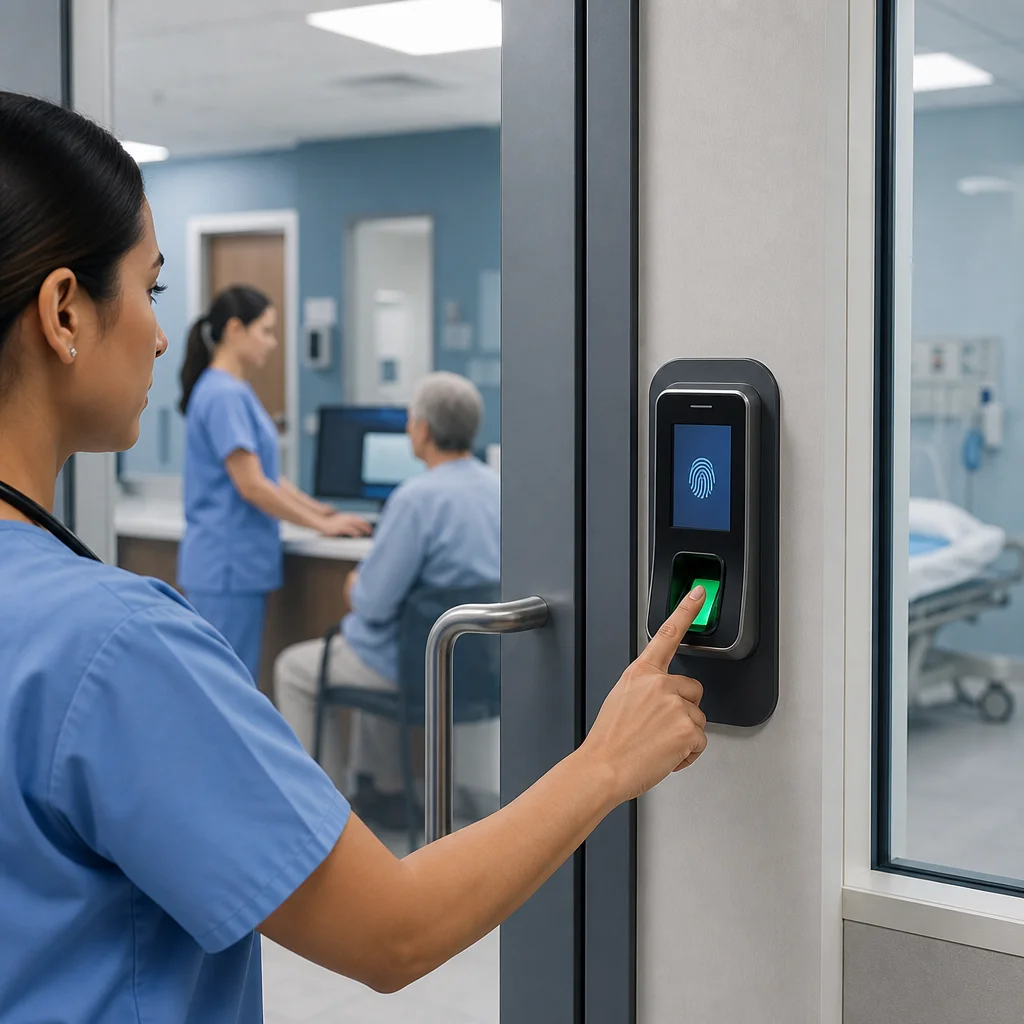
For hotel chains, this means housekeeping access, guest movements, and staff activity create an auditable record across multiple properties using consistent system logic. For distribution centers, it means security exceptions trigger immediate camera feeds of the exact location and time the issue occurred. For clinics, it means HIPAA-compliant video management integrated with access control for sensitive areas.
Integration also extends to your broader IT environment. We ensure cameras don’t monopolize bandwidth during normal operations. We design storage systems that integrate with your IT backup and disaster recovery processes. We manage camera network traffic so it doesn’t interfere with business-critical applications.
The Business Case for Consolidating Multiple Technology Vendors Into One Partner
Operating with multiple technology vendors creates hidden costs that don’t appear in the initial budget.
Each vendor requires separate support contracts, renewal management, and escalation procedures. When an incident occurs, you’re managing multiple vendor response times and responsibility boundaries. When you need to upgrade one system component, you’re coordinating with multiple organizations to ensure compatibility.
We’ve documented this at clients operating across multiple locations. Consolidating to one SLA partner typically reduces:
- Support overhead by 40-50% through unified ticketing and escalation
- Training requirements by standardizing interfaces and workflows across facilities
- Procurement complexity by managing one vendor relationship for cameras, access control, cabling, and IT services
- Incident response time by 30-60% because a single provider owns the entire stack
From a budgeting perspective, multi-vendor deployments require contingency reserves for integration surprises. Single-partner solutions allow you to forecast more accurately because we’re accountable for end-to-end performance, not just our component.
Our Managed IT Services Keep Your Security Systems Running 24/7
Security systems that aren’t actively managed deteriorate quietly. Software updates lag. Storage fills unexpectedly. Network configuration drifts from best practices. Camera firmware versions become inconsistent across your facility.
We provide 24/7 managed IT services that monitor your security infrastructure continuously. Our team proactively identifies and resolves issues before they affect security coverage. We manage cloud-based surveillance systems alongside your on-premises infrastructure, ensuring data availability and redundancy.
Our managed services include:
- Continuous monitoring of camera health, network performance, and storage utilization
- Automated patching and firmware updates on your schedule
- Monthly compliance reporting showing system uptime and incident response metrics
- Capacity planning that prevents storage saturation before it impacts operations
- Disaster recovery validation ensuring your backup systems actually work
For multi-location operators, managed services mean your smaller facilities receive the same level of technical expertise as large campuses. You don’t need to maintain dedicated IT security staff at every location.
This approach transforms security systems from assets that deteriorate over time into reliable infrastructure that actually improves with age as we optimize configuration and performance.
Why Southern California Facilities Choose Terapixels Systems Over Point Solutions
Southern California facilities face specific operational challenges that point solutions don’t address well. Our regional expertise matters.
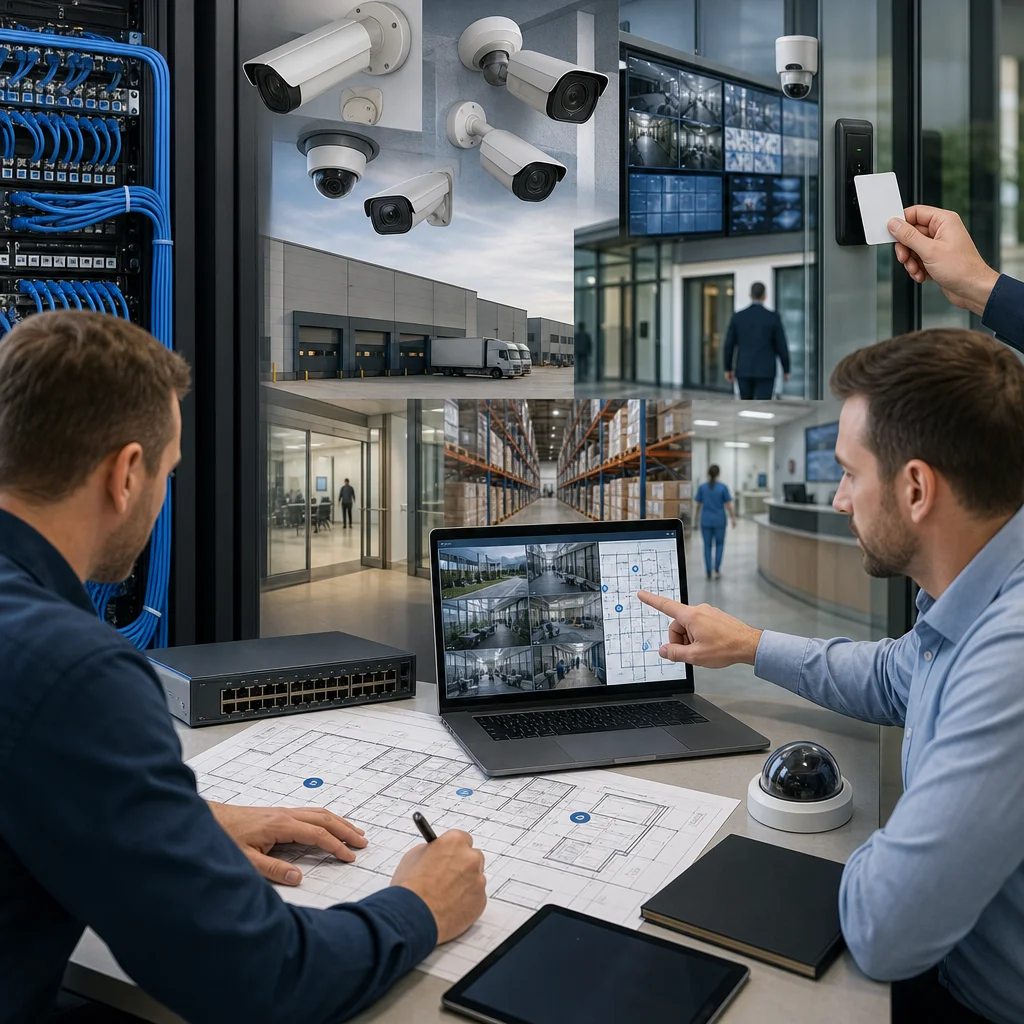
Facilities here operate in complex multi-jurisdictional environments with different compliance requirements between locations. Hotels managing properties across county lines need consistent security standards but localized operational procedures. Distribution centers serving both retail and food service customers have different regulatory obligations. We understand those nuances because we operate in this region.
We also understand the physical environment. Southern California’s climate, sprawling facility layouts, and high-traffic commercial areas create specific security demands. Parking areas need robust nighttime visibility. Loading docks face constant thermal variations. Multi-story facilities require network architectures that handle signal propagation across distances that generic deployments underestimate.
Our relationships with local contractors, electrical installers, and building management teams mean we execute complex deployments efficiently. We’re not learning your facility’s systems and processes during your project. We’ve worked in environments like yours.
Most importantly, we’re available. When your security systems need attention, you’re working with a local team that can respond in hours, not days.
Getting Started With Our End-to-End Security Assessment
The first step is understanding your facility’s actual requirements and current infrastructure readiness.
We conduct a comprehensive security assessment that evaluates your physical layout, existing technology systems, compliance obligations, and operational workflows. This assessment becomes the foundation for a security strategy that actually fits your organization rather than forcing you into a vendor’s standard template.
During the assessment, we document:
- Current security gaps and coverage blind spots
- Infrastructure limitations that will impact new system performance
- Integration opportunities with existing access control and IT systems
- Compliance requirements specific to your industry and location
- Multi-year capacity and scaling needs
The assessment typically takes 2-3 weeks and results in a detailed specification document and implementation roadmap. More importantly, you’ll understand exactly what enterprise video surveillance looks like when designed for your specific facility, not when adapted from someone else’s template.
Ready to move beyond point solutions to integrated security infrastructure? Contact our team at Terapixels Systems. We’ll schedule your comprehensive security assessment and show you why facility leaders across Southern California choose integrated partners over vendors selling single components.
Frequently Asked Questions (FAQ)
What’s included in your end-to-end security assessment?
We conduct a thorough evaluation of your current facility infrastructure, security gaps, and IT environment to design an integrated system tailored to your operations. Our assessment covers structured cabling requirements, camera placement and coverage zones, access control integration points, and how these systems connect with your existing managed IT infrastructure. We deliver a detailed report with recommendations and a consolidated vendor approach so you’re not juggling multiple contracts and support teams.
Why should we consolidate our security and IT systems with one provider?
When we manage your enterprise security cameras, access control, cabling infrastructure, and IT services together, we eliminate costly miscommunications between vendors and ensure seamless integration. We take full responsibility for how your systems communicate end-to-end, reducing troubleshooting time and finger-pointing during incidents. You also streamline budgeting, support requests, and system upgrades since we understand your entire technology environment rather than just one piece of it.
How do we support your security systems after installation?
We provide 24/7 managed IT services that keep your security infrastructure monitored, maintained, and updated without interrupting your operations. Our team proactively manages your video surveillance storage, access control databases, and network performance to prevent downtime before it happens. When issues do occur, we respond as your single point of contact rather than leaving you to coordinate between multiple vendors.