CONTACT US
Table of Contents
- Why Camera Selection Matters for Your Enterprise Operations
- Understanding Your Security Infrastructure Gaps
- AXIS Systems: Capabilities and Limitations for Enterprise Integration
- Hanwha Solutions: What Enterprise Leaders Should Know
- How We Integrate Security Cameras with Your Existing Systems
- Structured Cabling and Infrastructure: The Foundation We Build
- Access Control Integration with Your Camera Network
- Total Cost of Ownership: Beyond Equipment Pricing
- Why Vendor Consolidation Strengthens Your Security Posture
- Our Comprehensive Installation and Support Approach
- Designing Your Custom Security Solution
- Frequently Asked Questions (FAQ)
Why Camera Selection Matters for Your Enterprise Operations
Your security camera system is not a commodity purchase. For mid-sized enterprises managing hospitality properties, distribution centers, manufacturing facilities, or healthcare environments across Southern California, the camera platform you select directly impacts operational visibility, incident response speed, and long-term scalability.
We’ve seen organizations struggle when they choose cameras based solely on upfront cost, only to discover integration nightmares years later. A poorly selected system fragments your security data across incompatible platforms, forces workarounds that frustrate your team, and leaves critical blind spots in your threat response capability. The right enterprise security camera system becomes a central nervous system for your facility, feeding actionable intelligence to access control, alarm systems, and your IT infrastructure.
AXIS and Hanwha represent the two dominant enterprise platforms in professional surveillance. Each brings distinct architectural strengths, integration pathways, and total cost implications. Understanding these differences allows you to make an informed choice aligned with your operational requirements and growth trajectory.
Actionable first step: Audit your current security camera locations, recording resolution requirements, and integration points with other systems. Document any existing infrastructure constraints before evaluating vendor options.
Understanding Your Security Infrastructure Gaps
Most mid-sized enterprises inherit fragmented security deployments. You might have analog cameras in the parking area, DVR-based systems in one building, and completely separate access control infrastructure elsewhere. This fragmentation creates operational friction and security gaps.
We typically find three recurring infrastructure problems:
Siloed data and delayed incident response. When cameras, access control, and alarm systems don’t communicate, security personnel waste time correlating events manually. A breach at a loading dock requires pulling footage from one system, access logs from another, and alarm records from a third.
Poor scalability and future flexibility. Legacy systems installed five years ago often can’t integrate with modern analytics, cloud storage, or mobile monitoring capabilities. Expanding to a new facility means deploying yet another incompatible platform.
Inadequate cabling and network readiness. Many facilities lack the structured network infrastructure to support modern IP camera systems. Cameras get installed, but bandwidth bottlenecks limit frame rates and resolution.
Identifying these gaps before selecting a camera platform prevents costly rework. IP-based enterprise systems require proper structured cabling services and network segmentation to perform effectively.
AXIS Systems: Capabilities and Limitations for Enterprise Integration
AXIS Communications dominates the premium enterprise segment, and for good reason. Their cameras deliver exceptional image quality, advanced analytics capabilities, and deep ecosystem integration.
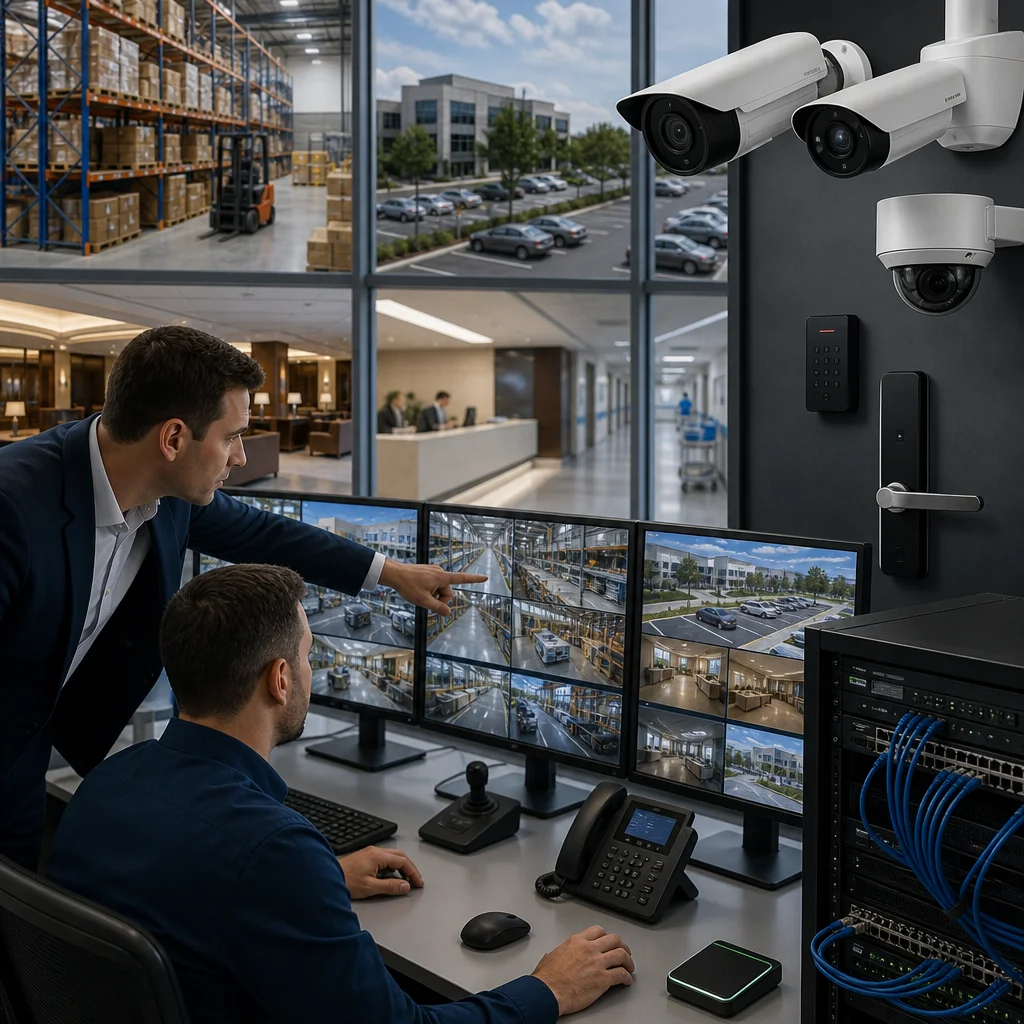
AXIS strengths for enterprise environments include robust edge computing in the camera itself, allowing video analytics to run directly on the device rather than requiring separate server hardware. This approach reduces bandwidth demands and accelerates threat detection. Their open API enables broad third-party integrations, and their thermal imaging lines excel in specialized applications like temperature screening in hospitality and healthcare.
For property management groups operating multiple sites across Southern California, AXIS software platforms like AXIS Site Designer simplify multi-site management and provide unified reporting across distributed locations.
However, AXIS systems carry meaningful limitations. Initial equipment costs run substantially higher than competitor alternatives. Their ecosystem strength requires technical sophistication to realize. Organizations lacking robust IT infrastructure may struggle maximizing AXIS capabilities. Additionally, AXIS cameras tend to be more demanding on network bandwidth due to their advanced processing features, which can stress undersized network infrastructure.
We’ve worked with hotel and hospitality groups where AXIS systems delivered exceptional performance once proper network foundation existed. In environments where network resources remain constrained, other platforms may deliver better ROI.
Hanwha Solutions: What Enterprise Leaders Should Know
Hanwha (which acquired Samsung’s security division) competes aggressively in the enterprise mid-market with strong value positioning and integrated platform capabilities.
Hanwha’s primary advantages center on total platform integration. Their camera, recorder, access control, and analytics solutions are designed to work seamlessly together, reducing integration complexity. For distribution centers and manufacturing facilities, this integrated approach simplifies deployment and support workflows. Hanwha also offers compelling pricing on equipment without sacrificing build quality or feature depth.
Their cloud platform provides solid multi-site management capabilities attractive to property management companies operating across Southern California. The user interface tends toward greater simplicity than AXIS, which can accelerate team adoption.
Hanwha limitations warrant honest consideration. Their open integration ecosystem remains smaller than AXIS, creating potential constraints if your organization uses specialized third-party security tools. Their thermal imaging and advanced analytics capabilities, while solid, don’t match AXIS feature depth in all scenarios. Some enterprise customers report longer support response times through standard channels.
The choice between these platforms isn’t about which is objectively “better.” It’s about alignment between your technical readiness, integration requirements, and growth trajectory.
How We Integrate Security Cameras with Your Existing Systems
Integration is where camera selection becomes consequential. A cutting-edge camera system isolated from your access control, alarm management, and IT infrastructure delivers limited operational value.
We approach integration strategically. First, we map your complete security and operational ecosystem: existing access control systems, alarm platforms, visitor management tools, and IT infrastructure. This mapping reveals integration opportunities and constraints before we select camera hardware.
For commercial IP camera systems, we configure video management software that consolidates your camera feeds with access control events. When someone gains access through a badge reader, that event triggers simultaneous logging of video footage. When an alarm trips, camera feeds automatically display on security workstations. This unified visibility radically improves incident response time.
We handle network integration carefully. Professional surveillance requires dedicated network segmentation, QoS configuration, and bandwidth provisioning separate from general business traffic. Cameras competing for bandwidth with email and web traffic create reliability problems that frustrate your team.
Structured Cabling and Infrastructure: The Foundation We Build
No enterprise camera system performs reliably on substandard cabling and network infrastructure. This is where many organizations fail without realizing it.
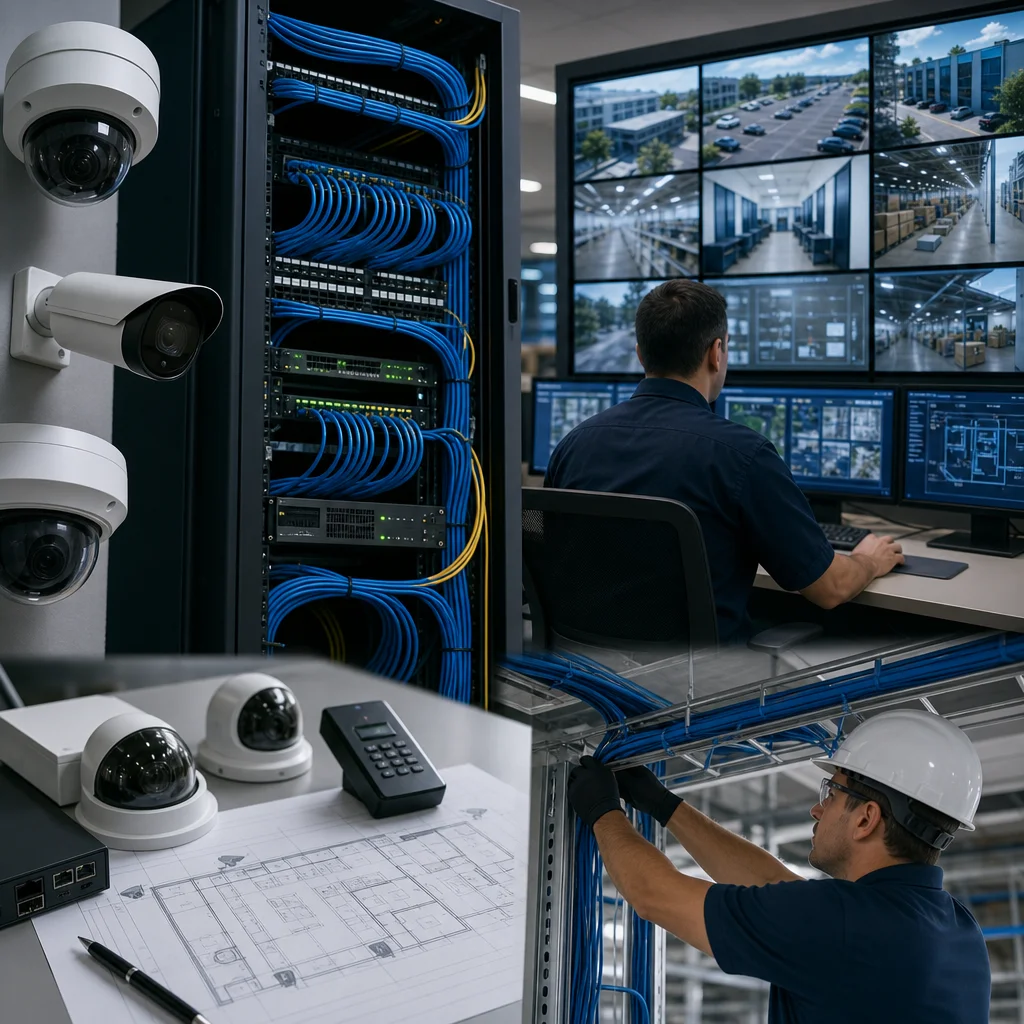
We design structured cabling infrastructure specifically for surveillance requirements. Modern IP cameras demand consistent power delivery, proper cable grounding to prevent interference, and network switching with adequate throughput and failover capability. Many existing facilities have Cat5e or early Cat6 installations designed for 10Mbps office traffic, not professional video streams.
Our approach involves pathway planning to minimize interference, fiber optic cabling for long runs between buildings, PoE-capable switching infrastructure, and redundant network paths for critical camera locations. This foundation costs more upfront but prevents the performance degradation and emergency repairs that plague systems built on inadequate infrastructure.
For manufacturing and distribution facilities with heavy electromagnetic equipment, proper cabling shielding becomes critical. Poor cabling in these environments leads to signal noise that corrupts video quality despite installing premium cameras.
Access Control Integration with Your Camera Network
Modern enterprises demand integrated physical and logical access control. Access cards, biometric readers, and camera systems must work in concert, not independently.
We integrate access control systems with your camera network so that every access event generates timestamped video reference. When an unauthorized entry attempt occurs at a loading dock, security personnel can instantly review footage from that exact moment. This integration proves invaluable for incident investigation, compliance documentation, and operational auditing.
For hospitality groups, this integration extends to guest lifecycle events. Room access, elevator entry, and common area presence get logged alongside video records, creating comprehensive security intelligence. For healthcare facilities, similar integration provides patient safety assurance and regulatory compliance documentation.
The technical foundation for this integration starts with proper network architecture and compatible platforms. This reinforces why camera and access control selection should happen in parallel, not sequentially.
Total Cost of Ownership: Beyond Equipment Pricing
Organizations frequently compare enterprise camera systems on initial purchase price, then face sticker shock when implementation costs materialize.
True total cost of ownership includes infrastructure upgrades, professional installation labor, software licensing, integration engineering, network management overhead, and long-term support. A lower-cost camera platform requiring substantial cabling upgrades and complex integrations often costs more over five years than a premium camera platform that integrates cleanly with existing infrastructure.
AXIS systems typically cost 15-25% more for equipment but often require less integration engineering if your IT environment is sophisticated. Hanwha systems offer lower equipment costs but may require more customization for complex deployments.
Beyond hardware, factor ongoing software licensing, video storage requirements (which scale with camera count and retention period), and support model costs. We’ve observed organizations save 30-40% on three-year costs by investing properly in infrastructure and platform consolidation upfront.
Why Vendor Consolidation Strengthens Your Security Posture
Managing security through multiple vendors creates operational and financial friction. Each vendor expects primary decision-making authority, billing flows through different contracts, and support issues get lost between vendors blaming each other.
Consolidating your camera system, access control, and network infrastructure through a single qualified integrator (like Terapixels) creates accountability. One vendor owns end-to-end system performance. One contract governs the entire solution. One support team coordinates response to complex issues. This eliminates the “that’s not our problem” dynamic that plagues multi-vendor environments.
For mid-market enterprises, consolidation also simplifies planning and budgeting. Rather than juggling multiple vendor roadmaps and upgrade cycles, you work with a partner invested in your long-term security infrastructure success.
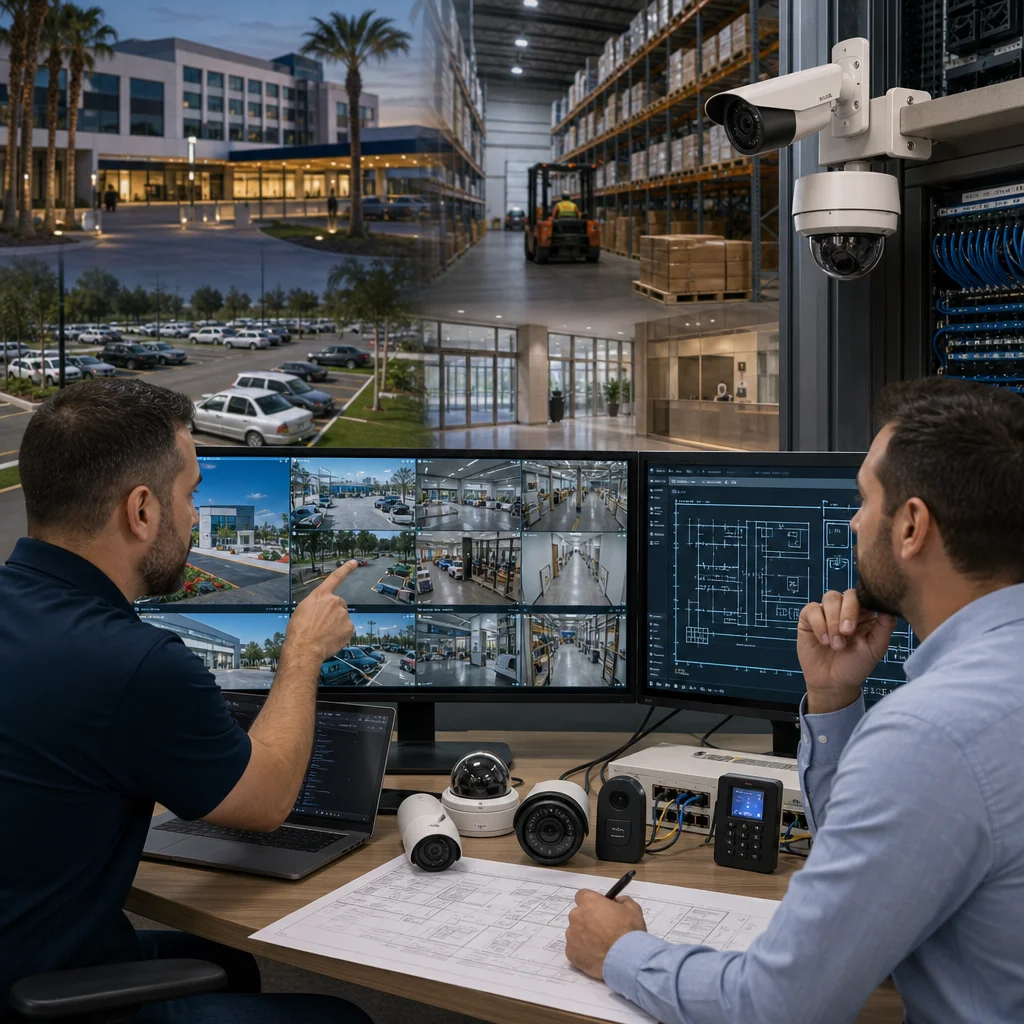
Our Comprehensive Installation and Support Approach
We handle enterprise camera system deployment as a coordinated infrastructure project, not a camera-hanging exercise.
Our process begins with detailed facility assessment, including network readiness analysis, cabling requirements evaluation, and integration point documentation. We design the complete solution before installing anything. We then coordinate cabling installation, camera mounting, network configuration, and software integration as parallel work streams managed to a detailed timeline.
Installation teams from Terapixels manage both technical implementation and operational minimization. For active facilities like hotels, distribution centers, and manufacturing plants, we schedule installation windows that avoid peak operational periods and coordinate with your facilities and IT teams.
Post-installation support includes 90-day system optimization, user training, and integration troubleshooting. We remain available for ongoing support, firmware updates, and future expansion planning. We document your system completely so future modifications don’t require reverse-engineering your infrastructure.
Designing Your Custom Security Solution
Your enterprise security camera system should reflect your specific operational requirements, facility layout, integration needs, and growth trajectory. Generic solutions designed for consumers or small businesses rarely serve mid-market enterprises effectively.
We recommend starting with a detailed requirements conversation. Bring facilities, security, IT, and operational leadership into the planning process. Be explicit about current pain points, integration priorities, compliance requirements, and budget parameters.
From there, we develop a phased implementation approach that typically addresses most critical areas first, then expands capacity and capability based on operational feedback and performance data.
Ready to evaluate enterprise security camera options for your Southern California facilities? Let’s schedule a consultation where we can assess your current infrastructure, discuss AXIS and Hanwha platform implications for your specific environment, and develop an integration strategy that serves your enterprise operations long-term. Contact Terapixels Systems today to begin the process.
Frequently Asked Questions (FAQ)
What’s the difference between AXIS and Hanwha systems, and which should we choose?
Both AXIS and Hanwha offer robust enterprise-grade cameras, but they serve different needs. AXIS excels in specialized applications like thermal imaging and analytics, while Hanwha provides strong value for standard HD and 4K surveillance with excellent integration capabilities. We evaluate your specific operational requirements, facility layout, and existing infrastructure to recommend the platform that delivers the best long-term performance for your business.
How do security cameras integrate with our access control and IT systems?
We build a unified infrastructure where your cameras, access controls, and network systems communicate seamlessly through structured cabling and managed platforms. This integration allows you to monitor physical access points in real-time, correlate security events across systems, and manage everything from a centralized dashboard rather than juggling multiple vendor tools.
Why should we consolidate our security and IT vendors with one provider?
Consolidating with us eliminates compatibility headaches, reduces support complexity, and ensures your entire security ecosystem is built on a cohesive foundation. When one provider designs your cabling infrastructure, installs your cameras, configures your access controls, and manages your IT network, we can identify vulnerabilities faster and respond to issues without the delays that come from coordinating between multiple vendors.