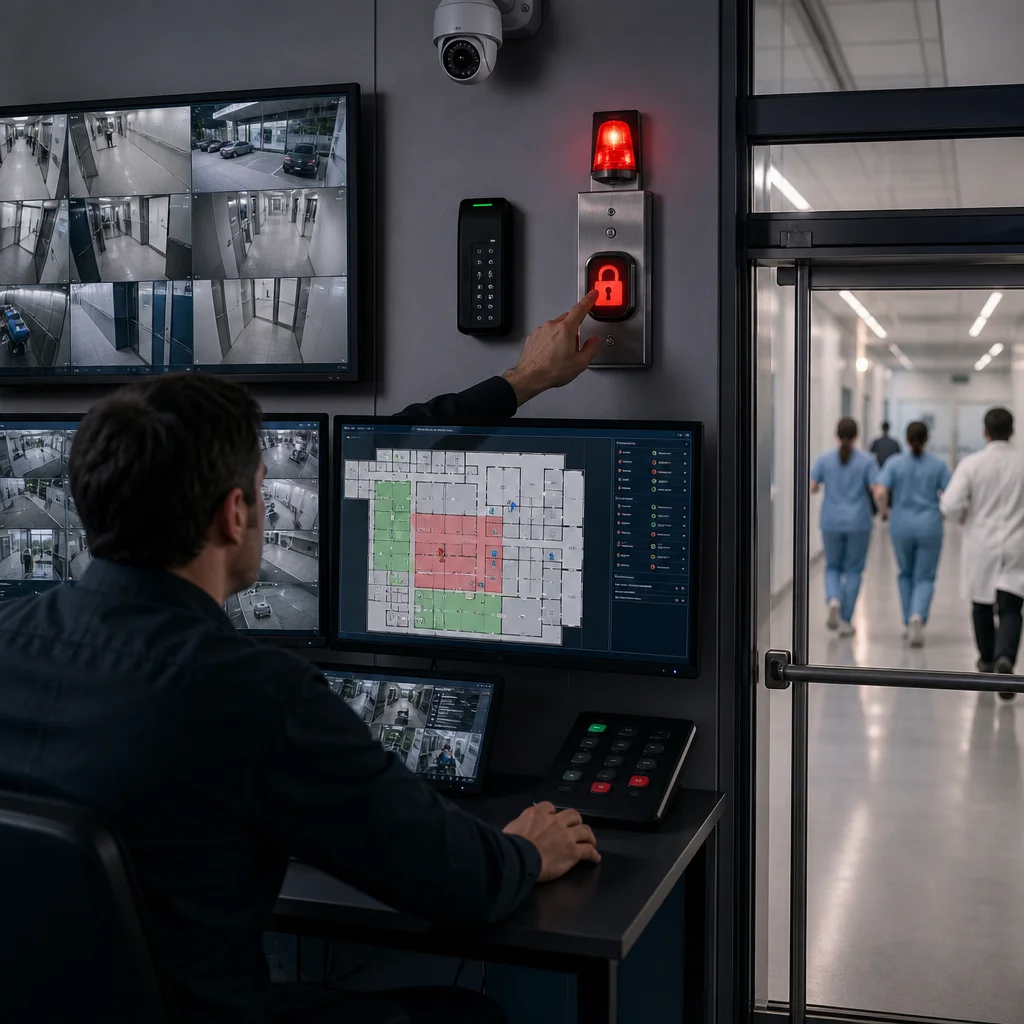
CONTACT US
Table of Contents
- The Challenge of Aging Access Control Infrastructure
- Why Legacy Systems Create Security and Operational Gaps
- Understanding AMAG Symmetry Platform Capabilities
- How We Approach Your Migration Strategy
- Minimizing Downtime During System Transitions
- Integration With Your Existing Security Ecosystem
- Structured Cabling and Network Foundation Requirements
- Security Best Practices During and After Migration
- Training Your Team on New Access Control Systems
- Measuring ROI From Your Access Control Upgrade
- Ongoing Managed Services and System Support
- Frequently Asked Questions (FAQ)
The Challenge of Aging Access Control Infrastructure
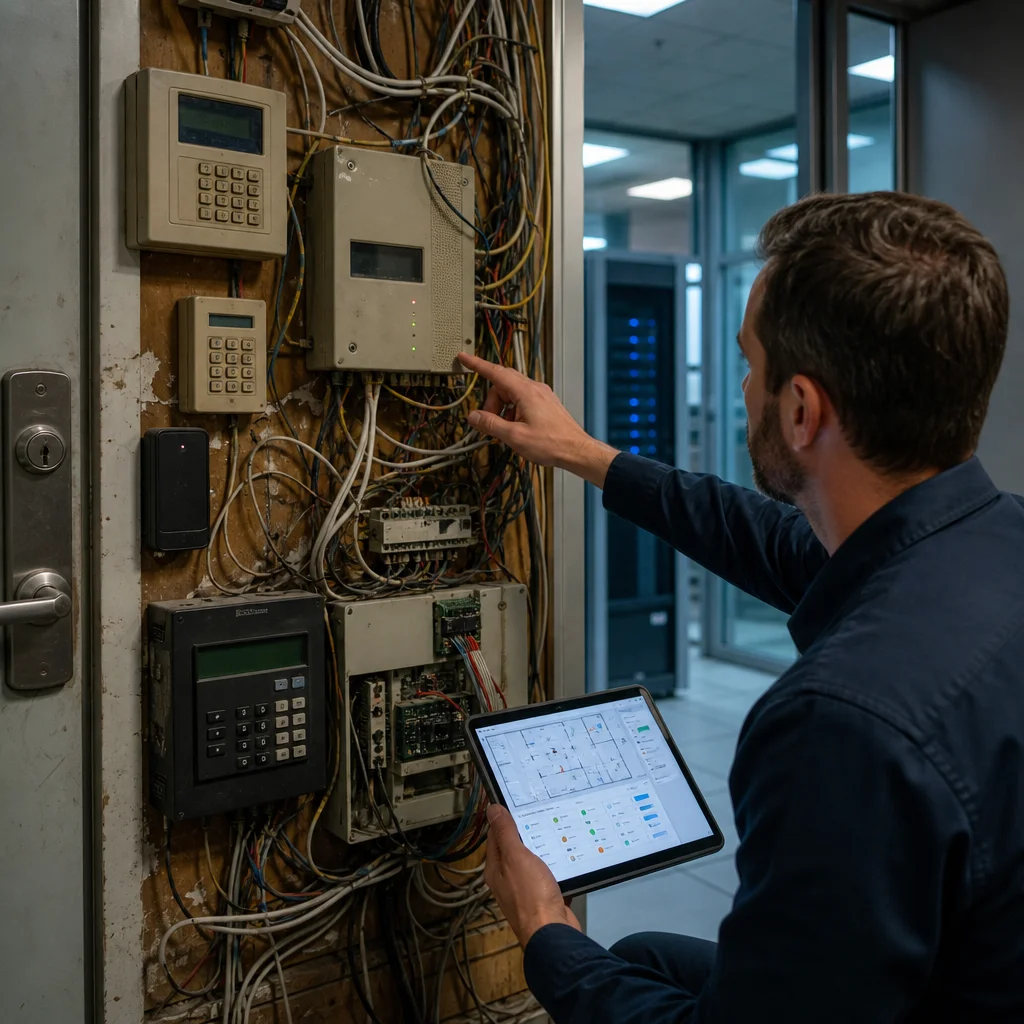
Most mid-sized organizations in Southern California inherit access control systems that have been patched and extended far beyond their original design life. We’ve walked into facilities where administrators are manually managing badge access through outdated web interfaces, tracking credentials in spreadsheets, or worse, managing physical keys across multiple buildings.
These legacy systems typically lack cloud integration, real-time reporting, and mobile credential support. When you’re managing hotel properties, warehouses, or distribution centers across multiple locations, fragmented access control becomes a liability. We often find that organizations operating Honeywell, Salto, or other aging platforms are stuck in reactive mode, unable to respond quickly when security incidents occur or when staff turnover requires bulk credential changes.
The core problem isn’t that these systems fail catastrophically overnight. They degrade gradually, creating administrative friction that masks deeper security vulnerabilities. Your team spends hours on manual processes while your actual security posture remains opaque.
Why Legacy Systems Create Security and Operational Gaps
Aging access control infrastructure introduces real business risk across multiple dimensions. Without centralized visibility, security managers cannot quickly answer critical questions: Who accessed Building C at 2 AM? Which cards were deactivated last week? Where are your temporary contractor credentials actually used?
Legacy systems also create operational bottlenecks. When your front-desk staff needs to grant temporary access to a vendor or visitor, they’re working through email chains and manual processes instead of instant, role-based provisioning. This directly impacts your guest experience at hospitality properties and creates compliance documentation nightmares.
From a security standpoint, older platforms often lack modern threat detection. They don’t identify unusual access patterns, can’t integrate anomalies with your video surveillance systems, and typically require manual audit trails. For manufacturing facilities and distribution centers, this means you’re essentially flying blind during shift changes when access activity peaks.
Integration gaps compound these issues. Your access control system operates as an island, disconnected from your security cameras, visitor management, and HR systems. We’ve seen organizations miss critical incidents because security wasn’t automatically correlated across systems.
Understanding AMAG Symmetry Platform Capabilities
AMAG Symmetry represents a fundamental shift toward integrated, cloud-capable access control. The platform provides real-time credential management, comprehensive audit trails, and mobile credential support across your entire portfolio. Whether you’re managing five locations or fifty, Symmetry scales without requiring separate hardware at each site.
The key capabilities we leverage when implementing Symmetry for your organization include:
- Cloud-based credential management with role-based access provisioning
- Real-time activity feeds and automated alerting when policy violations occur
- Mobile credential support, allowing staff to use smartphones as keycards
- Visitor management integration with automated temporary access workflows
- API connectivity enabling integration with your video management system, HR platform, and building automation
- Comprehensive reporting and analytics for compliance audits and security investigations
For hospitality properties, Symmetry’s mobile credential capability eliminates the need for physical card reissues during staff transitions. Distribution centers benefit from automated shift-based access rules and real-time violation alerts when unusual access patterns emerge. Manufacturing facilities gain visibility into who accessed restricted areas and when.
The platform’s architecture also supports our structured cabling and network infrastructure work. Symmetry runs on modern network infrastructure, which means your installation quality directly impacts system reliability and performance.
How We Approach Your Migration Strategy
We don’t treat AMAG Symmetry migration as a rip-and-replace project. Your organization operates continuously, and we plan migrations accordingly.
Our approach starts with a comprehensive audit of your existing access control footprint. We document every reader, every credential type, every access rule, and every integration point. For large properties like hotel chains or warehouses, this discovery phase typically takes 1-2 weeks and is critical for avoiding gaps during cutover.
Next, we develop a phased migration plan tailored to your operational requirements. For a 50-location hotel portfolio, we might migrate one property at a time, capturing lessons and refining our process. For a single large facility with high security requirements, we plan parallel operation windows where both systems run simultaneously, allowing staff to validate that Symmetry behaves exactly as expected before we decommission legacy hardware.
We establish a migration timeline that accounts for your peak operational periods. A distribution center migrates during lower-traffic windows; a hotel property migrates during off-peak seasons if possible. We also identify which access control zones are mission-critical and which can tolerate brief windows of manual override if needed.
Your IT team and facility management staff are embedded in this planning. We need to know which staff members currently manage the legacy system, what workarounds they’ve developed, and which operational challenges keep them awake at night. Those insights shape our migration priorities.
Minimizing Downtime During System Transitions
Downtime during access control migration isn’t acceptable. We’ve designed our process to eliminate it.
For facilities we service, we run both systems in parallel for 48-72 hours before final cutover. During this window, every access event triggers both the legacy system and Symmetry simultaneously. This approach lets us validate that credential provisioning matches, that all readers are responding correctly, and that mobile credentials work as expected in your actual environment, not just in a lab.
We physically install AMAG Symmetry hardware and network connections days before the actual migration begins. This means network cabling is complete, power distribution is established, and all readers undergo isolated testing. When migration day arrives, we’re activating pre-validated systems, not troubleshooting infrastructure during a live cutover.
Our team also provisions “manual override” procedures at every access point. If Symmetry experiences any unexpected issue, your staff can use temporary badge codes or mechanical overrides to maintain access. This safety net means your facility keeps operating while our team investigates and resolves any issues.
For large properties, we station technicians onsite for 24-48 hours post-cutover. They monitor reader activity, verify alerting is functioning, and respond immediately to any anomalies. You’re not dealing with remote support or hoping issues resolve themselves.
Integration With Your Existing Security Ecosystem
AMAG Symmetry’s value multiplies when it connects to your video surveillance system. We integrate Symmetry with your security camera network so that access violations automatically trigger video clip retrieval and review. When someone attempts unauthorized access to a restricted manufacturing area, security personnel instantly see the video evidence.
This integration requires modern network infrastructure. Your structured cabling foundation needs to support the bandwidth and reliability requirements of both systems operating in concert. We often discover that legacy cabling is limiting the performance of newer security systems, so we address network foundations as part of the migration project.
Your visitor management system also connects to Symmetry. Visitors arriving at your hotel, manufacturing facility, or office get temporary mobile credentials that automatically expire at their checkout time. No manual cleanup, no lingering access.
HR system integration is equally important. When you offboard staff in your HR platform, their access credentials automatically deactivate across all locations within minutes. For hospitality properties managing seasonal staff or manufacturing facilities with high turnover, this automation eliminates a major security gap.
We use API connections to pull this integration together. Symmetry’s open architecture allows us to connect your existing enterprise platforms rather than forcing you into proprietary silos.
Structured Cabling and Network Foundation Requirements
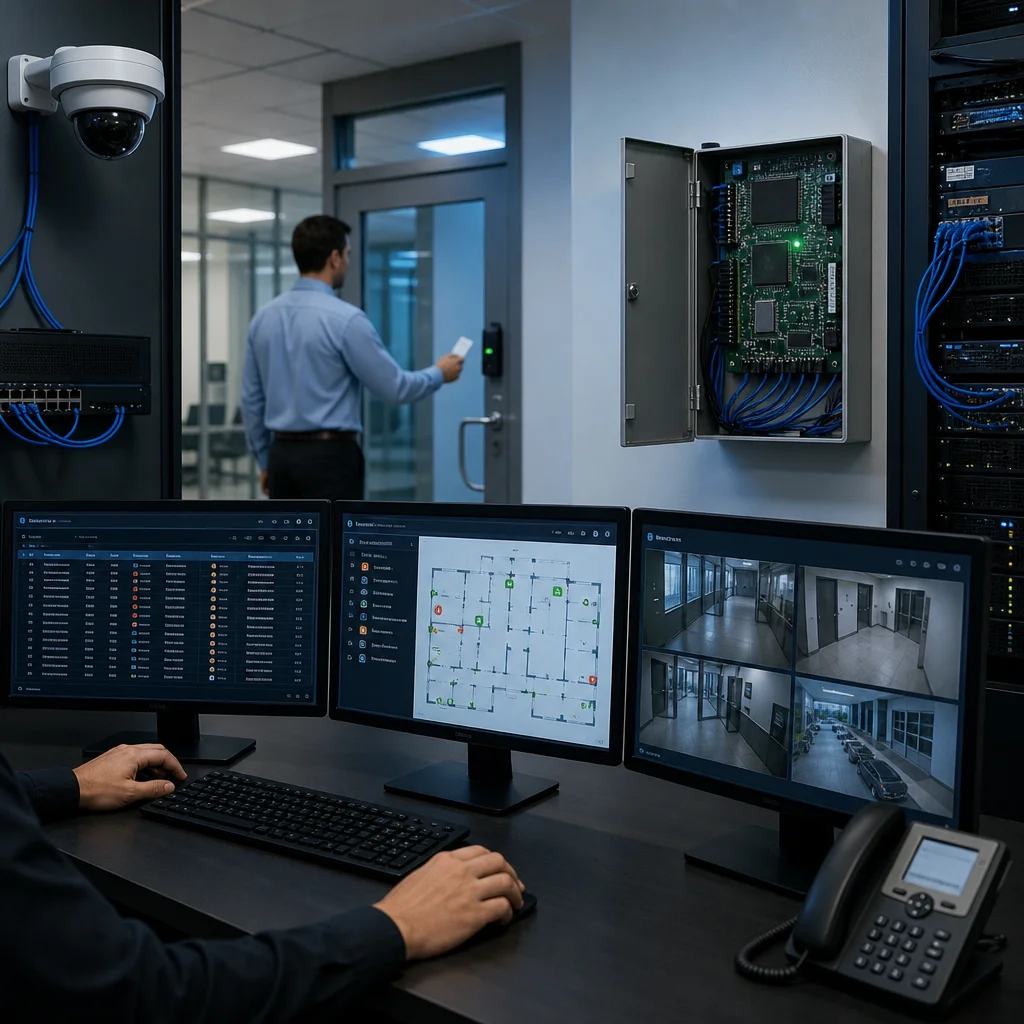
AMAG Symmetry depends on robust, redundant network infrastructure. If your facility is running over aging copper cabling, salvaged network switches, or WiFi access points installed a decade ago, your access control system will suffer performance and reliability issues.
We assess your network foundation as part of our migration proposal. For facilities with Cat5e or older cabling, we recommend upgrades to Cat6A infrastructure that supports gigabit bandwidth and maintains performance over longer distances. Many Southern California facilities we work with were built before modern cabling standards existed, so infrastructure refresh is often necessary.
Our structured cabling foundations work ensures that your access control readers, controllers, and management servers operate on a network designed for security-critical applications. This includes managed network switches with VLAN segmentation, isolating access control traffic from general IT traffic for security and performance reasons.
We also design redundancy into the network. Access control systems need failover paths so that reader outages don’t cascade through your entire facility. This typically means dual network connections to critical equipment and failover controllers that activate if primary systems experience issues.
Security Best Practices During and After Migration
Migration represents a unique security window. We implement controls that protect your organization during this transition.
Before cutover, we perform security scanning on all AMAG Symmetry hardware and network infrastructure. We verify that firmware is current, that default passwords are changed, and that only authorized personnel have access to management interfaces. Legacy systems sometimes lack these controls, so we’re not just upgrading capability, we’re upgrading security posture.
During migration, access credentials are briefly vulnerable as they transition between systems. We limit this window as tightly as possible and monitor both systems for unauthorized access attempts. For facilities managing sensitive areas like manufacturing clean rooms or hotel back-of-house, we may assign additional security personnel during cutover.
After cutover, we establish role-based access policies that reflect your current organizational structure. This is the ideal time to audit and tighten access rules. A warehouse that previously allowed all staff access to all areas might now restrict chemical storage to trained personnel only. A hotel might restrict back-of-house access to employees on scheduled shifts rather than 24/7 blanket access.
We also establish ongoing security auditing practices. Symmetry generates detailed access logs, and we help you establish regular review processes. Monthly compliance audits, quarterly access rule reviews, and incident response procedures become standard operations.
Training Your Team on New Access Control Systems
Your facility management and security team need to be proficient with Symmetry before we consider migration complete. We conduct hands-on training covering day-to-day operations, emergency procedures, and compliance reporting.
Training covers specific scenarios your team will encounter. For hospitality properties, staff learn how to provision temporary mobile credentials for guests with mobile credentialing, how to revoke access when guests check out, and how to handle emergency lockdowns. For manufacturing facilities, training covers shift-based access rule changes, contractor credential provisioning, and access violation investigation procedures.
We also document your access control policies in written procedures. This documentation ensures that knowledge isn’t dependent on individual team members. When staff transitions occur, new personnel have clear, step-by-step guides for common operations.
For organizations with multiple locations, we often train a core team that then conducts site-specific training at each facility. This approach ensures consistency while accounting for location-specific variations.
Measuring ROI From Your Access Control Upgrade
AMAG Symmetry migration delivers measurable business value across multiple dimensions.
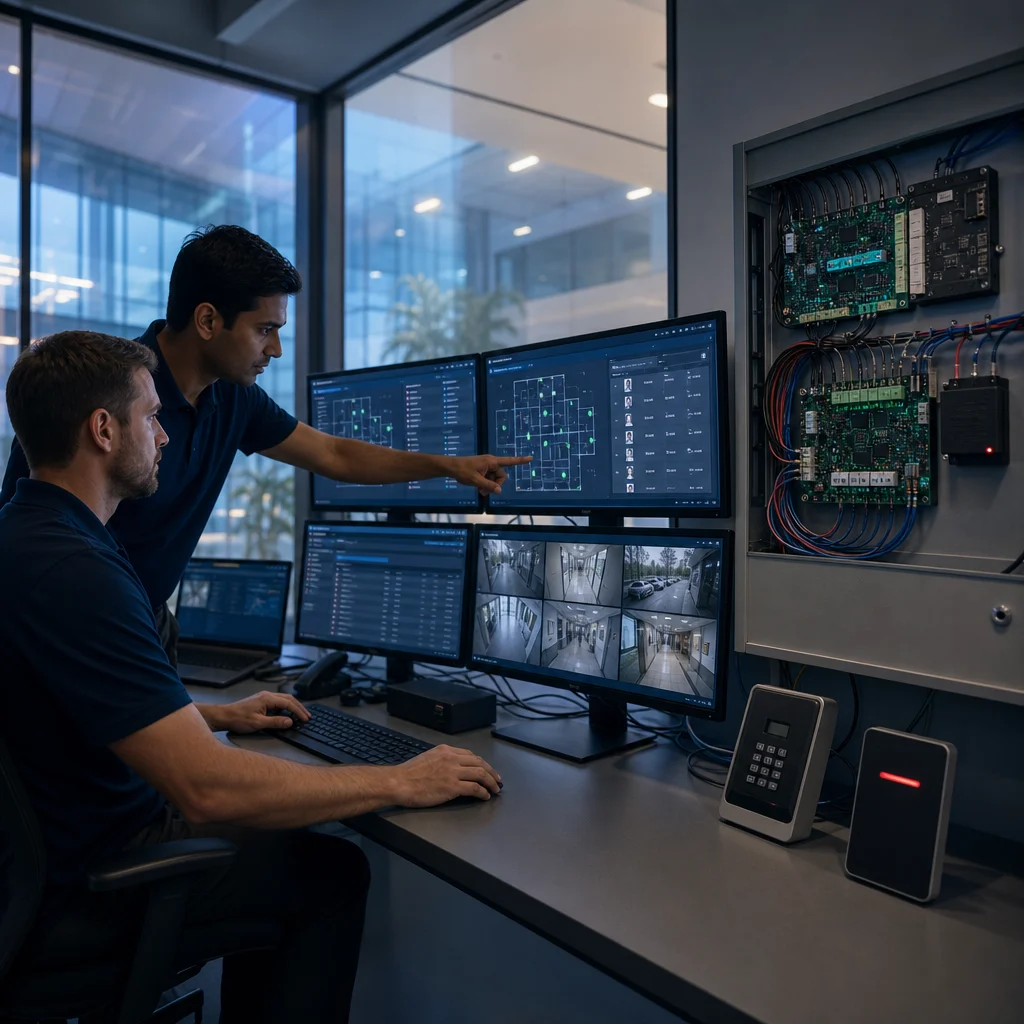
Administrative time reduction is immediately apparent. Manual credential provisioning that previously consumed 5-10 hours weekly now takes minutes. For organizations managing hundreds or thousands of credentials across multiple locations, this efficiency gain translates directly to cost reduction. Your security team spends less time on administrative drudgery and more time on strategic security initiatives.
Reduced downtime from credential issues also generates ROI. Legacy systems sometimes require physical IT intervention to provision new credentials or resolve reader failures. Symmetry’s cloud architecture means most credential operations happen remotely, eliminating truck rolls and onsite troubleshooting.
Security incident response improves measurably. Access violations that previously required manual log review now generate instant alerts. Video integration allows security teams to investigate incidents in minutes rather than hours. For hospitality and manufacturing properties, this faster response capability reduces the impact of actual security incidents.
Compliance audit preparation becomes substantially easier. Symmetry’s audit trails provide the documentation requirements regulatory bodies and insurance providers demand. We’ve seen organizations reduce compliance audit preparation time from weeks to days because their access control system now generates audit-ready reports automatically.
We help you establish baseline metrics before migration begins, then measure improvement at 30, 60, and 90 days post-cutover. Most organizations we serve realize full migration costs within 18 months through operational efficiency gains alone.
Ongoing Managed Services and System Support
Migration to AMAG Symmetry isn’t the end of our engagement. We provide ongoing managed services that keep your system secure, performant, and aligned with your evolving business needs.
Our managed access control services include firmware updates, security patching, performance monitoring, and credential auditing. We monitor your Symmetry system 24/7, identifying potential issues before they impact your operations. When a reader fails or a network segment experiences problems, our team investigates and resolves the issue before your staff is even aware of it.
We also handle seasonal access rule changes and new credential provisioning as your organization evolves. When you expand to new facilities or open seasonal operations, we provision those locations in Symmetry and integrate them into your existing infrastructure without disruption.
For many organizations, we combine access control managed services with our broader managed IT offerings. Your access control system, video surveillance, structured cabling, and network infrastructure operate as an integrated ecosystem under our management. This consolidated approach eliminates vendor finger-pointing when issues span multiple systems.
Ready to modernize your access control infrastructure? We’d like to understand your current environment, your security goals, and the operational challenges you’re facing. Contact us to schedule a detailed assessment of your AMAG Symmetry migration opportunity.
Frequently Asked Questions (FAQ)
What makes AMAG Symmetry the right choice for our legacy access control system replacement?
We recommend AMAG Symmetry because it delivers enterprise-grade security with modern integration capabilities that your aging infrastructure simply cannot match. Our experience shows that Symmetry’s flexible architecture allows us to seamlessly connect your access control system with your existing security cameras, IT network, and facility management tools without requiring a complete technology overhaul. The platform also scales as your organization grows, protecting your investment for years to come.
How do we minimize operational disruption when migrating your access control system?
We handle migrations strategically by running parallel systems during transition periods, which means your facility maintains full access control functionality throughout the process. Our team coordinates the switchover during off-peak hours whenever possible and conducts thorough testing at each phase to catch any issues before they impact your daily operations. We also ensure your team is present and trained during cutover so they can manage any immediate questions that arise.
What infrastructure upgrades does our access control migration typically require?
Most organizations benefit from refreshing their network cabling and physical infrastructure to support modern access control hardware and ensure reliable system performance. We evaluate your current electrical systems, data pathways, and network capacity during our initial assessment and provide you with a clear breakdown of what needs upgrading. These foundation improvements not only support your new access control system but also create a platform for future security and IT enhancements.