CONTACT US
Table of Contents
- Why Your Facility Needs Emergency Lockdown Capability
- The Risks of Fragmented Security Systems
- How Integrated Access Control Stops Security Threats
- Our Approach to Emergency Lockdown Implementation
- Structured Cabling Foundation for Reliable Access Control
- Real-World Emergency Response Scenarios
- Implementation Timeline and Facility Integration
- Training Your Team on Tiered Access Protocols
- Measuring Security Performance and Response Effectiveness
- Next Steps to Secure Your Facility
- Frequently Asked Questions (FAQ)
Why Your Facility Needs Emergency Lockdown Capability
Modern facilities face evolving security threats that demand more than traditional locks and guards. Whether you operate a hospitality property, healthcare clinic, distribution center, or manufacturing facility, the ability to execute a controlled lockdown within seconds can be the difference between containment and chaos.
Emergency lockdown systems provide immediate facility-wide control when threats emerge. Rather than relying on manual responses or verbal communication across multiple zones, an integrated lockdown capability lets authorized personnel electronically secure doors, restrict movement between areas, and guide staff and guests to safety in real time. This isn’t about creating panic; it’s about removing uncertainty and enabling coordinated response.
Southern California’s mixed-use environments, high-density operations, and diverse tenant bases make comprehensive access control essential. From a hotel managing guest flow during an incident to a manufacturing facility protecting both employees and valuable equipment, the stakes are high. We’ve helped organizations across hospitality, healthcare, and logistics implement systems that protect assets and people with minimal operational friction during normal operations.
Actionable takeaway: Schedule a facility audit to identify critical zones that need emergency lockdown capability. Map your emergency routes and determine which areas require automatic versus manual override.
The Risks of Fragmented Security Systems
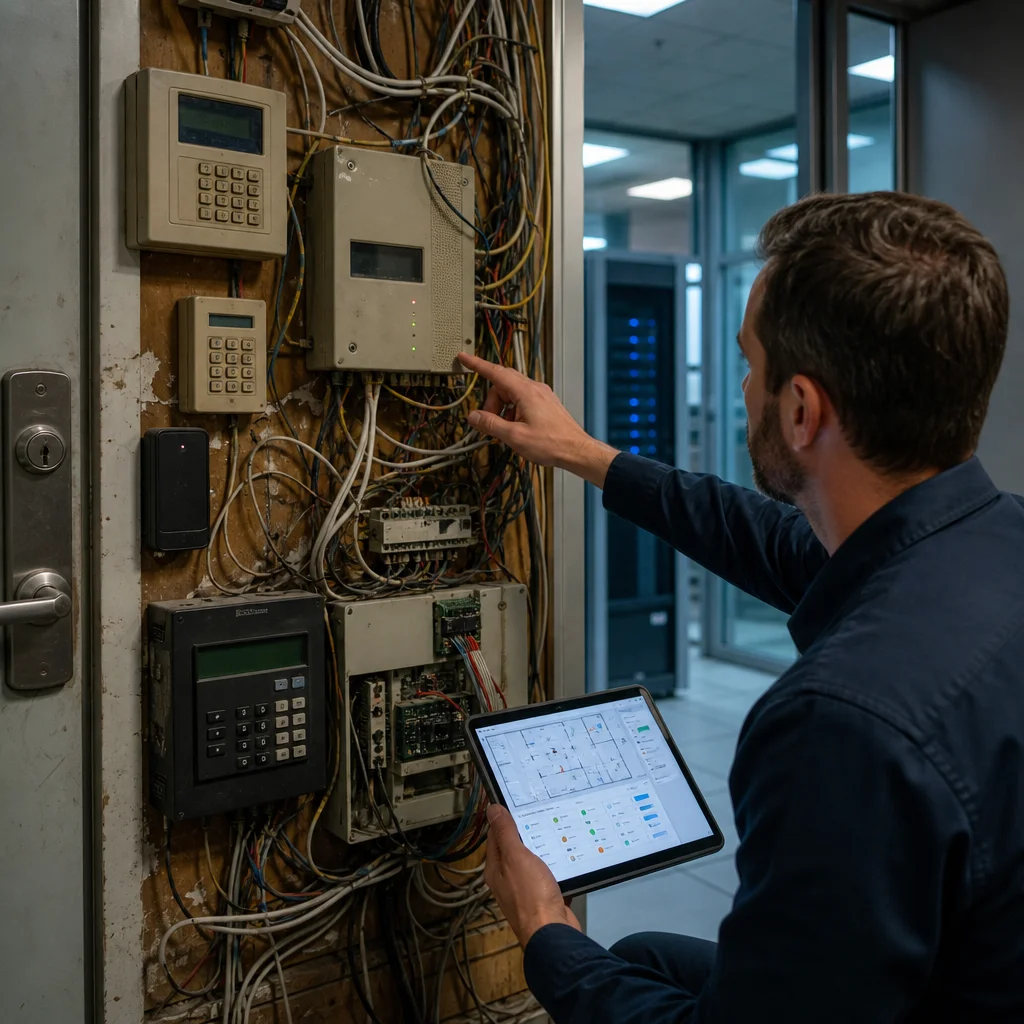
Many organizations we encounter have accumulated security solutions over years of piecemeal upgrades. A card reader system handles access to the IT room. Security cameras cover the loading dock. Badge readers exist for employee areas. Meanwhile, executive suites use older PIN-based locks, and exterior gates operate on a separate system entirely.
Fragmented systems create dangerous gaps. When an incident occurs, no single operator has facility-wide visibility. Response times multiply because personnel must coordinate across incompatible systems. Staff trained on one platform may not know how to operate another. Integration failures mean locked doors that should open for emergency evacuation, or doors that should close remaining accessible to unauthorized personnel.
The operational cost compounds too. Maintenance teams manage multiple vendors, different software platforms, varying battery backup schedules, and incompatible reporting systems. When critical systems fail, troubleshooting becomes slow because no one vendor understands the entire ecosystem. We’ve seen this delay cost organizations precious minutes during actual emergencies.
Actionable takeaway: Audit your current access control hardware and software. Document which systems don’t communicate with each other. This list becomes your integration roadmap.
How Integrated Access Control Stops Security Threats
Integrated integrated access control systems consolidate all door, gate, and area controls into a single intelligent platform. When a threat is reported in one zone, the system can instantly lock adjacent areas, prevent access to sensitive departments, and keep exits clear for emergency evacuation. Everyone sees the same situation in real time.
Here’s what integration enables in practice. A healthcare clinic receives an active threat alert. Within seconds, the administrative software triggers lockdown protocols: patient care areas seal off from public entrances, staff rooms lock automatically, and emergency exits remain accessible for evacuation. Security personnel see a live floor plan showing which doors are locked, which are in alarm state, and which personnel are in restricted areas. The system logs every action for incident review and compliance reporting.
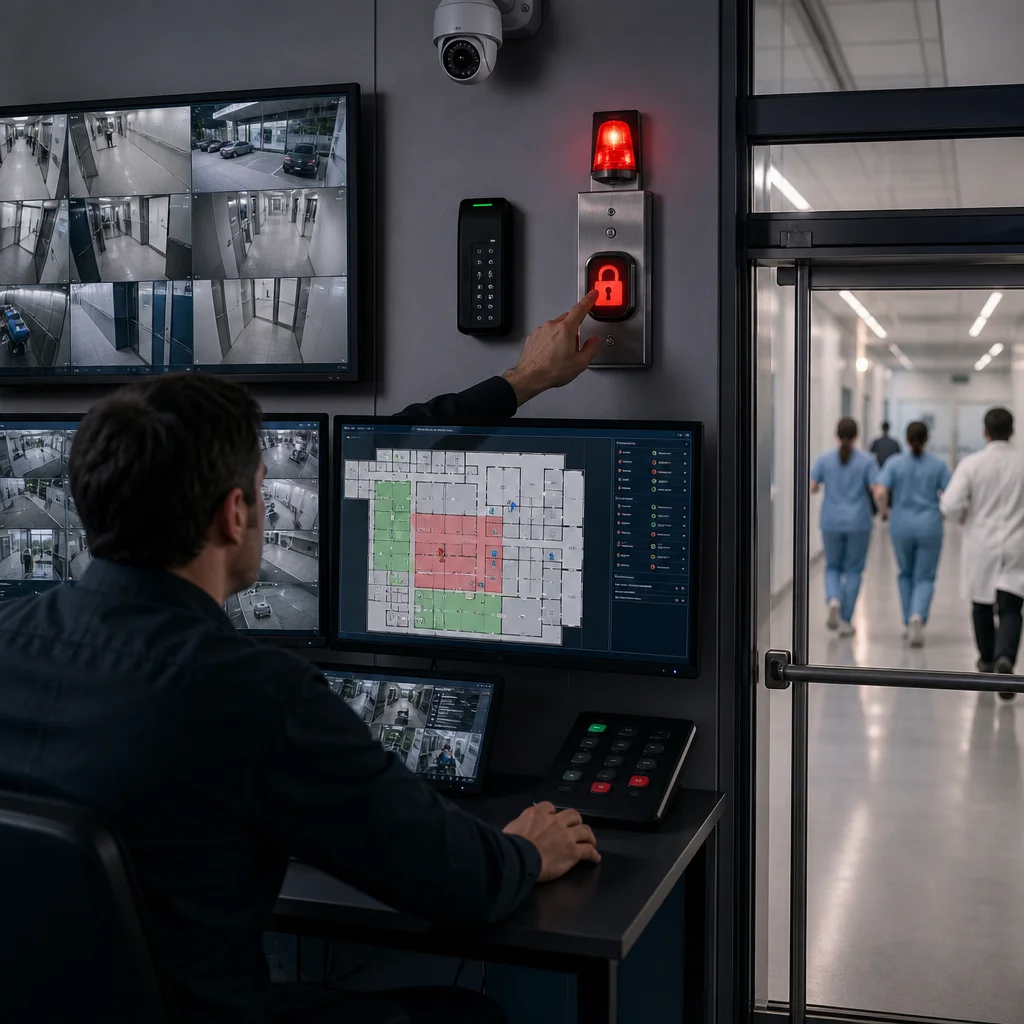
This responsiveness requires more than connected hardware. The infrastructure must be redundant, reliable, and fast. Network latency, power failures, or communication breakdowns during lockdown defeat the entire purpose. This is why we design systems with dedicated security networks, battery backup on every door control, and failsafe protocols that default to safe states when technology fails.
Actionable takeaway: Ask your current security provider whether their system can execute a facility-wide lockdown command in under five seconds. If they can’t answer with specifics, that’s a problem.
Our Approach to Emergency Lockdown Implementation
We begin every project by understanding your facility’s unique layout, threat profile, and operational requirements. A hotel’s needs differ from a manufacturing plant’s needs, which differ from a distribution center’s concerns.
Our implementation process follows clear phases:
- Assessment and design: We map your facility, identify critical areas, and define lockdown scenarios appropriate to your operations
- Hardware selection: We specify doors, card readers, and server infrastructure matched to your security level and environmental conditions
- Network preparation: Proper structured cabling and redundant connectivity ensure systems remain responsive under any conditions
- System configuration: We program access rules, define tiered permissions, and establish emergency protocols specific to your facility
- Testing and validation: Every lockdown scenario is tested with your team before go-live
- Staff training: Your team learns the system, emergency procedures, and troubleshooting basics
This isn’t a “install and disappear” approach. We’ve worked with major hotel chains, healthcare networks, and manufacturing operations that demand enterprise-level support and proven reliability.
Actionable takeaway: Request a facility walkthrough with a security integrator who will spend time understanding your operations before recommending solutions.
Structured Cabling Foundation for Reliable Access Control
Access control systems are only as reliable as their underlying network infrastructure. Our structured cabling services provide the foundation that makes emergency lockdown systems dependable.
Modern facilities need redundant pathways for security traffic, separate from general network infrastructure. We install dedicated cabling runs to critical access points, implement fiber optic connections for long-distance reliability, and ensure battery backup systems can power all door hardware during extended outages. This isn’t cutting corners with consumer-grade networking; this is enterprise infrastructure built for security applications.
When you have proper structured cabling, system diagnostics become simpler and failures easier to isolate. Technicians can identify cable faults, network bottlenecks, or device failures without guessing. During an emergency, the system performs because the underlying network was engineered for performance, not cost.
Actionable takeaway: If your facility’s network cabling is more than 10 years old or was installed without security applications in mind, plan a cabling assessment before implementing new access control systems.
Real-World Emergency Response Scenarios
Consider how an integrated lockdown system responds to different situations:
Active threat scenario: Security detects an unauthorized person in a restricted area. The system immediately locks all exits from that zone, traps the individual while preventing movement to other areas, and alerts staff on their communication devices with location and status. Exits remain open for safe evacuation of other personnel.
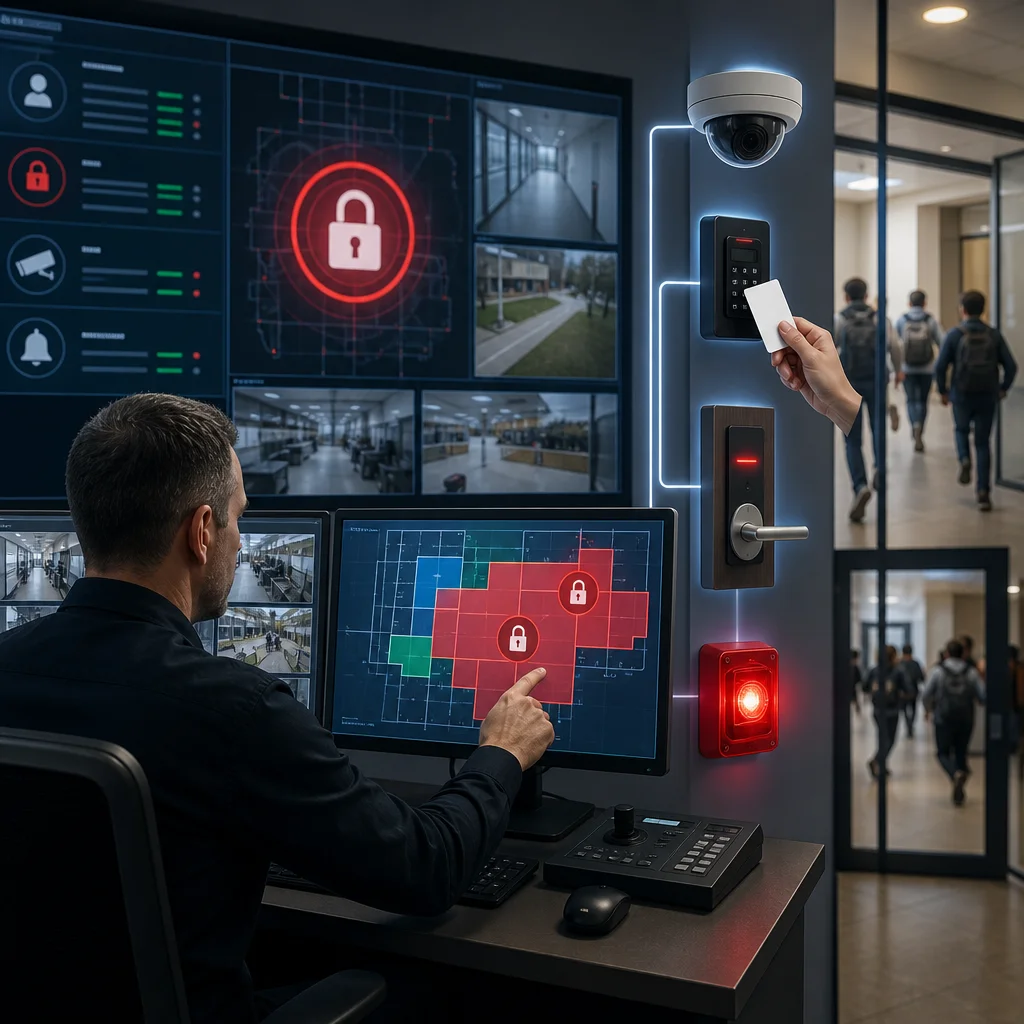
Medical emergency in a clinic: A patient becomes hostile. Staff presses an emergency button. Adjacent areas lock automatically while clinical spaces remain accessible for emergency response. Unnecessary lockdowns don’t trigger, keeping staff able to move where they’re needed.
After-hours facility breach: Motion sensors detect entry in a secured warehouse area after business hours. The system locks the zone, alerts monitoring services, and provides security personnel with video feeds and door status. The intruder’s exits are systematically blocked as responding personnel close in.
Each scenario benefits from speed and coordination that only integrated systems provide. Manual responses, phone-based communication, or separated systems simply can’t move fast enough.
Actionable takeaway: Document the three most likely emergency scenarios for your facility type, then ask potential integrators how their systems would respond to each one.
Implementation Timeline and Facility Integration
Typical implementations span 8-14 weeks depending on facility size and complexity. We’ve learned that rushing this work creates operational friction and security gaps.
- Weeks 1-2: Facility assessment, design review, and approval
- Weeks 3-4: Ordering long-lead hardware and planning installation windows
- Weeks 5-9: Physical installation, cabling, hardware setup, and network integration
- Weeks 10-12: System configuration, testing against defined scenarios, and staff training
- Week 13-14: Refinement, documentation, and handoff to your operations team
For larger properties like hotel chains managing multiple Southern California locations, we stage the rollout. We install and perfect the system at one property, train your central team, then expand to additional locations with proven processes.
Actionable takeaway: Start conversations with integrators now, even if installation isn’t planned for six months. Lead times on enterprise hardware can be substantial.
Training Your Team on Tiered Access Protocols
The best system fails if your team doesn’t know how to use it. We build training around your actual facility and your specific protocols.
Tiered access means different staff levels have different capabilities. Front desk personnel might only unlock emergency exits. Security supervisors can execute zone lockdowns. Facility managers can override specific doors for maintenance. The chief of security accesses the system from mobile devices or command centers.
We provide hands-on training with your actual equipment in your actual facility. Staff practices initiating lockdowns, simulates response scenarios, and learns how to troubleshoot basic connectivity issues. Documentation is specific to your facility, not generic vendor manuals.
Ongoing training matters too. New hires need orientation, and annual refresher training keeps protocols sharp when incidents are rare.
Actionable takeaway: Designate at least one staff member per shift to be deeply trained on your access control system. Make them your internal champion who mentors others.
Measuring Security Performance and Response Effectiveness
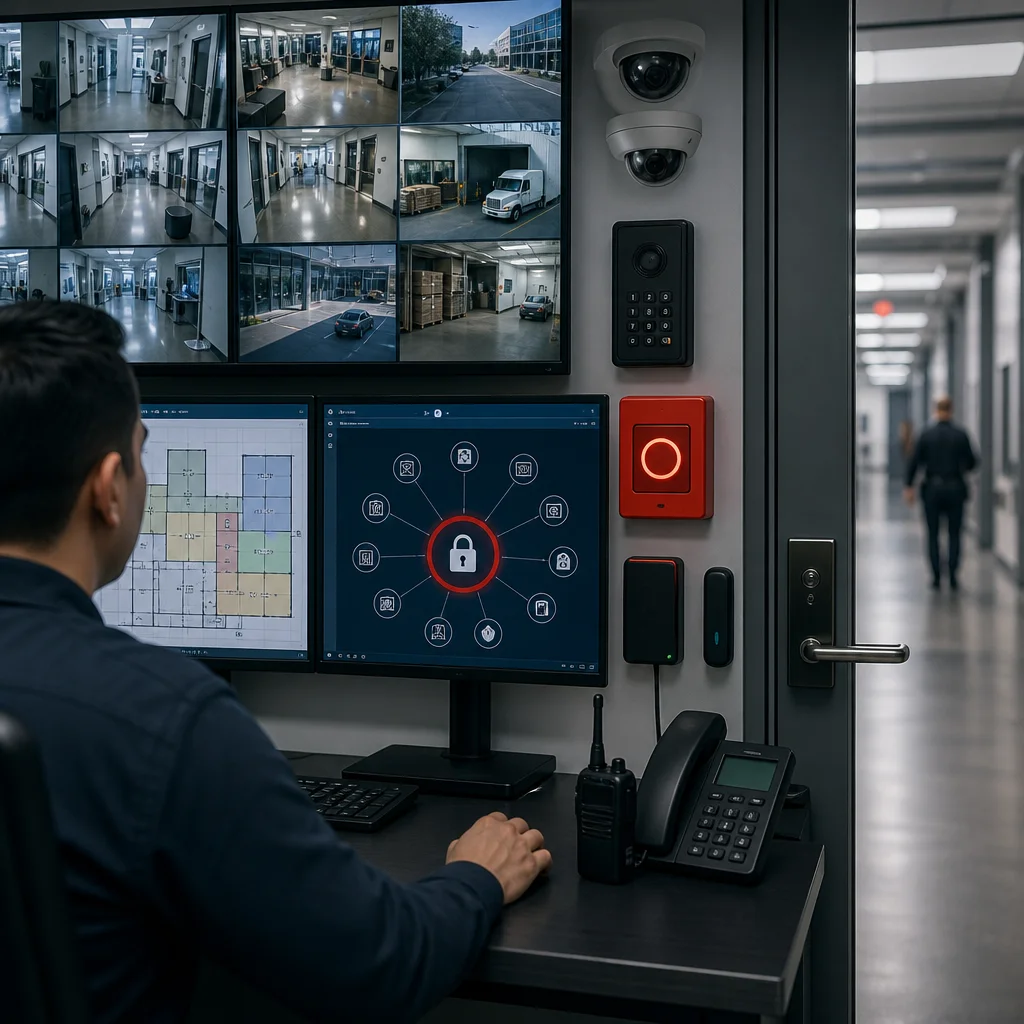
A system’s value appears in metrics and incident reports. We help you track:
- Average lockdown activation time (goal: under 5 seconds facility-wide)
- False alarm rates and their causes
- Unauthorized access attempts detected and blocked
- Staff compliance with access protocols
- System uptime and reliability statistics
- Audit trail completeness for compliance purposes
After implementing new systems, review these metrics quarterly for the first year, then biannually. Patterns emerge. You’ll identify doors that get propped open, areas where access rules need adjustment, or times when certain zones experience repeated false alarms.
This data feeds continuous improvement. We use it to refine configurations, add additional cameras or readers where needed, and optimize workflows that were awkward during initial training.
Actionable takeaway: Ask your integrator what dashboards and reports they’ll provide post-implementation. Simple metrics matter more than complex ones.
Next Steps to Secure Your Facility
Start by defining what emergency lockdown means for your specific operation. A hotel needs different capabilities than a clinic, which needs different systems than a distribution center. Your facility’s mission and your threat profile shape the entire solution.
Contact us for a facility assessment. We’ll walk your property, understand your current systems and their limitations, and propose an integrated access control approach matched to your needs. We work with hotels, healthcare providers, warehouses, manufacturing facilities, and property management companies across Southern California.
The goal isn’t just compliance or checking a security box. It’s building a system your team trusts, that actually works when emergencies occur, and that operates smoothly during normal business. That’s what we deliver.
Frequently Asked Questions (FAQ)
How quickly can we implement an emergency lockdown system at our facility?
We typically complete emergency lockdown system installation within 4-8 weeks, depending on your facility’s size and existing infrastructure. Our implementation timeline includes site assessment, structured cabling foundation work, access control deployment, integration testing, and staff training. We work around your operational schedule to minimize disruption to daily business activities.
What makes an integrated access control system better than managing separate security vendors?
When we consolidate your security infrastructure, we eliminate communication gaps between systems that create vulnerabilities during emergencies. Our unified approach means your access control, cameras, and emergency protocols operate seamlessly together rather than as disconnected solutions. You’ll have single-point visibility and faster response times because our team manages everything as one integrated ecosystem.
How do we ensure our staff actually follows tiered access protocols during a real lockdown event?
We provide hands-on training that goes beyond documentation, including scenario-based drills so your team practices emergency procedures before a critical moment occurs. Our training covers role-specific responsibilities, emergency communication protocols, and proper use of tiered access controls under stress. We also establish monitoring and measurement systems so you can verify compliance and identify areas needing reinforcement.