
Security automation can lower operating costs by helping commercial buildings use energy more efficiently and coordinate routine operations. Commercial building security automation brings connected security and building functions into a more unified system, while occupancy data can help adjust energy use to actual building needs. The result is better visibility into how spaces and systems are being used, not simply more devices to manage.
It’s reasonable to expect connected systems to support both protection and efficiency, but their value depends on how well they’re integrated and secured. This article explains how commercial building security automation can affect operating costs, which cybersecurity risks deserve attention, and how connected-building data can support useful analytics. It also explores how insights from occupancy, security events, energy use, and building performance can inform operational decisions and help organizations plan more responsive buildings.
Key Takeaways
- See how coordinated building controls can support more efficient energy use and day-to-day operations.
- Understand how access controls and multifactor authentication can strengthen protection for connected systems.
- Recognize cybersecurity exposures that may affect building operations, occupants, and sensitive data.
- Learn how connected-building data can reveal useful patterns and support better operational decisions.
How do commercial building automation systems reduce operating costs?
Connected controls can coordinate security with energy management, lighting, and HVAC functions. Occupancy data can help adjust energy use, supporting efficiency while monitoring building activity.
Access Controls and Multifactor Authentication
Access controls determine who can enter specified areas, while multifactor authentication adds verification beyond a password. Together, they help limit unauthorized system access and make permissions easier to manage. For example, an employee’s credentials can be restricted to approved rooms and administrative functions. Installation and operating costs depend on device counts, integration needs, facility layout, and ongoing monitoring requirements. Applicable U.S. laws and standards depend on jurisdiction, building use, and the security data collected.
Continuous and Dynamic Access Control
Continuous monitoring reviews system activity for suspicious behavior or operational anomalies. Dynamic access control adjusts permissions using factors such as time of day, occupancy, or a real-time threat assessment. For example, a system can restrict entry to a particular area during an incident. Coordinated controls can also reduce wasted energy by responding to occupancy. When selecting systems and vendors, assess compatibility, cybersecurity capabilities, and whether the platform can support planned building functions.
Remote Monitoring and Cloud Access
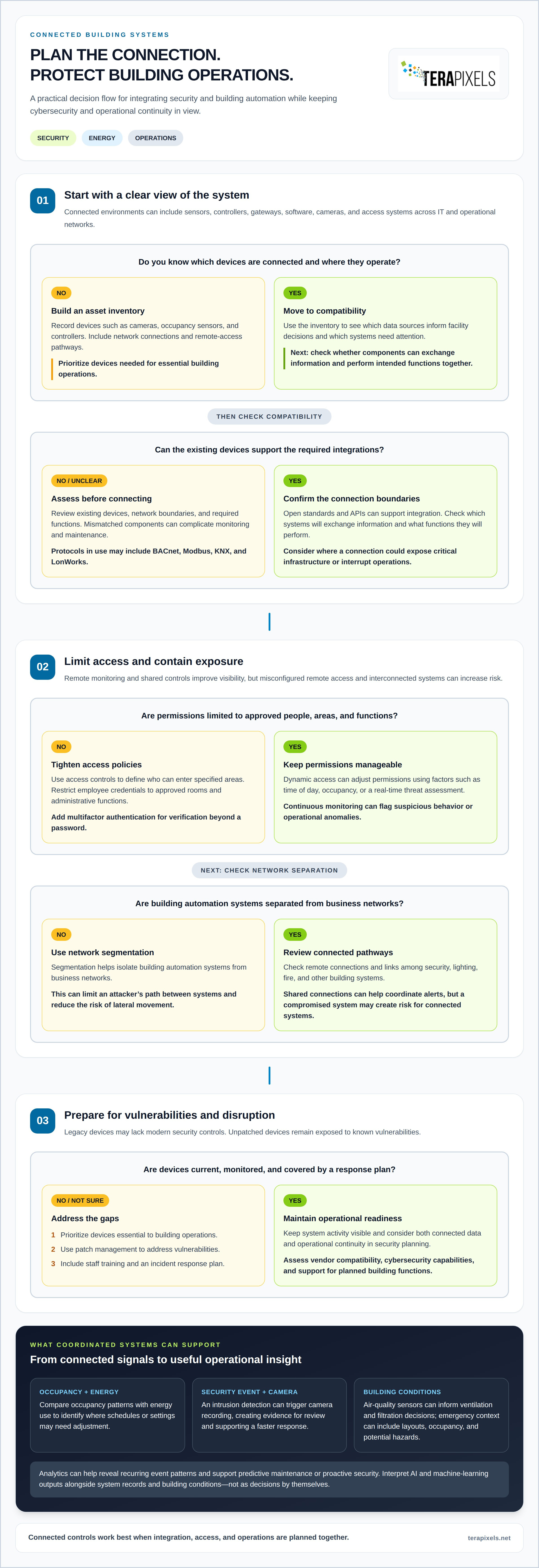
Remote monitoring lets authorized personnel review connected systems through a management platform, including security cameras and access events. Cloud access can centralize information across connected devices, but misconfigured remote access may increase exposure to attack. Systems commonly combine sensors, controllers, gateways, and software across IT and operational networks. Planning should account for the building’s layout, existing infrastructure, required integrations, and access policies before connected components are installed and configured. This coordination helps maintain visibility while supporting energy efficiency and operational savings.
Cybersecurity risks in building automation systems
Connected building infrastructure can expose operational technology to cyberattacks and service disruption. Security planning must account for legacy devices, remote connections, and links among building systems.
Security, Lighting, and Fire System Integration
Integration allows security, lighting, and fire systems to share relevant event information through connected controls. During a fire or lockdown, coordinated systems can support alerts through text messages, email, or in-building announcements. This can help occupants receive timely information, while shared connections also create risks if one system is compromised. Network segmentation helps isolate building automation systems from business networks and limit an attacker’s path between systems.
System Compatibility and Open APIs
Compatibility means connected systems can exchange information and perform intended functions together, while open standards and APIs can support integration. Commercial buildings may use protocols such as BACnet, Modbus, KNX, and LonWorks, so mismatched components can complicate monitoring and maintenance. Before integration, assess existing devices, network boundaries, and required functions. This helps identify where connections could expose critical infrastructure or interrupt operations.
Legacy building automation systems may lack modern security controls, and unpatched devices remain exposed to known vulnerabilities. Flat network designs can also make lateral movement easier after an intrusion. Risk planning should inventory sensors, controllers, gateways, and remote-access pathways, then prioritize devices needed for essential building operations. Patch management, staff training, and an incident response plan help address vulnerabilities, human error, and service disruption. Building automation security must protect operational continuity as well as connected data.
Connected-building data and analytics
Connected-building data becomes useful when it links operational events with decisions. An asset inventory records devices such as cameras, occupancy sensors, and controllers, giving managers visibility into what systems are connected and where they operate. For commercial building security automation, this inventory helps teams understand which data sources inform facility decisions and which systems need attention.
An integrated platform can report security events, energy consumption, and building performance together. For example, managers can compare occupancy patterns with energy use to identify where schedules or settings may need adjustment. Occupancy sensors can also inform automation responses in real time, supporting efficiency without relying only on fixed operating schedules.
Analytics can connect an event to a practical response. If a system detects an intrusion, it can trigger a camera to record video, creating evidence for review and supporting a faster security response. Reports can also show recurring event patterns, helping building teams distinguish isolated alerts from issues that may need operational attention.
Connected systems can provide useful context during emergencies, including building layouts, occupancy information, and potential hazards for first responders. Air-quality sensors can inform ventilation and filtration decisions, while security and performance data help operators understand facility conditions. For commercial building security automation, accurate inventories and useful reports help translate connected data into operational insight.
AI and machine learning can help analyze patterns for predictive maintenance and proactive security. Their outputs are most useful when teams interpret them alongside system records and building conditions, rather than treating an alert as a decision by itself. This keeps analytics tied to measurable operational needs.
Terapixels Systems: Commercial Solar
Terapixels Systems supports commercial facilities with Commercial Solar, Remote Monitoring Management, Cyber Security, and Structural Cabling. These services address different parts of building operations: energy infrastructure, system visibility, digital protection, and the cabling that supports business communications.
Consider discussing a project when planning security automation alongside wider infrastructure upgrades, or when existing systems need more coordinated monitoring and protection. The right scope depends on the building’s current systems, operational priorities, and integration needs. A connected-building plan can align decisions with practical requirements rather than treating each system as an isolated purchase.
Contact Terapixels Systems to discuss your commercial building requirements.
Make Your Next Building Upgrade More Connected
Before expanding commercial building security automation, define the operational outcome the next project should support. That might mean clearer oversight, stronger protection for connected infrastructure, or a more coordinated approach to future upgrades. A focused scope helps align technical decisions with how the facility actually operates.
Terapixels Systems offers Remote Monitoring Management, Cyber Security, and Structural Cabling for commercial technology projects. These capabilities support monitoring, cybersecurity planning, and the infrastructure behind connected systems. The next step is to discuss your building’s priorities and how an integrated project could address them.
A practical plan can give your team a clearer foundation for secure, informed building operations.
Frequently Asked Questions
What are the benefits of a connected building?
A connected building gives facility teams a more coordinated view of systems and activity. For example, a manager can review access events alongside equipment performance when investigating an operational issue. This shared context can help teams make informed decisions, identify recurring patterns, and plan upgrades around actual facility needs rather than isolated device requirements.
Why does open-protocol integration matter in commercial building automation?
Open-protocol integration matters because it can make it easier for compatible equipment from different systems to exchange information. That flexibility helps when a facility expands or replaces a component without redesigning every connected system. During planning, teams can map current devices and required functions, then assess whether the proposed interfaces support the intended connections.
Why is it important?
Cybersecurity matters because building systems affect both digital information and physical operations. A compromised system could expose occupancy schedules or access records, or interfere with building functions. Protecting these environments helps preserve operational continuity and supports safer facility management. Security planning should account for system connections, remote access, device maintenance, and the people who administer the systems.
How do access control, video surveillance, alarms, and building management systems integrate?
These systems can exchange event information through a shared management platform or connected interfaces. For example, an access-control event can be associated with relevant camera footage and an alarm record, giving authorized staff a clearer incident timeline. Integration planning defines which events are shared, who can view them, and how records are organized for operational review.
How do cloud-based and on-premises security automation systems compare?
Cloud-based systems support remote access to centralized security information, while on-premises systems keep management infrastructure at the facility. The right model depends on operational requirements, existing networks, data-handling preferences, and the level of remote administration needed. Some facilities may use a hybrid approach, combining local equipment with cloud services where the architecture supports it.