CONTACT US
Table of Contents
- Why Business Leaders Struggle With Cloud CCTV Decisions
- The Real Costs of Misaligned Security Systems
- How We Structure Our Cloud CCTV Subscription Tiers
- Storage and Retention: What Your Business Actually Needs
- Integration With Access Control and IT Infrastructure
- Scaling Your Security as Your Business Grows
- Support and Service Level Agreements That Matter
- Making Your Decision: Total Cost of Ownership Analysis
- Getting Started With Our Cloud CCTV Solutions
- Frequently Asked Questions (FAQ)
Why Business Leaders Struggle With Cloud CCTV Decisions
You’re managing a facility with real security needs. A warehouse with high-value inventory. A hospitality property with guest safety obligations. A distribution center where uptime matters. Yet when you start evaluating cloud CCTV subscription options, you hit a wall: vendors quote wildly different prices for seemingly identical services, feature lists contradict each other, and nobody clearly explains what you’re actually getting.
The confusion stems from fragmented vendor ecosystems. One provider emphasizes unlimited cloud storage while charging per camera. Another locks you into long-term contracts with vague support terms. A third sells you cameras separately from the software platform. Enterprise leaders like yourselves need integration across security systems, IT infrastructure, and facility operations, but most vendors only speak their single language.
We’ve worked with hotels, manufacturing facilities, and property management companies across Southern California facing this exact problem. The vendors in your RFP process aren’t speaking apples-to-apples. One includes professional installation and redundancy; another assumes you’ll handle it internally. Real decision-making requires cutting through this noise to understand what your business actually requires.
Next step: Before comparing subscriptions, document your specific facility type, number of camera locations, and whether you need integration with access control or other security systems.
The Real Costs of Misaligned Security Systems
Choosing the cheapest cloud CCTV plan feels smart until you inherit hidden costs later. A subscription quoted at $99 per camera monthly might include only 7 days of retention with standard definition video. When you need 30-day footage for an incident investigation at your hotel property, you’re paying surge fees for retrieval. Or you discover the system doesn’t integrate with your access control platform, forcing you to operate two separate vendor relationships and two separate support teams.
We see mid-sized facility managers absorb preventable expenses because their initial subscription selection didn’t match operational reality. A warehouse operator picked a plan with inadequate storage, then paid overages that exceeded the base fee by 40% within six months. A hospitality group selected cameras with poor night vision capability, necessitating a complete hardware refresh twelve months later.
Consider your actual risk profile:
- Retention windows: Manufacturing facilities often need 60-90 days for compliance audits. Hospitality requires longer retention for liability protection.
- Video quality: Outdoor loading areas demand HD or higher for license plate identification. Interior corridors may operate effectively at lower resolution.
- Integration requirements: If you’re consolidating vendors, your CCTV system must communicate with access control, intrusion detection, and IT monitoring.
- Redundancy and failover: Cloud systems need backup connectivity for mission-critical facilities.
The true cost of a security system includes not just monthly fees but operational complexity, remediation when the wrong tool fails you, and opportunity cost of staff managing multiple disconnected platforms.
Next step: Map your facility’s specific incident scenarios and regulatory requirements to determine which features drive genuine value for your business.
How We Structure Our Cloud CCTV Subscription Tiers
We’ve designed our subscription approach specifically for enterprise facilities where security integrates with broader operations. Our tiers reflect real usage patterns rather than arbitrary feature gatekeeping.
Our foundation tier covers properties requiring solid baseline coverage: standard definition or HD video, 30-day retention, cloud backup, and mobile access for facility managers. This tier works well for smaller warehouse locations or secondary hotel properties where you need visibility without premium redundancy.
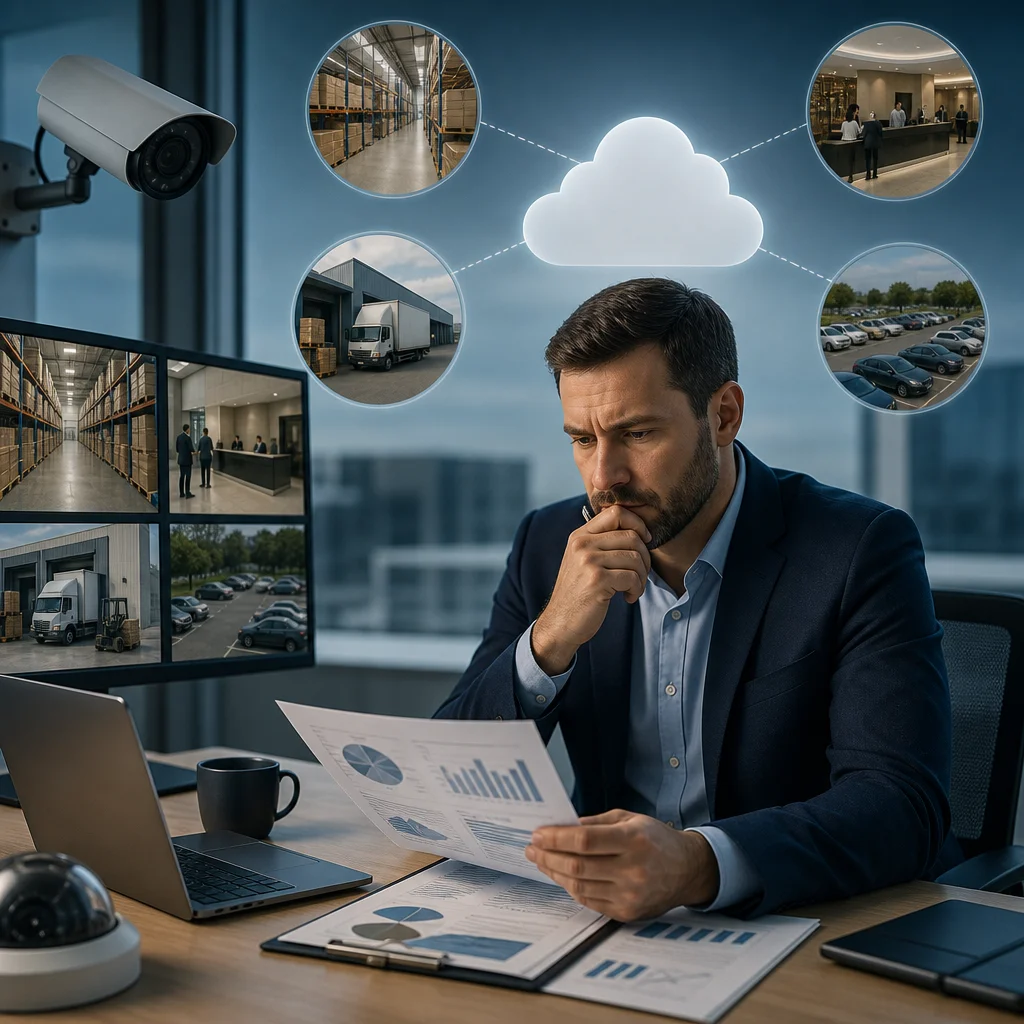
Our professional tier adds the features most mid-sized operations need: full HD or 4K capability, 60-day retention, priority support with guaranteed response times, and integration hooks for access control systems. This tier dominates our customer base across hospitality and distribution because it balances capability with predictable cost.
Our enterprise tier removes most constraints entirely: unlimited high-resolution recording, 90-day retention, dedicated infrastructure, SLA guarantees, and deep integration with your entire security and IT ecosystem. Properties operating multiple locations, dealing with complex compliance requirements, or managing high-risk assets typically run this tier.
Each tier includes professional installation by our technicians and ongoing network optimization. We don’t charge per-camera licensing fees that balloon as your facility expands. You get transparent pricing that scales with your actual needs, not with vendor convenience.
Next step: Audit your current facility requirements against these tiers to identify which investment level prevents operational problems.
Storage and Retention: What Your Business Actually Needs
Storage dominates subscription cost conversations, yet many facility managers don’t actually calculate what retention they require. A hotel managing guest safety might operate under hospitality industry standards recommending 30-45 days. A manufacturing facility with compliance requirements might need 90 days minimum. Distribution centers sometimes need only 14 days because incidents surface immediately.
Here’s the practical reality: cloud storage isn’t unlimited regardless of what the marketing says. Pricing correlates directly to how much footage you’re keeping and how many cameras feed into that storage. A 50-camera facility recording continuously in 4K generates roughly 45 terabytes monthly. Storing 90 days of that requires serious infrastructure.
We design retention plans around your actual incident detection timeline. If security incidents at your facility typically surface within 10-14 days, pushing to 60-day retention costs extra money for scenarios that rarely occur. Conversely, if you’re dealing with inventory shrinkage or guest incidents requiring investigation, shorter retention windows create operational blind spots.
Calculate your retention needs this way:
- Identify your longest typical investigation window (when do incidents usually surface?)
- Add a buffer for off-hours discovery
- Account for regulatory requirements in your industry
- Evaluate redundancy needs (do you need simultaneous access from multiple locations?)
We also optimize storage efficiency through intelligent video quality scaling. Perimeter cameras recording mostly static scenes transmit less data than entry points with constant activity. This compression doesn’t sacrifice forensic capability where it matters most.
Next step: Review your incident history from the past year and identify how many cases would have been solved with 30 days versus 60 versus 90 days of retention.
Integration With Access Control and IT Infrastructure
Most businesses operate CCTV as an isolated island, but your security works better when systems communicate. A facility manager investigating an access control anomaly gains tremendous value from simultaneously reviewing video of that doorway. Hotels need guest safety systems synchronized with video analytics. Manufacturing facilities need access events correlated with inventory movements.
We build integrated access control systems that speak the same language as your video surveillance. When someone badge-swipes into a restricted area, that event triggers video recording focus on that location. When our access control platform detects unusual patterns, your security team has immediate video context.
This integration extends to your broader IT infrastructure. Your network monitoring sees when cameras are transmitting video, alerting your IT team to bandwidth issues before they impact operations. Your backup systems automatically protect security footage alongside other critical data. Incident reporting flows into your existing documentation systems rather than creating parallel databases.
Enterprise properties we serve recognize that fragmented security vendors create fragmented incident response. One vendor handles cameras, another handles access control, a third manages IT infrastructure. When an incident occurs, your team wastes time collecting information from three separate systems rather than acting decisively.
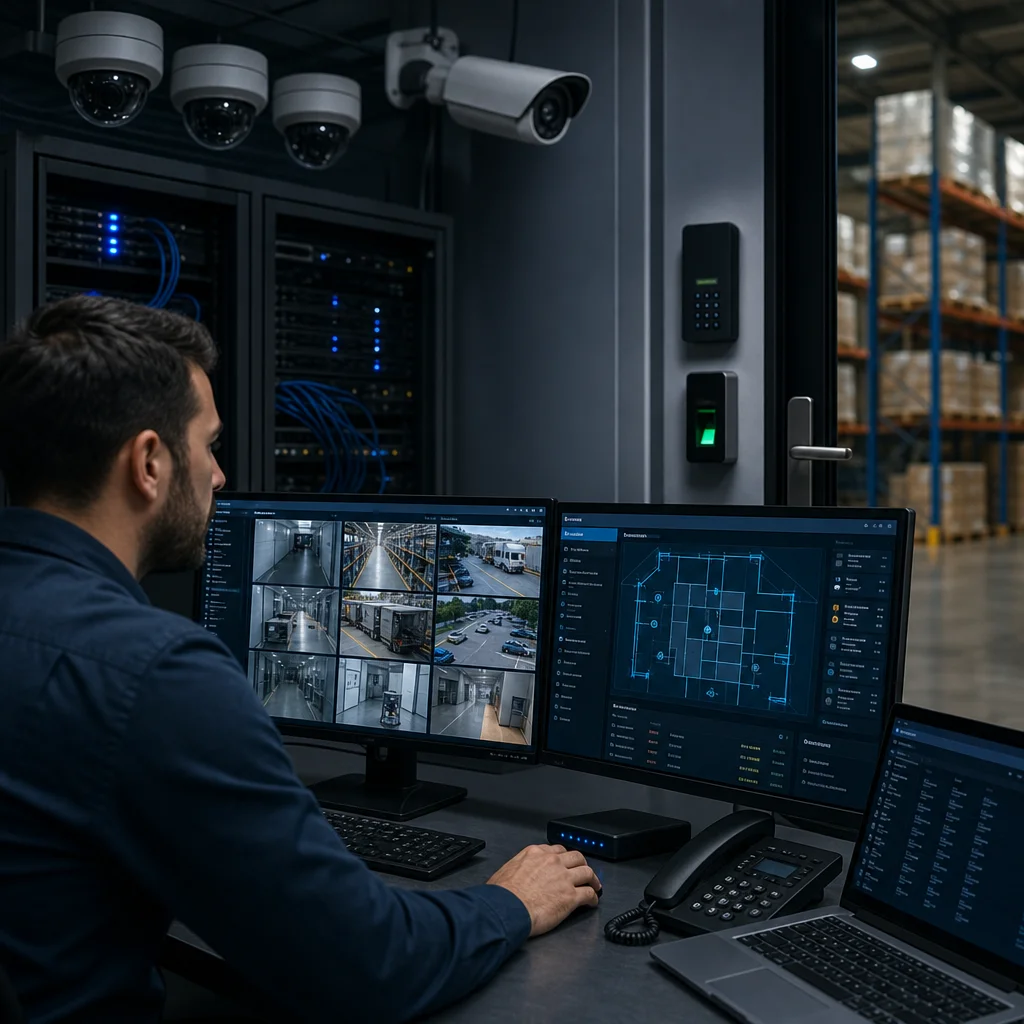
Next step: Assess which other systems in your facility would benefit from real-time correlation with video events, then ensure your CCTV subscription provider can deliver that integration.
Scaling Your Security as Your Business Grows
A subscription that works perfectly for your current five-location footprint shouldn’t force painful restructuring when you expand to eight locations or implement new facility types. Yet many cloud CCTV providers create pricing cliffs that make growth economically painful.
We structure subscriptions that scale linearly with your business. Additional cameras add predictable cost without per-unit licensing surprises. Opening a new facility uses the same management interface and support structure as your existing properties. Growth becomes straightforward rather than requiring vendor renegotiation.
Consider whether your provider can support:
- Multi-site management from unified dashboards
- Consistent policies and retention rules across locations
- Federated authentication if you’re adding team members
- Bandwidth management for growing camera counts
- Compliance reporting that aggregates across facilities
Hospitality groups managing ten properties under one brand need security systems that operate consistently across all locations while supporting location-specific policies. Manufacturing operations expanding into new warehouses need infrastructure that grows without forcing system architecture changes.
Next step: Project your facility count and camera needs for the next three to five years, then verify your subscription provider can accommodate that growth without architectural changes.
Support and Service Level Agreements That Matter
When your security system fails during a critical incident, the quality of vendor support determines whether you’ve lost visibility for ten minutes or ten hours. This reality separates true enterprise providers from commodity vendors.
Our service agreements guarantee response times aligned with your criticality level. Enterprise tier customers get dedicated technical contacts with facility knowledge, not rotating call center operators reading scripts. We maintain local infrastructure across Southern California so your video stream doesn’t depend on distant data centers that might experience regional outages.
Professional-tier subscriptions include scheduled maintenance windows coordinated with your operations rather than imposed on your timeline. Enterprise tier includes redundant connectivity and automatic failover so brief network interruptions don’t blind your security team.
Support quality matters most when systems fail. We staff our support team with technicians who understand security integration, not just generic cloud platforms. Your facility security is complex enough that generic support creates costly delays.
Next step: Request the actual SLA document from any provider you’re seriously evaluating, then discuss response times for scenarios matching your specific facility’s criticality level.
Making Your Decision: Total Cost of Ownership Analysis
Monthly subscription fees represent only part of your actual security investment. True cost of ownership includes initial setup, integration work, staff training, and operational complexity. A subscription $50 cheaper monthly looks different when you factor in fifteen hours of internal IT effort integrating separate vendor systems.
Build a TCO model incorporating:
- Monthly subscription costs across all locations
- Professional installation and integration work
- Initial training for security and facility staff
- Ongoing platform administration and maintenance
- Operational costs when systems fail or provide poor integration
- Compliance and reporting overhead
We’ve analyzed this with large hospitality and industrial clients. Many discovered that consolidating multiple vendors into our integrated platform actually reduced overall cost despite higher per-camera monthly fees, because operational complexity and staff overhead disappeared.
The cheapest subscription often generates the most expensive deployment. The most expensive subscription sometimes delivers the lowest true cost by eliminating vendor fragmentation and operational friction.
Compare providers against your actual operational requirements rather than against each other’s pricing. A $100 monthly difference per camera across a 50-camera facility represents $60,000 annually, but if that difference eliminates one dedicated IT staff member managing separate vendor integrations, your true cost clearly favors the more expensive option.
Next step: Build a spreadsheet comparing your top three options including all direct costs plus estimated staff time and integration complexity, then calculate three-year TCO rather than monthly rate.
Getting Started With Our Cloud CCTV Solutions
You’ve identified that your facility needs integrated security infrastructure where CCTV, access control, and IT systems operate cohesively. You understand your actual retention requirements, know which tier fits your risk profile, and recognize that lowest cost doesn’t equal lowest total cost.
The next move is straightforward. We conduct a facility assessment that documents your current security gaps, identifies integration opportunities with existing systems, and recommends the subscription tier matching your operational reality. This assessment is free and involves our technicians visiting your locations to understand your specific challenges.
From that assessment, we provide a transparent quote showing exactly what you’re funding: which cameras go where, how retention and storage work for your facility type, which integrations we’re activating, and what support you’re receiving. No hidden per-camera fees. No surprise overages. No vendor lock-in beyond knowing you’ve selected infrastructure that actually fits your business.
Cloud-based surveillance systems work best when designed specifically for your facility’s operations rather than imposed from a generic template. Our team brings expertise managing security infrastructure across Southern California’s most complex properties, from hospitality groups to manufacturing operations to distribution centers.
Contact us to schedule your facility assessment and let’s build security infrastructure that actually integrates with how your business operates.
Frequently Asked Questions (FAQ)
How do your cloud CCTV subscription plans compare to traditional on-premises systems?
We design our cloud-based plans to eliminate the infrastructure burden of managing servers on-site while providing the same level of control and customization. Our tiered subscription model lets you pay for exactly what you need, whether that’s basic 24/7 recording across a few cameras or advanced features like AI-powered motion detection and extended retention. Unlike on-premises systems that require capital investment upfront and ongoing maintenance from your IT team, we handle all updates, security patches, and system management as part of our service.
Can we integrate your cloud CCTV system with our existing access control and IT infrastructure?
Yes, integration is core to how we build security solutions for mid-sized businesses like yours. We’ve structured our cloud CCTV offerings to work seamlessly with our access control systems and managed IT services, creating unified dashboards and streamlined workflows across your facility’s security layer. This eliminates vendor fragmentation and gives your team a single point of control rather than managing multiple disconnected platforms.
What happens to our video storage and retention if we need to scale up or down?
We built flexibility into our subscription tiers so your storage scales with your actual needs rather than forcing you into unnecessary capacity. As your business grows and you add more camera locations, we adjust your cloud storage allocation and retention windows without requiring system overhauls or long-term renegotiations. If your requirements change, we work with you to modify your plan terms to match your current operational demands.