CONTACT US
Table of Contents
- Why Fragmented Security and IT Systems Cost Your Business Money and Headaches
- The Hidden Costs of Managing Multiple Technology Vendors
- How Modern Camera Systems Connect to Your IT Infrastructure
- Our Integrated Approach to Security Camera and Network Management
- Structured Cabling as the Foundation for Enterprise-Grade Camera Systems
- Centralized Access Control Through Unified IT Integration
- Real-Time Monitoring and Management from a Single Platform
- Scalability: Growing Your Security System with Your Business
- Data Security and Compliance in Integrated Camera Networks
- Eliminating Vendor Silos: The Terapixels Difference
- Implementation and Timeline for Your Camera IT Integration
- Transform Your Security Infrastructure Today
- Frequently Asked Questions (FAQ)
Why Fragmented Security and IT Systems Cost Your Business Money and Headaches
Your security cameras shouldn’t exist in isolation. Neither should your access control system, your network infrastructure, or your IT operations. Yet that’s exactly how most mid-sized organizations operate in Southern California. We see it constantly: a security vendor manages the cameras, your IT team manages the network, and nobody’s talking to each other. The result is operational friction, security gaps, and costs that climb faster than they should.
At Terapixels Systems, we’ve spent years helping enterprise facilities consolidate fragmented technology stacks into unified, enterprise-grade systems. Camera system IT integration isn’t just a technical upgrade—it’s a strategic shift that transforms how your organization operates, secures assets, and scales operations.
Separation between security systems and network infrastructure creates real operational problems. When your camera system runs independently from your IT environment, you’re managing two separate platforms, two vendor relationships, and two different security protocols. This fragmentation forces your team to toggle between systems, manually reconcile data, and troubleshoot issues across disconnected domains.
Consider a hospitality property managing guest safety. Security cameras document incidents, but access control sits on a different system. When an event occurs, your security team needs footage from one platform while your operations team pulls logs from another. Critical incident response that should take minutes now takes much longer.
Infrastructure also suffers. Independent systems lack unified visibility into your network’s performance, capacity, and health. Camera systems consume significant bandwidth, but without integration into your core network monitoring, you won’t see traffic congestion or potential bottlenecks until service degrades. By then, you’ve already impacted guest experience or operational continuity.
The financial impact stacks quickly. Separate systems mean separate maintenance contracts, separate training cycles, separate upgrade schedules, and separate support line items in your budget. More importantly, you’re paying more for less capability because integrated solutions deliver more value at lower total cost.
The Hidden Costs of Managing Multiple Technology Vendors
Working with three to five different technology vendors for security, networking, and IT infrastructure introduces coordination overhead that most organizations underestimate. Each vendor operates on their own service schedule, their own compatibility standards, and their own support model.
When you need a new camera installed in a warehouse or hotel corridor, the security vendor handles procurement. When you need additional network capacity to support it, your IT vendor gets involved on a separate timeline. Coordination delays mean projects take longer and cost more. A simple expansion that should take two weeks stretches to four weeks because vendors aren’t working in parallel.
Support becomes fragmented too. A camera performance issue might stem from network configuration, but your security vendor points to IT infrastructure while your IT vendor points back to the camera system. Finger-pointing delays resolution, frustrates your internal team, and leaves security gaps unresolved.
Compliance reporting amplifies the problem. If your organization operates hotels, clinics, or distribution centers, you likely face regulatory requirements around data retention, access logging, or incident documentation. When security and network data live in separate systems, audit compliance requires manual aggregation and cross-referencing. This process is error-prone and expensive to execute consistently.
We consolidate these relationships. Working with one partner who understands both your security infrastructure and your network architecture eliminates coordination delays, ensures compatibility by design, and streamlines compliance reporting into a unified process.
How Modern Camera Systems Connect to Your IT Infrastructure
Today’s enterprise camera systems are network devices first and foremost. Unlike older analog systems that required dedicated cabling runs, modern IP-based cameras integrate directly into your network architecture. This shift fundamentally changes how security infrastructure relates to your broader IT environment.
Network-based surveillance systems transmit video, audio, and metadata across your existing Ethernet infrastructure. This creates both opportunity and responsibility. The opportunity is integration: your cameras become part of your network ecosystem, subject to the same monitoring, management, and security protocols you apply everywhere else. The responsibility is ensuring your network was designed with this demand in mind.
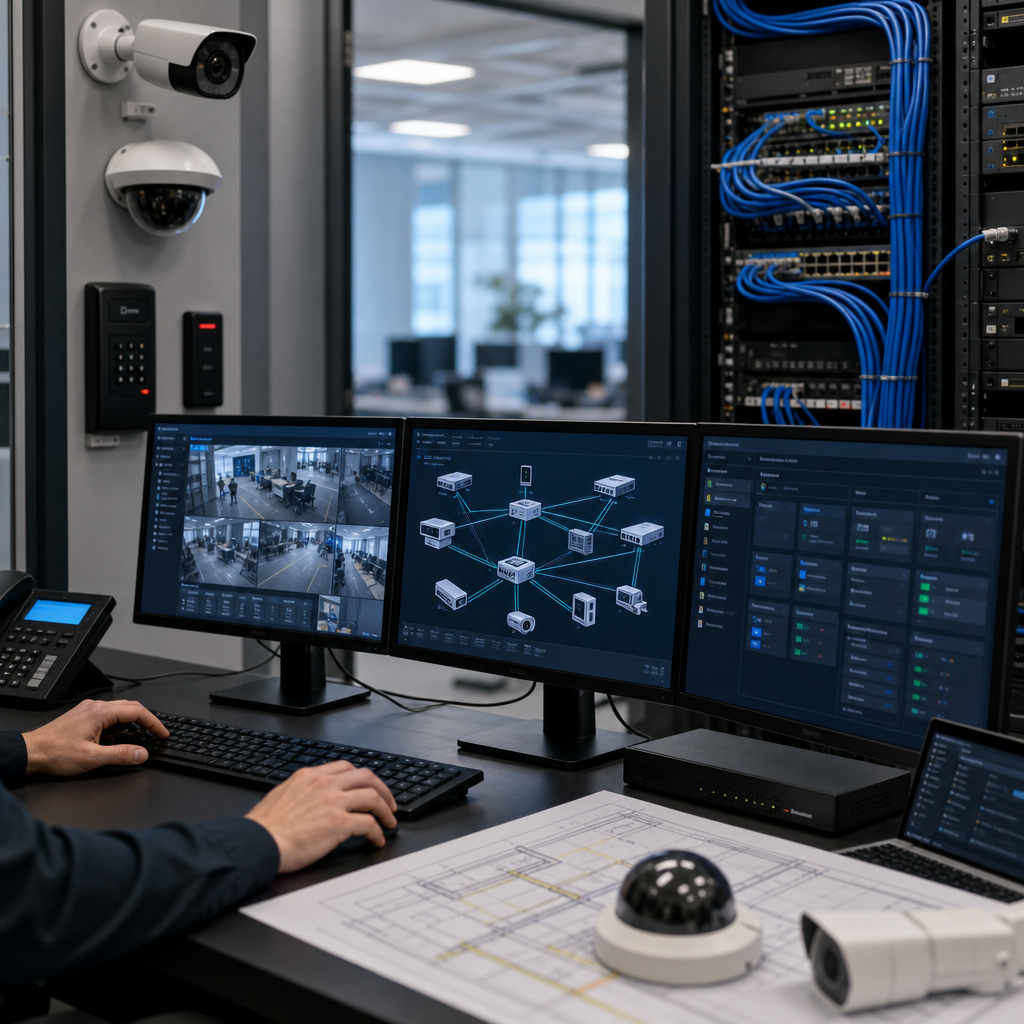
A typical HD security camera generates between 1 to 8 Mbps depending on resolution, compression, and frame rate. Deploy 40 cameras across a manufacturing facility or hotel property, and you’re consuming 40 to 320 Mbps of bandwidth. Without proper network planning, you’re competing with operational systems for bandwidth and introducing latency that degrades both security monitoring and business applications.
This is where modern camera systems connect your security objectives to your IT infrastructure strategy. Cameras need managed switches with quality-of-service configuration to prioritize video traffic during congestion. They need network segmentation to prevent unauthorized access to video streams. They need integration with your network monitoring tools so you know immediately if a camera goes offline. They need power-over-Ethernet (PoE) infrastructure to simplify installation and eliminate separate power requirements.
Each of these requirements touches your IT infrastructure. That’s why camera system IT integration requires architectural planning from day one, not bolt-on integration after systems are already deployed.
Our Integrated Approach to Security Camera and Network Management
We design security infrastructure as an extension of your IT architecture, not as a separate domain. This means our security camera deployments start with network planning. We assess your existing infrastructure, identify capacity gaps, and design upgrades that support both current video requirements and future growth.
Our approach connects your cameras to your IT operations team. We deploy management systems that provide unified visibility into camera health, network performance, and system availability. Your IT team gains clear insight into how security infrastructure impacts overall network performance, and your security team gains visibility into network conditions affecting camera reliability.
We also standardize on platforms that allow your existing IT tools to monitor security infrastructure. If you use network management software, we configure it to track camera status alongside other network devices. If you use centralized authentication, we integrate camera access through the same identity directory. If you maintain an asset inventory system, cameras appear there automatically.
This integration approach eliminates the technical fragmentation that forces manual workarounds. Your team spends less time managing separate systems and more time analyzing actual security risks and responding to incidents.
Structured Cabling as the Foundation for Enterprise-Grade Camera Systems
Your cabling infrastructure determines whether camera system IT integration is practical or problematic. Undersized or improperly designed cabling creates bottlenecks that no amount of management software can solve. We view structured cabling as foundational to enterprise-grade camera deployment.
Our structured cabling guide addresses this in detail, but the core principle is straightforward: modern facilities need Cat6A or higher cabling standards to support power-over-Ethernet camera systems, high-bandwidth video transmission, and future technology requirements. We design cabling systems that provide this capacity across all areas where cameras need deployment.
We also design redundancy into cabling infrastructure. Critical areas in hotels, clinics, or distribution centers shouldn’t have single points of failure. Redundant pathways, backup power systems, and strategic switch placement ensure camera systems remain operational even during component failures.
Beyond the technical design, proper cabling simplifies maintenance and future expansion. When you need to add cameras to a warehouse section or hotel floor, existing cabling infrastructure either supports it or doesn’t. Good cabling design means you’re adding devices, not redesigning infrastructure.
Centralized Access Control Through Unified IT Integration
Camera systems and access control systems serve complementary purposes. Cameras document what happens; access control prevents or enables events in the first place. When these systems operate independently, you lose critical context during incident investigation and response.
We deploy integrated access control systems that share the same IT infrastructure and management platform as your cameras. This creates a unified security model where door access events automatically trigger associated camera recording, and security personnel investigating an incident can see access logs and video together in one interface.
Integration also enables sophisticated security policies. Restrict access to a secure area based on time of day or credential level, and you automatically generate corresponding camera recording rules. When someone attempts unauthorized access, video starts recording immediately, capturing the attempted intrusion in context.
For multi-location properties like hotel chains or hospital systems, unified access and camera integration across all locations provides enterprise-level visibility. A security incident at one property can be correlated with access attempts at other properties, revealing patterns individual location monitoring would miss.
Real-Time Monitoring and Management from a Single Platform
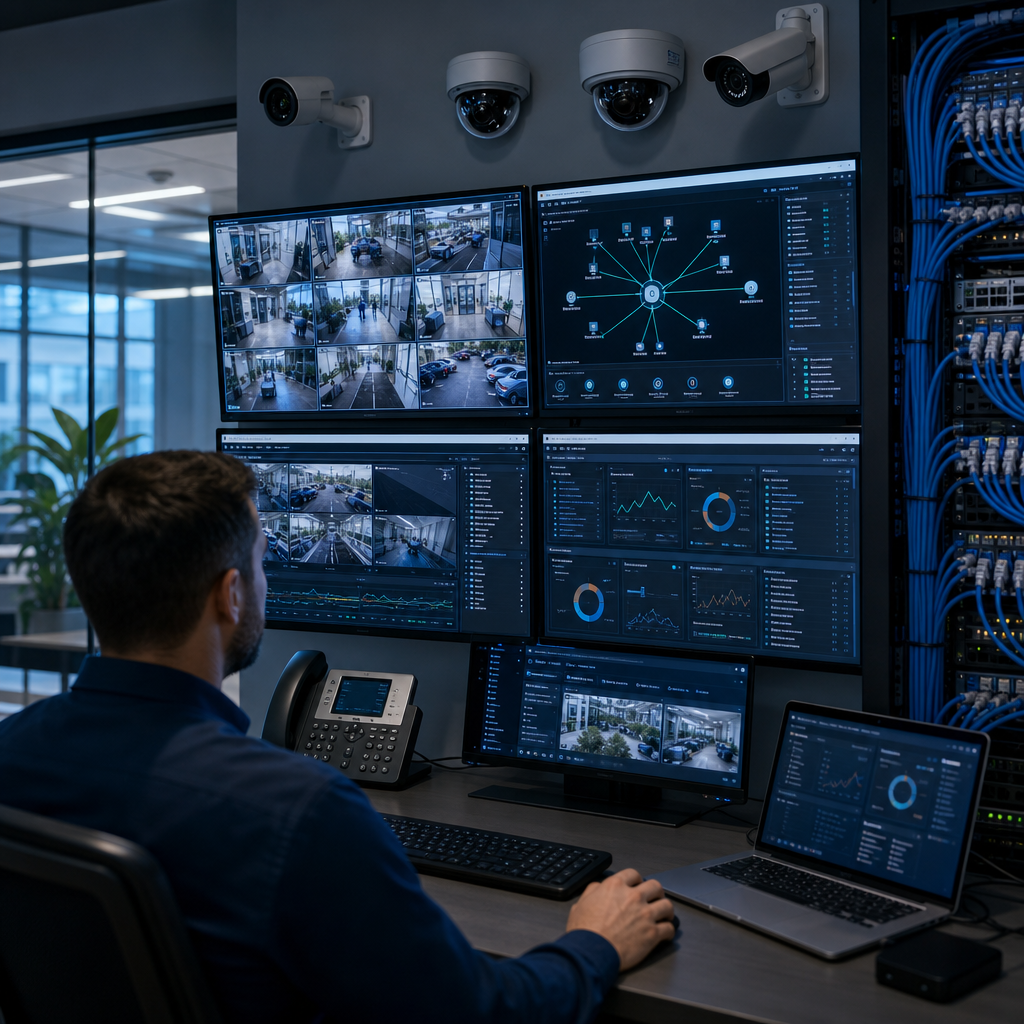
Unified camera and IT integration delivers real-time visibility across your entire security and network infrastructure. Rather than checking camera systems separately from network monitoring tools, your team manages both through a single platform.
This simplifies incident response significantly. An alert triggers in your unified platform: perhaps unauthorized access at a secure door, or a camera going offline. Your security or operations team sees the alert, reviews associated video immediately, checks access logs instantly, and initiates response procedures without context-switching between systems.
Real-time bandwidth monitoring becomes part of this picture too. Your platform tracks video traffic consumption, alerts you when a camera starts transmitting at unusual levels (indicating a potential malfunction), and shows you whether video infrastructure is consuming excessive bandwidth during peak hours.
Dashboards configured for different roles multiply efficiency. Your security team focuses on access and incident data. Your IT operations team monitors camera system health and network impact. Your facilities team tracks camera coverage in areas undergoing maintenance. Everyone works from current, accurate information.
Scalability: Growing Your Security System with Your Business
Businesses grow, and security infrastructure must grow with them. Fragmented systems make scaling expensive and disruptive. Adding cameras means coordinating with a security vendor, adding network capacity means coordinating with IT, and neither party can fully plan without the other’s input.
Integrated infrastructure scales more gracefully. We design camera systems and network architecture with growth trajectories in mind. Your cabling infrastructure includes pathways and capacity for future expansion. Your network switching includes growth capacity. Your video management platform licenses scale with additional devices.
When you’re ready to expand security coverage to a new facility section, warehouse area, or hotel floor, you’re adding devices to infrastructure that was already designed for this growth. Installation timelines compress, and you avoid the disruption of mid-project infrastructure redesigns.
This becomes particularly valuable for organizations managing multiple locations across Southern California. Standardized integration approaches across properties make rolling out new security requirements faster and more cost-effective.
Data Security and Compliance in Integrated Camera Networks
Video data is sensitive. It documents where people move, what they access, and when. Compliance regulations for hospitality, healthcare, and regulated manufacturing facilities impose strict requirements around video data handling, retention, and access controls.
Fragmented systems create compliance risk. When video data lives in a separate system, you may lack central visibility into who accesses footage, when it’s accessed, and whether access aligns with policies. Audit trails remain scattered across vendor systems, making regulatory review difficult.
Integrated infrastructure consolidates data security. Your video management system operates within your IT security framework, subject to the same authentication, encryption, and access control policies as other sensitive data. Your IT team maintains visibility into security infrastructure in the same way they monitor other critical systems.
We deploy network segmentation strategies that isolate camera traffic from other network segments while maintaining management visibility. This prevents compromise of operational systems from affecting camera networks and vice versa.
Data retention and archival policies become manageable within unified infrastructure. You configure retention rules once, they apply consistently across all locations, and your IT team manages storage in concert with other data retention requirements.
Eliminating Vendor Silos: The Terapixels Difference
We consolidate security, networking, and IT infrastructure into a unified partner relationship. Rather than coordinating between vendors, you coordinate with us. We handle the internal coordination, ensuring systems work together by design rather than by accident.
This starts with our expertise spanning security cameras, access control, network infrastructure, and IT management. We’re not a security vendor adding network capabilities, and we’re not an IT vendor adding security. We’re an integrated systems partner with deep experience in both domains and how they interconnect.
Our team designs systems holistically. We don’t place a camera system on your network; we design your network to support your security strategy. We don’t add access control as an afterthought; we architect it as part of your overall facility security model.
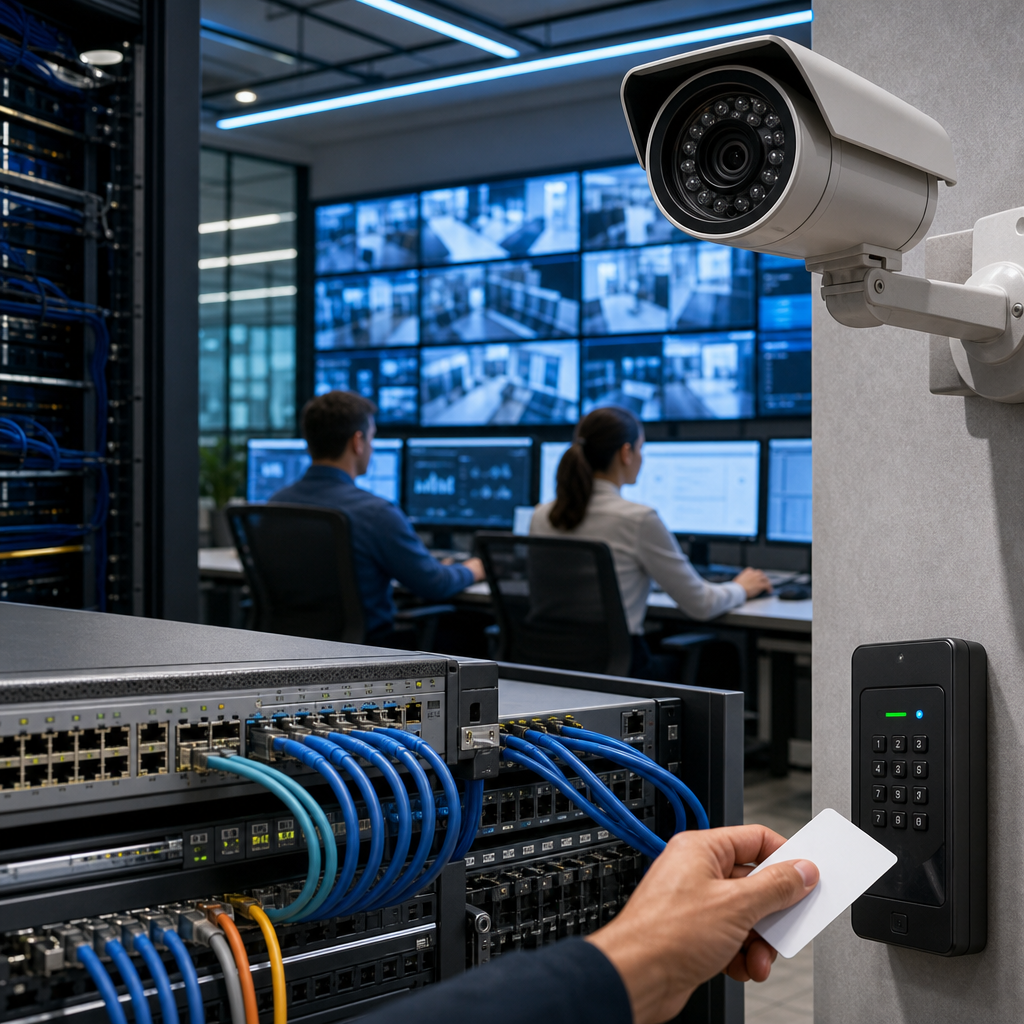
We also maintain continuity throughout your system lifecycle. Installation, maintenance, upgrades, and compliance support flow through one relationship. You’re not negotiating between vendors about who’s responsible for a particular problem; you’re working with one partner who owns the entire system’s performance.
Implementation and Timeline for Your Camera IT Integration
Deploying integrated camera and IT infrastructure follows a structured methodology. Assessment phase involves auditing your current infrastructure, understanding your security requirements, and identifying gaps between current and needed capability. This typically takes 1-2 weeks.
Design phase develops detailed specifications for your cabling infrastructure, network upgrades, camera placement, access control integration, and management platform configuration. We deliver comprehensive documentation so you understand exactly what you’re implementing and why. Design takes 2-4 weeks depending on facility complexity.
Installation comes next. We coordinate cabling installation, network switch deployment, camera installation, access control integration, and management platform configuration to minimize disruption to your operations. For multi-location properties, we can phase installations across locations. Typical installation for a mid-sized facility takes 4-8 weeks.
Testing and commissioning verify that every component works correctly both in isolation and as an integrated system. We document camera coverage, verify access control functionality, test network performance, and confirm your team understands how to manage the complete system.
Training ensures your security, IT, and facilities teams understand how to manage integrated infrastructure. Rather than learning separate systems, they learn one unified platform and how each team’s role contributes to overall security and operational objectives.
Transform Your Security Infrastructure Today
Integrated camera system IT infrastructure isn’t a luxury for large enterprises anymore. Mid-sized organizations across Southern California benefit significantly from consolidating fragmented security and IT systems into unified, managed infrastructure that scales with your business.
The time to address this is now. Legacy fragmented systems cost more to operate, create security risks, and limit your ability to leverage security data for operational intelligence. Modern integrated infrastructure delivers better security, lower operational costs, and capabilities that separate systems simply can’t provide.
Contact Terapixels Systems to discuss your camera system IT integration strategy. We’ll assess your current infrastructure, identify opportunities to unify your systems, and develop a detailed implementation plan that moves you toward integrated, enterprise-grade security infrastructure. We serve facilities across hospitality, healthcare, manufacturing, and property management sectors throughout Southern California.
Let’s consolidate your vendors, strengthen your security, and build infrastructure that grows with your organization.
Frequently Asked Questions (FAQ)
How does unifying our security cameras with our IT infrastructure actually save us money?
We eliminate the redundancy and overhead that comes from managing separate vendors, systems, and support contracts. By integrating your camera network directly into your existing IT infrastructure, we reduce installation costs, streamline maintenance, and give you a single point of contact for all your security and technology needs. You’ll also avoid the data silos that force you to purchase duplicate monitoring platforms and management tools.
What’s the difference between how we set up camera systems versus traditional security integrators?
We design your camera network as an extension of your IT infrastructure from the ground up, starting with structured cabling that serves both your network and security systems. Most traditional integrators treat cameras as standalone devices, which means your systems don’t communicate efficiently and your IT team has limited visibility into security operations. Our approach ensures your security team and IT team work from the same unified platform with real-time data flowing seamlessly across your entire organization.
Can we scale our camera system as our business grows without replacing what we’ve already installed?
Yes. We build our integrated systems with scalability as a core principle, so you can add cameras, access points, and monitoring capabilities without disrupting your existing infrastructure. Our structured cabling foundation and centralized management platform are designed to grow with your business, which means you won’t face the costly forklift upgrades that come with fragmented systems.