
Table of Contents
- The Challenge: Meeting ADA Standards Without Compromising Security
- DIY and Basic Systems: Where Most Organizations Fall Short
- Professional Access Control Installation: Our Comprehensive Approach
- Comparison: Code Compliance and Safety Standards
- Comparison: Integration Capabilities and Long-Term Scalability
- Comparison: Ongoing Support and Regulatory Updates
- Why Full-Service Integration Prevents Costly Compliance Issues
- Our Role as Your Single Technology Partner
- Making the Investment in Professional ADA Solutions
- Frequently Asked Questions (FAQ)
The Challenge: Meeting ADA Standards Without Compromising Security
Managing facility access while meeting Americans with Disabilities Act requirements creates a genuine tension for most organizations. You need a system that restricts entry to authorized personnel, monitors who comes and goes, and simultaneously ensures every visitor and employee—regardless of physical ability—can move through your facility safely and independently.
This isn’t a small ask. The ADA requires accessible building entry systems that work for people with mobility limitations, vision impairments, and hearing disabilities. At the same time, your security needs haven’t changed: you still require controlled access, audit trails, and integration with your broader facility management systems.
Most organizations we work with in Southern California initially underestimate the complexity. They assume a standard electronic lock and push-to-exit button satisfy the law. In reality, ADA entrance requirements encompass door hardware specifications, approach distances, button placement heights, tactile feedback, audible signals, and integration with your broader access infrastructure. Get any one of these elements wrong, and you’re exposed to both compliance violations and operational blind spots.
The real challenge isn’t choosing between security and compliance. It’s recognizing that they’re inseparable. A properly designed access control system strengthens both simultaneously.
DIY and Basic Systems: Where Most Organizations Fall Short
We’ve observed a pattern: businesses install basic electronic locks, add a standard push button, and believe they’ve solved the problem. This approach creates several critical gaps.
Hardware and specification mismatches frequently occur when DIY solutions don’t account for door weight, closing force, or material compatibility. A button positioned at 48 inches might work for standing visitors but fails wheelchair accessibility standards. Mag locks without auxiliary power supplies can trap occupants during power failures, creating a safety violation that contradicts the entire purpose of access control.
Integration failures are equally common. Off-the-shelf locks rarely connect to your network infrastructure, IT management systems, or existing security camera feeds. You end up maintaining separate credential systems, manual logs, and disconnected audit trails across your facility.
Compliance drift happens silently with DIY systems. ADA standards evolve, building codes update, and local jurisdictions add requirements. When you’re managing access control through a disconnected device with no vendor support structure, regulatory changes simply don’t reach you. You’re running on outdated specifications without knowing it.
Cost creep follows inevitably. Initial savings from a budget solution evaporate when you need to retrofit doors, upgrade hardware, add integration layers, and bring in emergency consulting to address compliance gaps. We typically see organizations spend 2-3 times their original budget through piecemeal fixes.
The fundamental problem with basic systems is that they’re not designed for integration. They’re lock devices, not infrastructure. Your facility operates as a unified system—IT, security, physical access, energy management, visitor flow—and your access control must function within that ecosystem, not alongside it.
Professional Access Control Installation: Our Comprehensive Approach

We design and install ADA compliant access control systems that treat your facility as an integrated whole. This starts long before hardware selection.
Our process begins with a comprehensive site assessment. We document door types, traffic patterns, existing infrastructure, electrical considerations, and specific accessibility requirements for your organization. For a hotel with multiple entry points, a warehouse with loading areas, or a clinic with restricted sections, this assessment reveals how access control needs differ across your facility.
From this foundation, we develop a specification that aligns access control with your broader technology infrastructure. This means your access control system connects to your network management backbone, integrates with HD security camera systems, and communicates with your IT operations. We’re not installing a lock; we’re extending your managed IT infrastructure into physical access management.
Hardware selection happens against these specifications. We specify door hardware that meets ADA approach distances and operation force requirements while delivering enterprise-grade durability. We select credentials—badge readers, biometric systems, or mobile access—based on your operational workflow and accessibility needs. We design button placement and feedback mechanisms that provide clear, accessible operation for all users.
Installation is where precision matters most. Our technicians verify approach distances, test operation under load, confirm signal transmission, validate power backup systems, and document every connection point. We don’t consider the job complete until the system operates reliably and integrates smoothly with your existing infrastructure.
This comprehensive approach costs more upfront than buying a lock and pushing it through a door frame. It delivers dramatically different results.
Comparison: Code Compliance and Safety Standards
Basic systems typically meet the minimum appearance of compliance without addressing the full scope of ADA entrance requirements and building code standards that apply to your specific facility.
Here’s the difference in practice. A standard electronic lock satisfies “there is an electronic entry device.” A professionally designed system satisfies “the approach is compliant, the hardware is compliant, the operational force is compliant, the tactile feedback meets standards, power failure safety is engineered, emergency egress is maintained, and documentation proves ongoing compliance.”
We design systems that anticipate building inspector reviews, insurance audits, and accessibility compliance assessments. Every specification is documented. Every installation point is verified. Every integration is tested. When an auditor reviews your access control, we provide the documentation demonstrating that your system meets applicable codes.
For organizations like hotel chains, healthcare facilities, and distribution centers, this documentation becomes essential. Your corporate risk management requires proof that facility access meets code standards across all locations. A disconnected DIY system creates liability exposure precisely when you need certainty.
Safety-critical systems—fire egress, emergency access, power failure behavior—are engineered into professional installations. We design fail-safe mechanisms that prioritize occupant safety during emergencies while maintaining access control during normal operations. These aren’t afterthoughts; they’re foundational design requirements.
Comparison: Integration Capabilities and Long-Term Scalability
This is where professional infrastructure-grade access control separates completely from basic systems.
Your facility isn’t static. You grow into new buildings, reconfigure departments, integrate additional security systems, or implement new credential technologies. When access control is designed as integrated infrastructure—not a disconnected device—these changes happen through coordinated planning rather than emergency retrofits.
With our integrated access control systems, adding a new building entrance means extending infrastructure you’ve already designed for scalability. Adding HD security cameras integrates with existing access points you’ve already installed. Transitioning from badge credentials to mobile access works because the underlying system architecture was built for evolution.
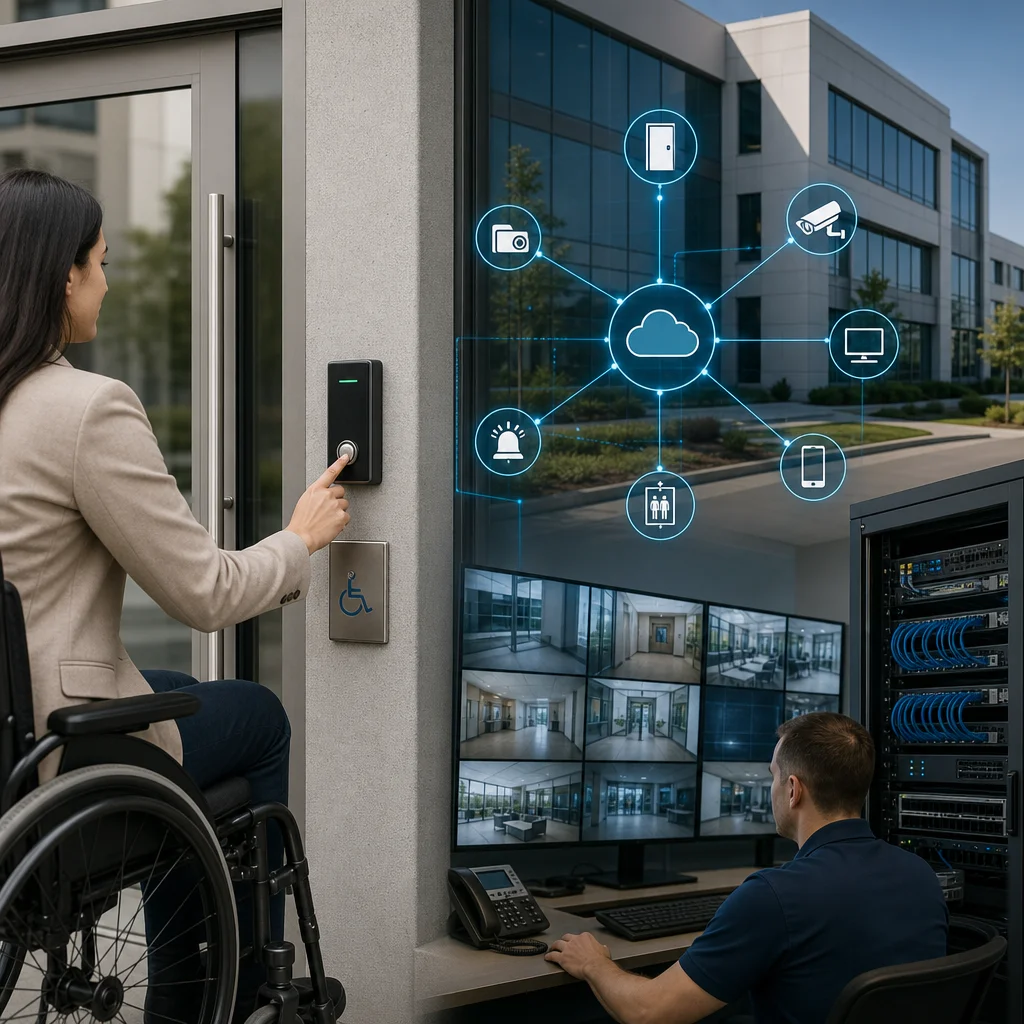
Compare this to basic systems. You add a second location and discover the first location’s system doesn’t communicate with the second. You install security cameras and realize access control data exists in a completely separate silo. You want to implement mobile credentials and learn you need to replace the entire basic system. Each addition becomes an expensive, disruptive project.
Our cloud-based access control approach amplifies these advantages. You manage access policy across all locations from unified dashboards. You adjust credentials, grant temporary access, or modify door groups without deploying technicians to each site. Your system learns and adapts as your organization grows.
Scalability isn’t just about size; it’s about capability. Professional systems handle the operational complexity you actually need to manage.
Comparison: Ongoing Support and Regulatory Updates
A basic electronic lock operates until it fails. Then you call a locksmith. Professional access control operates within an ongoing support and evolution framework.
Building codes and ADA standards don’t remain constant. We monitor regulatory changes, evaluate their impact on your installed systems, and implement updates that keep your infrastructure compliant. This happens proactively, not reactively when an inspector flags a violation.
When a new credential technology emerges or a firmware update is available, you have a vendor relationship oriented toward helping you adopt improvements strategically. You’re not managing hardware independently; you’re working with a technology partner invested in your long-term success.
For organizations managing multiple locations—multi-property hotel chains, healthcare networks, large distribution operations—this support structure becomes genuinely critical. Compliance consistency across locations happens because you have a single vendor ensuring standards align everywhere.
Basic systems leave you responsible for monitoring changes yourself. Professional partnerships include this responsibility as part of the service.
Why Full-Service Integration Prevents Costly Compliance Issues
Organizations that implement basic access control systems frequently encounter expensive problems down the line.
We’ve seen facilities discover during insurance audits that their access control doesn’t meet ADA standards. Remediating this across multiple doors, multiple locations, or multiple years of installations consumes budgets that could have been prevented through proper initial design. We’ve seen compliance violations result in legal settlements, operational disruptions during forced system overhauls, or both.
More subtly, disconnected access systems create operational friction. Staff can’t efficiently manage visitor access because credentials and physical access operate in separate systems. Security teams can’t investigate incidents because access logs exist separately from camera footage. Facility managers can’t verify whether access control is actually preventing unauthorized entry because systems don’t integrate.
Full-service integration addresses all of these issues simultaneously. Compliance is engineered in from day one. Operational friction disappears because systems work together. Incident investigation becomes possible because data streams are connected. Risk exposure decreases because your infrastructure is designed as a cohesive whole, not a collection of disconnected devices.
The cost of fixing a poorly designed system after it’s installed typically exceeds the cost of designing it correctly upfront. Beyond pure expense, you’re also dealing with operational disruption, staff retraining, and potential compliance exposure during remediation.
Our Role as Your Single Technology Partner
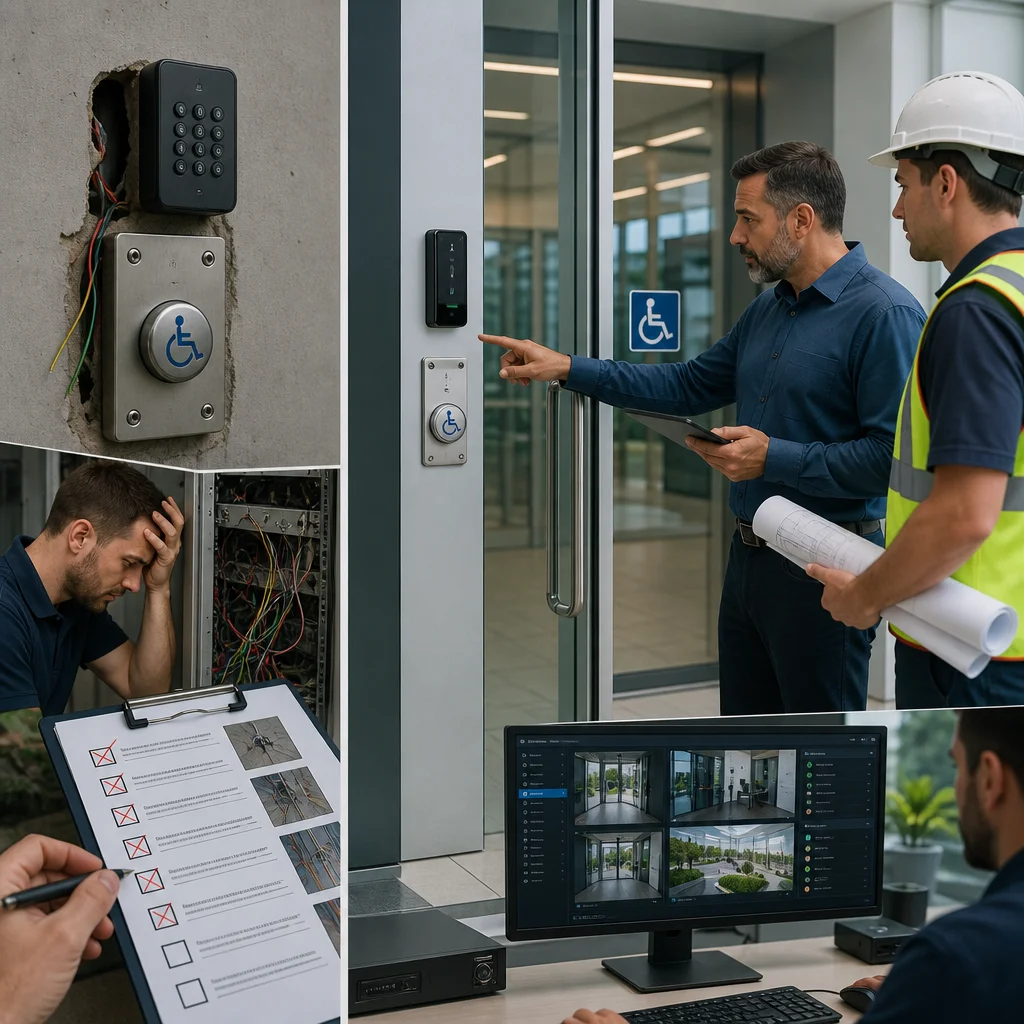
We serve organizations across Southern California—hospitality groups, healthcare networks, manufacturing operations, and large property management companies—that recognize the value of consolidated technology partnerships.
Rather than managing access control through one vendor, security cameras through another, IT infrastructure through a third, and then trying to make them work together, we handle the entire ecosystem. This approach eliminates the integration gaps, finger-pointing, and operational complexity that plague multi-vendor environments.
When you’re managing a hotel group with dozens of properties, a healthcare organization with multiple clinics, or a distribution network with warehouses across the region, having one vendor accountable for your entire physical security and IT infrastructure simplifies your life substantially. We maintain consistent standards across locations, respond to issues through a single point of contact, and ensure your systems evolve as a coordinated whole.
This is particularly valuable for compliance-heavy environments. Hotels meeting hospitality standards, clinics meeting healthcare security requirements, and distribution centers meeting industry protocols all benefit from having a single partner who understands and manages these requirements across your entire infrastructure.
Making the Investment in Professional ADA Solutions
The choice between DIY access control and professional, integrated systems comes down to how you value compliance, operational reliability, and strategic growth.
DIY systems save money immediately. Professional systems deliver better outcomes, lower long-term cost, and eliminate compliance risk. If your facility simply needs a lock that occasionally works, a basic system might suffice. If your organization needs access control that serves your customers reliably, meets legal standards, and integrates with your broader operations, professional installation is the correct decision.
The investment in professional ADA compliant access control isn’t an expense you’re absorbing. It’s infrastructure that your organization depends on daily, that protects your compliance posture, and that enables secure operation at scale.
We’re ready to assess your facility, develop a specification that meets your actual needs, and install infrastructure that grows with your organization. Contact us to discuss how we can integrate your access control into a comprehensive technology solution that strengthens both security and compliance.
Frequently Asked Questions (FAQ)
What makes ADA compliant access control different from standard systems we might install?
ADA compliant access control requires specific technical specifications that go beyond basic security functionality, including proper door hardware, appropriate response times, and integration with building emergency systems. We design our access control solutions to meet ADA standards while maintaining the security integrity your facility needs, ensuring every entrance point serves both accessibility and protection requirements seamlessly.
Why should we choose professional installation over handling ADA compliance ourselves?
DIY or piecemeal approaches often result in gaps between your access control system, electrical infrastructure, and emergency protocols that create compliance violations and security vulnerabilities. Our team handles the complete installation, from structured cabling to door hardware to system integration, and we maintain responsibility for keeping your systems current with evolving ADA requirements and local Southern California building codes.
How does integrating ADA access control with our other security systems save us money long-term?
When we consolidate your access control, security cameras, and IT infrastructure under one platform, we eliminate duplicate hardware, reduce maintenance costs, and prevent the expensive rework that comes from incompatible systems. As your single technology partner, we manage all updates and regulatory changes centrally, so you avoid the costly compliance issues that emerge when multiple vendors point fingers about responsibility.