CONTACT US
Table of Contents
- 1. Eliminating Vendor Fragmentation: Why One Partner Beats Multiple
- 2. Managed IT Services That Secure Your Digital Infrastructure
- 3. Physical Security Systems Integrated With Network Management
- 4. Access Control Integration: Seamless Identity and Entry Management
- 5. HD Security Camera Networks Connected to Your IT Systems
- 6. Structured Cabling as the Foundation for Unified Operations
- 7. Cost Efficiency Through Consolidated Security and IT Support
- Frequently Asked Questions (FAQ)
1. Eliminating Vendor Fragmentation: Why One Partner Beats Multiple
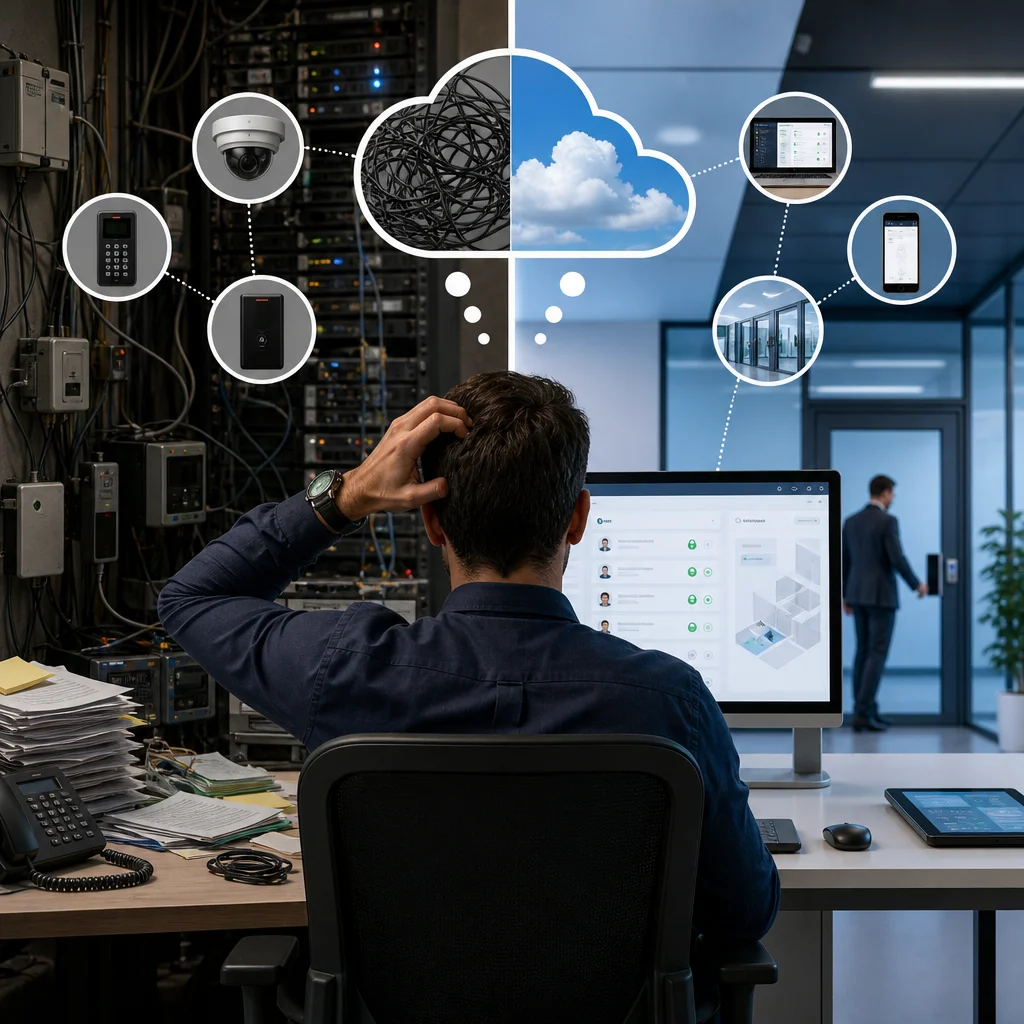
Managing technology across a mid-sized organization in Southern California means juggling multiple vendors, different support contracts, and systems that don’t always talk to each other. You coordinate with one company for network infrastructure, another for security cameras, a third for access control, and a fourth for IT support. When something breaks, you’re caught in the middle of finger-pointing, delayed responses, and fragmented reporting.
This fragmentation costs time, money, and security effectiveness. We’ve worked with dozens of Southern California businesses and property management firms who faced exactly this challenge. The solution isn’t adding another vendor to the pile. It’s consolidating your IT and security infrastructure under a single partner who understands how these systems must work together to protect your organization.
Here’s what unified IT and security solutions actually deliver.
Running separate vendors for IT, security, cabling, and access control creates invisible operational costs. Your team spends hours scheduling different technicians, learning different ticketing systems, and chasing accountability when issues span multiple systems. A physical security incident might involve camera footage, access logs, and network diagnostics, but if three different vendors handle these pieces, you’re manually connecting the dots.
Worse, incompatible systems create blind spots. Your security camera system may not integrate with your access control platform. Your network infrastructure might not support the bandwidth your HD camera network requires. These gaps aren’t accidental, they’re the result of vendors optimizing for their own product rather than your organization’s security posture.
When you consolidate under one integrated IT and security partner, you eliminate these friction points entirely. A single SLA covers your entire technology ecosystem. One vendor takes responsibility for ensuring your access control system talks to your network management platform, your cameras integrate with your physical security workflows, and your IT infrastructure supports all of it reliably.
For hotels, clinics, warehouses, and distribution centers, this matters enormously. A hotel operator can’t afford for access control, cameras, and alarm systems to operate independently. A warehouse can’t have network downtime cascade into loss of camera feeds and access logs. We design our unified solutions around these operational realities.
Your action: Audit your current vendor list. Count how many separate technology contracts you’re managing, how many different support phone numbers your team dials, and how many times per quarter you escalate issues that fall between vendor responsibility boundaries. That’s the cost of fragmentation.
2. Managed IT Services That Secure Your Digital Infrastructure
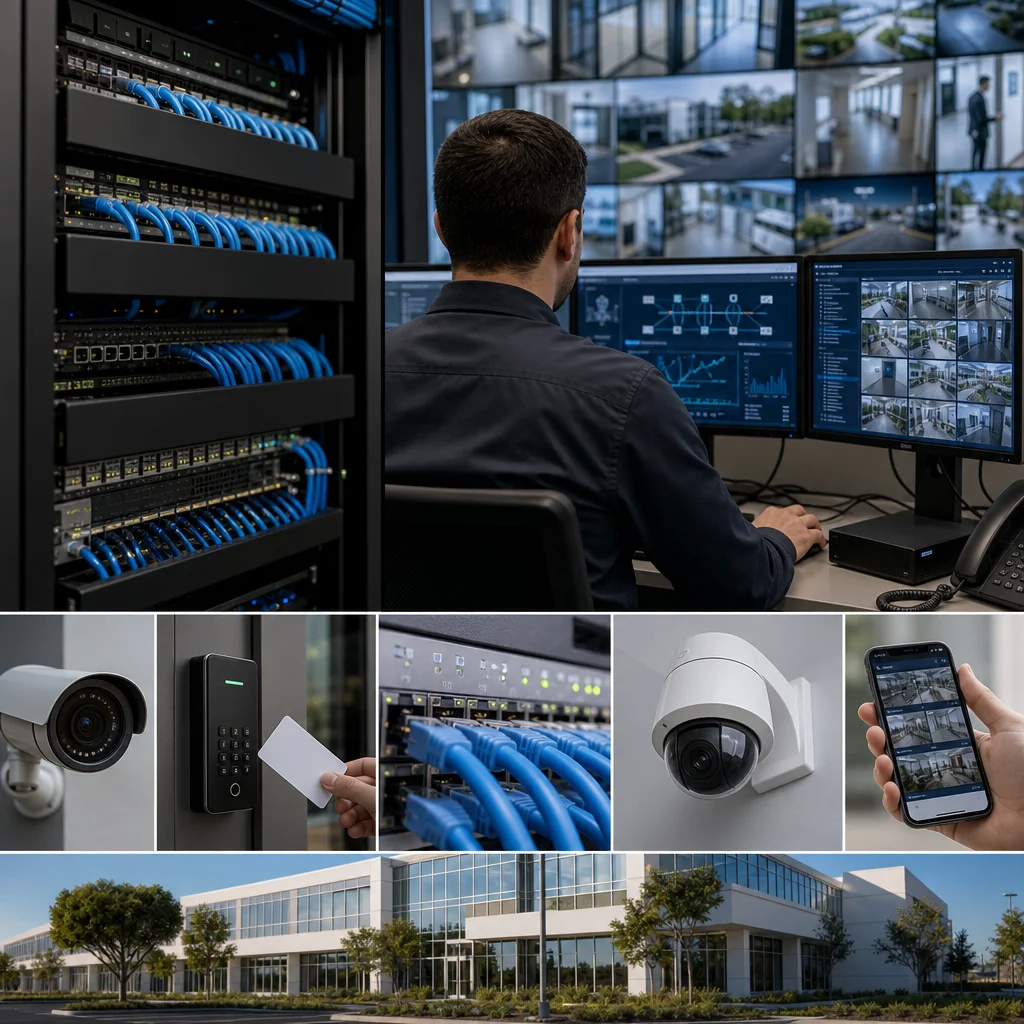
Your digital infrastructure is the nervous system of your physical security. Without reliable networks, proper firewall configuration, and proactive threat monitoring, your cameras stop streaming, your access control system goes offline, and your staff can’t authenticate at doors. Managed IT services aren’t optional when security depends on them.
We provide managed IT services built specifically for organizations with integrated security requirements. This means our team doesn’t just monitor server health and patch software. We actively manage the network bandwidth, security protocols, and system redundancy that your security infrastructure demands.
Here’s what this looks like in practice: A distribution center we work with in Los Angeles had sporadic access control failures. They’d blamed the access control vendor. We discovered the real culprit: their network was misconfigured to deprioritize authentication traffic during peak data transfers. Our managed IT team reconfigured their network QoS settings, implemented proper VLAN segmentation for security systems, and added redundant network paths. Access control failures dropped to zero.
Managed IT services we provide include:
- 24/7 network monitoring and proactive threat detection
- Firewall configuration and management optimized for security system traffic
- Bandwidth allocation and QoS settings to ensure security cameras and access control systems get priority when needed
- Backup and disaster recovery planning that includes all security infrastructure
- Vulnerability scanning and penetration testing tailored to your integrated environment
- User access management and identity federation across IT and physical security systems
The difference between basic IT support and managed IT services designed for security integration is visibility. We don’t wait for a user to report a problem. We detect network anomalies, bandwidth bottlenecks, and configuration drift before they impact your security posture.
Your action: Ask your current IT provider how they specifically support your security camera and access control systems. If they give you a generic answer about “network support,” they’re not architecting your infrastructure around security requirements.
3. Physical Security Systems Integrated With Network Management
Physical security systems are network systems. Your HD cameras stream video over IP. Your access control panels communicate via TCP/IP. Your alarm systems send alerts through your network. The separation between “physical security” and “network management” is purely organizational, not technical.
This integration is where most multi-vendor setups fail. Your security vendor installs cameras on your network without coordinating with your IT team. Your access control vendor doesn’t know your network architecture. Your IT team doesn’t understand the traffic patterns security systems require. Each system works in isolation, and you’re left with performance issues, security gaps, and confusion about who’s responsible.
We design physical and digital infrastructure as a unified system from the beginning. When we install HD security cameras, we don’t just plug them in. We conduct network assessments, plan cabling routes that support video bandwidth, configure managed switches with proper VLAN separation, and ensure your network equipment can handle the load. We coordinate with your IT infrastructure to guarantee cameras have the bandwidth, latency, and uptime they need.
For a hotel client in San Diego, we integrated their access control system with their existing network infrastructure. Rather than treating it as a separate physical security network, we created a dedicated but integrated VLAN for security devices. This let their IT team monitor and support access control as part of their broader infrastructure responsibility, while maintaining proper security segmentation. The result: faster troubleshooting, reduced downtime, and IT staff who actually understood the system they were supporting.
Access control panels, security cameras, alarm systems, and network infrastructure must be planned together. This integration ensures:
- Video and security traffic gets appropriate network priority
- Backup power and redundancy covers all security systems
- Network monitoring includes security device health
- Firmware updates and patches are coordinated across physical and digital systems
- Troubleshooting tools and procedures span the entire environment
Your action: When security systems are installed, ask how network changes will be documented in your IT asset inventory. If they’re not being tracked alongside your other network infrastructure, integration is incomplete.
4. Access Control Integration: Seamless Identity and Entry Management
Access control is where physical and digital identity converge. Your employee badges authenticate against your physical access control system, which connects to your corporate directory, which connects to your IT infrastructure. When these systems are fragmented, you get identity chaos: people whose access rights don’t sync with their employment status, manual access provisioning that takes weeks, and security holes where someone still has physical access long after leaving the company.
Integrated access control security systems tie identity management to your IT infrastructure. When someone is hired, their credentials provision across physical access, badge readers, and IT systems simultaneously. When they’re terminated, their access revokes everywhere at once. No more manual spreadsheets, no more delays, no more security gaps.
We’ve implemented this for large hospitality clients managing hundreds of properties and thousands of team members. A Marriott property we work with needed consistent access control across multiple buildings: front-of-house areas with restricted zones, back-of-house kitchens and storage, and administrative areas. Rather than managing separate access systems per building, we created unified access control tied to their corporate identity management system. HR changes sync automatically. Emergency lockdowns can be initiated from a single dashboard. Audit trails tie access events directly to employee records.
Here’s what seamless access control integration delivers:
- Real-time identity synchronization between HR systems and physical access
- Role-based access that updates automatically as job responsibilities change
- Emergency procedures that lock down physical space while notifying IT security teams
- Complete audit trails connecting access events to employee identities and actions
- Mobile credential support (badge on phone) synchronized with physical readers
- Temporary access for contractors and visitors managed through your IT systems
The critical piece is that your access control decisions are informed by real-time IT identity data. You’re not managing two separate identity systems; you’re managing one identity system that extends to both digital and physical access. This eliminates the fundamental vulnerability in fragmented systems: the delay between someone losing their job and losing physical access.
Your action: Check your current access control system. Can it query your corporate directory in real-time, or does it maintain a separate user database that someone manually updates? Real integration means no manual sync process.
5. HD Security Camera Networks Connected to Your IT Systems
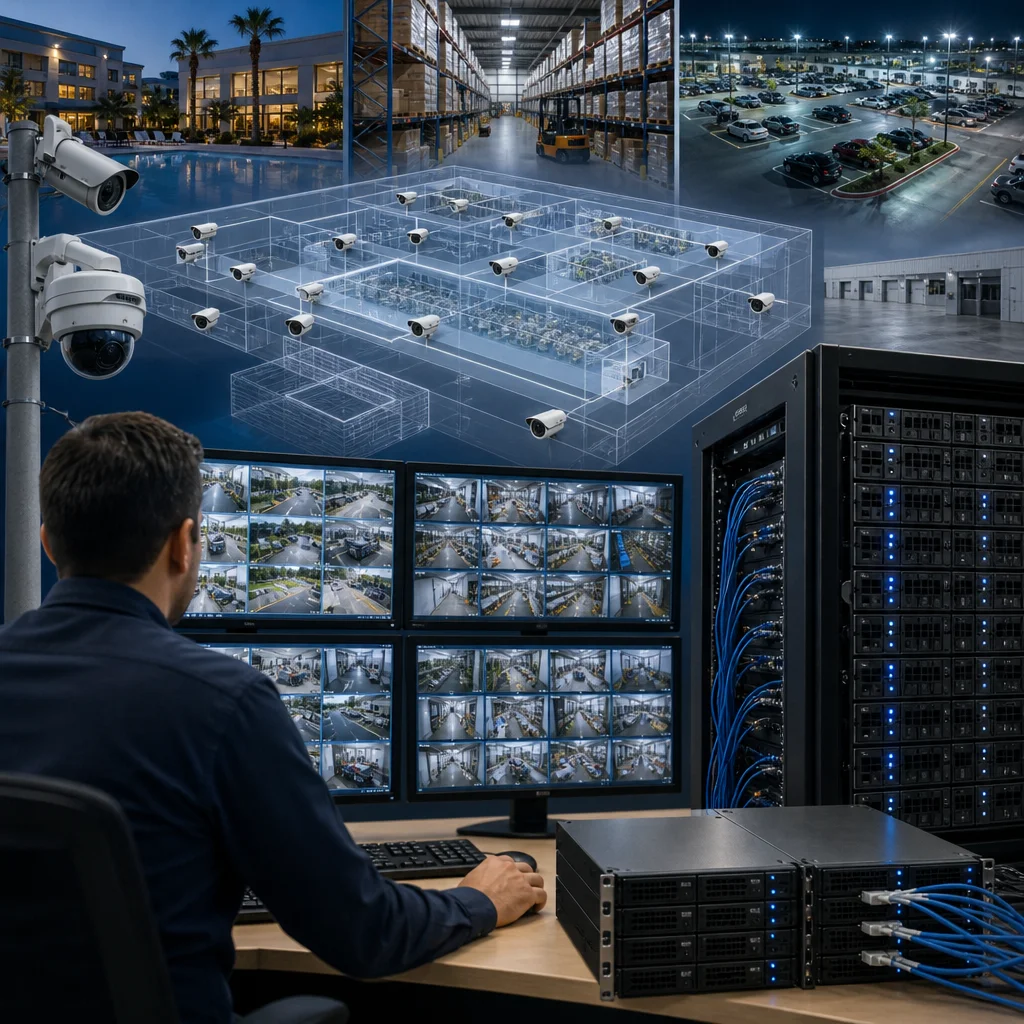
Security cameras generate enormous amounts of data. A modern HD security camera system in a distribution center can produce terabytes of footage weekly. Without proper IT infrastructure integration, this data overwhelms your network, creates storage bottlenecks, and makes footage retrieval slow and unreliable.
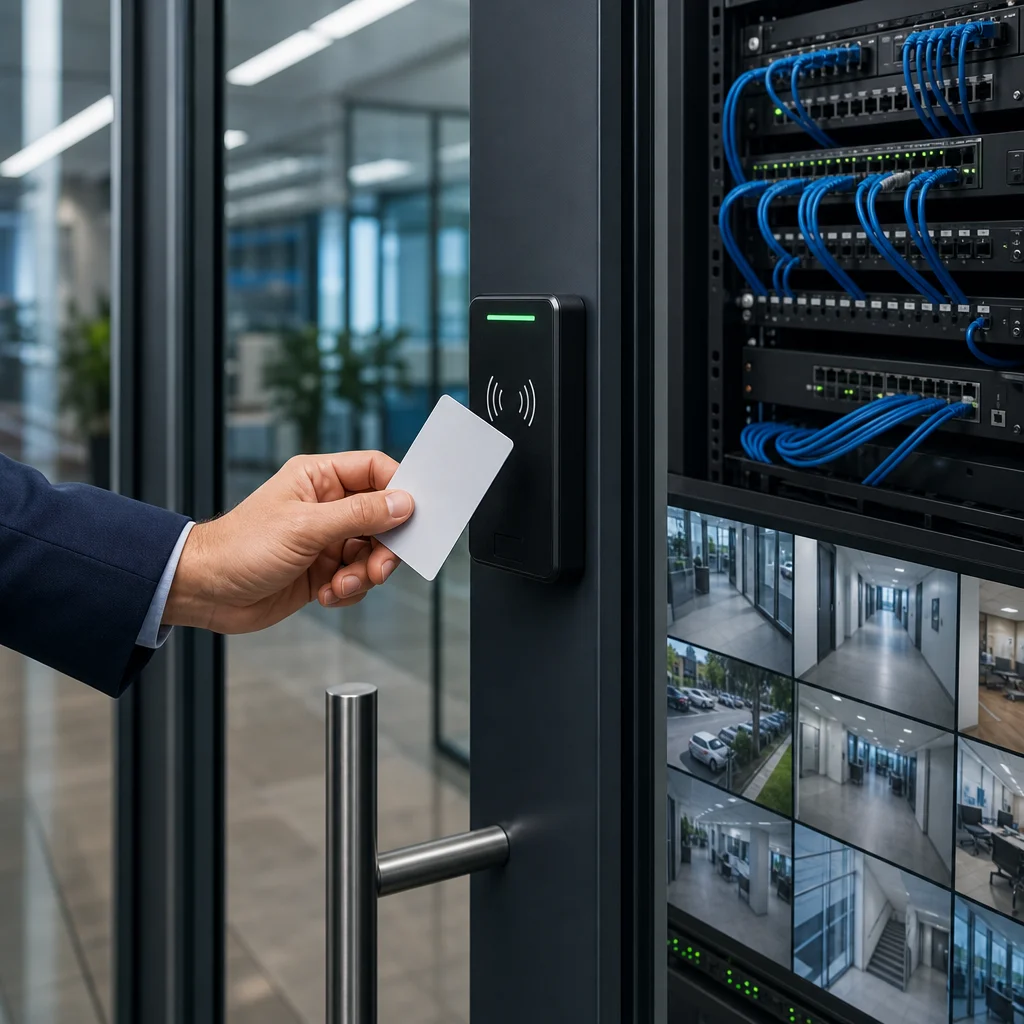
We design HD security camera networks as core infrastructure components, not afterthoughts. This means camera placement is planned alongside network architecture, cabling is sized for video bandwidth, and storage is integrated with your IT backup systems.
A warehouse client in Orange County deployed an HD camera system without coordinating with their network team. Cameras were installed on existing network switches not designed for video traffic. The result: network congestion during peak hours, incomplete footage when bandwidth ran out, and frustrated management unable to review incidents quickly. When we remediated the system, we installed managed switches with proper bandwidth allocation, created a dedicated video VLAN with QoS settings, and implemented networked storage that integrates with their IT backup infrastructure. Footage is now always available, network performance is stable, and the system scales as they expand operations.
Properly integrated HD camera networks include:
- IP-based cameras selected for compatibility with your network infrastructure
- Managed switches configured to prioritize video traffic without impacting business systems
- Structured cabling designed to handle current and future camera expansion
- Networked storage with redundancy, failover, and integration with IT backup systems
- Video analytics that identify security events and integrate with access control alerts
- Mobile viewing that ties into your IT security infrastructure and authentication systems
- Long-term retention that balances storage costs with compliance requirements
The difference between a camera system that works and one that’s integrated: your IT team can manage it. Cameras appear in your network monitoring tools. Storage integrates with your backup procedures. Video footage can be retrieved through your security operations workflows without contacting a separate vendor.
Your action: Log into your security camera system right now and check the interface. If it feels disconnected from your IT systems and requires separate login credentials, it’s not properly integrated.
6. Structured Cabling as the Foundation for Unified Operations
Structured cabling is invisible infrastructure that determines whether integrated IT and security systems can actually work. It’s the physical foundation of your unified technology environment. Most businesses get this wrong: they have cabling installed once, then assume it will support everything forever.
Integrated IT and security solutions require cabling planned specifically for the combined demands of data networks, security systems, power distribution for cameras and access control, and future expansion. This isn’t standard office cabling; it’s infrastructure engineered for enterprise-grade security and uptime requirements.
We design structured cabling systems that support integrated operations from the beginning. This includes:
- Copper and fiber pathways sized for video bandwidth and future expansion
- Dedicated conduits for security system cabling separate from business data networks (for reliability and security segmentation)
- Power infrastructure (PoE and dedicated power runs) for cameras, access control panels, and emergency systems
- Grounding and shielding specifications for security systems
- Documentation and asset management tied to your IT infrastructure
- Organized cable management that lets technicians troubleshoot quickly and add new systems without rework
A clinic in San Diego we work with had cabling installed years ago for basic office networking. When they wanted to add integrated access control and HD cameras, they discovered their existing cabling couldn’t support the load, had no power infrastructure for cameras, and lacked proper conduit organization. They faced a complete reinstall. We designed comprehensive structured cabling that now supports their access control, cameras, network infrastructure, and emergency systems, with spare capacity for future growth.
This is the infrastructure choice that separates organizations that can scale their security and technology together from those that hit ceilings and need expensive rework every few years.
Your action: Have someone physically trace your network cables from your main distribution frame. If they’re bundled with power cables, routed inefficiently, or running through unsecured spaces, your cabling is a liability, not a foundation.
7. Cost Efficiency Through Consolidated Security and IT Support
Consolidating vendors sounds expensive, but the financial case is actually straightforward. Multiple vendors mean multiple contracts, multiple support tiers, multiple escalation procedures, and multiple teams learning your environment. When you consolidate under one SLA partner in SoCal, costs drop dramatically.
Here’s where the savings come from:
Eliminated redundancy: Instead of paying for separate monitoring, support, and maintenance contracts for IT, cameras, and access control, you have one integrated contract. Your support isn’t duplicated across vendors; it’s consolidated.
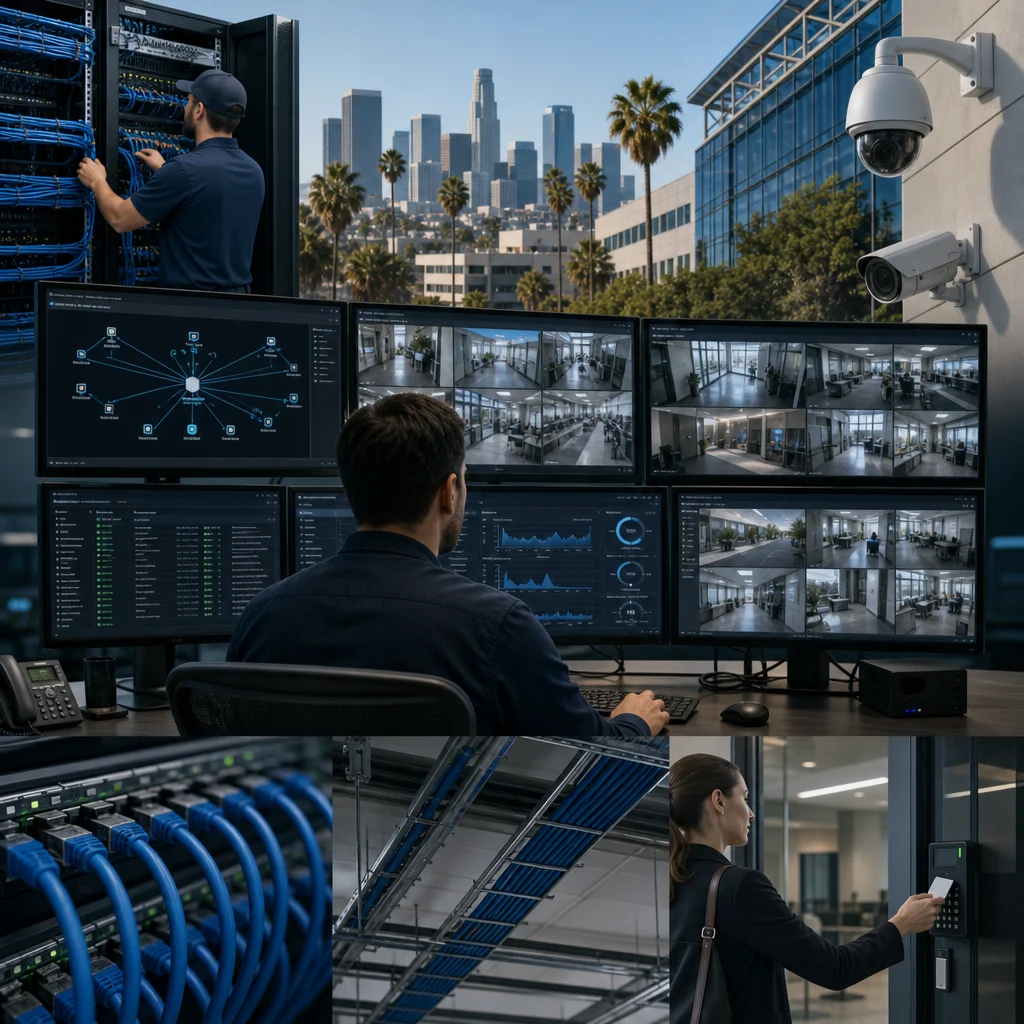
Faster troubleshooting: When a security incident occurs, your team doesn’t chase finger-pointing between vendors. One team has complete visibility across all systems and can identify root causes quickly. This means less downtime, fewer escalations, and faster resolution.
Optimized infrastructure: Consolidated partners design infrastructure to work as a unified system, not as separate tools forced to coexist. This eliminates waste: you don’t overprovision cameras because your network can’t handle them, you don’t buy extra storage because systems aren’t communicating, you don’t pay for duplicate monitoring because vendors can’t share data.
Planned scaling: As your organization grows, adding new locations or new security capabilities is straightforward when one partner understands your entire environment. You’re not negotiating with three vendors about how to expand. One partner has the full picture and can scale efficiently.
Reduced management overhead: Your team isn’t coordinating between vendors, learning different systems, or managing separate schedules. One partner, one point of contact, one unified platform.
For a distribution center managing multiple facilities, consolidation meant reducing their vendor contacts from seven to one. Their support response time dropped from averaging 4 hours across multiple vendors to guaranteed response within 1 hour. Their monthly technology costs actually decreased because they eliminated duplicate service fees and infrastructure inefficiencies.
The cost comparison is striking: A mid-sized organization might spend $5,000-10,000 monthly supporting fragmented security and IT vendors. Consolidating under an integrated partner typically costs 30-40% less while delivering better uptime, faster support, and superior security outcomes.
Your action: Add up your monthly spending across all your IT, security, camera, and access control vendors. Then calculate what your team spends coordinating between them. That’s the true cost of fragmentation.
—
Unified IT and security solutions aren’t a luxury for Southern California businesses anymore, they’re a necessity. Your organization’s security depends on systems that work together, infrastructure that’s properly designed, and support from partners who take responsibility for the entire environment, not just one component.
We’ve designed our services around this reality. From structured cabling that supports integrated operations to managed IT services that prioritize security infrastructure to access control systems connected to your corporate identity management, we approach every engagement as a complete technology and security ecosystem.
If you’re currently managing multiple vendors for IT, physical security, cameras, and access control, consolidation delivers immediate improvements: faster support, lower costs, better security outcomes, and a team that actually owns your entire technology environment rather than maintaining separate fiefdoms.
Let’s talk about what unified IT and security solutions could look like for your organization. Contact us to discuss how we consolidate fragmented technology vendors and build integrated infrastructure that supports your operations securely and efficiently.
Frequently Asked Questions (FAQ)
Why should we consolidate our IT and security vendors with one partner?
We handle the complexity of integrating your digital and physical security systems, eliminating the coordination headaches that come with multiple vendors. When we manage everything under one umbrella, response times improve, accountability increases, and your total cost of ownership decreases because we’re not duplicating services or creating gaps in your infrastructure.
How does structured cabling support your unified security and IT systems?
We design and install structured cabling as the backbone that connects your managed IT services, access control systems, and security cameras into a cohesive network. This foundation ensures seamless communication between all your systems and makes future expansions or upgrades straightforward, rather than requiring additional infrastructure work.
Can we integrate our existing security cameras and access control systems with our managed IT services?
We assess your current equipment and integrate compatible systems into our unified platform, or we recommend upgrades where necessary to achieve true system integration. Our approach keeps your technology investments working together instead of operating in silos, giving you centralized monitoring and management across your entire Southern California facility.