Create a repeatable standard
Establish approved platforms, device naming, network architecture, credentials, documentation, testing, and support practices for future Beaumont sites.
 Request an estimate
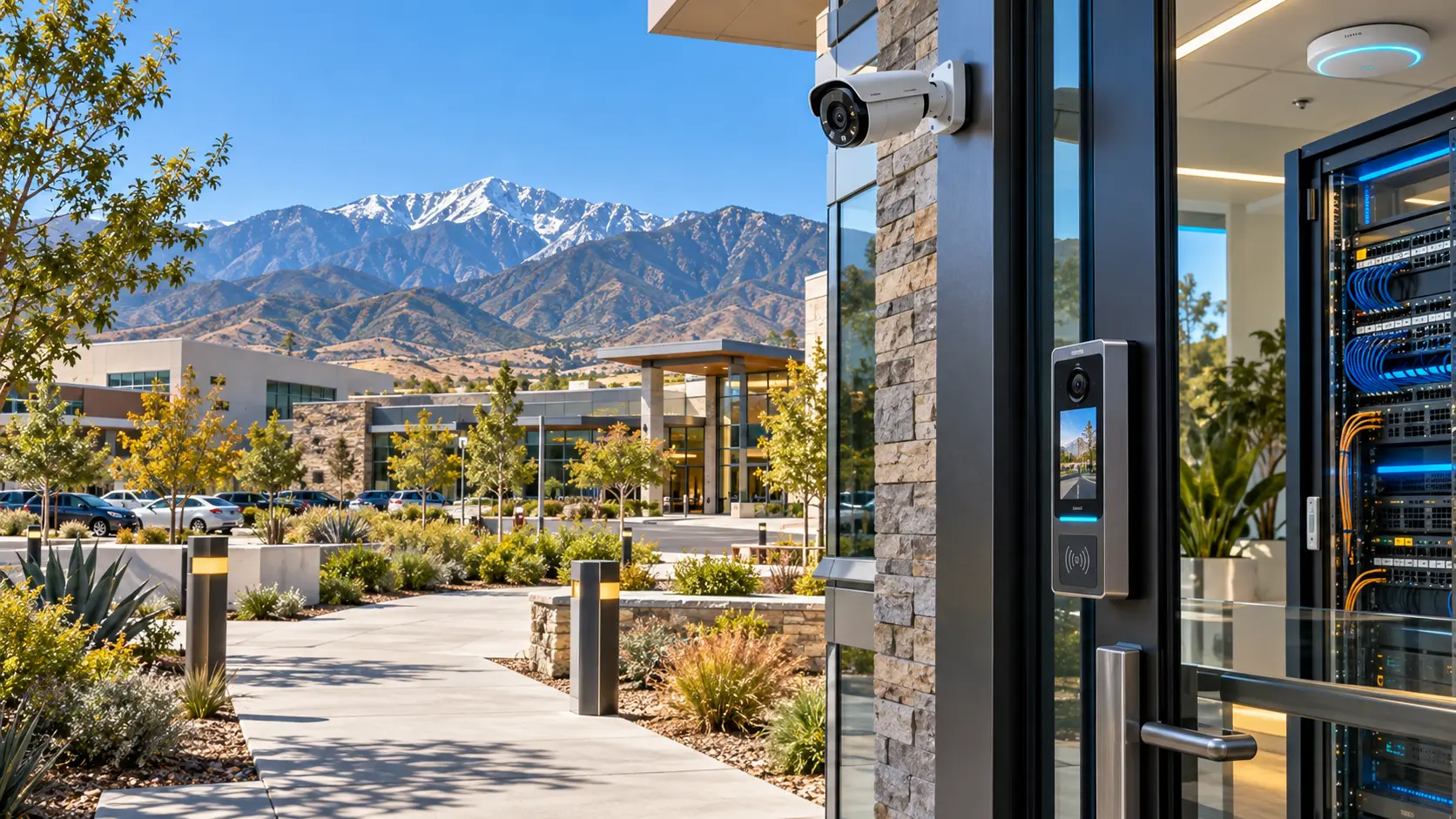
Terapixels designs integrated security, access control, cabling, fiber, commercial Wi-Fi, networks, cloud systems, and managed IT for Beaumont medical, office, retail, education, logistics, and multi-building environments.
Beaumont organizations can consolidate responsibility for cameras, doors, intercom, cabling, wireless, switching, servers, cloud platforms, documentation, and support. The design begins with users, traffic, growth plans, existing assets, and service expectations—not a predetermined product list.
Select a capability for technical details, platforms, deliverables, and planning questions.
IP cameras, video management, cloud or on-premises recording, analytics, retention planning, and investigation workflows.
Explore capability ↗Credentials, readers, controllers, electrified hardware, permissions, reporting, and cloud or on-premises administration.
Explore capability ↗Copper, fiber, pathways, racks, MDF and IDF buildouts, testing, labeling, remediation, and as-built documentation.
Explore capability ↗Switching, routing, firewalls, segmentation, wireless design, cloud connectivity, monitoring, and performance validation.
Explore capability ↗Help desk, onsite support, Microsoft 365, endpoints, backup, cybersecurity, servers, cloud systems, and technology planning.
Explore capability ↗Troubleshooting, system-health review, documentation, training, upgrades, licensing coordination, and lifecycle support.
Explore capability ↗Beaumont’s rapid residential and commercial expansion has brought medical offices, schools, shopping, business parks, warehouses, and civic facilities along the I-10 and State Route 60 corridors. New construction and occupied sites often need a common technology standard that can grow across phases.
A coordinated plan can define camera coverage, door schedules, visitor communication, MDF and IDF requirements, backbone fiber, wireless capacity, network segmentation, cloud management, naming, documentation, and support before separate trades create incompatible decisions.
Establish approved platforms, device naming, network architecture, credentials, documentation, testing, and support practices for future Beaumont sites.
Reserve pathway, fiber, rack, switching, PoE, licensing, storage, and wireless capacity for buildings or spaces not yet online.
Plan access, dust control, work zones, shutdowns, testing, and training around patients, students, customers, employees, and tenants.
Configure roles, alerts, health visibility, secure remote access, and escalation paths that match the organization’s staffing model.
Reliable entry, discreet video, protected infrastructure, wireless coverage, and carefully scheduled work for Beaumont care environments.
Visitor entry, credentials, parking coverage, tenant networks, Wi-Fi, and lifecycle support for Beaumont workplaces and properties.
Customer-aware video, staff access, inventory protection, guest connectivity, and after-hours response for Beaumont commercial destinations.
Gate, yard, dock, inventory, employee-entry, fiber, network, and multi-shift visibility for Beaumont distribution operations.
The scope is defined around the site, existing assets, users, risks, operational schedule, technology dependencies, and outcome—not a predetermined product bundle.
Yes. We can define common security, cabling, network, wireless, naming, documentation, training, and support standards while accounting for each site’s physical differences.
Yes. Coordinating pathways, telecom rooms, fiber, switching, PoE, wireless, cameras, access control, intercom, servers, and cloud connectivity early reduces rework and capacity gaps.
Terapixels provides video surveillance, access control, intercom and entry, intrusion integration, structured cabling, fiber, network infrastructure, commercial Wi-Fi, cloud and server systems, managed IT, documentation, and lifecycle support for Beaumont organizations.
Yes. Project planning can account for operating hours, public and staff circulation, restricted spaces, temporary protection, testing, training, and approved migration windows to reduce disruption.