Scale from daily use to event mode
Define operating profiles, credentials, staffing, alerts, video views, network capacity, guest access, and exception handling for different occupancy levels.
 Request an estimate
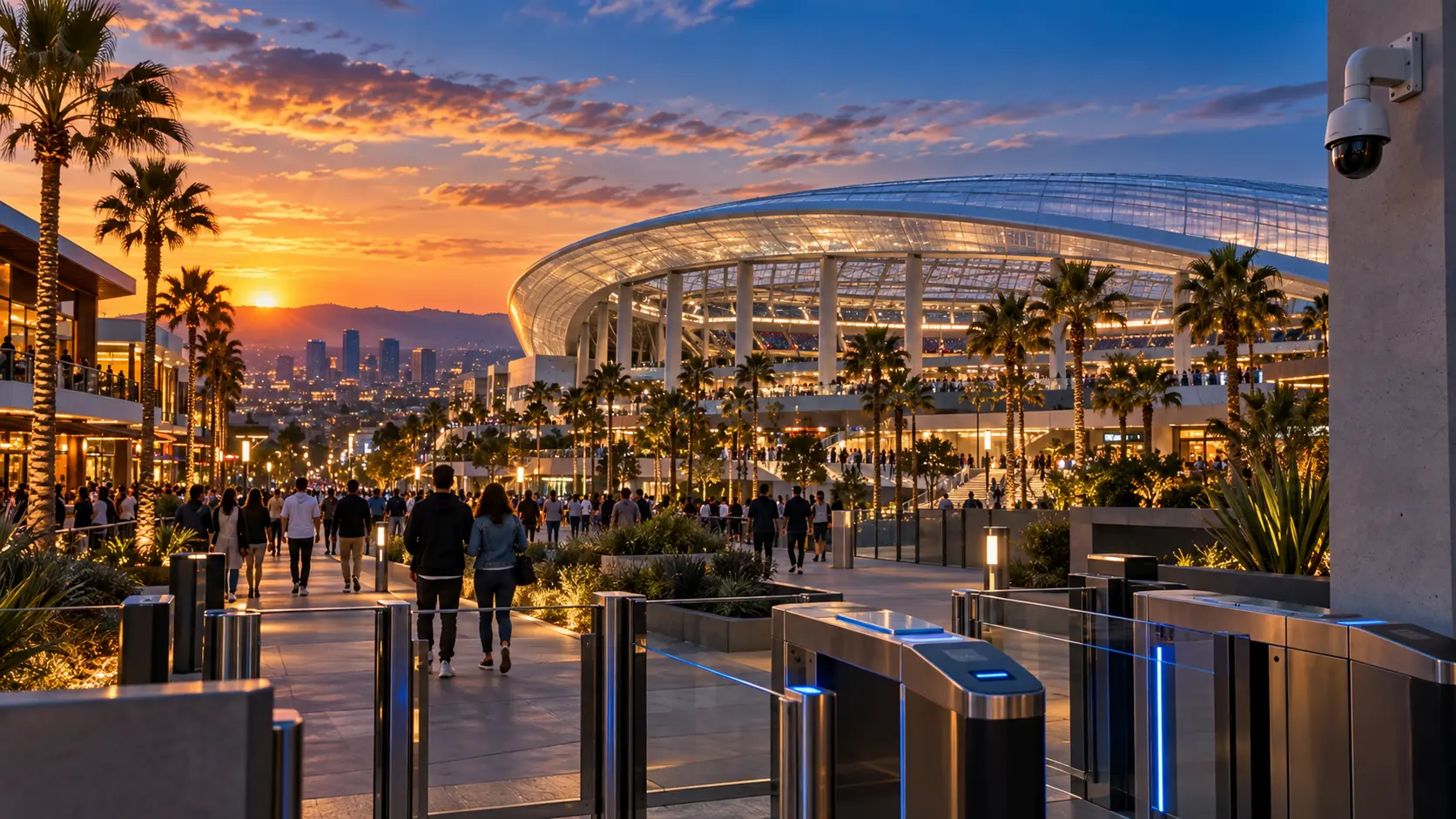
Terapixels designs and supports video, access, entry, cabling, fiber, high-density Wi-Fi, network, cloud, and IT systems for Inglewood venues, hospitality, retail, offices, mixed-use properties, and event-driven operations.
Inglewood properties can use one team to align public and staff entry, cameras, credentials, event modes, guest connectivity, back-of-house networks, servers, cloud platforms, documentation, and operational support.
Select a capability for technical details, platforms, deliverables, and planning questions.
IP cameras, video management, cloud or on-premises recording, analytics, retention planning, and investigation workflows.
Explore capability ↗Credentials, readers, controllers, electrified hardware, permissions, reporting, and cloud or on-premises administration.
Explore capability ↗Copper, fiber, pathways, racks, MDF and IDF buildouts, testing, labeling, remediation, and as-built documentation.
Explore capability ↗Switching, routing, firewalls, segmentation, wireless design, cloud connectivity, monitoring, and performance validation.
Explore capability ↗Help desk, onsite support, Microsoft 365, endpoints, backup, cybersecurity, servers, cloud systems, and technology planning.
Explore capability ↗Troubleshooting, system-health review, documentation, training, upgrades, licensing coordination, and lifecycle support.
Explore capability ↗Inglewood’s stadium and entertainment district, hotels, retail, restaurants, offices, mixed-use development, airport-adjacent businesses, and established neighborhoods create dramatic swings between everyday operations and major-event demand. Crowd movement, temporary staff, vendors, deliveries, parking, guest Wi-Fi, and restricted areas must work together.
A complete design can include layered video, turnstiles and doors, credential and visitor workflows, intercom, parking and vehicle analytics, fiber, high-density wireless, segmented networks, command and back-of-house systems, centralized monitoring, and event-ready support procedures.
Define operating profiles, credentials, staffing, alerts, video views, network capacity, guest access, and exception handling for different occupancy levels.
Coordinate turnstiles, doors, service entrances, loading, suites, offices, parking, video verification, and life-safety interfaces.
Plan RF capacity, fiber, switching, segmentation, roaming, interference, monitoring, guest networks, and resilient back-of-house service.
Create naming, maps, permissions, event procedures, evidence workflows, health monitoring, escalation, spares, and post-event review.
Crowd and perimeter video, turnstiles, credentials, temporary users, high-density Wi-Fi, command workflows, and event support.
Guest-aware entry, staff zones, parking, elevators, common areas, Wi-Fi, tenant systems, and portfolio administration.
Public areas, cash and inventory, employee entry, service corridors, connectivity, delivery zones, and after-hours visibility.
Visitor management, protected infrastructure, reliable networks, cloud systems, parking, and ongoing support.
The scope is defined around the site, existing assets, users, risks, operational schedule, technology dependencies, and outcome—not a predetermined product bundle.
Yes. Planning can address everyday and event modes, temporary credentials, crowd and staff circulation, parking, video, high-density Wi-Fi, network segmentation, command workflows, and support.
Yes. Architecture can use separate SSIDs and VLANs, firewalls, policy controls, bandwidth management, authentication, monitoring, and documented responsibilities.
Terapixels provides video surveillance, access control, intercom and entry, intrusion integration, structured cabling, fiber, network infrastructure, commercial Wi-Fi, cloud and server systems, managed IT, documentation, and lifecycle support for Inglewood organizations.
Yes. The project plan can coordinate work zones, public and staff circulation, business hours, restricted areas, temporary protection, testing, training, and approved migration windows to limit operational disruption.