Engineer for mountain weather
Select ratings, mounting, cable and connector protection, heaters where appropriate, surge protection, power backup, and safe service access.
 Request an estimate
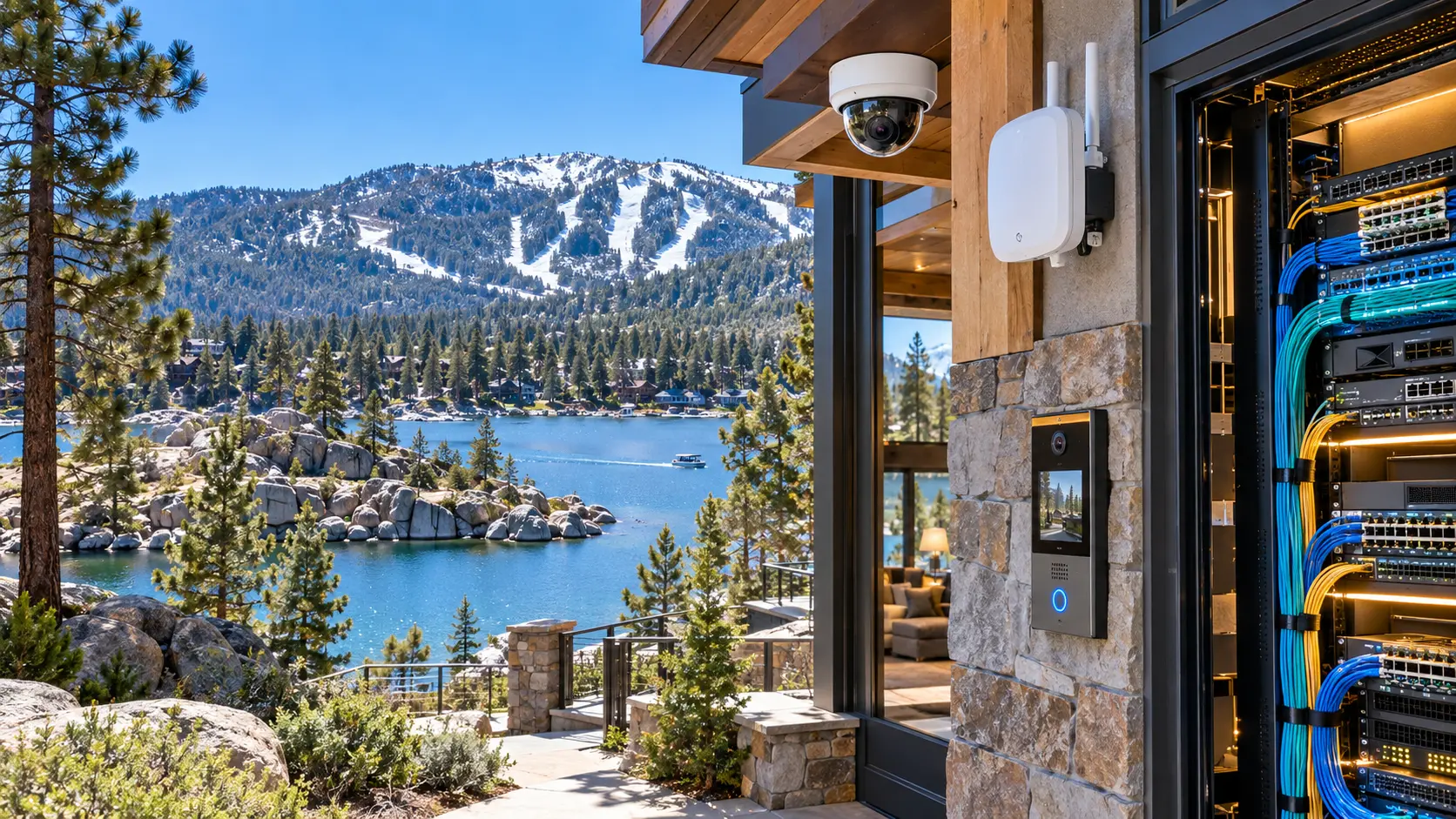
Terapixels designs discreet cameras, access control, intercom, cabling, property-wide Wi-Fi, networks, cloud systems, and managed support for Big Bear Lake hotels, vacation operations, recreation, retail, restaurants, offices, and community facilities.
Big Bear Lake organizations can protect guests, staff, property, and operations while maintaining a welcoming experience. We coordinate video, controlled areas, visitor entry, fiber, Wi-Fi, network segmentation, cloud administration, system health, documentation, and support for mountain conditions.
Select a capability for technical details, platforms, deliverables, and planning questions.
IP cameras, video management, cloud or on-premises recording, analytics, retention planning, and investigation workflows.
Explore capability ↗Credentials, readers, controllers, electrified hardware, permissions, reporting, and cloud or on-premises administration.
Explore capability ↗Copper, fiber, pathways, racks, MDF and IDF buildouts, testing, labeling, remediation, and as-built documentation.
Explore capability ↗Switching, routing, firewalls, segmentation, wireless design, cloud connectivity, monitoring, and performance validation.
Explore capability ↗Help desk, onsite support, Microsoft 365, endpoints, backup, cybersecurity, servers, cloud systems, and technology planning.
Explore capability ↗Troubleshooting, system-health review, documentation, training, upgrades, licensing coordination, and lifecycle support.
Explore capability ↗Big Bear Lake’s economy centers on lodging, recreation, restaurants, retail, events, community services, and properties with seasonal occupancy. Snow, ice, cold, moisture, elevation, power events, peak guest demand, and spread-out grounds create specific design and maintenance requirements.
A useful system balances guest privacy with entrances, parking, staff spaces, storage, public areas, outdoor connectivity, network resiliency, remote support, seasonal credentials, event capacity, and installation schedules coordinated around bookings and weather.
Select ratings, mounting, cable and connector protection, heaters where appropriate, surge protection, power backup, and safe service access.
Use discreet placement, appropriate privacy boundaries, reliable Wi-Fi, staff workflows, and work schedules that respect occupancy.
Review wireless density, bandwidth, recording, temporary users, credentials, remote monitoring, spares, and escalation before busy periods.
Evaluate fiber, wireless bridges, outdoor access points, managed switching, segmentation, and centralized administration across the property.
Guest-aware security, staff and vendor access, resilient Wi-Fi, network infrastructure, and responsive support for Big Bear Lake properties.
Public-area video, staff access, outdoor Wi-Fi, event connectivity, and facility support for Big Bear Lake venues.
Customer-aware video, staff access, inventory protection, guest connectivity, and after-hours response for Big Bear Lake destinations.
Auditable entry, public-area video, resilient networks, wireless coverage, and documented administration for Big Bear Lake facilities.
The scope is defined around the site, existing assets, users, risks, operational schedule, technology dependencies, and outcome—not a predetermined product bundle.
Yes. We evaluate temperature ratings, precipitation, ice, mounting, housings, cable protection, power, surge, visibility, safe maintenance access, and seasonal inspection.
Yes. The architecture may use fiber or wireless links, managed switching, segmentation, centralized platforms, documented addressing, monitoring, and remote support.
Terapixels provides video surveillance, access control, intercom and entry, intrusion integration, structured cabling, fiber, network infrastructure, commercial Wi-Fi, cloud and server systems, managed IT, documentation, and lifecycle support for Big Bear Lake organizations.
Yes. Project planning can account for operating hours, public and staff circulation, restricted spaces, temporary protection, testing, training, and approved migration windows to reduce disruption.