Campus fiber backbones
Building-to-building links for networks, security, Wi-Fi and operational systems.
 Request an estimate
Campus fiber and outside-plant pathway planning, underground and aerial route coordination, building entry, testing and documentation.
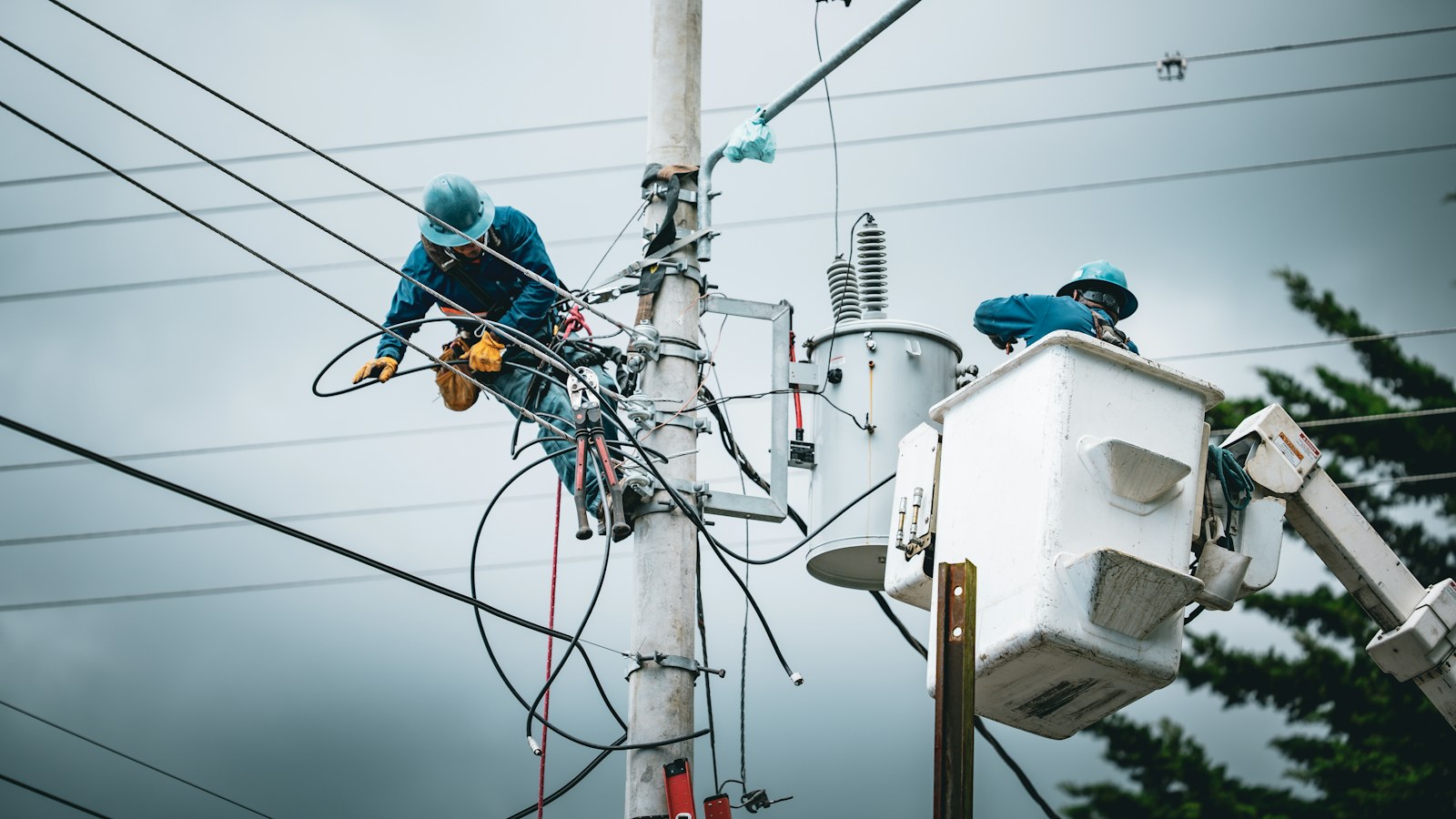
Outside-plant work begins with route ownership, utilities, permits, environmental exposure and building-entry protection. Fiber is generally the appropriate interbuilding data medium; any exterior copper application needs a separate review of distance, grounding and surge protection. The complete route also includes conduit, handholes, pulling limits, drainage and restoration.
Building-to-building links for networks, security, Wi-Fi and operational systems.
Conduit, handholes, pull points and entry locations coordinated with civil and electrical work.
Cable construction matched to moisture, sunlight, temperature, pulling and installation conditions.
Route records, strand schedules, test results, handhole references and building-entry documentation.
Existing utilities and unknown conditions require field verification and coordinated route development.
Bend radius, pulling tension, conduit fill and access points shape the constructible route.
Paving, landscape, waterproofing and firestopping limits should be part of the scope.
The installation is only complete when the customer can identify what was installed, where it connects, how it was tested, what remains open and who owns the next action.
These technology families may be relevant to the scope. Final models, licenses, accessories and compatibility are verified during design.
Document the site, current systems, users, risks, dependencies and constraints.
Define architecture, products, responsibilities, testing, budget and implementation.
Coordinate installation, configuration, migration, commissioning and training.
Preserve system knowledge, resolve issues and plan the lifecycle.
Local commercial service with office support in Irvine and San Diego.
Terapixels can define and coordinate the technology pathway scope. Civil excavation, utility locating, engineering, permits and restoration may be performed by qualified project partners or owner-selected trades.
Cable construction depends on conduit, direct-burial or aerial use, moisture exposure, fire-rated transitions and the building-entry method. The final cable is selected after the route is established.
Properly located handholes provide access for pulling, splicing and future maintenance. Their size, spacing, drainage and placement must match the route and cable plan.
Terapixels will help define a practical scope before products are selected.
Request a consultation ↗